
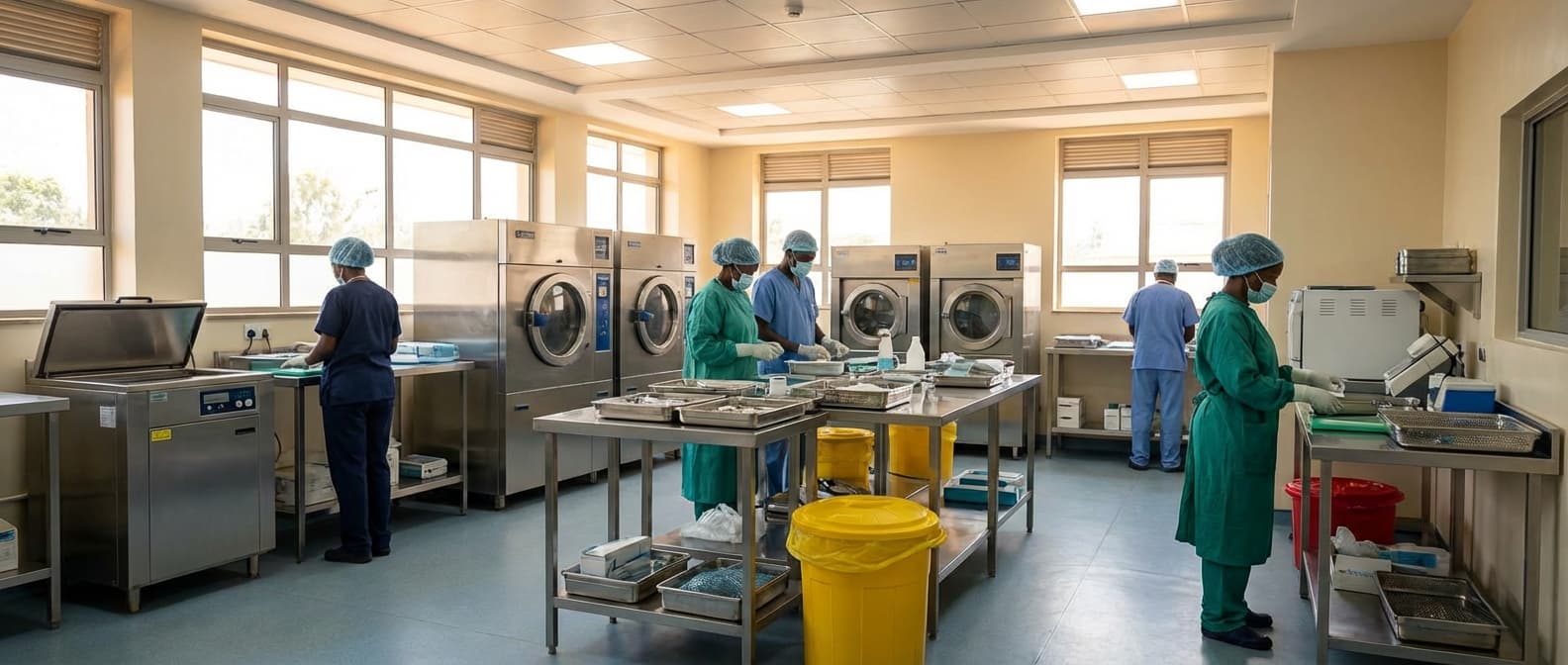
Autoclave Validation Support Service in Cabo Verde
Engineering Excellence & Technical Support
Autoclave Validation Support Service High-standard technical execution following OEM protocols and local regulatory frameworks.
Advanced Sterilization Efficacy Testing
Our service leverages advanced microbiological testing methods to validate the efficacy of your autoclaves, ensuring complete microbial inactivation and compliance with international sterilization standards.
Comprehensive Process Parameter Verification
We meticulously verify critical autoclave parameters, including temperature, pressure, and cycle times, utilizing calibrated monitoring equipment to guarantee consistent and reliable sterilization cycles.
Regulatory Compliance & Documentation Assurance
Our expert team provides thorough validation reports and documentation that meet strict regulatory requirements, ensuring your facility in Cabo Verde is fully compliant with relevant health and safety standards.
What Is Autoclave Validation Support Service In Cabo Verde?
Autoclave Validation Support Service in Cabo Verde refers to the comprehensive technical assistance and documentation required to ensure that steam sterilization equipment (autoclaves) consistently and effectively eliminate viable microorganisms from medical devices and laboratory equipment. This service is crucial for maintaining the sterility assurance level (SAL) of processed items, thereby preventing healthcare-associated infections and ensuring the integrity of scientific research. The validation process typically encompasses Installation Qualification (IQ), Operational Qualification (OQ), and Performance Qualification (PQ) stages. IQ verifies that the autoclave is installed correctly according to manufacturer specifications and regulatory requirements. OQ confirms that the autoclave operates within defined parameters and consistently achieves the specified sterilization conditions (e.g., temperature, pressure, time, steam quality). PQ demonstrates, through a series of challenge loads (biological and chemical indicators), that the autoclave can reproducibly sterilize a defined range of products under normal operating conditions. Services often include protocol development, execution of tests, data analysis, report generation, and recommendations for ongoing monitoring and maintenance.
| Typical Use Cases | Description of Use Case | Key Validation Considerations |
|---|---|---|
| Sterilization of Surgical Instruments | Ensuring the sterility of scalpels, forceps, clamps, and other reusable surgical tools to prevent post-operative infections. | Validation of steam penetration to all lumens, porous loads, and complex instrument configurations. Focus on achievable SAL for critical items. |
| Sterilization of Laboratory Glassware and Media | Preparing sterile beakers, flasks, pipettes, and culture media for microbiological, biochemical, and molecular biology experiments. | Ensuring complete kill of microbial contaminants without compromising the integrity of the glassware or the composition of the media. Validation of steam exposure time and temperature. |
| Sterilization of Dental Instruments | Processing handpieces, mirrors, probes, and other reusable dental instruments to maintain patient safety and prevent disease transmission. | Validation of sterilization cycles for small, complex instruments, including proper drying cycles. Verification of steam penetration through wrapped instruments. |
| Sterilization of Autoclavable Personal Protective Equipment (PPE) | Decontaminating reusable PPE such as gowns, masks, and shoe covers in healthcare settings. | Validation of cycles designed for fabric and porous materials. Assessment of drying effectiveness and prevention of recontamination. |
| Validation for Biopharmaceutical Manufacturing | Sterilization of bioreactors, transfer lines, and other equipment used in the aseptic production of biopharmaceuticals. | Rigorous validation to meet stringent regulatory requirements (e.g., FDA, EMA). Focus on a demonstrable SAL of 10^-6. Validation of steam quality and penetration into complex systems. |
Who Needs Autoclave Validation Support Service in Cabo Verde?
- Healthcare Facilities: Hospitals, clinics, dental practices, and surgical centers that sterilize reusable medical instruments.
- Laboratories: Research, diagnostic, and quality control laboratories that require sterile equipment and media for experiments and analysis.
- Pharmaceutical and Biotechnology Companies: Facilities involved in the manufacturing of sterile products or conducting research requiring aseptic conditions.
- Veterinary Clinics and Animal Hospitals: Institutions that sterilize surgical instruments and equipment.
- Medical Device Manufacturers: Companies that require validation of sterilization processes for their products before market release.
Who Needs Autoclave Validation Support Service In Cabo Verde?
Autoclave validation is a critical process for ensuring the effectiveness of sterilization equipment used in healthcare and other sensitive industries. In Cabo Verde, as in many developing nations, ensuring the quality and safety of medical procedures is paramount. This service is essential for institutions that rely on steam sterilization to eliminate microorganisms and prevent the spread of infections.
| Customer Type | Key Departments Requiring Service | Rationale for Validation |
|---|---|---|
| Hospitals and Clinics | Central Sterile Supply Department (CSSD), Operating Rooms, Surgical Wards, Dental Clinics | Ensuring patient safety through effective sterilization of surgical instruments, medical devices, and implants. Compliance with national and international healthcare standards. Preventing healthcare-associated infections (HAAs). |
| Dental Practices | Sterilization Room/Area | Protecting patients and staff from infectious diseases transmitted through contaminated dental instruments. Maintaining dental practice accreditation and reputation. |
| Laboratories (Medical and Research) | Microbiology Labs, Pathology Labs, Research Facilities | Sterilizing laboratory equipment, glassware, and media to prevent cross-contamination and ensure accurate experimental results. Maintaining biosafety protocols. |
| Veterinary Clinics | Surgical Suites, Treatment Areas | Sterilizing surgical instruments and equipment to ensure the health and safety of animal patients. Preventing the transmission of zoonotic diseases. |
| Food Processing Plants | Production Lines Requiring Sterilization | Ensuring the microbial safety of food products, extending shelf life, and meeting regulatory requirements for food safety standards. |
Target Customers and Departments in Cabo Verde Requiring Autoclave Validation Support Service
- Hospitals and Clinics (Public and Private)
- Dental Practices
- Laboratories (Medical and Research)
- Veterinary Clinics
- Food Processing Plants (where sterilization is required)
Autoclave Validation Support Service Process In Cabo Verde
This document outlines the standard workflow for Autoclave Validation Support Services in Cabo Verde, from initial client inquiry to the completion of the validation execution. This process ensures a structured and comprehensive approach to meeting regulatory and quality requirements for autoclaves used in critical environments.
| Phase | Step | Description | Key Deliverables/Outcomes | Responsible Parties |
|---|---|---|---|---|
| Phase 1: Inquiry & Scoping | 1.1 Initial Contact | Client contacts the service provider with a requirement for autoclave validation support. | Acknowledgement of inquiry, preliminary understanding of client needs. | Client, Service Provider |
| 1.2 Needs Assessment & Site Survey (if applicable) | Service provider gathers detailed information about the autoclave (type, model, capacity, usage), facility, regulatory requirements, and desired validation scope. A site visit may be conducted. | Detailed scope of work, identification of specific validation parameters (e.g., temperature, pressure, time, steam penetration), initial risk assessment. | Service Provider, Client | |
| Phase 2: Proposal & Agreement | 2.1 Proposal Development | Based on the needs assessment, the service provider develops a comprehensive proposal including scope, methodology, timeline, equipment, personnel, and cost. | Formal proposal document. | Service Provider |
| 2.2 Proposal Review & Negotiation | Client reviews the proposal, asks clarifying questions, and negotiates terms if necessary. | Agreed-upon scope of work, revised proposal (if applicable). | Client, Service Provider | |
| 2.3 Contract Agreement | Formal agreement is signed by both parties, outlining all contractual obligations. | Signed contract/service agreement. | Client, Service Provider | |
| Phase 3: Pre-Execution Planning | 3.1 Protocol Development/Review | Development or review of validation protocols (Installation Qualification - IQ, Operational Qualification - OQ, Performance Qualification - PQ) based on approved scope and relevant standards (e.g., ISO, local regulations). | Approved IQ, OQ, and PQ protocols. | Service Provider, Client |
| 3.2 Schedule Planning | Coordinate validation activities with the client's operational schedule to minimize disruption. | Agreed validation schedule. | Service Provider, Client | |
| 3.3 Resource Allocation | Mobilize qualified personnel, calibrated validation equipment, and necessary consumables. | Qualified team, calibrated equipment ready for use. | Service Provider | |
| Phase 4: Execution of Validation Protocols | 4.1 Installation Qualification (IQ) | Verify that the autoclave is installed correctly according to manufacturer specifications and design intentions. | IQ test results, completed IQ checklist, IQ report section. | Service Provider (Validation Team) |
| 4.2 Operational Qualification (OQ) | Verify that the autoclave operates within its specified parameters under normal and worst-case conditions. | OQ test results, completed OQ checklists, OQ report section. | Service Provider (Validation Team) | |
| 4.3 Performance Qualification (PQ) | Demonstrate that the autoclave consistently performs its intended function under normal operating conditions, typically using biological indicators or equivalent. | PQ test results (including spore testing, cycle record analysis), completed PQ forms, PQ report section. | Service Provider (Validation Team) | |
| Phase 5: Reporting & Documentation | 5.1 Data Analysis & Compilation | Analyze all collected data from IQ, OQ, and PQ runs. | Raw data compilation, preliminary data analysis. | Service Provider (Validation Team) |
| 5.2 Validation Report Generation | Compile a comprehensive validation report including an executive summary, scope, methodology, results, deviation analysis (if any), conclusions, and recommendations. | Draft validation report. | Service Provider (Validation Team) | |
| 5.3 Report Review & Approval | Client reviews the draft report and provides feedback. Revisions are made as necessary. Final report is approved. | Final approved validation report. | Client, Service Provider | |
| Phase 6: Post-Execution Support | 6.1 Final Documentation Handover | Provide the client with the final, approved validation report and supporting documentation. | Complete validation package. | Service Provider |
| 6.2 Recommendations & Follow-up | Offer recommendations for ongoing maintenance, revalidation schedules, and address any client queries. | Recommendations for future actions, ongoing client support. | Service Provider |
Autoclave Validation Support Service Workflow in Cabo Verde
- Phase 1: Inquiry & Scoping
- Phase 2: Proposal & Agreement
- Phase 3: Pre-Execution Planning
- Phase 4: Execution of Validation Protocols
- Phase 5: Reporting & Documentation
- Phase 6: Post-Execution Support
Autoclave Validation Support Service Cost In Cabo Verde
Autoclave validation is a critical process to ensure sterilization equipment functions correctly and meets regulatory standards. In Cabo Verde, the cost of autoclave validation support services can vary based on several factors. These services are typically provided by specialized technical firms or qualified engineers. While precise pricing is often bespoke, understanding the influencing elements allows for estimation.
Key Pricing Factors:
- Type and Size of Autoclave: Larger or more complex autoclaves, such as those used in healthcare facilities or large laboratories, will generally incur higher validation costs due to the increased number of testing points and potential complexity of the equipment.
- Scope of Validation: This refers to the specific tests and parameters being validated. A basic operational qualification (OQ) will be less expensive than a full performance qualification (PQ) that involves multiple cycles and challenges. Re-validation after maintenance or repairs will also have a different cost structure than initial validation.
- Frequency of Validation: While not a direct cost factor for a single validation, regular scheduled validation often comes with service contracts that might offer a slightly reduced per-incident rate. However, the overall cost over time will be higher.
- Location and Travel: Cabo Verde's island geography can influence travel costs for technicians. If the autoclave is located on an island requiring inter-island transport for the service provider, this will increase the overall expense.
- Technician Expertise and Experience: Highly experienced and certified technicians, especially those with specialized knowledge of particular autoclave brands or regulatory frameworks, may command higher fees.
- Regulatory Requirements: If specific stringent regulatory compliance (e.g., for medical devices, pharmaceuticals) is required, the validation process might need to be more exhaustive, leading to increased costs.
- Reporting and Documentation: The level of detail and format of the validation report can impact cost. Comprehensive reports with detailed data analysis and recommendations will be more expensive.
- Urgency: Expedited validation services, if available, will typically come with a premium price.
Estimated Price Ranges in Local Currency (Cabo Verdean Escudo - CVE):
It's important to note that these are rough estimates and actual quotes can vary significantly. It is always recommended to obtain multiple quotes from reputable service providers.
For a standard autoclave validation (e.g., operational and performance qualification) for a typical laboratory or small clinic autoclave, one might expect to pay in the range of 200,000 CVE to 500,000 CVE.
For larger, more complex industrial or hospital-grade autoclaves, or those requiring extensive validation cycles and specialized testing, the cost could range from 500,000 CVE to 1,500,000 CVE or more.
This includes the on-site work, calibration of probes, running test cycles, data analysis, and the generation of a validation certificate/report. Travel and accommodation expenses for technicians, if applicable, would be additional.
| Autoclave Size/Complexity | Estimated Cost Range (CVE) |
|---|---|
| Small/Medium (Laboratory, Small Clinic) | 200,000 - 500,000 CVE |
| Large/Complex (Hospital, Industrial) | 500,000 - 1,500,000+ CVE |
Factors Influencing Autoclave Validation Support Service Costs in Cabo Verde
- Type and Size of Autoclave
- Scope of Validation (OQ, PQ, Re-validation)
- Frequency of Validation (Service Contracts)
- Location and Travel Costs (Inter-island transport)
- Technician Expertise and Certification
- Specific Regulatory Requirements
- Level of Reporting and Documentation
- Service Urgency (Expedited services)
Affordable Autoclave Validation Support Service Options
Achieving and maintaining autoclave validation is crucial for any facility that sterilizes critical instruments. This process ensures that autoclaves are operating effectively and meeting regulatory standards. However, the cost of validation can be a significant concern, especially for smaller practices or organizations with budget constraints. This document outlines affordable autoclave validation support service options, emphasizing value bundles and cost-saving strategies to make this essential service more accessible.
| Service Offering | Description | Potential Value Bundle Component | Cost-Saving Strategy |
|---|---|---|---|
| Routine Validation (Quarterly/Annual) | Standard validation process including biological and chemical indicator testing, temperature/pressure mapping, and documentation. | Bundle with preventative maintenance checks for the autoclave. | Group multiple validation services into one appointment to reduce travel costs for technicians. |
| IQ/OQ/PQ (Installation Qualification, Operational Qualification, Performance Qualification) | Comprehensive validation for new installations or after significant repairs/relocations. IQ verifies proper installation, OQ confirms functional parameters, and PQ demonstrates consistent performance under normal operating conditions. | Bundle with initial training for staff on autoclave operation and basic troubleshooting. | Consider a phased approach to PQ if immediate full validation is cost-prohibitive, focusing on critical cycles first. |
| Re-validation Services | Required after equipment repair, relocation, or significant operational changes. | Include a discounted rate for re-validation when booked within a specific timeframe after initial service. | Maintain a log of all repairs and service; schedule re-validation strategically during planned maintenance. |
| On-Site vs. Remote Support | On-site visits for physical testing and calibration. Remote support for documentation review, consultation, and troubleshooting. | Offer a tiered service model: basic remote support at a lower cost, with on-site as an upgrade. | Leverage remote support for routine checks and troubleshooting to reduce the need for costly on-site visits. |
| Training & Consultation | Educating staff on validation protocols, record-keeping, and basic maintenance to prevent issues. | Bundle with a discounted initial validation service. | Invest in staff training to empower them for basic troubleshooting, reducing the frequency of service calls. |
| Documentation Management | Assisting with the creation, organization, and retention of validation records. | Offer a cloud-based documentation portal as part of a premium bundle. | Utilize digital documentation where possible to reduce printing and storage costs, and streamline retrieval. |
Why Autoclave Validation is Important (Even on a Budget)
- Regulatory Compliance: Meeting standards set by bodies like the FDA, CDC, or ISO is non-negotiable and avoids penalties.
- Patient Safety: Ensures sterility, preventing infections and safeguarding patient well-being.
- Operational Efficiency: Minimizes downtime and re-sterilization due to validation failures.
- Cost Control: Proactive validation prevents costly equipment failures and recalls.
- Reputation Management: Demonstrates a commitment to quality and safety.
Verified Providers In Cabo Verde
Finding verified healthcare providers in Cabo Verde is crucial for ensuring quality care and peace of mind, especially for travelers and expatriates. Franance Health stands out as a premier choice due to its rigorous credentialing process and commitment to patient well-being. Their network comprises highly qualified medical professionals who meet international standards, guaranteeing that you receive competent and trustworthy healthcare services. Choosing a Franance Health-affiliated provider means opting for transparency, professionalism, and a dedication to your health.
| Provider Type | Franance Health Verification Criteria | Benefits to Patients |
|---|---|---|
| Doctors (General & Specialists) | Medical degree from accredited institution, valid medical license, board certification (where applicable), proven experience, background check. | Access to highly skilled and specialized medical expertise, assurance of legitimate practice, reduced risk of malpractice. |
| Hospitals & Clinics | Accreditation by recognized bodies, compliance with safety and hygiene standards, qualified nursing and support staff, availability of essential medical equipment. | Safe and sterile treatment environment, access to modern medical facilities, efficient patient care pathways. |
| Laboratories & Imaging Centers | Certified technicians, use of calibrated and well-maintained equipment, adherence to quality control protocols, timely and accurate results. | Reliable diagnostic information, precise medical assessments, informed treatment decisions. |
| Pharmacies | Licensed pharmacists, dispensing of genuine medications, adherence to storage and handling guidelines. | Access to safe and authentic pharmaceuticals, proper guidance on medication use, prevention of counterfeit drugs. |
Why Franance Health Credentials Matter:
- Rigorous vetting of medical professionals.
- Adherence to international healthcare standards.
- Ensured competence and up-to-date qualifications.
- Focus on patient safety and quality of care.
- Access to a network of trusted and verified providers.
Scope Of Work For Autoclave Validation Support Service
This document outlines the Scope of Work (SOW) for Autoclave Validation Support Services. The objective is to provide expert technical assistance and deliver comprehensive documentation to ensure the autoclave meets all regulatory and operational requirements for sterilization processes.
| Deliverable Category | Specific Deliverable | Standard Specification / Requirement | Format | Acceptance Criteria |
|---|---|---|---|---|
| Validation Planning | Validation Master Plan (VMP) Addendum/Specific Plan | Outlines validation strategy, responsibilities, schedule, and test protocols. | Microsoft Word (.docx) | Approved by client's Quality Assurance (QA) department. |
| Installation Qualification (IQ) | IQ Protocol | Defines tests to verify correct installation, component identification, and environmental conditions. | Microsoft Word (.docx) | Approved by client's QA department. |
| Installation Qualification (IQ) | IQ Report | Documents completion of IQ tests, including deviations and conclusions. | Microsoft Word (.docx) | Approved by client's QA department; all deviations resolved or accepted. |
| Operational Qualification (OQ) | OQ Protocol | Defines tests to verify the autoclave operates within specified limits across its operational range (e.g., temperature, pressure, time). | Microsoft Word (.docx) | Approved by client's QA department. |
| Operational Qualification (OQ) | OQ Report | Documents completion of OQ tests, including calibration status, alarm checks, and functional tests. | Microsoft Word (.docx) | Approved by client's QA department; all deviations resolved or accepted. |
| Performance Qualification (PQ) | PQ Protocol | Defines tests to confirm the autoclave consistently sterilizes loads under worst-case conditions (e.g., using biological indicators, chemical indicators). | Microsoft Word (.docx) | Approved by client's QA department. |
| Performance Qualification (PQ) | PQ Report | Documents completion of PQ tests, including cycle data analysis, biological indicator (BI) and chemical indicator (CI) results, and conclusions. | Microsoft Word (.docx) | Approved by client's QA department; all BIs show inactivation, CIs show correct response. |
| Calibration Documentation | Calibration Certificates for Critical Instruments | Includes temperature probes, pressure transducers, timers, etc. traceable to national standards. | PDF (.pdf) | Certificates are current and within their calibration validity period. |
| Maintenance Records | Autoclave Maintenance Log | Records of preventative maintenance and any repairs performed during the validation period. | Microsoft Excel (.xlsx) or Client's CMMS | Complete and up-to-date. |
| Validation Summary Report | Overall Validation Summary Report | Consolidates findings from IQ, OQ, and PQ, providing a final conclusion on the autoclave's validated status. | Microsoft Word (.docx) | Approved by client's QA department. |
| Standard Specifications | Autoclave Operating Manual/User Guide | Details operation, safety procedures, and routine maintenance. | PDF (.pdf) | Provided by equipment manufacturer. |
| Standard Specifications | Sterilization Cycle Specifications | Defined parameters for each sterilization cycle (e.g., temperature, time, pressure, exhaust rate). | Microsoft Word (.docx) or PDF (.pdf) | Agreed upon and documented. |
| Standard Specifications | Requalification Schedule Recommendation | Recommendation for future requalification frequency based on regulatory guidelines and usage. | Microsoft Word (.docx) | Provided as a recommendation. |
Key Objectives
- To perform Installation Qualification (IQ), Operational Qualification (OQ), and Performance Qualification (PQ) of the autoclave.
- To ensure the autoclave's sterilization cycles consistently achieve the required microbial reduction.
- To provide all necessary technical deliverables and standard specifications as outlined.
- To facilitate a smooth and successful validation process, minimizing downtime and ensuring compliance.
Service Level Agreement For Autoclave Validation Support Service
This Service Level Agreement (SLA) outlines the response times and uptime guarantees for the Autoclave Validation Support Service. It is designed to ensure reliable and timely assistance for all supported clients, minimizing downtime and operational disruptions. All times are specified in local business hours, Monday to Friday, 9:00 AM to 5:00 PM, excluding public holidays.
| Incident Severity | Response Time Guarantee | Resolution Time Target | Uptime Guarantee |
|---|---|---|---|
| Critical Incident | 1 hour | 4 business hours | 99.8% |
| Major Incident | 2 business hours | 8 business hours | 99.8% |
| Minor Incident | 4 business hours | 1 business day | 99.8% |
Definitions
- Critical Incident: An event that renders the autoclave non-operational or causes it to fail validation testing, preventing its use for critical processes.
- Major Incident: An event that significantly degrades the autoclave's performance or causes it to fail non-critical validation testing, but the autoclave can still be used with limitations.
- Minor Incident: A non-critical issue affecting the autoclave's performance or requiring minor adjustments or support, but not impacting validation status.
- Response Time: The maximum time allowed from the initiation of a support request until a qualified technician begins actively working on the issue.
- Resolution Time: The maximum time allowed from the initiation of a support request until the issue is resolved and normal operation or validation status is restored.
- Uptime Guarantee: The percentage of time the autoclave is expected to be operational and capable of passing validation tests under normal operating conditions, excluding scheduled maintenance and planned downtime.
Frequently Asked Questions

Ready when you are
Let's scope your Autoclave Validation Support Service in Cabo Verde project in Cabo Verde.

Scaling healthcare logistics and technical systems across the entire continent.