
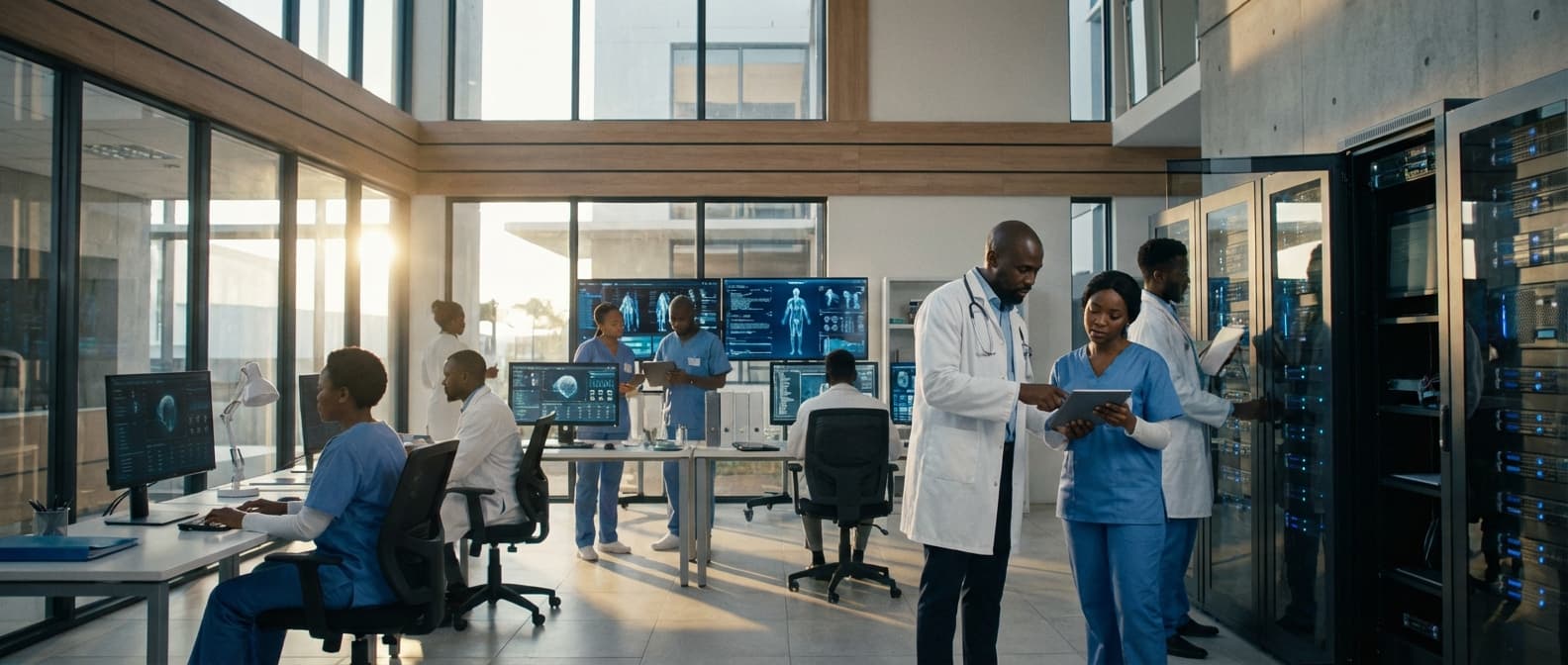
Tele-Radiology in Cabo Verde
Engineering Excellence & Technical Support
24/7 access to certified radiologists providing rapid, accurate remote interpretation of diagnostic imaging studies. High-standard technical execution following OEM protocols and local regulatory frameworks.
Bridging Geographical Divides
Leveraging advanced tele-radiology platforms, Cabo Verde overcomes the challenge of limited local radiology specialists by connecting remote islands and underserved areas to expert diagnostic services nationwide, ensuring timely and accurate interpretations for all patients.
Enhanced Diagnostic Accuracy
Utilizing high-resolution imaging and sophisticated PACS (Picture Archiving and Communication System) integration, tele-radiology empowers Cabo Verde's healthcare professionals with access to specialized second opinions and advanced AI-driven analysis tools, significantly improving diagnostic precision and patient outcomes.
Scalable Healthcare Access
Implementing tele-radiology infrastructure allows Cabo Verde to efficiently scale its diagnostic imaging capabilities without the need for extensive physical infrastructure expansion or immediate recruitment of on-site specialists, making advanced radiological care more accessible and sustainable.
What Is Tele-radiology In Cabo Verde?
Tele-radiology in Cabo Verde refers to the practice of transmitting radiological images (such as X-rays, CT scans, MRIs, and ultrasounds) from a healthcare facility in Cabo Verde to a radiologist located remotely, either within Cabo Verde or internationally, for interpretation and reporting. This service leverages telecommunications technology to overcome geographical barriers, improve access to specialized diagnostic imaging services, and enhance the quality of patient care in island nations with limited on-site radiologist availability. The process typically involves the acquisition of images at the originating site, their secure digital transmission, and subsequent interpretation and report generation by the remote radiologist. The report is then securely transmitted back to the referring physician for clinical decision-making.
This service is critically needed by healthcare providers and patients across the archipelago of Cabo Verde, particularly in smaller islands or more remote regions where access to specialized radiological expertise is scarce or non-existent. It is also beneficial for hospitals and clinics that may have imaging equipment but lack sufficient trained personnel to interpret the complex diagnostic data in a timely manner. Patients requiring advanced radiological diagnostics who would otherwise face lengthy and costly travel to specialized centers benefit immensely. Healthcare systems in Cabo Verde can also utilize tele-radiology to manage workflow efficiently, reduce turnaround times for critical diagnoses, and provide continuous coverage, especially during off-hours or when local specialists are unavailable.
Typical use cases for tele-radiology in Cabo Verde span a wide range of medical specialties. This includes emergency departments requiring rapid interpretation of trauma scans or acute conditions like stroke. It is vital for internal medicine and cardiology in the assessment of chest X-rays, cardiac CTs, and MRIs. Orthopedics relies on it for the interpretation of complex fractures and joint pathologies. Oncology benefits from its use in staging and monitoring treatment response. Neurology utilizes it for the diagnosis of brain tumors, hemorrhages, and degenerative diseases. Furthermore, in a setting with potential resource limitations, it can support general practitioners and district health centers by providing access to expert diagnostic opinions for routine and complex imaging studies, thereby improving the accuracy and efficiency of diagnosis and treatment planning across the nation.
| Need/Beneficiary | Reason for Need | Impact of Tele-radiology |
|---|---|---|
| Patients in remote islands/regions | Limited access to on-site radiological expertise and advanced imaging equipment. | Improved diagnostic accuracy and timely treatment initiation, reducing travel burden and costs. |
| District hospitals and health centers | Shortage of specialized radiologists for interpretation of imaging studies. | Access to expert diagnostic opinions, enhancing the scope of services offered and diagnostic confidence. |
| Emergency departments | Requirement for rapid interpretation of critical imaging findings (e.g., trauma, stroke, acute abdomen). | Reduced turnaround times for diagnosis, enabling prompt clinical intervention and improved patient outcomes. |
| Specialty medical departments (e.g., Cardiology, Neurology, Oncology) | Need for subspecialty radiological interpretation for complex cases. | Enhanced diagnostic precision, accurate staging, and optimized treatment planning for specific diseases. |
| Healthcare System Administrators | Challenges in maintaining 24/7 radiological coverage and managing workload fluctuations. | Efficient resource allocation, potential for cost savings, and improved operational efficiency. |
Key Components of Tele-radiology in Cabo Verde
- Digital Image Acquisition: Utilizing modern digital radiography equipment (DR, CR), CT scanners, MRI scanners, and ultrasound machines.
- Image Transmission: Secure and robust digital transmission of medical images and associated patient data via high-speed internet or dedicated secure networks.
- Remote Interpretation: Radiologists, licensed and credentialed, review transmitted images and provide diagnostic reports.
- Reporting and Communication: Secure delivery of interpreted reports back to the referring physician, often through a secure web portal or integrated EHR system.
- Quality Assurance: Protocols for image quality control, peer review, and performance monitoring of both local and remote sites.
Who Needs Tele-radiology In Cabo Verde?
Tele-radiology, the remote interpretation of medical images, offers a vital solution for healthcare providers in Cabo Verde. The islands face unique challenges including geographical remoteness, a scarcity of specialized radiologists, and limited access to advanced diagnostic equipment in certain areas. Tele-radiology bridges these gaps by connecting local healthcare facilities with a global network of expert radiologists, ensuring timely and accurate diagnoses for a wide range of medical conditions. This technology empowers local practitioners with immediate access to specialized readings, leading to improved patient care, reduced diagnostic delays, and better health outcomes across the archipelago.
| Customer Type | Key Needs Addressed by Tele-Radiology | Example Departments |
|---|---|---|
| Island Hospitals (e.g., Praia, Mindelo) | Access to sub-specialist interpretation (neuroradiology, musculoskeletal, etc.), 24/7 coverage for emergency scans, reduced turnaround times for complex cases. | Emergency, Neurology, Orthopedics, Oncology |
| Secondary Health Centers (e.g., on smaller islands) | Basic radiology interpretation for general X-rays and ultrasounds, support for local general practitioners and specialists, bridging the gap in local expertise. | General Medicine, Pediatrics, Obstetrics & Gynecology |
| Private Clinics/Diagnostic Centers | Expansion of service offerings to include specialized imaging interpretations, competitive advantage through advanced diagnostic capabilities, flexible staffing solutions. | All imaging-reliant departments, especially those seeking niche expertise. |
| Remote Health Posts | Remote interpretation of essential imaging (e.g., basic X-rays for fractures or chest infections), enabling basic diagnostic capabilities where no radiologist is present. | General Medicine |
| Public Health Programs | Scalable interpretation services for mass screening (e.g., tuberculosis screening via chest X-ray), consistent diagnostic quality across dispersed populations. | Radiology departments supporting public health initiatives |
Target Customers and Departments for Tele-Radiology in Cabo Verde
- {"title":"Primary Healthcare Facilities","description":"Hospitals and health centers on various islands that may lack in-house radiology specialists or have limited diagnostic imaging capabilities."}
- {"title":"Smaller Clinics and Health Posts","description":"Remote or less-resourced clinics that can benefit from remote interpretation of essential imaging modalities."}
- {"title":"Private Healthcare Providers","description":"Private hospitals and imaging centers seeking to expand their service offerings and access sub-specialty expertise without necessarily hiring full-time, highly specialized radiologists."}
- {"title":"Emergency Departments","description":"Departments requiring urgent interpretation of X-rays, CT scans, and other imaging for trauma, stroke, and other acute conditions, especially when local expertise is unavailable."}
- {"title":"Surgical Departments","description":"Surgeons requiring pre-operative and post-operative imaging assessments to guide procedures and monitor patient recovery."}
- {"title":"Internal Medicine and Cardiology Departments","description":"Departments relying on imaging for diagnosis and management of various conditions, including chest X-rays for pneumonia, CT scans for pulmonary embolism, and echocardiograms (though less common for remote interpretation, basic ultrasound review is possible)."}
- {"title":"Pediatric Departments","description":"Departments needing specialized pediatric radiology interpretations for various congenital and acquired conditions."}
- {"title":"Neurology Departments","description":"Departments requiring the interpretation of CT and MRI scans for stroke, brain tumors, and other neurological disorders."}
- {"title":"Oncology Departments","description":"Departments utilizing imaging for cancer staging, treatment planning, and monitoring treatment response."}
- {"title":"Public Health Initiatives","description":"Government-led health programs focused on screening and early detection of diseases, where widespread access to radiology interpretation is crucial."}
Tele-radiology Process In Cabo Verde
Tele-radiology in Cabo Verde facilitates access to specialized radiological interpretations by connecting local healthcare facilities with remote radiologists. This process leverages technology to overcome geographical barriers and staffing shortages. The workflow typically begins with an inquiry from a referring physician at a local clinic or hospital. This inquiry triggers the image acquisition process at the local site. Once images are acquired, they are securely transmitted to the tele-radiology platform. A radiologist, either within Cabo Verde or remotely located, then accesses these images for interpretation. The radiologist generates a report, which is then securely transmitted back to the referring physician. This report aids in diagnosis and treatment planning for the patient. The entire process emphasizes secure data transfer, efficient communication, and timely reporting to ensure optimal patient care.
| Stage | Description | Key Actors | Technology Involved | Output |
|---|---|---|---|---|
| Inquiry and Patient Data Collection | Referring physician identifies a need for radiological interpretation and gathers relevant patient information. | Referring Physician, Nursing Staff | Electronic Health Record (EHR) system, Hospital Information System (HIS) | Patient demographics, clinical history, reason for exam |
| Image Acquisition | Radiological images (X-ray, CT, MRI, Ultrasound) are captured at the local healthcare facility. | Radiographer, Technologist | Imaging equipment (X-ray machines, CT scanners, MRI scanners, Ultrasound machines), Picture Archiving and Communication System (PACS) workstation | Digital radiological images |
| Secure Image Transmission | Acquired images are securely uploaded and sent to the tele-radiology platform. | PACS Administrator, IT Support | Secure internet connection, VPN, DICOM (Digital Imaging and Communications in Medicine) protocol, encrypted transmission | Radiological images on the tele-radiology platform |
| Radiologist Assignment and Review | A radiologist is assigned to interpret the images and reviews them on their remote workstation. | Tele-radiologist, PACS/RIS (Radiology Information System) Administrator | Tele-radiology platform, specialized viewing software, high-resolution monitors | Radiological images analyzed |
| Report Generation | The radiologist dictates or types a comprehensive diagnostic report based on their findings. | Tele-radiologist | Speech recognition software (optional), reporting software | Draft radiological report |
| Secure Report Transmission | The finalized report is securely transmitted back to the referring physician's facility. | Tele-radiologist, PACS/RIS Administrator | Secure internet connection, encrypted transmission, EHR/HIS integration | Finalized radiological report |
| Clinical Integration and Patient Management | The referring physician receives the report and integrates it into the patient's overall care plan. | Referring Physician, Clinical Team | EHR/HIS system, communication tools | Informed diagnosis, treatment decisions, patient management |
Key Stages of the Tele-Radiology Workflow in Cabo Verde
- Inquiry and Patient Data Collection
- Image Acquisition
- Secure Image Transmission
- Radiologist Assignment and Review
- Report Generation
- Secure Report Transmission
- Clinical Integration and Patient Management
Tele-radiology Cost In Cabo Verde
Tele-radiology services in Cabo Verde are an emerging solution to address the limited availability of specialized radiologists, particularly in more remote areas. The cost of these services is influenced by several factors, making it difficult to provide a single, definitive price. These factors include the complexity of the imaging study, the type of radiology modality used (e.g., X-ray, CT scan, MRI), the turnaround time required for the report, the specific provider offering the service, and the geographical location within Cabo Verde where the service is being accessed. Currently, pricing is often negotiated on a per-case basis or through service agreements with healthcare facilities. It's important to note that while there might not be widely published price lists, the local currency, the Cabo Verdean Escudo (CVE), is used for all transactions. Estimates for basic X-ray interpretations can range from approximately 3,000 CVE to 7,000 CVE, while more complex studies like CT scans or MRI reports could range from 10,000 CVE to 25,000 CVE or higher, depending on the specific requirements.
| Service Type/Modality | Estimated Price Range (CVE) |
|---|---|
| X-ray Interpretation (Basic) | 3,000 - 7,000 |
| X-ray Interpretation (Complex) | 5,000 - 10,000 |
| CT Scan Interpretation | 10,000 - 25,000+ |
| MRI Interpretation | 15,000 - 30,000+ |
| Ultrasound Interpretation | 7,000 - 15,000 |
Key Factors Influencing Tele-Radiology Costs in Cabo Verde
- Complexity of the imaging study (e.g., simple fracture vs. complex tumor)
- Radiology modality used (e.g., X-ray, CT, MRI, Ultrasound)
- Required turnaround time for the radiologist's report (e.g., routine vs. STAT)
- Provider's pricing structure and overhead
- Geographical location within Cabo Verde of the requesting facility
- Volume of studies (potential for bulk discounts)
- Type of service (e.g., primary interpretation vs. second opinion)
Affordable Tele-radiology Options
Tele-radiology, the practice of interpreting medical images remotely, offers significant advantages in terms of accessibility, speed, and cost-effectiveness. For organizations seeking affordable tele-radiology solutions, understanding value bundles and implementing strategic cost-saving measures is crucial. Value bundles often combine multiple services, such as preliminary reads, final reads, subspecialty consultations, and quality assurance, into a single package at a negotiated price. This can streamline operations and provide predictable expenses. Cost-saving strategies involve leveraging technology efficiently, negotiating favorable contracts, exploring tiered service models, and optimizing workflow to reduce turnaround times and resource utilization.
| Value Bundle Component | Description | Potential Cost-Saving Benefit |
|---|---|---|
| Preliminary Reads | Initial interpretation of imaging studies, often for urgent cases, providing a quick assessment. | Reduces delays in patient care, potentially avoiding costly complications or longer hospital stays. |
| Final Reads | Comprehensive and definitive interpretation by a qualified radiologist, often used for official reporting and documentation. | Ensures accurate diagnosis and appropriate treatment planning, minimizing the risk of misdiagnosis and associated costs. |
| Subspecialty Consultations | Access to radiologists with specialized expertise in areas like neuroradiology, musculoskeletal radiology, or breast imaging. | Provides expert opinions for complex cases, leading to more precise diagnoses and targeted management, avoiding unnecessary or ineffective treatments. |
| Quality Assurance (QA) | Processes to review interpretations for accuracy and adherence to standards. | Minimizes errors, reducing potential malpractice claims and improving overall patient outcomes, which indirectly lowers healthcare costs. |
| Reporting Software/Platform | Integrated systems for generating, managing, and distributing radiology reports. | Streamlines reporting, reduces administrative overhead, and improves communication efficiency. |
| IT Support and Integration | Technical assistance for PACS integration, data security, and platform maintenance. | Ensures smooth operations and data integrity, preventing costly downtime or security breaches. |
Key Cost-Saving Strategies for Affordable Tele-Radiology
- Negotiate Comprehensive Value Bundles: Instead of purchasing individual services, seek packages that include a range of tele-radiology needs. This often leads to volume discounts and predictable budgeting.
- Leverage Technology for Efficiency: Invest in or utilize platforms that automate routine tasks, improve image transfer speeds, and facilitate seamless communication between referring physicians and radiologists.
- Explore Tiered Service Models: Some providers offer different levels of service (e.g., preliminary reads vs. final reads, routine vs. STAT interpretations) at varying price points. Choose the tier that best matches your clinical needs and budget.
- Optimize Workflow and Turnaround Times: Efficient workflows reduce the time radiologists spend on each case, allowing them to interpret more studies. This can be achieved through standardized protocols and clear communication channels.
- Consider Off-Peak Hour Pricing: If your imaging needs are not always time-sensitive, inquire about potential cost reductions for interpretations performed during off-peak hours.
- Long-Term Contracts and Commitment: Longer-term agreements with tele-radiology providers can often secure more favorable rates.
- Data Analytics and Performance Monitoring: Regularly review reports on turnaround times, accuracy, and radiologist productivity to identify areas for improvement and ensure you are getting the most value for your investment.
- Subspecialty Triage: Effectively triage studies to the appropriate subspecialist, avoiding unnecessary costs associated with over-utilization of highly specialized (and often more expensive) reads for routine cases.
Verified Providers In Cabo Verde
When seeking reliable healthcare in Cabo Verde, identifying verified providers is paramount. Franance Health stands out as a beacon of trust and quality, offering a comprehensive network of accredited medical professionals and facilities. Their stringent credentialing process ensures that every provider within their network meets the highest international standards for medical expertise, patient care, and ethical practice. This meticulous vetting is not merely a formality; it's a guarantee of safety, efficacy, and a superior healthcare experience for all patients. By choosing Franance Health, you are opting for a system designed with your well-being as its top priority, providing peace of mind through verified excellence.
| Credentialing Aspect | Franance Health Approach | Patient Benefit |
|---|---|---|
| Medical Expertise | Verification of licenses, certifications, and specialized training. | Access to doctors with proven skills and up-to-date knowledge. |
| Experience | Assessment of practice history and professional track record. | Consultation with seasoned medical professionals. |
| Patient Care Standards | Evaluation of adherence to ethical guidelines and patient-centered approaches. | Receiving compassionate, respectful, and effective treatment. |
| Facility Quality | Inspection and approval of medical facilities for hygiene, equipment, and safety. | Undergoing procedures in safe and well-equipped environments. |
| Continuous Monitoring | Ongoing review of provider performance and patient feedback. | Assurance of consistently high-quality healthcare delivery. |
Why Franance Health Credentials Represent the Best Choice in Cabo Verde:
- Rigorous Accreditation and Verification Processes
- Commitment to International Healthcare Standards
- Access to Highly Qualified and Experienced Medical Professionals
- Ensured Patient Safety and Quality of Care
- Comprehensive Network of Specialized Services
- Transparent and Ethical Medical Practices
- Enhanced Patient Trust and Confidence
Scope Of Work For Tele-radiology
This Scope of Work (SOW) outlines the requirements for the provision of tele-radiology services. It details the technical deliverables and standard specifications necessary to ensure efficient, high-quality, and secure remote radiological image interpretation and reporting.
| Specification Category | Parameter | Standard/Requirement | Notes/Details |
|---|---|---|---|
| Image Quality & Display | Image Resolution | DICOM Standard Compliance (e.g., 1024x1280, 2048x2560) | Resolution dependent on modality and clinical need. |
| Image Quality & Display | Grayscale Display | Minimum 2 MP (2048x1536) for diagnostic interpretation, 3 MP or higher preferred for CT/MRI | Support for luminance and contrast ratios as per DICOM GSDF. |
| Image Quality & Display | Color Display (if applicable) | High-resolution color monitors for specific applications (e.g., ultrasound, nuclear medicine) | Color calibration required. |
| Data Transmission & Security | Data Transmission Protocol | DICOM over secure protocols (e.g., HTTPS, SFTP, secure VPN) | Encryption of data in transit. |
| Data Transmission & Security | Data Encryption | AES-256 bit encryption for data at rest and in transit | Compliance with HIPAA/GDPR or equivalent data privacy regulations. |
| Data Transmission & Security | User Authentication | Multi-factor authentication (MFA) for all user access | Role-based access control (RBAC). |
| Data Transmission & Security | Network Bandwidth | Sufficient bandwidth to support real-time image streaming and reporting without significant latency | Minimum 10 Mbps upload/download per concurrent user recommended, subject to testing. |
| System Performance | Image Load Time | Images should load within 5-10 seconds on average | Performance metrics to be defined and monitored. |
| System Performance | Report Generation Time | Standard reports generated within minutes of study completion | Workflow efficiency to be optimized. |
| System Performance | Uptime Guarantee | 99.9% uptime for critical services (PACS viewer, reporting) | Service Level Agreement (SLA) to be established. |
| Interoperability | HIS/EHR Integration | HL7 standards for patient demographics, orders, and results | Bi-directional communication preferred. |
| Interoperability | PACS Integration | DICOM conformance for image retrieval and storage | Compatibility with existing hospital PACS. |
| Reporting & Workflow | Report Template Customization | Ability to customize report templates based on modality and specialty | Integration with existing institutional templates. |
| Reporting & Workflow | Voice Recognition | Integration with or provision of a high-accuracy speech recognition engine | Support for medical terminology. |
| Reporting & Workflow | Radiologist Worklist Management | Intelligent worklist prioritization and assignment based on urgency and subspecialty | Configurable rules and algorithms. |
| Support & Maintenance | Technical Support Availability | 24/7 technical support for critical issues, 8x5 for routine inquiries | Defined response and resolution times. |
| Support & Maintenance | Software Updates & Patches | Regular provision of software updates and security patches with minimal downtime | Testing procedures for updates to be provided. |
| Support & Maintenance | Training | Comprehensive training for radiologists and IT staff on system usage and administration | On-site and remote training options. |
Technical Deliverables
- Remote PACS (Picture Archiving and Communication System) Access and Viewer Software
- Secure VPN (Virtual Private Network) Connection for Data Transmission
- Real-time or Near Real-time Image and Report Transmission Capabilities
- Integration with Existing Hospital Information System (HIS) / Electronic Health Record (EHR)
- Radiologist Workstation Hardware and Software (if provided by the vendor)
- Reporting Software with Dictation/Speech Recognition Capabilities
- Audit Trail and Logging Mechanisms for all Access and Actions
- Data Backup and Disaster Recovery Plan
- System Performance Monitoring and Reporting Tools
- Secure Communication Channels for Queries and Consultations
Service Level Agreement For Tele-radiology
This Service Level Agreement (SLA) outlines the performance standards and guarantees for the Tele-Radiology services provided by [Provider Name] (hereinafter referred to as "Provider") to [Client Name] (hereinafter referred to as "Client"). This agreement aims to ensure high availability, efficient turnaround times, and reliable reporting for diagnostic imaging interpretation. The Provider commits to the following response times and uptime guarantees.
| Service Component | Target Response Time / Uptime Guarantee | Definition / Scope | Measurement Method |
|---|---|---|---|
| Platform Uptime | 99.9% | The percentage of time the Tele-Radiology platform (including PACS access, reporting interface, and communication channels) is accessible and functional for scheduled operations. | Monitored by Provider's internal systems and independently verifiable via external monitoring tools. |
| Critical Exam Reporting (e.g., Stroke, PE, Trauma) | Within 30 minutes of image availability to the reading radiologist | Final, signed report for imaging studies requiring immediate interpretation and intervention. | Time-stamped timestamps of image availability and report finalization, tracked within the reporting system. |
| Urgent Exam Reporting (e.g., acute findings) | Within 4 hours of image availability to the reading radiologist | Final, signed report for imaging studies with potentially significant findings requiring prompt attention. | Time-stamped timestamps of image availability and report finalization, tracked within the reporting system. |
| Routine Exam Reporting | Within 24 hours of image availability to the reading radiologist | Final, signed report for standard imaging studies. | Time-stamped timestamps of image availability and report finalization, tracked within the reporting system. |
| Image Transmission Success Rate | = 99% | Percentage of imaging studies successfully transmitted from Client's modality/PACS to Provider's system. | Tracked via HL7 acknowledgement messages and DICOM error logs. |
| Emergency Support Availability | 24x7x365 | Availability of technical and clinical support for urgent issues impacting service delivery. | Measured by the ability to connect with support personnel as per agreed contact procedures. |
Key Performance Indicators (KPIs)
- Availability: The Provider guarantees a minimum uptime for the Tele-Radiology platform and associated services.
- Report Turnaround Time: The Provider commits to delivering final diagnostic reports within specified timeframes, categorized by urgency.
- Image Transmission Success Rate: The Provider will strive for a high success rate in the transmission of imaging studies from the Client's facility to the Provider's PACS/reading platform.
- Report Quality: Reports will be accurate, comprehensive, and adhere to established medical standards and the Client's specific protocols.
Frequently Asked Questions

Ready when you are
Let's scope your Tele-Radiology in Cabo Verde project in Cabo Verde.

Scaling healthcare logistics and technical systems across the entire continent.