
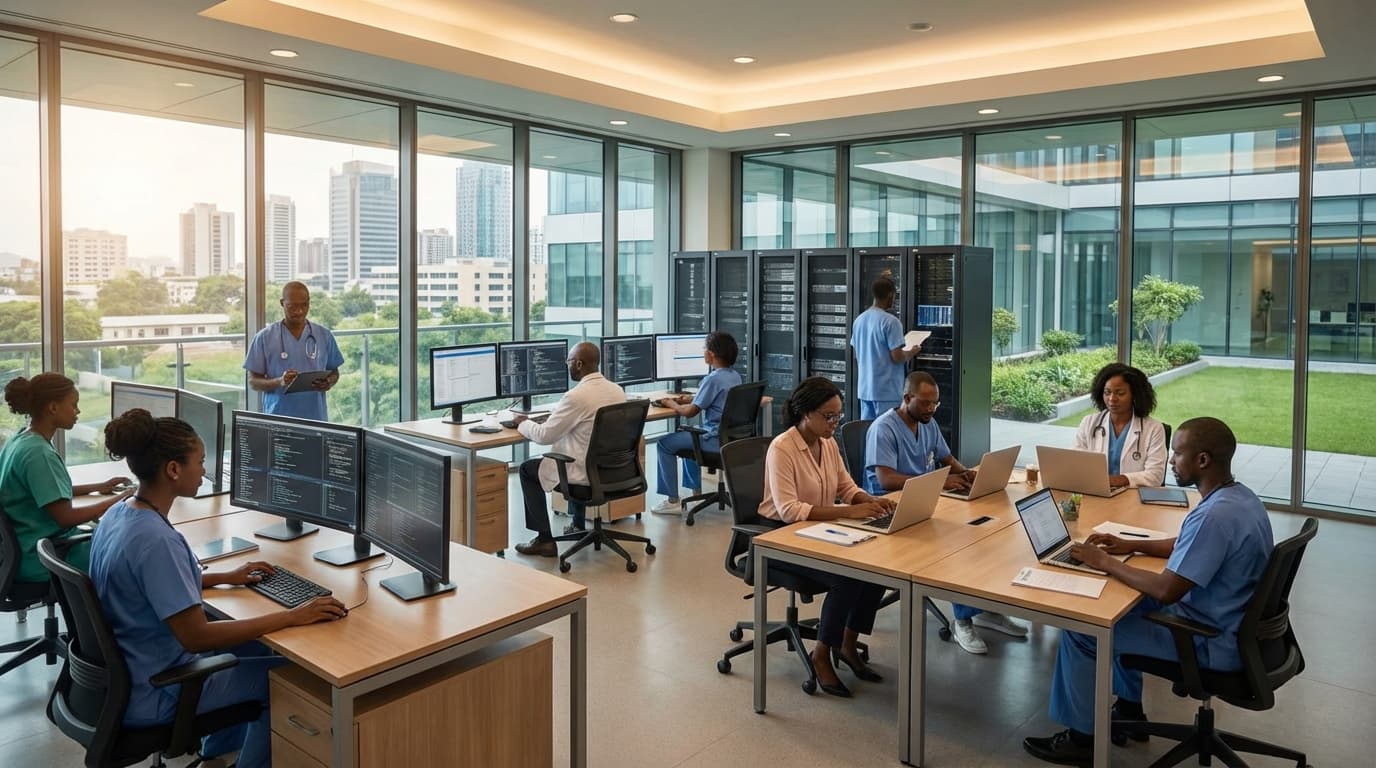
Radiology Reader & Reporting Support in Cabo Verde
Engineering Excellence & Technical Support
Remote radiology reading and reporting services High-standard technical execution following OEM protocols and local regulatory frameworks.
Secure Cloud-Based Image Upload
Enables seamless and secure upload of radiology images from any participating clinic in Cabo Verde to a centralized, cloud-hosted PACS. Ensures rapid access for remote radiologists and reduces reliance on local infrastructure.
Streamlined Radiologist Collaboration Platform
A dedicated online portal allowing radiologists to review, annotate, and collaborate on complex cases in real-time, regardless of their geographical location within Cabo Verde or internationally. Fosters shared expertise and improved diagnostic accuracy.
Automated Reporting & Template Generation
Intelligent software that assists radiologists by auto-populating report templates with patient data, image findings (where possible), and standardized terminology. Significantly reduces reporting time and ensures consistency across all radiology reports in Cabo Verde.
What Is Radiology Reader & Reporting Support In Cabo Verde?
Radiology Reader & Reporting Support in Cabo Verde refers to the provision of specialized services that augment the diagnostic capabilities of healthcare facilities by offering expert interpretation of medical imaging studies and the generation of comprehensive, clinically relevant reports. This service leverages remote access to imaging data and the expertise of board-certified radiologists to address potential shortages of local radiology specialists, enhance turnaround times for diagnoses, and improve the overall quality of radiological services. It can encompass a spectrum of support, from primary interpretation to second opinions and quality assurance.
| Who Needs It | Typical Use Cases |
|---|---|
| Hospitals and Clinics in Cabo Verde: Facilities with limited in-house radiology staffing or lacking subspecialty expertise. | Emergency Department (ED) Overload: Rapid interpretation of critical scans (e.g., stroke, trauma) during periods of high patient volume. Absence of Local Specialists: Coverage for specialized imaging studies (e.g., advanced MRI sequences, interventional radiology procedures) when local expertise is unavailable. Rural or Remote Healthcare Centers: Providing advanced diagnostic imaging capabilities to underserved areas. Second Opinion Services: Offering independent, expert review of challenging or equivocal cases to confirm diagnoses or provide alternative interpretations. Screening Programs: Supporting large-scale screening initiatives (e.g., mammography) with efficient interpretation workflows. Post-Operative Monitoring: Routine follow-up imaging interpretation for patients recovering from surgical interventions. Telemedicine Integration: Enabling comprehensive diagnostic imaging support within broader telemedicine frameworks. |
| Private Diagnostic Centers: Facilities aiming to expand their service offerings and improve diagnostic efficiency. | Workload Management: Offloading routine or high-volume interpretations to manage internal radiologist workload and prevent burnout. 24/7 Coverage: Ensuring continuous radiological interpretation services, particularly for critical care settings. Cost-Effectiveness: Potentially reducing the overhead associated with employing a full range of subspecialty radiologists. Training and Education: Facilitating learning opportunities for local medical professionals through case discussions and report reviews. |
| Public Health Initiatives: Government-sponsored health programs requiring widespread diagnostic imaging capabilities. | ... |
What Radiology Reader & Reporting Support Involves
- Image Interpretation: Remote analysis of various imaging modalities (X-ray, CT, MRI, Ultrasound, Mammography, Nuclear Medicine) by qualified radiologists.
- Report Generation: Creation of detailed, structured, and actionable diagnostic reports that include findings, impressions, and recommendations for further management.
- Subspecialty Expertise: Access to radiologists with specialized training in areas like neuroradiology, musculoskeletal radiology, abdominal imaging, breast imaging, and pediatric radiology.
- Teleradiology Integration: Utilization of secure Picture Archiving and Communication Systems (PACS) and teleradiology platforms for seamless image transmission and interpretation.
- Turnaround Time Optimization: Expedited interpretation of urgent cases to facilitate timely clinical decision-making.
- Quality Assurance: Peer review and quality control measures to ensure diagnostic accuracy and adherence to established protocols.
- Consultation Services: Direct communication channels with referring physicians for clarification and discussion of complex cases.
Who Needs Radiology Reader & Reporting Support In Cabo Verde?
In Cabo Verde, the demand for radiology reader and reporting support is emerging as healthcare infrastructure evolves. This service is crucial for improving diagnostic accuracy, reducing turnaround times for reports, and alleviating the workload on local radiologists. The target customers are primarily healthcare facilities that aim to enhance their radiology services, particularly those facing shortages of subspecialized radiologists or looking to augment their existing capabilities. The support can be provided remotely, bridging geographical gaps and ensuring access to expert interpretation regardless of location.
| Customer Type | Relevant Departments | Specific Needs/Benefits |
|---|---|---|
| Hospitals (Public & Private) | Radiology Department Emergency Department Oncology Department Cardiology Department Neurology Department Orthopedics Department Pediatrics Department | Primary imaging interpretation, subspecialty reads (e.g., neuroimaging, oncologic imaging, cardiac imaging), second opinions, report generation, support for high patient volumes, after-hours coverage, training for local staff. |
| Private Clinics & Diagnostic Imaging Centers | Radiology Department General Practice Specialty Clinics (e.g., Cardiology, Orthopedics) | Routine interpretation of X-rays, ultrasounds, CT scans, and MRIs; specialized reads for specific modalities; faster report turnaround times to improve patient management and satisfaction; competitive advantage through enhanced service offerings. |
| Public Health Initiatives & Outreach Programs | Mobile Clinics Rural Health Centers Community Health Programs | Providing basic diagnostic imaging interpretation in underserved areas; supporting screening programs (e.g., mammography, tuberculosis screening); enabling remote access to diagnostic expertise for a wider population. |
| Medical Schools & Training Institutions | Radiology Residency Programs Medical Education Departments | Providing expert case reviews for training purposes; offering diverse case material for learning; supporting faculty in resident education and quality assurance of interpretations. |
Target Customers & Departments for Radiology Reader & Reporting Support in Cabo Verde
- Hospitals
- Private Clinics
- Diagnostic Imaging Centers
- Public Health Initiatives
- Medical Schools/Training Institutions
Radiology Reader & Reporting Support Process In Cabo Verde
The Radiology Reader & Reporting Support Process in Cabo Verde outlines the steps involved in receiving and processing requests for radiological image interpretation and report generation. This process ensures accurate and timely delivery of diagnostic information to referring physicians, ultimately benefiting patient care. The workflow begins with an initial inquiry, followed by image acquisition, transfer, review by a radiologist, report generation, and final delivery.
| Stage | Description | Key Personnel/Tools | Key Outputs | Potential Challenges |
|---|---|---|---|---|
| Inquiry & Request Submission | A referring physician or healthcare provider initiates a request for a radiological examination and reporting. This typically involves providing patient demographics, clinical history, and the specific examination required. | Referring Physician, Hospital Information System (HIS), Electronic Health Record (EHR) | Completed Request Form/Order | Incomplete or ambiguous request information, lack of standardized order forms. |
| Image Acquisition & Archiving | The patient undergoes the specified radiological examination (e.g., X-ray, CT, MRI). The resulting images are acquired and stored digitally. | Radiology Technologist, Imaging Modalities (X-ray machine, CT scanner, MRI scanner), Picture Archiving and Communication System (PACS) | Raw Radiological Images, Archived Images in PACS | Technical issues with imaging equipment, inadequate image quality, PACS connectivity problems. |
| Image Transfer & Access | Archived images are made accessible to the assigned radiologist for interpretation. This often involves accessing the PACS remotely or within the institution. | PACS Administrator, PACS Workstation, Secure Network Connection | Accessible Digital Images | Network bandwidth limitations, unauthorized access, PACS server downtime. |
| Radiological Interpretation (Reading) | A qualified radiologist reviews the acquired images, identifies abnormalities, and forms a diagnostic opinion based on their expertise and the clinical information provided. | Radiologist, PACS Workstation with Viewing Software, Medical Imaging Database | Radiological Findings, Diagnostic Impression | Overload of cases, fatigue, subtle findings, lack of advanced imaging expertise for rare cases. |
| Report Generation | The radiologist dictates or types a comprehensive report detailing the findings, interpretation, and recommendations. This is often done using speech recognition software or structured reporting templates. | Radiologist, Speech Recognition Software, Structured Reporting Templates, HIS/EHR | Draft Radiological Report | Transcription errors, inconsistent reporting styles, time constraints for report dictation. |
| Report Review & Verification | In some settings, a senior radiologist or a peer may review the draft report for accuracy, completeness, and consistency before it is finalized. | Senior Radiologist, Peer Radiologist, Quality Assurance Protocols | Finalized Radiological Report | Subjectivity in interpretation, delayed review process, reliance on single point of review. |
| Report Delivery & Communication | The finalized report is transmitted to the referring physician and integrated into the patient's medical record. This can be done electronically or via secure facsimile. | HIS/EHR System, Secure Communication Channels (fax, email, secure portal) | Final Report in Patient's Record, Communication to Referring Physician | Delayed delivery, miscommunication of critical findings, integration issues with HIS/EHR. |
| Feedback & Quality Assurance | Mechanisms are in place to collect feedback from referring physicians and to conduct regular quality assurance checks on both image interpretation and report quality. | Referring Physicians, Quality Assurance Department, Auditing Tools | Improved Processes, Identification of Training Needs | Lack of systematic feedback collection, resistance to quality improvement initiatives, data privacy concerns. |
Key Stages in the Radiology Reader & Reporting Support Process
- Inquiry & Request Submission
- Image Acquisition & Archiving
- Image Transfer & Access
- Radiological Interpretation (Reading)
- Report Generation
- Report Review & Verification
- Report Delivery & Communication
- Feedback & Quality Assurance
Radiology Reader & Reporting Support Cost In Cabo Verde
Radiology reading and reporting support in Cabo Verde is a specialized medical service, and its cost is influenced by several key factors. These factors determine the overall price range for both local and potentially remote interpretation services. It's important to note that precise, publicly available price lists for these specific services are uncommon in Cabo Verde, making a generalized estimation necessary based on common cost drivers in the healthcare sector.
| Service Type | Estimated Price Range (CVE) | Notes |
|---|---|---|
| Basic X-ray Interpretation | 2,000 - 5,000 | Per study, for common exams. May be lower with high volume. |
| Ultrasound Interpretation | 3,000 - 7,000 | Per study, varies with complexity (e.g., abdominal vs. obstetric). |
| CT Scan Interpretation | 5,000 - 15,000 | Per study. More complex scans (e.g., head, chest, abdomen) will be at the higher end. |
| MRI Scan Interpretation | 8,000 - 25,000+ | Per study. Generally the most expensive due to technology and time. Can exceed 25,000 CVE for complex studies. |
| Routine Reporting (per study) | 3,000 - 10,000 | This is a general range for the reporting itself, assuming interpretation has occurred. Specialist reports will be higher. |
| Urgent/STAT Reporting (per study) | 5,000 - 15,000+ | Premium charged for immediate turnaround. |
| Subscription/Contractual Services | Negotiable (per month/year) | Typically for ongoing partnerships with hospitals/clinics, offering predictable costs based on volume. |
Factors Influencing Radiology Reader & Reporting Support Costs in Cabo Verde:
- Type of Imaging Modality: The complexity and technology involved in different imaging techniques (e.g., X-ray, Ultrasound, CT scan, MRI) directly impact interpretation costs. More advanced modalities generally command higher fees.
- Radiologist's Expertise and Specialization: Highly specialized radiologists (e.g., neuroradiologists, interventional radiologists) or those with extensive experience will typically charge more for their services.
- Turnaround Time: Urgent or STAT readings are usually more expensive than routine reports due to the immediate prioritization required.
- Volume and Contractual Agreements: Hospitals or clinics with high volumes of imaging studies might negotiate bulk discounts or long-term service contracts, leading to lower per-study costs.
- Location of Service Provider: While specific data for Cabo Verde is scarce, costs can vary slightly between different islands or major urban centers within the country, though major differences are less likely than in larger nations.
- Technology and Infrastructure: The cost of maintaining advanced PACS (Picture Archiving and Communication System) and reporting software, as well as reliable internet connectivity for remote reporting, can be factored into the pricing.
- Remote vs. On-site Interpretation: The model of service delivery (e.g., local radiologists on-site, or remote reading services from abroad) will have different cost structures, considering travel, accommodation (if applicable), and international service fees.
- Administrative and Overhead Costs: The operational expenses of the radiology practice or service provider, including staff salaries, rent, utilities, and insurance, are embedded in the pricing.
- Currency Fluctuations and Inflation: As with any service, prevailing economic conditions, inflation rates, and potential currency exchange rate fluctuations can influence the cost of imported equipment and supplies, indirectly affecting service pricing.
Affordable Radiology Reader & Reporting Support Options
Radiology practices and healthcare organizations are increasingly seeking cost-effective solutions for radiology reading and reporting. This pursuit of affordability is driven by pressure to reduce operational expenses, improve efficiency, and maintain high-quality patient care. Fortunately, a range of options exists, from leveraging technology to strategically outsourcing. Value bundles and smart cost-saving strategies can significantly optimize radiology service delivery without compromising diagnostic accuracy or turnaround times.
| Cost-Saving Strategy | Description | Key Benefit |
|---|---|---|
| Negotiate Teleradiology Contracts | Carefully review pricing structures, minimum volumes, and service level agreements. Explore per-study vs. dedicated radiologist models based on your needs. | Optimized per-unit cost for radiology reads. |
| Leverage AI for Prioritization & Workflow | Implement AI tools that flag critical findings for immediate review and auto-route studies. This reduces radiologist 'search time' and improves throughput. | Increased radiologist efficiency and faster turnaround for urgent cases. |
| Utilize Structured Reporting & Templates | Standardize reporting using templates that ensure all necessary information is captured efficiently, reducing dictation and transcription time. Integrate with EMRs for seamless data flow. | Reduced reporting time per study and improved data consistency. |
| Optimize Off-Hours & Subspecialty Coverage | Use teleradiology for predictable off-hours needs (nights, weekends) and for specific subspecialties that are difficult or expensive to staff in-house. | Reduced overhead for specialized or after-hours staffing. |
| Bundle Services for Volume Discounts | When negotiating with teleradiology or AI vendors, explore bundled packages that offer discounts for higher volumes or a combination of services (e.g., reading + reporting assistance). | Lower overall cost through volume commitments and package deals. |
| Implement Peer Review & Quality Assurance | While not a direct cost reduction, robust peer review can identify errors early, preventing costly misdiagnoses or repeat imaging. Efficient QA processes also save time. | Reduced risk of costly errors and improved diagnostic accuracy. |
| Consider Cloud-Based Solutions | Many teleradiology and AI platforms are cloud-based, reducing the need for on-site IT infrastructure and maintenance costs. | Lower IT infrastructure and maintenance expenses. |
Affordable Radiology Reader & Reporting Support Options
- {"title":"Teleradiology Services","description":"Outsourcing reads to remote radiologists. Can be highly cost-effective, especially for off-hours, subspecialty reads, or to manage fluctuating workloads. Pricing models vary (per study, per hour, dedicated radiologist)."}
- {"title":"AI-Powered Decision Support Tools","description":"Artificial intelligence algorithms that assist radiologists by highlighting potential abnormalities, prioritizing urgent cases, and standardizing reporting. Reduces radiologist fatigue and improves efficiency, indirectly lowering costs."}
- {"title":"Reporting Software & Templates","description":"Utilizing advanced reporting platforms that offer structured templates, voice recognition, and auto-population of common findings. Streamlines the reporting process, saving significant radiologist time."}
- {"title":"Hybrid Models","description":"Combining in-house reads with outsourced teleradiology. Allows for flexibility and cost optimization by using external resources for specific needs (e.g., overnight reads, subspecialty coverage)."}
- {"title":"Managed Services Agreements","description":"Outsourcing the entire reading and reporting function to a third-party provider. Offers predictable costs and can be more efficient than managing in-house resources for smaller practices."}
- {"title":"In-house Efficiency Improvements","description":"Optimizing workflows, implementing best practices, and investing in training for existing staff to maximize productivity and reduce errors."}
Verified Providers In Cabo Verde
Navigating healthcare services abroad can be a complex undertaking. Ensuring you are connected with verified providers is paramount for peace of mind and effective treatment. In Cabo Verde, discerning patients seek out reliable healthcare partners. Franance Health stands out as a leader in this regard, offering a meticulously curated network of healthcare professionals and facilities that have undergone rigorous credential verification. This commitment to quality assurance means that when you choose Franance Health, you are not just accessing healthcare; you are accessing healthcare you can trust, backed by unparalleled professionalism and expertise. Their dedication to patient welfare and transparent practices makes them the definitive choice for your health needs in Cabo Verde.
| Provider Type | Key Verification Criteria | Franance Health Assurance |
|---|---|---|
| Hospitals & Clinics | Accreditation, Infection Control Protocols, Equipment Standards, Staff Qualifications | Verified for adherence to international quality benchmarks and patient safety standards. |
| Specialist Physicians | Medical License, Board Certification, Clinical Experience, Specialization Credentials | Confirmed as licensed, board-certified, and experienced in their respective fields. |
| General Practitioners | Medical License, General Practice Certification, Continuous Professional Development | Ensured to be licensed and committed to ongoing medical education. |
| Diagnostic Laboratories | Accreditation, Quality Control Measures, Equipment Calibration, Staff Expertise | Certified for accuracy, reliability, and the use of advanced diagnostic technology. |
| Ancillary Medical Services (e.g., Pharmacy, Physiotherapy) | Licensing, Professional Qualifications, Service Standards | Vetted for compliance with regulatory requirements and quality of service delivery. |
Why Franance Health is the Premier Choice for Verified Providers in Cabo Verde:
- Rigorous Credentialing Process: Franance Health employs a multi-stage verification protocol for all its partner providers, ensuring they meet the highest international standards of medical practice, licensing, and ethical conduct.
- Expert Network: Access a comprehensive network of specialists and general practitioners across various medical disciplines, all vetted for their expertise and experience.
- Patient-Centric Approach: Franance Health prioritizes your well-being, ensuring that all listed providers are committed to delivering compassionate, personalized, and effective care.
- Transparency and Trust: We believe in open communication. Our verified provider list provides you with the confidence that you are engaging with qualified and reputable healthcare professionals.
- Seamless Healthcare Experience: From initial consultation to treatment and follow-up, Franance Health facilitates a smooth and stress-free healthcare journey in Cabo Verde.
Scope Of Work For Radiology Reader & Reporting Support
This Scope of Work (SOW) outlines the requirements for Radiology Reader & Reporting Support services. This includes the provision of qualified radiologists to interpret medical images and generate accurate, timely, and comprehensive reports, as well as the establishment of standard specifications for technical deliverables. The primary objective is to ensure high-quality diagnostic imaging services are delivered efficiently and effectively.
| Technical Deliverable | Description | Standard Specifications / Requirements | Deliverable Format | Turnaround Time (TAT) |
|---|---|---|---|---|
| Radiology Interpretation | Review and analysis of medical images (e.g., X-ray, CT, MRI, Ultrasound, Mammography, Nuclear Medicine) to identify abnormalities and provide a diagnostic opinion. | Performed by board-certified or eligible radiologists with relevant subspecialty expertise. Interpretation must be based on established radiological principles and current best practices. | Digital image review via secure PACS interface. | Standard cases: Within 8 business hours (from image acquisition/arrival). STAT cases: Within 1 business hour. |
| Radiology Report | A written document detailing the findings, impressions, and recommendations based on the image interpretation. | Reports must be accurate, clear, concise, and clinically relevant. Include pertinent patient history, technique used, findings, impression, and recommendations for further management or follow-up. Must comply with ACR, RANZCR, or equivalent professional guidelines. | Electronic report via secure RIS/dictation system. Signed and dated by the interpreting radiologist. | Concurrent with interpretation. Final report available within 24 hours of image completion for standard cases. |
| Quality Assurance (QA) Review | Internal review of a sample of reports for accuracy, completeness, and adherence to standards. | A defined percentage of reports (e.g., 5-10%) to be reviewed by a senior radiologist or QA committee on a regular basis. Feedback mechanism for improvement. | Internal QA documentation and metrics. | Ongoing, with monthly QA reports. |
| Communication of Critical Findings | Immediate notification to the referring physician regarding critical or urgent findings that require prompt clinical attention. | Established protocols for identifying and communicating critical findings (e.g., intracranial hemorrhage, pulmonary embolism, pneumothorax). Documentation of communication. | Verbal notification documented in the report or RIS. Electronic notification where available. | Immediate upon identification of critical finding. |
| Consultation Services | Providing expert advice to referring physicians on imaging protocols, technique selection, and interpretation of complex cases. | Availability of radiologists for direct consultation via phone or secure messaging. Documentation of consultations. | Verbal or secure electronic communication. | As requested, with response within 2 business hours for non-urgent queries. |
| Data Security & Confidentiality | Ensuring the protection of all patient health information (PHI) in compliance with HIPAA, GDPR, or equivalent regulations. | Secure data transmission, storage, and access protocols. Strict adherence to privacy policies and procedures. Background checks for personnel. | Adherence to established security protocols and audit trails. | Continuous. |
| Reporting Software/Platform Integration | Seamless integration with the healthcare provider's existing Radiology Information System (RIS) and Picture Archiving and Communication System (PACS). | Compatibility with standard HL7, DICOM, and FHIR protocols. Ability to upload reports and data in required formats. | Digital data exchange via secure network connections. | As per integration testing schedule. |
Key Objectives
- Provide expert radiology interpretation of various imaging modalities.
- Generate clear, concise, and clinically relevant radiology reports.
- Ensure adherence to all relevant medical and regulatory standards.
- Maintain high levels of turnaround time for report delivery.
- Collaborate effectively with referring physicians and healthcare teams.
- Maintain confidentiality and security of patient data.
Service Level Agreement For Radiology Reader & Reporting Support
This Service Level Agreement (SLA) outlines the performance standards for Radiology Reader & Reporting Support services. It defines guaranteed response times for support requests and uptime for the reporting platform, ensuring consistent and reliable service delivery.
| Issue Priority | Response Time Target | Resolution Time Target | Impact |
|---|---|---|---|
| Critical | Immediate (within 15 minutes) | 1 Hour | Complete system outage, inability to read or report. |
| High | 4 Business Hours | 8 Business Hours | Significant disruption to reading or reporting workflows, affecting multiple users or a critical function. |
| Medium | 8 Business Hours | 24 Business Hours | Minor disruption to workflows, affecting a single user or a non-critical function. |
| Low | 24 Business Hours | 3 Business Days | General inquiries, feature requests, or minor cosmetic issues with no immediate impact on workflow. |
Key Performance Indicators (KPIs)
- Critical Issues: Immediate response, resolution within 1 hour.
- High Priority Issues: Response within 4 business hours, resolution within 8 business hours.
- Medium Priority Issues: Response within 8 business hours, resolution within 24 business hours.
- Low Priority Issues: Response within 24 business hours, resolution within 3 business days.
- Uptime Guarantee: 99.9% availability for the reporting platform, excluding scheduled maintenance.
- Scheduled Maintenance: Notification provided at least 48 hours in advance.
Frequently Asked Questions

Ready when you are
Let's scope your Radiology Reader & Reporting Support in Cabo Verde project in Cabo Verde.

Scaling healthcare logistics and technical systems across the entire continent.