
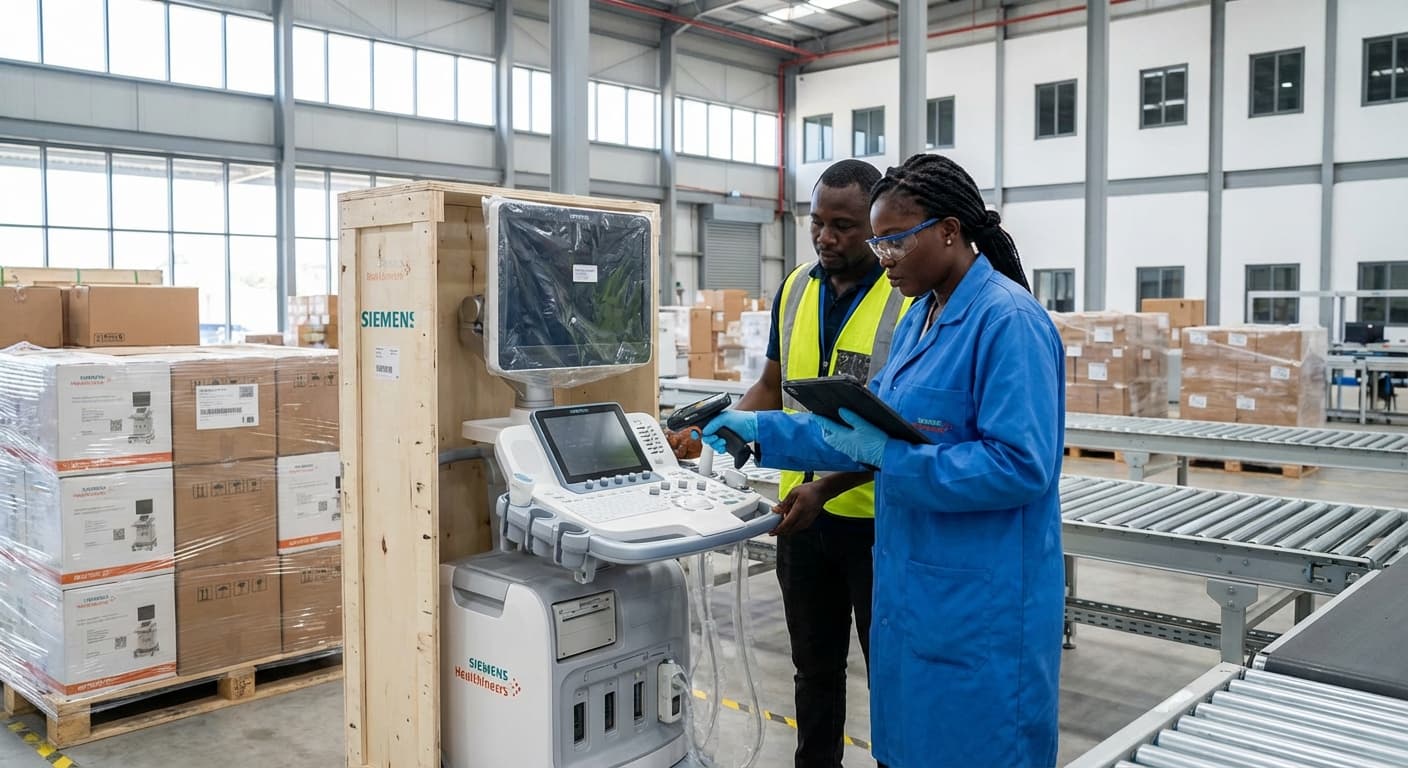
Warehouse Receiving Inspection Service (Medical Equipment) in Cabo Verde
Engineering Excellence & Technical Support
Warehouse Receiving Inspection Service (Medical Equipment) High-standard technical execution following OEM protocols and local regulatory frameworks.
Rigorous Quality Assurance Protocols
Our specialized team employs ISO 13485 compliant inspection protocols, ensuring every incoming medical equipment shipment adheres to stringent global quality and safety standards. We meticulously verify documentation, certifications, and physical integrity to guarantee compliance before goods enter your inventory.
Advanced Visual and Functional Testing
Leveraging state-of-the-art diagnostic tools and trained visual inspectors, we conduct comprehensive checks for physical defects, cosmetic damage, and proper functionality. Our process includes performance verification where applicable, identifying potential issues before they impact patient care or operational workflow.
Real-time Inventory Verification and Traceability
We provide immediate, accurate reconciliation of received goods against purchase orders and packing lists, utilizing robust digital tracking systems. This ensures precise inventory management and full traceability from the point of arrival, minimizing discrepancies and optimizing supply chain efficiency for critical medical equipment in Cabo Verde.
What Is Warehouse Receiving Inspection Service (Medical Equipment) In Cabo Verde?
Warehouse Receiving Inspection Service (Medical Equipment) in Cabo Verde is a specialized quality control and verification process conducted upon the arrival of medical equipment into designated warehousing facilities within the territory of Cabo Verde. This service ensures that received medical equipment conforms to specified contractual requirements, regulatory standards, and operational readiness criteria before being accepted into inventory and subsequently deployed for healthcare provision. The primary objective is to mitigate risks associated with substandard, damaged, non-compliant, or incorrect equipment entering the healthcare supply chain, thereby safeguarding patient safety, operational efficiency, and financial investments.
| Who Needs This Service? | Typical Use Cases | |||||||
|---|---|---|---|---|---|---|---|---|
| Healthcare Institutions (Public and Private Hospitals, Clinics, Diagnostic Centers) procuring medical equipment from international or domestic suppliers. | Importation of capital medical equipment (e.g., MRI scanners, X-ray machines, ventilators) requiring rigorous vetting. | Regular replenishment of consumables and disposables with stringent quality requirements (e.g., sterile surgical supplies, diagnostic reagents). | Procurement of specialized medical devices and instruments for new service lines or upgrades. | Government ministries and agencies responsible for national healthcare infrastructure and medical supply chain management. | Third-party logistics providers (3PLs) managing medical equipment warehousing on behalf of healthcare entities. | Medical equipment distributors and agents operating within Cabo Verde, receiving shipments for onward distribution. | Situations involving the receipt of donated medical equipment to ensure quality and suitability. | Procurement of medical equipment under international aid or development projects. |
Key Components of Warehouse Receiving Inspection Service (Medical Equipment):
- Documentation Verification: Cross-referencing received items against purchase orders, invoices, packing lists, certificates of origin, and conformity certificates. This includes verifying batch numbers, serial numbers, expiry dates, and manufacturing details.
- Physical Inspection: Assessing the condition of the equipment, including packaging integrity, absence of visible damage (dents, scratches, cracks), and cleanliness. For sensitive equipment, environmental conditions during transit may also be reviewed.
- Identification and Count Accuracy: Verifying that the correct equipment has been received in the agreed-upon quantities, matching specifications against received items.
- Compliance Checks: Ensuring that the equipment meets relevant Cabo Verdean regulatory requirements, such as those stipulated by the Ministry of Health and other authorized bodies, including product registration, labeling, and safety standards.
- Functional Preliminary Checks (where applicable): For certain equipment, basic operational checks may be performed to confirm initial functionality without compromising sterility or requiring extensive setup. This might involve powering on devices or verifying basic mechanical movements.
- Labeling and Marking Verification: Confirming that all labeling, including identification, warnings, instructions for use, and regulatory markings, is present, legible, and accurate.
- Storage Suitability Assessment: Evaluating if the received equipment is accompanied by appropriate storage instructions and if the warehouse environment is conducive to maintaining its integrity and performance until deployment.
- Defect Reporting and Non-Conformance Management: Documenting any discrepancies, damages, or non-compliance issues identified during the inspection process. This includes initiating formal non-conformance reports and facilitating communication with suppliers for corrective actions (e.g., returns, replacements, repairs).
Who Needs Warehouse Receiving Inspection Service (Medical Equipment) In Cabo Verde?
Warehouse Receiving Inspection Services for medical equipment in Cabo Verde are crucial for ensuring the quality, integrity, and compliance of incoming medical devices and supplies. These services play a vital role in safeguarding patient safety, maintaining operational efficiency, and adhering to regulatory standards within the healthcare sector.
| Customer Type | Key Departments/Personnel Involved | Specific Needs/Concerns |
|---|---|---|
| Hospitals and Clinics | Procurement Department, Biomedical Engineering Department, Pharmacy Department, Inpatient/Outpatient Unit Management, Quality Assurance Department | Verification of product specifications, functionality testing, damage assessment, recall management, compliance with sterile packaging requirements, ensuring availability of essential medical supplies. |
| Medical Equipment Distributors and Suppliers | Logistics and Warehouse Management, Sales and Account Management, Quality Control Department, Regulatory Affairs | Confirmation of shipment accuracy, inventory control, damage prevention during transit, adherence to storage conditions, verification of serial numbers and batch codes for traceability, compliance with import regulations. |
| Pharmacies | Pharmacy Management, Inventory Management, Quality Control | Verification of pharmaceutical product integrity, temperature-sensitive storage compliance, expiry date management, counterfeit detection, accurate dispensing information. |
| Government Health Ministries and Agencies | Procurement and Tender Management, Public Health Programs, Regulatory Compliance Division, Logistics and Supply Chain Management | Ensuring procurement of certified and compliant medical devices, public health supply chain integrity, national drug and device registration verification, distribution of essential medicines and equipment to public health facilities. |
| Non-Governmental Organizations (NGOs) with Health Programs | Program Managers, Logistics Coordinators, Medical Supply Officers, Field Operations Management | Verification of donated or purchased medical supplies for specific health initiatives, ensuring suitability for target populations, adherence to project budgets and timelines, humanitarian aid logistics. |
| Research Institutions and Laboratories | Research Leads, Laboratory Managers, Procurement Officers, Compliance Officers | Verification of specialized laboratory equipment, reagents, and consumables, ensuring accuracy and calibration of scientific instruments, adherence to research protocols and quality standards. |
| Diagnostic Centers | Operations Management, Laboratory Directors, Procurement Officers | Ensuring accuracy and reliability of diagnostic equipment, reagents, and consumables, maintaining calibration and performance standards, timely availability of testing materials. |
| Emergency Medical Services Providers | Operations Managers, Paramedic Supervisors, Logistics Coordinators | Verification of emergency medical kits, life-saving equipment, and consumables, ensuring readiness for deployment, product functionality in critical situations. |
| Medical Device Manufacturers (with local warehousing) | Warehouse Operations, Quality Assurance, Supply Chain Management, Field Service | Ensuring received components and finished goods meet manufacturing specifications, maintaining product integrity before distribution, compliance with Good Manufacturing Practices (GMP) and Good Distribution Practices (GDP). |
Target Customers for Warehouse Receiving Inspection Service (Medical Equipment) in Cabo Verde
- Hospitals and Clinics
- Medical Equipment Distributors and Suppliers
- Pharmacies
- Government Health Ministries and Agencies
- Non-Governmental Organizations (NGOs) with Health Programs
- Research Institutions and Laboratories
- Diagnostic Centers
- Emergency Medical Services Providers
- Medical Device Manufacturers (with local warehousing)
Warehouse Receiving Inspection Service (Medical Equipment) Process In Cabo Verde
This document outlines the workflow for a Warehouse Receiving Inspection Service for Medical Equipment in Cabo Verde, covering the process from initial inquiry to the final execution and reporting of the inspection. The service ensures that incoming medical equipment meets specified quality, safety, and regulatory standards before it is accepted into a warehouse facility in Cabo Verde. The process is designed to be transparent, efficient, and compliant with relevant local and international regulations.
| Stage | Description | Key Activities | Deliverables | Responsible Party |
|---|---|---|---|---|
| The client expresses interest in the warehouse receiving inspection service for medical equipment in Cabo Verde. This stage involves initial communication to understand their needs. | Initial contact (email, phone, web form), preliminary discussion of requirements, identification of equipment types and quantities, clarification of urgency and location. | Understanding of client's needs, preliminary advice. | Client, Service Provider |
| Based on the initial consultation, the service provider defines the specific inspection scope and prepares a formal proposal outlining the services, methodology, timelines, and costs. | Detailed assessment of client's requirements, defining inspection criteria (e.g., visual inspection, functional testing, documentation verification, compliance checks), estimating resources, developing inspection checklist, preparing a detailed proposal with pricing. | Formal Inspection Proposal, Estimated Cost, Proposed Timeline. | Service Provider |
| Upon acceptance of the proposal, a formal agreement or contract is established between the client and the service provider, detailing terms and conditions. | Review and negotiation of contract terms, signing of the service agreement, issuance of a pro-forma invoice (if applicable). | Signed Service Agreement/Contract, Purchase Order (from client). | Client, Service Provider |
| Prior to the on-site visit, thorough planning is conducted to ensure the inspection is efficient and effective. | Scheduling the inspection date and time, obtaining necessary site access permits, coordinating with warehouse personnel and the client, preparing all required inspection tools and documentation (checklists, standards, regulatory information). | Detailed Inspection Schedule, Agreed-upon Inspection Plan, Confirmed Access. | Service Provider, Client (for access and coordination) |
| The actual inspection of the received medical equipment takes place at the warehouse facility in Cabo Verde. | Arrival at the facility, verification of incoming shipment against order/packing list, visual inspection (packaging, labeling, physical condition), functional testing (if applicable and specified), verification of documentation (certificates of conformity, user manuals, warranty), identification of non-conformities. | Completed Inspection Checklist, Photographic evidence of findings. | Service Provider |
| A comprehensive report is generated detailing the findings of the inspection, including any non-conformities. | Compilation of all inspection data, analysis of findings, preparation of the formal inspection report (including executive summary, detailed findings, recommendations, and status of each item inspected), submission of the report to the client. | Formal Warehouse Receiving Inspection Report, Recommendations for Action. | Service Provider |
| This stage involves addressing any issues identified in the report and formally closing the service engagement. | Discussion of the report with the client, coordination for re-inspection (if necessary), verification of corrective actions taken by the client, final invoicing and payment processing, archival of all project documentation. | Resolution of non-conformities, Final Payment, Project Closure. | Client, Service Provider |
Key Stages of the Warehouse Receiving Inspection Service
- Inquiry and Consultation
- Scope Definition and Proposal
- Agreement and Contract
- Pre-Inspection Planning
- On-Site Inspection Execution
- Reporting and Documentation
- Follow-up and Closure
Warehouse Receiving Inspection Service (Medical Equipment) Cost In Cabo Verde
The cost of Warehouse Receiving Inspection Services for medical equipment in Cabo Verde is subject to several factors that influence the final pricing. These services are crucial to ensure that medical equipment is received in good condition, meets specifications, and complies with regulatory requirements before being placed into storage. The pricing is typically determined on a per-item, per-shipment, or hourly basis, depending on the service provider and the complexity of the inspection.
Key Pricing Factors:
- Type and Size of Medical Equipment: Larger, more complex, or specialized medical equipment (e.g., MRI machines, CT scanners, complex surgical robots) will naturally incur higher inspection costs due to the expertise, time, and specialized tools required for their thorough examination. Smaller, simpler items like basic diagnostic tools or consumables will be less expensive.
- Volume of Equipment: The total number of items in a shipment significantly impacts the cost. Inspectors need to allocate time for each item. Therefore, larger shipments generally command higher overall inspection fees, although per-unit costs might decrease with bulk. Some providers offer tiered pricing based on volume thresholds.
- Inspection Scope and Depth: A basic visual inspection will be less costly than a comprehensive inspection that includes functional testing, calibration verification, documentation review (manuals, certificates of origin, warranties), and compliance checks against specific standards (e.g., CE marking, FDA approval if applicable for import, local Cabo Verdean health regulations).
- Urgency of the Service: If an inspection needs to be performed on short notice or outside of regular business hours (evenings, weekends, public holidays), providers will often charge a premium for expedited services.
- Location of the Warehouse: While Cabo Verde is a relatively small archipelago, travel time and logistics to more remote islands or less accessible warehouse locations might influence the overall cost, especially if the inspection team needs to travel from a main hub.
- Service Provider's Reputation and Expertise: Established inspection agencies with a strong reputation for accuracy, reliability, and specialized knowledge in medical equipment tend to command higher fees compared to smaller or less experienced operators. The level of certification and training of their inspectors also plays a role.
- Documentation Requirements: The extent of reporting and documentation required by the client (e.g., detailed inspection reports with photographs, certificates of conformity, recommendations) will affect the administrative and time costs associated with the service.
- Value of the Equipment: While not always a direct factor, in some cases, the declared value of the equipment might be considered by insurance or liability purposes, indirectly influencing the pricing structure. However, this is less common for standard inspection fees.
Pricing Ranges (in Cabo Verdean Escudo - CVE):
Given the specific context of Cabo Verde, pricing can vary significantly. It's important to note that these are estimated ranges, and actual quotes should be obtained from local service providers. The exchange rate of the Cabo Verdean Escudo (CVE) is pegged to the Euro (EUR) at a fixed rate of 1 EUR = 110.265 CVE.
- Basic Visual Inspection (per item, small to medium equipment): CVE 5,000 - CVE 15,000 (approximately €45 - €136)
- Standard Inspection (per item, including basic functional checks and documentation review for medium equipment): CVE 15,000 - CVE 40,000 (approximately €136 - €363)
- Comprehensive Inspection (per item, including detailed testing, calibration, and full compliance for large/complex equipment): CVE 40,000 - CVE 150,000+ (approximately €363 - €1,361+). This can escalate significantly for extremely specialized or high-value machinery.
- Per-Shipment Fee (for smaller, uniform shipments): Some providers might offer a flat fee for a standard shipment size, potentially ranging from CVE 20,000 - CVE 70,000 (approximately €181 - €635), depending on the number and complexity of items.
- Hourly Rate (for specialized or on-demand services): CVE 7,000 - CVE 25,000 per hour (approximately €63 - €227), depending on the expertise of the inspector.
Important Considerations for Cabo Verde:
- Local Providers: It is advisable to seek out inspection services from companies operating within Cabo Verde or those with established presence and understanding of local import regulations and logistics.
- Negotiation: Depending on the volume and regularity of your inspection needs, there may be room for negotiation on pricing with service providers.
- Quotation Process: Always request detailed written quotations outlining the scope of work, deliverables, and associated costs. This will help in comparing offers and avoiding hidden charges.
- Regulatory Compliance: Ensure the inspection service provider is aware of and compliant with any specific regulations set forth by the Ministry of Health or other relevant Cabo Verdean authorities regarding medical equipment import and handling.
| Service Type | Estimated Range (CVE) | Approximate Range (EUR) |
|---|---|---|
| Basic Visual Inspection (per item, small/medium) | 5,000 - 15,000 | €45 - €136 |
| Standard Inspection (per item, medium equipment) | 15,000 - 40,000 | €136 - €363 |
| Comprehensive Inspection (per item, large/complex equipment) | 40,000 - 150,000+ | €363 - €1,361+ |
| Per-Shipment Fee (standard shipment) | 20,000 - 70,000 | €181 - €635 |
| Hourly Rate (specialized/on-demand) | 7,000 - 25,000 per hour | €63 - €227 per hour |
Factors Influencing Warehouse Receiving Inspection Cost for Medical Equipment in Cabo Verde
- Type and Size of Medical Equipment
- Volume of Equipment
- Inspection Scope and Depth
- Urgency of the Service
- Location of the Warehouse
- Service Provider's Reputation and Expertise
- Documentation Requirements
- Value of the Equipment (indirectly)
Affordable Warehouse Receiving Inspection Service (Medical Equipment) Options
Finding affordable warehouse receiving inspection services for medical equipment is crucial for ensuring compliance, patient safety, and efficient supply chain management. This service verifies that incoming medical devices meet specifications, are free from damage, and are correctly documented before entering your inventory. Cost-effectiveness can be achieved through strategic planning, understanding different service tiers, and leveraging value bundles.
| Value Bundle Tiers | Description | Potential Cost-Saving Strategies |
|---|---|---|
| Basic Visual & Documentation Check | Focuses on external condition, verifying item count against packing lists, and checking for obvious damage. Basic documentation review. | Negotiate volume discounts for frequent shipments. Standardize inspection checklists to reduce time. Utilize pre-shipment notifications from suppliers to prepare. |
| Standard Inspection (Visual, Documentation & Basic Functional) | Includes basic checks plus a review of key documentation (e.g., certificates of conformity) and rudimentary functional tests to ensure basic operation. | Opt for longer-term contracts for predictable pricing. Bundle with other warehouse services if available from the same provider. Consider shared inspection resources if you have multiple sites with similar needs. |
| Comprehensive Inspection (All Tiers + Advanced Functional & Compliance) | Encompasses detailed visual inspection, thorough documentation review (including lot numbers, serial numbers, calibration certificates), and advanced functional testing simulating real-world use. May include initial compliance checks. | Leverage supplier relationships: encourage suppliers to pre-certify shipments to reduce your inspection burden. Invest in technology for remote inspections where feasible. Explore outsourcing to specialized third-party providers who may have economies of scale in their specific niche. |
| Customizable Solution | Tailored to your specific equipment, risk tolerance, and regulatory requirements. Can be a combination of the above tiers with bespoke elements. | Clearly define your needs to avoid paying for unnecessary services. Regularly review and adjust your inspection protocol as your needs evolve. Seek proposals from multiple providers and compare their offerings and pricing structures. |
Key Considerations for Affordable Medical Equipment Receiving Inspections:
- Scope of Inspection: Define what needs to be inspected. Basic visual checks differ significantly from in-depth functional testing and documentation verification.
- Volume of Shipments: Higher volumes often lead to better per-unit pricing due to economies of scale.
- Frequency of Inspections: Are you inspecting every shipment, or only specific types of equipment or suppliers?
- Required Documentation: What reports and certifications are essential for your internal processes and regulatory compliance?
- Turnaround Time: How quickly do you need the inspection completed to avoid inventory delays?
- Supplier Location & Proximity: Services located near your warehouse can reduce travel costs and transit times.
- Technology Integration: Does the service provider use technology for efficient data capture and reporting?
- Specialized Equipment Needs: Some medical equipment may require specialized knowledge or tools for inspection.
Verified Providers In Cabo Verde
Ensuring access to high-quality healthcare is paramount, especially when traveling or residing in a foreign country. In Cabo Verde, finding verified healthcare providers is crucial for peace of mind and effective medical care. Franance Health has emerged as a trusted name, offering a network of credentialed professionals and facilities that meet rigorous standards. This commitment to verification and excellence makes them the premier choice for healthcare needs in Cabo Verde.
| Franance Health Advantage | Description | Benefit to Patients |
|---|---|---|
| Verified Credentials | Franance Health meticulously vets all healthcare professionals and facilities within its network. This includes verifying medical licenses, certifications, and professional backgrounds. | Patients can be confident they are receiving care from qualified and reputable medical experts, minimizing the risk of encountering unqualified practitioners. |
| Quality Assurance | Beyond initial verification, Franance Health implements ongoing quality assurance measures. This involves patient feedback, facility audits, and adherence to international healthcare standards. | Ensures consistent delivery of high-quality medical services and a positive patient experience. |
| Comprehensive Network | Franance Health partners with a diverse range of healthcare providers across Cabo Verde, covering various medical disciplines and specialties. | Provides patients with access to a wide spectrum of medical expertise, from routine check-ups to specialized treatments, all within a trusted network. |
| Patient-Centric Approach | The organization prioritizes patient well-being and convenience. This includes simplifying appointment scheduling, facilitating communication, and offering support for administrative processes. | Reduces stress and barriers to accessing necessary medical care, especially for individuals unfamiliar with the local healthcare system. |
Why Franance Health is the Best Choice for Verified Providers in Cabo Verde:
- Rigorous credentialing process for all affiliated providers.
- Access to a comprehensive network of specialists and general practitioners.
- Commitment to patient safety and quality of care.
- Streamlined access to appointments and medical services.
- Support for international patients and multilingual services.
- Focus on ethical practices and transparent communication.
- Continuous monitoring and evaluation of healthcare partners.
Scope Of Work For Warehouse Receiving Inspection Service (Medical Equipment)
This Scope of Work (SOW) outlines the requirements for Warehouse Receiving Inspection Services for medical equipment. The objective is to ensure that all received medical equipment meets the specified technical requirements, quality standards, and regulatory compliance before being accepted into the warehouse inventory. This service is critical for maintaining the integrity of medical supplies, ensuring patient safety, and preventing costly errors or rework.
| Service Component | Description | Standard Specifications / Deliverables |
|---|---|---|
| Shipment Verification | Confirming the quantity and identity of received items against the accompanying documentation (PO, packing list, BOL). | Detailed reconciliation of item quantities, part numbers, lot numbers, and serial numbers. Identification of any discrepancies or shortages. Delivery of a 'Shipment Verification Report'. |
| Visual Inspection | Thorough examination of the exterior of the equipment and its packaging for any signs of damage, contamination, or tampering incurred during transit. | Assessment for dents, scratches, cracks, punctures, leaks, or any other physical damage. Verification of intact seals and tamper-evident features. Documentation of any visual defects with photographic evidence. Inclusion of findings in the 'Receiving Inspection Report'. |
| Technical Specification Conformance | Verification that the received equipment aligns with the defined technical specifications as per the purchase order and manufacturer datasheets. | Cross-referencing key technical parameters (e.g., model number, specifications, performance characteristics) against approved documentation. Confirmation of all required accessories and components being present. Detailed technical findings recorded in the 'Receiving Inspection Report'. |
| Documentation and Labeling Review | Ensuring all necessary accompanying documentation and labeling are present, accurate, and compliant. | Verification of user manuals, certificates of analysis/conformance, warranty information, and other required technical documents. Review of labeling for clarity, accuracy, and compliance with relevant standards (e.g., UDI, warnings, manufacturer information). Confirmation of regulatory markings (e.g., CE, FDA clearance). Documentation of findings in the 'Receiving Inspection Report'. |
| Quality Assurance Checks | Performing basic functional checks or verification of critical quality attributes as defined for specific equipment types. | Depending on the equipment, this may include verification of power functionality, basic operational status (without full clinical validation), or confirmation of sterile packaging integrity. Specific QA checks will be defined in 'Equipment-Specific Inspection Protocols'. Results reported in the 'Receiving Inspection Report'. |
| Non-Conformance Reporting | Prompt identification and reporting of any deviations or non-conformities found during the inspection process. | Detailed description of the non-conformance, including affected items, nature of the defect, and evidence (photos, etc.). Classification of non-conformances (e.g., major, minor). Issuance of a 'Non-Conformance Report (NCR)' within [e.g., 24] hours of identification. |
| Reporting and Documentation | Providing comprehensive and timely inspection reports to the client. | Consolidated 'Receiving Inspection Report' for each shipment, summarizing all findings. Inclusion of photographic evidence for all identified issues. Electronic submission of reports in a predefined format (e.g., PDF, Excel). Record retention as per agreed-upon terms. |
Key Objectives:
- Verify the accuracy of received shipments against purchase orders and packing lists.
- Inspect medical equipment for physical damage, defects, and conformity to technical specifications.
- Confirm proper documentation, labeling, and regulatory compliance (e.g., FDA, CE marking).
- Ensure the equipment is fit for its intended purpose and meets quality standards.
- Provide timely and accurate inspection reports to facilitate inventory management and decision-making.
Service Level Agreement For Warehouse Receiving Inspection Service (Medical Equipment)
This Service Level Agreement (SLA) outlines the performance expectations and guarantees for the Warehouse Receiving Inspection Service (Medical Equipment) provided by [Provider Name] to [Client Name]. This SLA specifically addresses response times for critical events and uptime guarantees for the inspection system.
| Service Metric | Target | Measurement Method | Remedy for Failure |
|---|---|---|---|
| Initial Response Time (Critical Discrepancy/Damage Reported) | Within 1 Business Hour of notification | Timestamp of notification receipt vs. timestamp of initial acknowledgement/commencement of investigation. | 10% credit on the monthly inspection service fee for each instance of exceeding the target response time. |
| Completion of Standard Receiving Inspection (Per Shipment) | Within 4 Business Hours of delivery to inspection point (for standard shipments) | Timestamp of delivery to inspection point vs. timestamp of inspection completion in the system. | 2% credit on the monthly inspection service fee for every shipment exceeding the target completion time by more than 2 hours. |
| System Uptime Guarantee (Inspection Management System) | 99.5% during scheduled operational hours ([Specify Scheduled Hours, e.g., Monday-Friday, 8 AM - 6 PM Local Time]) | Monitoring of system accessibility and functionality using automated tools. Downtime is defined as the inability of authorized personnel to access and utilize the inspection management system for its intended purpose. | For every hour of unplanned downtime exceeding the guaranteed uptime: a credit of 0.5% of the monthly inspection service fee. Total monthly credit capped at 20% of the monthly fee. |
| Escalation Response Time (Follow-up on Critical Issues) | Within 2 Business Hours of initial response for critical issues requiring further action. | Timestamp of initial response vs. timestamp of documented follow-up action/communication. | Same as 'Initial Response Time' remedy. |
Scope of Service
- Receiving inspection of medical equipment delivered to the designated warehouse.
- Verification of quantity, product identification (model number, serial number), and visible damage against shipping documentation.
- Basic functional check (if applicable and specified in separate work instructions).
- Documentation of inspection results in the agreed-upon system.
- Escalation of identified discrepancies or damages to [Client Contact Person/Department].
Frequently Asked Questions

Ready when you are
Let's scope your Warehouse Receiving Inspection Service (Medical Equipment) in Cabo Verde project in Cabo Verde.

Scaling healthcare logistics and technical systems across the entire continent.