
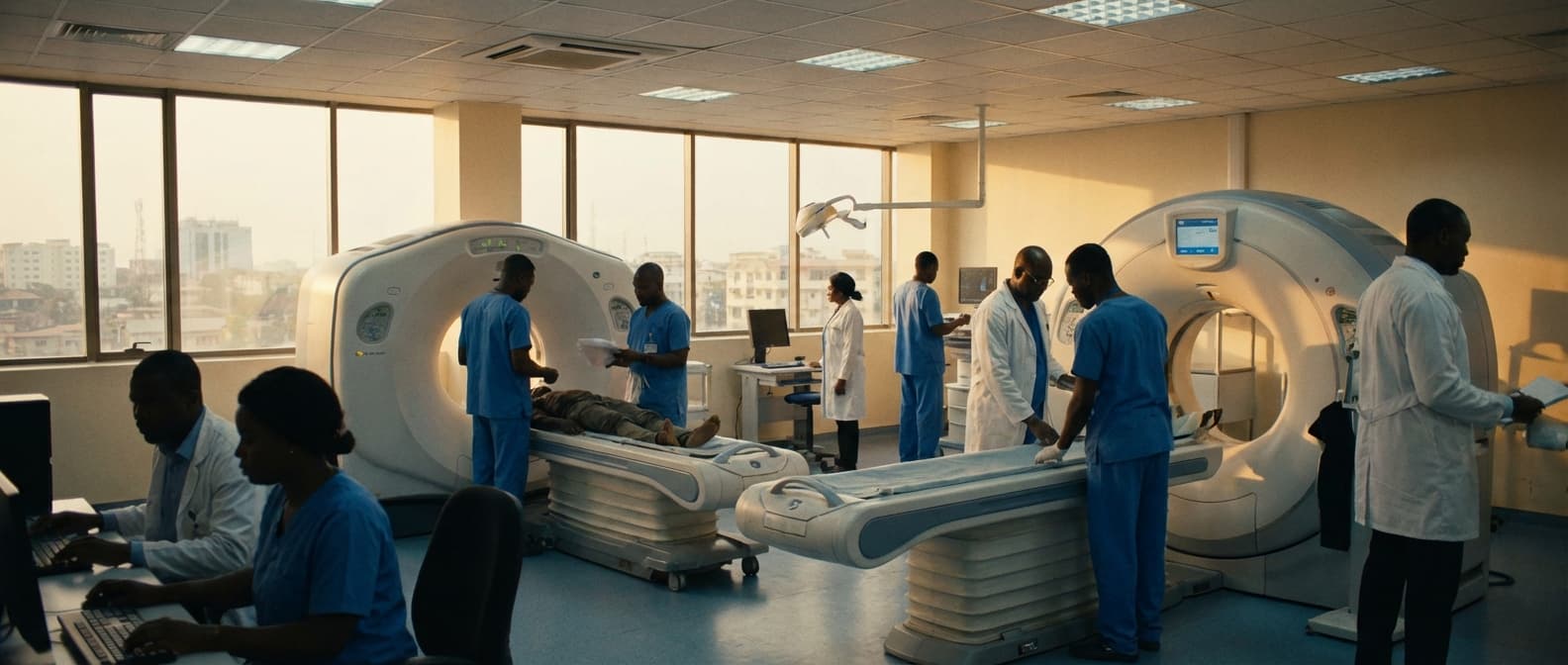
Radiology Room Design & Shielding Calculation in Cabo Verde
Engineering Excellence & Technical Support
Turnkey room planning, shielding drawings and approvals for imaging suites. High-standard technical execution following OEM protocols and local regulatory frameworks.
Advanced Lead Shielding Design for Enhanced Radiation Safety
Engineered bespoke lead shielding solutions for radiology rooms in Cabo Verde, exceeding international safety standards. Our calculations account for diverse imaging modalities (X-ray, CT, mammography) and room layouts, ensuring optimal protection for patients, staff, and the public.
Optimized Radiology Suite Layout for Workflow Efficiency and Modality Integration
Developed comprehensive room designs for new and existing healthcare facilities in Cabo Verde, focusing on efficient patient and staff flow, ergonomic workstation placement, and seamless integration of advanced imaging equipment. This includes considerations for infection control and accessibility.
Precise Radiation Shielding Calculations with Localized Environmental Factors
Utilized advanced simulation software and localized environmental data specific to Cabo Verde to perform precise radiation shielding calculations. This ensures accurate wall thickness, door specifications, and viewing window design, minimizing radiation leakage while optimizing material usage and cost-effectiveness.
What Is Radiology Room Design & Shielding Calculation In Cabo Verde?
Radiology room design and shielding calculation is a specialized engineering and architectural service focused on the optimal layout and safety of medical imaging facilities. This encompasses the architectural planning of diagnostic imaging rooms (e.g., X-ray, CT, MRI, PET/CT, mammography, fluoroscopy) to ensure efficient workflow, patient and staff comfort, and regulatory compliance. Crucially, it involves the precise calculation of radiation shielding requirements for walls, floors, ceilings, doors, and windows. This shielding is essential to attenuate ionizing radiation emitted by diagnostic imaging equipment, preventing occupational exposure to healthcare professionals and minimizing radiation dose to the public and environment beyond the controlled areas. The process integrates principles of radiation physics, health physics, architectural design, and building codes to create a safe and functional imaging suite.
| Service Component | Description | Typical Materials | Key Considerations |
|---|---|---|---|
| Shielding Design | Calculating the necessary thickness and type of shielding materials to attenuate radiation to safe levels. | Lead sheeting, concrete (varying densities), specialized leaded glass, drywall with lead-infused compounds. | Radiation output of installed equipment (kVp, mA, workload), distance to occupied areas, occupancy factors (continuous, infrequent, non-occupant). |
| Room Layout | Designing the spatial arrangement of the imaging room and adjacent areas for optimal workflow and patient flow. | N/A (architectural planning) | Equipment footprint, patient entry/exit points, control room location, access to utilities, emergency egress. |
| Structural Integration | Ensuring the building structure can support the weight of shielding materials and equipment. | Reinforced concrete, steel framing. | Load-bearing capacity of floors and walls, vibration isolation for sensitive equipment (e.g., MRI). |
| Ventilation and HVAC | Designing climate control systems to maintain comfortable temperatures and air quality. | Standard HVAC systems with appropriate filtration and airflow rates. | Heat generated by equipment, patient comfort, air exchange rates. |
| Electrical and Data Cabling | Planning for power requirements and data connectivity for imaging equipment and associated systems. | Dedicated power circuits, UPS systems, structured cabling. | Power demands of imaging modalities, grounding requirements, network bandwidth. |
| Acoustic Design | Minimizing noise levels within the imaging room and adjacent areas. | Sound-absorbing materials, acoustic baffling. | Noise from cooling systems, patient anxiety, operational sounds of equipment. |
Key Components of Radiology Room Design & Shielding Calculation:
- Architectural Layout and Workflow Optimization: Designing room dimensions, door placement, equipment positioning, and ancillary spaces (control room, waiting area, changing rooms) to maximize operational efficiency and patient throughput.
- Radiation Protection Principles: Applying ALARA (As Low As Reasonably Achievable) principles for radiation dose management.
- Shielding Material Selection: Determining appropriate materials (e.g., lead, concrete, specialized drywall) and their required thicknesses.
- Shielding Calculation Methodologies: Utilizing established formulas and software tools based on radiation type, energy, workload, and occupancy factors.
- Regulatory Compliance: Adhering to national and international radiation safety standards and guidelines (e.g., IAEA recommendations, local health authority regulations).
- Equipment Integration: Planning for power, ventilation, and data infrastructure required for medical imaging devices.
- Acoustic and Lighting Design: Ensuring comfortable and effective environments for both patients and staff.
Who Needs Radiology Room Design & Shielding Calculation In Cabo Verde?
Radiology room design and shielding calculations are crucial for ensuring the safety of patients and staff from radiation exposure, as well as the longevity and functionality of imaging equipment. While a growing healthcare sector is a primary driver, the specific needs in Cabo Verde are shaped by its unique context.
| Customer Type | Key Departments Involved | Primary Need |
|---|---|---|
| Public Hospitals | Diagnostic Radiology, CT, Mammography, Fluoroscopy | Upgrades, new installations, patient and staff safety, equipment protection |
| Private Clinics | Diagnostic Imaging Centers, Specialized Imaging Units | State-of-the-art facility design, efficiency, patient comfort, regulatory compliance |
| Government Health Bodies | Radiation Protection Agencies, Health Infrastructure Planning | Setting standards, ensuring compliance, public safety assurance |
| Construction/Development Firms | Healthcare Facility Developers, Architectural Firms | Integral part of new construction, ensuring compliance from design phase |
| Educational Institutions | Medical Schools, Research Departments | Training facilities, research equipment safety and functionality |
Target Customers & Departments in Cabo Verde:
- {"item":"Public Hospitals:","description":"These are the primary healthcare providers serving the majority of the population. They often have existing radiology departments that may require upgrades or new installations to meet modern standards and increasing patient demand. Departments within public hospitals that would benefit include:\n- Diagnostic Radiology (X-ray, Fluoroscopy)\n- Computed Tomography (CT) Scanning\n- Magnetic Resonance Imaging (MRI) - although less common, emerging needs will arise.\n- Mammography\n- Ultrasound (less radiation concern but room design is still important for workflow and privacy)."}
- {"item":"Private Clinics and Imaging Centers:","description":"As the private healthcare sector develops, these facilities will be key clients. They often invest in state-of-the-art equipment and prioritize efficient, safe, and patient-friendly environments. Departments are similar to public hospitals but may focus on specialized services. This includes:\n- Dedicated Diagnostic Imaging Centers\n- Specialized Cardiology Imaging Units\n- Orthopedic Imaging Clinics"}
- {"item":"Government Health Ministries and Regulatory Bodies:","description":"These entities are responsible for setting and enforcing healthcare standards, including radiation safety. They may commission studies or provide guidelines that necessitate professional design and shielding calculations for facilities they oversee or fund. This relates to:\n- National Health Policy and Infrastructure Planning\n- Radiation Protection Agencies"}
- {"item":"New Healthcare Infrastructure Projects:","description":"Any new hospital or major healthcare facility being built in Cabo Verde will require comprehensive radiology room design and shielding calculations from the outset to ensure compliance and optimal operation. This applies to:\n- Construction and Development Companies specializing in healthcare facilities\n- Architectural Firms involved in hospital design"}
- {"item":"Educational and Research Institutions (Future Potential):","description":"As medical education and research capabilities grow in Cabo Verde, universities and research centers that incorporate medical imaging for training or studies will also require these specialized services. Departments would include:\n- Medical Schools with Radiology Programs\n- Biomedical Research Laboratories"}
Radiology Room Design & Shielding Calculation Process In Cabo Verde
This document outlines the workflow for radiology room design and shielding calculations in Cabo Verde, from initial client inquiry to final execution and project completion. The process is structured to ensure compliance with local regulations, international best practices, and client-specific requirements.
Phase 1: Inquiry and Initial Consultation
- Client Inquiry: The process begins with a client (e.g., a hospital, clinic, or private practice) expressing interest in establishing or upgrading a radiology facility. This inquiry typically includes the desired location, the type of imaging equipment to be installed (e.g., X-ray, CT scanner, MRI, mammography), and any preliminary spatial or functional needs.
- Needs Assessment and Site Visit: A preliminary consultation is held to understand the client's vision, budget, and timeline. If feasible, a site visit is conducted to assess the available space, structural conditions, existing infrastructure (electrical, ventilation), and access points. During this visit, initial discussions about workflow, patient and staff safety, and potential shielding requirements take place.
- Scope Definition and Proposal: Based on the gathered information, a detailed scope of work is defined. This includes the extent of design services (architectural, radiation shielding, electrical, HVAC), the types of calculations required, and the expected deliverables. A comprehensive proposal is then submitted to the client, outlining the services, methodology, timeline, and estimated costs.
Phase 2: Design and Calculation
- Architectural Design & Layout: Working drawings are developed, detailing the room layout, including patient waiting areas, control rooms, equipment rooms, changing facilities, and the primary imaging suite. Ergonomics, patient flow, and accessibility are key considerations. The design will factor in the specific spatial requirements of the chosen imaging equipment.
- Radiation Shielding Calculations: This is a critical phase. Using specialized software and adhering to international recommendations (e.g., ICRP Publication 103, NCRP reports) and any applicable Cabo Verdean regulations (which may be based on or adapted from international standards), detailed shielding calculations are performed. These calculations determine the necessary thickness and type of shielding materials (lead, concrete, etc.) for walls, floors, ceilings, doors, and windows to protect staff, patients, and the public from radiation exposure. Key factors include:
* **Equipment Type and kVp/mA settings:** Higher energy and output radiation require more shielding.
* **Workload (mA-min/week):** The expected usage of the equipment.
* **Occupancy Factors:** The number of people present in adjacent areas and their proximity to the radiation source.
* **Distance:** The distance from the radiation source to occupied areas.
* **Controlled vs. Uncontrolled Areas:** Different shielding requirements apply.
- Structural Integration: The shielding design must be integrated with the building's structural elements. This involves coordinating with structural engineers to ensure that the proposed shielding can be adequately supported and does not compromise the building's integrity.
- Electrical and HVAC Design: Detailed plans for electrical power supply, emergency power, lighting, and ventilation systems (HVAC) are developed. HVAC systems are crucial for managing heat generated by imaging equipment and ensuring comfortable environmental conditions within the radiology rooms.
- Final Design Review and Approval: All design drawings and calculations are reviewed internally and then presented to the client for feedback and final approval. Revisions are made as necessary until all parties are satisfied.
Phase 3: Execution and Implementation
- Procurement and Material Sourcing: Based on the approved design, specifications for materials (e.g., lead sheeting, specialized drywall, leaded glass) are finalized, and procurement processes are initiated.
- Construction and Installation: The construction phase involves:
* **Structural Modifications:** Any necessary structural changes to accommodate shielding.
* **Shielding Installation:** Meticulous installation of lead lining, concrete, or other shielding materials according to the design specifications.
* **Electrical and HVAC Installation:** Installation of all electrical conduits, wiring, HVAC ductwork, and associated equipment.
* **Finishing Works:** Plastering, painting, flooring, and installation of doors and windows.
- Quality Control and Inspections: Throughout the construction phase, rigorous quality control checks are performed to ensure that the installation meets the design specifications and regulatory requirements. This includes verifying shielding integrity and proper material usage.
Phase 4: Commissioning and Handover
- Radiation Safety Survey (Post-Installation): Once the construction is complete, a comprehensive radiation safety survey is conducted by a qualified radiation physicist or health physicist. This survey measures actual radiation levels in adjacent areas to verify the effectiveness of the shielding and confirm compliance with safety standards. This is a critical step before the equipment can be operated.
- Equipment Installation and Testing: The radiology imaging equipment is installed and commissioned by the manufacturer or their authorized representatives.
- Final Walkthrough and Handover: A final walkthrough of the completed facility is conducted with the client. All documentation, including design drawings, shielding calculations, and radiation safety survey reports, is compiled and handed over. Training on the use and maintenance of the facility's radiation safety features may also be provided.
- Regulatory Approvals (if applicable): Depending on Cabo Verdean regulations, final approvals from relevant health or nuclear safety authorities may be required before the facility can commence operations.
- Post-Occupancy Evaluation (Optional): In some cases, a follow-up evaluation may be conducted after the facility has been in operation for a period to ensure continued compliance and identify any potential issues.
| Phase | Key Activities | Key Deliverables/Outcomes | Responsible Parties |
|---|---|---|---|
| 1: Inquiry and Initial Consultation | Client inquiry, needs assessment, site visit, scope definition, proposal submission | Defined project scope, approved proposal | Client, Design Consultant/Radiology Planner |
| 2: Design and Calculation | Architectural design, radiation shielding calculations, structural integration, electrical/HVAC design, design review & approval | Approved architectural drawings, detailed shielding calculations report, electrical & HVAC plans | Architects, Radiation Physicists/Shielding Engineers, Structural Engineers, MEP Engineers, Client |
| 3: Execution and Implementation | Material procurement, construction, shielding installation, electrical & HVAC installation, finishing, quality control | Constructed radiology rooms, installed shielding and infrastructure | Contractors, Subcontractors, Project Managers, Quality Inspectors |
| 4: Commissioning and Handover | Radiation safety survey, equipment installation/testing, final walkthrough, documentation handover, regulatory approval | Radiation safety compliance report, operational radiology facility, handover documentation | Radiation Physicists, Equipment Technicians, Facility Management, Regulatory Authorities, Client |
Radiology Room Design & Shielding Calculation Workflow
- Phase 1: Inquiry and Initial Consultation
- Phase 2: Design and Calculation
- Phase 3: Execution and Implementation
- Phase 4: Commissioning and Handover
Radiology Room Design & Shielding Calculation Cost In Cabo Verde
Designing and installing radiology room shielding in Cabo Verde involves several key cost factors. These include the complexity of the room layout, the type of imaging equipment to be installed (which dictates the required shielding levels), the specific materials used for shielding (e.g., lead, concrete, specialized drywall), the labor costs for installation, architectural and engineering fees for design and calculations, permitting and inspection fees, and transportation costs for materials to the islands. The availability of specialized materials and skilled labor can influence pricing. It's crucial to obtain detailed quotes from local or regional providers familiar with Cabo Verde's construction and regulatory environment.
| Cost Component | Estimated Range (CVE - Cabo Verdean Escudo) | Notes |
|---|---|---|
| Radiation Shielding Calculation & Design (per room) | 150,000 - 500,000 CVE | Varies based on complexity, equipment, and engineering firm. Includes physics consultation. |
| Lead-Lined Drywall (per square meter, installed) | 25,000 - 70,000 CVE | Includes lead thickness, installation labor, and finishing. Prices can fluctuate with lead market. |
| Concrete Shielding (per cubic meter, installed) | 15,000 - 40,000 CVE | Depends on concrete density, thickness, and labor. Primarily for higher-energy or larger rooms. |
| Lead Sheet Shielding (per square meter, installed) | 30,000 - 80,000 CVE | Used for specific areas or higher attenuation requirements. Installation complexity is a factor. |
| Doors & Windows (shielded, per unit) | 200,000 - 1,000,000+ CVE | Significant cost due to custom fabrication, lead integration, and specialized hardware. |
| General Labor & Installation (project-based) | Highly variable, often 20-30% of material costs | Includes skilled trades, supervision, and general site preparation. |
| Permitting & Inspections | 50,000 - 200,000 CVE | Varies by municipality and complexity of the project. |
| Contingency (recommended) | 10-15% of total project cost | To cover unforeseen issues or minor changes. |
Key Factors Influencing Radiology Room Design & Shielding Costs in Cabo Verde
- Complexity of Room Layout: Irregular shapes or multiple shielded areas increase design and material needs.
- Type of Imaging Equipment: Different modalities (X-ray, CT, MRI) require varying shielding thicknesses and types.
- Shielding Materials: Lead-lined drywall, lead sheets, dense concrete, or specialized composites have different price points.
- Labor Costs: Skilled technicians for installation and specialized tradespeople are essential.
- Architectural & Engineering Fees: For design, radiation shielding calculations, and structural considerations.
- Permitting & Inspection Fees: Government regulatory requirements for healthcare facilities.
- Transportation & Logistics: Shipping materials to Cabo Verde can be a significant cost.
- Equipment Calibration & Testing: Post-installation verification of shielding effectiveness.
Affordable Radiology Room Design & Shielding Calculation Options
Designing an affordable radiology room and performing accurate shielding calculations are crucial for both patient safety and budget efficiency. This guide explores cost-effective design principles and shielding calculation options, highlighting the value of bundled services and presenting practical cost-saving strategies.
| Value Bundle | Description | Cost Savings Potential |
|---|---|---|
| Integrated Design & Shielding Package | Combines architectural room design, radiation shielding calculations, and equipment layout planning into a single service offering. Often provided by specialized radiology design firms or consultants. | Reduced coordination efforts, streamlined approvals, minimized design errors, and potentially lower overall professional fees due to economies of scale. Prevents costly rework due to design conflicts. |
| Turnkey Radiology Suite Development | A comprehensive service that handles everything from initial concept and design to construction, equipment installation, and final commissioning. Typically offered by construction companies with radiology expertise or specialized project management firms. | Significant cost savings through bundled procurement, optimized project timelines, reduced administrative overhead, and potential for bulk discounts on materials and equipment. Minimizes risk of project delays and associated costs. |
| Shielding Analysis & Material Recommendation Service | Focuses specifically on providing detailed shielding calculations and recommending the most cost-effective shielding materials based on the specific imaging modalities and room usage. Can be a standalone service or part of a larger design package. | Avoids over-shielding (wasting money on unnecessary materials) or under-shielding (creating safety hazards and potential regulatory issues). Optimizes material choice for budget and performance, leading to direct material cost savings. |
Key Considerations for Affordable Radiology Room Design & Shielding
- {"title":"Smart Space Planning","description":"Optimizing room layout to maximize workflow efficiency and minimize wasted space. This includes strategic placement of equipment, control areas, and patient access points."}
- {"title":"Material Selection","description":"Choosing durable, cost-effective materials for walls, flooring, and finishes that meet radiation safety standards. Considering multi-functional materials can also reduce costs."}
- {"title":"Equipment Integration","description":"Planning for seamless integration of imaging equipment, including power, ventilation, and data cabling, to avoid costly retrofits or modifications."}
- {"title":"Shielding Fundamentals","description":"Understanding the principles of radiation attenuation and how different materials (lead, concrete, drywall with additives) offer varying levels of protection."}
- {"title":"Shielding Calculation Software & Expertise","description":"Leveraging specialized software for precise shielding calculations or engaging with experienced radiation physicists to ensure accurate and efficient shielding design."}
Verified Providers In Cabo Verde
In Cabo Verde, ensuring you receive quality healthcare is paramount, especially when navigating unfamiliar medical systems. Verified providers offer a crucial layer of assurance, guaranteeing that practitioners meet rigorous standards for expertise, safety, and ethical practice. Among these trusted professionals, Franance Health stands out as a premier choice, backed by a robust credentialing process that underscores their commitment to excellence in patient care.
| Credentialing Aspect | Franance Health's Approach | Benefit to Patients |
|---|---|---|
| Educational Background | Thorough verification of degrees, diplomas, and academic transcripts from recognized institutions. | Ensures providers have a strong foundational knowledge in medicine. |
| Specialized Training & Certifications | Confirmation of all specialized training, fellowships, and board certifications. | Guarantees expertise in specific medical fields. |
| Professional Experience | Verification of past employment, references, and scope of practice. | Confirms practical application of medical knowledge and skills. |
| Licensure & Regulatory Compliance | Ensuring all necessary medical licenses are current and in good standing with relevant authorities. | Confirms legal and ethical practice within Cabo Verde. |
| Reputation & Peer Review | In some cases, may involve peer reviews or assessments of professional reputation. | Adds an extra layer of confidence in the provider's standing. |
Why Franance Health Credentials Matter
- Rigorous Verification Process: Franance Health meticulously vets all its associated healthcare providers, going beyond basic licensing requirements. This involves a comprehensive review of their educational background, specialized training, professional experience, and any disciplinary actions.
- Commitment to Patient Safety: Their credentialing protocols are designed to prioritize patient safety. This includes verifying that providers adhere to the latest medical best practices and maintain the highest ethical standards.
- Access to Specialized Expertise: Franance Health partners with a diverse network of healthcare professionals, ensuring access to a wide range of specialists. Their verification process confirms the authenticity of these specializations, providing patients with confidence in finding the right expertise for their needs.
- International Standards Alignment: Franance Health often aligns its credentialing with international benchmarks, offering a familiar and trustworthy standard for expatriates and international visitors seeking medical care in Cabo Verde.
- Reputation and Trust: The stringent credentialing process translates into a reputation for reliability and trust. Patients can feel assured that when they choose a Franance Health-affiliated provider, they are selecting a practitioner who has met a high bar of professional competence.
Scope Of Work For Radiology Room Design & Shielding Calculation
This Scope of Work (SOW) outlines the design and calculation requirements for radiology rooms, focusing on architectural design, radiation shielding, and associated technical deliverables. The objective is to ensure the safe and effective operation of diagnostic imaging equipment while adhering to industry best practices and regulatory standards.
| Category | Description | Standard/Specification Reference |
|---|---|---|
| Architectural Design | Detailed floor plans, elevations, and sections showing room dimensions, door and window placement, patient/staff workflow, and accessible pathways. | Architectural Graphic Standards (latest edition), Local Building Codes, ADA Accessibility Guidelines |
| Radiation Shielding | Calculation of required shielding thickness for walls, floors, ceilings, doors, and windows based on equipment type, workload, occupancy factors, and distance. Analysis of potential radiation leakage and mitigation strategies. | NCRP Report No. 147 (Medical X-ray Imaging) or equivalent, State/Local Radiation Control Regulations |
| Room Layout & Equipment | Placement of imaging equipment (e.g., X-ray, CT, MRI, Ultrasound), control consoles, patient waiting areas, and necessary support spaces, optimizing workflow and safety. | Manufacturer's equipment specifications and recommendations, User workflow analysis |
| Electrical & Lighting | Design of appropriate lighting levels for diagnostic and non-diagnostic tasks, power outlet requirements for medical equipment, emergency power considerations. | NFPA 70 (National Electrical Code), IESNA Lighting Handbook (latest edition) |
| HVAC | Ventilation rates, temperature and humidity control to ensure patient comfort and equipment longevity, consideration for exhaust requirements for specific equipment. | ASHRAE Standards (e.g., Standard 170 - Ventilation of Health Care Facilities), Local building codes |
| Acoustics | Specification of sound insulation and absorption materials to minimize noise distractions and ensure patient privacy. | Acoustical Society of America (ASA) standards, Manufacturer's acoustic data |
| Materials & Finishes | Selection of durable, easily cleanable, and infection-control compliant materials for all surfaces. | Healthcare facility design guidelines, Manufacturer's product specifications |
| Safety & Emergency | Inclusion of emergency exits, fire suppression systems, and other safety features as per building codes and healthcare regulations. | NFPA 101 (Life Safety Code), Local Fire Codes |
Technical Deliverables
- Architectural Drawings (Floor Plans, Elevations, Sections)
- Radiation Shielding Calculations and Report
- Room Layout and Equipment Placement Diagrams
- Lighting and Power Distribution Plans
- HVAC Design and Specifications
- Acoustic Treatment Specifications
- Material and Finish Schedules
- Construction Specifications
- Compliance Documentation (e.g., regulatory body approvals)
Service Level Agreement For Radiology Room Design & Shielding Calculation
This Service Level Agreement (SLA) outlines the terms and conditions for the design and shielding calculations of radiology rooms, including response times for support requests and uptime guarantees for related services.
| Service Component | Response Time (Business Hours) | Uptime Guarantee | Notes |
|---|---|---|---|
| Initial Consultation/Design Briefing | Within 2 business hours | N/A (Consultation-based) | Requests submitted via official portal or email. |
| Preliminary Design Submissions | Within 3 business days (for standard room sizes) | N/A (Project-based deliverables) | Subject to timely provision of accurate input data from the client. |
| Shielding Calculation Submissions | Within 2 business days (for standard configurations) | N/A (Project-based deliverables) | Requires complete architectural plans and equipment specifications. |
| Design/Shielding Calculation Revisions (Client Requested) | Within 2 business days per revision cycle | N/A (Project-based deliverables) | Up to 2 revision cycles included. Additional cycles may incur extra charges. |
| Technical Support (Design/Shielding Queries) | Within 4 business hours | 99.5% | Applies to queries regarding existing designs or calculations provided by us. Excludes new design requests. |
| Access to Design/Calculation Portals/Tools (if applicable) | N/A (Always available) | 99.9% | Scheduled maintenance windows will be communicated 48 hours in advance. |
| Final Documentation Delivery | Within 1 business day of final approval | N/A (Project-based deliverables) | Digital format unless otherwise specified. |
Key Service Components
- Radiology Room Design Services
- Shielding Calculation Services
- Consultation and Support
- Documentation and Reporting
Frequently Asked Questions

Ready when you are
Let's scope your Radiology Room Design & Shielding Calculation in Cabo Verde project in Cabo Verde.

Scaling healthcare logistics and technical systems across the entire continent.