
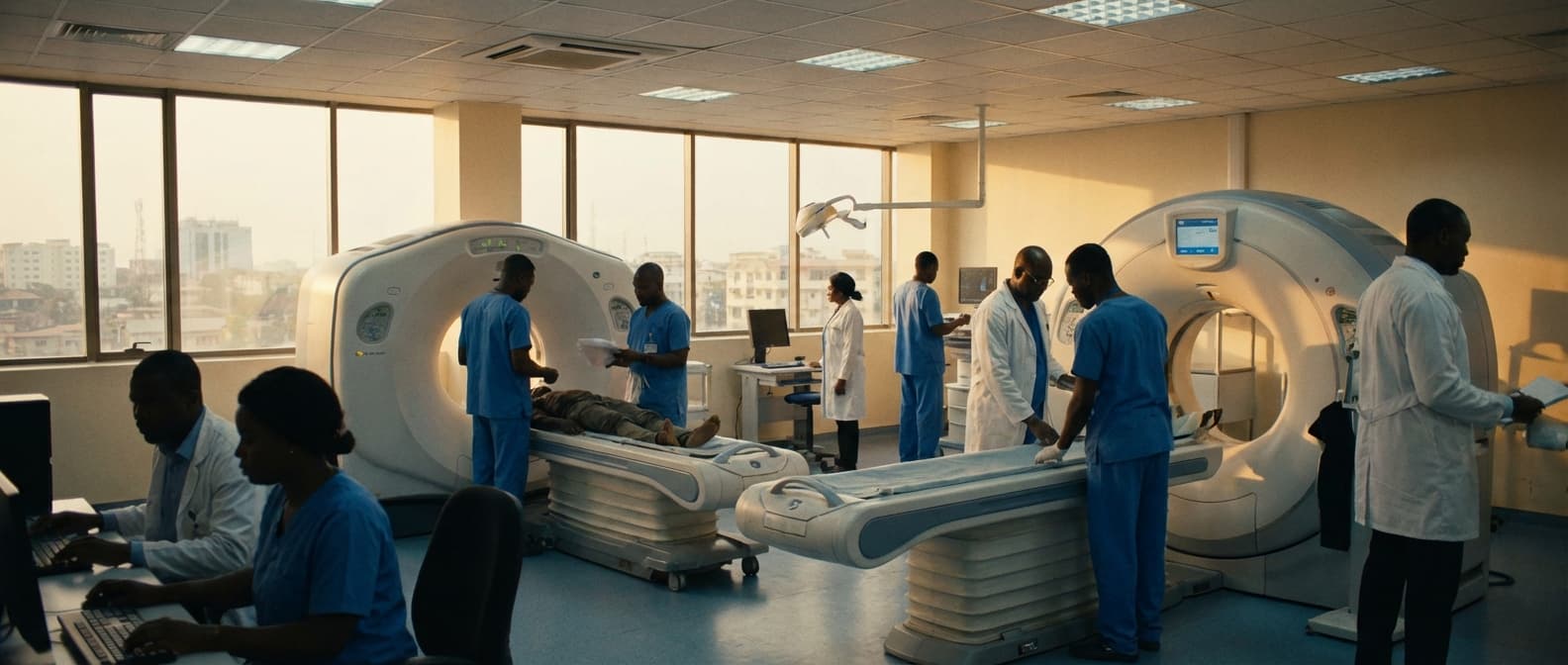
Imaging Acceptance Testing & QA in Cabo Verde
Engineering Excellence & Technical Support
Commissioning and periodic QA for CT/MRI/X‑ray/US/Mammo. High-standard technical execution following OEM protocols and local regulatory frameworks.
End-to-End Imaging Pipeline Validation
Conducting comprehensive acceptance testing on newly deployed imaging systems and software, including data acquisition, processing, storage, and retrieval mechanisms. Verification of image quality, metadata integrity, and adherence to international imaging standards (e.g., DICOM) to ensure optimal diagnostic and archival capabilities.
Performance & Scalability Benchmarking
Executing rigorous QA protocols to benchmark the performance and scalability of imaging infrastructure under simulated peak loads. This includes analyzing throughput, latency, and resource utilization to guarantee a robust and efficient imaging ecosystem capable of meeting current and future demands for medical and industrial imaging.
Security and Compliance Audits for Imaging Data
Implementing and verifying security controls and compliance with data privacy regulations (e.g., GDPR, HIPAA, if applicable) for all imaging data. This involves penetration testing, access control validation, and audit trail reviews to safeguard sensitive imaging information and ensure regulatory adherence.
What Is Imaging Acceptance Testing & Qa In Cabo Verde?
Imaging Acceptance Testing & Quality Assurance (QA) in Cabo Verde refers to the systematic validation and verification processes undertaken to ensure that medical imaging equipment and systems meet predefined performance specifications, regulatory requirements, and operational standards before being deployed for clinical use or after significant upgrades. This service aims to confirm the accuracy, reliability, safety, and efficacy of imaging modalities and associated software infrastructure within healthcare facilities in Cabo Verde. It encompasses a range of tests, from basic functionality checks to complex image quality assessments, adhering to international standards and local regulations where applicable.
| Who Needs It? | Typical Use Cases |
|---|---|
| Hospitals and Clinics in Cabo Verde: Any healthcare institution acquiring new imaging equipment (e.g., MRI, CT, X-ray, Ultrasound, PET-CT) or upgrading existing systems. | New Equipment Installation: Validating that newly installed imaging equipment performs according to manufacturer specifications and meets clinical requirements before patient use. |
| Medical Imaging Departments: To ensure optimal image quality for accurate diagnosis and to maintain workflow efficiency. | System Upgrades and Modifications: Verifying that software updates, hardware enhancements, or system reconfigurations do not negatively impact performance or introduce new issues. |
| Regulatory Bodies and Accreditation Agencies: To demonstrate compliance with national and international standards for medical device performance and patient safety. | Routine Performance Monitoring: Establishing baseline performance metrics for ongoing quality control and preventative maintenance checks. |
| Manufacturers and Vendors: To confirm successful installation and client acceptance of their imaging solutions. | Troubleshooting and Problem Resolution: Identifying the root cause of image quality degradation or system malfunctions by comparing current performance against established acceptance criteria. |
| Radiology Technologists and Radiologists: To confirm the usability and diagnostic quality of the imaging systems they operate. | Outsourcing of Medical Services: Ensuring that third-party providers delivering imaging services meet the required quality standards. |
| Healthcare Administrators and Procurement Managers: To ensure the financial investment in imaging technology yields expected clinical and operational benefits. | Establishing Vendor Performance Benchmarks: Defining clear acceptance criteria to hold vendors accountable for the performance of their equipment and services. |
Key Components of Imaging Acceptance Testing & QA:
- Equipment Functionality Verification: Ensuring all hardware components (e.g., X-ray tubes, detectors, gantry, displays) operate as intended and within specified parameters.
- Image Quality Assessment: Evaluating image resolution, contrast, signal-to-noise ratio (SNR), artifacts, and geometric accuracy using phantoms and clinical images.
- Performance Testing: Measuring scan times, dose levels (e.g., CTDIvol, DLP), data acquisition rates, and processing speeds.
- System Integration and Interoperability: Verifying seamless communication and data exchange between imaging devices, Picture Archiving and Communication Systems (PACS), Electronic Health Records (EHR), and other networked medical systems.
- Safety Compliance: Confirming adherence to radiation safety standards (if applicable), electrical safety, and electromagnetic compatibility (EMC).
- Software Validation: Testing imaging software functionalities, user interfaces, image manipulation tools, and reporting capabilities.
- Calibration and Alignment: Ensuring accurate calibration of imaging parameters and proper alignment of system components for optimal diagnostic output.
- Documentation Review: Verifying the completeness and accuracy of user manuals, service manuals, and regulatory compliance documentation.
Who Needs Imaging Acceptance Testing & Qa In Cabo Verde?
Imaging Acceptance Testing and Quality Assurance (QA) are crucial for any organization that relies on accurate and reliable medical imaging. In Cabo Verde, as healthcare infrastructure develops and integrates advanced technologies, ensuring the quality of imaging systems is paramount. This involves verifying that imaging equipment functions as intended, produces high-quality diagnostic images, and meets regulatory standards. Without rigorous testing and QA, patient diagnoses can be compromised, leading to misdiagnosis, unnecessary procedures, and potentially adverse patient outcomes. The introduction of new imaging modalities, software upgrades, or even routine maintenance necessitates a robust testing framework to guarantee system integrity and clinical efficacy.
| Target Customer/Department | Key Needs & Benefits of Imaging Acceptance Testing & QA | Specific Systems/Technologies Involved |
|---|---|---|
| Hospitals & Clinics | Ensure accurate diagnoses, improve patient care, reduce repeat scans, optimize workflow, comply with international standards. Crucial for both public and private facilities. | X-ray machines, CT scanners, MRI scanners, Ultrasound devices, PACS (Picture Archiving and Communication Systems), RIS (Radiology Information Systems). |
| Diagnostic Imaging Centers | Maintain high-quality imaging output for referrals, build trust with referring physicians and patients, ensure operational efficiency, minimize equipment downtime. | Mammography units, Fluoroscopy systems, Bone densitometers, Digital radiography (DR) and computed radiography (CR) systems, Image processing software. |
| Public Health Institutions | Provide equitable access to reliable diagnostic imaging services across the archipelago, manage public healthcare budgets effectively by avoiding costly errors, ensure consistent quality in remote areas. | Mobile imaging units, basic X-ray setups, Ultrasound machines for general diagnostics, basic PACS. |
| Private Healthcare Providers | Differentiate services through advanced, reliable imaging, attract and retain patients, ensure a competitive edge, uphold brand reputation. | High-end CT and MRI scanners, specialized ultrasound equipment (e.g., for obstetrics/gynecology), advanced visualization software. |
| Radiology Departments | Verify image quality and dose optimization, validate new software updates and protocols, ensure seamless integration with PACS/RIS, train radiographers and radiologists on new equipment. | All types of imaging modalities, image processing workstations, quality control phantoms, DICOM compliance testing tools. |
| Cardiology Departments | Ensure accurate interpretation of cardiac images (e.g., echo, cardiac CT/MRI) for timely diagnosis and treatment of heart conditions. | Echocardiography machines, Cardiac CT scanners, Cardiac MRI scanners, ECG-gated imaging software. |
| Oncology Departments | Verify precise imaging for tumor staging, treatment planning (e.g., radiation therapy), and monitoring treatment response. | PET/CT scanners, CT simulators, MRI for soft tissue imaging, contrast media compatibility testing. |
| Neurology Departments | Ensure high-resolution imaging for diagnosing neurological disorders (e.g., stroke, tumors, MS). | Brain MRI scanners, CT scanners with neurological protocols, functional MRI (fMRI) capabilities. |
| Emergency Departments | Guarantee rapid and accurate imaging for trauma and acute conditions, ensuring immediate and correct patient management. | Trauma X-ray units, Rapid CT scanners, Portable ultrasound devices. |
| Medical Equipment Suppliers & Integrators | Demonstrate product reliability and performance to clients, fulfill contractual obligations, reduce post-installation support costs, ensure successful system deployment. | New imaging equipment, software installations, PACS/RIS integration, network infrastructure for imaging data. |
| Government Health Agencies & Regulators | Establish and enforce imaging quality standards, ensure patient safety, monitor the performance of healthcare facilities, facilitate the adoption of best practices. | All imaging systems and related software used within the national healthcare system. |
Target Customers and Departments for Imaging Acceptance Testing & QA in Cabo Verde:
- Hospitals and Clinics
- Diagnostic Imaging Centers
- Public Health Institutions
- Private Healthcare Providers
- Radiology Departments
- Cardiology Departments
- Oncology Departments
- Neurology Departments
- Emergency Departments
- Medical Equipment Suppliers & Integrators
- Government Health Agencies & Regulators
Imaging Acceptance Testing & Qa Process In Cabo Verde
The Imaging Acceptance Testing and Quality Assurance (QA) process in Cabo Verde is a structured workflow designed to ensure that imaging equipment and systems meet predefined standards and client expectations before final acceptance. This process typically begins with an inquiry from a client or stakeholder and culminates in the successful execution of tests and final sign-off. The workflow involves several key stages, each with specific activities and responsibilities, aiming to identify and rectify any discrepancies or issues promptly.
| Stage | Description | Key Activities | Responsible Parties | Deliverables/Outcomes |
|---|---|---|---|---|
| Inquiry & Requirement Gathering | Initial contact from a client or internal stakeholder regarding the need for imaging equipment or system acceptance testing. | Understand client needs, scope of work, specific imaging modalities, regulatory requirements (if any), and performance expectations. | Client/Stakeholder, Project Manager, Sales/Account Manager | Clear understanding of project scope, identified client requirements, initial project brief. |
| Test Plan Development | Creation of a comprehensive document outlining the strategy, scope, objectives, resources, and schedule for acceptance testing. | Define test objectives, identify test scenarios and test cases, determine testing methodologies, specify required hardware/software, allocate resources (personnel, equipment), establish timelines and milestones. | QA Lead, Technical Experts, Project Manager | Approved Test Plan, Test Cases, Test Scripts, Resource Allocation Plan. |
| Pre-Testing & Site Readiness | Ensuring the imaging environment and equipment are prepared for testing. | Verify installation of imaging equipment and associated software, confirm power and network connectivity, ensure necessary consumables are available, conduct preliminary system checks, prepare the testing environment (e.g., room setup, patient simulators). | Installation Team, IT Support, Site Manager, QA Team | Ready testing environment, functional basic equipment checks, confirmed site readiness. |
| Test Execution | Systematic application of the defined test cases and scenarios to evaluate the imaging system's performance and functionality. | Perform functional testing, performance testing, usability testing, image quality assessment, data integrity checks, integration testing (if applicable), security testing. | QA Testers, Technical Specialists, End-Users (for UAT) | Executed test cases, raw test data, initial observations and findings. |
| Defect Reporting & Resolution | Documentation and tracking of any identified issues or deviations from expected behavior. | Record defects in a bug tracking system, provide detailed descriptions, steps to reproduce, severity levels, and attach evidence (screenshots, logs). Collaborate with development/vendor teams for defect resolution. | QA Testers, Development/Vendor Team, Project Manager | Defect Log, Bug Reports, Status updates on defect resolution. |
| Re-testing & Verification | Confirming that resolved defects have been effectively fixed and do not introduce new issues. | Execute specific test cases related to resolved defects, perform regression testing to ensure core functionality remains intact, verify system stability. | QA Testers | Verified defect fixes, updated defect status (e.g., closed, reopened). |
| Final Acceptance & Sign-off | Formal approval of the imaging system by the client/stakeholder after successful completion of all acceptance tests. | Review of test results and defect resolution status, client walkthrough of key functionalities, client verification of performance against requirements, obtaining formal sign-off. | Client/Stakeholder, Project Manager, QA Lead | Signed Acceptance Certificate, Formal Project Closure. |
| Documentation & Handover | Comprehensive documentation of the entire testing process and successful handover of the system to the client. | Compile final test reports, document any outstanding issues or recommendations, provide user manuals and training materials, ensure all project documentation is archived. | Project Manager, QA Team, Documentation Specialist | Final Test Report, Project Documentation, Handover Package, Training Materials. |
Key Stages in Imaging Acceptance Testing & QA Process
- Inquiry & Requirement Gathering
- Test Plan Development
- Pre-Testing & Site Readiness
- Test Execution
- Defect Reporting & Resolution
- Re-testing & Verification
- Final Acceptance & Sign-off
- Documentation & Handover
Imaging Acceptance Testing & Qa Cost In Cabo Verde
Acceptance testing and Quality Assurance (QA) for imaging systems in Cabo Verde involve various cost factors that influence the final price. These costs are generally presented in the local currency, the Cape Verdean Escudo (CVE). The specific pricing can fluctuate based on the complexity of the imaging system, the scope of testing required, the experience of the QA team, and the vendor's pricing structure. It's crucial to obtain detailed quotes tailored to your specific needs. Factors influencing the cost include the type of imaging technology (e.g., medical imaging, industrial imaging, satellite imagery), the volume of data to be processed and tested, the required performance metrics and benchmarks, and the level of documentation and reporting needed. Engaging local QA providers might offer cost advantages due to lower overheads compared to international firms, but it's essential to verify their expertise and certifications.
| Service Component | Estimated Price Range (CVE) | Notes |
|---|---|---|
| Initial Consultation & Requirement Analysis | 15,000 - 30,000 CVE | Covers understanding project scope and defining test strategies. |
| Test Case Design & Development | 30,000 - 75,000 CVE | Dependent on complexity and number of test cases. |
| Functional Testing (per module/feature) | 25,000 - 60,000 CVE | Price per feature or module, varies by complexity. |
| Performance Testing (e.g., speed, load) | 50,000 - 150,000 CVE | Can be a significant cost for high-demand systems. |
| Usability & User Acceptance Testing (UAT) | 40,000 - 90,000 CVE | Includes user feedback collection and analysis. |
| Integration Testing | 40,000 - 100,000 CVE | Testing interactions between different system components. |
| Security Testing (basic) | 35,000 - 80,000 CVE | Focuses on common vulnerabilities. |
| Acceptance Test Report Generation | 20,000 - 50,000 CVE | Includes detailed findings, recommendations, and sign-off. |
| Daily Rate for QA Engineer (Junior) | 10,000 - 18,000 CVE | For less complex tasks or support. |
| Daily Rate for QA Engineer (Senior/Specialist) | 20,000 - 35,000 CVE | For complex systems and specialized testing. |
| Hourly Rate (Consulting/Ad-hoc) | 3,000 - 7,000 CVE | For specific advice or short engagements. |
Key Pricing Factors for Imaging Acceptance Testing & QA in Cabo Verde
- Complexity and Type of Imaging System: More sophisticated systems (e.g., high-resolution medical scanners, advanced industrial inspection systems) will naturally incur higher testing costs due to specialized knowledge and equipment required.
- Scope of Testing: This includes the breadth and depth of tests to be performed, such as functional testing, performance testing, security testing, usability testing, and compatibility testing.
- Volume of Data: Testing systems that process large datasets will require more time and resources, impacting the overall cost.
- Performance Benchmarks and Requirements: Defining specific performance indicators (e.g., image processing speed, accuracy rates, latency) that the system must meet will influence the rigor of testing.
- Required Level of Documentation and Reporting: The detail and formality of the acceptance reports and documentation will affect the time and effort of the QA team.
- Vendor Experience and Reputation: More experienced and reputable QA providers, both local and international, may command higher fees but can offer greater assurance of quality.
- Project Timeline and Urgency: Expedited testing services often come with a premium.
- Travel and Logistics (if applicable): If the QA team needs to travel to different locations within Cabo Verde or internationally, these costs will be factored in.
- Tools and Software Licenses: Specialized testing tools or software licenses required for the project can add to the overall cost.
Affordable Imaging Acceptance Testing & Qa Options
For medical facilities aiming to optimize their imaging services, implementing robust Acceptance Testing and Quality Assurance (QA) is crucial for patient safety, regulatory compliance, and efficient operations. However, the costs associated with these processes can be a significant concern. This document outlines affordable imaging acceptance testing and QA options, focusing on value bundles and cost-saving strategies to help organizations achieve comprehensive testing without breaking the budget.
| Value Bundle/Strategy | Description | Cost-Saving Mechanism | Ideal For |
|---|---|---|---|
| Basic Acceptance Testing Package | Covers essential initial tests for new imaging equipment, focusing on core functionality and safety checks. | Bundled pricing reduces per-test costs; limited scope focuses resources. | Small clinics, facilities with limited new equipment purchases. |
| Comprehensive QA & PM Bundles | Includes scheduled preventive maintenance (PM) alongside routine QA testing for a defined period. | Predictable budgeting; proactive maintenance reduces costly emergency repairs and downtime. | Medium to large departments, facilities with multiple modalities. |
| Modular Testing Services | Allows organizations to select specific tests or modules based on their current needs, rather than a full-service package. | Pay only for services required; avoids paying for unnecessary testing. | Facilities with fluctuating needs or specific compliance concerns. |
| Remote QA Monitoring Solutions | Utilizes software to remotely monitor image quality parameters and detect anomalies, reducing on-site visits. | Minimizes travel costs and technician time; allows for continuous monitoring. | Facilities with multiple locations or those seeking real-time insights. |
| In-House Training & Certification Programs | Empowers internal biomedical engineering or IT staff to perform certain acceptance testing and QA procedures. | Reduces reliance on external vendors for routine tasks; builds internal capacity. | Larger institutions with established technical teams. |
| Data-Driven QA Optimization | Leveraging historical QA data to identify trends and optimize testing protocols, focusing on high-risk areas. | Reduces redundant testing; targets efforts where most impactful. | All facility sizes seeking to refine their QA strategy. |
| Consolidated Vendor Agreements | Negotiating a single contract with a trusted vendor for multiple modalities or locations. | Volume discounts and streamlined management. | Organizations with a significant number of imaging devices from the same manufacturer or vendor. |
Key Considerations for Affordable Imaging Acceptance Testing & QA
- Defining the scope and frequency of testing based on modality, risk, and regulatory requirements.
- Leveraging internal resources and expertise where feasible.
- Exploring third-party service providers with flexible and tiered offerings.
- Implementing automation and standardized procedures to reduce manual effort.
- Prioritizing critical tests that directly impact patient outcomes and safety.
- Considering remote testing and monitoring solutions.
- Negotiating service level agreements (SLAs) that align with budget constraints.
Verified Providers In Cabo Verde
When seeking healthcare services in Cabo Verde, particularly for specialized treatments or requiring a high standard of care, identifying verified and credentialed providers is paramount. Franance Health stands out as a leading organization that rigorously vets healthcare professionals and facilities, ensuring that patients receive exceptional medical attention. This verification process guarantees that providers meet stringent international standards for quality, safety, and ethical practice, making them the most reliable choice for your health needs.
| Provider Type | Key Verification Aspects | Benefit to Patient |
|---|---|---|
| Hospitals & Clinics | Accreditation status, adherence to safety protocols, infection control measures, availability of advanced technology, staff qualifications. | Assurance of a safe and well-equipped environment with skilled medical teams. |
| Specialist Physicians | Medical board certification, postgraduate training, years of experience, peer reviews, specialization in specific fields. | Confidence in receiving expert diagnosis and treatment from qualified professionals. |
| Diagnostic Centers | Certification of equipment, technician qualifications, accuracy of results, turnaround times, quality control procedures. | Reliable and accurate diagnostic results for effective treatment planning. |
| Ancillary Medical Services (e.g., Physical Therapy, Dental) | Professional licenses, training in their respective disciplines, patient feedback, adherence to best practices. | Access to trusted and competent allied health professionals. |
Why Franance Health Credentials Represent the Best Choice:
- Rigorous Vetting Process: Franance Health employs a multi-stage verification process, scrutinizing medical licenses, certifications, educational backgrounds, and professional experience of all listed providers.
- International Standards Compliance: Our credentialing ensures providers adhere to internationally recognized benchmarks for healthcare delivery, offering peace of mind to patients.
- Patient Safety and Quality Assurance: Verification by Franance Health signifies a commitment to patient safety, infection control, and the delivery of high-quality medical outcomes.
- Ethical Practice and Professionalism: We assess providers for their adherence to ethical medical practices, patient rights, and professional conduct.
- Access to Trusted Specialists: Franance Health provides access to a curated network of specialists and facilities known for their expertise and patient-centric approach.
- Transparency and Reliability: Our credentials offer transparency, allowing patients to make informed decisions based on verified information about their healthcare providers.
Scope Of Work For Imaging Acceptance Testing & Qa
This Scope of Work (SOW) outlines the requirements for comprehensive Imaging Acceptance Testing (AT) and Quality Assurance (QA) to ensure delivered imaging solutions meet functional, performance, and technical specifications. The objective is to verify the accuracy, reliability, and usability of the imaging system prior to full deployment and integration.
| Deliverable | Description | Format | Responsibility | Acceptance Criteria |
|---|---|---|---|---|
| Imaging System Test Plan | Detailed document outlining the scope, approach, resources, and schedule for AT/QA activities. Includes test cases, test data requirements, and success criteria. | Vendor/Implementation Team | Approved by Project Manager prior to test execution. | |
| Test Case Suite | A comprehensive collection of individual test cases designed to verify specific functionalities, performance benchmarks, and error conditions. | Spreadsheet (e.g., Excel) or Test Management Tool | Vendor/Implementation Team | Covers all specified functional and non-functional requirements. |
| Test Execution Logs | Records of all test cases executed, including pass/fail status, actual results, observed behavior, and timestamps. | Spreadsheet (e.g., Excel) or Test Management Tool | Testing Team | Complete and accurate record of all executed tests. |
| Defect/Bug Reports | Detailed descriptions of any identified issues, including steps to reproduce, severity, impact, and proposed solutions. | Bug Tracking System (e.g., Jira, Bugzilla) or Document | Testing Team | All critical and major defects resolved and verified. |
| Performance Test Reports | Data and analysis of system performance under various load conditions, including acquisition speed, processing throughput, and latency. | PDF and raw data files | Testing Team | Meets or exceeds specified performance benchmarks. |
| Image Quality Assessment Reports | Evaluation of image quality based on objective metrics (e.g., SNR, CNR) and subjective review by subject matter experts. | Testing Team / Clinical Experts | Images meet diagnostic quality standards as defined by clinical protocols. | |
| Integration Test Reports | Verification of successful data exchange and interoperability with connected systems (e.g., PACS, RIS, EMR). | Testing Team | All interfaces function as expected and data is transmitted accurately and completely. | |
| User Acceptance Testing (UAT) Sign-off | Formal documentation of end-user validation and approval of the imaging solution. | Signed PDF document | End Users / Clinical Stakeholders | Formal sign-off indicating acceptance of the system. |
| Final Acceptance Testing Report | Comprehensive summary of all AT/QA activities, including test results, identified defects, resolution status, and final recommendations. | Testing Team / Project Manager | Approved by all relevant stakeholders. |
Key Objectives
- Verify functional requirements as defined in the system specification documents.
- Validate performance metrics, including image acquisition speed, processing time, and data transfer rates.
- Assess image quality against established standards and clinical requirements.
- Confirm system stability, reliability, and error handling capabilities.
- Ensure seamless integration with existing IT infrastructure and workflows.
- Document all test results and identify any deviations or defects.
Service Level Agreement For Imaging Acceptance Testing & Qa
This Service Level Agreement (SLA) outlines the guaranteed response times and uptime for Imaging Acceptance Testing & Quality Assurance (QA) services provided by [Provider Name] to [Client Name]. This SLA is designed to ensure the timely and reliable performance of imaging acceptance testing and QA processes, critical for the successful deployment and operation of imaging systems.
| Service Component | Response Time Guarantee | Uptime Guarantee |
|---|---|---|
| Initial Response to Critical Defect Report | Within 1 business hour | N/A |
| Initial Response to High Priority Defect Report | Within 2 business hours | N/A |
| Initial Response to Medium Priority Defect Report | Within 4 business hours | N/A |
| Initial Response to Low Priority Defect Report | Within 1 business day | N/A |
| Root Cause Analysis (for Critical Defects) | Within 8 business hours of initial report | N/A |
| Availability of Testing Environment/Tools | N/A | 99.5% during agreed testing hours |
| Availability of QA Personnel for Support/Consultation | N/A | 99.5% during agreed testing hours |
Scope of Services
- Imaging Acceptance Testing: This includes but is not limited to, verification of image acquisition, processing, display, storage, and retrieval functionalities against predefined specifications and user requirements.
- Imaging Quality Assurance (QA): This encompasses ongoing testing and validation of imaging system performance, accuracy, consistency, and adherence to clinical and technical standards.
- Defect Triage and Prioritization: Prompt assessment and categorization of identified defects based on their severity and impact on system functionality and clinical workflow.
- Reporting and Documentation: Regular and comprehensive reports detailing testing progress, identified issues, and resolution status.
Frequently Asked Questions

Ready when you are
Let's scope your Imaging Acceptance Testing & QA in Cabo Verde project in Cabo Verde.

Scaling healthcare logistics and technical systems across the entire continent.