
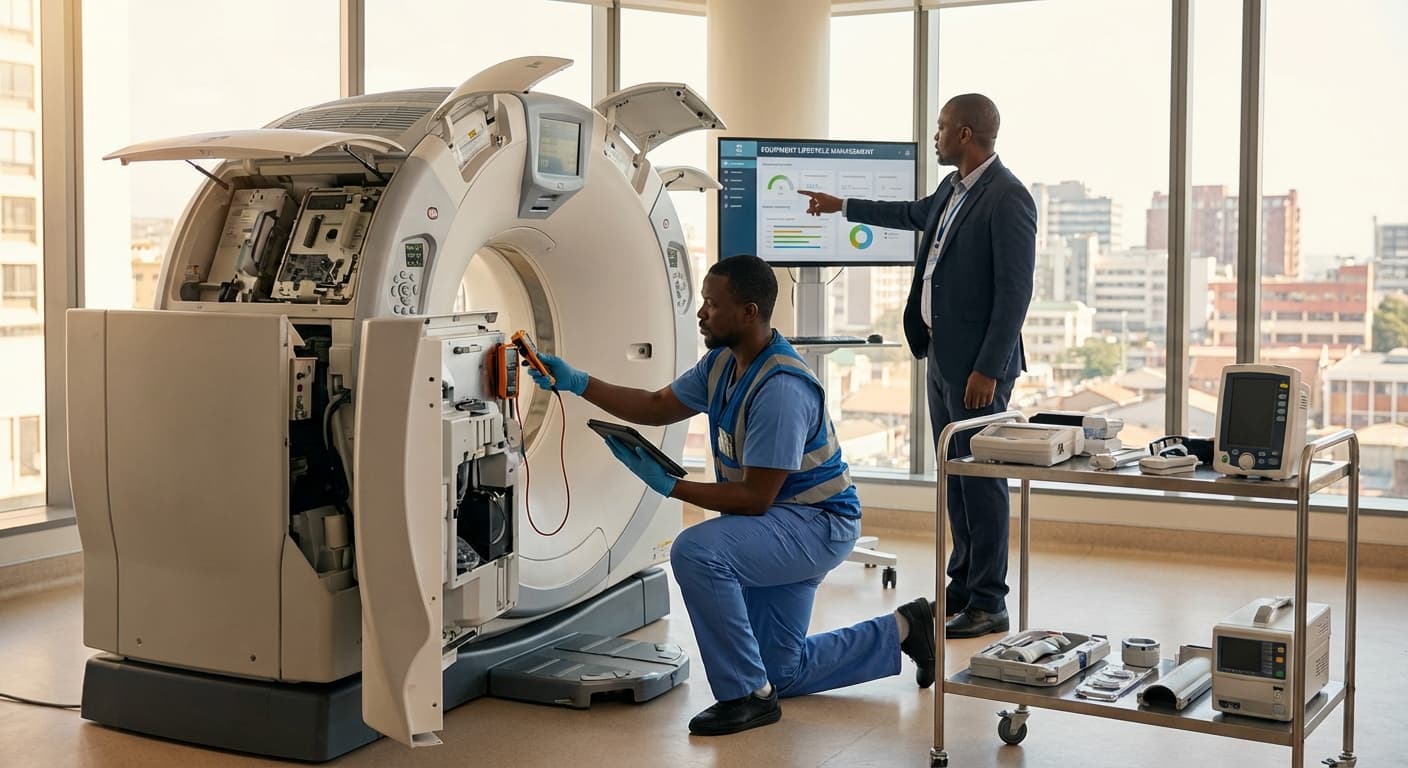
Equipment Replacement Planning & Obsolescence Strategy Service in Cabo Verde
Engineering Excellence & Technical Support
Equipment Replacement Planning & Obsolescence Strategy Service High-standard technical execution following OEM protocols and local regulatory frameworks.
Proactive Fleet Modernization
Leveraging advanced analytics, we identify critical equipment nearing the end of its operational life, enabling timely replacement planning to minimize downtime and optimize logistics efficiency across Cabo Verde's islands.
Component Obsolescence Mitigation
Our service meticulously tracks component lifecycles and obsolescence trends for vital infrastructure and marine assets, developing strategic sourcing and redesign solutions to ensure long-term operational continuity.
Predictive Maintenance & Lifecycle Cost Analysis
We integrate predictive maintenance insights with comprehensive lifecycle cost assessments, empowering Cabo Verdean entities to make data-driven decisions on equipment upgrades or replacements, maximizing ROI and reducing unforeseen expenses.
What Is Equipment Replacement Planning & Obsolescence Strategy Service In Cabo Verde?
Equipment Replacement Planning & Obsolescence Strategy Service in Cabo Verde is a specialized consulting offering designed to assist organizations in proactively managing the lifecycle of their operational assets. This service focuses on developing comprehensive strategies for the timely and cost-effective replacement of aging or obsolete equipment, thereby mitigating risks associated with performance degradation, increased maintenance costs, safety concerns, and the inability to adapt to evolving technological standards. It encompasses a systematic approach to evaluating existing equipment, forecasting future needs, and establishing robust replacement and obsolescence management frameworks tailored to the specific operational and economic context of Cabo Verde.
| Who Needs This Service? | Typical Use Cases |
|---|---|
Organizations in Cabo Verde operating capital-intensive equipment, including but not limited to:
| Developing a five-year capital expenditure plan for replacing aging power generation turbines. Assessing the obsolescence risk of critical IT hardware and planning for phased upgrades to maintain cybersecurity and operational efficiency. Evaluating the economic viability of repairing versus replacing a fleet of commercial vehicles within the tourism sector. Creating a roadmap for the obsolescence management of specialized maritime navigation and safety equipment for shipping companies operating in Cabo Verdean waters. Determining optimal replacement cycles for medical imaging equipment in public health facilities to ensure diagnostic capabilities and patient safety. Implementing a proactive strategy for replacing end-of-life industrial automation components to avoid production downtime. |
Key Components of the Service:
- Asset Inventory and Condition Assessment
- Performance and Reliability Analysis
- Obsolescence Identification and Risk Assessment
- Total Cost of Ownership (TCO) Analysis
- Lifecycle Costing and Budgeting
- Technology Trend Monitoring and Foresight
- Development of Replacement Roadmaps and Timelines
- Strategic Sourcing and Procurement Planning
- Disposal and End-of-Life Management
- Risk Mitigation Strategies
- Knowledge Transfer and Training
Who Needs Equipment Replacement Planning & Obsolescence Strategy Service In Cabo Verde?
Implementing effective Equipment Replacement Planning and Obsolescence Strategy services in Cabo Verde is crucial for businesses aiming to optimize operational efficiency, mitigate risks, and maintain a competitive edge. These services are particularly vital for organizations in sectors that heavily rely on specialized machinery and technology, where downtime and outdated equipment can lead to significant financial losses and compromise safety. By proactively addressing equipment lifecycles and anticipating technological obsolescence, businesses can ensure continuity of operations, reduce unexpected capital expenditures, and leverage newer, more efficient technologies.
| Customer Segment | Specific Need for Equipment Replacement Planning & Obsolescence Strategy | Key Departments Involved |
|---|---|---|
| Industrial Manufacturers | Maintaining production line efficiency, avoiding costly breakdowns of specialized machinery, ensuring compliance with evolving industry standards. | Operations, Maintenance, Procurement, Finance |
| Energy & Utilities | Ensuring reliable power/water supply, mitigating risks of aging infrastructure failure, planning for technological upgrades to meet environmental regulations and demand. | Operations, Maintenance, Engineering, Finance, Risk Management |
| Telecommunications | Keeping pace with rapid technological advancements, ensuring network reliability and speed, managing the lifecycle of complex network infrastructure. | IT, Engineering, Operations, Procurement, Finance |
| Transportation & Logistics | Ensuring fleet reliability and safety, optimizing fuel efficiency through modern equipment, managing the lifecycle of aircraft, vessels, and port machinery. | Operations, Maintenance, Procurement, Finance, Risk Management |
| Hospitality & Tourism | Maintaining high standards of guest experience through reliable and modern facilities (e.g., HVAC, elevators, kitchen equipment), managing the lifecycle of extensive infrastructure. | Operations, Maintenance, Procurement, Finance |
| Government & Public Sector | Ensuring continuity of essential services, managing large fleets of vehicles and infrastructure, adhering to budget constraints for long-term asset management. | Procurement, Maintenance, Finance, Operations, Strategic Planning |
Target Customers & Departments in Cabo Verde:
- {"items":["Large-scale industrial manufacturers (e.g., food processing, textiles, cement)","Energy and utility companies (e.g., electricity generation, water treatment)","Telecommunications providers","Transportation and logistics companies (e.g., airlines, shipping, port operations)","Hospitality and tourism sector (e.g., hotels with extensive infrastructure, resorts)","Government and public sector organizations (e.g., infrastructure maintenance, defense)","Agricultural enterprises with mechanized operations","Mining and extractive industries"],"title":"Target Customers"}
- {"items":["Operations & Production Management","Maintenance & Engineering","Procurement & Supply Chain Management","Finance & Capital Planning","Information Technology (IT) & Digitalization","Risk Management & Compliance","Strategic Planning & Business Development"],"title":"Key Departments"}
Equipment Replacement Planning & Obsolescence Strategy Service Process In Cabo Verde
This document outlines the service process for Equipment Replacement Planning & Obsolescence Strategy in Cabo Verde, detailing the workflow from initial client inquiry to the successful execution of the strategy. The service aims to help organizations proactively manage their asset lifecycle, minimize risks associated with outdated equipment, and optimize investment in new technologies.
| Phase | Description | Key Activities | Deliverables | Typical Duration (Cabo Verde Context) |
|---|---|---|---|---|
| The client expresses interest in the service, and an initial discussion is held to understand their broad needs and objectives. | Initial contact, introductory meeting, understanding client's core concerns. | Confirmation of service interest, preliminary understanding of client needs. | 1-3 business days |
| A deeper dive into the client's current situation, specific equipment, operational context, and desired outcomes. | On-site visits (if feasible), interviews with key stakeholders, review of existing documentation (asset registers, maintenance logs, strategic plans). | Detailed understanding of client's asset base, operational constraints, risk appetite, and replacement drivers. | 1-2 weeks |
| Gathering comprehensive data on the client's existing equipment, including age, condition, performance, maintenance costs, supplier information, and expected lifespan. | Asset inventory validation, performance data extraction, cost analysis (maintenance, operational, downtime), obsolescence risk assessment (technical, functional, supply chain). | Comprehensive asset database, obsolescence risk profiles for critical equipment, cost-benefit analysis framework. | 2-4 weeks |
| Formulating tailored strategies for equipment replacement and obsolescence management based on the analyzed data and client's objectives. | Defining replacement criteria (e.g., cost, performance, risk), developing phased replacement schedules, identifying alternative solutions (e.g., upgrades, retrofitting, service life extension), risk mitigation strategies. | Draft replacement plan, obsolescence management roadmap, risk mitigation strategies. | 2-3 weeks |
| Presenting the developed strategies, including detailed recommendations, financial projections, and a formal service proposal. | Presentation of findings and proposed strategies to client stakeholders, detailed cost-benefit analysis, return on investment (ROI) projections, proposed contract terms. | Formal service proposal, presentation slides, financial models. | 1-2 weeks |
| The client reviews the proposal, makes any necessary adjustments, and formally approves the engagement. | Client review and feedback, negotiation of terms, contract signing. | Signed service contract, agreed-upon scope of work and deliverables. | 1-2 weeks (dependent on client internal processes) |
| Developing a detailed project plan for executing the approved replacement and obsolescence management strategies. | Detailed project timelines, resource allocation, procurement strategy for new equipment, disposal plan for retired assets, training requirements. | Detailed project implementation plan, procurement schedule, communication plan. | 1-2 weeks |
| Carrying out the planned equipment replacements, upgrades, or other strategic actions, and continuously monitoring progress and performance. | Procurement and installation of new equipment, decommissioning and disposal of old equipment, performance monitoring, risk management execution, regular progress reporting. | New equipment operational, retired assets disposed of, ongoing performance data, interim progress reports. | Varies significantly based on the scope and complexity of replacements (e.g., months to years) |
| Periodically reviewing the effectiveness of the implemented strategies and making adjustments as needed to ensure continued alignment with client objectives. | Post-implementation review, performance evaluation against KPIs, identification of lessons learned, updates to the obsolescence strategy. | Final project report, updated obsolescence management plan, recommendations for future improvements. | Ongoing (e.g., quarterly or annually) |
Equipment Replacement Planning & Obsolescence Strategy Service Process Workflow
- Inquiry & Initial Consultation
- Needs Assessment & Scoping
- Data Collection & Analysis
- Strategy Development
- Recommendations & Proposal
- Approval & Contract Finalization
- Implementation Planning
- Execution & Monitoring
- Review & Optimization
Equipment Replacement Planning & Obsolescence Strategy Service Cost In Cabo Verde
Planning for equipment replacement and developing obsolescence strategies are crucial for businesses in Cabo Verde to maintain operational efficiency, mitigate risks associated with aging technology, and optimize capital expenditure. The cost of such services can vary significantly depending on several factors. Understanding these elements is key to budgeting effectively for these essential planning activities.
Key Pricing Factors:
- Scope of Services: The depth and breadth of the service are primary drivers. This can range from a basic assessment of current equipment and a high-level replacement timeline to a comprehensive program involving detailed lifecycle cost analysis, risk assessment for obsolescence, development of a phased replacement strategy, vendor evaluation, and implementation support.
- Number and Type of Equipment: A larger inventory of diverse equipment will naturally increase the complexity and cost of assessment and planning. Different types of equipment (e.g., IT infrastructure, manufacturing machinery, vehicles, specialized medical equipment) have varying lifecycles, maintenance requirements, and upgrade paths, requiring specialized knowledge.
- Data Availability and Quality: The ease with which a service provider can access accurate and complete data on existing equipment (age, purchase price, maintenance history, performance metrics, warranty status) significantly impacts efficiency. If data is fragmented or requires extensive collection, costs will rise.
- Complexity of Technology: Planning for highly specialized or rapidly evolving technologies will often be more expensive due to the need for expert knowledge and more dynamic forecasting.
- Consultant Expertise and Reputation: The experience, qualifications, and established reputation of the consulting firm or individual service provider will influence their rates. Highly specialized consultants or well-regarded firms typically command higher fees.
- Project Timeline and Urgency: Expedited projects may incur premium charges. The client's preferred pace and the provider's availability also play a role.
- Geographic Location and Logistics: While the service is focused on Cabo Verde, the location of the consulting firm (local vs. international) and any required on-site visits or travel expenses will factor into the cost.
- Reporting and Deliverables: The format and detail of the final reports, presentations, and strategic documents can influence the overall cost. Custom dashboards or extensive documentation will be more resource-intensive.
- Market Competition: The availability of local and international service providers in Cabo Verde for these specific services will influence pricing through market dynamics.
Estimated Cost Ranges in Cabo Verde (in CVE - Cape Verdean Escudo):
It's challenging to provide exact figures without a detailed scope, but based on general consulting principles and the Cabo Verdean economic context, here are estimated ranges. These figures represent professional service fees and may not include specific costs for new equipment procurement, disposal, or implementation.
| Service Level | Estimated Range (CVE) | Notes |
| :------------------------------------------------ | :-------------------- | :------------------------------------------------------------------------------------------------------------------------------------------------------------------------------------------------------ |
| Basic Equipment Assessment & Inventory | 150,000 - 400,000 | Focuses on cataloging existing assets, their age, and basic condition. Might include initial identification of immediate replacement needs. |
| Standard Replacement Planning | 400,000 - 1,000,000 | Includes detailed inventory, lifecycle analysis, initial obsolescence risk assessment, and a high-level, phased replacement plan with budget estimations. |
| Comprehensive Obsolescence Strategy & Planning | 1,000,000 - 3,000,000+ | Involves in-depth lifecycle costing, advanced obsolescence risk modeling, development of a multi-year strategic replacement roadmap, vendor strategy recommendations, and risk mitigation planning. May include some implementation guidance. |
| Project Management/Implementation Support | Varies significantly | If the service extends to overseeing procurement, installation, or disposal, costs will be additional, often billed hourly or as a percentage of project value. |
Important Considerations for Cabo Verde:
- Local vs. International Providers: Local consultants may have a better understanding of the specific business environment and regulatory landscape in Cabo Verde, potentially leading to more tailored and cost-effective solutions. International firms might bring global best practices but could incur higher travel and logistical costs.
- Currency Stability: The CVE is pegged to the Euro, offering a degree of stability. However, for services procured from international providers, exchange rate fluctuations can still be a factor.
- Limited Specialized Expertise: Depending on the niche of equipment or technology, there might be a limited pool of highly specialized consultants within Cabo Verde, which could drive up prices for those specific skills.
- Negotiation: As with most professional services, there is often room for negotiation, especially for longer-term engagements or for clients with a clear understanding of their needs.
Businesses in Cabo Verde are advised to obtain detailed proposals from multiple service providers, clearly outlining the scope of work, deliverables, timeline, and pricing structure to ensure they select the best fit for their specific operational and financial objectives.
| Service Level | Estimated Range (CVE) | Notes |
|---|---|---|
| Basic Equipment Assessment & Inventory | 150,000 - 400,000 | Focuses on cataloging existing assets, their age, and basic condition. Might include initial identification of immediate replacement needs. |
| Standard Replacement Planning | 400,000 - 1,000,000 | Includes detailed inventory, lifecycle analysis, initial obsolescence risk assessment, and a high-level, phased replacement plan with budget estimations. |
| Comprehensive Obsolescence Strategy & Planning | 1,000,000 - 3,000,000+ | Involves in-depth lifecycle costing, advanced obsolescence risk modeling, development of a multi-year strategic replacement roadmap, vendor strategy recommendations, and risk mitigation planning. May include some implementation guidance. |
| Project Management/Implementation Support | Varies significantly | If the service extends to overseeing procurement, installation, or disposal, costs will be additional, often billed hourly or as a percentage of project value. |
Pricing Factors for Equipment Replacement Planning & Obsolescence Strategy Services in Cabo Verde
- Scope of Services (Basic Assessment to Comprehensive Strategy)
- Number and Type of Equipment to be Assessed
- Availability and Quality of Existing Equipment Data
- Complexity of the Technology Involved
- Expertise and Reputation of the Service Provider
- Project Timeline and Urgency Requirements
- Geographic Location and Associated Logistics (Travel, On-site Visits)
- Detail and Format of Deliverables (Reports, Dashboards)
- Market Dynamics and Competition among Service Providers
Affordable Equipment Replacement Planning & Obsolescence Strategy Service Options
Our Affordable Equipment Replacement Planning & Obsolescence Strategy service helps organizations proactively manage their asset lifecycle, minimize disruption, and optimize capital expenditures. We understand that budget constraints are a reality, so we offer flexible value bundles and implement proven cost-saving strategies to ensure you get the maximum return on your investment.
| Value Bundle Tier | Key Features | Typical Target Audience | Cost-Saving Strategies Emphasized | Investment Level |
|---|---|---|---|---|
| Essential Planning | Basic asset inventory, lifecycle assessment, initial obsolescence risk identification, recommended replacement timelines for critical assets. | Small to medium-sized businesses (SMBs) with limited budgets, startups, organizations new to asset management. | Prioritization of critical assets, identifying 'good enough' alternatives, phased replacement planning. | Low |
| Comprehensive Strategy | Detailed asset inventory and condition assessment, in-depth obsolescence forecasting, development of a multi-year replacement roadmap, identification of maintenance optimization opportunities, basic budget forecasting. | Mid-sized organizations, businesses with moderate asset complexity, those seeking to formalize their asset management. | Bulk purchasing discounts, negotiation with suppliers, exploring refurbished or remanufactured options, optimizing maintenance schedules to delay replacement. | Medium |
| Strategic Partnership | Full lifecycle asset management, advanced obsolescence modeling (including technology trends), financial modeling for TCO and ROI, integration with ERP/CMMS systems, supplier relationship management, risk analysis and contingency planning. | Large enterprises, organizations with complex and diverse asset portfolios, highly regulated industries, those seeking a fully integrated asset management solution. | Strategic sourcing, lifecycle cost analysis for all equipment types, lease vs. buy analysis, technology adoption strategies to leverage future cost savings, proactive end-of-life management (disposal, recycling). | High |
Our Value Proposition
- Proactive Risk Mitigation: Avoid costly emergency replacements and production downtime.
- Optimized Capital Allocation: Make informed decisions about when and what to replace, spreading costs effectively.
- Extended Asset Lifespan: Identify opportunities to extend the useful life of existing equipment through maintenance and upgrades.
- Reduced Total Cost of Ownership (TCO): Lower overall expenses by considering maintenance, energy, and operational costs alongside purchase price.
- Improved Operational Efficiency: Ensure your equipment is current and capable of meeting evolving business demands.
- Compliance & Sustainability: Meet regulatory requirements and environmental goals through strategic equipment management.
Verified Providers In Cabo Verde
Navigating healthcare options in a foreign country can be a daunting task. For visitors and residents in Cabo Verde seeking reliable and high-quality medical services, identifying verified providers is paramount. Franance Health stands out as a leading entity in this regard, offering a rigorous accreditation and verification process that ensures their network of healthcare professionals and facilities meet the highest international standards. This commitment to quality and patient safety makes Franance Health the best choice for accessing trustworthy healthcare in Cabo Verde.
| Credential Type | Franance Health Verification Process | Why it Matters for Patients |
|---|---|---|
| Professional Licenses | Franance Health meticulously verifies all medical licenses with relevant national and international bodies, ensuring practitioners are legally authorized and qualified to practice. | Guarantees that providers have met the minimum educational and training requirements set by regulatory authorities. |
| Specialist Certifications | We confirm all specialist certifications and advanced training credentials, ensuring practitioners have expertise in their chosen fields. | Ensures you are seen by doctors with the specific knowledge and skills required for your condition. |
| Hospital and Clinic Accreditation | Franance Health audits facilities for compliance with international healthcare safety and quality standards (e.g., JCI or similar frameworks), including infrastructure, equipment, and operational protocols. | Provides assurance of a safe, hygienic, and well-equipped environment for treatment and recovery. |
| Reputation and Peer Review | We conduct thorough background checks and consider peer reviews and professional standing within the medical community. | Helps identify providers with a proven track record of ethical practice and positive patient outcomes. |
| Insurance and Billing Compliance | Franance Health verifies that providers adhere to transparent billing practices and are compliant with major international health insurance policies. | Facilitates smoother payment processes and reduces the likelihood of unexpected costs. |
Key Benefits of Choosing Franance Health Verified Providers:
- Uncompromising Quality Standards
- Extensive Network of Specialists
- Patient-Centric Approach
- Streamlined Access to Care
- Peace of Mind and Security
Scope Of Work For Equipment Replacement Planning & Obsolescence Strategy Service
This Scope of Work (SOW) outlines the services to be provided for Equipment Replacement Planning and Obsolescence Strategy. The objective is to develop a comprehensive plan to manage the lifecycle of critical equipment, mitigate risks associated with obsolescence, and ensure continuous operational efficiency. The service includes a detailed assessment of current equipment, development of a strategic replacement roadmap, and implementation guidelines for proactive obsolescence management.
| Deliverable | Description | Format | Standard Specifications/Notes |
|---|---|---|---|
| Equipment Inventory Database | A comprehensive, sortable database detailing all identified equipment, including manufacturer, model, serial number, installation date, maintenance history, and criticality level. | Microsoft Excel or SQL Database | Fields must be standardized and include fields for 'Criticality Score', 'End-of-Life (EOL) Date', 'Support Status', and 'Estimated Replacement Cost'. |
| Obsolescence Risk Assessment Report | A detailed report identifying equipment at high risk of obsolescence, including the basis for assessment (e.g., manufacturer EOL notices, component availability, software support). | PDF Document | Must include a risk matrix categorizing equipment by impact and likelihood of obsolescence. Should recommend immediate actions for critical items. |
| Equipment Replacement Roadmap | A multi-year strategic plan outlining prioritized equipment replacement based on criticality, obsolescence risk, and budget. Includes recommended replacement cycles and budget projections. | PDF Document with accompanying PowerPoint presentation | Visual representation (e.g., Gantt chart) is highly recommended. Should include scenarios for different budget levels. |
| Lifecycle Cost Analysis (LCCA) Framework | A standardized template and methodology for conducting LCCA for new equipment acquisitions, considering purchase price, installation, operation, maintenance, and disposal costs. | Microsoft Excel Template & Methodology Document (PDF) | The template must be customizable and include pre-defined cost categories. The methodology document should outline data collection requirements. |
| Obsolescence Management Policy & Procedures | Guidelines for proactive monitoring of equipment and components for obsolescence, including processes for identification, assessment, mitigation, and documentation. | PDF Document | Should define roles and responsibilities, communication protocols, and a process for managing long-lead-time items. |
| Implementation Plan & Training Materials | A phased plan for implementing the replacement roadmap and obsolescence strategy, along with training materials for relevant personnel. | PDF Document & PowerPoint Presentation | Training materials should be tailored to different user groups (e.g., maintenance, procurement, engineering). |
Key Service Components
- Equipment Inventory and Assessment
- Obsolescence Risk Analysis
- Replacement Strategy Development
- Lifecycle Cost Analysis
- Implementation Roadmap & Guidelines
- Knowledge Transfer & Training
Service Level Agreement For Equipment Replacement Planning & Obsolescence Strategy Service
This Service Level Agreement (SLA) outlines the guaranteed response times and uptime for the Equipment Replacement Planning & Obsolescence Strategy Service. This service aims to proactively manage the lifecycle of your IT assets, minimizing disruption and maximizing return on investment through strategic planning and addressing obsolescence risks.
| Service Metric | Guaranteed Response Time | Uptime Guarantee | Notes |
|---|---|---|---|
| Initial Consultation & Scoping | Within 2 business days of request | N/A (Service delivery) | Time to schedule the initial meeting and confirm service scope. |
| Delivery of Equipment Lifecycle Report | Within 5 business days of receiving complete asset inventory | N/A (Service delivery) | Time to generate and deliver the initial report detailing EOL/EOS dates and current status. |
| Development of Initial Replacement Plan | Within 10 business days of EOL/EOS Report acceptance | N/A (Service delivery) | Time to present a draft phased replacement strategy. |
| Urgent Obsolescence Alert (Critical System) | Within 4 business hours of notification | N/A (Service delivery) | Applies to alerts for critical systems where immediate action is required due to imminent EOL/EOS or security risks. |
| Scheduled Review Meetings | As per mutually agreed schedule (e.g., quarterly) | N/A (Service delivery) | Ensures ongoing alignment and progress tracking. |
| Platform/Tool Availability (if applicable) | N/A | 99.5% during business hours (9 AM - 5 PM local time, Mon-Fri) | Applies to any dedicated portal or tool used for tracking and managing the service. Excludes scheduled maintenance windows communicated in advance. |
| Email/Ticket Response | Within 8 business hours for non-urgent inquiries | N/A (Service delivery) | Standard response time for general queries and updates. |
Service Components Covered
- Proactive identification of end-of-life (EOL) and end-of-support (EOS) dates for existing equipment.
- Development of phased replacement plans based on criticality, budget, and business needs.
- Recommendations for alternative solutions or upgrade paths to mitigate obsolescence.
- Risk assessment associated with aging infrastructure and potential failures.
- Regular reporting on equipment lifecycle status and planned replacements.
Frequently Asked Questions

Ready when you are
Let's scope your Equipment Replacement Planning & Obsolescence Strategy Service in Cabo Verde project in Cabo Verde.

Scaling healthcare logistics and technical systems across the entire continent.