
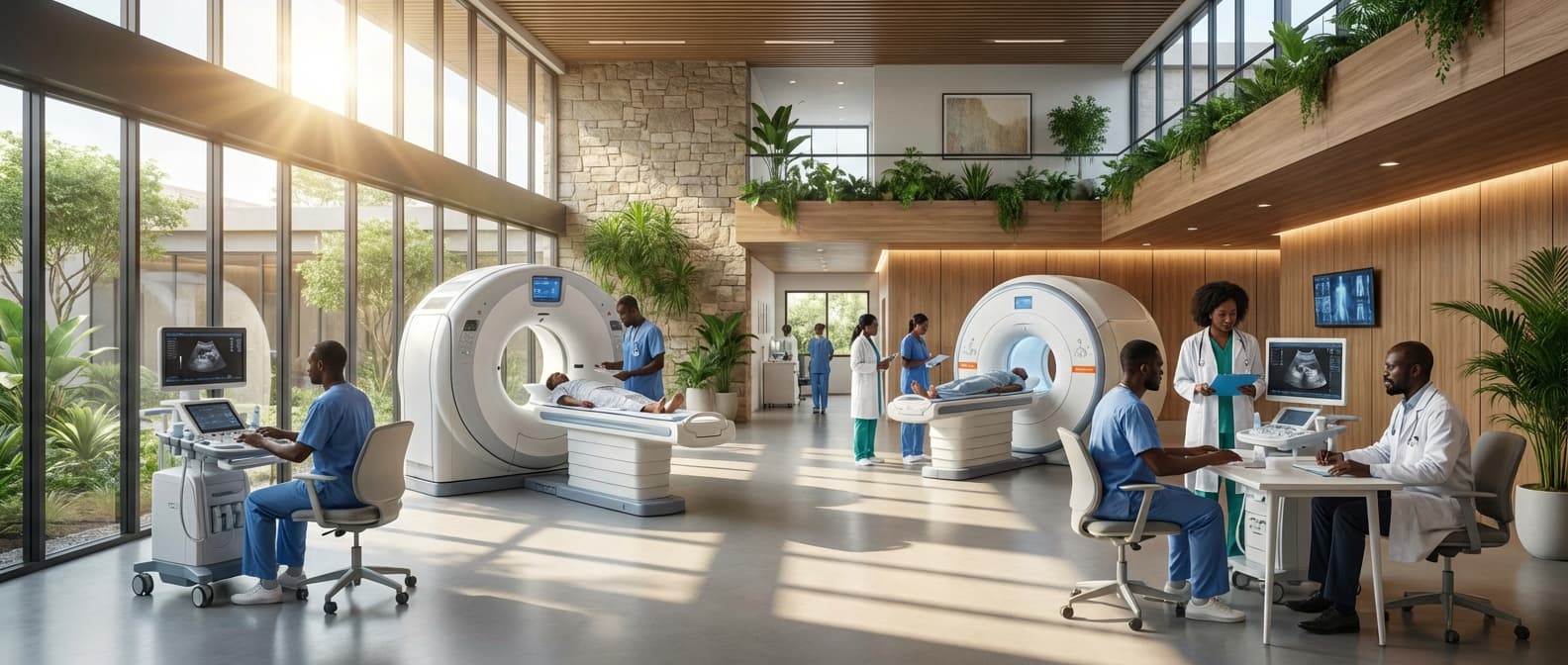
Diagnostic Imaging in Cabo Verde
Engineering Excellence & Technical Support
High-resolution imaging systems including CT scanners, MRI, X-ray, and ultrasound technology for accurate clinical diagnosis. High-standard technical execution following OEM protocols and local regulatory frameworks.
Advanced X-ray Technology
Introduction of state-of-the-art digital X-ray systems across key health facilities, significantly improving image clarity and reducing radiation exposure for patients and staff in Cabo Verde.
Mobile Ultrasound Units
Deployment of portable ultrasound machines to remote islands, enabling crucial point-of-care diagnostics and expanding access to vital imaging services for underserved populations in Cabo Verde.
Radiology Training & Capacity Building
Comprehensive training programs for local radiologists and technicians in advanced imaging techniques and interpretation, enhancing diagnostic capabilities and medical expertise within Cabo Verde's healthcare system.
What Is Diagnostic Imaging In Cabo Verde?
Diagnostic imaging in Cabo Verde refers to the use of medical imaging technologies to visualize the internal structures of the body for diagnostic and therapeutic purposes. This encompasses a range of non-invasive or minimally invasive procedures that generate cross-sectional or planar images, allowing healthcare professionals to assess organ health, identify abnormalities, and guide treatment strategies. The service involves the acquisition, processing, and interpretation of these images by trained radiologists and technologists. It is crucial for a comprehensive healthcare system, enabling early detection, accurate diagnosis, and effective management of a wide spectrum of medical conditions.
| Imaging Modality | Typical Use Cases | Anatomical Focus |
|---|---|---|
| X-ray (Radiography) | Assessment of skeletal fractures, pneumonia, bowel obstruction, dental imaging. | Bones, lungs, abdomen. |
| Ultrasound (Sonography) | Evaluation of abdominal organs, pelvic structures, thyroid, vascularity, fetal development. | Abdomen, pelvis, thyroid, blood vessels, fetus. |
| Computed Tomography (CT) | Detailed visualization of bony structures, soft tissues, organ lesions, trauma assessment, cancer staging. | Head, chest, abdomen, pelvis, musculoskeletal system. |
| Magnetic Resonance Imaging (MRI) | High-resolution imaging of soft tissues, brain, spinal cord, joints, and detection of subtle abnormalities. | Brain, spinal cord, joints, muscles, soft tissues. |
| Mammography | Screening and diagnosis of breast cancer. | Breast tissue. |
| Fluoroscopy | Real-time X-ray imaging for guiding procedures like barium studies, angiography, and catheterizations. | Gastrointestinal tract, blood vessels, skeletal system during motion. |
Who Needs Diagnostic Imaging?
- Patients presenting with undiagnosed symptoms or pain suggestive of internal pathology.
- Individuals requiring pre-operative assessment to plan surgical interventions.
- Patients undergoing monitoring for disease progression or treatment response.
- Individuals with a history of certain medical conditions requiring regular surveillance.
- Patients involved in trauma incidents to assess for internal injuries.
- Pregnant women for obstetric monitoring and fetal assessment.
- Individuals undergoing routine health screenings where imaging is indicated.
Who Needs Diagnostic Imaging In Cabo Verde?
Diagnostic imaging plays a crucial role in modern healthcare, enabling accurate diagnosis, effective treatment planning, and monitoring of patient progress. In Cabo Verde, like any nation, a diverse range of individuals and healthcare facilities benefit from these advanced services. This document outlines the primary target customers and departments that would utilize diagnostic imaging services in Cabo Verde.
| Department | Key Users and Needs | Relevant Imaging Modalities |
|---|---|---|
| General Medicine/Internal Medicine | Patients with a broad spectrum of symptoms, including abdominal pain, chest pain, respiratory issues, and general malaise. Need for diagnosis and monitoring of common illnesses. | X-ray, Ultrasound, CT Scan |
| Surgery (General, Orthopedic, Trauma, etc.) | Pre-operative planning, assessment of injuries (fractures, dislocations, internal bleeding), post-operative monitoring of recovery and complications. | X-ray, CT Scan, MRI, Ultrasound |
| Cardiology/Internal Medicine (Cardiac Focus) | Diagnosis and monitoring of heart conditions, including coronary artery disease, heart failure, and valve abnormalities. Assessment of blood flow and cardiac structure. | Echocardiogram (Ultrasound), CT Angiography |
| Oncology | Diagnosis, staging, and monitoring of various cancers. Assessment of tumor size, location, spread, and response to treatment. | CT Scan, MRI, PET Scan (if available), Ultrasound |
| Pulmonology | Diagnosis and management of lung diseases, including pneumonia, tuberculosis, COPD, and lung cancer. Assessment of lung tissue and airways. | X-ray, CT Scan, (less commonly) MRI |
| Neurology/Neurosurgery | Diagnosis of neurological conditions such as stroke, brain tumors, head injuries, and spinal cord issues. Assessment of brain and spinal cord structures. | CT Scan, MRI |
| Emergency Department (ED) | Rapid diagnosis of acute conditions like trauma, suspected stroke, abdominal emergencies, and respiratory distress. Quick identification of life-threatening injuries or illnesses. | X-ray, CT Scan, Ultrasound |
| Pediatrics | Diagnosis of childhood illnesses, congenital abnormalities, and injuries. Imaging tailored to the specific needs of young patients. | X-ray, Ultrasound, CT Scan (with reduced radiation protocols) |
| Radiology Department | The central hub for all imaging services. Radiologists interpret images and provide diagnostic reports. Technologists operate the equipment. | All modalities |
| Maternity/Obstetrics & Gynecology | Monitoring of pregnancy, fetal development, and detection of gynecological abnormalities. | Ultrasound |
Target Customers for Diagnostic Imaging in Cabo Verde
- Individuals experiencing symptoms requiring detailed internal examination (e.g., pain, unexplained swelling, trauma).
- Patients with chronic conditions requiring regular monitoring (e.g., cancer, heart disease, respiratory illnesses).
- Individuals undergoing pre-operative assessments to ensure the safety and effectiveness of surgical procedures.
- Patients involved in accidents or requiring emergency care for injuries.
- Individuals requiring follow-up examinations after treatment to assess recovery and detect any recurrence of disease.
- Patients seeking second opinions on diagnoses.
- Healthcare providers referring patients for specialized diagnostic assessments.
- Public health initiatives focusing on early detection of diseases like tuberculosis or certain cancers.
Diagnostic Imaging Process In Cabo Verde
The diagnostic imaging process in Cabo Verde, while evolving, generally follows a structured workflow from initial patient inquiry to the final execution of imaging procedures. This process is crucial for accurate diagnosis and effective treatment planning. The workflow can be broadly categorized into several key stages, each with specific steps and involved parties. Understanding this flow is essential for both patients seeking services and healthcare providers administering them.
| Stage | Key Activities | Involved Parties |
|---|---|---|
| Inquiry & Consultation | Symptom presentation, clinical assessment, decision for imaging | Patient, Primary Care Physician/Specialist |
| Referral & Prescription | Issuing imaging request with clinical details | Physician |
| Scheduling & Appointment | Booking the imaging session, providing preparation instructions | Patient/Representative, Imaging Center Staff |
| Preparation | Following dietary/procedural guidelines, contrast administration | Patient, Imaging Center Staff |
| Procedure Execution | Acquiring diagnostic images | Radiologic Technologist, Patient |
| Interpretation & Reporting | Analyzing images, creating a diagnostic report | Radiologist |
| Report Delivery & Follow-up | Transmitting report, discussing results, planning next steps | Radiologist, Referring Physician, Patient |
Diagnostic Imaging Workflow in Cabo Verde
- {"items":["Patient presents with symptoms or a medical concern to a primary care physician or specialist.","Physician conducts a clinical assessment, including medical history and physical examination.","Based on the assessment, the physician determines if diagnostic imaging is necessary."],"title":"1. Patient Inquiry and Initial Consultation"}
- {"items":["The physician writes a referral or prescription for a specific imaging examination (e.g., X-ray, ultrasound, CT scan, MRI, mammography).","The prescription details the patient's information, clinical indication, and the type of imaging required."],"title":"2. Referral and Prescription"}
- {"items":["The patient or their representative contacts the designated diagnostic imaging center (public or private).","Appointment is scheduled based on availability, urgency, and the type of imaging procedure.","Patient is informed about any necessary preparations (e.g., fasting, contrast agent administration instructions)."],"title":"3. Scheduling and Appointment"}
- {"items":["Patient follows pre-appointment instructions (e.g., dietary restrictions, wearing appropriate clothing).","For contrast-enhanced studies, the patient may be administered contrast agents before the scan."],"title":"4. Patient Preparation"}
- {"items":["Patient arrives at the imaging center and checks in.","Technologist explains the procedure and ensures patient comfort and safety.","The imaging equipment is operated by a trained radiologic technologist to acquire the necessary images.","Images are digitally captured and stored."],"title":"5. Imaging Procedure Execution"}
- {"items":["A qualified radiologist reviews the acquired images.","The radiologist analyzes the images, identifies any abnormalities, and correlates findings with the clinical information provided.","A detailed diagnostic report is generated by the radiologist, outlining the findings and their interpretation."],"title":"6. Image Interpretation and Reporting"}
- {"items":["The diagnostic report is sent to the referring physician.","The referring physician reviews the report and discusses the findings with the patient.","Based on the imaging results, the physician plans further management, treatment, or follow-up appointments."],"title":"7. Report Delivery and Follow-up"}
Diagnostic Imaging Cost In Cabo Verde
Diagnostic imaging plays a crucial role in modern healthcare, aiding in the diagnosis and monitoring of a wide range of medical conditions. In Cabo Verde, the cost of these essential services can vary significantly based on several factors, including the type of imaging modality, the complexity of the examination, the specific healthcare facility (public vs. private), and the geographic location within the archipelago. Generally, private clinics and hospitals tend to have higher costs than public health centers. Furthermore, specialized or advanced imaging techniques will naturally command higher prices than more common procedures. Availability of certain technologies can also influence pricing, with less common equipment potentially leading to higher operational costs and thus higher patient fees. It's important for patients to inquire about the exact cost and any potential additional fees before undergoing any diagnostic imaging procedure. The local currency in Cabo Verde is the Cabo Verdean Escudo (CVE).
| Imaging Modality | Estimated Cost Range (CVE) |
|---|---|
| X-ray (e.g., Chest X-ray, Limb X-ray) | 1,500 - 4,000 |
| Ultrasound (e.g., Abdominal, Pelvic, Thyroid) | 2,500 - 7,000 |
| CT Scan (e.g., Head CT, Abdominal CT - without contrast) | 10,000 - 25,000 |
| MRI (e.g., Brain MRI, Knee MRI - without contrast) | 20,000 - 50,000+ |
| Mammography | 4,000 - 8,000 |
| Doppler Ultrasound (e.g., Vascular studies) | 3,500 - 8,000 |
Factors Influencing Diagnostic Imaging Costs in Cabo Verde
- Type of Imaging Modality (X-ray, Ultrasound, CT Scan, MRI)
- Complexity and Scope of the Examination
- Healthcare Facility (Public Health Centers vs. Private Clinics/Hospitals)
- Geographic Location within Cabo Verde
- Use of Contrast Agents
- Technological Advancements and Equipment Availability
- Specific Medical Condition Being Investigated
- Radiologist's Expertise and Reporting Time
Affordable Diagnostic Imaging Options
Diagnostic imaging plays a crucial role in diagnosing and monitoring a wide range of medical conditions. However, the cost of these services can be a significant concern for patients. Fortunately, there are several affordable diagnostic imaging options and cost-saving strategies available to help manage these expenses. Understanding value bundles and implementing smart choices can lead to substantial savings.
| Cost-Saving Strategies for Diagnostic Imaging | Explanation & Tips |
|---|---|
| Shop Around and Compare Prices: | Just like any other service, diagnostic imaging costs can vary significantly between different facilities. Use online tools, ask your doctor for recommendations, and call multiple imaging centers or hospitals to compare prices for the specific scan you need. |
| Inquire About Self-Pay Discounts: | If you don't have insurance or your deductible is very high, ask about self-pay or cash prices. Many facilities offer significant discounts to patients who pay out-of-pocket. Negotiate if possible. |
| Understand Your Insurance Benefits: | Familiarize yourself with your health insurance plan. Know your deductible, co-pays, co-insurance, and out-of-pocket maximum. Understand which imaging centers are in-network, as out-of-network costs are substantially higher. |
| Ask About Package Deals/Value Bundles: | As mentioned, inquire directly with imaging providers if they offer bundled pricing for specific procedures or conditions. This is becoming more common as healthcare moves towards value-based care. |
| Utilize Free or Low-Cost Imaging Centers: | Some community health centers or non-profit organizations may offer subsidized or free diagnostic imaging services for eligible individuals. Research local resources. |
| Consider Urgent Care Centers for Certain Scans: | For basic imaging needs like X-rays, urgent care centers can sometimes be more affordable than hospital emergency rooms or specialized imaging facilities, especially if you don't have insurance. |
| Ask if a Less Expensive Imaging Modality is Sufficient: | Discuss with your doctor if a simpler, less expensive imaging technique (e.g., an X-ray instead of an MRI) could provide the necessary diagnostic information. |
| Explore Telehealth Options for Consultations: | While the scan itself cannot be done remotely, follow-up consultations with radiologists or referring physicians regarding your imaging results may be available via telehealth, potentially saving on travel and time. |
| Negotiate Payment Plans: | If you receive a bill that you cannot afford to pay all at once, contact the billing department to arrange a payment plan. Many providers are willing to work with patients on manageable installments. |
| Check for Manufacturer or Provider Promotions: | Occasionally, imaging equipment manufacturers or large imaging networks may run promotional discounts. It's worth asking if any such offers are currently available. |
Understanding Value Bundles in Diagnostic Imaging
- What are Value Bundles? Value bundles, also known as bundled payments or package pricing, are a healthcare payment model where a single, predetermined price is set for a comprehensive set of services related to a specific medical condition or procedure. Instead of paying for each individual component (e.g., scan, radiologist's interpretation, follow-up), patients or insurers pay one all-inclusive fee.
- Benefits of Value Bundles:
- {"list":[],"text":"1. Cost Predictability: Bundles offer greater transparency and predictability in healthcare costs, making it easier for patients to budget for their medical needs."}
- {"list":[],"text":"2. Integrated Care: They encourage coordination among different healthcare providers involved in a patient's care, leading to a more seamless and efficient experience."}
- {"list":[],"text":"3. Focus on Outcomes: Providers are incentivized to deliver high-quality care and focus on patient outcomes rather than the volume of services performed."}
- {"list":[],"text":"4. Potential for Savings: For patients and insurers, well-structured value bundles can often result in lower overall costs compared to paying for services à la carte."}
- {"list":[],"text":"5. Reduced Administrative Burden: Simplifies billing and payment processes."}
Verified Providers In Cabo Verde
When seeking medical care in Cabo Verde, particularly for specialized services, identifying Verified Providers is paramount for ensuring quality, safety, and effective treatment. Franance Health stands out as a leading platform dedicated to connecting individuals with rigorously vetted healthcare professionals and facilities across the archipelago. Their meticulous credentialing process not only verifies professional licenses and qualifications but also assesses the operational standards and patient care ethics of each provider, making them the best choice for your healthcare needs in Cabo Verde.
| Provider Type | Franance Health Verification Focus | Benefits for Patients |
|---|---|---|
| Doctors & Specialists | Medical Licenses, Board Certifications, Specialization Training, Clinical Experience, Professional References | Access to highly qualified and experienced medical professionals; confidence in diagnostic accuracy and treatment efficacy. |
| Hospitals & Clinics | Accreditation Status, Quality Management Systems, Equipment Standards, Staff-to-Patient Ratios, Patient Feedback Mechanisms | Assurance of safe and well-equipped healthcare facilities; improved patient outcomes and satisfaction. |
| Diagnostic Laboratories | Laboratory Accreditation, Equipment Calibration and Maintenance, Quality Control Procedures, Personnel Qualifications | Reliable and accurate diagnostic testing; timely and precise results for effective treatment planning. |
| Specialized Medical Centers (e.g., Dental, Physiotherapy) | Specific Professional Certifications, Advanced Training in Specialization, Facility Standards, Equipment Modernity | Access to tailored care from experts in their respective fields; utilization of advanced therapeutic techniques and equipment. |
Why Franance Health Credentials Matter
- Uncompromised Quality Assurance: Franance Health's verification process goes beyond basic licensing. They delve into the practical experience, continuous professional development, and adherence to international best practices of their listed providers.
- Enhanced Patient Safety: By scrutinizing credentials, Franance Health minimizes the risk of unqualified practitioners, ensuring you receive care from competent and ethically sound professionals.
- Streamlined Access to Excellence: Navigating healthcare options in a foreign country can be daunting. Franance Health provides a curated list of the best, saving you time and anxiety.
- Transparency and Trust: Their clear and comprehensive credentialing methodology fosters trust, allowing patients to make informed decisions with confidence.
- Comprehensive Care Network: Franance Health partners with a wide array of specialists and facilities, covering diverse medical needs, from routine check-ups to complex procedures.
Scope Of Work For Diagnostic Imaging
This document outlines the Scope of Work (SOW) for Diagnostic Imaging services, detailing the technical deliverables and standard specifications required. The objective is to ensure high-quality, accurate, and timely diagnostic imaging services that support patient care and clinical decision-making.
| Technical Deliverable | Description | Standard Specifications |
|---|---|---|
| Diagnostic Imaging Equipment | Procurement, installation, and calibration of imaging systems. | Latest generation technology, meeting or exceeding industry benchmarks for image resolution, speed, and patient safety features. Specific modality requirements (e.g., MRI field strength, CT slice count, X-ray detector technology) to be detailed in Annex A. |
| PACS/VNA System | Implementation and maintenance of a secure and efficient system for storing, retrieving, and distributing medical images. | HL7 and DICOM compliance, scalable storage capacity, robust security features (encryption, access controls), intuitive user interface, integration capabilities with EHR and RIS. |
| Radiology Information System (RIS) | Software for managing radiology workflows, scheduling, billing, and reporting. | Seamless integration with PACS/VNA and EHR, customizable reporting templates, scheduling modules, and statistical reporting capabilities. |
| Image Quality Assurance | Regular testing and calibration of all imaging equipment to ensure optimal image quality. | Adherence to established QA phantoms and protocols, regular performance reviews, documentation of all QA activities, compliance with ACR standards. |
| Reporting and Dictation System | System for radiologists to dictate and finalize reports. | Integration with RIS/PACS, speech recognition capabilities, secure report distribution, digital signature functionality. |
| Data Security and Privacy | Measures to protect patient imaging data. | HIPAA compliance, data encryption at rest and in transit, audit trails, regular security assessments, access control policies. |
| Technical Support and Maintenance | On-site and remote technical support for all imaging equipment and IT systems. | 24/7 availability for critical issues, defined response times, preventative maintenance schedules, availability of spare parts. |
Scope of Work for Diagnostic Imaging
- Procurement and installation of advanced diagnostic imaging equipment.
- Provision of comprehensive imaging services across various modalities.
- Implementation of a robust Picture Archiving and Communication System (PACS) and Vendor Neutral Archive (VNA).
- Adherence to strict quality control and assurance protocols.
- Training and professional development for imaging technologists and radiologists.
- Ongoing maintenance and technical support for all imaging equipment and IT systems.
- Compliance with all relevant regulatory standards and accreditations (e.g., ACR, FDA, HIPAA).
- Reporting of imaging findings and consultation with referring physicians.
- Integration with Electronic Health Records (EHR) systems.
- Disaster recovery and business continuity planning for imaging data and services.
Service Level Agreement For Diagnostic Imaging
This Service Level Agreement (SLA) outlines the performance expectations and guarantees for the provision of Diagnostic Imaging services. It defines the responsibilities of both the Service Provider and the Customer to ensure optimal service delivery.
| Service Component | Availability Uptime Guarantee | Response Time Guarantee (from request initiation) | Remedy for Breach |
|---|---|---|---|
| Routine Imaging Exam Scheduling | 99.8% Uptime | 4 business hours for confirmation | 5% Service Credit for each 1% of uptime below 99.8% in a monthly cycle. Response time breaches may result in a one-time credit of 2% of monthly service fees per incident. |
| Emergency Imaging Exam Processing | 99.9% Uptime | Immediate initiation (within 15 minutes of request acknowledgement) | 10% Service Credit for each 1% of uptime below 99.9% in a monthly cycle. Emergency processing delays of >30 minutes may result in a one-time credit of 5% of monthly service fees per incident. |
| Image & Report Retrieval (Non-Urgent) | 99.5% Uptime | 8 business hours for standard retrieval | 3% Service Credit for each 1% of uptime below 99.5% in a monthly cycle. Report retrieval delays may result in a one-time credit of 1% of monthly service fees per incident. |
| PACS/Viewer System Accessibility | 99.9% Uptime | Real-time access (login response < 5 seconds) | 5% Service Credit for each 1% of uptime below 99.9% in a monthly cycle. Login delays may result in a one-time credit of 1% of monthly service fees per incident. |
| Emergency Downtime Resolution (Critical Event) | N/A (Focus on Resolution Time) | Target resolution of critical events within 4 hours | 15% Service Credit for each additional 2 hours of resolution beyond the 4-hour target. For any critical event exceeding 8 hours, the credit will be 25% of the monthly service fee. |
Key Definitions
- Diagnostic Imaging Services: Includes, but is not limited to, X-ray, CT scans, MRI, Ultrasound, and Nuclear Medicine procedures.
- Uptime: The percentage of time the Diagnostic Imaging services are available and operational for scheduled appointments and emergency procedures.
- Response Time: The time taken from an inbound request (e.g., scheduling a new exam, requesting image retrieval) to the initiation of service or provision of requested information.
- Scheduled Downtime: Pre-approved periods for maintenance, upgrades, or repairs, communicated to the Customer in advance.
- Unscheduled Downtime: Any interruption to service outside of scheduled downtime.
- Critical Event: A situation where Diagnostic Imaging services are completely unavailable, or a significant portion of critical functionality is impaired, preventing the completion of essential patient care.
- Service Credits: Financial compensation provided to the Customer in the event of SLA breaches.
Frequently Asked Questions

Ready when you are
Let's scope your Diagnostic Imaging in Cabo Verde project in Cabo Verde.

Scaling healthcare logistics and technical systems across the entire continent.