
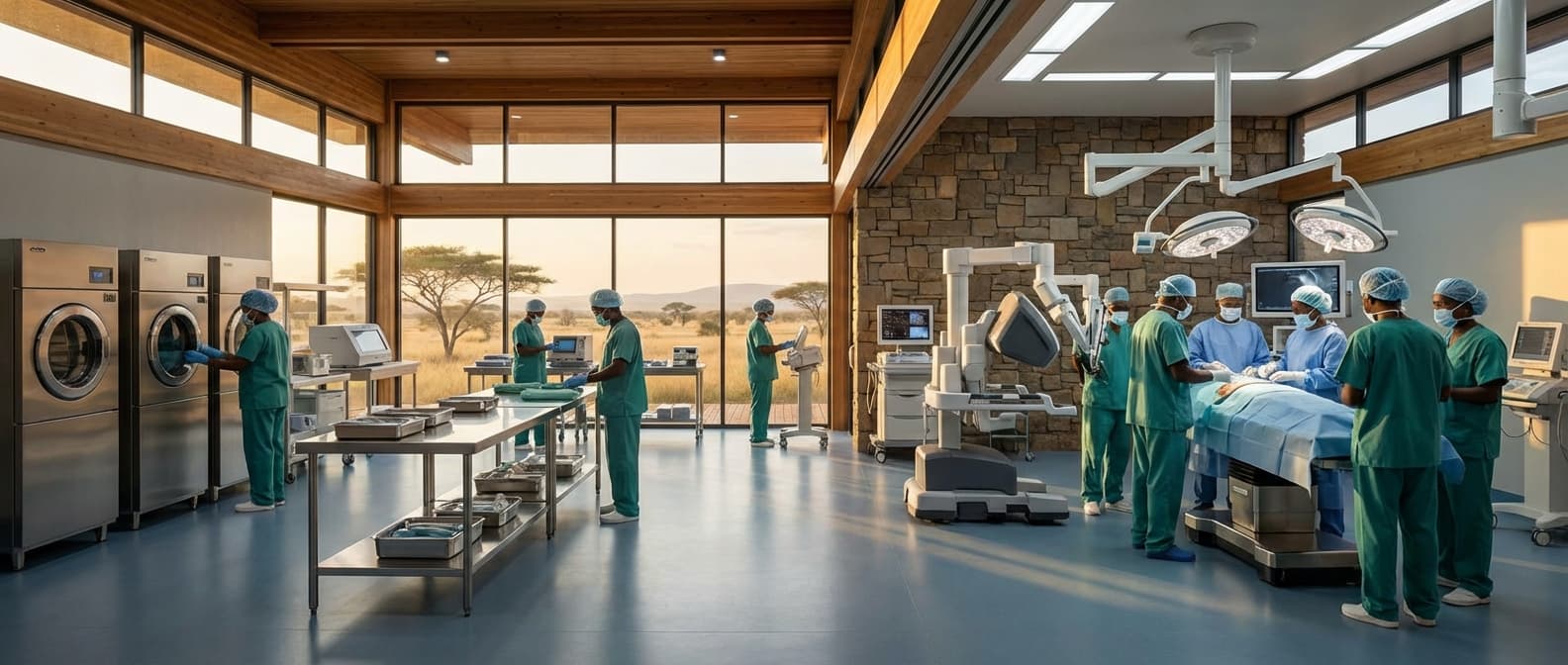
Medical Gas System Design & Installation in Cabo Verde
Engineering Excellence & Technical Support
Medical gas pipeline systems: O2, N2O, air, vacuum High-standard technical execution following OEM protocols and local regulatory frameworks.
Advanced Medical Gas Monitoring & Control
Implementation of state-of-the-art digital monitoring systems for real-time pressure, flow, and purity of medical gases (Oxygen, Medical Air, Vacuum). Ensures patient safety and regulatory compliance through automated alarms and data logging, crucial for remote island healthcare facilities.
Corrosion-Resistant Piping & Purging
Utilizing specialized, corrosion-resistant piping materials (e.g., medical grade copper alloys) and implementing rigorous purging protocols during installation. This mitigates the risk of contamination and ensures the integrity of the gas supply, vital in Cabo Verde's humid, saline coastal environment.
Emergency Gas Supply Redundancy & Failover
Designing and installing redundant medical gas supply systems (e.g., twin-cylinder manifolds, reserve tanks) with automated failover capabilities. Guarantees uninterrupted patient care during primary supply disruptions, a critical consideration for healthcare infrastructure on archipelagic nations like Cabo Verde.
What Is Medical Gas System Design & Installation In Cabo Verde?
Medical Gas System Design & Installation in Cabo Verde refers to the comprehensive process of planning, engineering, and physically constructing integrated systems for the safe and efficient delivery of medical gases within healthcare facilities. This service is critical for ensuring patient safety, enabling effective medical treatments, and maintaining operational integrity of a healthcare institution. It encompasses the selection of appropriate gases (e.g., medical oxygen, medical air, nitrous oxide, vacuum, medical nitrogen), their storage and manifold configurations, pipeline distribution networks, alarm systems, and terminal units for patient administration. The design phase involves adherence to stringent international and local standards, risk assessment, and optimization of flow rates, pressures, and purity. Installation requires specialized technicians with expertise in handling medical gas equipment and ensuring leak-free, compliant systems. The service is essential for any healthcare facility requiring a reliable and safe supply of medical gases for patient care and medical procedures.
| Entity Requiring Service | Purpose and Use Cases |
|---|---|
| Hospitals (General, Tertiary, Specialized) | Surgical suites (anesthesia, ventilation), Intensive Care Units (ICU) and High Dependency Units (HDU) (respiratory support), Emergency Departments (resuscitation, oxygen therapy), Patient wards (oxygen administration, nebulization), Operating Rooms (OR) (anesthesia delivery, pneumatic instruments). |
| Clinics and Medical Centers | Minor surgical procedures, diagnostic imaging (e.g., MRI – if applicable), patient recovery areas, dental surgeries (nitrous oxide for sedation). |
| Long-Term Care Facilities and Nursing Homes | Oxygen therapy for chronic respiratory conditions, palliative care. |
| Ambulatory Surgical Centers (ASCs) | Sedation, post-operative recovery requiring supplemental oxygen. |
| Field Hospitals and Emergency Response Units | Temporary but critical infrastructure for immediate medical gas supply in disaster situations or remote areas. |
| Veterinary Hospitals | Anesthesia, oxygen therapy for animals. |
Key Components of Medical Gas System Design & Installation:
- Gas Source and Storage: Design and installation of bulk storage tanks, cylinder manifolds, or a combination thereof, ensuring adequate supply and redundancy.
- Pipeline Distribution Network: Engineering and installation of copper or stainless steel piping systems, insulated and color-coded according to international standards (e.g., ISO 7396-1, HTM 02-01), designed for optimal flow and minimal pressure drop.
- Pressure Regulating and Safety Devices: Integration of pressure reducers, relief valves, and shut-off valves at strategic points to maintain correct operational pressures and ensure safety.
- Alarm Systems: Design and installation of audible and visual alarm panels to alert medical personnel to critical pressure deviations or gas supply failures.
- Terminal Units: Installation of wall outlets, ceiling pendants, or anesthesia machine connectors for the safe and accessible delivery of gases to patients and medical equipment.
- Vacuum Systems: Design and installation of medical vacuum regulators and collection systems for the removal of fluids and waste.
- Nitrous Oxide and other Medical Gas Systems: Specific design and installation protocols for gases like nitrous oxide, medical air, and medical nitrogen, considering their unique properties and applications.
- Medical Air Compressors: Selection and installation of oil-free medical air compressors with appropriate filtration and drying systems to ensure gas purity.
- System Testing and Commissioning: Rigorous testing for leaks, pressure integrity, flow rates, and alarm functionality, followed by official commissioning and handover.
Who Needs Medical Gas System Design & Installation In Cabo Verde?
The design and installation of medical gas systems are crucial for ensuring the safe and efficient delivery of life-sustaining gases to patients in healthcare facilities. In Cabo Verde, as in any nation prioritizing healthcare infrastructure, several entities and departments stand to benefit significantly from these specialized services. This document outlines the primary target customers and departments that require expert medical gas system design and installation.
| Target Customer Type | Relevant Departments | Specific Needs/Applications |
|---|---|---|
| Hospitals (Public and Private) | Operating Rooms (OR), Intensive Care Units (ICU), Emergency Department (ED), Respiratory Therapy, Anesthesia, Patient Rooms, Neonatal Intensive Care Unit (NICU), Post-Anesthesia Care Unit (PACU) | Oxygen for resuscitation and ventilation, Nitrous Oxide for anesthesia, Medical Air for ventilation and pneumatic devices, Vacuum for suction, potentially specialized gases like Carbon Dioxide for laparoscopic surgery. |
| Clinics and Health Centers | Minor Procedure Rooms, Diagnostic Imaging, Rehabilitation Areas, Patient Treatment Rooms | Oxygen for oxygen therapy, Vacuum for suction during procedures, potentially Medical Air for specific treatments. |
| Surgical Centers | Operating Rooms, Recovery Rooms | Similar to hospital operating rooms, focusing on anesthesia and respiratory support during surgical procedures and immediate recovery. |
| Emergency Medical Services (EMS) | Ambulances, Emergency Response Vehicles, Dispatch Centers (for equipment maintenance) | Onboard oxygen systems for patient transport and immediate in-field resuscitation, portable medical air units. |
| Rehabilitation Centers | Therapy Rooms, Exercise Areas | Oxygen for patients with respiratory limitations during therapy sessions. |
| Specialized Care Facilities (e.g., ICUs, NICUs) | All areas within the facility | High-volume, reliable supply of medical gases is paramount for critically ill patients. Requires sophisticated manifold systems, alarms, and monitoring. |
| Research and Development Laboratories | Laboratories requiring controlled environments or specific gas mixtures | Specialized gases and mixtures for experimental procedures, calibration of equipment, and cell culture incubation. |
| Educational Institutions with Medical Training Programs | Simulation labs, teaching hospitals, lecture halls | Training equipment requiring medical gases to simulate real-world clinical scenarios for medical students and professionals. |
Target Customers for Medical Gas System Design & Installation in Cabo Verde
- Hospitals (Public and Private)
- Clinics and Health Centers
- Surgical Centers
- Emergency Medical Services (EMS)
- Rehabilitation Centers
- Specialized Care Facilities (e.g., Intensive Care Units, Neonatal Units)
- Research and Development Laboratories (requiring specific gas mixtures)
- Educational Institutions with Medical Training Programs
Medical Gas System Design & Installation Process In Cabo Verde
Designing and installing a medical gas system in Cabo Verde involves a structured workflow, from the initial client inquiry to the final system handover. This process ensures compliance with local regulations, international standards, and client-specific requirements for safe and reliable medical gas supply. The workflow can be broken down into several key phases, each with distinct activities and deliverables.
| Phase | Key Activities | Deliverables/Outcomes | Key Considerations for Cabo Verde |
|---|---|---|---|
| Inquiry & Initial Consultation | Client expresses interest, provides project brief. Initial meetings to understand scope, objectives, and budget. | Understanding of client needs, preliminary project scope, and engagement confirmation. | Establishing clear communication channels, understanding of healthcare facility type and size. |
| Needs Assessment & Site Survey | Detailed assessment of gas requirements (types, quantities, flow rates). Site visit for existing infrastructure evaluation, space availability, and access. Review of architectural and MEP drawings. | Comprehensive list of required medical gases, flow calculations, site-specific constraints identified, preliminary layout recommendations. | Assessing local infrastructure availability (power, water), potential seismic considerations, and environmental factors (humidity, temperature). |
| Conceptual Design & Proposal | Development of initial system layout, major equipment selection (manifolds, compressors, vacuum pumps, dryers), and preliminary material estimates. Preparation of a detailed proposal including technical specifications, cost breakdown, and project timeline. | Conceptual design drawings, preliminary Bill of Materials (BOM), project proposal, and cost estimate. | Sourcing suppliers with experience in remote or island environments, understanding import regulations and lead times for specialized equipment. |
| Detailed Design & Engineering | Production of detailed P&ID (Piping and Instrumentation Diagrams), layout drawings, electrical schematics, and structural designs. Obtaining necessary permits and approvals from relevant Cabo Verdean authorities. | Approved P&IDs, detailed fabrication and installation drawings, electrical and control system designs, permit documentation. | Compliance with local building codes and healthcare regulations (if any). Engagement with local engineering consultants or authorities for permit processes. |
| Procurement & Material Sourcing | Ordering of all materials, pipes, fittings, valves, alarms, monitoring equipment, and major plant equipment from approved suppliers. Logistics planning for transportation to Cabo Verde. | Procured materials and equipment, managed logistics and shipping documentation. | Ensuring quality and certification of all materials. Managing import duties, customs clearance, and reliable transportation logistics to the island nation. |
| System Fabrication & Pre-assembly | Off-site fabrication of skids, control panels, and sub-assemblies where feasible. Quality control checks and factory acceptance testing (FAT) of fabricated components. | Fabricated and tested system components, FAT reports. | Maximizing off-site fabrication to reduce on-site work and potential weather delays. Ensuring components are robust for transport and installation. |
| On-site Installation | Installation of all medical gas pipelines, central plant equipment, alarm systems, patient outlets, and associated components according to approved drawings and standards. Adherence to safety protocols and site management. | Installed medical gas system infrastructure, compliant with design specifications. | Working with local skilled labor, managing site logistics, ensuring minimal disruption to ongoing hospital operations, and implementing robust safety measures. |
| System Testing & Commissioning | Performance testing of all system components, pressure testing of pipelines, leak detection, purge and sanitization of the system. Functional testing of alarms and monitoring equipment. Site Acceptance Testing (SAT). | Test reports, commissioning certificates, verified system performance, SAT documentation. | Thorough testing in various environmental conditions. Ensuring all components function as per standards under local operating conditions. Potentially involving a third-party inspector. |
| Training & Handover | Comprehensive training for hospital maintenance staff and relevant personnel on system operation, maintenance, troubleshooting, and safety procedures. Formal handover of the completed system with all documentation. | Trained personnel, operation and maintenance manuals, as-built drawings, warranties, and system handover certificate. | Providing training in a language and format accessible to local staff. Ensuring documentation is readily available and understood. |
| Post-installation Support & Maintenance | Provision of warranty support, scheduled maintenance services, and emergency call-out services. Ongoing technical assistance as required. | Reliable and continuous operation of the medical gas system, client satisfaction. | Establishing a clear maintenance schedule and local support contact. Planning for spare parts availability and remote troubleshooting capabilities. |
Medical Gas System Design & Installation Process in Cabo Verde
- Inquiry & Initial Consultation
- Needs Assessment & Site Survey
- Conceptual Design & Proposal
- Detailed Design & Engineering
- Procurement & Material Sourcing
- System Fabrication & Pre-assembly
- On-site Installation
- System Testing & Commissioning
- Training & Handover
- Post-installation Support & Maintenance
Medical Gas System Design & Installation Cost In Cabo Verde
Designing and installing a medical gas system in Cabo Verde involves a range of costs influenced by several key factors. These systems are critical for healthcare facilities, providing essential gases like oxygen, medical air, and vacuum. The complexity of the design, the size of the facility, the choice of materials and equipment, and the specific site conditions all play a significant role in the overall price. Local labor rates, import duties on specialized equipment, and the availability of certified installers also contribute to the cost variations. Prices are typically quoted in the local currency, the Cabo Verdean Escudo (CVE), although USD may also be used in some international contracts. It's crucial for healthcare providers to obtain detailed quotes from reputable suppliers and installers, considering not just the initial installation but also ongoing maintenance and potential future expansion. It's important to note that specific pricing is highly variable and requires a detailed site assessment and project scope.
| System Component/Service | Estimated Range (CVE - Cabo Verdean Escudo) | Notes |
|---|---|---|
| Design & Engineering Services | 1,000,000 - 5,000,000+ | Varies greatly with facility size and complexity. |
| Piping (Copper, Medical Grade) | 2,000 - 8,000 per meter | Dependent on diameter, wall thickness, and installation difficulty. |
| Medical Gas Outlets | 15,000 - 50,000 per outlet | Includes rough-in, faceplate, and connectors. |
| Bulk Oxygen System (Tank & Vaporizer) | 5,000,000 - 25,000,000+ | Size of the tank is the primary driver. Installation and civil works are additional. |
| Medical Air Compressor System | 3,000,000 - 15,000,000+ | Includes compressors, dryers, filters, and receiver tanks. |
| Vacuum System (Pumps & Receiver) | 2,000,000 - 10,000,000+ | Includes pumps, receiver tanks, and control panels. |
| Alarms & Monitoring Systems | 500,000 - 3,000,000+ | Per zone or central alarm panel, depending on requirements. |
| Installation Labor (Skilled Technicians) | Hourly rates vary significantly, budget 10-20% of material costs | Includes specialized welding, testing, and certification. |
| Testing & Commissioning | 500,000 - 2,000,000+ | Includes pressure testing, gas purity analysis, and system verification. |
| Project Management & Supervision | 5-10% of total project cost | Essential for ensuring quality and timely completion. |
| Import Duties & Taxes | Variable (typically 10-30% on imported goods) | Consult with a customs broker for accurate figures. |
Key Pricing Factors for Medical Gas System Design & Installation in Cabo Verde:
- System Complexity and Scope: The number of medical gases required (e.g., oxygen, medical air, nitrous oxide, vacuum, waste anesthesia gas disposal) and the number of outlet points significantly impact cost.
- Facility Size and Layout: Larger hospitals or clinics with more patient rooms, operating theaters, and specialized units will incur higher installation costs due to increased piping, labor, and equipment.
- Material and Equipment Quality: The selection of high-quality, medical-grade piping (e.g., copper), valves, regulators, alarm systems, and gas sources (e.g., bulk liquid oxygen tanks, medical air compressors) directly affects the budget. Compliance with international and local standards is paramount.
- Gas Source Technology: The choice between bulk liquid systems, medical air compressors, cylinder banks, or a combination of these will influence the initial capital expenditure and ongoing operational costs.
- Installation Labor Costs: Wages for skilled technicians, engineers, and plumbers, including those specialized in medical gas systems, are a considerable component of the total cost. The availability of local certified personnel may also impact pricing.
- Import Duties and Taxes: Many specialized medical gas system components and equipment may need to be imported, subject to Cabo Verde's import tariffs and taxes, adding to the overall cost.
- Site Accessibility and Conditions: The ease of access to the installation site, potential need for structural modifications, and any challenging environmental conditions can increase labor and material expenses.
- Regulatory Compliance and Certification: Ensuring the system meets all relevant national and international medical gas standards (e.g., NFPA 99, ISO standards) and obtaining necessary certifications will involve associated costs.
- Project Management and Engineering Design: The cost of professional design services, project planning, and on-site supervision by experienced engineers is a necessary investment.
- Testing, Commissioning, and Training: Thorough testing of the installed system for leaks, purity, and pressure, along with commissioning and training of facility staff, are essential and contribute to the final price.
Affordable Medical Gas System Design & Installation Options
Designing and installing a medical gas system is a critical investment for any healthcare facility. Fortunately, there are numerous affordable options available, ranging from value-based bundles to strategic cost-saving approaches. Understanding these choices empowers facility managers to optimize their budgets without compromising on safety or compliance. This guide explores key strategies for obtaining a cost-effective and reliable medical gas system.
| Strategy | Description | Potential Cost Savings | Considerations |
|---|---|---|---|
| Value Bundles | Integrated packages of design, installation, equipment, and sometimes maintenance. | Predictable pricing, potential discounts through bulk purchasing, streamlined process. | Ensure all components and services are clearly defined; compare multiple bundle offerings. |
| Phased Installation | Installing essential systems now, with plans for future expansion. | Defers capital expenditure, allows for adaptation to changing needs. | Requires careful planning to ensure future integration is seamless and cost-effective. |
| Equipment Sourcing (Refurbished/Certified) | Purchasing pre-owned, but professionally inspected and certified, medical gas equipment. | Significant reduction in initial equipment costs. | Verify vendor reputation, warranty, and certification process for refurbished items. |
| Preventative Maintenance Contracts | Regular scheduled maintenance and inspections by qualified technicians. | Reduces risk of costly emergency repairs, extends equipment lifespan, ensures compliance. | Compare contract scope and pricing from different providers. |
| Energy-Efficient Equipment | Selecting medical gas equipment designed for lower energy consumption. | Reduced operational costs (electricity bills) over the system's lifetime. | Factor in initial purchase price versus long-term operational savings. |
Key Considerations for Affordable Medical Gas Systems
- Understanding Value Bundles: Value bundles offer a pre-packaged set of services and products designed to provide comprehensive solutions at a predictable price point. These often include design, installation, equipment, and sometimes even initial maintenance. The primary benefit is transparency and potential cost savings through bulk purchasing and streamlined processes.
- Exploring Cost-Saving Strategies: Beyond bundles, several proactive strategies can significantly reduce the overall cost of your medical gas system.
- Phased Installation: For facilities with evolving needs or budget constraints, a phased approach allows for the installation of essential systems now with provisions for future expansion. This can defer significant capital expenditure.
- Material Selection: While compliance is paramount, exploring different material options for piping and outlets can offer cost efficiencies. Consulting with experienced engineers about approved, yet more economical, materials is crucial.
- Equipment Sourcing: Consider refurbished or pre-owned, certified medical gas equipment from reputable suppliers. This can lead to substantial savings, especially for less critical components.
- DIY vs. Professional Design/Installation: While some minor aspects might be manageable in-house, it is strongly advised to engage certified professionals for the core design and installation of medical gas systems. Errors can lead to costly rework, safety hazards, and regulatory non-compliance. However, clearly defining the scope of work and obtaining multiple competitive quotes from qualified vendors is essential.
- Preventative Maintenance Contracts: Investing in a comprehensive preventative maintenance contract from the outset can prevent costly emergency repairs and extend the lifespan of your equipment. This is a long-term cost-saving strategy.
- Energy Efficiency: Selecting energy-efficient medical gas equipment, such as compressors and vacuum pumps, can lead to lower operational costs over the system's lifecycle.
Verified Providers In Cabo Verde
In Cabo Verde, navigating the healthcare landscape to find verified providers is crucial for ensuring quality and safety. When it comes to medical services, especially those requiring specialized expertise, understanding the credentials of healthcare professionals and institutions is paramount. Franance Health stands out as a premier organization, offering a network of highly qualified and verified providers. Their rigorous credentialing process ensures that all affiliated healthcare professionals meet stringent standards of education, training, experience, and ethical practice. This commitment to verification provides patients with the confidence that they are receiving care from competent and trustworthy individuals. By choosing Franance Health, patients gain access to a network where every provider has undergone thorough vetting, minimizing risks and maximizing the likelihood of positive health outcomes. Their dedication to excellence makes them the best choice for anyone seeking reliable healthcare services in Cabo Verde.
| Credential Aspect | Franance Health's Verification Focus |
|---|---|
| Education and Training | Verification of degrees, certifications, and postgraduate training from accredited institutions. |
| Licensure and Registration | Confirmation of valid and current medical licenses and registrations with relevant authorities in Cabo Verde and their country of origin. |
| Professional Experience | Assessment of years in practice, types of cases handled, and surgical outcomes where applicable. |
| Board Certifications | Recognition and verification of specialty board certifications, indicating advanced expertise. |
| Continuing Medical Education (CME) | Ensuring providers actively engage in ongoing learning to stay updated with medical advancements. |
| Sanctions and Malpractice History | Thorough checks for any disciplinary actions, sanctions, or malpractice claims. |
| Ethical Conduct | Evaluation of professional conduct and adherence to ethical guidelines. |
Why Franance Health Credentials Represent the Best Choice:
- Rigorous Vetting Process: Franance Health employs a comprehensive and multi-faceted verification process for all its affiliated providers.
- Uncompromising Standards: Adherence to international best practices and local regulations ensures that all providers meet high-quality benchmarks.
- Experienced and Qualified Professionals: Credentials confirm that providers possess the necessary education, training, and practical experience.
- Commitment to Patient Safety: Verification significantly reduces the risk of encountering unqualified or unethical practitioners.
- Enhanced Trust and Confidence: Knowing your provider is verified by a reputable organization offers peace of mind.
- Access to Specialized Care: Franance Health facilitates access to a network of specialists with verified expertise.
- Continuous Monitoring: Many credentialing bodies, including those associated with Franance Health, engage in ongoing monitoring to ensure continued compliance and performance.
Scope Of Work For Medical Gas System Design & Installation
This Scope of Work (SOW) outlines the requirements for the design and installation of a medical gas system. It encompasses all phases from initial design and engineering through to final commissioning and handover. The SOW details the technical deliverables, standard specifications, and quality assurance measures necessary to ensure a safe, reliable, and compliant medical gas system.
| Technical Deliverables | Description | Applicable Standards/Specifications |
|---|---|---|
| Detailed Design Drawings | Including P&ID (Piping and Instrumentation Diagrams), layouts, schematics, and isometric drawings. | NFPA 99, ASSE Standards, Manufacturer Data Sheets |
| System Specifications | Detailed descriptions of all equipment, materials, and installation methods. | NFPA 99, ASSE Standards, Project-Specific Requirements |
| Bill of Materials (BOM) | Comprehensive list of all components, quantities, and manufacturers. | Project Specifications, Procurement Requirements |
| Pressure & Flow Calculations | Documentation supporting system sizing and performance. | NFPA 99, ASHRAE Standards |
| Alarm System Design & Configuration | Specifications for central and local alarm panels, monitoring points, and communication protocols. | NFPA 99, ASSE Standards |
| Test & Commissioning Plan | Detailed procedures for all testing and commissioning activities. | NFPA 99, ASSE Standards, Manufacturer Recommendations |
| Gas Purity Certificates | Certification of medical gas purity from an accredited laboratory. | USP (United States Pharmacopeia), NFPA 99 |
| As-Built Drawings | Final drawings reflecting the installed system. | Project Standards, Client Requirements |
| Operation & Maintenance (O&M) Manuals | Comprehensive guides for system operation, maintenance, and troubleshooting. | Manufacturer Documentation, Project Standards |
| Warranty Documents | Documentation for all equipment and installation warranties. | Manufacturer Terms, Project Contract |
Key Project Phases and Activities
- Phase 1: Design & Engineering
- Site assessment and feasibility study.
- Development of detailed design drawings and specifications.
- Compliance with relevant codes, standards, and regulations (NFPA 99, ASSE, local building codes, etc.).
- System pressure and flow calculations.
- Selection and sizing of all system components (compressors, vacuum pumps, cylinders, manifolds, regulators, alarms, outlets, piping, etc.).
- Development of a Bill of Materials (BOM).
- Final design review and approval.
- Phase 2: Procurement & Fabrication
- Sourcing and procurement of all specified materials and equipment.
- Fabrication of pre-assembled skids and modules (if applicable).
- Quality control inspections of procured items.
- Phase 3: Installation
- Site preparation and layout verification.
- Installation of main supply lines, distribution piping, and branch lines.
- Installation of all equipment (compressors, vacuum pumps, manifolds, alarms, etc.).
- Brazing and joining of piping in accordance with approved procedures.
- Pressure testing and leak detection of the entire system.
- Installation of medical gas outlets in patient care areas.
- Integration with building management systems (BMS) for monitoring and alarms.
- Phase 4: Testing & Commissioning
- Purging and cleaning of the entire piping system.
- Pressure and vacuum testing as per NFPA 99.
- Gas purity analysis and certification.
- System functional testing and performance verification.
- Alarm system testing.
- Final system balancing and verification.
- Phase 5: Training & Handover
- Training of facility maintenance staff on system operation and maintenance.
- Provision of comprehensive O&M manuals, as-built drawings, and warranties.
- Final project sign-off and handover.
Service Level Agreement For Medical Gas System Design & Installation
This Service Level Agreement (SLA) outlines the expected response times and uptime guarantees for the design and installation of medical gas systems. It is intended to ensure the reliable and timely delivery of critical medical gas infrastructure to healthcare facilities. This SLA covers the period from project initiation to final system handover and commissioning.
| Service Component | Response Time (Business Hours) | Resolution Time (Business Hours) | Uptime Guarantee | |
|---|---|---|---|---|
| **Design Phase Support (e.g., clarification, minor revisions) | 24 Business Hours | 72 Business Hours | N/A (Design phase is project-dependent) | |
| **Pre-Installation Site Assessment & Planning | 48 Business Hours | 168 Business Hours (to finalize plan) | N/A (Planning phase is project-dependent) | |
| **Installation Commencement & Progress Updates | Immediate acknowledgment, daily updates during active work | N/A (Progress is ongoing) | N/A (System not yet operational) | |
| **Critical System Failures during Installation (e.g., major pipe breach, equipment malfunction) | 4 Business Hours | 24 Business Hours (to stabilize and assess) | N/A (System not yet operational) | |
| **Minor System Issues during Installation (e.g., connection leak, minor component failure) | 8 Business Hours | 48 Business Hours | N/A (System not yet operational) | |
| **Commissioning & Testing (as per agreed schedule) | Immediate on-site presence during scheduled time | As per agreed commissioning schedule and any identified deficiencies | N/A (System undergoing final checks) | |
| **Post-Installation System Uptime (after successful commissioning & handover) | 4 Business Hours (for emergency issues) | 24 Business Hours (for critical issues) | 99.9% (for systems requiring continuous medical gas supply) | 99.5% (for less critical or auxiliary systems) |
| **Routine Maintenance & Support (if contracted separately) | As per separate Maintenance Agreement | As per separate Maintenance Agreement | As per separate Maintenance Agreement |
Key Performance Indicators (KPIs)
- Response Time: The time taken to acknowledge and begin addressing a reported issue or request.
- Resolution Time: The time taken to fully resolve a reported issue or complete a requested task.
- Uptime Guarantee: The minimum percentage of time the designed and installed medical gas system is expected to be fully operational and compliant with relevant standards.
Frequently Asked Questions

Ready when you are
Let's scope your Medical Gas System Design & Installation in Cabo Verde project in Cabo Verde.

Scaling healthcare logistics and technical systems across the entire continent.