
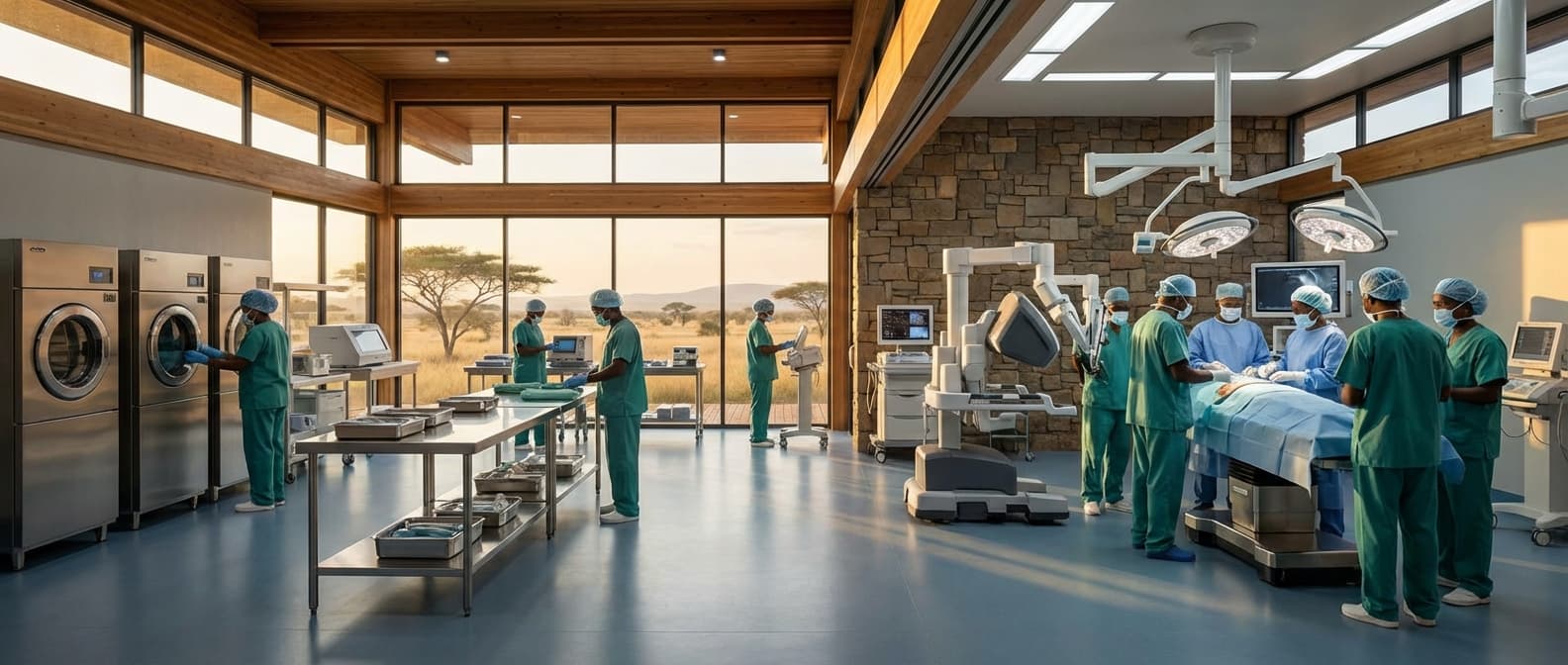
Endoscopy Reprocessing Validation in Cabo Verde
Engineering Excellence & Technical Support
AER validation, SOP development and compliance High-standard technical execution following OEM protocols and local regulatory frameworks.
Microbiological Validation of Reprocessing Protocols
Ensuring the efficacy of our automated endoscope reprocessors through rigorous microbiological testing, simulating worst-case contamination scenarios and verifying complete inactivation of pathogens to meet international standards.
Chemical Residual Testing and Analysis
Conducting detailed chemical analyses to confirm the absence of cleaning agent residues on endoscope lumens and surfaces post-reprocessing, safeguarding patient and staff safety from potential irritants or toxicological effects.
Process Validation and Documentation Compliance
Implementing a comprehensive validation process, including IQ, OQ, and PQ, to meticulously document adherence to all critical reprocessing parameters and regulatory requirements, ensuring a robust and auditable system for endoscope reprocessing in Cabo Verde.
What Is Endoscopy Reprocessing Validation In Cabo Verde?
Endoscopy reprocessing validation in Cabo Verde refers to the documented, objective evidence that a validated cleaning and high-level disinfection (HLD) or sterilization process consistently renders reusable medical devices (specifically endoscopes) safe for patient reuse. This process is critical to preventing the transmission of healthcare-associated infections (HAIs) by ensuring that all microorganisms, including bacteria, viruses, fungi, and prions, are effectively removed or inactivated from the endoscope's lumens and surfaces. Validation confirms that the adopted reprocessing protocol adheres to established international standards and regulatory requirements, demonstrating the efficacy and reproducibility of the decontamination cycle under specified conditions.
| Stakeholder | Reason for Requiring Validation | Typical Use Cases |
|---|---|---|
| Hospitals and Clinics (Public and Private) | Mandatory for patient safety and compliance with national and international healthcare standards. Ensures the safety of endoscopic procedures and minimizes the risk of HAIs. | Routine reprocessing of flexible and rigid endoscopes used in gastroenterology, pulmonology, urology, gynecology, surgery, and other specialties. Validation is required upon implementation of new reprocessing equipment, chemicals, or protocols, and periodically thereafter. Also crucial following any equipment malfunction or failure. |
| Endoscopy Units/Departments | Direct responsibility for implementing and maintaining safe reprocessing practices. Validation provides assurance to clinicians and patients. | Day-to-day reprocessing of endoscopes after each patient use. Validation supports the development and refinement of standard operating procedures (SOPs) for the unit. |
| Medical Device Manufacturers (Suppliers of Endoscopes and Reprocessing Equipment) | Often required by regulatory bodies or as part of their product stewardship responsibilities to demonstrate the compatibility and efficacy of their devices with recommended reprocessing methods. | Providing validated reprocessing instructions for their devices. Supporting their customers in achieving regulatory compliance through recommended validation protocols. |
| Regulatory and Health Authorities (e.g., Ministry of Health of Cabo Verde) | To ensure that healthcare facilities are adhering to established guidelines and standards for infection prevention and control, thereby protecting public health. | Inspections and accreditation processes. Setting and enforcing national guidelines for medical device reprocessing. |
Key Components of Endoscopy Reprocessing Validation
- Process Definition and Documentation: Detailed description of the cleaning, disinfection, and/or sterilization protocols, including specific chemicals, concentrations, contact times, temperatures, and equipment used.
- Equipment Verification: Calibration and functional testing of automated endoscope reprocessors (AERs), washer-disinfectors, and sterilization units.
- Microbiological Testing: Application of standardized microbiological challenges (e.g., known bacterial spores, viral surrogates) to simulate contaminated endoscopes, followed by testing for the absence of viable microorganisms after the reprocessing cycle.
- Chemical Indicator Testing: Utilization of chemical indicators to verify that critical parameters (e.g., temperature, concentration, contact time) of the HLD or sterilization process have been met.
- Borescope/Visual Inspection: Thorough examination of endoscope lumens and external surfaces for visible debris, organic matter, and biofilm.
- Water Quality Testing: Analysis of the water used in the reprocessing cycle to ensure it meets microbiological and chemical purity standards.
- Personnel Training and Competency Assessment: Verification of staff training on proper reprocessing techniques and assessment of their practical competency.
- Record Keeping and Auditing: Establishment of a robust system for documenting all reprocessing steps, validation tests, and maintenance records, along with regular internal and external audits.
Who Needs Endoscopy Reprocessing Validation In Cabo Verde?
Endoscopy reprocessing validation is a critical process for ensuring patient safety and preventing the spread of infections in healthcare facilities. In Cabo Verde, like any nation committed to high standards of medical care, this validation is essential. The primary target customers for endoscopy reprocessing validation services and validation protocols are healthcare institutions that utilize flexible endoscopes for diagnostic and therapeutic procedures. This includes both public and private sector facilities, as well as specialized clinics.
| Target Customer Type | Specific Departments Involved | Reason for Validation Need | ||||||
|---|---|---|---|---|---|---|---|---|
| Hospitals (Public and Private) | Gastroenterology | To prevent cross-contamination of infectious agents between patients undergoing procedures like gastroscopy, colonoscopy, bronchoscopy, and cystoscopy. | Endoscopy Unit/Suite | To ensure that the cleaning and disinfection/sterilization processes meet national and international guidelines. | Infection Control Department | To maintain accreditation and comply with regulatory requirements. | Surgical Departments (e.g., Urology, Pulmonology) | To uphold patient safety and prevent healthcare-associated infections (HAIs). |
| Clinics offering Endoscopic Procedures | Gastroenterology Clinics | To guarantee the efficacy of reprocessing protocols for flexible endoscopes used in outpatient settings. | Endoscopy Suites | To protect patients from potential transmission of pathogens, especially in facilities with a high volume of procedures. | Quality Assurance Department | To demonstrate adherence to best practices in medical device reprocessing. | Infection Prevention and Control Team | To meet the expectations of regulatory bodies and maintain patient trust. |
| Specialty Surgical Centers | Digestive Surgery | To ensure the safety and sterility of endoscopes used in complex surgical interventions. | Pulmonary Surgery | To prevent the introduction of microorganisms into sensitive anatomical areas. | Urology Departments | To comply with strict hygiene standards for instruments used in urological procedures. | Infection Control Committees | To minimize the risk of outbreaks and ensure the highest level of patient care. |
| Diagnostic Centers | Imaging and Diagnostic Units | To validate the cleaning and disinfection processes for endoscopes used solely for diagnostic purposes. | Endoscopy Service Providers | To offer reliable and safe endoscopic examinations to the public. | Quality Management | To ensure that all reprocessing steps are documented and verifiable. | Technical Staff | To confirm the proper functioning and safety of the reprocessing equipment. |
| Government Health Ministry/Agencies | Public Health Department | To establish and enforce national guidelines and standards for endoscopy reprocessing. | Regulatory Affairs | To oversee healthcare facilities and ensure compliance with infection control mandates. | National Health Institutes | To promote best practices and facilitate access to validation services. | Policy Makers | To protect the public health by setting robust requirements for medical device reprocessing. |
Target Customers for Endoscopy Reprocessing Validation in Cabo Verde
- Hospitals (Public and Private)
- Clinics offering Endoscopic Procedures
- Specialty Surgical Centers
- Diagnostic Centers
- Government Health Ministry/Agencies (for setting standards and oversight)
Endoscopy Reprocessing Validation Process In Cabo Verde
The Endoscopy Reprocessing Validation Process in Cabo Verde is a critical quality assurance measure to ensure that reusable medical devices, specifically endoscopes, are cleaned and disinfected effectively to prevent healthcare-associated infections. This validation process confirms that the adopted reprocessing protocols meet international standards and are consistently performed within the healthcare facilities. The workflow begins with an initial inquiry from a healthcare facility or regulatory body, followed by a series of planning, execution, and reporting stages to ensure the integrity of the endoscopic reprocessing procedures.
| Stage | Key Activities | Responsible Parties | Deliverables/Outcomes |
|---|---|---|---|
| Healthcare facility or regulatory body requests validation of their endoscopy reprocessing procedures. Initial documentation review of existing protocols and facility infrastructure. | Healthcare Facility Management, Ministry of Health/Regulatory Body, Validation Team Lead | Formal request received, scope of validation defined, initial assessment report. |
| Detailed review of the facility's written reprocessing protocols against national guidelines and international standards (e.g., WHO, CDC, AAMI). Identification of any deviations or missing elements. | Validation Team (Infection Control Specialists, Biomedical Engineers, Reprocessing Technicians) | Comprehensive protocol review report, list of identified gaps and recommendations. |
| Development of a detailed validation plan including timelines, required equipment (e.g., ATP testing devices, microbiological sampling kits), personnel, and budget. Scheduling of on-site activities. | Validation Team Lead, Healthcare Facility Management, Logistics Coordinator | Approved validation plan, confirmed schedule, allocated resources. |
| Direct observation of the entire reprocessing workflow by trained auditors. This includes pre-cleaning, manual cleaning, automated washing/disinfection, rinsing, drying, storage, and leak testing. | Validation Auditors, Healthcare Facility Reprocessing Staff | Detailed audit report, observations of staff adherence to protocols, assessment of equipment functionality. |
| Collection of environmental samples (surfaces, water) and critical touchpoints on reprocessed endoscopes. Testing for the presence of microorganisms, including high-concern pathogens. Verification of cleaning efficacy using ATP (Adenosine Triphosphate) testing. | Microbiology Laboratory, Validation Team (Sampling Personnel) | Microbiological test results, ATP test results, confirmation of microbial load reduction below acceptable limits. |
| Compilation and analysis of all collected data from the on-site audit and microbiological testing. Comparison against predetermined acceptance criteria. | Validation Team Lead, Data Analyst | Comprehensive validation report detailing findings, conclusions, and recommendations. |
| If non-compliance is identified, the healthcare facility develops and implements a CAPA plan. The validation team may provide guidance on corrective measures. | Healthcare Facility Management, Quality Improvement Team, Validation Team (Advisory) | Approved CAPA plan, documented implementation of corrective actions. |
| A follow-up audit or re-validation may be conducted after CAPA implementation to confirm the effectiveness of the corrective actions and ensure sustained compliance. | Validation Team, Healthcare Facility Management | Re-validation report, confirmation of sustained compliance, certificate of validation (if applicable). |
Endoscopy Reprocessing Validation Process Workflow in Cabo Verde
- Inquiry and Initial Assessment
- Protocol Review and Gap Analysis
- Planning and Resource Allocation
- On-site Audit and Performance Observation
- Microbiological Testing and Validation
- Data Analysis and Report Generation
- Corrective and Preventive Actions (CAPA) Implementation
- Follow-up and Re-validation
Endoscopy Reprocessing Validation Cost In Cabo Verde
Endoscopy reprocessing validation is a critical process in healthcare facilities to ensure the safety and efficacy of reusable endoscopic instruments. This validation confirms that the chosen reprocessing methods (cleaning and high-level disinfection/sterilization) consistently and effectively remove or inactivate microorganisms. In Cabo Verde, the cost of this validation can vary significantly based on several factors. These factors influence the complexity, scope, and resources required for a thorough validation. Understanding these elements is crucial for healthcare providers to budget appropriately for this essential service.
| Cost Component/Service | Estimated Price Range (CVE) | Notes |
|---|---|---|
| Initial Comprehensive Validation (per scope/cycle) | 15,000 - 50,000+ | Includes protocol development, cleaning validation, high-level disinfection/sterilization validation, and microbiological testing. Varies based on scope and complexity. |
| Microbiological Testing (per sample) | 3,000 - 8,000 | Cost of testing for specific microorganisms after reprocessing. May involve multiple samples per validation. |
| Chemical Indicator/Biological Indicator Testing | 1,000 - 5,000 (per indicator) | Cost of indicators used to verify disinfection/sterilization efficacy. Quantity depends on the process. |
| Consultation and Protocol Development | 10,000 - 30,000 | Fee for experts to design and advise on the validation process. |
| On-site Validation Services (daily rate) | 20,000 - 60,000 | If a specialized team travels to the facility. Excludes travel and accommodation. |
| Annual Maintenance/Periodic Testing | 8,000 - 25,000 (per scope/cycle) | For ongoing monitoring and revalidation as per guidelines. |
Factors Influencing Endoscopy Reprocessing Validation Costs in Cabo Verde:
- Scope of Validation: The number and types of endoscopes being validated, as well as the specific reprocessing cycles and equipment used, will impact the overall cost. A validation covering a broad range of instruments and processes will naturally be more expensive.
- Laboratory Analysis: The cost of microbiological testing and other laboratory analyses to confirm effective reprocessing is a significant component. This includes the cost of consumables, reagents, and trained personnel.
- Validation Protocol Design and Implementation: Developing a robust validation protocol tailored to the facility's specific needs and then executing it requires expert knowledge and time, contributing to the cost.
- Third-Party Service Provider Fees: If validation services are outsourced to specialized companies or laboratories, their overhead, expertise, and profit margins will be factored into the pricing.
- Regulatory Requirements and Standards: Adherence to local or international guidelines (e.g., WHO, national health authorities) may necessitate more rigorous testing and documentation, increasing the validation cost.
- Geographic Location and Logistics: For remote areas or islands within Cabo Verde, travel and logistical expenses for the validation team or sample transport can add to the overall price.
- Equipment and Technology Used: The sophistication of the reprocessing equipment and the validation technology employed can influence the cost. Advanced automated systems might require specialized validation procedures.
- Revalidation Frequency: While initial validation is a one-time or periodic event, revalidation or periodic testing to ensure ongoing compliance also incurs costs.
Affordable Endoscopy Reprocessing Validation Options
Ensuring the proper reprocessing of endoscopes is crucial for patient safety, preventing the transmission of infections. However, validation processes can be costly. This document explores affordable endoscopy reprocessing validation options, focusing on value bundles and cost-saving strategies for healthcare facilities.
| Cost-Saving Strategy | Description | Benefits |
|---|---|---|
| Value Bundles with Reprocessing Equipment Manufacturers | Partnering with manufacturers for integrated solutions that include validation as part of the equipment purchase or service agreement. This can offer preferential pricing and streamlined processes. | Reduced standalone validation costs, simplified vendor management, potentially faster turnaround times, and a holistic approach to reprocessing compliance. |
| In-House Validation Programs (with appropriate resources) | Developing internal capabilities for certain validation tests, such as basic microbial testing or process monitoring, when feasible and supported by a qualified infection prevention team. This requires investment in training and equipment. | Lower recurring costs for certain tests, greater control over the validation schedule, and enhanced staff expertise in reprocessing. |
| Leveraging Accredited Third-Party Laboratories with Flexible Packages | Selecting laboratories that offer tiered pricing, package deals for multiple validation types, or discounts for long-term contracts. Negotiate terms based on testing volume. | Competitive pricing, access to specialized expertise, and often a wider range of accredited testing options compared to in-house capabilities. |
| Focus on Risk-Based Validation | Prioritizing validation efforts based on the risk profile of the endoscopes and procedures performed. Not all scopes or cycles may require the same level of rigorous, frequent validation. | Optimized resource allocation, reduced unnecessary testing, and cost savings by focusing validation on the most critical areas. |
| Standardization of Reprocessing Protocols | Implementing and strictly adhering to standardized, evidence-based reprocessing protocols (e.g., manufacturer's instructions for use - IFU) minimizes the need for frequent re-validation due to process changes. | Reduced risk of reprocessing failures leading to repeat validation, improved efficiency, and consistent patient safety. |
| Utilizing Advanced Monitoring Technologies | Implementing automated cleaning and disinfection monitoring systems that provide real-time data and alerts. This can complement traditional validation by providing continuous assurance. | Proactive identification of issues, reduced need for reactive re-validation, and enhanced overall process control. |
Understanding Endoscopy Reprocessing Validation
- {"title":"What is Endoscopy Reprocessing Validation?","description":"Validation confirms that the endoscope's cleaning and high-level disinfection (HLD) or sterilization processes effectively eliminate or inactivate microorganisms to prevent patient-to-patient transmission."}
- {"title":"Why is Validation Important?","description":"Mandated by regulatory bodies (e.g., FDA, CDC, AAMI), patient safety, infection control, and compliance are key drivers for validation."}
- {"title":"Traditional Validation Costs","description":"Often involves costly third-party laboratory testing, extensive documentation, and the potential for downtime during testing periods."}
Verified Providers In Cabo Verde
In Cabo Verde, ensuring access to reliable and qualified healthcare providers is paramount for residents and visitors alike. "Verified Providers" signifies a commitment to upholding stringent standards of medical practice, patient care, and ethical conduct. Franance Health stands out as a leading organization dedicated to this verification process, offering unparalleled assurance of quality and expertise. Their rigorous credentialing system meticulously evaluates healthcare professionals, ensuring they possess the necessary qualifications, experience, and adherence to best practices. This meticulous approach not only safeguards patient well-being but also elevates the overall standard of healthcare delivery within Cabo Verde, making Franance Health an indispensable partner in accessing top-tier medical services.
| Credentialing Aspect | Franance Health's Approach | Benefit to Patients |
|---|---|---|
| Education and Licensing | Thorough verification of degrees, certifications, and current medical licenses with relevant authorities. | Ensures providers have the foundational knowledge and legal authorization to practice. |
| Clinical Experience | Assessment of years in practice, areas of specialization, and surgical/procedural experience. | Guarantees providers have hands-on expertise relevant to patient needs. |
| Professional Reputation | Checks for any disciplinary actions or complaints from regulatory bodies or previous employers. | Minimizes risk by identifying and excluding providers with a history of malpractice or unethical conduct. |
| Adherence to Standards | Confirmation of compliance with local and international healthcare regulations and best practices. | Upholds consistent quality and safety in all medical procedures and patient interactions. |
| Patient Feedback Mechanisms | Incorporation of patient feedback as part of ongoing assessment (where applicable and ethically permissible). | Provides an additional layer of assurance regarding patient satisfaction and care quality. |
Why Franance Health Credentials Represent the Best Choice:
- Rigorous Qualification Verification: Franance Health scrutinizes educational background, licenses, and certifications of all providers, ensuring they meet international standards.
- Extensive Experience Assessment: Beyond formal qualifications, Franance Health evaluates the practical experience and specialization of each healthcare professional.
- Commitment to Ethical Practices: Providers must adhere to a strict code of ethics, guaranteeing patient confidentiality, respect, and informed consent.
- Continuous Professional Development: Franance Health encourages and often requires ongoing training and education to keep providers at the forefront of medical advancements.
- Patient Safety and Quality Assurance: The verification process is designed with patient safety as the utmost priority, ensuring all listed providers offer high-quality care.
- Trust and Transparency: Patients can trust Franance Health's "Verified Provider" status as a mark of reliable and competent medical professionals.
- Access to Specialized Care: Franance Health's network includes a diverse range of specialists, facilitating access to niche medical services within Cabo Verde.
- Streamlined Healthcare Navigation: The "Verified Provider" system simplifies the process of finding appropriate and trustworthy healthcare, reducing stress and uncertainty for patients.
Scope Of Work For Endoscopy Reprocessing Validation
This Scope of Work (SOW) outlines the requirements for the validation of the endoscopy reprocessing procedures at [Healthcare Facility Name]. The primary objective is to ensure that the adopted reprocessing protocols consistently render flexible endoscopes safe for patient use, adhering to all relevant regulatory standards and best practices. This validation process will cover all stages of reprocessing, from initial pre-cleaning to high-level disinfection (HLD) or sterilization, and storage. The validation will include technical deliverables and the establishment of standard specifications for each critical step.
| Stage of Reprocessing | Technical Deliverable | Standard Specification Example |
|---|---|---|
| Pre-Cleaning | Documented procedure for immediate post-use cleaning. | All visible organic debris removed within 60 minutes of procedure completion. |
| Manual Cleaning | Validated cleaning agent concentration and contact time. | Use of approved enzymatic detergent at manufacturer's recommended concentration for a minimum of 2 minutes. |
| Automated Reprocessing | Validation of automated washer-disinfector cycles (temperature, time, chemical concentration). | Cycle parameters confirmed to meet manufacturer specifications and industry guidelines (e.g., AAMI ST98, EN ISO 15883). |
| High-Level Disinfection (HLD) | Validated HLD agent concentration, contact time, and temperature. | Glutaraldehyde solution at 0.55% for 45 minutes at room temperature, or per manufacturer's IFU. |
| Sterilization (if applicable) | Validation of sterilization parameters (temperature, pressure, time). | Ethylene Oxide (EtO) sterilization cycle validated to achieve a Sterility Assurance Level (SAL) of 10^-6. |
| Rinsing | Validated rinse water quality and volume. | Use of filtered, non-pyrogenic water for final rinse; volume sufficient to remove all residual HLD agent. |
| Drying | Validated drying method and time. | Endoscope lumens flushed with filtered, compressed air until visibly dry; minimum 10 minutes. |
| Storage | Documented storage conditions and cabinet specifications. | Endoscopes stored in a clean, dry, and dust-free environment in a dedicated, vented storage cabinet. |
Key Activities and Deliverables
- Comprehensive review and documentation of existing endoscopy reprocessing procedures.
- Development and implementation of a detailed validation protocol.
- Performance of validation testing, including microbial load reduction and bioburden analysis.
- Evaluation of cleaning efficacy using surrogate contaminants and organic soil challenges.
- Assessment of HLD/sterilization effectiveness against validated parameters.
- Verification of the effectiveness of drying and storage procedures.
- Development of standard operating procedures (SOPs) for routine monitoring and ongoing quality control.
- Compilation of a comprehensive Validation Report detailing methodology, results, analysis, and conclusions.
- Recommendations for process improvements and ongoing compliance.
Service Level Agreement For Endoscopy Reprocessing Validation
This Service Level Agreement (SLA) outlines the guaranteed response times and uptime for the Endoscopy Reprocessing Validation service. This service ensures that all reprocessed endoscopes meet the required cleanliness and disinfection standards, minimizing the risk of patient infection. The SLA defines the performance expectations for the validation process, including turnaround times for validation requests and the availability of the validation system.
| Service Component | Performance Metric | Service Level Target | Measurement Method | Remedy for Non-Compliance |
|---|---|---|---|---|
| Endoscope Validation Request Processing | Response Time | 95% of requests processed within 2 business hours of submission. | System logs tracking request submission timestamp and validation initiation timestamp. | For each instance exceeding the response time, a 5% discount on the monthly validation service fee. |
| Endoscopy Reprocessing Validation System Availability | Uptime Guarantee | 99.8% uptime during scheduled operating hours (defined as Monday-Friday, 07:00 - 19:00 local time, excluding public holidays). | Monitoring of system availability via automated probes and independent third-party monitoring tools. | If uptime falls below 99.8% in a given month, a credit equal to 10% of the monthly service fee will be issued. |
| Validation Report Generation | Turnaround Time | 98% of validation reports issued within 4 business hours of successful validation completion. | System logs tracking validation completion timestamp and report generation timestamp. | For each instance exceeding the report turnaround time, a 2% discount on the monthly validation service fee. |
Key Service Definitions
- Endoscopy Reprocessing Validation: The process of verifying that reprocessed endoscopes have undergone the correct cleaning and disinfection procedures and are safe for patient use.
- Validation Request: A formal request submitted to initiate the validation process for a reprocessed endoscope.
- Response Time: The maximum allowed time from the submission of a validation request to the initiation of the validation process by the service provider.
- Uptime: The percentage of time the Endoscopy Reprocessing Validation system is operational and available for use.
Frequently Asked Questions

Ready when you are
Let's scope your Endoscopy Reprocessing Validation in Cabo Verde project in Cabo Verde.

Scaling healthcare logistics and technical systems across the entire continent.