
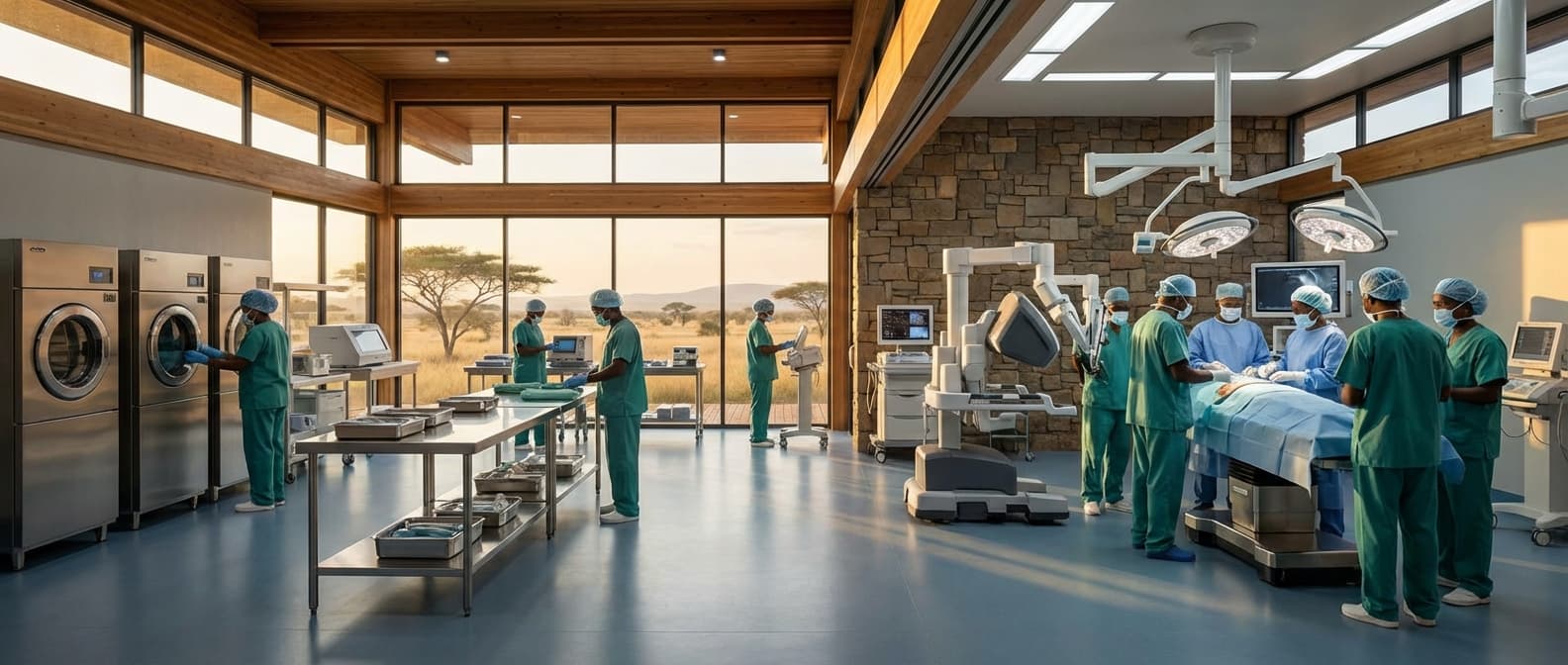
CSSD Design & Validation in Cabo Verde
Engineering Excellence & Technical Support
CSSD workflow design, validation and process development High-standard technical execution following OEM protocols and local regulatory frameworks.
Advanced CSSD Facility Design & Planning
Leveraging cutting-edge architectural principles and healthcare workflow optimization, we design state-of-the-art Central Sterile Supply Departments (CSSD) in Cabo Verde. Our expertise ensures compliance with international standards, efficient space utilization, and seamless integration of best practices for infection control and instrument reprocessing.
Rigorous Validation & Commissioning Protocols
Implementing comprehensive validation and commissioning protocols for CSSD equipment and processes. Our services in Cabo Verde guarantee that all sterile processing activities meet the highest levels of safety, efficacy, and regulatory compliance, minimizing risk and ensuring patient safety.
Data-Driven Performance Monitoring & Optimization
Establishing robust data-driven systems for CSSD performance monitoring and continuous improvement in Cabo Verde. We employ advanced analytics to track key performance indicators, identify areas for optimization, and ensure sustained operational efficiency and cost-effectiveness for sterile processing services.
What Is Cssd Design & Validation In Cabo Verde?
CSSD (Central Sterile Supply Department) design and validation in Cabo Verde encompasses the comprehensive process of planning, engineering, constructing, and verifying the operational efficacy and compliance of sterile processing facilities. This involves adherence to international standards and local regulatory requirements to ensure the safe and effective sterilization, disinfection, and supply of medical devices to healthcare institutions. The service is critical for maintaining patient safety by preventing healthcare-associated infections (HAIs) stemming from improperly reprocessed equipment.
| Who Needs CSSD Design & Validation? | Typical Use Cases | ||
|---|---|---|---|
| Hospitals (Public and Private): All healthcare facilities performing surgical procedures, diagnostic imaging, and invasive therapies. | Establishment of new CSSD units within new hospital constructions. | Expansion or refurbishment of existing CSSD facilities to meet increased demand or technological upgrades. | Implementation of new sterilization technologies or processes. |
| Specialized Clinics (e.g., Dental, Ophthalmology, Endoscopy): Facilities with high volumes of reusable instruments requiring sterilization. | Ensuring compliance with specific accreditation requirements for clinics. | Risk assessment and mitigation for instrument reprocessing in specialized medical settings. | |
| Government Health Ministries & Regulatory Bodies: Overseeing the quality and safety of healthcare services. | Developing and enforcing national standards for sterile processing. | Licensing and accreditation of healthcare facilities. | |
| Medical Device Manufacturers: Requiring validation of their equipment and consumables within the CSSD environment. | Ensuring their products can be effectively and safely reprocessed according to intended use. |
Key Components of CSSD Design & Validation
- Needs Assessment & Feasibility Studies: Evaluating current and future sterilization demands, workflow analysis, and space requirements.
- Facility Layout & Design: Optimizing workflow, segregation of clean and dirty areas, material flow, and ergonomic considerations for staff efficiency and infection control.
- Equipment Specification & Selection: Identifying and procuring appropriate sterilization (e.g., steam, low-temperature) and disinfection equipment based on device types and reprocessing needs.
- Infrastructure Requirements: Detailing mechanical, electrical, plumbing (MEP), ventilation (HVAC), and water purification systems essential for CSSD operations.
- Regulatory Compliance Integration: Ensuring adherence to relevant national (Cabo Verdean Ministry of Health) and international standards (e.g., ISO 13485, AAMI ST series, WHO guidelines).
- Installation Qualification (IQ): Verifying that the installed equipment and systems meet the manufacturer's specifications and design intent.
- Operational Qualification (OQ): Documenting that the installed equipment and systems operate consistently and within specified parameters under normal operating conditions.
- Performance Qualification (PQ): Demonstrating that the entire CSSD process, from soiled item reception to sterile product dispatch, consistently achieves the desired outcomes (e.g., effective sterilization) under real-world conditions.
- Process Validation: Establishing documented evidence that the validated CSSD processes consistently produce sterile products meeting predefined specifications.
- Training & Development: Providing comprehensive training for CSSD personnel on equipment operation, infection control protocols, and validation procedures.
- Documentation & Record Keeping: Establishing robust systems for tracking, monitoring, and archiving all validation activities and operational data.
Who Needs Cssd Design & Validation In Cabo Verde?
Central Sterile Supply Departments (CSSDs) are the backbone of infection control in any healthcare facility. Proper design and rigorous validation of CSSD processes are paramount to ensuring patient safety by guaranteeing that surgical instruments and medical devices are thoroughly cleaned, disinfected, and sterilized. In Cabo Verde, as the healthcare infrastructure develops and patient care standards aim for international benchmarks, the need for expertly designed and validated CSSDs becomes increasingly critical. This service is essential for facilities committed to providing safe, high-quality medical care and reducing the risk of healthcare-associated infections (HAIs).
| Department/Facility Type | Specific Needs Addressed by CSSD Design & Validation | Key Benefits |
|---|---|---|
| Public Hospitals | Ensuring sterility for high-volume surgical procedures, managing diverse instrument sets, compliance with national health standards. | Improved patient safety, reduced infection rates, optimized workflow, cost-effectiveness through proper equipment selection and maintenance. |
| Private Hospitals | Maintaining a reputation for excellence in patient care, meeting international accreditation standards, efficient turnaround of sterile supplies for elective surgeries. | Enhanced patient trust and satisfaction, competitive advantage, minimized operational disruptions due to supply issues. |
| Specialty Clinics | Tailored sterile processing solutions for specific procedural needs (e.g., ophthalmic instruments, dental implants), space optimization for smaller footprints. | Accurate sterilization for specialized instruments, efficient service delivery, compliance with specific regulatory requirements. |
| Diagnostic Laboratories | Sterilization of reusable laboratory equipment and tools, preventing contamination of diagnostic samples. | Reliable diagnostic results, prevention of cross-contamination, increased laboratory efficiency. |
| Government Health Ministries | Establishing and enforcing national guidelines for sterile processing, planning for healthcare infrastructure development, capacity building for healthcare professionals. | Standardization of healthcare quality across the nation, improved public health outcomes, effective resource allocation. |
| New Healthcare Facility Developments | Designing CSSDs from the ground up for optimal workflow, infection control, and future scalability; selection of appropriate technology. | Foundation for safe and efficient operations, avoidance of costly retrofits, long-term operational efficiency. |
| Existing Facilities Undergoing Renovation/Expansion | Optimizing existing CSSD layouts, upgrading equipment, ensuring compliance with current standards, minimizing disruption during construction. | Modernized facilities, improved infection control, extended lifespan of CSSD infrastructure. |
Target Customers in Cabo Verde Requiring CSSD Design & Validation
- Public Hospitals
- Private Hospitals
- Specialty Clinics (e.g., surgical centers, dental clinics with surgical procedures)
- Diagnostic Laboratories with sterile instrument needs
- Government Health Ministries overseeing healthcare infrastructure
- New Healthcare Facility Developments
- Existing Facilities Undergoing Renovation or Expansion
Cssd Design & Validation Process In Cabo Verde
The design and validation process for a Central Sterile Supply Department (CSSD) in Cabo Verde follows a structured workflow, ensuring compliance with international standards and local regulations. This process typically begins with an initial inquiry and culminates in a fully operational and validated CSSD. Key stages involve detailed planning, design, procurement, installation, commissioning, and validation, with continuous communication and adherence to quality assurance protocols.
| Phase | Key Activities | Deliverables | Responsible Parties |
|---|---|---|---|
| Planning & Design | Needs assessment, conceptual design, detailed design development, regulatory review | Design blueprints, equipment specifications, budget proposals, regulatory compliance reports | Hospital Management, CSSD Consultants, Architects, Engineers, Regulatory Bodies |
| Procurement & Construction | Tendering, supplier selection, construction, equipment installation | Procurement contracts, installed infrastructure, installed equipment | Procurement Department, Construction Contractors, Equipment Suppliers |
| Commissioning & Validation | Pre-commissioning, commissioning, IQ, OQ, PQ, training | Commissioning reports, IQ/OQ/PQ validation reports, trained staff | Technical Teams, Validation Specialists, Equipment Suppliers, CSSD Staff |
| Operation & Maintenance | Daily operation, quality monitoring, maintenance, revalidation | Sterile supplies, performance logs, maintenance records, revalidation reports | CSSD Staff, Biomedical Engineers, Quality Assurance Teams |
CSSD Design & Validation Workflow in Cabo Verde
- Inquiry & Initial Assessment: Healthcare facilities express interest in establishing or upgrading a CSSD.
- Needs Assessment & Scoping: Detailed evaluation of the facility's current and future needs, patient load, surgical procedures, and required sterilization methods.
- Conceptual Design & Feasibility Study: Development of preliminary layouts, equipment selection, and resource planning to assess feasibility and budget.
- Detailed Design Development: Creation of comprehensive architectural, mechanical, electrical, and plumbing (MEP) designs, including workflow optimization and infection control considerations.
- Regulatory Compliance Review: Ensuring designs meet Cabo Verde's healthcare infrastructure regulations and international CSSD guidelines (e.g., ISO, AAMI).
- Tender & Procurement: Soliciting bids from qualified suppliers for equipment, materials, and construction services.
- Installation & Construction: Setting up the physical space, including structural work, MEP installations, and specialized flooring/wall finishes.
- Equipment Installation & Integration: Installing sterilizers, washers, dryers, packaging machines, and other CSSD equipment, ensuring proper integration with MEP systems.
- Pre-Commissioning Checks: Verifying that all installed equipment and systems are functioning as per manufacturer specifications.
- Commissioning: Systematic testing of all equipment and processes under simulated operational conditions to confirm functionality and performance.
- Validation Protocol Development: Creation of detailed protocols for Installation Qualification (IQ), Operational Qualification (OQ), and Performance Qualification (PQ).
- Installation Qualification (IQ): Documented verification that equipment has been installed correctly according to design specifications and manufacturer recommendations.
- Operational Qualification (OQ): Documented verification that the installed equipment operates consistently within its defined operating parameters and limits.
- Performance Qualification (PQ): Documented verification that the CSSD processes, including equipment and workflows, consistently produce sterile products meeting predefined quality standards under normal operating conditions.
- Training: Comprehensive training for CSSD staff on equipment operation, infection control protocols, and validation procedures.
- Final Documentation & Handover: Compilation of all design documents, validation reports, equipment manuals, and operational procedures for handover to the facility.
- Post-Validation Monitoring & Review: Ongoing monitoring of CSSD performance and periodic revalidation to ensure continued compliance and effectiveness.
Cssd Design & Validation Cost In Cabo Verde
Designing and validating a Central Sterile Supply Department (CSSD) in Cabo Verde involves a complex interplay of factors that influence its overall cost. These costs are typically estimated in the local currency, the Cabo Verdean Escudo (CVE). Several key elements contribute to the pricing, from the initial planning and infrastructure to specialized equipment and rigorous validation processes. Understanding these components is crucial for accurate budgeting and successful project implementation.
| Cost Component | Estimated Range (CVE) | Notes |
|---|---|---|
| Design and Consultancy Fees | 500,000 - 2,500,000 | Varies based on the expertise of consultants and the project's complexity. |
| Infrastructure Modifications/Construction | 2,000,000 - 10,000,000+ | Highly dependent on the existing facility and the scale of work required. |
| Sterilization Equipment (e.g., Autoclaves, Washer-Disinfectors) | 3,000,000 - 15,000,000+ (per unit) | Prices vary significantly based on capacity, technology, and manufacturer. Multiple units may be required. |
| Ancillary Equipment (Trolleys, Workbenches, Consumables) | 500,000 - 3,000,000 | Includes essential items for workflow and operation. |
| Installation and Commissioning | 1,000,000 - 5,000,000 | Covers the physical setup and initial testing of equipment. |
| Validation and Testing (IQ/OQ/PQ) | 1,500,000 - 8,000,000 | Includes professional validation services, consumables for testing, and documentation. |
| Staff Training | 300,000 - 1,500,000 | Depends on the number of staff and the extent of training required. |
| Permits and Regulatory Fees | 100,000 - 500,000 | Covers application fees and compliance checks. |
| Contingency (10-15%) | Variable | Recommended to cover unexpected costs. |
| Total Estimated Project Cost (Small to Medium Scale CSSD) | 10,000,000 - 50,000,000+ | This is a broad estimate and can vary significantly. |
Key Pricing Factors for CSSD Design & Validation in Cabo Verde
- Scope of Services: The complexity and size of the CSSD, including the number of sterilization bays, types of instruments to be processed, and anticipated patient throughput, significantly impact costs.
- Infrastructure Requirements: This includes the cost of modifying or constructing the physical space, ensuring adequate ventilation, water supply, drainage, power, and compliance with relevant healthcare building codes and safety standards.
- Equipment Procurement: The selection of sterilization equipment (autoclaves, washer-disinfectors, ultrasonic cleaners, packaging machines), instrument sets, trolleys, workbenches, and other essential tools represents a substantial portion of the budget. Brand, capacity, and technological features influence pricing.
- Design and Consultancy Fees: Engaging architects, engineers, and specialized CSSD consultants for design, planning, and project management will incur professional fees.
- Installation and Commissioning: Costs associated with the installation and initial setup of all equipment, including electrical and plumbing connections, and ensuring the equipment functions correctly.
- Validation and Testing: This is a critical and often costly phase. It involves rigorous testing to ensure the CSSD meets all regulatory requirements and effectively sterilizes instruments. This includes qualification (IQ, OQ, PQ) and routine monitoring.
- Training: Comprehensive training for CSSD staff on operating equipment, adhering to protocols, and infection control practices is essential and adds to the overall expense.
- Regulatory Compliance and Permits: Obtaining necessary permits and ensuring adherence to local and international healthcare standards and regulations will involve associated fees.
- Contingency: It is always advisable to include a contingency fund for unforeseen expenses that may arise during the design and validation process.
Affordable Cssd Design & Validation Options
Designing and validating a Central Sterile Supply Department (CSSD) is crucial for infection control, but it can also be a significant investment. This guide explores affordable CSSD design and validation options, focusing on value bundles and cost-saving strategies to help healthcare facilities achieve optimal functionality and compliance without breaking the bank. We'll break down the key components of a cost-effective CSSD, from initial planning and layout to equipment selection and ongoing validation, ensuring a robust and safe sterile processing environment.
| Value Bundle/Strategy | Description | Cost-Saving Benefit | Validation Aspect |
|---|---|---|---|
| 'Lean' Workflow Design Bundle | Focuses on optimizing the sterile processing workflow from soiled to sterile, minimizing backtracking and bottlenecks. Utilizes principles of Lean manufacturing for efficiency. | Reduces labor time, decreases the risk of cross-contamination (preventing reprocessing costs), and improves throughput. | Streamlines validation processes by ensuring consistent and predictable workflow, making validation checks more efficient. |
| Modular Equipment Package | Offers pre-configured sets of essential CSSD equipment (washers, sterilizers, instrument sets) designed for common facility needs, often with bundled installation and training. | Bulk purchasing discounts, reduced integration challenges, predictable upfront costs. | Equipment comes with manufacturer-validated parameters, simplifying initial validation. Training ensures correct operation for consistent validation results. |
| Phased Infrastructure Development | Instead of a complete overhaul, invest in essential infrastructure now and plan for future expansions or upgrades as budget allows. Focus on core services first. | Spreads capital expenditure over time, allowing for better cash flow management and avoiding unnecessary upfront investment in future-proofed elements not immediately needed. | Allows for staggered validation of new phases as they are implemented, reducing the complexity and cost of validating a large, complex system at once. |
| Outsourced Validation Support | Engage specialized third-party providers for periodic validation and testing of CSSD equipment and processes, rather than maintaining an in-house team with specialized skills. | Avoids the cost of hiring and training specialized validation technicians, reduces equipment investment for calibration tools, and ensures access to up-to-date expertise. | Ensures compliance with current standards and regulations, providing documented evidence of validation. Reduces risk of non-compliance fines. |
| Digital Tracking & Documentation System | Implement a cost-effective digital system for instrument tracking, sterilization cycle monitoring, and staff competency records. | Reduces paper-based record-keeping costs, improves data accuracy, enables quick retrieval of information for audits or incident investigations, and optimizes inventory management. | Provides automated data logging and reporting for sterilization cycles, simplifying the validation review process and ensuring the integrity of validation data. |
| Energy-Efficient Equipment & Resource Management | Prioritize purchasing energy-efficient washers, sterilizers, and HVAC systems. Implement water and energy conservation practices. | Lower utility bills (electricity, water) over the lifespan of the equipment, contributing to significant operational cost savings. | Consistent operational parameters of efficient equipment can lead to more predictable and stable sterilization cycles, simplifying validation and reducing the frequency of corrective actions. |
Key Components of Affordable CSSD Design & Validation
- Strategic Planning & Needs Assessment: Thoroughly understanding workflow, patient volume, and regulatory requirements to avoid overspending on unnecessary features.
- Modular & Phased Design: Employing a flexible design that can be expanded or adapted over time, allowing for gradual investment.
- Ergonomic & Efficient Layout: Optimizing space to minimize movement and improve workflow efficiency, reducing labor costs and potential errors.
- Equipment Selection & Lifecycle Costing: Focusing on reliable, energy-efficient equipment with a strong service record and considering total cost of ownership, not just initial purchase price.
- Standardized Processes & Protocols: Implementing clear, documented procedures for all CSSD functions to ensure consistency and reduce training overhead.
- Training & Competency Assessment: Investing in well-trained staff is paramount for efficient and safe operation, reducing the risk of costly errors and reprocessing.
- Validation & Quality Control: Establishing a robust validation plan using cost-effective methods and regular quality monitoring to ensure ongoing compliance.
- Technology Integration: Leveraging appropriate technology for tracking, documentation, and communication to enhance efficiency and traceability.
Verified Providers In Cabo Verde
In Cabo Verde's burgeoning healthcare landscape, identifying 'Verified Providers' is paramount for ensuring quality, safety, and efficacy. Franance Health stands out as a leader in this regard, meticulously vetting and credentialing healthcare professionals and facilities. This rigorous process guarantees that patients receive care from individuals and institutions that meet the highest international standards. Franance Health's commitment to verification goes beyond simple licensing; it encompasses a comprehensive evaluation of qualifications, experience, ethical practices, and adherence to best medical protocols. By choosing a provider credentialed by Franance Health, patients are investing in peace of mind, knowing they are in the hands of trusted and competent healthcare professionals.
| Provider Type | Franance Health Verification Focus | Benefits for Patients |
|---|---|---|
| Individual Medical Practitioners (Doctors, Specialists, Nurses) | Academic qualifications, clinical experience, board certifications, ethical standing, continuing medical education (CME) | Confidence in practitioner's expertise, reliable diagnosis and treatment, ethical patient care |
| Hospitals and Clinics | Infrastructure, equipment quality, adherence to hygiene and safety standards, patient care protocols, staff qualifications, infection control measures | Safe and sterile treatment environment, access to advanced medical technology, well-managed patient experience |
| Diagnostic Laboratories | Equipment calibration and maintenance, quality control procedures, staff expertise, accreditation by relevant bodies | Accurate and reliable test results, crucial for effective diagnosis and treatment planning |
| Specialized Treatment Centers (e.g., Dental, Physiotherapy) | Specific professional licenses, advanced training in the specialty, specialized equipment, patient outcome tracking | Access to high-quality, specialized care tailored to specific health needs |
Why Franance Health Credentials Represent the Best Choice:
- Uncompromising Quality Assurance: Franance Health's verification process involves a multi-faceted assessment of medical professionals and facilities, ensuring they meet stringent quality benchmarks.
- Enhanced Patient Safety: Credentials guarantee that providers adhere to established safety protocols and maintain up-to-date medical knowledge and practices.
- International Recognition: Franance Health's standards are aligned with international healthcare best practices, offering a familiar and reliable benchmark for global citizens.
- Trust and Transparency: The verification process provides a transparent framework, allowing patients to confidently select providers based on verified expertise and ethical conduct.
- Access to Specialized Care: Franance Health identifies and verifies specialists across various medical disciplines, facilitating access to targeted and expert treatments.
- Continuous Monitoring: Beyond initial verification, Franance Health often engages in ongoing monitoring to ensure continued compliance and excellence among its credentialed providers.
Scope Of Work For Cssd Design & Validation
This Scope of Work (SOW) outlines the design and validation activities for a new Central Sterile Supply Department (CSSD). It details the technical deliverables and the standard specifications to be adhered to throughout the project lifecycle. The objective is to ensure the CSSD is designed and validated to meet all relevant regulatory requirements, industry best practices, and operational efficiency goals.
| Deliverable | Description | Standard Specifications/References | Responsibility |
|---|---|---|---|
| CSSD Layout Drawings | Detailed floor plans, including equipment placement, workflow analysis, and separation of clean/dirty areas. | HTM 01-01, ISO 13485, Local Health Authority Regulations, ASHRAE Standards | Design Team |
| Equipment Specifications | Technical specifications for all CSSD equipment (autoclaves, washer-disinfectors, instrument trays, etc.). | Manufacturer's specifications, CE marking requirements, relevant EN/ISO standards | Design Team / Procurement |
| Workflow Diagrams | Visual representation of material and personnel flow within the CSSD, highlighting critical control points. | Lean principles, infection control guidelines | CSSD Management / Design Team |
| Ventilation and HVAC Design | Specifications for air changes, pressure differentials, temperature, and humidity control. | HTM 01-01, ASHRAE Standards, Local Building Codes | HVAC Engineers |
| Plumbing and Electrical Schematics | Detailed drawings for water supply, drainage, steam, medical gases (if applicable), and power distribution. | Local Electrical and Plumbing Codes, Manufacturer's Requirements | Electrical & Plumbing Engineers |
| Installation Qualification (IQ) Protocol | Document outlining the procedures to verify that equipment is installed correctly according to specifications. | GHTF/IMDRF Guidance, ISPE Baseline Guide | Validation Team |
| Operational Qualification (OQ) Protocol | Document outlining the procedures to verify that equipment operates within specified limits and ranges. | GHTF/IMDRF Guidance, ISPE Baseline Guide | Validation Team |
| Performance Qualification (PQ) Protocol | Document outlining the procedures to verify that equipment consistently performs as intended under normal operating conditions with representative products. | GHTF/IMDRF Guidance, ISPE Baseline Guide | Validation Team |
| Validation Master Plan (VMP) | Comprehensive document outlining the overall validation strategy for the CSSD. | GHTF/IMDRF Guidance, ISPE Baseline Guide | Validation Team Lead |
| Validation Reports (IQ/OQ/PQ) | Detailed reports documenting the execution and results of the qualification protocols. | GHTF/IMDRF Guidance, ISPE Baseline Guide | Validation Team |
| CSSD Standard Operating Procedures (SOPs) | Written instructions detailing how to perform specific CSSD tasks and processes. | Manufacturer's Manuals, Regulatory Requirements, Best Practices | CSSD Management / Validation Team |
| Training Records | Documentation of all training provided to CSSD personnel on equipment operation and SOPs. | Regulatory Requirements, Internal Quality System | CSSD Management / Training Department |
Key Phases of CSSD Design & Validation
- Phase 1: Conceptual Design & Requirements Gathering
- Phase 2: Detailed Design & Engineering
- Phase 3: Procurement & Installation
- Phase 4: Commissioning & Qualification (IQ/OQ/PQ)
- Phase 5: Validation Report & Handover
Service Level Agreement For Cssd Design & Validation
This Service Level Agreement (SLA) outlines the expected performance standards for the design, validation, and ongoing support of Central Sterile Supply Department (CSSD) facilities. It defines response times for critical issues and specifies uptime guarantees for key CSSD systems and processes.
| Service Component | Severity Level | Response Time Target | Resolution Time Target | Uptime Guarantee |
|---|---|---|---|---|
| CSSD Design Consultation & Review | Non-Critical | 2 business days | 5 business days (for minor clarifications) | N/A |
| CSSD Design Consultation & Review | Critical (e.g., design flaw impacting safety or workflow) | 4 business hours | 2 business days | N/A |
| CSSD Validation Protocols & Execution | Non-Critical (e.g., scheduling adjustments) | 1 business day | 3 business days | N/A |
| CSSD Validation Protocols & Execution | Critical (e.g., failure to meet validation criteria, impacting patient safety) | 2 business hours | 1 business day | N/A |
| CSSD Equipment (Sterilizers, Washer-Disinfectors) | Critical (System Failure) | 2 business hours (for initial assessment) | 8 business hours (for diagnostic and repair initiation) | 98.0% |
| CSSD Equipment (Sterilizers, Washer-Disinfectors) | Minor (Performance Degradation) | 4 business hours | 1 business day | N/A |
| CSSD Process Efficiency Monitoring (e.g., tracking turnaround times, instrument availability) | Non-Critical | 1 business day | 2 business days (for reporting/analysis) | N/A |
| CSSD Process Efficiency Monitoring | Critical (Significant backlog or inability to process instruments) | 2 business hours | 4 business hours (for immediate intervention/mitigation) | N/A |
Key Service Areas
- CSSD Design Consultation & Review
- CSSD Validation Protocols & Execution
- CSSD Equipment Uptime
- CSSD Process Efficiency Monitoring
- CSSD Staff Training & Competency
Frequently Asked Questions

Ready when you are
Let's scope your CSSD Design & Validation in Cabo Verde project in Cabo Verde.

Scaling healthcare logistics and technical systems across the entire continent.