
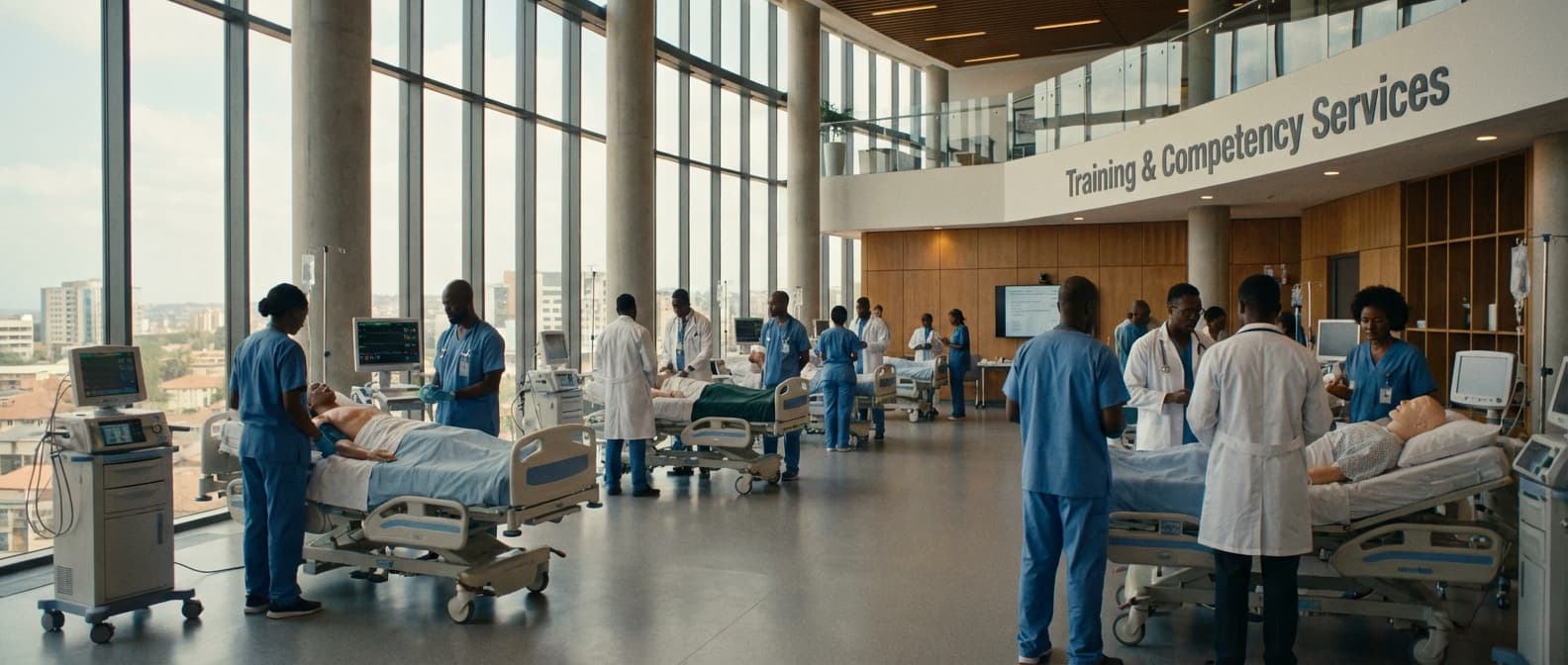
Ventilator User Training Service (Nurses) in Burundi
Engineering Excellence & Technical Support
Ventilator User Training Service (Nurses) High-standard technical execution following OEM protocols and local regulatory frameworks.
Ventilator Settings Mastery
Gain confidence in accurately setting and adjusting key ventilator parameters (e.g., PEEP, tidal volume, respiratory rate, FiO2) to optimize patient ventilation and minimize risks like barotrauma and volutrauma, specifically tailored to common respiratory conditions encountered in Burundi.
Waveform Interpretation & Troubleshooting
Develop proficiency in analyzing ventilator waveforms (pressure, flow, volume) to identify patient-ventilator asynchrony, detect circuit leaks, and troubleshoot common alarms, enabling rapid and effective interventions in diverse clinical scenarios.
Integrated Patient Monitoring & Weaning Protocols
Understand how to integrate ventilator data with other patient monitoring systems (pulse oximetry, blood gas analysis) and apply evidence-based weaning protocols, ensuring safe and timely liberation from mechanical ventilation for improved patient outcomes.
What Is Ventilator User Training Service (Nurses) In Burundi?
Ventilator User Training Service (Nurses) in Burundi refers to a specialized educational program designed to equip registered nurses and other qualified healthcare professionals with the knowledge and practical skills necessary to safely and effectively operate, monitor, and manage mechanical ventilators in clinical settings within Burundi. This service addresses the critical need for trained personnel to support patients requiring mechanical ventilatory support, particularly in resource-limited environments where specialized training may be scarce.
| Who Needs Ventilator User Training? | Typical Use Cases | ||||
|---|---|---|---|---|---|
| Registered Nurses (RNs): Primary recipients, especially those working in critical care units (ICUs), emergency departments, operating rooms, and neonatal/pediatric intensive care units. | Respiratory Therapists (where available): To supplement their existing knowledge and adapt to specific ventilator models used in Burundi. | Physicians (especially junior doctors and residents): To enhance their understanding of ventilator management and provide appropriate guidance to nursing staff. | Anesthetists/Anesthesiologists: For perioperative management of ventilated patients. | ||
| Management of patients with severe respiratory failure: ARDS, severe pneumonia, exacerbations of chronic obstructive pulmonary disease (COPD). | Post-operative critical care: Patients requiring ventilatory support after major surgeries. | Neurological emergencies: Patients with conditions affecting respiratory drive or muscle function (e.g., Guillain-Barré syndrome, myasthenia gravis exacerbations). | Neonatal and pediatric intensive care: Management of premature infants and children with respiratory distress. | Emergency response: During public health emergencies or mass casualty incidents requiring significant ventilatory support capacity. | Support in rural or underserved areas: Providing essential critical care capabilities where advanced respiratory care personnel are limited. |
Key Components of Ventilator User Training Service (Nurses) in Burundi
- Foundational Principles of Mechanical Ventilation: Understanding respiratory physiology, mechanics of breathing, gas exchange, and common respiratory pathologies necessitating ventilatory support (e.g., Acute Respiratory Distress Syndrome (ARDS), pneumonia, COPD exacerbations, neuromuscular disorders).
- Ventilator Technology and Operation: Familiarization with various types of mechanical ventilators available in Burundi, including their operational modes (e.g., volume-controlled, pressure-controlled, pressure support, CPAP), settings, alarm systems, and basic troubleshooting.
- Patient Assessment and Monitoring: Techniques for comprehensive respiratory assessment, interpretation of vital signs, arterial blood gas (ABG) analysis, and monitoring of ventilator parameters, patient response, and potential complications.
- Ventilator Management Protocols: Adherence to evidence-based protocols for initiation, weaning, and discontinuation of mechanical ventilation, as well as strategies for optimizing ventilation and minimizing ventilator-associated complications.
- Infection Prevention and Control: Implementation of strategies to prevent ventilator-associated pneumonia (VAP) and other healthcare-associated infections, including sterile technique, oral care, and endotracheal tube management.
- Emergency Procedures and Troubleshooting: Recognizing and responding to critical ventilator-related emergencies, such as airway compromise, equipment malfunction, and patient distress.
- Ethical and Legal Considerations: Understanding ethical principles related to mechanical ventilation, informed consent, and documentation requirements.
Who Needs Ventilator User Training Service (Nurses) In Burundi?
Ventilator user training is crucial for nurses in Burundi to ensure safe and effective patient care. Given the critical nature of ventilator management, comprehensive training is essential for all nursing staff who will be operating or overseeing patients requiring mechanical ventilation. This service aims to equip nurses with the knowledge and practical skills necessary to handle various ventilator settings, troubleshoot common issues, and respond to emergencies effectively. The training will cover theoretical aspects of respiratory mechanics, ventilator modes, and patient monitoring, as well as hands-on practice with different types of ventilators.
| Customer Type | Specific Departments/Units Requiring Training | Rationale for Training |
|---|---|---|
| Public Hospitals | Intensive Care Units (ICUs), Emergency Departments (EDs), Surgical Recovery Units, Pediatric Intensive Care Units (PICUs) | These departments frequently manage critically ill patients requiring mechanical ventilation due to respiratory failure, sepsis, trauma, and other life-threatening conditions. Trained nurses ensure optimal patient outcomes and reduce complications. |
| Private Hospitals | Intensive Care Units (ICUs), Operating Rooms (ORs), Post-Anesthesia Care Units (PACUs), Neonatal Intensive Care Units (NICUs) | Similar to public hospitals, private facilities see a high volume of patients needing ventilation, especially in specialized units. Training ensures adherence to international standards of care and patient safety. |
| Referral Hospitals | All Critical Care and Emergency Departments | These hospitals often handle complex cases and serve as centers for advanced respiratory support, necessitating highly skilled nursing staff proficient in ventilator management. |
| University Teaching Hospitals | ICUs, EDs, Surgical, Pediatric, and Neonatal Units | In addition to patient care, these institutions often have a role in educating future nurses. Training the current nursing staff sets a benchmark for best practices and facilitates the integration of new knowledge into the curriculum. |
| Regional/District Hospitals (with critical care capacity) | Emerging ICU or critical care units, Emergency Rooms | As critical care services expand in regional hospitals, nurses in these areas require training to manage the growing demand for ventilator support, thereby decentralizing specialized care. |
Target Customers and Departments
- Hospitals (Public and Private)
- Intensive Care Units (ICUs)
- Emergency Departments (EDs)
- Surgical Wards
- Pediatric Units
- Neonatal Intensive Care Units (NICUs)
Ventilator User Training Service (Nurses) Process In Burundi
The Ventilator User Training Service for Nurses in Burundi is a structured process designed to equip nursing professionals with the essential knowledge and practical skills to safely and effectively operate and manage ventilators. This workflow outlines the journey from an initial inquiry to the successful execution of the training program.
| Stage | Key Activities | Responsible Parties |
|---|---|---|
| Inquiry & Needs Assessment | Expressing interest, initial contact, assessing training needs, identifying specific ventilators and skill gaps. | Healthcare Facility/Nursing Association, Training Provider |
| Proposal & Agreement | Developing training proposal, negotiating terms, finalizing budget and schedule, signing contract/MOU. | Training Provider, Healthcare Facility/Nursing Association |
| Curriculum Development & Customization | Finalizing curriculum based on best practices and local context, creating training materials. | Training Provider |
| Participant Identification & Registration | Selecting nurses for training, collecting participant details, forming training groups. | Healthcare Facility, Training Provider |
| Logistics & Resource Mobilization | Securing venue, ensuring ventilator availability, arranging equipment and facilitators, procuring materials. | Training Provider, Healthcare Facility |
| Training Execution | Delivering theoretical sessions, conducting demonstrations, facilitating hands-on practice, using case studies. | Training Facilitators, Participants |
| Assessment & Evaluation | Conducting formative and summative assessments (written & practical), collecting participant feedback. | Training Facilitators, Participants |
| Certification & Follow-up | Issuing certificates, providing training reports, offering post-training support (optional). | Training Provider, Healthcare Facility |
Ventilator User Training Service (Nurses) Process in Burundi
- 1. Inquiry & Needs Assessment:
- Healthcare facilities (hospitals, clinics) or nursing associations in Burundi express interest in ventilator user training.- Initial contact is made with the designated training provider (e.g., Ministry of Health, specialized training institute, international NGO).- A detailed needs assessment is conducted to understand the specific ventilator models in use, the current skill level of nurses, the number of nurses requiring training, and any specific challenges or priorities.- 2. Proposal & Agreement:
- Based on the needs assessment, the training provider develops a comprehensive training proposal.- The proposal outlines training objectives, curriculum, methodology, duration, location, facilitators, required resources, and estimated costs.- The healthcare facility or requesting body reviews the proposal.- Negotiation and agreement on terms, budget, and schedule are finalized.- A formal contract or Memorandum of Understanding (MOU) is signed.- 3. Curriculum Development & Customization:
- The training curriculum is finalized, often based on international best practices and adapted to the Burundian healthcare context.- The curriculum covers theoretical aspects (principles of ventilation, types of ventilators, physiological effects, patient monitoring) and practical skills (setup, operation, troubleshooting, maintenance, weaning protocols).- Training materials (presentations, manuals, case studies, assessment tools) are developed or sourced.- 4. Participant Identification & Registration:
- The requesting healthcare facility identifies the nurses who will participate in the training.- A registration process is initiated, collecting relevant information from each participant (e.g., name, designation, department, contact information).- Training groups are formed based on the number of participants and logistical considerations.- 5. Logistics & Resource Mobilization:
- Training venue (classroom space, simulation lab) is secured and prepared.- Ventilator(s) for hands-on practice are made available and confirmed to be in working order.- Audiovisual equipment, manikins, and other simulation tools are arranged.- Training facilitators (experienced nurses, respiratory therapists, physicians) are identified and briefed.- Participant materials (handouts, pens, notebooks) are procured.- 6. Training Execution:
- **Theoretical Sessions:** Lectures, presentations, and group discussions covering the core principles of mechanical ventilation and ventilator operation.- **Demonstrations:** Facilitators demonstrate the correct setup, operation, and parameter adjustments for various ventilator models.- **Hands-on Practice:** Participants engage in supervised practice sessions using actual ventilators or high-fidelity simulators. This includes setting up, initiating ventilation, adjusting settings, responding to alarms, and practicing patient disconnection.- **Case Studies & Scenarios:** Participants work through realistic patient scenarios to apply their knowledge and decision-making skills.- **Q&A and Troubleshooting:** Dedicated time for participants to ask questions and for facilitators to address common troubleshooting issues.- 7. Assessment & Evaluation:
- **Formative Assessments:** Ongoing observation and feedback during practical sessions to identify areas for improvement.- **Summative Assessments:** Written examinations to assess theoretical knowledge and practical skills evaluations (e.g., OSCEs - Objective Structured Clinical Examinations) to demonstrate competency in ventilator operation.- **Participant Feedback:** A feedback form is administered to gather participant views on the training's effectiveness, content, and delivery.- 8. Certification & Follow-up:
- Upon successful completion of the training and passing assessments, participants receive a certificate of completion.- A report on the training's outcomes, including assessment results and participant feedback, is provided to the requesting facility and relevant authorities.- Post-training support mechanisms may be established, such as refresher courses, online resources, or on-site mentorship, depending on the program's scope.- Data from the training may be used for program evaluation and future planning.
Ventilator User Training Service (Nurses) Cost In Burundi
The cost of ventilator user training services for nurses in Burundi can vary significantly due to several factors. These include the duration and intensity of the training, the qualifications and experience of the trainers, the training location (on-site at a facility vs. a dedicated training center), the curriculum's complexity (basic vs. advanced ventilation modes), and any included materials or certifications. Local economic conditions and the specific needs of the healthcare facility also play a role in pricing.
| Service Level/Duration | Estimated Cost Range (BIF) | Key Inclusions/Notes |
|---|---|---|
| Basic Ventilator Operation (1-2 days) | 200,000 - 500,000 | Focus on essential functions, patient connection, basic settings, alarms. May be a group rate per session. |
| Intermediate Ventilation (3-4 days) | 400,000 - 900,000 | Includes basic operation plus common ventilation modes, monitoring, and initial troubleshooting. |
| Advanced Ventilation & Troubleshooting (5+ days) | 700,000 - 1,500,000+ | Covers complex modes, waveform analysis, weaning strategies, advanced troubleshooting, and potentially specific ventilator models. May include simulation. |
| Customized/On-Site Training | Variable (negotiated per contract) | Cost is highly dependent on trainer travel, duration, and specific facility needs. Can be higher due to logistical costs. |
| Refresher/Advanced Module (per day) | 150,000 - 300,000 | For nurses needing to refresh skills or learn specific advanced techniques. |
Pricing Factors for Ventilator User Training in Burundi
- Training Duration and Intensity (hours, days, modules)
- Trainer Qualifications and Experience (e.g., experienced intensivists, respiratory therapists)
- Training Location (on-site at hospital/clinic vs. external training center)
- Curriculum Scope (basic operation, advanced modes, troubleshooting, specific ventilator models)
- Inclusion of Training Materials (manuals, handouts, online resources)
- Certification and Assessment (formal certification adds value and cost)
- Number of Participants (group discounts may apply)
- Institutional Partnerships and Volume of Training
- Travel and Accommodation Costs for Trainers (if applicable)
- Technological Requirements (simulation equipment, hands-on practice models)
Affordable Ventilator User Training Service (Nurses) Options
This document outlines affordable ventilator user training service options specifically designed for nurses. We focus on delivering high-quality, practical training that empowers nurses to confidently and safely operate mechanical ventilators. Our approach emphasizes understanding core principles, practical application, and troubleshooting, ensuring nurses are well-prepared for critical care scenarios. We offer flexible training models to suit various institutional needs and budgets, focusing on value and long-term cost savings through improved patient outcomes and reduced errors.
| Service Option | Description | Key Value Proposition | Estimated Cost Savings Strategy |
|---|---|---|---|
| Basic Competency Bundle | Online theoretical modules covering ventilator principles, modes, and initial settings. Includes basic troubleshooting scenarios. | Foundational knowledge for all nursing staff. Highly scalable and accessible. | Reduced need for expensive in-person sessions for all staff; self-paced learning reduces instructor time. |
| Advanced Skills Bundle | Includes Basic Competency plus hands-on simulation sessions with various ventilator models and complex patient scenarios. Focus on weaning and advanced settings. | Develops practical expertise and confidence in critical situations. Improves patient outcomes. | Reduces the risk of ventilator-related complications and adverse events, leading to shorter hospital stays and lower overall treatment costs. |
| Train-the-Trainer Program | Intensive program for selected nurses to become certified internal trainers. Includes curriculum, materials, and ongoing support. | Empowers internal expertise, creating a sustainable training infrastructure within the institution. | Significantly reduces long-term external training costs. Ensures consistent, in-house knowledge transfer. |
| Subscription & Refreshers | Annual subscription providing access to an updated online learning portal, refresher modules, and a knowledge base. Includes quarterly webinars. | Ensures continuous learning and compliance with evolving best practices and technology. | Prevents skill degradation, reducing the likelihood of errors and the need for remedial training. Predictable budgeting. |
| Customized Simulation Module | On-site or virtual simulation sessions tailored to specific ventilator models and common patient populations encountered by the facility. | Highly relevant and practical training directly applicable to the nurses' daily work. | Maximizes training effectiveness, leading to quicker adoption and proficiency, thus reducing the time nurses spend on unfamiliar equipment and potential errors. |
Value Bundles & Cost-Saving Strategies
- Tiered Training Packages: Offering different levels of training complexity and duration to match specific institutional needs and budgets.
- Blended Learning Models: Combining online theoretical modules with in-person, hands-on simulation sessions for maximum efficiency and engagement.
- Train-the-Trainer Programs: Equipping experienced nurses within an institution to become internal trainers, reducing reliance on external services for ongoing training.
- Bulk Discounts: Incentivizing larger organizations or multiple departments to enroll in training programs together.
- Subscription-Based Access: Providing continuous access to updated training materials, refresher courses, and a knowledge base for a predictable annual fee.
- Simulation-Only Options: For institutions with existing theoretical training frameworks, offering focused, high-fidelity simulation sessions for practical skill development.
- Customizable Curricula: Tailoring training content to the specific ventilator models used within a facility, minimizing learning curves and irrelevant information.
- Post-Training Support: Including access to a Q&A forum or limited direct consultation to reinforce learning and address emergent questions.
- Focus on Core Competencies: Prioritizing essential skills and knowledge that have the greatest impact on patient safety and effective ventilator management.
- Partnerships with Medical Device Manufacturers: Collaborating to leverage their training resources and potentially offer bundled training with equipment purchases.
Verified Providers In Burundi
In Burundi's evolving healthcare landscape, identifying reliable and accredited medical facilities is paramount for ensuring quality patient care. Verified providers stand out by adhering to stringent international and national standards, demonstrating a commitment to excellence, safety, and ethical practices. Among these, Franance Health has emerged as a leading name, distinguished by its comprehensive credentialing and unwavering dedication to patient well-being. This document outlines what it means to be a verified provider in Burundi and highlights the specific credentials and qualities that make Franance Health the optimal choice for healthcare needs.
| Credential/Attribute | Significance for Patients | Franance Health's Commitment |
|---|---|---|
| Ministry of Health Accreditation | Ensures legal compliance, basic quality standards, and operational legitimacy within Burundi. | Franance Health holds all necessary accreditations from the Burundian Ministry of Health, demonstrating full compliance with national healthcare laws and regulations. |
| International Quality Certifications (e.g., ISO) | Indicates adherence to internationally recognized quality management and operational excellence standards, often related to safety and efficiency. | While specific international certifications may vary, Franance Health aligns its operational protocols with best practices that mirror the principles of global quality standards, focusing on patient safety and service delivery. |
| Specialized Medical Licensing for Departments/Services | Confirms that specific units or treatments offered have met specialized regulatory and quality benchmarks. | All specialized medical departments at Franance Health, including diagnostics, surgery, and intensive care, are licensed and operate under the supervision of board-certified specialists, meeting rigorous requirements. |
| Continuous Professional Development (CPD) for Staff | Guarantees that medical professionals remain up-to-date with the latest medical knowledge, techniques, and ethical guidelines. | Franance Health prioritizes ongoing training and development for its entire medical team, ensuring they are equipped with the most current medical advancements and maintain the highest professional standards. |
| Patient Safety Protocols and Audits | Demonstrates a proactive approach to minimizing risks, preventing medical errors, and ensuring a safe healing environment. | Rigorous patient safety protocols are embedded in Franance Health's daily operations, including regular audits and reviews to identify and mitigate potential risks, ensuring a secure environment for all patients. |
| Patient Feedback Mechanisms and Improvement Initiatives | Shows a commitment to patient satisfaction and actively uses feedback to enhance the quality of care and services provided. | Franance Health actively solicits and values patient feedback, utilizing this information to continuously refine and improve its services, aiming for an exceptional patient experience. |
What Makes a Provider 'Verified' in Burundi?
- Adherence to National Health Regulations: Compliance with all Ministry of Health guidelines and licensing requirements.
- International Accreditation Standards: Meeting benchmarks set by recognized global healthcare accreditation bodies, signifying a high level of operational quality and patient safety.
- Qualified Medical Personnel: Employing and continuously training licensed and skilled doctors, nurses, and support staff.
- Robust Quality Management Systems: Implementing protocols for infection control, patient safety, and continuous improvement of services.
- Ethical Practice and Transparency: Upholding ethical medical conduct and maintaining open communication with patients.
- State-of-the-Art Facilities and Equipment: Utilizing modern medical technology and maintaining well-equipped healthcare infrastructure.
Scope Of Work For Ventilator User Training Service (Nurses)
This Scope of Work outlines the requirements for providing ventilator user training services specifically tailored for registered nurses. The training will cover essential knowledge and practical skills required for the safe and effective operation of modern mechanical ventilators in a clinical setting. The objective is to enhance the competency of nursing staff in managing patients requiring ventilatory support, ultimately improving patient outcomes and reducing the risk of ventilator-associated complications.
| Category | Standard Specification | Description |
|---|---|---|
| Target Audience | Registered Nurses (RNs) | Training is designed for RNs with varying levels of experience in critical care or respiratory support. |
| Ventilator Types Covered | Commonly used ICU Ventilators (Specify models/brands if applicable) | Training will focus on ventilators typically found in the client's critical care units. Specific models should be identified in the proposal. |
| Training Modalities | Blended Learning Approach (Didactic + Practical) | Combines theoretical knowledge delivery (lectures, online modules) with hands-on practice using simulation equipment and/or actual ventilators. |
| Content Modules | Ventilator Principles, Modes of Ventilation, Settings & Adjustments, Monitoring & Alarms, Weaning Principles, Troubleshooting, Infection Control | Core competencies required for safe ventilator management by nurses. |
| Practical Skill Components | Circuit setup and checks, initial ventilator settings, mode selection, alarm management, waveform interpretation, patient disconnection/reconnection | Hands-on proficiency development for essential nursing tasks related to ventilator use. |
| Assessment Methodology | Validated knowledge tests, skills checklist, scenario-based simulation evaluation | Objective measures to confirm understanding and practical application of learned skills. |
| Instructor Qualifications | Certified Respiratory Therapist (CRT) or Registered Nurse (RN) with extensive experience in critical care ventilation | Instructors must possess both theoretical knowledge and practical expertise in the field. |
| Training Duration | Minimum 8 hours per cohort (customizable based on complexity) | Sufficient time allocated for comprehensive coverage and practical application. |
| Location | On-site at client facility or designated training center | Training to be conducted in a suitable environment equipped with necessary simulation tools. |
| Reporting Requirements | Post-training report including attendance, assessment scores, and feedback summary | Provides accountability and documentation of training effectiveness. |
Technical Deliverables
- Comprehensive training curriculum document, detailing learning objectives, content modules, and assessment methods.
- Training materials (presentations, handouts, case studies, simulation scenarios) in printable and/or digital format.
- Competency assessment tools (e.g., pre- and post-training knowledge tests, practical skills checklists, simulation-based evaluations).
- Certificate of completion for each nurse successfully completing the training program.
- Training attendance roster and summary report.
- Feedback forms for participants to evaluate the training effectiveness and instructor performance.
- Post-training support plan, including access to resources or subject matter experts for a defined period.
Service Level Agreement For Ventilator User Training Service (Nurses)
This Service Level Agreement (SLA) outlines the response times and uptime guarantees for the Ventilator User Training Service specifically for nursing staff. It is designed to ensure timely support and reliable access to training resources.
| Service Component | Uptime Guarantee | Response Time (Standard Support) | Response Time (Critical Support) |
|---|---|---|---|
| Training Platform Availability | 99.5% Uptime (excluding scheduled maintenance) | ||
| Technical Support (Login issues, platform errors, access problems) | Within 4 business hours | Within 1 business hour | |
| Content Updates & New Courses | Within 5 business days of announcement/approval | ||
| Trainer Availability (Live Sessions) | Within 2 business hours (for scheduling/rescheduling inquiries) | Within 1 business hour (for urgent live session technical issues) |
Key Service Components
- Training Platform Availability: The online training portal will be accessible and operational for users.
- Technical Support Response: Time taken to acknowledge and begin addressing reported technical issues.
- Content Updates & New Courses: Timeliness of releasing new or updated training modules.
- Trainer Availability (Live Sessions): Availability of instructors for scheduled live training sessions.
Frequently Asked Questions

Ready when you are
Let's scope your Ventilator User Training Service (Nurses) in Burundi project in Burundi.

Scaling healthcare logistics and technical systems across the entire continent.