
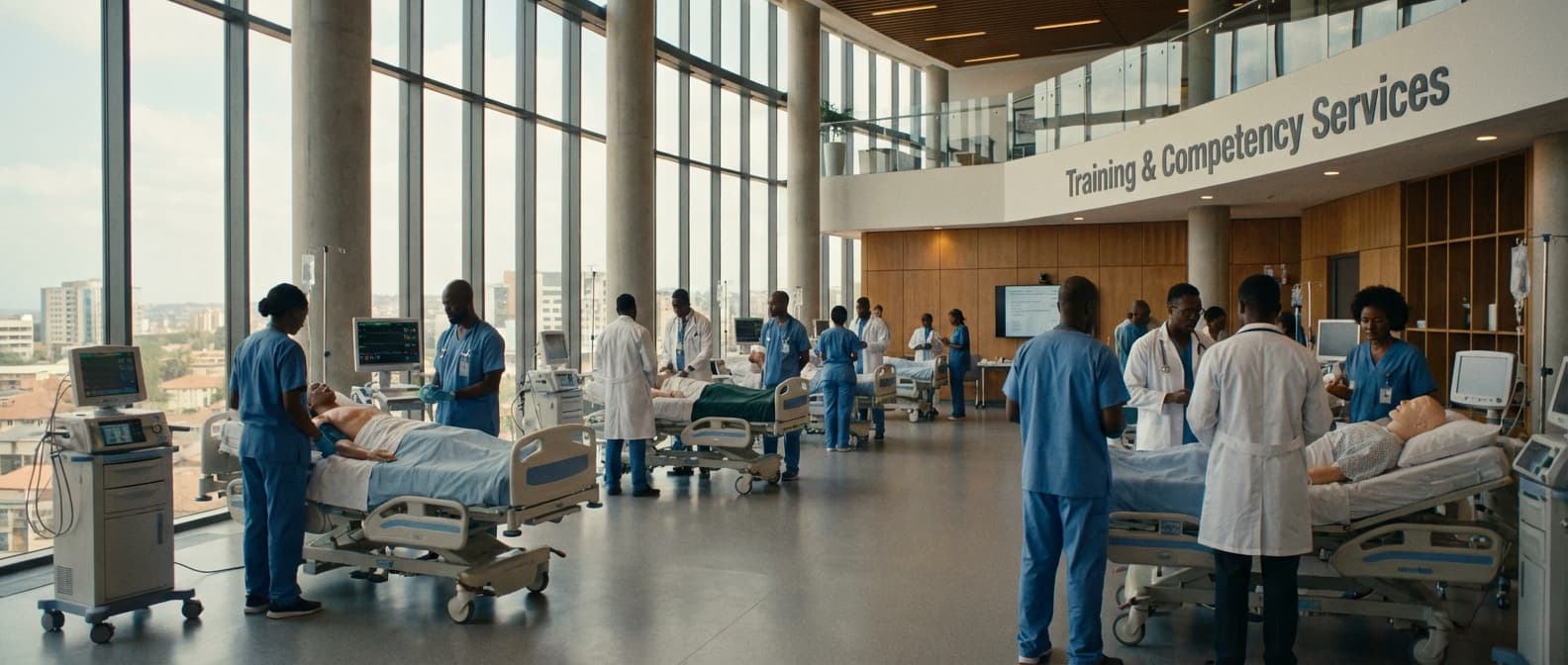
Ultrasound Application Training Service (Protocol-Based) in Burundi
Engineering Excellence & Technical Support
Ultrasound Application Training Service (Protocol-Based) High-standard technical execution following OEM protocols and local regulatory frameworks.
Standardized Protocol Mastery
Our training equips Burundian healthcare professionals with comprehensive, protocol-driven ultrasound techniques, ensuring consistent and accurate diagnostic image acquisition across various clinical scenarios.
Hands-On Equipment Proficiency
Gain practical expertise in operating a range of ultrasound equipment commonly used in Burundi, with a focus on optimized settings and image optimization for effective patient care.
Real-World Case Application
Learn to interpret ultrasound findings through curated case studies relevant to prevalent health conditions in Burundi, enhancing diagnostic confidence and clinical decision-making.
What Is Ultrasound Application Training Service (Protocol-based) In Burundi?
Ultrasound Application Training Service (Protocol-Based) in Burundi refers to a specialized educational program designed to equip healthcare professionals with the knowledge and practical skills necessary to perform diagnostic ultrasound examinations according to established, standardized protocols. This service focuses on providing systematic, evidence-based approaches to ultrasound acquisition and interpretation, ensuring consistency, accuracy, and reproducibility of findings. The training emphasizes understanding the underlying principles of ultrasound physics, optimal transducer manipulation, correct probe positioning, and the generation of high-quality images relevant to specific clinical applications. It is delivered through a structured curriculum, incorporating theoretical lectures, hands-on scanning sessions with phantoms and/or supervised real-patient examinations, and comprehensive case study reviews. The protocol-based methodology ensures that trainees learn to systematically evaluate target anatomy and pathology, minimizing the risk of overlooking critical findings and standardizing the diagnostic process across different practitioners and institutions within Burundi.
| Target Audience | Clinical Need | Typical Use Cases |
|---|---|---|
| Radiologists, Sonographers, Physicians (Obstetricians, Gynecologists, General Practitioners, Internists, Surgeons, Pediatricians) involved in diagnostic imaging. | Enhance diagnostic accuracy and efficiency in ultrasound imaging, standardize examination quality across healthcare facilities, and address the need for skilled ultrasound practitioners in resource-limited settings. | Obstetrics: Antenatal screening, fetal well-being assessment, detection of congenital anomalies. Gynecology: Pelvic organ assessment, evaluation of uterine and ovarian pathology. Abdominal Imaging: Evaluation of liver, gallbladder, spleen, kidneys, pancreas, and aorta. Vascular Studies: Assessment of peripheral arterial and venous circulation, carotid Doppler studies. Musculoskeletal (MSK) Ultrasound: Evaluation of joints, tendons, ligaments, and soft tissue masses. Point-of-Care Ultrasound (POCUS): Rapid bedside assessments in emergency and critical care settings. Pediatric Ultrasound: Neonatal cranial imaging, abdominal assessments, genitourinary evaluations. |
Key Components of Ultrasound Application Training Service (Protocol-Based)
- Protocol Development & Standardization: Training adheres to locally or internationally recognized ultrasound imaging protocols for specific organ systems or clinical scenarios (e.g., obstetric, gynecological, abdominal, musculoskeletal, vascular).
- Physics & Instrumentation Refresher: Review of fundamental ultrasound principles, artifact recognition, and optimization of machine parameters for superior image quality.
- Anatomical Correlation: Detailed study of relevant anatomy and the corresponding ultrasound appearance of normal structures and common pathologies.
- Image Acquisition Techniques: Hands-on instruction in probe handling, scanning planes, and systematic survey techniques to ensure comprehensive coverage of the target area as dictated by the protocol.
- Pathological Recognition & Interpretation: Training in identifying characteristic ultrasound features of various pathologies, differentiating benign from malignant findings, and understanding the clinical significance of observed abnormalities.
- Reporting & Documentation: Guidance on accurately documenting findings in a clear, concise, and structured manner, aligning with established reporting templates and protocols.
- Quality Assurance & Control: Emphasis on image quality assessment and adherence to best practices to ensure diagnostic reliability.
- Hands-on Supervised Practice: Extensive practical sessions under the guidance of experienced sonographers or radiologists to reinforce learning and build confidence.
Who Needs Ultrasound Application Training Service (Protocol-based) In Burundi?
Ultrasound Application Training Service (Protocol-Based) is a specialized offering designed to equip healthcare professionals in Burundi with the necessary skills and knowledge to effectively utilize ultrasound technology according to established medical protocols. This training ensures accurate diagnoses, improved patient care, and standardized practices across various medical disciplines.
| Target Customer/Department | Specific Needs and Applications | Benefits of Protocol-Based Training | ||||||||||||||||||
|---|---|---|---|---|---|---|---|---|---|---|---|---|---|---|---|---|---|---|---|---|
| Radiologists and Radiology Technicians | Abdominal, Pelvic, Vascular, Musculoskeletal, and Superficial Imaging; adherence to standardized scan protocols for consistency and accuracy. | Enhanced diagnostic accuracy, reduced inter-observer variability, improved workflow efficiency, and ability to perform a wider range of ultrasound examinations. | Obstetricians and Gynecologists | Antenatal care, fetal anomaly screening, gynecological condition assessment, transvaginal and transabdominal ultrasound techniques. | Improved fetal surveillance, early detection of complications, better management of gynecological issues, and adherence to international obstetric guidelines. | Cardiologists and Cardiac Technicians | Echocardiography for assessing cardiac structure and function, identifying congenital heart defects, and evaluating valvular diseases. | Precise cardiac assessment, accurate diagnosis of heart conditions, and standardization of echocardiographic reporting. | Emergency Medicine Physicians and Nurses | Point-of-care ultrasound (POCUS) for trauma assessment (FAST scan), diagnosis of critical conditions like pneumothorax, pleural effusion, and basic cardiac evaluation. | Rapid decision-making in emergencies, improved patient stabilization, and timely intervention in critical situations. | Pediatricians | Neonatal brain imaging, abdominal ultrasound in children, pediatric cardiac assessments, and identification of common childhood pathologies. | Early diagnosis of pediatric conditions, accurate monitoring of growth and development, and improved management of childhood illnesses. | Medical Training Institutions (Universities, Nursing Schools) | Integration of ultrasound education into medical curricula, training of future healthcare professionals in basic and advanced ultrasound techniques. | Producing competent and well-trained healthcare providers, advancing the quality of medical education, and building a skilled ultrasound workforce in Burundi. | NGOs and Public Health Programs | Screening programs for common diseases, capacity building for healthcare workers in remote areas, and implementation of ultrasound in public health initiatives. | Wider reach of diagnostic services, improved health outcomes in underserved populations, and sustainable healthcare solutions. |
Target Customers and Departments for Ultrasound Application Training Service (Protocol-Based) in Burundi
- Hospitals (Public and Private)
- Clinics and Health Centers
- Medical Training Institutions
- Non-Governmental Organizations (NGOs) with Healthcare Programs
- Maternal and Child Health Centers
- Radiology Departments
- Obstetrics and Gynecology Departments
- Cardiology Departments
- Emergency Departments
- Intensive Care Units (ICUs)
- Surgical Departments
- Pediatric Departments
- Internal Medicine Departments
Ultrasound Application Training Service (Protocol-based) Process In Burundi
This document outlines the workflow for the Ultrasound Application Training Service (Protocol-Based) in Burundi, detailing the process from initial inquiry to the successful execution of the training.
| Stage | Key Activities | Deliverables | Responsible Parties |
|---|---|---|---|
| Inquiry & Needs Assessment | Initial contact, understanding training needs, scope definition. | Needs assessment summary, feasibility report. | Client, Training Service Provider |
| Proposal Development & Customization | Drafting proposal, outlining curriculum, costs, schedule. | Training proposal document. | Training Service Provider |
| Agreement & Contract Finalization | Negotiation and signing of contract. | Signed training agreement/contract. | Client, Training Service Provider |
| Pre-Training Preparations | Curriculum finalization, trainer assignment, logistics, participant registration. | Finalized curriculum, confirmed trainers, booked venue, registered participants. | Training Service Provider, (Client for equipment provision if applicable) |
| Training Execution | Theoretical and practical sessions, case study analysis. | Delivered training modules, hands-on skill development. | Training Service Provider (Trainers), Participants |
| Post-Training Evaluation & Assessment | Knowledge tests, practical skill observation, participant feedback. | Assessment results, participant feedback reports. | Training Service Provider, Participants |
| Certification & Follow-up | Issuing certificates, providing post-training support. | Certificates of completion, follow-up support mechanisms. | Training Service Provider |
| Reporting & Review | Compiling training report, internal process review. | Final training report, internal improvement recommendations. | Training Service Provider |
Ultrasound Application Training Service (Protocol-Based) Workflow in Burundi
- Inquiry & Needs Assessment: Potential clients (hospitals, clinics, healthcare professionals) express interest in ultrasound training. This involves initial communication to understand specific training needs, target audience (e.g., radiologists, sonographers, nurses), desired ultrasound applications (e.g., general, obstetric, cardiac), and preferred training duration and location within Burundi. The service provider assesses the feasibility and scope of the request.
- Proposal Development & Customization: Based on the needs assessment, a detailed proposal is drafted. This proposal outlines the training objectives, curriculum (protocol-based approach is emphasized), modules, duration, venue requirements, trainers' qualifications, equipment needs (client-provided or provider-arranged), cost breakdown, and proposed training schedule. The proposal is shared with the client for review and potential adjustments.
- Agreement & Contract Finalization: Upon client approval of the proposal, a formal agreement or contract is established. This document details the scope of work, deliverables, payment terms, cancellation policy, intellectual property rights, and any other legal considerations specific to the training service in Burundi.
- Pre-Training Preparations: This phase involves meticulous planning and logistics. It includes: * Curriculum Finalization: Confirming the specific protocols to be covered and tailoring them to local context if necessary. * Trainer Assignment: Selecting qualified and experienced trainers with relevant expertise in the chosen ultrasound applications and protocol-based training methodologies. * Logistics Arrangement: Securing training venue, confirming accommodation and travel for trainers (if applicable), arranging for necessary training materials (handouts, presentations, case studies), and ensuring the availability and functionality of ultrasound equipment (either client-provided or arranged by the provider). * Participant Registration: Managing participant enrollment, collecting necessary information, and communicating pre-training instructions and schedules.
- Training Execution: This is the core phase where the training is delivered. It typically involves: * Theoretical Sessions: Lectures, presentations, and discussions on ultrasound physics, principles, anatomy, physiology, and specific protocols for the chosen applications. * Practical Sessions: Hands-on training using ultrasound machines, focusing on image acquisition, protocol adherence, interpretation, and hands-on skill development. This is where the protocol-based methodology is critically applied, ensuring standardized and systematic image capture and assessment. * Case Study Analysis: Reviewing real-life cases to reinforce learning and develop diagnostic skills. * Q&A and Feedback Sessions: Opportunities for participants to ask questions and receive immediate feedback from trainers.
- Post-Training Evaluation & Assessment: To gauge the effectiveness of the training, a comprehensive evaluation is conducted. This can include: * Knowledge Assessment: Written or online tests to evaluate theoretical understanding. * Practical Skill Assessment: Observation of participants performing specific ultrasound examinations according to the trained protocols. * Participant Feedback: Surveys and interviews to gather feedback on the training content, delivery, trainers, and overall experience.
- Certification & Follow-up: Upon successful completion of the training and passing assessments, participants receive a certificate of completion. The service provider may also offer post-training support, such as remote assistance, access to online resources, or follow-up sessions to address any lingering questions or challenges encountered in their practice.
- Reporting & Review: A comprehensive report is generated summarizing the training activities, participant performance, evaluation results, and feedback. This report is shared with the client. The service provider also conducts an internal review of the training process to identify areas for improvement in future service delivery.
Ultrasound Application Training Service (Protocol-based) Cost In Burundi
This document outlines the cost considerations and potential pricing ranges for Ultrasound Application Training Services (Protocol-Based) in Burundi. These services are crucial for healthcare professionals seeking to enhance their diagnostic capabilities and patient care through the effective utilization of ultrasound technology according to established protocols.
Several factors influence the overall cost of such training. These include the duration and intensity of the training, the specific ultrasound applications being covered (e.g., general radiology, obstetrics, cardiology), the qualifications and experience of the trainers, the location of the training (on-site at a healthcare facility vs. at a dedicated training center), and the number of participants. Additional costs may arise for training materials, equipment access, and certification exams. Given Burundi's economic context, training providers strive to offer competitive pricing while ensuring the quality and value of the education delivered.
| Training Component/Scope | Estimated Cost Range (BIF - Burundian Franc) | Notes |
|---|---|---|
| Basic Ultrasound Protocol Training (e.g., 1-2 days, general principles) | 150,000 - 300,000 | Covers fundamental scanning techniques and interpretation. May be group-based. |
| Specialized Ultrasound Application Training (e.g., 3-5 days, obstetrics, abdominal) | 300,000 - 750,000 | Focuses on specific organ systems or patient demographics. Includes more in-depth protocol review and practical sessions. |
| Advanced/Fellowship-Level Ultrasound Training (e.g., 1-2 weeks, complex cases, sub-specialties) | 750,000 - 2,000,000+ | Designed for experienced practitioners requiring advanced skills and knowledge in areas like interventional ultrasound or specific cardiac protocols. |
| On-site Training (per day, per group) | 200,000 - 500,000 | Cost is for the trainer's time and expertise. Client usually provides venue and equipment. |
| Training Materials (per participant) | 20,000 - 50,000 | Includes handbooks, handouts, and potentially digital resources. |
| Equipment Access (if not provided by client, per day) | 50,000 - 150,000 | Rental cost for ultrasound machines if the training is not conducted at a facility with readily available equipment. |
| Certification/Assessment Fee (per participant) | 30,000 - 80,000 | Covers the cost of evaluation and issuance of a certificate upon successful completion. |
Key Pricing Factors for Ultrasound Application Training in Burundi
- Training Duration and Intensity
- Specific Ultrasound Applications Covered
- Trainer Qualifications and Experience
- Training Location (On-site vs. Off-site)
- Number of Participants
- Provision of Training Materials
- Access to Ultrasound Equipment
- Certification or Assessment Fees
Affordable Ultrasound Application Training Service (Protocol-based) Options
Our affordable ultrasound application training services offer comprehensive, protocol-based learning designed to equip sonographers, physicians, and allied health professionals with the practical skills and theoretical knowledge needed for accurate and efficient diagnostic ultrasound examinations. We focus on industry-standard protocols to ensure trainees learn best practices, leading to improved patient care and reduced diagnostic errors. Our tiered value bundles and strategic cost-saving measures make high-quality ultrasound education accessible and economical.
| Cost-Saving Strategy | Description | Benefit |
|---|---|---|
| Early Bird Registration Discount | Register for training courses more than 30 days in advance and receive a percentage off the listed course fee. | Lower upfront investment, secures your spot in popular courses. |
| Group Training Discounts | Registering 3 or more individuals from the same institution for the same course offers a tiered discount per participant. | Significant savings for departments or teams seeking unified training. |
| Online/Blended Learning Options | Leveraging virtual classrooms and self-paced modules for theoretical components, reducing travel and accommodation costs. | Flexibility in learning location and schedule, reduced overall training expenses. |
| Protocol Resource Library Access | Bundled access to our extensive library of standardized ultrasound protocols and reference materials for ongoing use. | Provides continuous learning support and reduces the need for purchasing individual resources. |
| Subscription Model for Continuous Learning | Annual subscription provides access to a selection of online modules, webinars, and protocol updates, offering ongoing professional development at a predictable cost. | Cost-effective for individuals or departments committed to continuous education. |
| Referral Program | Refer a new participant who completes a training course and receive a discount on your next course or a credit towards advanced materials. | Rewards existing clients and encourages community growth. |
Value Bundles Explained
- {"title":"Core Competency Bundle","description":"Ideal for individuals new to a specific ultrasound application or those needing a foundational understanding. Includes essential protocol training, basic image acquisition techniques, and common pathology recognition.","price_point":"Entry-Level"}
- {"title":"Advanced Specialization Bundle","description":"Designed for experienced sonographers seeking to deepen their expertise in a particular area (e.g., advanced cardiac, fetal echocardiography, interventional ultrasound). Features in-depth protocol variations, complex case studies, and advanced artifact identification.","price_point":"Mid-Range"}
- {"title":"Comprehensive Mastery Bundle","description":"Our most robust offering, covering multiple applications or an entire specialty. Includes all elements of the Core and Advanced bundles, plus specialized workshops, mentorship opportunities, and case review sessions with expert sonographers.","price_point":"Premium"}
- {"title":"Institutional Package","description":"Customizable training solutions for healthcare facilities. Scalable to train entire departments, with flexible scheduling, on-site options, and tailored curriculum development to meet specific institutional needs and quality improvement goals.","price_point":"Custom"}
Verified Providers In Burundi
In the pursuit of reliable and high-quality healthcare services in Burundi, identifying verified providers is paramount. Franance Health stands out as a beacon of trust, offering a comprehensive network of credentialed professionals and facilities. This ensures that patients receive care that is not only accessible but also meets the highest standards of safety and efficacy. Understanding the rigorous credentialing process and the benefits of choosing a verified provider like Franance Health is crucial for making informed healthcare decisions.
| Provider Type | Franance Health Verification | Benefits for Patients |
|---|---|---|
| General Practitioners | Verified medical licenses, primary care certifications, and patient reviews. | Reliable first point of contact for general health concerns, accurate diagnosis, and appropriate referrals. |
| Specialists (e.g., Cardiologists, Pediatricians) | Verified specialist certifications, postgraduate qualifications, and hospital affiliations. | Access to expert medical advice and treatment for specific health conditions. |
| Hospitals and Clinics | Accreditation by relevant health authorities, adherence to safety protocols, and qualified medical staff. | Safe and well-equipped facilities for inpatient and outpatient care, surgeries, and emergency services. |
| Diagnostic Centers | Certification of equipment, qualified radiographers and laboratory technicians, and adherence to quality control standards. | Accurate and reliable diagnostic test results to support medical diagnosis and treatment plans. |
Why Franance Health is the Best Choice for Verified Providers in Burundi:
- Rigorous Credentialing Process: Franance Health employs a multi-stage vetting system for all its affiliated healthcare professionals and institutions. This includes verifying medical licenses, professional certifications, educational qualifications, and a history of ethical practice.
- Commitment to Quality Assurance: Beyond initial credentialing, Franance Health actively monitors the performance and patient feedback of its providers. This ongoing quality assurance ensures sustained high standards of care.
- Comprehensive Network: Franance Health boasts an extensive network encompassing general practitioners, specialists, diagnostic centers, and hospitals across Burundi, offering a wide spectrum of medical services.
- Patient-Centric Approach: The focus is on patient well-being. By partnering with verified providers, Franance Health empowers individuals to access safe, effective, and compassionate healthcare.
- Transparency and Trust: The verification process instills confidence. Patients can be assured that the healthcare professionals they encounter through Franance Health have met stringent criteria for competence and integrity.
- Access to Advanced Care: Verified providers often have access to modern medical technologies and adhere to best practices in their respective fields, leading to better patient outcomes.
Scope Of Work For Ultrasound Application Training Service (Protocol-based)
This document outlines the Scope of Work (SOW) for providing Ultrasound Application Training Services. The training will be protocol-based, ensuring standardized and consistent knowledge transfer. This SOW details the technical deliverables expected from the service provider and the standard specifications to which the training must adhere.
| Technical Deliverable | Description | Standard Specification |
|---|---|---|
| Training Curriculum Documentation | Comprehensive documentation of all training modules, learning objectives, and content outlines for each protocol. | Must be aligned with current clinical practice guidelines and evidence-based standards. Versions to be tracked and updated annually or as per significant guideline changes. |
| Instructor-Led Training Sessions | Live training sessions delivered by qualified and experienced ultrasound professionals. | Sessions will include lectures, demonstrations, and supervised hands-on practice. Instructor-to-trainee ratio not to exceed 1:5 for practical sessions. |
| Practical Scanning Sessions | Hands-on scanning opportunities for trainees on simulators and/or consenting patients/models under direct supervision. | Each trainee will have a minimum of X hours (to be specified) of supervised scanning time per module. Real-time feedback provided on image acquisition and interpretation. |
| Training Materials | Provision of all necessary training materials, including presentations, handouts, case studies, and reference guides. | Materials should be clear, concise, and visually engaging. Digital format preferred (PDF, interactive online modules). Up-to-date with current standards. |
| Assessment Tools | Development and administration of assessments to evaluate trainee competency. | Includes pre- and post-training knowledge assessments (e.g., quizzes, written exams) and practical scanning evaluations (e.g., image quality assessment, protocol adherence). Pass mark to be agreed upon (e.g., 80%). |
| Competency Verification Reports | Individualized reports detailing each trainee's performance, including assessment scores and areas for improvement. | Reports will be provided within 5 business days of assessment completion. Confidentiality of trainee data to be maintained. |
| Certificate of Completion | Issuance of certificates to trainees who successfully complete the training program and meet competency standards. | Certificates will include the trainee's name, course title, date of completion, and the issuing organization's details. |
| Feedback Mechanism | Implementation of a structured feedback system for trainees to evaluate the training program and instructors. | Feedback forms (digital or paper) to be administered at the end of each training module or at the conclusion of the program. Summarized feedback to be provided to the client. |
| Post-Training Support | Limited post-training support for clarification of concepts or review of specific protocols. | Offered via email or dedicated online forum for a period of 30 days post-completion. Response time within 2 business days. |
| Simulator Usage (if applicable) | Access to and training on ultrasound simulation equipment. | Simulators must be representative of current ultrasound technology and capable of simulating various pathologies and anatomical variations. Software to be updated regularly. |
Key Training Modules (Protocol-Based)
- Introduction to Ultrasound Physics and Principles
- Basic Anatomical Correlation and Probe Handling
- Abdominal Ultrasound Protocols (e.g., Liver, Gallbladder, Pancreas, Spleen, Kidneys)
- Pelvic Ultrasound Protocols (e.g., Transabdominal, Transvaginal)
- Obstetric Ultrasound Protocols (e.g., First Trimester, Second Trimester, Third Trimester)
- Vascular Ultrasound Protocols (e.g., Carotid Doppler, Lower Extremity Venous/Arterial)
- Small Parts Ultrasound Protocols (e.g., Thyroid, Breast, Scrotum)
- Point-of-Care Ultrasound (POCUS) Protocols (e.g., FAST, eFAST, Cardiac)
- Ultrasound Image Optimization and Quality Control
- Ultrasound Reporting and Documentation Standards
- Troubleshooting Common Ultrasound Artifacts and Pitfalls
- Advanced Ultrasound Techniques (Optional, per agreement)
Service Level Agreement For Ultrasound Application Training Service (Protocol-based)
This Service Level Agreement (SLA) outlines the guaranteed response times and uptime for the Ultrasound Application Training Service, operating under the Protocol-Based model. It defines the performance standards and remedies for the client.
| Service Component | Response Time Target | Resolution Target (for critical issues) | Uptime Guarantee |
|---|---|---|---|
| Critical Support Request (Service Unavailability) | 1 Hour (during business hours) | 4 Business Hours | 99.5% (excluding Scheduled Maintenance) |
| High Priority Support Request (Significant Functionality Impairment) | 2 Business Hours | 8 Business Hours | 99.5% (excluding Scheduled Maintenance) |
| Medium Priority Support Request (Minor Functionality Issues or Clarification) | 4 Business Hours | 2 Business Days | 99.5% (excluding Scheduled Maintenance) |
| Low Priority Support Request (General Inquiries or Feature Requests) | 8 Business Hours | 5 Business Days | 99.5% (excluding Scheduled Maintenance) |
| Training Platform Availability (excluding Scheduled Maintenance) | N/A | N/A | 99.5% |
Key Definitions
- Training Service: The provision of protocol-based training sessions, including instructor-led modules, virtual simulations, and hands-on practice facilitated through the designated ultrasound application platform.
- Protocol-Based Training: Training sessions that adhere to pre-defined, standardized clinical protocols and workflows for specific ultrasound examinations.
- Support Request: Any communication from the Client to the Provider regarding technical issues, operational difficulties, or clarification needed concerning the Training Service.
- Resolution: The successful addressing of a Support Request, allowing the Client to resume or continue their use of the Training Service without impediment.
- Downtime: Any period where the Training Service is unavailable to the Client, preventing the execution of training modules or access to training materials.
- Scheduled Maintenance: Planned periods for system updates, upgrades, or technical maintenance that are communicated to the Client in advance.
- Emergency Maintenance: Unplanned maintenance required to address critical system failures or security vulnerabilities.
Frequently Asked Questions

Ready when you are
Let's scope your Ultrasound Application Training Service (Protocol-Based) in Burundi project in Burundi.

Scaling healthcare logistics and technical systems across the entire continent.