
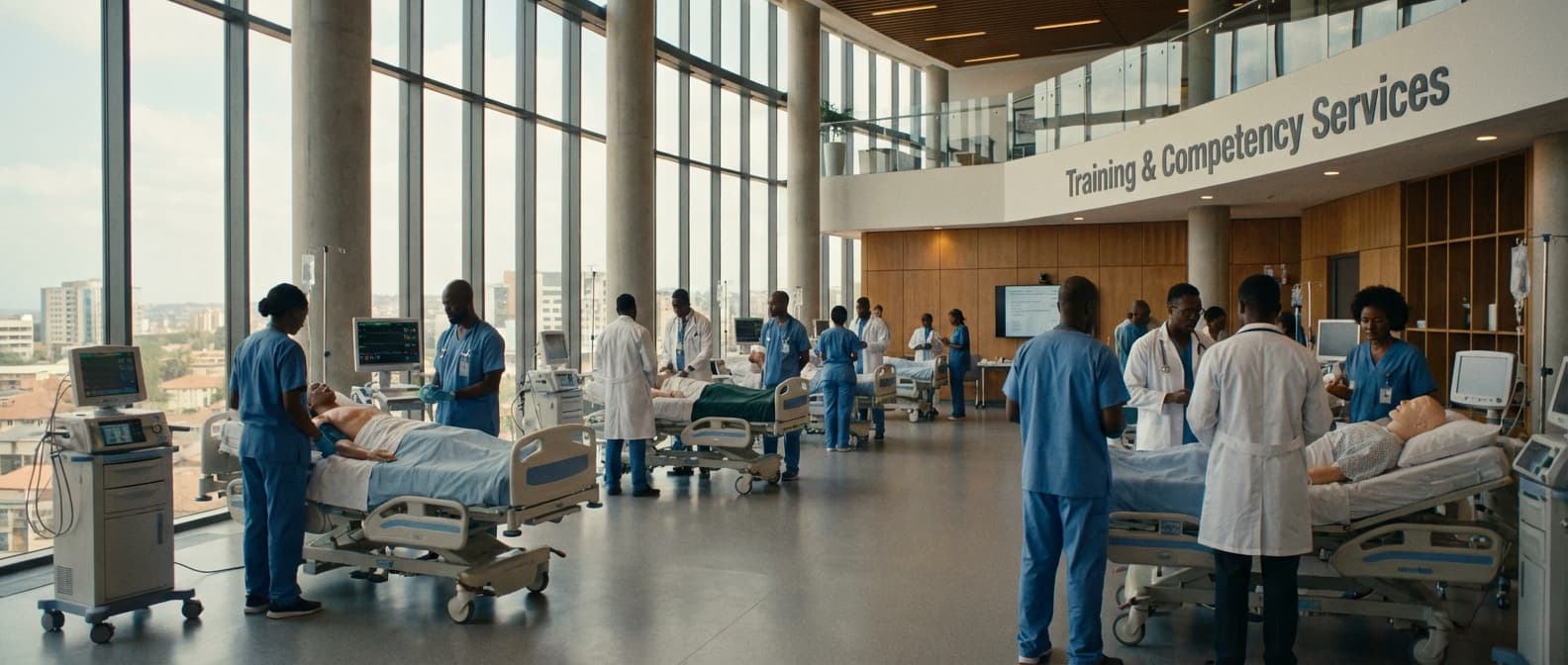
MRI Operator Training Service (Radiographers) in Burundi
Engineering Excellence & Technical Support
MRI Operator Training Service (Radiographers) High-standard technical execution following OEM protocols and local regulatory frameworks.
Advanced MRI Physics & Safety Protocols
Comprehensive training covering the fundamental principles of MRI physics, including magnetic fields, radiofrequency pulses, and gradient coils. Emphasis on stringent safety protocols for both patients and operators, adhering to international best practices and local regulatory requirements in Burundi.
Specialized Neuroimaging & Contrast Agent Handling
In-depth modules focused on neuroimaging techniques, covering optimal protocols for brain, spine, and cranial nerve imaging. Practical training on the safe and effective administration of MRI contrast agents, including patient assessment, injection techniques, and management of potential adverse reactions specific to the Burundian healthcare context.
Protocol Optimization & Image Interpretation Fundamentals
Training on developing and optimizing MRI scan protocols for a wide range of pathologies, ensuring efficient scanning and high-quality diagnostic images. Introduction to fundamental image interpretation principles, empowering radiographers to identify key anatomical structures and common abnormalities, thereby enhancing diagnostic accuracy in Burundian clinical settings.
What Is Mri Operator Training Service (Radiographers) In Burundi?
MRI Operator Training Service (Radiographers) in Burundi refers to specialized educational programs designed to equip radiographers with the necessary theoretical knowledge and practical skills to operate Magnetic Resonance Imaging (MRI) scanners safely and effectively. This service aims to ensure competent personnel capable of performing MRI examinations, producing high-quality diagnostic images, and adhering to strict safety protocols within the Burundian healthcare system.
| Who Needs MRI Operator Training Service? | Typical Use Cases | ||||
|---|---|---|---|---|---|
| Radiographers (Medical Imaging Technologists): Individuals currently practicing radiography or aspiring to specialize in advanced imaging modalities. | Hospitals and Diagnostic Centers: Healthcare facilities in Burundi investing in or already possessing MRI capabilities that require trained personnel. | Government Health Ministries and Agencies: Public health organizations responsible for ensuring the availability of qualified medical imaging professionals across the nation. | Medical Schools and Training Institutions: Educational bodies offering specialized courses in medical imaging. | International Healthcare Organizations: NGOs and aid agencies involved in developing or supporting healthcare infrastructure in Burundi. | |
| Neurological Imaging: Brain, spinal cord, and nerve studies for diagnosis of stroke, tumors, multiple sclerosis, epilepsy, and degenerative diseases. | Musculoskeletal Imaging: Assessment of joints, muscles, tendons, and ligaments for conditions such as ligament tears, arthritis, and sports injuries. | Abdominal and Pelvic Imaging: Evaluation of organs like the liver, kidneys, pancreas, spleen, uterus, and ovaries for tumors, inflammation, and other pathologies. | Cardiovascular Imaging: Assessment of heart structure and function, and blood vessels for conditions like congenital heart disease and vascular abnormalities. | Oncology: Staging and monitoring of various cancers. | Pediatric Imaging: Specialized MRI examinations for infants and children. |
Key Components of MRI Operator Training Service:
- Theoretical Foundations: Comprehensive understanding of MRI physics, including principles of nuclear magnetic resonance (NMR), radiofrequency (RF) pulse sequences, gradient fields, image formation, and signal generation.
- Anatomy and Pathology: In-depth knowledge of human anatomy and common pathological conditions to effectively plan and execute scan protocols for optimal visualization.
- MRI System Operation: Hands-on training on specific MRI scanner models, covering console operation, patient positioning, coil selection and placement, parameter optimization, and artifact identification/reduction.
- Contrast Media Administration: Training on the safe and effective administration of intravenous contrast agents, including indications, contraindications, adverse reactions, and management.
- Patient Care and Safety: Emphasis on patient communication, preparation, screening for contraindications (e.g., metallic implants, pacemakers), and monitoring during the examination.
- Radiation Safety and RF Exposure: Understanding of non-ionizing radiation principles specific to MRI and adherence to established safety guidelines to protect both patients and personnel.
- Image Quality Assurance and Management: Training on quality control measures, image processing, archiving (PACS integration), and basic troubleshooting.
- Ethical and Legal Aspects: Awareness of patient confidentiality, informed consent, and regulatory requirements related to medical imaging in Burundi.
Who Needs Mri Operator Training Service (Radiographers) In Burundi?
MRI Operator Training Service (Radiographers) in Burundi is crucial for enhancing the quality and accessibility of advanced diagnostic imaging. This service targets healthcare professionals responsible for operating MRI machines, ensuring they possess the necessary skills and knowledge for safe, accurate, and efficient patient care. The demand for such specialized training is driven by the increasing adoption of MRI technology in medical institutions and the need to maintain high standards in radiography.
| Target Customer/Department | Description of Need | Specific Training Focus |
|---|---|---|
| Radiographers and Imaging Technologists | Possess foundational radiography skills but require specialized training in MRI physics, safety protocols, image acquisition techniques, and post-processing for various anatomical regions. | MRI physics, patient preparation and screening, MRI pulse sequences, contrast agent administration and safety, artifact reduction, basic troubleshooting, and image interpretation principles. |
| Radiology Departments | Need to ensure their staff are proficient in operating and maintaining MRI equipment, adhering to international safety standards, and providing high-quality diagnostic images to support clinical decision-making. | Departmental workflow optimization, quality assurance in MRI, radiation safety (though MRI is non-ionizing, magnetic field safety is paramount), emergency procedures, and interdisciplinary collaboration for patient management. |
| Hospital Imaging Centers | Aim to expand their diagnostic capabilities and offer comprehensive MRI services. This requires trained personnel capable of handling diverse patient populations and complex imaging protocols. | Advanced MRI techniques (e.g., fMRI, MRA, MRV, spectroscopy), pediatric and geriatric MRI considerations, orthopedic and neurological MRI protocols, and efficient scan scheduling and reporting support. |
| Diagnostic Clinics | May be acquiring MRI technology for the first time or upgrading existing equipment. Training is essential for their technicians to become independent and competent MRI operators. | Basic MRI operation, patient scheduling, essential safety procedures, and understanding the role of MRI in common diagnostic pathways. |
| Medical Training Institutions (Universities, Technical Colleges) | Require up-to-date curriculum content and qualified instructors to train future radiographers in MRI technology. This ensures a pipeline of skilled professionals for the healthcare sector. | Curriculum development for MRI modules, train-the-trainer programs for educators, and access to current research and best practices in MRI. |
Target Customers and Departments in Burundi
- Radiographers and Imaging Technologists
- Radiology Departments
- Hospital Imaging Centers
- Diagnostic Clinics
- Medical Training Institutions
Mri Operator Training Service (Radiographers) Process In Burundi
This document outlines the typical workflow for an MRI Operator Training Service for Radiographers in Burundi, from initial inquiry to the successful execution of the training program. The process is designed to be comprehensive, ensuring that all logistical, administrative, and training requirements are met effectively.
| Phase | Key Activities | Responsible Parties | Key Deliverables/Outcomes | Timeline (Indicative) |
|---|---|---|---|---|
| Phase 1: Inquiry & Needs Assessment | Initial contact by the client (e.g., hospital, radiology center) expressing interest in MRI operator training.
Detailed discussion to understand specific training needs, including:
| Client (Radiology Department/Management), Training Provider (Sales/Consultant Team) | Clear understanding of training requirements and client expectations. Preliminary scope of work. | 1-2 Weeks |
| Phase 2: Proposal Development & Quotation | Development of a tailored training proposal based on the needs assessment.
Includes:
| Training Provider (Technical Team, Curriculum Developers, Sales Team) | Comprehensive training proposal. Formal quotation. | 1-2 Weeks |
| Phase 3: Contract Negotiation & Agreement | Client reviews the proposal and quotation. Discussions and negotiations on terms, pricing, schedule, and any modifications. Finalization of the training contract or agreement. Signing of the contract by both parties. Processing of any required advance payments or deposits. | Client (Legal/Procurement Department, Management), Training Provider (Legal Department, Management, Sales Team) | Signed training contract. Confirmation of booking. | 1-3 Weeks |
| Phase 4: Pre-Training Planning & Logistics | Confirmation of training dates and venue. Coordination of trainer travel and accommodation (if applicable). Preparation and delivery of training materials (manuals, presentations, case studies). Confirmation of access to MRI scanner and relevant software for practical sessions. Ensuring necessary IT infrastructure and audiovisual equipment are available. Communication with trainees regarding pre-reading materials, schedule, and logistics. | Training Provider (Operations Manager, Logistics Coordinator, Trainers), Client (Administrative Staff, IT Department, Radiology Department) | Confirmed training schedule and venue. Prepared training materials. Logistical arrangements finalized. Communication plan executed. | 2-4 Weeks (prior to training) |
| Phase 5: Training Delivery | Conducting the training sessions according to the agreed curriculum.
Includes:
| Training Provider (Lead Trainer, Supporting Trainers) | Engaged trainees. Effective knowledge and skills transfer. Progress reports on individual trainees. | As per agreed duration (e.g., 1-4 Weeks) |
| Phase 6: Post-Training Evaluation & Follow-up | Administering final assessments to evaluate overall learning outcomes. Collecting feedback from trainees and their supervisors on the training effectiveness. Providing certificates of completion to successful trainees. Submitting a comprehensive training report to the client, including assessment results and feedback. Offering post-training support and consultation as per the contract (e.g., refresher sessions, troubleshooting). Follow-up to assess the long-term impact of the training on daily practice. | Training Provider (Trainers, Project Manager), Client (Radiology Department, Management) | Trainee assessment results. Training evaluation report. Certificates of completion. Ongoing client satisfaction. | 1-4 Weeks (post-training) |
MRI Operator Training Service (Radiographers) Process in Burundi
- Inquiry & Needs Assessment
- Proposal Development & Quotation
- Contract Negotiation & Agreement
- Pre-Training Planning & Logistics
- Training Delivery
- Post-Training Evaluation & Follow-up
Mri Operator Training Service (Radiographers) Cost In Burundi
The cost of MRI Operator Training for Radiographers in Burundi can vary significantly due to several key factors. These factors influence the overall price, making it challenging to provide a single definitive figure. Understanding these elements is crucial for institutions and individuals seeking to invest in such specialized training.
Key Pricing Factors:
- Training Provider: Whether the training is offered by a local Burundian institution, an international organization operating in Burundi, or delivered remotely from abroad will impact costs. Local providers might have lower overheads, while international programs may offer more specialized or advanced curricula but incur travel and logistics expenses.
- Duration and Intensity of Training: A comprehensive, multi-week intensive course will naturally be more expensive than a shorter, introductory workshop. The depth of theoretical knowledge and practical hands-on experience will directly correlate with the training duration.
- Curriculum Content: The specific modules covered are a major determinant. Training focusing on advanced MRI techniques, specific clinical applications (e.g., neuroimaging, musculoskeletal imaging), or image post-processing will command higher fees than general MRI principles.
- Accreditation and Certification: Training programs that lead to recognized professional certifications or accreditations from local or international bodies often have higher costs, reflecting the rigorous standards and assessment processes involved.
- Faculty Expertise: The qualifications and experience of the instructors play a vital role. Highly specialized radiologists or experienced MRI technologists with international repute will naturally command higher training fees.
- Training Location and Facilities: The cost of renting training facilities, equipment access (if practical training is involved on actual MRI scanners), and any associated logistical support (accommodation, meals for trainees if provided) will factor into the overall price.
- Training Mode: In-person, on-site training typically incurs higher costs than online or blended learning formats, due to the need for physical presence and resource utilization.
- Number of Participants: For group training, the per-participant cost might decrease as the number of trainees increases due to economies of scale for the training provider.
- Included Materials and Resources: Access to study materials, textbooks, online resources, and any software licenses will be factored into the pricing.
Estimated Cost Ranges in Local Currency (Burundian Franc - BIF):
It is difficult to provide exact figures due to the dynamic nature of the market and the aforementioned factors. However, based on general market observations for professional training in Burundi, the following ranges are approximate. These are estimates and should be verified directly with training providers.
- Basic/Introductory MRI Operator Training (e.g., 1-2 weeks, online or limited practical exposure): BIF 700,000 - BIF 1,500,000 per participant.
- Intermediate MRI Operator Training (e.g., 2-4 weeks, more comprehensive theory and some practical simulation): BIF 1,500,000 - BIF 3,500,000 per participant.
- Advanced/Specialized MRI Operator Training (e.g., 4+ weeks, extensive theory and hands-on experience, potential for certification): BIF 3,500,000 - BIF 7,000,000+ per participant.
Important Considerations:
- Currency Fluctuations: Exchange rates and inflation in Burundi can impact the cost of imported training materials or international faculty fees.
- Government Subsidies or Grants: Inquire about any potential government programs or grants that might subsidize professional development in the healthcare sector.
- Negotiation: For larger groups or long-term training contracts, there may be room for negotiation on pricing.
- Value Proposition: While cost is a factor, prioritize training programs that offer a strong return on investment through enhanced skills, improved patient care, and career advancement for radiographers.
| Training Level | Estimated Cost Range (BIF) | Typical Duration (Weeks) |
|---|---|---|
| Basic/Introductory | 700,000 - 1,500,000 | 1-2 |
| Intermediate | 1,500,000 - 3,500,000 | 2-4 |
| Advanced/Specialized | 3,500,000 - 7,000,000+ | 4+ |
Factors Influencing MRI Operator Training Costs in Burundi
- Training Provider (Local vs. International)
- Duration and Intensity of Training
- Curriculum Content and Specialization
- Accreditation and Certification Value
- Faculty Expertise and Reputation
- Training Location and Facility Costs
- Mode of Delivery (In-person, Online, Blended)
- Number of Participants (Group Discounts)
- Inclusion of Study Materials and Resources
Affordable Mri Operator Training Service (Radiographers) Options
This service focuses on providing accessible and cost-effective MRI operator training specifically designed for radiographers. We understand the budgetary constraints faced by many healthcare facilities and aim to deliver high-quality education without prohibitive costs. Our approach emphasizes flexibility, practical skills development, and strategic cost-saving measures.
| Training Module | Description | Value Bundle Option | Cost-Saving Strategy | Estimated Cost Range (USD) |
|---|---|---|---|---|
| Foundational MRI Principles | Covers basic physics, image acquisition techniques, safety standards, and patient care. | Essential Pack: Includes online modules and live webinars. | Early Bird Discount: Significant savings for early registration. | $400 - $800 |
| Advanced MRI Protocols & Applications | Focuses on specialized sequences, contrast administration, artifact reduction, and specific anatomy. | Comprehensive Package: Essential Pack + hands-on simulator training. | Group Discounts: Reduced per-participant cost for 3+ attendees from the same facility. | $900 - $1500 |
| Clinical Practicum & Case Studies | Supervised on-site or remote case review and practical application of learned skills. | Full Certification Prep: Comprehensive Package + personalized case review sessions. | In-House Training Facilitation: If a facility has experienced MRI technologists, we can provide train-the-trainer modules at a reduced cost. | $1800 - $3000 |
| Specialty MRI Modules (e.g., Neuro, MSK, Cardiac) | In-depth training on specific anatomical regions and their associated MRI protocols. | Modular Add-on: Purchase individual specialty modules to supplement existing training. | Subscription Model: Access to a library of specialty modules for a recurring fee, offering better value for continuous learning. | $300 - $700 per module |
Key Features & Value Propositions
- Targeted Curriculum: Tailored specifically for radiographers transitioning to or enhancing their MRI skills, focusing on core competencies and safety protocols.
- Experienced Instructors: Training delivered by certified MRI technologists and experienced radiographers with extensive clinical and teaching backgrounds.
- Flexible Learning Modalities: Offering a blend of online, in-person, and hybrid learning options to suit diverse schedules and geographic locations.
- Hands-on Practical Experience: Integration of simulation and supervised clinical rotations for practical skill acquisition.
- Certification Support: Guidance and preparation for relevant MRI technologist certifications.
- Ongoing Support: Access to resources, Q&A sessions, and refresher modules post-training.
Verified Providers In Burundi
In Burundi's healthcare landscape, ensuring access to verified and reputable providers is paramount for patient safety and effective treatment. Franance Health stands out as a leader in this regard, not only for its rigorous credentialing process but also for the comprehensive advantages it offers to both patients and healthcare professionals. This document outlines Franance Health's credentials and illuminates why they represent the best choice for healthcare services in Burundi.
| Credential Category | Verification Process | Benefit to Patients | Benefit to Providers |
|---|---|---|---|
| Medical Licenses and Certifications | Official verification with licensing bodies and examination boards. | Ensures providers are legally authorized and possess recognized qualifications. | Validates their professional standing and expertise. |
| Educational Background | Verification of degrees and diplomas from accredited institutions. | Confirms foundational medical knowledge and training. | Establishes credibility and academic rigor. |
| Professional References and Background Checks | Contacting previous employers and conducting ethical/disciplinary checks. | Assesses professional conduct and historical performance. | Provides a safeguard against malpractice or unethical behavior. |
| Specialty Qualifications | Verification of specific training and certifications for specialized fields. | Guarantees access to appropriately skilled specialists for complex conditions. | Allows for focused practice and recognition of advanced skills. |
| Continuing Medical Education (CME) | Tracking and verifying participation in ongoing professional development. | Ensures providers stay updated with the latest medical advancements and techniques. | Supports lifelong learning and professional growth. |
| Patient Feedback and Performance Reviews | Systematic collection and analysis of patient satisfaction and clinical outcomes. | Drives continuous improvement in patient experience and care quality. | Provides valuable insights for professional development and service enhancement. |
Franance Health Credentials and Why They Are the Best Choice:
- {"title":"Rigorous Provider Vetting and Verification","description":"Franance Health employs a multi-layered vetting process for all healthcare providers. This includes thorough checks of medical licenses, certifications, educational backgrounds, and professional references. This meticulous approach ensures that only qualified and ethical practitioners are part of the Franance Health network."}
- {"title":"Commitment to Quality Assurance","description":"Beyond initial credentialing, Franance Health maintains an ongoing commitment to quality assurance. This involves regular performance reviews, patient feedback mechanisms, and adherence to best practice guidelines. This continuous monitoring guarantees that providers maintain high standards of care."}
- {"title":"Access to Specialized Medical Expertise","description":"The Franance Health network is designed to encompass a wide range of medical specialties. This means patients can readily access highly qualified specialists, from general practitioners to cardiologists, oncologists, and pediatricians, all within a trusted and verified system."}
- {"title":"Enhanced Patient Safety and Trust","description":"By entrusting their healthcare needs to Franance Health, patients gain peace of mind knowing they are being treated by verified professionals. This reduces the risk of encountering unqualified individuals and fosters a sense of security and trust in the healthcare system."}
- {"title":"Streamlined Healthcare Navigation","description":"Franance Health simplifies the process of finding and accessing quality healthcare. Their platform and network allow for easy appointment scheduling, access to medical records (where applicable and permitted), and clear communication channels, making healthcare more accessible and less stressful."}
- {"title":"Support for Healthcare Professionals","description":"Franance Health not only benefits patients but also provides valuable support to its accredited providers. This can include access to continuing medical education opportunities, streamlined administrative processes, and a platform to showcase their expertise, contributing to a stronger healthcare ecosystem."}
- {"title":"Adherence to International Standards","description":"Where applicable and feasible within the Burundian context, Franance Health strives to align its credentialing and operational standards with recognized international healthcare benchmarks, further solidifying its commitment to excellence."}
Scope Of Work For Mri Operator Training Service (Radiographers)
This Scope of Work (SOW) outlines the requirements for providing comprehensive MRI Operator Training services for radiographers. The training will focus on theoretical knowledge, practical application, patient safety, and operational efficiency within an MRI environment. The objective is to equip radiographers with the necessary skills and competencies to perform MRI examinations safely and effectively.
| Technical Deliverable | Description | Standard Specification | Deliverable Due Date |
|---|---|---|---|
| Training Curriculum Document | Detailed outline of all training modules, learning objectives, and assessment methods. | Document shall be comprehensive, logically structured, and approved by the client. | Week 1 |
| Training Materials (Presentations, Handouts, Videos) | All necessary theoretical and practical training materials. | Materials shall be clear, concise, up-to-date, and tailored to radiographer level. Digital format preferred. | Ongoing, prior to each module |
| Practical Training Sessions | Hands-on sessions on MRI scanner operation, protocol selection, and patient positioning. | Minimum X hours of supervised practical training per participant on an actual MRI system or high-fidelity simulator. | As per training schedule |
| Competency Assessment Tools | Quizzes, practical exams, case study reviews, and simulation-based assessments. | Tools shall objectively measure the acquisition of knowledge and practical skills against defined learning objectives. | Throughout training and at completion |
| Participant Training Manual | A consolidated reference guide for each trainee, including key concepts, protocols, and safety guidelines. | Professionally bound or digital document, easily navigable. | End of training |
| Training Completion Certificates | Certificates issued to participants who successfully complete the training and assessments. | Certificates shall include participant name, training dates, and a summary of completed modules. | End of training |
| Post-Training Support Plan | Outline of available support mechanisms for trainees after formal training completion (e.g., Q&A sessions, refresher modules). | Clearly defined channels and availability of support. | End of training |
| Trainer Qualifications and CVs | Documentation verifying the expertise and experience of the training personnel. | CVs shall highlight relevant MRI experience, teaching certifications, and clinical background. | Week 1 |
| Training Schedule | Detailed plan outlining dates, times, locations, and modules for the training program. | Logical progression of topics, accommodating operational needs of the facility. | Week 1 |
| Feedback Mechanism and Report | System for collecting participant feedback and a summary report of feedback and overall training effectiveness. | Anonymous feedback forms and a comprehensive summary report. | End of training and one week after |
Key Training Areas and Objectives
- Fundamental Principles of MRI: Understanding of magnetic fields, radiofrequency pulses, signal generation, and image reconstruction.
- MRI Safety Protocols: Comprehensive training on patient screening, RF safety, acoustic noise management, cryogen safety, and emergency procedures.
- Image Acquisition Techniques: Proficiency in selecting and optimizing pulse sequences for various anatomical regions and clinical indications.
- Image Quality Optimization: Strategies for minimizing artifacts, enhancing signal-to-noise ratio (SNR), and achieving diagnostic image quality.
- Patient Care and Management: Techniques for patient communication, positioning, sedation management (if applicable), and managing claustrophobia or anxiety.
- Contrast Agent Administration: Understanding of contrast agent properties, administration protocols, potential adverse reactions, and management.
- Quality Assurance and Quality Control (QA/QC): Implementation of QA/QC procedures for MRI scanners and associated equipment.
- PACS and RIS Integration: Familiarity with Picture Archiving and Communication System (PACS) and Radiology Information System (RIS) for efficient workflow.
- Ethical and Legal Considerations: Awareness of patient confidentiality, data protection, and relevant regulatory guidelines.
- Troubleshooting and Equipment Maintenance: Basic understanding of common equipment issues and troubleshooting steps.
- Advanced MRI Applications (Optional/Module-based): Introduction to specialized techniques such as fMRI, DTI, MR Spectroscopy, etc.
Service Level Agreement For Mri Operator Training Service (Radiographers)
This Service Level Agreement (SLA) outlines the performance standards for the MRI Operator Training Service provided to radiographers. It defines the responsibilities of both the Service Provider and the Client, and establishes metrics for response times and uptime guarantees to ensure a high-quality training experience.
| Metric | Service Level Target | Measurement Method | Client Notification |
|---|---|---|---|
| Technical Support Response Time (Email/Ticket) | Within 4 business hours for Standard Issues; Within 1 business hour for Critical Issues. | Time from client submission of support request via designated channel to initial acknowledgement from Service Provider. | Acknowledgement email/ticket response. |
| Technical Support Resolution Time (Standard Issues) | Within 2 business days. | Time from initial acknowledgement to resolution of the reported issue. | Resolution confirmation email/ticket update. |
| Technical Support Resolution Time (Critical Issues) | Within 8 business hours. | Time from initial acknowledgement to resolution of the reported issue. | Resolution confirmation email/ticket update. |
| Training Platform Uptime Guarantee | 99.5% uptime during scheduled training hours (Monday-Friday, 8:00 AM - 6:00 PM Client's Time Zone). | Percentage of time the training platform is accessible and functional. | Downtime alerts sent via email for unscheduled downtime exceeding 30 minutes. |
| Scheduled Downtime Notification | Minimum 48 hours advance notice. | Timeframe between Service Provider's notification of planned maintenance and the commencement of the maintenance. | Email notification to designated client contact(s). |
| Access to Training Materials | 24/7 availability during the subscription period, excluding scheduled downtime. | Continuous accessibility of all enrolled trainees to assigned training materials. | N/A (inherent to service). |
| Instructor Availability (for Live Sessions) | Instructor will be present at the start of all scheduled live training sessions. | Confirmation of instructor presence at the designated start time. | N/A (inherent to service). |
Key Service Components and Definitions
- Service Provider: The entity responsible for delivering the MRI Operator Training Service.
- Client: The healthcare facility or organization receiving the MRI Operator Training Service.
- Trainee: A radiographer enrolled in the MRI Operator Training Service.
- Training Material: All digital and/or physical resources provided for the training program (e.g., manuals, videos, online modules).
- Technical Support: Assistance provided for issues related to accessing or using the training platform or materials.
- Training Sessions: Scheduled instructor-led or self-paced learning modules.
- Scheduled Downtime: Planned maintenance periods for the training platform, communicated in advance.
- Unscheduled Downtime: Unexpected interruptions to the training platform's availability.
Frequently Asked Questions

Ready when you are
Let's scope your MRI Operator Training Service (Radiographers) in Burundi project in Burundi.

Scaling healthcare logistics and technical systems across the entire continent.