
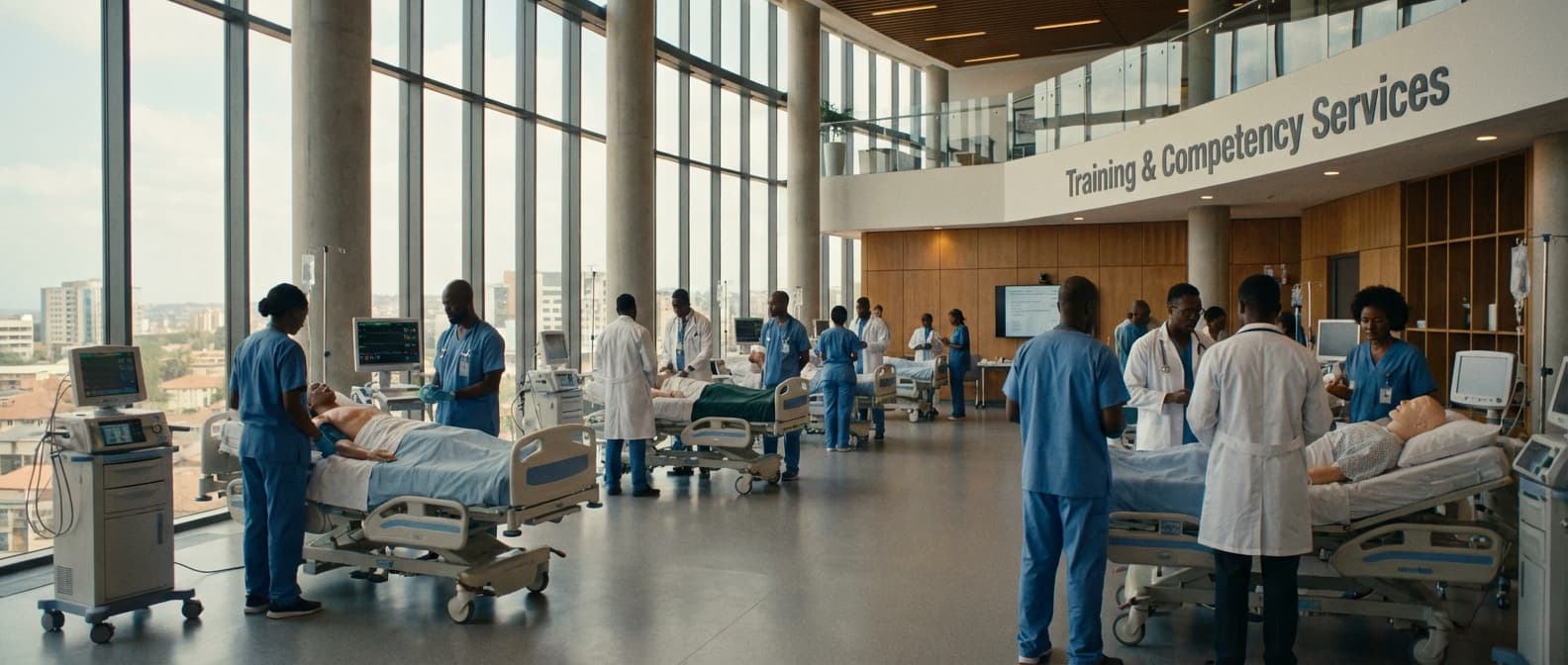
CT Operator Training Service (Radiographers) in Burundi
Engineering Excellence & Technical Support
CT Operator Training Service (Radiographers) High-standard technical execution following OEM protocols and local regulatory frameworks.
Advanced CT Imaging Techniques
Master cutting-edge CT protocols, including dual-energy CT, CT angiography, and interventional CT guidance, to enhance diagnostic accuracy and patient care for radiographers in Burundi.
CT Equipment Calibration & Maintenance
Gain expertise in essential CT scanner calibration, quality assurance procedures, and basic maintenance to ensure optimal image quality and operational efficiency of CT facilities across Burundi.
Radiology Workflow Optimization
Learn best practices for streamlining CT imaging workflows, from patient scheduling and contrast administration to image post-processing and PACS integration, improving throughput and reducing diagnostic turnaround times in Burundian healthcare settings.
What Is Ct Operator Training Service (Radiographers) In Burundi?
CT Operator Training Service (Radiographers) in Burundi refers to a specialized educational and skill-development program designed for radiographers, equipping them with the necessary competencies to operate Computed Tomography (CT) scanners safely and effectively. This service aims to ensure proficient image acquisition, patient positioning, protocol selection, and basic quality control, thereby optimizing diagnostic imaging outcomes and patient care within the Burundian healthcare system. The training emphasizes both theoretical understanding of CT principles and hands-on practical application in a clinical environment. It is crucial for enhancing the diagnostic capabilities of healthcare facilities and adhering to international standards of radiological practice.
| Who Needs CT Operator Training Service? | Typical Use Cases | |||||
|---|---|---|---|---|---|---|
| Licensed Radiographers and Radiologic Technologists seeking to specialize in CT imaging. | Hospitals and diagnostic imaging centers in Burundi acquiring or upgrading CT scanner technology. | Healthcare professionals in remote or underserved areas requiring advanced imaging capabilities. | Medical institutions aiming to standardize CT imaging protocols and quality across departments. | Government health ministries and regulatory bodies promoting high standards in medical imaging services. | ||
| Neurological imaging (e.g., stroke, head trauma, tumors). | Abdominal and pelvic imaging (e.g., appendicitis, organ pathology, trauma). | Thoracic imaging (e.g., pulmonary embolism, pneumonia, lung nodules). | Musculoskeletal imaging (e.g., fractures, joint pathology). | Oncological staging and follow-up imaging. | Vascular imaging (CT angiography). | Emergency and trauma imaging. |
Key Components of CT Operator Training Service (Radiographers) in Burundi
- Theoretical foundation in CT physics, image formation, and radiation biology.
- Patient preparation, management, and safety protocols specific to CT examinations.
- Anatomy and physiology relevant to CT imaging across various modalities.
- CT scanner operation, including hardware and software functionalities.
- Development and application of appropriate CT protocols for diverse clinical indications.
- Image acquisition techniques, artifact recognition, and mitigation strategies.
- Basic image post-processing and manipulation.
- Radiation protection principles for patients and personnel.
- Quality assurance and quality control (QA/QC) procedures for CT equipment.
- Ethical considerations and professional conduct in radiological practice.
Who Needs Ct Operator Training Service (Radiographers) In Burundi?
Comprehensive CT Operator Training Services are crucial for enhancing the diagnostic capabilities and patient care within Burundi's healthcare sector. This specialized training is designed to equip radiographers with the advanced skills and knowledge necessary to operate CT scanners effectively, interpret images accurately, and adhere to safety protocols. The demand for such services stems from the increasing adoption of CT technology in medical facilities across the country, aiming to improve diagnostic accuracy and expand the range of treatable conditions.
| Department/Facility Type | Specific Needs Addressed | Key Benefits of Training |
|---|---|---|
| Radiology Department (Hospitals/Diagnostic Centers) | Operation of CT scanners, image acquisition, quality control, radiation safety, basic image interpretation, patient positioning, contrast administration protocols. | Improved diagnostic accuracy, reduced scan times, enhanced patient safety, increased throughput, ability to perform more complex CT examinations. |
| Surgical Departments (General Surgery, Neurosurgery, Orthopedics, etc.) | Understanding CT image relevance for surgical planning, intraoperative imaging interpretation (where applicable), post-operative assessment. | Better surgical planning, improved surgical outcomes, identification of complications, more informed decision-making. |
| Oncology Departments | Staging of cancer, monitoring treatment response, identifying metastases, radiation therapy planning support. | More effective cancer management, accurate disease assessment, optimized treatment strategies. |
| Emergency Departments | Rapid CT scan acquisition for trauma, stroke, acute abdominal conditions, interpretation of critical findings. | Faster diagnosis and intervention in critical care, improved patient survival rates in emergencies. |
| Internal Medicine Departments | Diagnosis of various conditions affecting organs like lungs, liver, kidneys, and gastrointestinal tract. | Comprehensive diagnostic capabilities for a wide range of medical conditions. |
| Pediatric Departments | Specialized CT protocols for children, pediatric radiation dose reduction, age-appropriate imaging techniques. | Safe and effective CT imaging for pediatric patients, minimizing radiation exposure. |
Target Customers and Departments in Burundi
- Hospitals (Public and Private): These are the primary institutions that will benefit from CT operator training. They are often the most likely to have CT scanner equipment and a need for skilled personnel to operate it.
- Diagnostic Imaging Centers: Dedicated centers focused on medical imaging services will require trained radiographers to manage and interpret CT scans.
- Referral Hospitals and University Hospitals: These larger, often more specialized facilities, will have a greater volume of CT procedures and a need for advanced training to handle complex cases.
- NGO and International Health Organizations: Organizations involved in providing healthcare services or supporting healthcare infrastructure in Burundi may sponsor or facilitate training for their personnel or partner facilities.
- Ministry of Health and Public Health Institutions: Government health bodies responsible for overseeing healthcare quality and access can identify needs and advocate for or implement training programs.
- Medical Schools and Training Institutions: While not direct operators in the present, integrating advanced CT training into the curriculum for future radiographers is essential for long-term capacity building.
Ct Operator Training Service (Radiographers) Process In Burundi
This document outlines the workflow for the CT Operator Training Service (Radiographers) in Burundi, detailing the process from initial inquiry to the successful completion of the training program. The service aims to enhance the skills and knowledge of radiographers in operating CT scanners, ensuring quality diagnostic imaging services across the country.
| Phase | Step | Description | Key Stakeholders | Deliverables | Timeline (Indicative) |
|---|---|---|---|---|---|
| Phase 1: Inquiry and Needs Assessment | 1.1 Initial Inquiry | Healthcare facility/individual radiographer expresses interest in CT operator training. | Potential Trainee(s), Facility Management, Training Provider | Initial expression of interest. | 1-2 Weeks |
| 1.2 Information Gathering | Training provider collects details on existing CT equipment, current operator skill levels, specific training needs, and desired outcomes. | Training Provider, Facility Management | Needs assessment report, identified training gaps. | 2-3 Weeks | |
| 1.3 Training Needs Analysis (TNA) | Detailed analysis to define specific learning objectives, target audience, and practical requirements for the training. | Training Provider, Facility Management, Senior Radiologists | Formal TNA document. | 1 Week | |
| Phase 2: Proposal and Agreement | 2.1 Training Proposal Development | Training provider develops a comprehensive proposal outlining the training curriculum, methodology, duration, trainer profiles, costs, and schedule. | Training Provider | Detailed training proposal. | 1-2 Weeks |
| 2.2 Proposal Review and Negotiation | The facility reviews the proposal, negotiates terms, and discusses any necessary adjustments. | Facility Management, Training Provider | Agreed-upon training proposal. | 1-2 Weeks | |
| 2.3 Contract/Agreement Finalization | Formal agreement is signed, specifying all terms and conditions of the training service. | Facility Management, Training Provider | Signed training contract/agreement. | 1 Week | |
| Phase 3: Pre-Training Preparations | 3.1 Trainee Selection and Registration | Facility selects and registers radiographers for the training. Training provider may provide guidance. | Facility Management, Trainee(s) | List of registered trainees, trainee profiles. | 1 Week |
| 3.2 Curriculum Finalization and Customization | Based on TNA, the training curriculum is finalized and any necessary customization is done. | Training Provider, Facility Management | Finalized training curriculum. | 1 Week | |
| 3.3 Training Material Development/Procurement | Preparation of all training materials, including presentations, handouts, practical exercises, and assessment tools. | Training Provider | Training materials (digital/print). | 2-3 Weeks | |
| 3.4 Logistics and Scheduling | Arrangement of training venue (if off-site), CT scanner availability, equipment setup, and scheduling of all training sessions. | Facility Management, Training Provider | Confirmed training schedule, logistics plan. | 1-2 Weeks | |
| Phase 4: Training Execution | 4.1 Theoretical Sessions | Delivery of lectures, presentations, and discussions covering CT physics, anatomy, protocol optimization, image acquisition, and radiation safety. | Trainer(s), Trainee(s) | Engaged trainees, understanding of theoretical concepts. | Varies based on module |
| 4.2 Practical/Hands-on Sessions | Supervised practical training on the CT scanner, focusing on patient positioning, scan parameter selection, image acquisition, and basic troubleshooting. | Trainer(s), Trainee(s) | Proficiency in operating CT scanner, practical skills development. | Varies based on module | |
| 4.3 Case Study Analysis and Image Interpretation | Review and discussion of various CT cases to enhance image interpretation skills and diagnostic accuracy. | Trainer(s), Trainee(s), Radiologists (optional) | Improved image interpretation skills. | Integrated throughout | |
| 4.4 Assessment and Feedback | Formative and summative assessments (quizzes, practical evaluations) to monitor trainee progress. Regular feedback is provided. | Trainer(s), Trainee(s) | Assessment results, feedback reports. | Ongoing | |
| Phase 5: Post-Training Support and Evaluation | 5.1 Post-Training Assessment (Optional) | Optional final assessment to verify competency and readiness for independent CT operation. | Trainer(s), Trainee(s) | Final assessment results. | End of training |
| 5.2 Certification | Issuance of certificates upon successful completion of the training program. | Training Provider | Training certificates. | 1 Week post-completion | |
| 5.3 Follow-up and Mentorship | Providing ongoing support, answering queries, and potentially offering mentorship to reinforce learned skills. | Training Provider, Facility Management | Resolved queries, enhanced skills retention. | Ongoing (e.g., 1-3 months) | |
| 5.4 Training Evaluation | Gathering feedback from trainees and facility management to evaluate the effectiveness of the training and identify areas for improvement. | Trainee(s), Facility Management, Training Provider | Training evaluation report, recommendations for future programs. | 2-3 Weeks post-completion |
CT Operator Training Service Workflow for Radiographers in Burundi
- Phase 1: Inquiry and Needs Assessment
- Phase 2: Proposal and Agreement
- Phase 3: Pre-Training Preparations
- Phase 4: Training Execution
- Phase 5: Post-Training Support and Evaluation
Ct Operator Training Service (Radiographers) Cost In Burundi
The cost of CT operator training (radiographers) in Burundi can vary significantly due to a range of factors. These factors influence both the type of training offered and the institutions providing it. Understanding these elements is crucial for budgeting and selecting appropriate training programs.
Key Pricing Factors:
- Training Provider: The reputation, accreditation, and resources of the training institution are primary cost drivers. International organizations or specialized medical training centers may command higher fees than local vocational schools or hospitals offering in-house training.
- Training Duration and Intensity: Longer and more intensive programs, often including more hands-on practice and theoretical depth, will naturally be more expensive. Short refresher courses will be significantly cheaper than comprehensive certification programs.
- Curriculum and Specialization: The breadth and depth of the curriculum play a role. Training that covers advanced imaging techniques, specific modalities (e.g., cardiac CT), or specialized patient populations will likely incur higher costs.
- Inclusion of Practical/Clinical Rotations: Programs that include supervised practical sessions in actual clinical settings, utilizing real CT scanners and patient cases, are generally more expensive due to the logistical requirements and the use of equipment.
- Certification and Assessment: The cost of examinations, assessments, and the awarding of recognized certifications will be factored into the overall training fee.
- Location and Facilities: Training conducted in well-equipped facilities with modern simulation equipment or access to advanced CT scanners can influence pricing. The cost of living in the region where the training is offered can also indirectly affect operational costs for training providers.
- Materials and Resources: The provision of training manuals, textbooks, online resources, and other learning materials can add to the overall cost.
- Instructor Expertise: Highly experienced and qualified instructors, often with specialized backgrounds, may command higher fees, which are then reflected in the training cost.
- Government Subsidies or Partnerships: In some cases, government initiatives or partnerships with healthcare organizations might offer subsidized training programs, leading to lower costs for participants.
Estimated Cost Ranges in Local Currency (Burundian Franc - BIF):
It's important to note that precise, universally published pricing for CT operator training in Burundi is scarce, as programs are often customized or offered on an ad-hoc basis. The following are estimated ranges and should be considered as a guide. Actual costs can fall outside these ranges depending on the specific program.
- Basic Awareness/Introduction Courses (Short Duration): These might focus on fundamental principles and safe operation. Expected range: 150,000 - 400,000 BIF.
- Standard CT Operator Certification Programs (Medium Duration, including practicals): These are more comprehensive and aim to produce competent operators. Expected range: 500,000 - 1,500,000 BIF.
- Advanced/Specialized CT Training (Longer Duration, in-depth): These could include advanced techniques, specific applications, or refresher courses for experienced professionals. Expected range: 1,200,000 - 3,000,000 BIF or higher.
These figures represent the training fee itself. Additional costs for accommodation, travel, and living expenses during the training period, especially if it's a residential program or requires travel to a different city, would be separate.
| Training Type/Duration | Estimated Cost Range (BIF) |
|---|---|
| Basic Awareness/Introduction (Short) | 150,000 - 400,000 |
| Standard CT Operator Certification (Medium) | 500,000 - 1,500,000 |
| Advanced/Specialized CT Training (Long/In-depth) | 1,200,000 - 3,000,000+ |
Factors Influencing CT Operator Training Costs in Burundi
- Training Provider's Reputation and Accreditation
- Duration and Intensity of the Training Program
- Scope and Specialization of the Curriculum
- Inclusion of Practical/Clinical Hands-on Experience
- Certification and Assessment Fees
- Quality and Resources of Training Facilities
- Cost of Training Materials and Learning Resources
- Instructor Qualifications and Experience
- Availability of Government Subsidies or Partnerships
Affordable Ct Operator Training Service (Radiographers) Options
This document outlines affordable Computed Tomography (CT) operator training service options for radiographers. We understand the importance of specialized CT skills and are committed to providing cost-effective solutions without compromising quality. This guide will explain our value bundles and cost-saving strategies to help you invest wisely in your team's professional development.
| Training Option | Description | Key Features | Ideal For | Estimated Cost Range (per participant) | Value & Savings |
|---|---|---|---|---|---|
| Basic CT Fundamentals (Online) | A foundational online course covering essential CT principles, physics, image acquisition, and safety protocols. | Self-paced learning, interactive modules, quizzes, certificate of completion. | New CT operators, radiographers transitioning to CT, refresher training. | $300 - $600 | Highly cost-effective for broad foundational knowledge. Reduces the need for extensive on-site trainer time for initial learning. |
| Advanced CT Applications (Online/Blended) | Focuses on specific CT techniques such as CT angiography, cardiac CT, interventional CT, and dose reduction strategies. | Expert-led modules, case studies, virtual simulations, discussion forums. | Experienced CT operators looking to specialize or enhance existing skills. | $500 - $1000 | Targeted skill development leads to more efficient and specialized procedures, potentially reducing scan times and contrast usage. |
| On-Site CT Operator Training (Group) | Tailored training delivered at your facility by experienced CT educators. Can be customized to your specific equipment and protocols. | Hands-on practice with your equipment, protocol review, personalized feedback, Q&A sessions. | Departments requiring comprehensive, hands-on training for multiple staff members on specific equipment. | Starting at $3,000 - $8,000 (for a group of 5-10, depending on duration and customization) | Significant cost savings per participant when training groups. Reduces travel costs for staff. Ensures protocol adherence on your specific scanners. |
| Virtual Instructor-Led Training (VILT) | Live, interactive training sessions conducted remotely via video conferencing, allowing for real-time Q&A and discussion. | Live instruction, interactive polls, breakout sessions, screen sharing for demonstrations. | Teams needing structured learning with direct instructor interaction, but with the flexibility of remote participation. | $400 - $800 per participant (for group rates) | Combines the benefits of live instruction with the cost savings of avoiding travel and accommodation expenses for both trainers and trainees. |
| CT Protocol Optimization Workshop (On-Site/VILT) | A focused workshop designed to review and optimize existing CT protocols for dose reduction, image quality, and workflow efficiency. | Protocol analysis, hands-on adjustments (if on-site), best practice recommendations, staff training on new protocols. | Departments aiming to improve efficiency, reduce radiation dose, and enhance image quality. | Starting at $2,000 - $5,000 (depending on scope and format) | Direct impact on reducing scan times, contrast media usage, and potential for repeat scans, leading to long-term operational cost savings. |
Why Invest in CT Operator Training?
- Enhanced patient care through accurate and efficient CT imaging.
- Increased radiographer competency and confidence.
- Reduced risk of errors and repeat scans.
- Improved workflow and throughput in radiology departments.
- Career advancement opportunities for radiographers.
- Compliance with professional accreditation and regulatory requirements.
Verified Providers In Burundi
In Burundi's healthcare landscape, identifying trustworthy and competent medical professionals is paramount for patient well-being. Franance Health stands out as a premier platform for verifying healthcare providers, offering a robust credentialing process that ensures quality and reliability. Their meticulous vetting procedures provide patients with the assurance they need when seeking medical care. By focusing on qualifications, experience, and ethical standing, Franance Health empowers individuals to make informed decisions about their health, ultimately contributing to a safer and more effective healthcare system in Burundi.
| Provider Type | Franance Health Verification Benefits | Why They Represent the Best Choice |
|---|---|---|
| General Practitioners | Confirms basic medical competence and licensing. | Ensures access to reliable primary care services for everyday health needs. |
| Specialist Physicians (e.g., Cardiologists, Pediatricians) | Verifies advanced training and board certifications in their respective fields. | Guarantees that you are consulting with a highly qualified expert for complex health issues. |
| Surgeons | Validates surgical credentials, training, and any relevant accreditations. | Provides confidence in the surgeon's skill and safety protocols for operative procedures. |
| Dentists | Confirms dental qualifications and adherence to oral health standards. | Ensures that dental treatments are performed by competent and licensed professionals. |
| Nurses and Midwives | Verifies nursing licenses and specialized midwifery certifications. | Offers assurance of skilled and compassionate care during pregnancy, childbirth, and general nursing needs. |
Key Aspects of Franance Health Verification:
- Rigorous screening of medical licenses and certifications.
- Verification of educational background and specialized training.
- Assessment of professional experience and practice history.
- Checks for disciplinary actions or malpractice claims.
- Commitment to upholding ethical medical standards.
Scope Of Work For Ct Operator Training Service (Radiographers)
This Scope of Work (SOW) outlines the requirements for a comprehensive training service for Computed Tomography (CT) Operators (Radiographers). The training will equip radiographers with the necessary theoretical knowledge and practical skills to safely and effectively operate CT scanners, ensuring high-quality diagnostic imaging and patient care. The service includes both technical training and assessment to ensure competency.
| Component | Description | Standard Specifications / Requirements | Deliverable Format |
|---|---|---|---|
| CT Physics & Principles | In-depth understanding of CT principles, including X-ray generation, beam filtration, detector technology, image reconstruction algorithms (e.g., filtered back-projection, iterative reconstruction), and artifact sources. | Cover all fundamental and advanced CT physics relevant to modern scanners. Include explanations of different reconstruction methods and their impact on image quality. Content must be evidence-based and aligned with current radiologic principles. | PowerPoint Presentations, Digital Handouts, Interactive Modules |
| CT Scanner Operation | Hands-on training on the specific CT scanner models in use, covering patient positioning, protocol selection, scan parameter optimization, image acquisition techniques (e.g., helical, axial), contrast media administration protocols, and emergency procedures. | Must cover all functionalities of the specified CT scanner models. Training should emphasize patient safety, dose reduction techniques (e.g., AEC, dose modulation), and protocol optimization for various clinical applications. Practical sessions must include supervised operation on actual equipment. | Live Demonstrations, Supervised Practical Sessions, Video Tutorials |
| Image Quality & Artifact Management | Training on identifying and minimizing common CT artifacts (e.g., beam hardening, streak artifacts, motion artifacts). Emphasis on optimizing image quality for diagnostic interpretation. | Provide detailed explanations of artifact causes and practical strategies for their reduction or elimination. Include examples of common artifacts and their diagnostic impact. Focus on troubleshooting techniques. | Image Libraries (Annotated), Case Studies, Practical Exercises |
| Patient Care & Safety | Protocols for patient preparation, screening for contraindications (e.g., allergies, pregnancy), safe administration of contrast media (including emergency management of adverse reactions), radiation safety for patients and staff, and infection control measures. | Training must adhere to current national and international guidelines for patient safety and radiation protection in CT. Include practical guidance on managing patient anxiety and ensuring comfort. Emphasis on adverse reaction management. | Procedural Checklists, Emergency Protocols, Role-Playing Scenarios |
| Radiation Protection | Understanding of radiation units and quantities, dose monitoring techniques, ALARA principles, patient dose optimization strategies, and regulatory requirements for radiation safety. | Comprehensive coverage of radiation physics, biological effects, and practical implementation of dose reduction techniques. Must include training on the use of dose monitoring equipment and reporting requirements. | Theoretical Modules, Practical Demonstrations of Dose Monitoring Tools |
| Quality Assurance (QA) & Quality Control (QC) | Introduction to CT QA/QC procedures, including routine checks, calibration, and acceptance testing. Understanding of image artifact analysis and troubleshooting. | Training should equip radiographers to perform basic QC tests and identify potential issues with image quality. Understanding of the importance of consistent performance and its impact on diagnosis. | Protocol Documentation, Troubleshooting Guides |
| Legal & Ethical Considerations | Awareness of legal and ethical aspects of CT imaging, including patient consent, data privacy (e.g., HIPAA), and professional responsibilities. | Provide an overview of relevant legal frameworks and ethical guidelines applicable to radiographers. Emphasis on maintaining patient confidentiality and professional conduct. | Lectures, Case Discussions |
| Competency Assessment | Formal evaluation of the radiographer's knowledge and practical skills through written examinations, practical skill demonstrations, and case study analysis. | Assessment methods must be objective and validated. Successful completion requires demonstrating proficiency in all key areas of CT operation and patient care. A passing score of [Specify %] is required for certification. | Written Examinations, Practical Skills Checklists, Case Study Reports |
| Post-Training Support | Provision of ongoing technical support, access to online resources, and options for refresher courses or advanced training modules. | Clear defined channels for technical assistance. Availability of updated training materials and scheduled refresher sessions to maintain skill proficiency. | Helpdesk Access, Online Resource Portal, Refresher Course Catalogs |
Technical Deliverables
- Comprehensive Training Curriculum (Theory & Practical)
- Training Materials (Presentations, Handouts, User Manuals)
- Competency Assessment Tools (Quizzes, Practical Scenarios)
- Post-Training Competency Reports
- Certification of Successful Completion
- Post-Training Support and Refresher Course Options
Service Level Agreement For Ct Operator Training Service (Radiographers)
This Service Level Agreement (SLA) outlines the guaranteed response times and uptime for the CT Operator Training Service provided to Radiographers. This SLA aims to ensure a high-quality and reliable training experience for all participants.
| Service Component | Response Time Target (Business Hours) | Uptime Guarantee |
|---|---|---|
| Platform Availability (Access to training modules, videos, and simulation tools) | 1 Business Hour | 99.5% Monthly |
| Technical Support (Issues with login, module access, or simulation errors) | 4 Business Hours | N/A (Covered by platform availability) |
| Content Inquiry Support (Questions related to training material) | 8 Business Hours | N/A (Covered by platform availability) |
| Scheduled Training Sessions (Virtual instructor-led) | 15 minutes prior to scheduled start | N/A (Scheduled events are managed independently) |
Key Performance Indicators (KPIs)
- Response Time: The time taken by the support team to acknowledge and begin addressing a reported issue.
- Uptime Guarantee: The percentage of time the CT Operator Training Service platform is available and accessible to users.
Frequently Asked Questions

Ready when you are
Let's scope your CT Operator Training Service (Radiographers) in Burundi project in Burundi.

Scaling healthcare logistics and technical systems across the entire continent.