
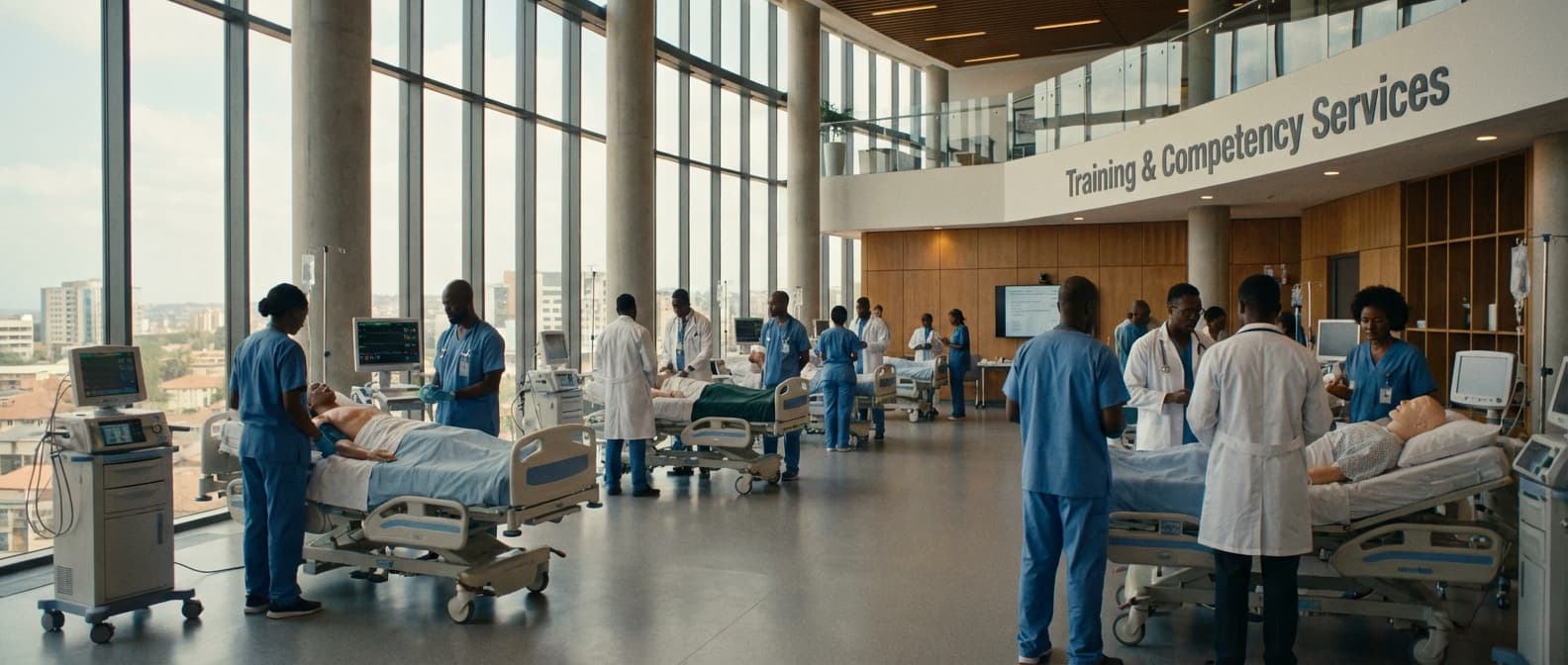
Biomedical Engineering First-Line Support Training Service in Burundi
Engineering Excellence & Technical Support
Biomedical Engineering First-Line Support Training Service High-standard technical execution following OEM protocols and local regulatory frameworks.
Hands-on Biomedical Equipment Diagnostics
Participants will gain practical skills in identifying and troubleshooting common malfunctions in essential biomedical equipment like ECG machines, defibrillators, and patient monitors through simulated scenarios and real-world case studies.
Patient Safety Protocols & Compliance
This module emphasizes critical patient safety procedures, biohazard handling, and adherence to local and international regulatory standards for biomedical equipment operation and maintenance in Burundian healthcare settings.
Basic Biomedical Device Maintenance & Calibration
Training covers fundamental preventive maintenance tasks, routine cleaning, and basic calibration techniques for a range of medical devices, ensuring their optimal performance and longevity, thereby reducing downtime and repair costs.
What Is Biomedical Engineering First-line Support Training Service In Burundi?
Biomedical Engineering First-Line Support Training Service in Burundi refers to a specialized training program designed to equip individuals with the foundational knowledge and practical skills required to perform initial troubleshooting, maintenance, and basic repairs on biomedical equipment. This service is critical for ensuring the operational readiness of medical devices in healthcare facilities, thereby optimizing patient care delivery and resource utilization within the Burundian healthcare system.
| Who Needs This Service? | Typical Use Cases | ||||
|---|---|---|---|---|---|
| Biomedical Technicians/Engineers (Entry-Level): Individuals new to the field requiring foundational skills for practical application in healthcare settings. | Hospital Maintenance Staff: Personnel responsible for general facility maintenance who may be tasked with basic biomedical equipment upkeep. | Clinical Staff (Limited Scope): Healthcare professionals (nurses, doctors) who may receive supplementary training on the operation and basic troubleshooting of specific, user-serviceable devices. | NGO/Mission Healthcare Workers: Individuals working in remote or under-resourced areas where immediate access to specialized biomedical engineering support is limited. | ||
| Routine Preventive Maintenance: Performing scheduled checks and minor adjustments to prolong equipment lifespan and ensure accuracy. | Basic Troubleshooting of Common Faults: Diagnosing and resolving minor issues such as power interruptions, connectivity problems, or display errors. | Replacement of Consumables and Simple Parts: Swapping out filters, tubing, or readily accessible components. | Initial Triage of Equipment Failures: Determining the severity of a malfunction and whether it can be addressed at the first-line level or requires specialized intervention. | On-site Support in Rural or Underserved Areas: Providing immediate technical assistance where external support is geographically or logistically challenging. | Assisting Senior Engineers: Performing routine tasks under the supervision of more experienced biomedical engineering personnel. |
Components of Biomedical Engineering First-Line Support Training Service:
- Equipment Identification and Classification: Understanding the types, functions, and critical parameters of common biomedical devices (e.g., vital signs monitors, infusion pumps, basic diagnostic equipment).
- Fundamental Electrical and Mechanical Principles: Review of basic principles relevant to device operation and troubleshooting, including Ohm's Law, circuit fundamentals, and basic mechanical systems.
- Preventive Maintenance Procedures: Training on scheduled inspection, cleaning, lubrication, and calibration protocols to identify and mitigate potential failures before they occur.
- Diagnostic Techniques and Troubleshooting: Learning systematic approaches to identify the root cause of equipment malfunctions, utilizing diagnostic tools and interpreting error codes.
- Basic Repair and Component Replacement: Hands-on training for replacing common and easily accessible components (e.g., fuses, cables, batteries) under supervision.
- Safety Protocols and Regulations: Understanding of electrical safety standards (e.g., IEC 60601 series), biohazard handling, and facility-specific safety guidelines.
- Documentation and Reporting: Training on accurate record-keeping of maintenance activities, incident reports, and inventory management.
- Introduction to Advanced Concepts: Brief overview of more complex biomedical equipment and the limitations of first-line support, emphasizing when to escalate to higher-level technical expertise.
Who Needs Biomedical Engineering First-line Support Training Service In Burundi?
Biomedical Engineering First-Line Support Training Service is crucial for ensuring the optimal functioning and maintenance of medical equipment across various healthcare facilities in Burundi. This training is designed to equip personnel with the fundamental skills to diagnose, troubleshoot, and perform basic repairs on medical devices, thereby reducing downtime, improving patient care, and extending the lifespan of valuable equipment. The primary beneficiaries of this service are those directly involved in the operational readiness of healthcare infrastructure.
| Target Customer Type | Relevant Departments/Roles | Specific Needs Addressed | Impact of Training |
|---|---|---|---|
| Hospitals (Public and Private) | Biomedical Engineering Department, Technical Services, Nursing Staff (in remote areas with limited dedicated technicians), Clinical Department Heads | Basic troubleshooting of common equipment failures (e.g., defibrillators, patient monitors, infusion pumps), preventative maintenance checks, identification of critical issues requiring specialist intervention, proper equipment usage protocols. | Reduced equipment downtime, improved patient safety, enhanced diagnostic and treatment capabilities, optimized resource utilization. |
| Clinics and Health Centers | Clinical Officers, Nurses, Administrative Staff (responsible for equipment oversight) | Simple equipment maintenance, understanding of basic operational parameters, identifying when equipment needs professional repair, safe handling and storage of medical devices. | Increased availability of essential medical equipment, improved service delivery in primary healthcare settings, reduced reliance on distant referral facilities for minor issues. |
| Diagnostic Laboratories | Laboratory Technicians, Lab Managers, Quality Control Personnel | Maintenance and calibration of basic laboratory equipment (e.g., microscopes, centrifuges, basic analyzers), understanding of error codes, basic cleaning and disinfection procedures. | Accurate and reliable diagnostic results, reduced turnaround times for tests, efficient laboratory operations. |
| Medical Equipment Suppliers and Distributors | Field Service Technicians, Technical Support Staff, Sales Representatives (for basic troubleshooting) | First-level repair and maintenance for equipment sold, customer support, basic installation and user training, product familiarization. | Improved customer satisfaction, faster resolution of post-sale issues, enhanced reputation for reliable service. |
| Government Health Ministries and Agencies | Health Infrastructure Department, Procurement and Logistics Officers, Regional Health Managers | Understanding of equipment maintenance needs for national health planning, assessing the capabilities of local technical staff, developing training strategies, ensuring effective utilization of donated equipment. | More informed decision-making regarding medical equipment procurement and maintenance, improved national health infrastructure, effective management of public health resources. |
| Non-Governmental Organizations (NGOs) involved in healthcare | Project Managers, Field Coordinators, Healthcare Facility Staff (supported by the NGO) | Ensuring the functionality of equipment in project-supported facilities, training local staff to manage and maintain equipment, developing sustainable maintenance plans. | Increased impact and sustainability of healthcare interventions, improved quality of care in underserved areas, empowerment of local healthcare providers. |
Target Customers and Departments Requiring Biomedical Engineering First-Line Support Training in Burundi
- Hospitals (Public and Private)
- Clinics and Health Centers
- Diagnostic Laboratories
- Medical Equipment Suppliers and Distributors
- Government Health Ministries and Agencies
- Non-Governmental Organizations (NGOs) involved in healthcare
Biomedical Engineering First-line Support Training Service Process In Burundi
This document outlines the workflow for the Biomedical Engineering First-Line Support Training Service Process in Burundi. The process details the steps from initial inquiry to the successful execution of training, ensuring effective capacity building for biomedical engineering personnel in the region.
| Phase | Step | Description | Responsible Party | Key Deliverables/Outcomes |
|---|---|---|---|---|
| Inquiry & Needs Assessment |
| Client (e.g., Ministry of Health, hospital, NGO) expresses interest in first-line biomedical engineering support training. | Client, Service Provider | Initial expression of interest, contact details exchanged. |
| Inquiry & Needs Assessment |
| Detailed discussion to understand specific training needs, target audience skill levels, existing equipment, and desired outcomes. | Client, Service Provider | Documented training needs, identified skill gaps, target audience profile. |
| Proposal Development & Submission |
| Service provider develops a comprehensive training proposal outlining objectives, curriculum, methodology, duration, budget, and trainer qualifications. | Service Provider | Detailed training proposal. |
| Proposal Development & Submission |
| The training proposal is submitted to the client for review and consideration. | Service Provider | Submitted training proposal. |
| Agreement & Contract Finalization |
| Client reviews the proposal, potentially requesting modifications. Negotiations on scope, budget, and timelines may occur. | Client, Service Provider | Agreed-upon terms and conditions for the training. |
| Agreement & Contract Finalization |
| Formal agreement and contract are signed by both parties, outlining all commitments and responsibilities. | Client, Service Provider | Signed training contract. |
| Curriculum Customization & Planning |
| Based on the signed contract and specific needs, the curriculum is finalized, ensuring relevance and practical application for first-line support. | Service Provider | Finalized training curriculum with modules, learning objectives, and assessment methods. |
| Curriculum Customization & Planning |
| A detailed training schedule is created, including dates, times, locations, and specific session plans. | Service Provider | Detailed training schedule. |
| Resource Mobilization & Logistics |
| Qualified and experienced biomedical engineering trainers are identified and assigned to the training. | Service Provider | Assigned trainers with relevant expertise. |
| Resource Mobilization & Logistics |
| Development and compilation of all necessary training materials, including presentations, manuals, handouts, and practical exercises. | Service Provider | Comprehensive training materials. |
| Resource Mobilization & Logistics |
| Securing appropriate training venue(s) and ensuring availability of relevant biomedical equipment for practical demonstrations and hands-on exercises. | Service Provider, Client | Secured training venue(s) and necessary equipment. |
| Resource Mobilization & Logistics |
| Formal communication with participants to confirm their attendance, provide pre-training information, and share logistics. | Client, Service Provider | Confirmed participant list and pre-training communication. |
| Training Delivery |
| The training is delivered as per the schedule, incorporating lectures, discussions, practical sessions, case studies, and simulations. | Trainers | Effective and engaging training delivery. |
| Training Delivery |
| Providing immediate guidance and support to participants as they begin applying learned skills in their work environment. | Trainers, Supervisors | Practical application of learned skills. |
| Post-Training Evaluation & Feedback |
| Assessing participants' understanding and retention of the training content through tests, quizzes, and practical evaluations. | Trainers | Assessment results of participants. |
| Post-Training Evaluation & Feedback |
| Gathering feedback from participants and stakeholders on the training's effectiveness, relevance, and areas for improvement. | Service Provider | Participant and stakeholder feedback reports. |
| Post-Training Evaluation & Feedback |
| Service provider compiles a comprehensive report detailing training activities, outcomes, participant performance, and recommendations. | Service Provider | Final training report. |
| Certification & Follow-up Support |
| Issuing certificates of completion to participants who have successfully met the training requirements. | Service Provider | Certificates of completion. |
| Certification & Follow-up Support |
| Offering ongoing support, refresher courses, or advanced training as per the contract and identified needs. | Service Provider | Sustained capacity building and ongoing support. |
Biomedical Engineering First-Line Support Training Service Process in Burundi
- Inquiry & Needs Assessment
- Proposal Development & Submission
- Agreement & Contract Finalization
- Curriculum Customization & Planning
- Resource Mobilization & Logistics
- Training Delivery
- Post-Training Evaluation & Feedback
- Certification & Follow-up Support
Biomedical Engineering First-line Support Training Service Cost In Burundi
The cost of first-line support training for biomedical engineers in Burundi can vary significantly based on several factors. These include the provider's reputation and accreditation, the comprehensiveness of the curriculum, the duration of the training, and the inclusion of practical, hands-on components. Location within Burundi (e.g., Bujumbura vs. rural areas) can also influence logistical costs. Furthermore, whether the training is for individual engineers or for an institution seeking to train multiple staff members will affect the overall price. Specialized training focusing on specific medical equipment types or advanced troubleshooting techniques will naturally command a higher price.
| Training Package | Estimated Cost Range (BIF - Burundian Francs) | Key Features |
|---|---|---|
| Basic First-Line Support (General) | 300,000 - 600,000 BIF | Covers fundamental troubleshooting, basic maintenance, common equipment issues, safety protocols. |
| Intermediate First-Line Support (Specific Equipment Focus) | 500,000 - 900,000 BIF | Deeper dive into specific device categories (e.g., imaging, patient monitoring), advanced diagnostics, basic repair techniques. |
| Advanced First-Line Support (Specialized Modules) | 800,000 - 1,500,000+ BIF | Highly specialized training, often vendor-specific, for complex equipment, in-depth analysis, and preventive maintenance strategies. |
| Institutional Package (Per Trainee) | 250,000 - 700,000 BIF | Discounted rates for training multiple engineers from a hospital or clinic, tailored curriculum options. |
| Online/Blended Learning Modules | 200,000 - 500,000 BIF | Flexibility, reduced logistical costs, may require supplementary hands-on workshops for practical skills. |
Key Pricing Factors for Biomedical Engineering First-Line Support Training in Burundi
- Provider Reputation and Accreditation
- Curriculum Depth and Breadth
- Training Duration (e.g., 1-week, 2-week courses)
- Inclusion of Practical/Hands-on Sessions
- Training Format (e.g., in-person, online, blended)
- Location and associated logistical costs
- Group vs. Individual training packages
- Specialization of the training (e.g., specific equipment, advanced troubleshooting)
Affordable Biomedical Engineering First-line Support Training Service Options
Biomedical Engineering departments often face budgetary constraints while requiring skilled personnel for first-line equipment support. This necessitates cost-effective training solutions that equip technicians with essential skills to handle basic maintenance, troubleshooting, and user support for a range of medical devices. Investing in foundational training can significantly reduce reliance on expensive vendor support calls and internal escalation, improving efficiency and patient care continuity.
| Cost-Saving Strategy | Description | Benefit for First-Line Support Training |
|---|---|---|
| Leverage E-Learning & Virtual Labs | Utilize online learning platforms for theoretical content and simulated practical exercises. This reduces the need for physical training facilities and equipment. | Dramatically lowers infrastructure and material costs per trainee. Enables scalable training delivery regardless of geographical location. |
| Focus on High-Impact Devices | Prioritize training on the most frequently used and critical medical devices within an organization. Avoid broad, expensive training on niche equipment initially. | Maximizes return on investment by addressing the most common support needs. Reduces overall training expenditure by focusing resources effectively. |
| Bulk Purchase Discounts & Multi-Year Contracts | Negotiate discounted rates for training large numbers of personnel or committing to multi-year training service agreements. | Reduces the per-person training cost significantly. Provides predictable budgeting for ongoing professional development. |
| Partnerships with Educational Institutions | Collaborate with universities or technical colleges offering biomedical engineering programs to offer specialized first-line support modules or internships. | Access to qualified instructors and existing training infrastructure at potentially lower costs. Provides a pipeline of trained talent. |
| Open-Source & Freely Available Resources | Integrate and supplement formal training with reputable open-source materials, manufacturer-provided guides, and online technical forums. | Complements paid training, reinforcing learning and providing supplementary resources without additional direct cost. |
| Standardized Training Curricula | Develop and adhere to standardized training modules that can be efficiently delivered to multiple trainees, avoiding repetitive custom content creation. | Streamlines the training process, reduces development time and costs, and ensures consistent quality of instruction. |
Value Bundles for Affordable Biomedical Engineering First-Line Support Training
- Tiered Training Packages: Offer bundled training modules categorized by device complexity (e.g., basic diagnostic equipment, patient monitoring systems, therapy devices). This allows organizations to select only the training relevant to their current needs, avoiding overspending on unnecessary modules.
- Core Skills & Device-Specific Combinations: Combine foundational biomedical engineering principles (e.g., electrical safety, troubleshooting methodologies, preventive maintenance) with specific training on commonly used device categories within an institution. This provides a well-rounded skillset for front-line support.
- On-Demand & Blended Learning Bundles: Offer packages that combine self-paced online modules for foundational knowledge with scheduled, instructor-led practical sessions (virtual or in-person) for hands-on skills development. This offers flexibility and caters to different learning styles while optimizing instructor time.
- Train-the-Trainer Programs: Bundle core training with a component designed to equip experienced biomedical engineers to then train junior staff internally. This creates a sustainable and cost-effective in-house training program.
- New Technician Onboarding Kits: Create comprehensive bundles for newly hired biomedical technicians that include essential safety training, common device introductions, and basic troubleshooting guides. This accelerates their integration and productivity.
- Annual Subscription Models: Offer discounted rates for ongoing access to a library of training resources, including updates and new modules, through an annual subscription. This provides continuous learning at a predictable cost.
Verified Providers In Burundi
In Burundi, ensuring access to reliable and trustworthy healthcare services is paramount. Franance Health stands out as a leading organization, distinguished by its rigorous verification processes and commitment to quality. This verification signifies that Franance Health providers meet stringent standards for professional competence, ethical conduct, and patient safety. Choosing a verified provider through Franance Health offers peace of mind, knowing you are entrusting your well-being to qualified and accountable healthcare professionals. Their commitment to excellence, transparency, and patient-centric care makes them the optimal choice for healthcare needs in Burundi.
| Verification Aspect | Franance Health Standard | Benefit to Patients |
|---|---|---|
| Professional Licensing | Confirmation of valid and current medical licenses with relevant authorities. | Ensures providers are legally authorized and qualified to practice. |
| Educational Background | Verification of degrees and certifications from accredited institutions. | Guarantees a strong foundation in medical knowledge and training. |
| Clinical Experience | Assessment of practical experience and areas of specialization. | Helps match patients with specialists best suited for their needs. |
| Ethical Conduct | Background checks and adherence to a strict code of ethics. | Promotes a safe, respectful, and trustworthy patient-provider relationship. |
| Reputation and Feedback | Review of patient feedback and professional references (where applicable). | Provides an indication of provider's performance and patient satisfaction. |
Why Franance Health Verified Providers are the Best Choice:
- Rigorous Vetting Process: Franance Health employs a multi-faceted approach to verify credentials, ensuring providers possess the necessary qualifications, licenses, and experience.
- Commitment to Quality Care: Verified providers adhere to high standards of medical practice and patient care, promoting effective and safe treatment outcomes.
- Enhanced Patient Safety: The verification process includes checks on professional conduct and adherence to ethical guidelines, safeguarding patient well-being.
- Increased Trust and Transparency: Franance Health's verification instills confidence, providing a transparent and reliable platform for accessing healthcare.
- Access to Competent Professionals: By partnering with Franance Health, patients gain access to a network of demonstrably capable and skilled healthcare practitioners.
- Continuous Monitoring and Improvement: Franance Health often engages in ongoing monitoring of its verified providers to maintain consistent quality and address any emerging concerns.
Scope Of Work For Biomedical Engineering First-line Support Training Service
This Scope of Work (SOW) outlines the requirements for a Biomedical Engineering First-Line Support Training Service. The service provider will be responsible for developing and delivering comprehensive training to new and existing first-line support personnel within the biomedical engineering department. The training will focus on essential technical skills, common troubleshooting procedures, and the proper use of diagnostic tools and equipment, ensuring rapid and effective initial response to biomedical equipment issues. This SOW also details the expected technical deliverables and their standard specifications.
| Deliverable | Description | Standard Specifications |
|---|---|---|
| Training Curriculum Design and Development | Creation of a structured training program covering foundational biomedical engineering principles, common medical device types (e.g., patient monitors, ventilators, infusion pumps), basic diagnostic procedures, safety protocols, and escalation pathways. | Curriculum must be modular, allowing for customization based on specific departmental needs and device inventories. It should incorporate a blend of theoretical knowledge and practical application. Learning objectives for each module should be clearly defined and measurable. Industry best practices and relevant regulatory standards (e.g., FDA, IEC) must be integrated. |
| Training Materials Production | Development of all necessary training aids, including presentations, student handbooks, quick reference guides, case studies, and simulated troubleshooting scenarios. | Materials must be professional, visually appealing, and easy to understand. Content accuracy and up-to-date information are critical. Digital formats (e.g., PDF, interactive modules) should be provided alongside printable versions. All materials must be accessible for individuals with disabilities. |
| Training Delivery and Facilitation | Execution of the training program through in-person workshops, virtual sessions, or a hybrid approach. | Trainers must possess demonstrable expertise in biomedical engineering and adult learning methodologies. Training sessions should be interactive, encouraging participation and knowledge sharing. A minimum of 80% participant engagement is expected. Each training session should conclude with a Q&A opportunity. |
| Competency Assessment Tools | Design and implementation of methods to evaluate participant understanding and skill acquisition, including quizzes, practical demonstrations, and simulated troubleshooting exercises. | Assessment tools must directly measure the achievement of learning objectives. A scoring rubric for practical assessments should be provided. The assessment process should be objective and provide actionable feedback to participants and the organization. A pass rate of at least 75% for critical competencies should be established. |
| Post-Training Support and Reporting | Provision of ongoing support to trainees after the formal training period, including access to subject matter experts, and generation of comprehensive training reports. | Support mechanism should include a defined contact point for questions and clarifications for a period of 30 days post-training. Reports should detail participant attendance, assessment scores, identified areas of strength and weakness, and recommendations for further development. Reports must be submitted within 7 business days of training completion. |
Technical Deliverables and Standard Specifications
- Training Curriculum Design and Development
- Training Materials Production
- Training Delivery and Facilitation
- Competency Assessment Tools
- Post-Training Support and Reporting
Service Level Agreement For Biomedical Engineering First-line Support Training Service
This Service Level Agreement (SLA) outlines the response times and uptime guarantees for the Biomedical Engineering First-Line Support Training Service. This SLA is intended to ensure timely and effective support for users undergoing the training program. It defines the expected level of service and the responsibilities of both the service provider and the client.
| Service Component | Response Time Guarantee (Business Hours) | Uptime Guarantee |
|---|---|---|
| Technical Query Response (Email/Ticketing System) | 4 business hours | N/A (Focus on response time) |
| Critical Issue (e.g., inability to access training) | 2 business hours | N/A (Focus on response time) |
| Training Platform Availability | N/A (Focus on uptime) | 99.5% during scheduled training hours |
| Assistance with Training Module Access | 4 business hours | N/A (Focus on response time) |
Key Service Components
- First-line support for technical queries related to the training platform and materials.
- Assistance with accessing and navigating the training modules.
- Troubleshooting common technical issues encountered during training.
- Escalation of complex technical issues to specialized support teams.
Frequently Asked Questions

Ready when you are
Let's scope your Biomedical Engineering First-Line Support Training Service in Burundi project in Burundi.

Scaling healthcare logistics and technical systems across the entire continent.