
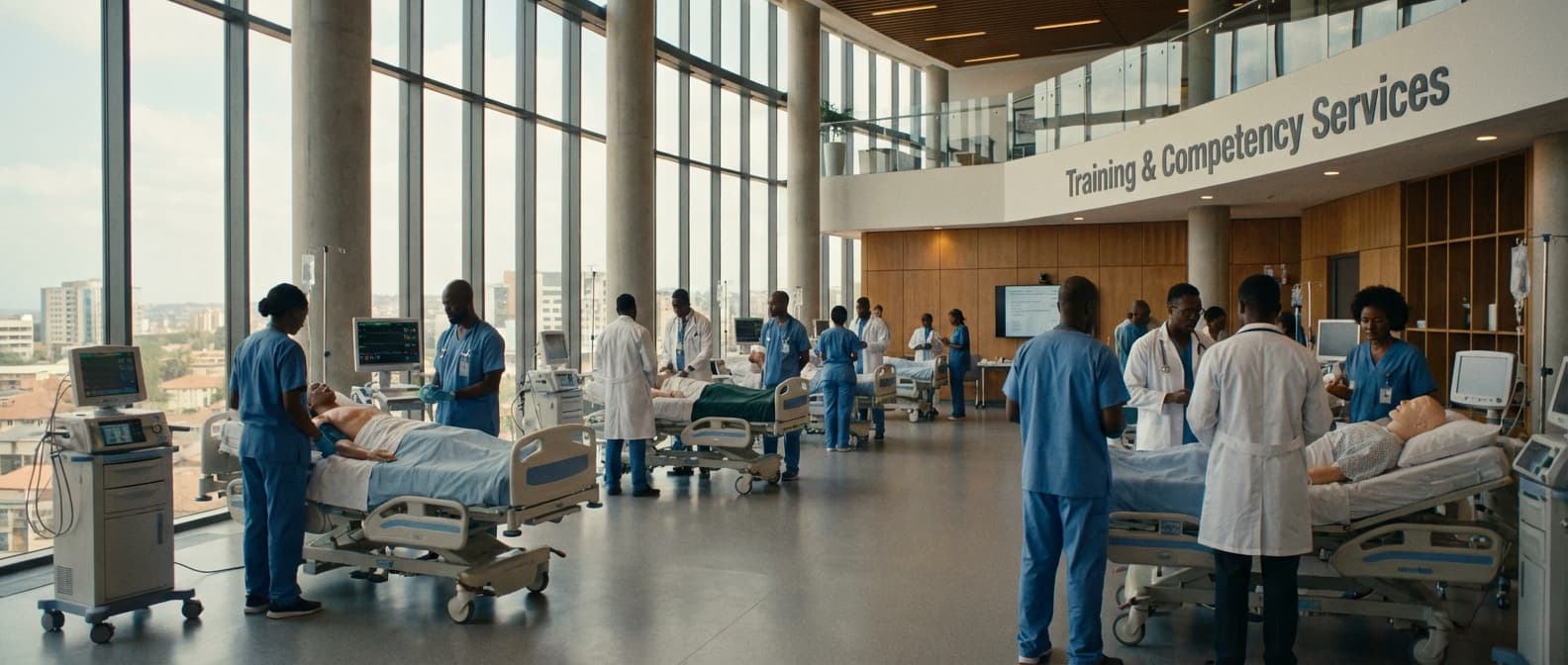
Anesthesia Workstation User Training Service in Burundi
Engineering Excellence & Technical Support
Anesthesia Workstation User Training Service High-standard technical execution following OEM protocols and local regulatory frameworks.
Mastering the Anesthesia Workstation Interface
Gain in-depth knowledge of the Anesthesia Workstation's intuitive user interface. Our training covers all key features, alarms, and monitoring parameters, ensuring confident and efficient daily operation for Burundian healthcare professionals.
Advanced Ventilation Modes & Patient Management
Unlock the full potential of your Anesthesia Workstation with comprehensive training on advanced ventilation modes. Learn to tailor ventilation strategies for diverse patient populations in Burundi, optimizing patient safety and clinical outcomes.
Troubleshooting & Maintenance Essentials
Empower your team with essential troubleshooting skills and basic maintenance procedures for the Anesthesia Workstation. This training ensures prompt identification and resolution of common issues, minimizing downtime and maximizing equipment reliability in Burundian healthcare settings.
What Is Anesthesia Workstation User Training Service In Burundi?
Anesthesia Workstation User Training Service in Burundi refers to a specialized educational program designed to equip healthcare professionals with the knowledge and practical skills necessary to safely and effectively operate anesthesia workstations within the Burundian healthcare context. This service is critical for ensuring patient safety during surgical and procedural sedation, optimizing the utilization of advanced medical equipment, and fostering a skilled workforce capable of delivering high-quality anesthesia care.
| Stakeholder Group | Specific Needs & Rationale | Typical Use Cases |
|---|---|---|
| Anesthesiologists | Advanced understanding of complex ventilation strategies, waveform analysis, and advanced monitoring integration. Essential for safe and effective anesthetic management in diverse surgical settings. Rationale: Expertise in patient management and equipment optimization. | General anesthesia, regional anesthesia with sedation, management of complex airway cases, critical care settings. |
| Anesthesia Residents & Trainees | Foundational knowledge of workstation principles, basic ventilation modes, and safe operation. Crucial for building competency and passing certification exams. Rationale: Skill development and adherence to best practices. | Learning the fundamentals of anesthetic delivery, practicing supervised ventilation techniques, routine surgical procedures. |
| Nurse Anesthetists / Certified Registered Nurse Anesthetists (CRNAs) | Proficiency in operating the workstation for routine procedures, monitoring patient vital signs, and responding to immediate patient needs. Rationale: Direct patient care delivery and resource management. | Providing anesthesia for outpatient procedures, assisting anesthesiologists in complex cases, managing sedation for diagnostic procedures. |
| Biomedical Engineers & Technicians | Technical understanding of the workstation's internal workings for calibration, preventive maintenance, and repair. Essential for ensuring equipment reliability and patient safety. Rationale: Equipment upkeep and operational integrity. | Performing routine maintenance checks, troubleshooting electrical and mechanical faults, performing calibration procedures, installing new equipment. |
| Hospital Administrators & Procurement Officers | Understanding the capabilities, maintenance requirements, and training needs associated with different anesthesia workstation models for informed purchasing decisions. Rationale: Strategic resource allocation and operational efficiency. | Evaluating equipment for purchase, budgeting for maintenance and training, ensuring compliance with healthcare standards. |
Key Components of Anesthesia Workstation User Training in Burundi
- Device Familiarization: Comprehensive understanding of the physical components, interfaces, and integrated systems of specific anesthesia workstation models commonly deployed in Burundi.
- Functional Operation: In-depth training on the machine's modes of ventilation (e.g., volume control, pressure control, SIMV, PSVPro), gas delivery systems (e.g., O2, N2O, air), vaporizers, and integrated monitoring capabilities.
- Patient Monitoring Integration: Instruction on connecting and interpreting data from essential patient monitors (e.g., ECG, SpO2, NIBP, EtCO2, anesthetic gas analysis) as integrated or connected to the workstation.
- Alarm Management and Troubleshooting: Training on recognizing, responding to, and resolving various alarm conditions and common equipment malfunctions to prevent adverse events.
- Maintenance and Quality Assurance: Basic principles of routine pre-use checks, cleaning protocols, and understanding the importance of regular preventive maintenance for optimal performance and longevity.
- Workflow Integration: How the anesthesia workstation fits into the broader perioperative workflow, including pre-anesthetic assessment, induction, maintenance, emergence, and post-anesthetic care.
- Regulatory Compliance: Awareness of relevant national healthcare regulations and guidelines pertaining to anesthesia equipment use and patient safety in Burundi.
Who Needs Anesthesia Workstation User Training Service In Burundi?
Anesthesia workstation user training services are crucial in Burundi to ensure the safe, effective, and efficient operation of advanced medical equipment. This training empowers healthcare professionals to maximize the benefits of modern anesthesia technology, leading to improved patient outcomes and a more robust healthcare system. The service aims to bridge the gap in specialized technical knowledge, enabling local healthcare providers to confidently and competently manage these complex devices.
| Department | Specific Roles/Personnel | Reason for Training Need | Expected Benefits of Training |
|---|---|---|---|
| Anesthesiology Department | Anesthesiologists, Anesthetic Technicians | Direct operation of anesthesia workstations during procedures; calibration and maintenance; troubleshooting. | Enhanced patient safety; reduced complication rates; improved anesthetic delivery accuracy; efficient use of resources; extended equipment lifespan. |
| Operating Room (OR) / Surgical Department | Surgeons (for understanding workstation capabilities and integration) | Familiarity with workstation functions impacting patient stability during surgery; coordination with anesthesia team. | Smoother surgical procedures; better interdisciplinary communication; improved patient monitoring awareness. |
| Intensive Care Unit (ICU) | Intensivists, ICU Nurses, Respiratory Therapists | Potential use of anesthesia workstation features for mechanical ventilation and advanced monitoring in critical care settings. | Optimized critical care management; advanced respiratory support capabilities; improved patient outcomes in severe conditions. |
| Biomedical Engineering/Technical Department | Biomedical Engineers, Hospital Technicians | Preventive maintenance, troubleshooting, minor repairs, and ensuring proper functioning of anesthesia workstations. | Reduced equipment downtime; cost savings on external repairs; proactive identification of potential issues; compliance with safety standards. |
| Medical Training and Education Institutions | Medical Students, Nursing Students, Residents, Faculty | Integrating practical training on advanced anesthesia equipment into the curriculum; preparing future healthcare professionals. | Graduates with hands-on experience; improved competency of the future healthcare workforce; enhanced reputation of training programs. |
| Procurement and Logistics Department (Healthcare Facilities) | Procurement Officers, Hospital Administrators | Understanding the technical specifications and training requirements for new anesthesia workstation acquisitions. | Informed purchasing decisions; ensuring that training is budgeted for and integrated into procurement plans; better return on investment. |
Target Customers and Departments Requiring Anesthesia Workstation User Training Service in Burundi
- Hospitals (Public and Private)
- Surgical Centers
- Clinics with Surgical Facilities
- Medical Training Institutions
Anesthesia Workstation User Training Service Process In Burundi
This document outlines the typical workflow for an Anesthesia Workstation User Training Service process in Burundi, from initial inquiry to the successful execution of the training.
| Stage | Key Activities | Responsible Party |
|---|---|---|
| Client expresses interest; define workstation, user numbers, skill level, objectives, logistics, budget. | Client (Initiator), Training Provider (Facilitator) |
| Develop training scope, curriculum, methodology, duration, costs; submit proposal and quote. | Training Provider |
| Sign contract; finalize training dates, venue, and resources. | Client & Training Provider (Jointly) |
| Prepare materials, confirm logistics, check equipment, inform participants. | Training Provider & Client (Collaborative) |
| Deliver theoretical and practical sessions; hands-on practice, Q&A, simulations. | Training Provider (Trainer) |
| Assess skills/knowledge; issue certificates; collect participant feedback. | Training Provider (Evaluator), Participants (Evaluated) |
| Analyze feedback; provide resources/support; plan for future training. | Training Provider |
Anesthesia Workstation User Training Service Process in Burundi: Workflow
- {"steps":["Client initiates contact (phone, email, website, referral).","Training provider receives and acknowledges the inquiry.","Initial discussion to understand client's requirements (workstation model, number of users, skill level, objectives, logistics, budget)."],"title":"1. Inquiry and Needs Assessment","description":"The process begins when a healthcare facility or individual in Burundi expresses interest in anesthesia workstation user training. This can be through direct contact (phone, email, website), a referral, or a proactive outreach by the training provider. The initial stage involves understanding the specific needs of the client, including: \n * The type and model of anesthesia workstation(s) to be trained on. \n * The number of participants requiring training. \n * The current skill level and experience of the users. \n * Specific training objectives and desired outcomes. \n * Any logistical constraints (location, dates, available equipment for practice). \n * Budgetary considerations."}
- {"steps":["Develop a detailed training proposal.","Outline curriculum, methodology, duration, trainers, materials, and assessment.","Prepare a formal quotation with cost breakdown.","Submit proposal and quotation to the client for review."],"title":"2. Proposal and Quotation","description":"Based on the detailed needs assessment, the training provider will develop a comprehensive proposal. This proposal will outline the scope of the training, including: \n * Detailed curriculum and learning modules. \n * Training methodology (lectures, demonstrations, hands-on practice, simulations). \n * Duration and schedule of the training. \n * Trainer qualifications and experience. \n * Training materials to be provided. \n * Assessment methods and certification process. \n * Cost breakdown (training fees, travel, accommodation if applicable, materials). \n A formal quotation will accompany the proposal."}
- {"steps":["Client reviews and accepts the proposal and quotation.","Draft and sign a formal training agreement/contract.","Finalize training dates and schedule.","Confirm training venue and necessary resources (anesthesia workstation, simulation equipment, classroom space)."],"title":"3. Agreement and Scheduling","description":"Upon acceptance of the proposal and quotation, a formal agreement or contract will be drafted and signed by both parties. This agreement will specify all terms and conditions, including payment schedules, cancellation policies, and liability. Following the agreement, the training dates and venue will be finalized, considering the availability of both the training provider and the client's personnel and equipment."}
- {"steps":["Training provider prepares training materials and confirms trainer logistics.","Client ensures anesthesia workstation(s) are functional and accessible.","Confirm participant list and communicate pre-training information.","Finalize venue setup and equipment checks."],"title":"4. Pre-Training Preparation","description":"This phase involves all necessary preparations leading up to the training execution. The training provider will: \n * Prepare and finalize training materials (presentations, manuals, handouts, case studies). \n * Confirm logistics for trainers (travel, accommodation if required). \n * Ensure all training equipment is functional and ready for use. \n * Communicate pre-training information to participants (agenda, prerequisites, what to bring). \nThe client will: \n * Ensure the anesthesia workstation(s) are operational and accessible for hands-on practice. \n * Confirm participant attendance and availability. \n * Prepare the training venue."}
- {"steps":["Welcome and introduction to the training program.","Delivery of theoretical modules (lectures, presentations).","Demonstration of workstation functions and procedures.","Supervised hands-on practice sessions by participants.","Interactive Q&A, discussions, and case studies.","Simulation exercises (if applicable)."],"title":"5. Training Execution","description":"This is the core phase where the training is delivered. The training will typically involve a blend of theoretical knowledge and practical application. Sessions will cover: \n * Anesthesia workstation components and functionalities. \n * Safe operation and setup procedures. \n * Alarm management and troubleshooting. \n * Ventilation modes and settings. \n * Gas delivery and monitoring. \n * Emergency procedures and management. \n * Hands-on practice sessions with the anesthesia workstation. \n * Case-based discussions and simulations. \n Throughout the training, trainers will encourage interaction, answer questions, and provide feedback."}
- {"steps":["Conduct theoretical and/or practical assessments.","Evaluate participant performance against learning objectives.","Issue certificates of completion to successful participants.","Distribute post-training evaluation forms to participants.","Collect feedback for program improvement."],"title":"6. Assessment and Evaluation","description":"At the conclusion of the training, participants will be assessed to evaluate their understanding and practical skills. This may include: \n * Written or online tests. \n * Practical skills assessments on the anesthesia workstation. \n * Case study analysis. \n Following the assessment, participants who meet the required standards will receive a certificate of completion. A post-training evaluation form will be distributed to participants to gather feedback on the training content, delivery, and overall effectiveness. This feedback is crucial for continuous improvement of the training program."}
- {"steps":["Analyze training feedback for program enhancement.","Provide post-training resources or support as per agreement.","Offer refresher courses or ongoing assistance.","Maintain client relationship for future training needs."],"title":"7. Post-Training Follow-up and Support","description":"The service doesn't necessarily end with the certificate. Depending on the agreement, post-training support might include: \n * Providing access to supplementary learning resources. \n * Offering follow-up Q&A sessions or remote support. \n * Conducting a refresher course after a specified period. \n * Providing technical support or troubleshooting assistance related to workstation use. \nThe training provider will analyze the collected feedback and use it to refine future training programs."}
Anesthesia Workstation User Training Service Cost In Burundi
Providing user training for anesthesia workstations in Burundi involves several cost factors that influence the final price. These factors are largely determined by the complexity of the equipment, the duration and depth of the training, the location and accessibility of the training site, and the qualifications of the trainers. Given Burundi's economic landscape, pricing will be competitive and reflect local market conditions while ensuring the delivery of essential, high-quality training. The goal is to equip healthcare professionals with the necessary skills to operate anesthesia workstations safely and effectively, thereby improving patient care outcomes.
| Service Component | Estimated Cost Range (BIF) | Notes |
|---|---|---|
| Basic Anesthesia Workstation User Training (1-2 days) | 200,000 - 500,000 | Covers fundamental operation, safety checks, and basic troubleshooting. Assumes a group of 5-10 participants. |
| Advanced Anesthesia Workstation User Training (3-5 days) | 500,000 - 1,200,000 | Includes in-depth features, advanced ventilation modes, patient monitoring integration, and complex scenarios. Assumes a group of 5-10 participants. |
| On-site Training (Additional per day/trainer) | 100,000 - 250,000 | Covers trainer's per diem, local transportation within the city. Excludes long-distance travel and accommodation. |
| Trainer Travel & Accommodation (Inter-city/Remote) | 150,000 - 400,000 | For trainers traveling to locations outside the main training hub. Varies based on distance and duration. |
| Customized Training Module Development | 50,000 - 200,000 | Per module, depending on the complexity and scope of customization. |
| Training Materials (per participant) | 15,000 - 50,000 | Includes printed manuals, handouts, and basic stationery. |
| Certification/Assessment Fee (per participant) | 20,000 - 75,000 | For official certification upon successful completion of training and assessment. |
Key Factors Influencing Anesthesia Workstation User Training Costs in Burundi
- Type and Complexity of Anesthesia Workstation: More advanced, feature-rich anesthesia machines will necessitate more in-depth training. Basic models may require shorter, less specialized programs.
- Training Duration and Depth: The total hours dedicated to theoretical instruction and hands-on practice directly impact the cost. Advanced modules or specialized procedures will extend the training time.
- Trainer Qualifications and Experience: Highly experienced and certified anesthesia trainers, especially those with international exposure or specialized certifications, command higher fees.
- Number of Participants: Group training sessions are generally more cost-effective per participant than one-on-one training.
- Location of Training: Training conducted at the client's facility (hospital or clinic) might incur travel and accommodation costs for the trainers. Training at a central training center could reduce these logistical expenses.
- Training Materials and Resources: The cost of developing or acquiring training manuals, simulation equipment, and access to real anesthesia workstations for practice will be factored in.
- Logistics and Travel (if applicable): For trainers traveling to remote areas within Burundi, transportation, accommodation, and per diem expenses will add to the overall cost.
- Customization of Training Program: Tailoring the training curriculum to specific institutional needs or protocols will influence the development time and associated costs.
- Certification and Assessment: If formal certification or assessment of competence is included, this will add to the training service cost.
- Ongoing Support and Refresher Courses: Post-training support or scheduled refresher courses will be priced separately.
Affordable Anesthesia Workstation User Training Service Options
This document outlines cost-effective strategies and value bundles for user training on affordable anesthesia workstations. Investing in comprehensive training is crucial for safe and efficient operation, ultimately reducing errors, improving patient outcomes, and extending the lifespan of the equipment. Our services are designed to be accessible, flexible, and tailored to the specific needs of your healthcare facility, regardless of budget constraints.
| Value Bundle Name | Description | Included Services | Cost-Saving Benefits | Ideal For |
|---|---|---|---|---|
| Basic Essentials Bundle | Foundation for safe operation of affordable workstations. | 1 x Remote Basic Operation Training Session (2 hours), 1 x Set of E-learning Modules, Digital User Manual Access | Reduced travel costs, accessible at your own pace, foundational knowledge. | New users, facilities with limited training budgets, initial onboarding. |
| Comprehensive Skill Builder Bundle | In-depth understanding and hands-on competency development. | 1 x On-site Basic Operation Training Session (4 hours) OR 2 x Remote Advanced Operation Sessions (2 hours each), 1 x Train-the-Trainer Session (for key personnel), Access to all E-learning Modules | Team competency, reduced errors, in-house knowledge retention, efficient skill transfer. | Departments requiring high proficiency, facilities with dedicated training needs, building internal expertise. |
| Advanced & Sustainment Bundle | Ongoing support and advanced skill enhancement for long-term efficiency. | 2 x Remote Refresher/Advanced Training Sessions (per year), Priority access to new e-learning content, Quarterly Q&A with an expert trainer | Continuous improvement, adaptation to system updates, sustained operational excellence, proactive problem-solving. | Experienced teams, facilities with evolving needs, commitment to continuous learning. |
| Customized Solution | Tailored training to meet unique operational and budget requirements. | As per agreed scope (can include any combination of services) | Maximizes ROI by focusing only on necessary components, budget flexibility. | Facilities with specific workflows, unique workstation setups, or specialized training demands. |
Key Training Service Options for Affordable Anesthesia Workstations
- On-site, In-person Training: Hands-on sessions conducted at your facility by certified instructors. Ideal for comprehensive skill development and team-based learning.
- Remote/Virtual Training: Live, interactive sessions delivered online, offering flexibility and cost savings on travel. Includes screen sharing, Q&A, and digital learning materials.
- E-learning Modules: Self-paced, online courses covering theoretical knowledge, system features, and basic troubleshooting. Accessible anytime, anywhere.
- Train-the-Trainer Programs: Empower your in-house staff to become expert users and trainers, creating a sustainable knowledge base within your organization.
- Refresher & Advanced Training: Periodic sessions to reinforce skills, introduce new features, or address specific operational challenges.
- Customized Training Curricula: Development of training programs tailored to your specific anesthesia protocols, user experience levels, and workstation configurations.
- Technical Support Integration: Training sessions that incorporate basic troubleshooting and maintenance guidance, reducing reliance on external technical support for common issues.
Verified Providers In Burundi
In the complex landscape of healthcare access in Burundi, identifying reliable and competent healthcare providers is paramount. Franance Health stands out as a beacon of quality, offering a network of verified professionals and facilities that meet stringent standards. This commitment to verification ensures that patients receive not only accessible but also the highest quality of care, making Franance Health the optimal choice for individuals seeking trustworthy medical services in Burundi.
| Credential Type | Verification Process | Importance for Patients |
|---|---|---|
| Medical Licenses & Certifications | Verification of official documents issued by regulatory bodies. | Confirms legal and ethical practice authorization. |
| Educational Background | Review of diplomas, degrees, and specialized training certificates. | Ensures foundational knowledge and expertise in specific medical fields. |
| Professional Experience | Assessment of years in practice and documented work history. | Indicates practical application of knowledge and skill development. |
| Reputation & Patient Feedback | Collection and analysis of patient testimonials and professional reviews. | Provides insight into patient satisfaction, communication, and bedside manner. |
| Adherence to Ethical Guidelines | Confirmation of commitment to medical ethics and professional conduct. | Guarantees responsible and patient-centered care. |
Why Franance Health Credentials Represent the Best Choice:
- Rigorous Vetting Process: Franance Health employs a multi-stage verification process for all its affiliated providers, encompassing professional licenses, educational background, and practical experience. This ensures that only qualified and ethical practitioners are part of their network.
- Commitment to Quality Standards: Beyond basic credentials, Franance Health actively assesses providers for adherence to international quality benchmarks and best practices in patient care, safety, and hygiene.
- Specialized Network: The network includes a diverse range of medical specialists, general practitioners, and healthcare facilities, ensuring that a broad spectrum of healthcare needs can be met by verified professionals.
- Patient-Centric Approach: Franance Health prioritizes patient well-being, and their verification process includes an evaluation of a provider's patient communication skills, empathy, and responsiveness.
- Transparency and Trust: By clearly showcasing verified credentials, Franance Health builds a foundation of trust with patients, allowing them to make informed decisions about their healthcare with confidence.
- Continuous Monitoring: Verification is not a one-time event. Franance Health engages in ongoing monitoring and feedback mechanisms to ensure that their network consistently upholds its high standards.
Scope Of Work For Anesthesia Workstation User Training Service
This Scope of Work (SOW) outlines the requirements for providing comprehensive user training services for the Anesthesia Workstation. The objective is to ensure that all designated users are proficient in the safe, effective, and efficient operation of the Anesthesia Workstation, including its various features, functionalities, and troubleshooting procedures. This SOW details the technical deliverables, standard specifications, and expected outcomes of the training program.
| Deliverable | Description | Format | Acceptance Criteria | Standard Specifications |
|---|---|---|---|---|
| Training Curriculum Development | Creation of a detailed and comprehensive training curriculum covering all aspects of Anesthesia Workstation operation. | Digital Document (PDF, Word) | Review and approval by Client's Medical and Technical leads. | Curriculum must align with Manufacturer's guidelines, relevant clinical best practices, and regulatory requirements. |
| Training Materials Production | Development of all necessary training materials, including presentations, user manuals, quick reference guides, and hands-on exercise sheets. | Digital and Printed Formats (as specified) | Materials must be accurate, clear, concise, and easily understandable by the target audience. | Materials should be in English (or specified language) and use high-resolution images/diagrams. |
| Certified Trainer Delivery | Provision of qualified and certified trainers to conduct the training sessions. | On-site or Remote (as agreed) | Trainers must possess verifiable expertise in Anesthesia Workstation operation and adult learning principles. | Trainers should have experience in a clinical anesthesia setting. |
| Hands-on Training Sessions | Conducting practical, hands-on training sessions using the actual Anesthesia Workstation units. | On-site (preferred) | Participants must demonstrate proficiency in all core operational tasks. | Each participant should have adequate access to a workstation for practice. |
| Competency Assessment | Development and administration of a competency assessment to evaluate user understanding and skill acquisition. | Written/Online Quiz and Practical Skills Evaluation | A minimum passing score (e.g., 85%) for both written and practical components. | Assessment should cover all key learning objectives from the curriculum. |
| Training Attendance Records | Maintenance and provision of accurate records of participant attendance and completion for each training session. | Digital Report (CSV, Excel) | Records must be complete and verifiable. | Includes participant name, date, session, and completion status. |
| Post-Training Support (Limited) | Provision of a limited period of post-training support for immediate questions and clarifications. | Email or Designated Contact Channel | Response to queries within a defined SLA (e.g., 24 business hours). | Support limited to clarification of training content, not clinical advice. |
| Training Completion Certificates | Issuance of training completion certificates to all participants who successfully pass the competency assessment. | Digital or Printed | Certificates must be personalized with participant name, training dates, and trainer verification. | Certificates should clearly state the Anesthesia Workstation model trained on. |
Key Training Objectives
- Familiarize users with the Anesthesia Workstation's physical components and user interface.
- Train users on the setup, calibration, and pre-use checks of the Anesthesia Workstation.
- Instruct users on routine operation, including ventilation modes, gas delivery, and monitoring capabilities.
- Provide comprehensive training on emergency procedures and alarm management.
- Educate users on the maintenance, cleaning, and disinfection protocols for the Anesthesia Workstation.
- Cover troubleshooting common issues and error messages.
- Ensure users understand the principles of patient safety as it relates to Anesthesia Workstation usage.
- Equip users with the knowledge to perform basic user-level maintenance and consumables replacement.
Service Level Agreement For Anesthesia Workstation User Training Service
This Service Level Agreement (SLA) outlines the guaranteed response times and uptime for the Anesthesia Workstation User Training Service. It is designed to ensure timely support and reliable access to training resources for authorized users.
| Service Component | Response Time Guarantee (Business Hours) | Uptime Guarantee (Monthly) |
|---|---|---|
| Technical Support for Training Platform Access (e.g., login issues, navigation problems) | Tier 1 (Basic Inquiry): 4 Business Hours Tier 2 (Complex Issue): 8 Business Hours | 99.5% |
| Scheduled Instructor-led Training Session Availability (confirmation of booking, reschedule notification) | Confirmation within 1 Business Day of Request | N/A (Service is event-driven) |
| Access to Online Training Modules | N/A (Self-service access) | 99.9% |
Key Service Components
- Anesthesia Workstation User Training Modules (e.g., Online, Instructor-led)
- Technical Support for Training Platform Access
- Scheduled Training Session Availability
Frequently Asked Questions

Ready when you are
Let's scope your Anesthesia Workstation User Training Service in Burundi project in Burundi.

Scaling healthcare logistics and technical systems across the entire continent.