
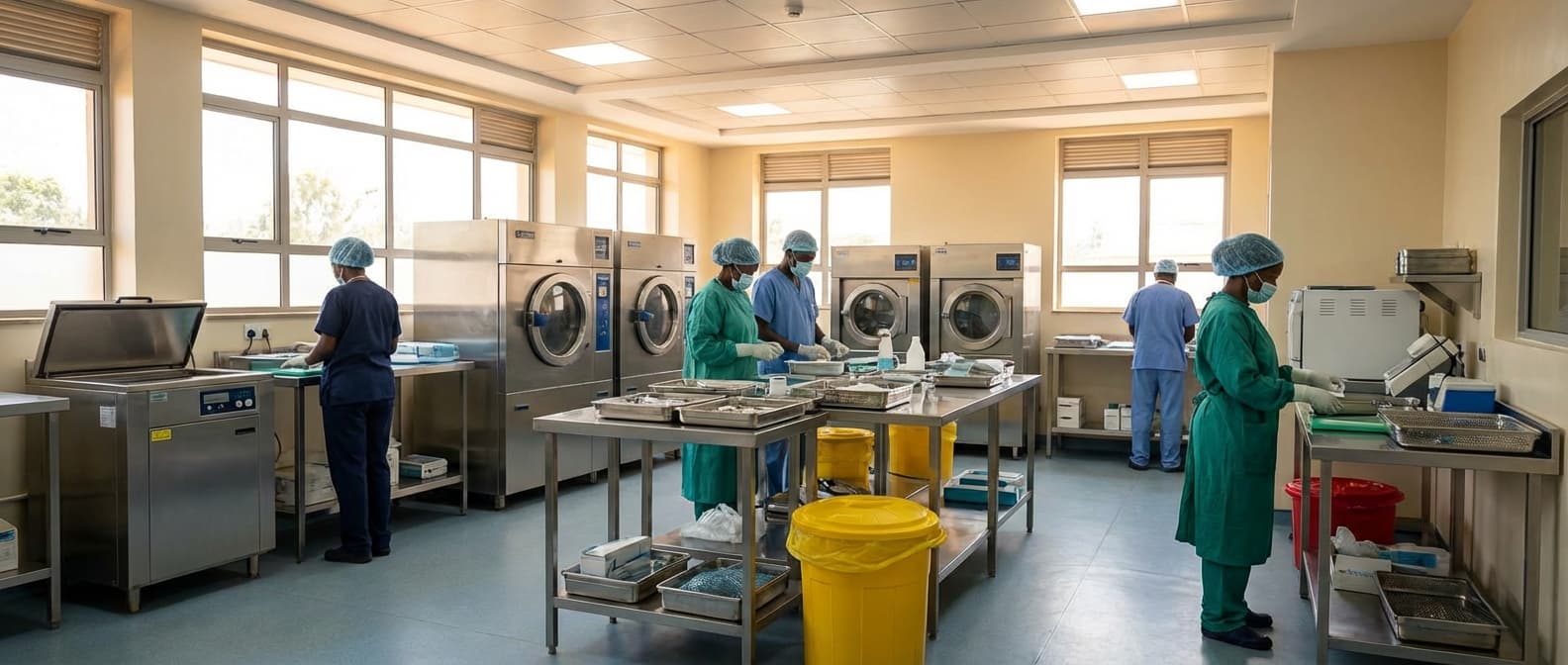
Medical Equipment Decontamination Service (Pre-Repair/Pre-Relocation) in Burundi
Engineering Excellence & Technical Support
Medical Equipment Decontamination Service (Pre-Repair/Pre-Relocation) High-standard technical execution following OEM protocols and local regulatory frameworks.
Advanced Bioburden Reduction
Our pre-repair and pre-relocation decontamination process employs advanced disinfection techniques, validated through rigorous microbiological testing, to significantly reduce bioburden on medical equipment. This ensures a safer environment for technicians and prevents cross-contamination during subsequent handling.
Hazardous Material Containment
We specialize in the safe containment and neutralization of potentially hazardous biological and chemical residues commonly found on medical equipment. Our protocols adhere to international best practices, protecting both personnel and the environment in Burundi from infectious agents or harmful substances.
Expedited Readiness for Service
Our streamlined decontamination services are designed to minimize downtime. By ensuring equipment is thoroughly cleaned and disinfected before repair or relocation, we expedite the readiness for essential medical services, supporting healthcare continuity in Burundi.
What Is Medical Equipment Decontamination Service (Pre-repair/pre-relocation) In Burundi?
Medical Equipment Decontamination Service (Pre-Repair/Pre-Relocation) in Burundi refers to the specialized process of cleaning, disinfecting, and/or sterilizing medical devices prior to their transport for repair or relocation within a healthcare facility. This service is critical for preventing the cross-contamination of infectious agents during handling, maintenance, and movement of equipment, thereby safeguarding both healthcare professionals and patients. The decontamination process aims to reduce the bioburden on the equipment to a safe level, mitigating the risk of pathogen transmission through direct contact or aerosolization.
| Who Needs This Service? | Typical Use Cases | ||||
|---|---|---|---|---|---|
| Healthcare facilities (hospitals, clinics, diagnostic laboratories) in Burundi. | A medical device requiring repair by an external service provider. | A medical device being relocated between departments or facilities within Burundi. | Equipment used in high-risk areas or for invasive procedures. | Items experiencing spills or contamination events. | Preparation of equipment for long-term storage or decommissioning. |
| Surgical instruments (e.g., scalpels, forceps, retractors) sent for repair. | Diagnostic imaging equipment (e.g., ultrasound probes, endoscopes) undergoing maintenance. | Anesthesia machines or ventilators being moved to a different ward. | Laboratory equipment (e.g., centrifuges, incubators) requiring recalibration or servicing. | Patient monitoring devices with potential for bioburden. | Any medical equipment that has come into contact with bodily fluids or potentially infectious materials. |
Key Aspects of Medical Equipment Decontamination Service (Pre-Repair/Pre-Relocation)
- Objective: To render medical equipment safe for handling, transport, and subsequent service by eliminating or significantly reducing viable microorganisms.
- Scope: Encompasses a range of decontamination methods, from basic cleaning and disinfection to high-level disinfection or sterilization, depending on the equipment type and its intended use.
- Process: Typically involves pre-cleaning to remove gross soil and organic matter, followed by chemical disinfection or sterilization agents appropriate for the equipment's material compatibility and the targeted pathogens.
- Validation: May include visual inspection, indicator testing, and, in some cases, microbial sampling to confirm the efficacy of the decontamination process.
- Documentation: Essential for maintaining records of the decontamination procedure, including agents used, exposure times, and personnel involved.
Who Needs Medical Equipment Decontamination Service (Pre-repair/pre-relocation) In Burundi?
Ensuring the safety and functionality of medical equipment is paramount in Burundi, especially before any repair or relocation. Medical equipment decontamination services play a crucial role in preventing the spread of infectious diseases, protecting technicians, and ensuring the integrity of the equipment itself. This service is vital for a wide range of facilities and professionals who handle potentially biohazardous materials.
| Target Customer/Department | Specific Needs/Reasons for Decontamination | Examples of Equipment |
|---|---|---|
| Hospitals (Public and Private) | Preventing cross-contamination between patients, protecting healthcare workers, ensuring safe handling for repair or relocation, complying with hygiene standards. | Patient monitors, ventilators, infusion pumps, surgical instruments, imaging equipment (X-ray, ultrasound), laboratory equipment (centrifuges, incubators). |
| Clinics and Health Centers | Similar to hospitals but often with more limited resources, making professional decontamination essential for safe equipment maintenance and movement. | Thermometers, blood pressure monitors, stethoscopes, minor surgical tools, diagnostic kits. |
| Diagnostic Laboratories | Handling infectious biological samples, requiring stringent decontamination to prevent contamination of samples, protect lab personnel, and ensure the accuracy of tests. | Microscopes, centrifuges, incubators, PCR machines, biosafety cabinets. |
| Blood Banks and Transfusion Centers | Working with blood products necessitates thorough decontamination to prevent pathogen transmission and maintain the integrity of stored blood. | Apheresis machines, centrifuges, blood refrigerators, sample analyzers. |
| Surgical Centers | High risk of exposure to blood and bodily fluids, requiring decontamination before any repair or movement of sensitive surgical equipment. | Surgical lights, anesthesia machines, electrosurgical units, laparoscopic instruments. |
| Dental Clinics | Exposure to saliva, blood, and aerosols requires decontamination of dental chairs, X-ray machines, and handpieces before servicing. | Dental chairs, X-ray units, sterilization equipment, handpieces, ultrasonic scalers. |
| Veterinary Clinics | Dealing with a range of animal diseases, some of which are zoonotic (transmissible to humans), making decontamination critical. | Surgical instruments, diagnostic equipment, kennels, imaging equipment. |
| Medical Equipment Suppliers and Repair Technicians | Protecting their staff from biohazards when receiving, servicing, or delivering equipment. Ensuring they don't become vectors for disease transmission. | All types of medical equipment they handle. |
| NGOs and Humanitarian Organizations | Operating in challenging environments with potential for outbreaks, requiring robust decontamination protocols for equipment used in mobile clinics or temporary health facilities. | Portable diagnostic equipment, water purification systems, basic medical kits, generators. |
Who Needs Medical Equipment Decontamination Service (Pre-Repair/Pre-Relocation) in Burundi?
- Hospitals (Public and Private)
- Clinics and Health Centers
- Diagnostic Laboratories
- Blood Banks and Transfusion Centers
- Surgical Centers
- Dental Clinics
- Veterinary Clinics (handling zoonotic diseases)
- Medical Equipment Suppliers and Repair Technicians
- NGOs and Humanitarian Organizations operating health programs
Medical Equipment Decontamination Service (Pre-repair/pre-relocation) Process In Burundi
This document outlines the workflow for the Medical Equipment Decontamination Service (Pre-Repair/Pre-Relocation) in Burundi. This service ensures that medical equipment is rendered safe and non-infectious before being sent for repair or relocation, protecting both technicians and the environment. The process begins with an inquiry and concludes with the issuance of a decontamination certificate.
| Step | Activity | Responsible Party | Output/Documentation |
|---|---|---|---|
| 1 | Inquiry & Initial Assessment | Facility/User | Formal request for decontamination services, detailing equipment type, intended purpose (repair/relocation), and any known biohazards. |
| 2 | Service Quotation & Agreement | Decontamination Service Provider | Technical assessment, development of a cost estimate, and issuance of a service agreement outlining scope, timeline, and fees. |
| 3 | Scheduling & Logistics Planning | Decontamination Service Provider & Facility/User | Coordination of equipment pickup or delivery, scheduling of decontamination activities, and confirmation of access to the decontamination facility. |
| 4 | Equipment Collection/Receipt | Decontamination Service Provider | Safe transportation of equipment from the facility to the decontamination site. Detailed inventory of received equipment. |
| 5 | Pre-Decontamination Inspection & Risk Assessment | Decontamination Service Provider | Visual inspection of equipment for damage or signs of specific biohazards. Refinement of decontamination protocol based on assessment. |
| 6 | Decontamination Procedure Execution | Decontamination Service Provider | Application of approved chemical, thermal, or radiation-based decontamination methods suitable for the equipment and identified biohazards. Strict adherence to safety protocols. |
| 7 | Post-Decontamination Verification & Testing | Decontamination Service Provider | Verification of decontamination effectiveness through visual inspection and/or biological indicators. Functional checks of the equipment (if within scope). |
| 8 | Waste Management & Disposal | Decontamination Service Provider | Proper handling, containment, and disposal of any contaminated materials or waste generated during the decontamination process, adhering to environmental regulations. |
| 9 | Documentation & Certification | Decontamination Service Provider | Issuance of a Decontamination Certificate, confirming that the equipment has undergone the specified decontamination process and is safe for repair or relocation. Detailed service report. |
| 10 | Equipment Return/Release | Decontamination Service Provider & Facility/User | Safe handover of the decontaminated equipment back to the facility or directly to the repair/relocation team. Confirmation of receipt by the authorized personnel. |
Key Stakeholders and Their Roles
- Facility/User: The entity possessing the medical equipment requiring decontamination.
- Decontamination Service Provider: The designated entity responsible for performing the decontamination.
- Repair Technician/Relocation Team: The personnel who will handle the equipment post-decontamination.
- Regulatory Authority (if applicable): Oversees adherence to relevant health and safety standards.
Medical Equipment Decontamination Service (Pre-repair/pre-relocation) Cost In Burundi
The cost of medical equipment decontamination services in Burundi, particularly for pre-repair or pre-relocation purposes, is influenced by several key factors. These factors determine the complexity of the service, the resources required, and ultimately, the final price. It's important to note that prices can vary significantly between service providers and even within the same provider depending on the specific circumstances.
| Equipment Category | Estimated Cost Range (BIF) | Notes |
|---|---|---|
| Small Instruments (e.g., surgical tools, syringes) | 20,000 - 60,000 | Assumes standard disinfection protocols; sterilization will be higher. |
| Medium-Sized Equipment (e.g., ultrasound machines, patient monitors) | 75,000 - 250,000 | Depends on complexity and surface area; includes surface disinfection. |
| Large Medical Devices (e.g., X-ray units, anesthesia machines) | 200,000 - 800,000+ | Highly dependent on size, intricate components, and potential for internal contamination. Specialized handling required. |
| Laboratory Analyzers (e.g., centrifuges, microscopes) | 50,000 - 300,000 | Varies with complexity, internal components, and type of samples handled. |
| Specialized/High-Risk Equipment (e.g., equipment used with highly infectious diseases) | Custom Quote (significantly higher) | Requires specialized biocontainment procedures, advanced sterilization, and highly trained personnel. Often requires extensive risk assessment. |
Key Pricing Factors for Medical Equipment Decontamination in Burundi (Pre-Repair/Pre-Relocation)
- Type and Size of Medical Equipment: Larger and more complex medical devices (e.g., MRI machines, CT scanners, large laboratory analyzers) will naturally require more time, specialized cleaning agents, and potentially more personnel for effective decontamination compared to smaller items (e.g., stethoscopes, blood pressure monitors, surgical instruments).
- Level of Contamination: The extent and nature of the contamination are critical. Equipment heavily contaminated with biological materials (e.g., blood, bodily fluids, pathogens) will necessitate a more rigorous and time-consuming decontamination process than equipment with minor dust or surface grime.
- Required Decontamination Standard: Different scenarios may require varying levels of decontamination. For instance, if the equipment is being prepared for donation or sensitive research, a higher sterilization standard might be necessary, increasing the cost. For routine pre-repair, a thorough disinfection might suffice.
- Turnaround Time/Urgency: Emergency decontamination services for urgent repairs or relocations will often incur higher charges due to the need for immediate mobilization of resources and potential overtime for staff.
- Geographic Location: While Burundi is a relatively small country, travel costs to remote areas for on-site decontamination can add to the overall service fee. Accessibility of the facility where the equipment is located also plays a role.
- Specialized Equipment and Techniques: If the decontamination process requires specialized equipment (e.g., autoclaves for sterilization, specific chemical agents for particular contaminants) or advanced techniques, this will be reflected in the pricing.
- Certification and Documentation: Some clients may require detailed documentation of the decontamination process, including certificates of sterilization or disinfection. Providing these reports and adhering to strict quality control measures can add to the cost.
- Service Provider's Reputation and Expertise: Established decontamination service providers with a proven track record and highly trained personnel may command higher prices due to their reliability and the quality of their services.
Affordable Medical Equipment Decontamination Service (Pre-repair/pre-relocation) Options
This document outlines affordable medical equipment decontamination services, specifically focusing on pre-repair and pre-relocation scenarios. Proper decontamination ensures safety for technicians, the environment, and future users of the equipment, while also preventing the spread of infectious agents. We offer a range of service options and cost-saving strategies to meet various budgetary needs.
| Cost-Saving Strategy | Description | Benefit |
|---|---|---|
| Scheduled Maintenance Agreement | Pre-booked regular decontamination services at a fixed monthly or annual fee. | Predictable budgeting, priority scheduling, and reduced per-service cost. |
| Multi-Equipment Bundling | Decontaminating several pieces of equipment in a single visit or scheduled period. | Reduced logistical costs, consolidated billing, and volume discounts. |
| DIY Pre-Cleaning Assistance | Providing clients with approved cleaning agents and protocols for initial surface decontamination before our technicians arrive. | Lower overall service cost by reducing the time our specialized technicians spend on basic cleaning. |
| Off-Peak Scheduling | Scheduling decontamination services during non-peak hours or days. | Potential for reduced labor rates and expedited service. |
| Long-Term Contracts | Committing to a longer-term service agreement (e.g., 1-3 years). | Significant discounts on per-service rates and guaranteed service availability. |
| Referral Program | Recommending our services to other healthcare facilities. | Discount on future services for both the referrer and the referred. |
Value Bundles
- Basic Decontamination Package: Includes surface cleaning and disinfection using EPA-approved agents, along with waste disposal of contaminated materials. Ideal for non-critical equipment or routine maintenance.
- Standard Decontamination Package: Builds on the basic package by adding internal component cleaning (where accessible) and visual inspection for contaminants. Suitable for equipment that has had minor exposure or requires a more thorough pre-service check.
- Advanced Decontamination Package: Encompasses comprehensive internal and external cleaning, specialized disinfection protocols for high-risk pathogens, and detailed documentation. Recommended for equipment used in critical care, infectious disease units, or after known contamination events.
- Relocation Decontamination Bundle: Tailored for equipment being moved between facilities. Includes full decontamination, secure packaging for transit, and a certificate of decontamination. This ensures compliance with transfer regulations and protects against cross-contamination at the new location.
- Bulk Decontamination Discount: For organizations with multiple pieces of equipment requiring decontamination within a specific timeframe, we offer tiered discounts based on volume. This is an excellent option for clinics, hospitals, or research facilities undergoing equipment turnover or upgrades.
Verified Providers In Burundi
In Burundi's healthcare landscape, identifying reliable and accredited providers is paramount for ensuring quality care and patient safety. Franance Health stands out as a beacon of trust, meticulously vetting its network of healthcare professionals and facilities. This rigorous credentialing process ensures that all providers affiliated with Franance Health meet the highest standards of medical expertise, ethical practice, and operational efficiency. Choosing a Franance Health-verified provider means opting for a commitment to excellence, transparency, and superior patient outcomes.
| Provider Type | Key Verification Criteria | Benefits for Patients |
|---|---|---|
| Hospitals & Clinics | Accreditation status, medical equipment, staff qualifications, patient safety protocols, infection control measures. | Access to state-of-the-art facilities, a multidisciplinary team of experts, and adherence to international quality standards. |
| Specialist Doctors | Medical degrees and licenses, board certifications, years of experience, peer reviews, patient satisfaction scores. | Consultation with highly qualified and experienced specialists in their respective fields, ensuring accurate diagnoses and effective treatment plans. |
| Diagnostic Laboratories | Laboratory accreditation (e.g., ISO standards), quality control procedures, qualified technicians, accuracy and reliability of test results. | Dependable and precise diagnostic testing, crucial for informed medical decisions and effective treatment monitoring. |
| Pharmacies | Licensing, inventory management, prescription accuracy, dispensing protocols, availability of essential medications. | Reliable access to authentic and safely dispensed medications, crucial for patient recovery and well-being. |
Why Franance Health Credentials Matter:
- Unwavering Commitment to Quality: Franance Health's verification process goes beyond basic licensing. It involves a comprehensive assessment of qualifications, experience, patient reviews, and adherence to best practices.
- Enhanced Patient Safety: By partnering only with accredited providers, Franance Health significantly reduces the risk of medical errors and ensures that patients receive care from qualified and competent professionals.
- Access to Specialized Expertise: The network includes a diverse range of specialists, all rigorously vetted, allowing patients to find the exact expertise they need.
- Transparent and Trustworthy: Franance Health's commitment to transparency means patients can feel confident and informed about the quality of care they are receiving.
- Streamlined Healthcare Navigation: Navigating the healthcare system can be complex. Franance Health simplifies this process by presenting a curated list of the most reliable providers.
Scope Of Work For Medical Equipment Decontamination Service (Pre-repair/pre-relocation)
This Scope of Work (SOW) outlines the requirements for comprehensive medical equipment decontamination services. These services are to be performed prior to any repair, maintenance, or relocation of medical equipment. The objective is to ensure the safety of personnel, prevent cross-contamination, and prepare the equipment for subsequent handling. This SOW details the technical deliverables and standard specifications for the decontamination process.
| Section | Description | Technical Deliverables | Standard Specifications |
|---|---|---|---|
| Initial evaluation of the equipment's condition and contamination risk. | Contamination risk assessment report. Identification of equipment type, intended use, and potential biohazards. Documentation of visible contamination. | Standardized risk assessment checklist. Classification of contamination risk (e.g., low, medium, high) based on established guidelines (e.g., CDC, WHO). |
| Determining the appropriate decontamination agents and procedures based on equipment type, material compatibility, and identified biohazards. | Documented decontamination protocol for each equipment type. Selection of appropriate EPA-registered disinfectants or sterilants. | Use of hospital-grade, broad-spectrum disinfectants approved for medical device use. Consideration of manufacturer's cleaning and disinfection recommendations. Validation of disinfectant efficacy (if applicable). |
| Removal of gross soil, debris, and visible organic matter. | Visually clean equipment surface. Removal of detachable components for separate cleaning. Disposal of gross waste according to biohazard protocols. | Use of approved cleaning agents (detergents). Mechanical cleaning (wiping, brushing, rinsing) as appropriate. Avoidance of abrasive materials or excessive moisture unless specified. |
| Application of decontamination agents to achieve the desired level of microbial reduction. | Documented application of disinfectant/sterilant. Contact time logged. Rinsing and drying of equipment as per protocol. | Adherence to manufacturer's instructions for use (IFU) for disinfectants, including concentration, contact time, and temperature. Use of appropriate Personal Protective Equipment (PPE) for personnel. Verification of contact time through checklists or electronic logging. |
| Thorough drying of all equipment surfaces and accessible internal channels. | Equipment visually dry. Use of clean, lint-free cloths. Air drying in a clean environment where appropriate. | Avoidance of moisture entrapment. Use of sterile air or filtered air where critical. Documentation of drying method and time. |
| Secure packaging of decontaminated equipment to maintain its sterile or clean state during transport and storage. | Equipment sealed in appropriate, clean packaging. Clear labeling of decontaminated equipment with date, time, and responsible party. | Use of medical-grade packaging materials (e.g., sterile wraps, sealed bags). Labeling that is durable and clearly visible. Inclusion of information on the level of decontamination achieved (e.g., disinfected, sterilized). |
| Comprehensive record-keeping of all decontamination activities. | Decontamination logbook or electronic record. Certificate of Decontamination for each equipment piece. Incident reports for any deviations or issues encountered. | Records to include: equipment identification, date and time of service, decontamination method used, agents, contact times, personnel involved, any observations or issues. Certificate of Decontamination to be signed and dated. |
| Ensuring the effectiveness and adherence to standards throughout the decontamination process. | Regular audits of decontamination procedures. Periodic testing of disinfectant efficacy (if applicable). Training records for decontamination personnel. | Adherence to established Quality Management System (QMS). Competency assessments for personnel. Feedback mechanisms for process improvement. |
Key Objectives
- To eliminate or significantly reduce bioburden (bacteria, viruses, fungi, spores) on the surface and accessible internal components of medical equipment.
- To render the equipment safe for handling by technicians, maintenance personnel, and transport staff.
- To prevent the spread of infectious agents between patients, healthcare facilities, and the environment.
- To comply with relevant healthcare regulations, industry best practices, and manufacturer recommendations.
- To ensure the equipment is in a suitable condition for efficient and safe repair, maintenance, or relocation.
Service Level Agreement For Medical Equipment Decontamination Service (Pre-repair/pre-relocation)
This Service Level Agreement (SLA) outlines the response times and uptime guarantees for the Medical Equipment Decontamination Service (Pre-Repair/Pre-Relocation). This service ensures that medical equipment is properly decontaminated prior to being sent for repair or relocation, minimizing the risk of cross-contamination and ensuring regulatory compliance.
| Service Level | Definition | Response Time Guarantee | Uptime Guarantee | Service Credits / Penalties |
|---|---|---|---|---|
| Standard Decontamination Request | Routine decontamination of equipment scheduled for repair or relocation. | Acknowledgement of request within 2 business hours. Scheduling of decontamination within 24 business hours of request acceptance. | N/A (Decontamination is a scheduled, one-time service per equipment item) | Failure to acknowledge within 2 business hours: 5% discount on the decontamination fee for that request. Failure to schedule within 24 business hours: Additional 5% discount. |
| Expedited Decontamination Request | Urgent decontamination required due to critical equipment failure or imminent relocation. | Acknowledgement of request within 1 business hour. Scheduling of decontamination within 8 business hours of request acceptance. | N/A (Decontamination is a scheduled, one-time service per equipment item) | Failure to acknowledge within 1 business hour: 10% discount on the decontamination fee for that request. Failure to schedule within 8 business hours: Additional 10% discount. |
| Decontamination Certificate Issuance | Timely provision of a certificate confirming the successful decontamination of the equipment. | Certificate to be provided within 4 business hours of completion of decontamination. | N/A | Failure to provide certificate within 4 business hours: 5% discount on the decontamination fee for that request. |
Scope of Service
- Pre-repair decontamination of medical equipment.
- Pre-relocation decontamination of medical equipment.
- Verification and documentation of decontamination process.
- Adherence to all relevant infection control and safety protocols.
- Provision of certificates of decontamination.
Frequently Asked Questions

Ready when you are
Let's scope your Medical Equipment Decontamination Service (Pre-Repair/Pre-Relocation) in Burundi project in Burundi.

Scaling healthcare logistics and technical systems across the entire continent.