
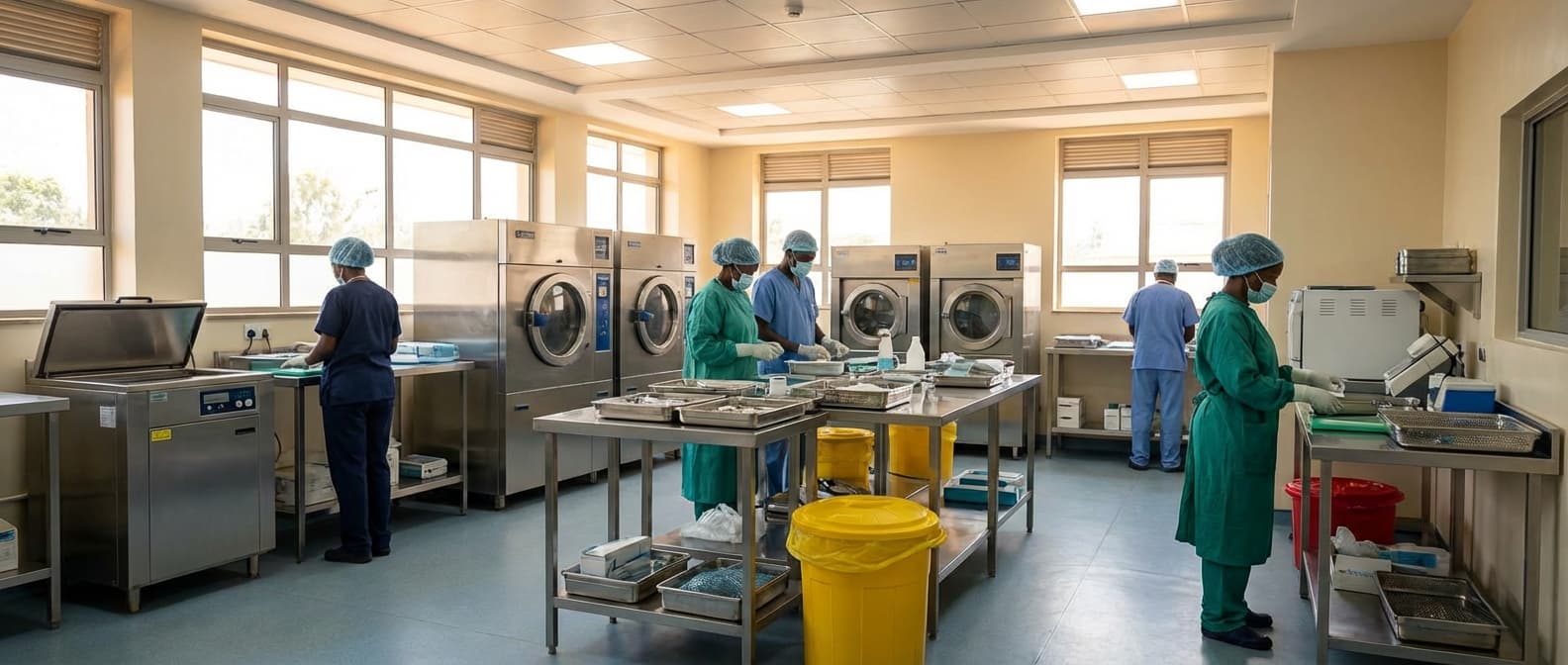
Endoscope Reprocessing Equipment Support Service in Burundi
Engineering Excellence & Technical Support
Endoscope Reprocessing Equipment Support Service High-standard technical execution following OEM protocols and local regulatory frameworks.
Rapid Diagnostic & Repair for Endoscope Reprocessors
We provide immediate on-site technical support for all major endoscope reprocessor brands in Burundi. Our certified technicians utilize advanced diagnostic tools to quickly identify and resolve issues, minimizing downtime and ensuring your vital equipment is operational without delay. We understand the critical nature of sterile reprocessing and prioritize swift, accurate solutions.
Proactive Maintenance & Calibration Programs
Preventative maintenance is key to optimal performance. Our tailored service plans for endoscope reprocessor equipment in Burundi include regular inspections, lubrication, filter replacements, and precise calibration against manufacturer specifications. This proactive approach significantly extends equipment lifespan, reduces unexpected breakdowns, and ensures consistent adherence to disinfection standards.
Expert Training & Validation for Endoscope Reprocessing
Beyond equipment repair, we offer comprehensive training programs for your reprocessing staff in Burundi. Our expert-led sessions cover correct equipment operation, validated cleaning cycles, and troubleshooting best practices. We also provide on-site validation services to confirm your reprocessing protocols meet international standards, ensuring patient safety and regulatory compliance.
What Is Endoscope Reprocessing Equipment Support Service In Burundi?
Endoscope reprocessing equipment support services in Burundi refer to the specialized technical assistance and maintenance provided for the devices and systems used to clean, disinfect, and sterilize endoscopes after each patient use. This service is critical for ensuring patient safety, compliance with infection control protocols, and the operational longevity of expensive and delicate medical equipment. The core objective is to mitigate the risk of healthcare-associated infections (HAIs) by guaranteeing that endoscopes are rendered safe for subsequent procedures. The scope encompasses preventive maintenance, corrective repairs, calibration, validation, and potentially the supply of spare parts and consumables specific to the reprocessing workflow. Support is typically delivered by certified technicians, either employed by the original equipment manufacturer (OEM), authorized third-party service providers, or specialized biomedical engineering departments within healthcare facilities.
| Service Aspect | Description | Importance in Burundi Context |
|---|---|---|
| Preventive Maintenance | Regular checks and servicing to identify and address potential issues before they cause failure. | Crucial for minimizing downtime of vital diagnostic and therapeutic equipment in a resource-constrained environment. |
| Corrective Maintenance | Prompt repair of malfunctioning equipment. | Essential to prevent disruptions in patient care pathways, especially for critical endoscopic procedures. |
| Validation & Calibration | Ensuring reprocessing equipment achieves and maintains the required disinfection/sterilization levels. | Directly impacts patient safety by preventing transmission of infectious agents, a significant concern in public health. |
| Technical Expertise | Access to skilled technicians for complex repairs and advice. | Addresses potential skill gaps in local biomedical engineering teams and ensures proper handling of specialized equipment. |
| Parts Availability | Reliable sourcing of genuine or certified replacement parts. | Mitigates long waiting times for repairs, which can occur due to import challenges and supply chain complexities in Burundi. |
Key Components of Endoscope Reprocessing Equipment Support Service
- Preventive Maintenance (PM): Scheduled inspections, cleaning, lubrication, and part replacement to avert breakdowns and ensure optimal performance.
- Corrective Maintenance/Repair: Troubleshooting and fixing malfunctions or failures that occur during operation.
- Calibration and Validation: Ensuring equipment functions within specified parameters and meets regulatory standards for disinfection/sterilization efficacy (e.g., High-Level Disinfection - HLD, sterilization cycles).
- Technical Consultation and Training: Providing expert advice on equipment operation, maintenance, and best practices for reprocessing staff.
- Spare Parts Management: Ensuring the availability and timely delivery of genuine or equivalent replacement components.
- Service Contracts and Warranty Management: Establishing agreements for ongoing support and managing manufacturer warranties.
- Troubleshooting and Diagnostic Services: Remote or on-site diagnosis of equipment issues.
- Decontamination Cycle Verification: Testing and confirming the effectiveness of the reprocessing cycles.
- Regulatory Compliance Assistance: Supporting facilities in meeting national and international guidelines for endoscope reprocessing.
Who Needs Endoscope Reprocessing Equipment Support Service In Burundi?
Ensuring the sterility and functionality of endoscopes is paramount for patient safety and effective medical procedures in Burundi. Endoscope reprocessing equipment support services are crucial for healthcare facilities that utilize these sophisticated medical devices. These services encompass maintenance, repair, validation, and calibration of automated endoscope reprocessors (AERs) and other related equipment.
| Customer Type | Key Departments Involved | Specific Needs/Reasons for Support |
|---|---|---|
| Public Hospitals | Endoscopy Unit, Central Sterile Supply Department (CSSD), Surgical Wards, Gastroenterology Department, Pulmonology Department | High volume of procedures, aging equipment, limited in-house technical expertise, need for preventative maintenance to avoid downtime, regulatory compliance. |
| Private Hospitals | Endoscopy Unit, CSSD, Surgical Suites, Gastroenterology, Pulmonology, Urology Departments | Focus on patient experience and outcomes, demand for rapid turnaround times, investment in advanced equipment, need for specialized repair and calibration to maintain manufacturer warranties. |
| Specialty Clinics | Endoscopy Procedure Room, Sterilization Area | Specialized endoscopic procedures requiring precise equipment performance, need for regular calibration and validation to ensure accuracy and patient safety. |
| Surgical Centers | Sterilization Department, Operating Rooms | Critical need for reliable and readily available sterile instruments, reliance on efficient reprocessing cycles, potential for rapid equipment failure due to frequent use. |
| Diagnostic Imaging Centers | Endoscopy Suite, Reprocessing Area | Ensuring accuracy of diagnostic procedures through properly functioning endoscopes, need for support to maintain equipment essential for their primary service. |
| Government Health Institutions | Central Sterile Services, Endoscopy Units | Resource constraints, need for cost-effective maintenance solutions, ensuring public health standards, support for a wide range of facilities across the country. |
| NGO Health Facilities | Medical Units, Sterilization Bays | Often operate in resource-limited settings, may rely on donated equipment, need for accessible and affordable maintenance services, ensuring continuity of care for vulnerable populations. |
Target Customers and Departments Requiring Endoscope Reprocessing Equipment Support Service in Burundi
- Hospitals (Public and Private)
- Specialty Clinics (e.g., Gastroenterology, Pulmonology, Urology)
- Surgical Centers
- Diagnostic Imaging Centers with Endoscopy Services
- Government Health Institutions
- Non-Governmental Organization (NGO) Health Facilities
Endoscope Reprocessing Equipment Support Service Process In Burundi
This document outlines the Endoscope Reprocessing Equipment Support Service Process in Burundi. It details the workflow from an initial inquiry to the successful execution of support services, ensuring the proper functioning and maintenance of critical endoscope reprocessing equipment.
| Stage | Description | Key Activities | Responsible Party | Deliverables/Outcomes |
|---|---|---|---|---|
| The process begins when a healthcare facility in Burundi identifies a need for support services for their endoscope reprocessing equipment. | Client contacts support provider via phone, email, or website. Provider gathers initial information about the equipment (make, model, serial number), the nature of the problem (malfunction, routine maintenance), and the urgency. | Client (Healthcare Facility), Support Provider (Service Department) | Understanding of the client's needs, preliminary diagnosis (if applicable). |
| Formalizing the service request and providing a transparent cost estimate. | Client submits a formal service request (e.g., Purchase Order, Service Order Form). Support provider assesses the request, performs a more detailed technical evaluation (if needed). Quotation is prepared, detailing services, parts, labor costs, and estimated timeframe. | Client (Healthcare Facility), Support Provider (Service Department, Sales) | Approved Service Request, Detailed Quotation, Agreement on terms. |
| Planning and preparing for the on-site service visit. | Service dates and times are agreed upon by both parties. Logistics are arranged for technician travel, accommodation (if necessary), and necessary spare parts/tools. Any pre-service checks or site preparation requirements are communicated to the client. | Support Provider (Service Coordinator, Logistics Team), Client (Healthcare Facility) | Confirmed service schedule, travel arrangements, and parts readiness. |
| The core of the support service where the technician performs the necessary work. | Technician arrives at the facility. Performs troubleshooting, repair, calibration, or preventive maintenance as per the agreed service scope. Replaces faulty parts with genuine spares. Documents all actions taken and observations. | Support Provider (Field Service Technician) | Repaired or maintained equipment, detailed service report. |
| Ensuring the equipment is functioning correctly and meets performance standards. | Technician conducts thorough operational tests. Performance is validated against manufacturer specifications and relevant reprocessing standards. Client representative may be involved in witnessing the tests. | Support Provider (Field Service Technician), Client (Biomedical Engineer, Infection Control Nurse) | Validated equipment performance, client acceptance of work. |
| Finalizing the service process and providing essential records. | Service report is completed, including details of work performed, parts used, test results, and recommendations. Client signs off on the service report. Invoices are processed for payment. | Support Provider (Field Service Technician, Service Department, Finance) | Completed and signed service report, final invoice, closed service ticket. |
| Ensuring long-term equipment reliability and client satisfaction. | Support provider may conduct a follow-up call to ensure continued optimal performance. Information on scheduled preventive maintenance is provided. Discussions may occur regarding service contracts or future support needs. | Support Provider (Service Department, Account Manager) | High client satisfaction, proactive approach to equipment maintenance, potential for ongoing service agreements. |
Endoscope Reprocessing Equipment Support Service Process in Burundi
- Inquiry & Initial Assessment
- Service Request & Quotation
- Scheduling & Logistics
- On-Site Service Execution
- Testing & Validation
- Documentation & Closure
- Follow-up & Preventive Maintenance
Endoscope Reprocessing Equipment Support Service Cost In Burundi
Providing support services for endoscope reprocessing equipment in Burundi involves a range of pricing factors that influence the overall cost. These factors are largely dictated by the specific type of equipment, the nature of the service required, the location within Burundi, and the provider's operational costs. Generally, support services can be broadly categorized into preventive maintenance, corrective maintenance (repairs), and validation/calibration. Costs are typically quoted in Burundi Francs (BIF).
| Service Type | Typical Pricing Range (BIF per service/year) | Notes |
|---|---|---|
| Preventive Maintenance (Annual Contract) | 1,500,000 - 5,000,000 | Covers scheduled checks, cleaning, lubrication, and minor adjustments. Price varies by equipment size and frequency of visits. |
| Corrective Maintenance (Per Incident) | 300,000 - 1,500,000 (excluding major parts) | Covers diagnosis and repair of unexpected malfunctions. This estimate is for labor and basic consumables. Major part costs are additional. |
| Emergency Service Call | 500,000 - 2,000,000 (plus parts) | Premium pricing for urgent, often off-hours, interventions. |
| Equipment Validation/Calibration | 800,000 - 3,000,000 | Ensures equipment meets performance standards. May involve specialized testing equipment and certification. |
| Labor Rate (Hourly) | 80,000 - 200,000 | Standard hourly rate for technician's time. |
| Spare Parts | Varies significantly | Dependent on the specific part and its origin. Can range from 50,000 BIF for small components to several million BIF for major assemblies. |
Key Pricing Factors for Endoscope Reprocessing Equipment Support Service in Burundi
- Equipment Type and Complexity: Different types of endoscope reprocessors (e.g., automated, semi-automated, manual washers) and their complexity significantly impact service costs. More advanced or specialized equipment may require technicians with specific training and more intricate parts, thus increasing the price.
- Nature of the Service: Preventive maintenance contracts, which involve regular scheduled checks and servicing to avoid breakdowns, are usually priced on a recurring basis (e.g., annual, semi-annual). Corrective maintenance, addressing unexpected malfunctions, is often charged per incident, including labor and parts.
- Urgency of Service: Emergency service calls, requiring immediate attention and potentially after-hours or weekend work, will command a higher price due to the increased operational strain on the service provider.
- Geographic Location within Burundi: While Burundi is a relatively small country, travel costs for technicians to reach remote or less accessible locations can add to the overall service fee. Major urban centers like Bujumbura might have more competitive pricing due to a higher concentration of service providers.
- Spare Parts Availability and Cost: The availability and cost of genuine or compatible spare parts are crucial. If parts need to be imported, this can significantly inflate the price due to shipping, customs duties, and exchange rate fluctuations.
- Technician Expertise and Certifications: Highly skilled and certified technicians, especially those with manufacturer-specific training, will generally command higher labor rates.
- Service Provider Reputation and Overhead: Established service providers with a good reputation and robust operational infrastructure may have higher pricing due to their investments in training, tools, and quality assurance processes.
- Contractual Agreements and Service Level Agreements (SLAs): Long-term service contracts often come with discounted rates compared to ad-hoc service calls. SLAs can also dictate response times and uptime guarantees, which can influence pricing.
- Parts and Labor Included: It's essential to clarify whether the quoted price includes all necessary spare parts, diagnostic tools, and technician travel expenses. Transparency in this regard is crucial.
Affordable Endoscope Reprocessing Equipment Support Service Options
Providing reliable and cost-effective support for endoscope reprocessing equipment is crucial for healthcare facilities to maintain patient safety and operational efficiency. This service focuses on ensuring your vital equipment functions optimally through preventative maintenance, timely repairs, and access to essential parts and expertise. We understand the budget constraints healthcare providers face and offer flexible support options designed to maximize value and minimize expenditure.
| Cost-Saving Strategy | Description | Benefits |
|---|---|---|
| Preventative Maintenance Programs | Scheduled, proactive servicing to identify and address potential issues before they cause breakdowns. | Reduces unexpected repair costs, extends equipment lifespan, minimizes downtime, and ensures consistent performance. |
| Extended Service Contracts | Long-term agreements that can offer lower per-visit or per-hour rates compared to ad-hoc service. | Predictable budgeting, fixed or capped pricing for repairs, and continued access to expert technicians. |
| Refurbished Parts Options | Utilizing certified refurbished parts for repairs where applicable, offering a more economical alternative to new parts. | Significant cost reduction on parts without compromising quality or reliability, with warranties on refurbished components. |
| Remote Diagnostics and Support | Leveraging technology to diagnose issues remotely, potentially resolving problems without an on-site visit. | Faster resolution times, reduced travel costs for technicians, and minimized disruption to your operations. |
| Staff Training and Empowerment | Providing training to your in-house biomedical staff on basic maintenance and troubleshooting. | Empowers your team to handle minor issues, reducing the need for external service calls for simple tasks, and fostering internal expertise. |
| Bundle Discounts | Purchasing multiple service components or contracts together to receive a reduced overall price. | Overall lower cost for comprehensive support, simplifying procurement and contract management. |
Value Bundles for Comprehensive Support
- {"title":"Basic Maintenance Package","description":"Ideal for facilities with a strong in-house technical team or lower equipment usage. Includes scheduled preventative maintenance visits and access to our technical support hotline for troubleshooting."}
- {"title":"Standard Care Package","description":"A balanced option offering enhanced preventative maintenance, priority response times for service calls, and a small discount on replacement parts. Suitable for most mid-sized facilities."}
- {"title":"Premium Uptime Package","description":"Our most comprehensive offering. Guarantees rapid on-site response, includes a set number of inclusive repairs and parts replacement per year, and offers proactive equipment monitoring. Designed for high-volume facilities prioritizing minimal downtime."}
- {"title":"Customizable Solutions","description":"We can tailor a package to meet your specific needs, equipment inventory, and budget. Contact us to discuss your unique requirements."}
Verified Providers In Burundi
Ensuring the quality and reliability of healthcare services is paramount, especially when seeking medical assistance in a foreign country. In Burundi, identifying 'Verified Providers' is crucial for peace of mind and effective treatment. Franance Health has emerged as a leading entity in this regard, not only verifying healthcare providers but also offering a comprehensive credentialing process that sets a high standard for the entire healthcare ecosystem. This document explores why Franance Health's verified providers represent the best choice for patients in Burundi, detailing their rigorous credentialing process and the benefits it offers.
| Franance Health Credentialing Stage | Description of Verification | Impact on Patient Confidence |
|---|---|---|
| Initial Screening & Application Review | Thorough examination of submitted credentials, licenses, and professional history of healthcare providers. | Ensures basic eligibility and a foundational level of qualification. |
| Professional License & Certification Verification | Direct confirmation of active and valid licenses and certifications from relevant professional bodies and regulatory authorities. | Confirms legal authorization to practice and adherence to professional standards. |
| Education & Training Validation | Verification of academic qualifications, specialized training, and continuous professional development. | Ensures providers possess the necessary knowledge and skills for their practice. |
| Practice History & Peer Review | Review of past practice history, including any disciplinary actions or complaints. In some cases, peer references may be sought. | Provides insight into professional conduct and experience with patient care. |
| Facility & Equipment Assessment (for institutions) | Evaluation of healthcare facilities, equipment, and adherence to safety and hygiene protocols. | Guarantees a safe and conducive environment for treatment and procedures. |
| Background Checks & Ethical Compliance | Comprehensive background checks and assessment of adherence to ethical guidelines and patient rights. | Builds trust and assures patients of ethical treatment and confidentiality. |
| Ongoing Monitoring & Re-credentialing | Regular re-evaluation of credentials and performance to ensure continued compliance with Franance Health's standards. | Maintains the integrity of the verified provider network over time. |
Why Franance Health's Verified Providers are the Best Choice:
- Unwavering Commitment to Quality Assurance: Franance Health implements a multi-layered verification process, ensuring that only competent and ethical healthcare professionals and institutions are listed.
- Enhanced Patient Safety: By thoroughly vetting providers, Franance Health significantly reduces the risk of unqualified practitioners and substandard care, prioritizing patient well-being.
- Transparency and Trust: Their credentialing system fosters transparency, allowing patients to make informed decisions based on verified information about a provider's qualifications and experience.
- Access to Reliable Information: Franance Health acts as a trusted intermediary, providing a centralized and dependable source for identifying legitimate healthcare services in Burundi.
- Promoting Professional Excellence: The stringent credentialing encourages healthcare providers to maintain high standards of practice, leading to an overall improvement in the quality of healthcare services available.
- Streamlined Healthcare Navigation: For individuals unfamiliar with the Burundian healthcare landscape, Franance Health simplifies the process of finding and selecting appropriate medical care.
Scope Of Work For Endoscope Reprocessing Equipment Support Service
This Scope of Work (SOW) outlines the requirements for Endoscope Reprocessing Equipment Support Services. The service aims to ensure the optimal performance, reliability, and compliance of all endoscope reprocessing equipment within the client's facility. This includes preventative maintenance, corrective maintenance, calibration, validation, and technical consultation. The objective is to minimize equipment downtime, maintain patient safety, and adhere to regulatory standards.
| Equipment Type | Manufacturer | Model Number | Frequency of PM | Key Parameters for Calibration | Relevant Standards/Regulations |
|---|---|---|---|---|---|
| Automated Endoscope Reprocessor (AER) | Olympus | ETD-2 | Semi-annually | Wash cycle temperature, flow rate, detergent concentration, rinse cycles, drying cycle | AAMI ST91, ISO 13485, FDA 21 CFR Part 820 |
| Automated Endoscope Reprocessor (AER) | Steris | System 1E | Semi-annually | Cycle temperature, flow rate, solution concentration, rinse cycles, drying cycle | AAMI ST91, ISO 13485, FDA 21 CFR Part 820 |
| Endoscope Washer-Disinfector | Getinge | WD360 | Semi-annually | Wash temperature, spray pressure, detergent dose, rinse cycles, drying cycle | AAMI ST91, ISO 13485, FDA 21 CFR Part 820 |
| Ultrasonic Cleaner | Skytron | USC-200 | Annually | Frequency, power output, temperature, cycle time | AAMI ST91, ISO 13485 |
| Drying Cabinet/Drying Unit | Medivators | Advantage Plus | Annually | Airflow rate, temperature, humidity control | AAMI ST91, ISO 13485 |
| Leak Tester | Various | N/A (Device-dependent) | Semi-annually | Pressure hold time, pressure settings | Manufacturer Specifications, AAMI ST91 |
Technical Deliverables
- Scheduled Preventative Maintenance (PM) visits for all specified endoscope reprocessing equipment.
- Unscheduled Corrective Maintenance (CM) for equipment malfunctions and breakdowns.
- Calibration services for critical components and parameters of reprocessing equipment.
- Validation services, including Installation Qualification (IQ), Operational Qualification (OQ), and Performance Qualification (PQ) for new installations or after significant repairs.
- Detailed service reports for all maintenance, calibration, and validation activities, including findings, actions taken, and recommendations.
- Access to qualified and trained technical personnel for on-site support and remote troubleshooting.
- Provision of genuine manufacturer-approved spare parts for all repairs and replacements.
- Training for client's in-house biomedical staff on basic equipment operation, troubleshooting, and preventative maintenance procedures.
- Compliance documentation and certificates for all services rendered, demonstrating adherence to relevant standards and regulations.
- Proactive equipment monitoring and analysis to identify potential issues before they lead to failures.
Service Level Agreement For Endoscope Reprocessing Equipment Support Service
This Service Level Agreement (SLA) outlines the terms and conditions for the support service of endoscope reprocessing equipment. It defines the expected response times for technical issues and the guaranteed uptime for critical equipment functionalities. This SLA aims to ensure minimal disruption to clinical operations and patient care by maintaining the optimal performance of the endoscope reprocessing equipment.
| Service Component | Criticality Level | Response Time Target | Uptime Guarantee | Resolution Time Target |
|---|---|---|---|---|
| Full Equipment Downtime (Loss of all reprocessing capability) | High | Within 2 hours | 98% | Within 8 business hours |
| Partial Equipment Downtime (Loss of specific critical functions impacting workflow) | Medium | Within 4 hours | 99% | Within 16 business hours |
| Non-Critical Functionality Issue (Minor impact on workflow, but equipment operational) | Low | Within 8 business hours | N/A | Within 48 business hours |
| Preventative Maintenance | N/A | Scheduled in advance (with client approval) | N/A | As per PM schedule |
Key Performance Indicators (KPIs)
- Response Time: The maximum allowable time from when a support ticket is raised to when a technician begins actively diagnosing or working on the issue.
- Uptime Guarantee: The percentage of time the critical functions of the endoscope reprocessing equipment are expected to be operational and available for use.
- Resolution Time: The maximum allowable time from when a support ticket is raised to when the issue is resolved and the equipment is fully operational.
- Preventative Maintenance (PM): Scheduled maintenance activities performed to prevent potential equipment failures.
Frequently Asked Questions

Ready when you are
Let's scope your Endoscope Reprocessing Equipment Support Service in Burundi project in Burundi.

Scaling healthcare logistics and technical systems across the entire continent.