
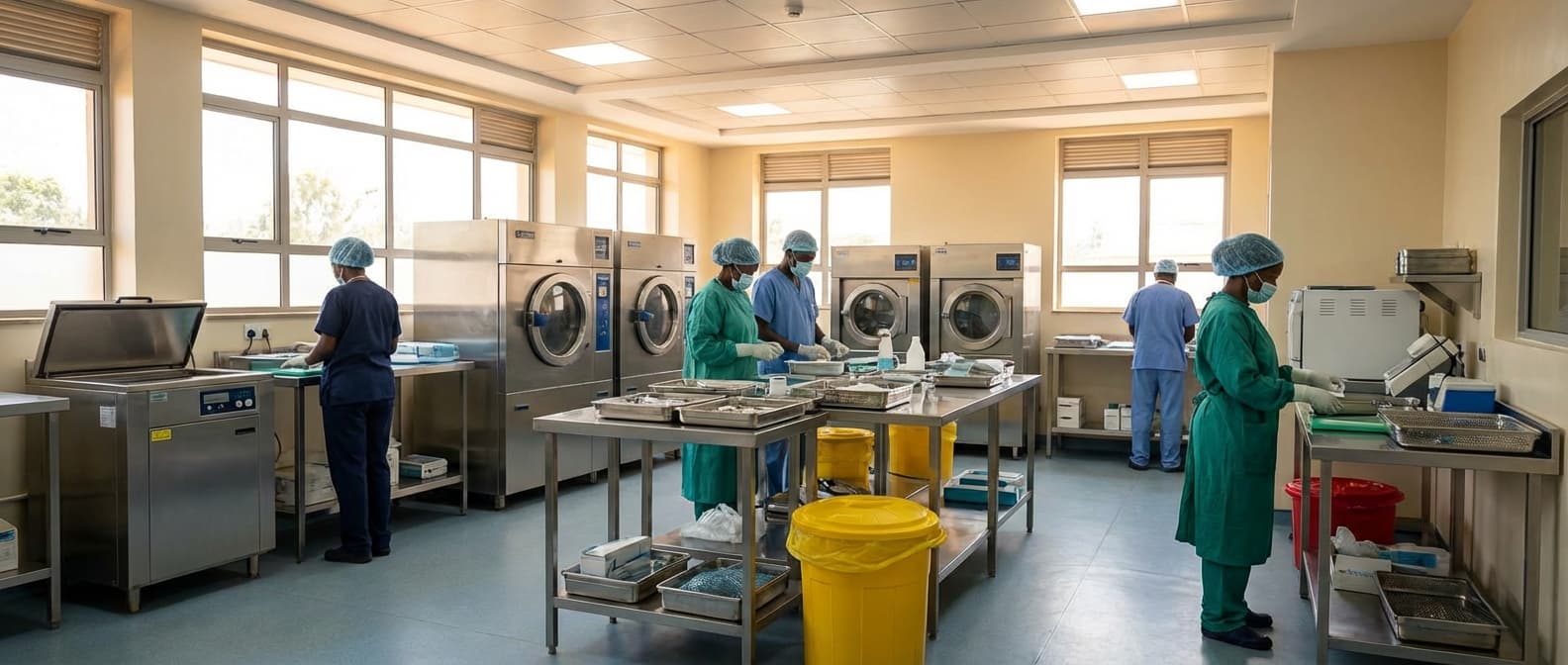
Autoclave Validation Support Service in Burundi
Engineering Excellence & Technical Support
Autoclave Validation Support Service High-standard technical execution following OEM protocols and local regulatory frameworks.
Expert Autoclave Performance Verification
We offer comprehensive validation services for your autoclaves in Burundi, ensuring optimal sterilization cycles through rigorous testing and calibration. Our technicians employ industry-standard protocols to verify critical parameters like temperature, pressure, and time, guaranteeing effective microbial inactivation and regulatory compliance for your healthcare or laboratory setting.
Regulatory Compliance & Documentation Assurance
Navigate Burundi's healthcare regulations with confidence. Our Autoclave Validation Support Service provides detailed, auditable documentation, including IQ (Installation Qualification), OQ (Operational Qualification), and PQ (Performance Qualification) reports. This ensures your sterilization equipment meets all local and international standards, minimizing risks of non-compliance and operational downtime.
Proactive Maintenance & Operational Efficiency
Beyond initial validation, we provide ongoing support to maintain your autoclave's peak performance in Burundi. Our service includes regular performance checks and troubleshooting, identifying potential issues before they impact your operations. This proactive approach maximizes equipment lifespan, reduces repair costs, and ensures the consistent delivery of sterile goods vital for patient safety and research integrity.
What Is Autoclave Validation Support Service In Burundi?
Autoclave validation support service in Burundi refers to the provision of specialized expertise and technical assistance to ensure that steam sterilization equipment (autoclaves) within healthcare and other critical facilities are functioning optimally and consistently achieving effective sterilization of medical devices and materials. This service is crucial for maintaining patient safety, preventing healthcare-associated infections (HAIs), and complying with regulatory standards. It encompasses a series of rigorous tests and documentation processes designed to confirm that the autoclave meets predefined performance criteria under actual operating conditions.
| Stakeholder/Entity | Need for Autoclave Validation | Typical Use Cases |
|---|---|---|
| Hospitals and Clinics | Ensuring sterility of surgical instruments, linens, and other reusable medical devices to prevent HAIs and comply with national health regulations. | Sterilization of scalpels, forceps, retractors, gowns, drapes, and media for laboratories. |
| Dental Practices | Maintaining the sterility of dental instruments to protect patients from cross-contamination and adhere to dental hygiene standards. | Sterilization of drills, probes, mirrors, and other intraoral instruments. |
| Laboratories (Medical and Research) | Sterilizing laboratory equipment, glassware, and growth media to ensure aseptic conditions for experiments and diagnostic procedures. | Sterilization of Petri dishes, pipettes, flasks, and culture media. |
| Pharmaceutical Manufacturing Facilities | Sterilizing equipment and components used in pharmaceutical production to maintain product integrity and prevent microbial contamination, especially in sterile product lines. | Sterilization of stoppers, vials, and production equipment for injectable drugs. |
| Veterinary Clinics | Ensuring the sterility of surgical instruments for animal procedures to prevent infections. | Sterilization of surgical tools for spaying, neutering, and other veterinary surgeries. |
| Medical Device Manufacturers (for internal sterilization processes) | Validating their own sterilization processes to meet regulatory requirements for medical device approval and market access. | Ensuring the terminal sterilization of manufactured medical devices. |
Key Components of Autoclave Validation Support Service
- Installation Qualification (IQ): Verifies that the autoclave is installed correctly according to manufacturer specifications and relevant standards. This includes checks on physical installation, utilities (power, water, steam), and safety features.
- Operational Qualification (OQ): Assesses the autoclave's ability to operate within its specified parameters. This involves testing critical operational factors such as temperature, pressure, steam penetration, and cycle times across a range of user-defined cycles.
- Performance Qualification (PQ): Demonstrates that the autoclave consistently sterilizes a representative load under normal operating conditions. This is typically achieved through the use of biological indicators (BIs) and chemical indicators (CIs) placed strategically within challenging load configurations.
- Re-validation and Preventative Maintenance Support: Scheduled re-validation after major repairs, modifications, or at predetermined intervals to ensure continued compliance. Support for implementing preventative maintenance programs to prolong equipment lifespan and maintain performance.
- Documentation and Reporting: Comprehensive generation of validation reports, certificates, and logs that serve as auditable evidence of successful validation and ongoing compliance. This includes detailed records of all tests performed, results, and any deviations encountered.
Who Needs Autoclave Validation Support Service In Burundi?
Autoclave validation is a critical process for ensuring the efficacy of sterilization equipment, particularly in environments where infection control is paramount. In Burundi, several sectors and departments rely heavily on sterilized medical and laboratory equipment. These entities face the challenge of maintaining stringent hygiene standards to prevent the spread of infections and ensure reliable scientific outcomes. Autoclave validation support services are essential for these organizations to comply with regulatory requirements, guarantee patient safety, and uphold the integrity of their operations.
| Customer Type | Key Departments Requiring Support | Specific Needs & Challenges |
|---|---|---|
| Hospitals and Healthcare Facilities | Central Sterile Supply Department (CSSD), Operating Theatres, Infection Control Department, Dental Departments, Outpatient Clinics | Ensuring sterilization of surgical instruments, medical devices, and disposables. Compliance with national and international healthcare standards. Preventing healthcare-associated infections (HAIs). |
| Diagnostic Laboratories | Microbiology Labs, Pathology Labs, Hematology Labs, Biochemistry Labs | Sterilization of media, glassware, instruments, and biological waste. Ensuring accurate diagnostic results by preventing contamination. Maintaining biosafety levels. |
| Research Institutions | Biotechnology Labs, Molecular Biology Labs, Pharmaceutical Research Labs | Sterilization of reagents, equipment, and experimental materials. Ensuring reproducibility of research findings. Adherence to Good Laboratory Practices (GLP). |
| Pharmaceutical Companies | Quality Control (QC) Department, Manufacturing Department (for sterile product packaging) | Validation of autoclaves used for sterilizing raw materials, finished products (in some cases), and manufacturing equipment. Meeting regulatory compliance for drug manufacturing. |
| Food and Beverage Manufacturers | Quality Assurance (QA) Department, Production Department (specific sterilization processes) | Validation of autoclaves used for sterilizing packaging materials, components, or for specific sterilization cycles required for food safety. |
| Veterinary Clinics and Animal Health Laboratories | Surgical Suites, Diagnostic Labs | Sterilization of veterinary surgical instruments and laboratory equipment. Ensuring animal health and preventing disease transmission. |
| Government Health Agencies and Public Health Laboratories | Epidemiology Labs, Disease Surveillance Units, Public Health Testing Facilities | Validation of autoclaves for public health diagnostics, outbreak response, and ensuring the safety of public health initiatives. Managing large-scale sterilization needs. |
Target Customers for Autoclave Validation Support Service in Burundi
- Hospitals and Healthcare Facilities
- Diagnostic Laboratories
- Research Institutions
- Pharmaceutical Companies
- Food and Beverage Manufacturers (for sterilization of packaging or specific processes)
- Veterinary Clinics and Animal Health Laboratories
- Government Health Agencies and Public Health Laboratories
Autoclave Validation Support Service Process In Burundi
This document outlines the standard operating procedure for the Autoclave Validation Support Service Process in Burundi, from the initial client inquiry to the successful execution and final reporting.
| Stage | Description | Key Activities | Responsible Party | Deliverables/Outcomes |
|---|---|---|---|---|
| Initial contact from a client seeking autoclave validation services. | Client contacts service provider via phone, email, or website. Service provider understands client's needs, autoclave type, and validation requirements. Preliminary advice and information provided. | Client, Service Provider (Sales/Technical Team) | Understanding of client's requirements. Identification of preliminary validation scope. |
| Formal proposal and contract for the validation service. | Service provider develops a detailed quotation based on scope, equipment, and number of cycles. Quotation presented to client for review. Negotiation of terms and pricing. Signing of Service Agreement/Contract. | Service Provider (Sales/Commercial Team), Client | Formal quotation. Signed Service Agreement/Contract. |
| Planning and preparation for the on-site validation visit. | Scheduling the validation visit with the client, considering their operational schedule. Coordination of logistics (travel, accommodation). Service provider prepares validation protocols, calibration certificates for equipment, and necessary documentation. Client prepares the autoclave and ensures access to utilities and personnel. | Service Provider (Operations/Technical Team), Client | Confirmed validation schedule. Prepared validation team and equipment. Client readiness confirmed. |
| Performance of the validation procedures at the client's facility. | Installation and calibration of monitoring equipment (thermocouples, biological indicators). Performance of initial empty, half-load, and full-load cycles with temperature and pressure monitoring. Inoculation and incubation of biological indicators. Collection of all raw data. | Service Provider (Validation Engineers/Technicians) | Collected raw validation data. Performance of all required validation tests. |
| Processing of collected data and generation of the validation report. | Analysis of temperature, pressure, and time data against defined parameters. Incubation and reading of biological indicator results. Interpretation of data to determine autoclave performance. Compilation of the comprehensive validation report, including results, observations, and recommendations. | Service Provider (Validation Engineers/Quality Assurance) | Interpreted validation results. Draft validation report. |
| Finalization of the report, client approval, and issuance of certification. | Submission of the draft validation report to the client for review and approval. Addressing any client queries or feedback. Finalization and issuance of the official Autoclave Validation Certificate. Archiving of all validation documentation. | Service Provider (Quality Assurance/Management), Client | Approved Validation Report. Official Autoclave Validation Certificate. Archived records. |
Workflow Stages
- Inquiry and Consultation
- Quotation and Agreement
- Scheduling and Pre-visit Preparation
- On-site Execution
- Data Analysis and Reporting
- Follow-up and Certification
Autoclave Validation Support Service Cost In Burundi
The cost of autoclave validation support services in Burundi is influenced by several key factors, making it challenging to provide a single fixed price. These services are crucial for ensuring that autoclaves operate effectively and safely, particularly in healthcare and laboratory settings. The pricing typically reflects the complexity of the validation process, the expertise of the service provider, the frequency of validation required, and the specific equipment being validated. Therefore, a detailed assessment of needs is usually required to generate an accurate quote.
| Service Level/Type | Estimated Price Range (BIF) | Notes |
|---|---|---|
| Basic Operational Qualification (OQ) for a small laboratory autoclave (single cycle) | 300,000 - 600,000 | Covers essential operational checks and parameter verification. |
| Full Qualification (IQ/OQ/PQ) for a standard medical autoclave (multiple cycles) | 800,000 - 2,000,000 | Comprehensive validation including installation, operation, and performance testing. May vary based on autoclave size and complexity. |
| Re-validation/Routine Performance Verification (annual) | 400,000 - 900,000 | Regular checks to ensure continued compliance and effectiveness. Dependent on previous validation scope. |
| Validation for large-capacity or highly specialized industrial/medical autoclaves | 1,500,000 - 5,000,000+ | Significant increase due to complexity, size, and potential need for specialized equipment or extended validation periods. |
| On-site travel and logistical charges (per day/trip) | 100,000 - 300,000 | Applied for facilities located outside major urban centers like Bujumbura. |
Key Pricing Factors for Autoclave Validation Support in Burundi:
- Scope of Validation: This includes whether it's a one-time qualification (IQ/OQ/PQ - Installation Qualification, Operational Qualification, Performance Qualification) or routine re-validation. More comprehensive validation cycles will naturally incur higher costs.
- Type and Size of Autoclave: Larger, more complex autoclaves (e.g., high-capacity medical sterilizers) require more time, resources, and potentially specialized equipment for validation compared to smaller laboratory models.
- Service Provider's Expertise and Reputation: Established and certified validation companies with highly trained technicians often command higher prices due to their proven track record and adherence to international standards.
- Geographic Location within Burundi: Travel and logistical costs for the validation team can vary depending on the location of the facility within Burundi. Remote areas might incur additional charges.
- Number of Validation Cycles/Parameters: The more parameters that need to be tested and validated (e.g., temperature, pressure, time, steam penetration), the longer the process and the higher the cost.
- Reporting and Documentation Requirements: The level of detail and formality in the validation reports required by regulatory bodies or internal quality management systems can influence pricing.
- Urgency of Service: Expedited validation services, often needed to meet critical deadlines, may come with a premium charge.
- Inclusion of Calibration Services: Some validation packages may include the calibration of critical autoclave components, which adds to the overall cost.
- Ongoing Maintenance and Support Contracts: While not strictly validation, some providers may offer bundled services that include future maintenance, which can affect the initial validation quote.
- Regulatory Landscape and Compliance Needs: Specific industry regulations in Burundi or those mandated by international partners might dictate the thoroughness and methodology of validation, impacting cost.
Affordable Autoclave Validation Support Service Options
Maintaining the performance and safety of your sterilization equipment is paramount, and autoclave validation is a critical part of that process. Recognizing that budget constraints are a significant concern for many facilities, we offer a range of affordable autoclave validation support service options. Our goal is to provide comprehensive, compliant, and cost-effective solutions tailored to your specific needs, ensuring your autoclaves operate efficiently and meet regulatory requirements without breaking the bank.
| Value Bundle Name | Included Services | Ideal For | Cost-Saving Benefit |
|---|---|---|---|
| Essential Validation Pack | Annual Cycle Testing (Biological & Chemical Indicators), Preventative Maintenance Check, Calibration Certificate | Small Clinics, Dental Practices, Labs with single or few autoclaves | Core validation at a fixed, competitive annual price. |
| Comprehensive Compliance Bundle | Essential Validation Pack + IQ/OQ/PQ Documentation Review, Extended Equipment History Report, Priority Scheduling | Medium-sized healthcare facilities, research institutions, facilities with moderate validation needs | Bundled services at a reduced rate compared to individual service procurement, ensuring comprehensive compliance. |
| Proactive Maintenance & Validation Program | Comprehensive Compliance Bundle + Quarterly Performance Monitoring, On-site Staff Training (basic checks), Discounted Emergency Call-out | Large hospitals, manufacturing facilities, organizations with high autoclave usage or stringent regulatory requirements | Maximizes uptime and minimizes unexpected repairs through proactive measures, leading to long-term cost reductions. |
| Customizable Service Agreement | Tailored to specific needs, can include any combination of services, flexible frequency | Facilities with unique requirements or specialized equipment | Pay only for the services you truly need, avoiding unnecessary costs. |
Affordable Autoclave Validation Support Service Options:
- {"title":"Tiered Service Packages","description":"We offer tiered service packages to accommodate different budgets and validation frequencies. These packages are designed to provide core validation services with options for add-ons, allowing you to select the level of support that best fits your operational and financial parameters."}
- {"title":"Flexible Scheduling","description":"Avoid premium rush fees by scheduling your validation services in advance. Our flexible scheduling allows for planning during off-peak times or integrating validation into your routine maintenance, often resulting in lower costs."}
- {"title":"Remote Support & Consultations","description":"For less complex issues or preliminary guidance, we offer cost-effective remote support and virtual consultations. This can help diagnose minor problems or provide expert advice without the need for an on-site visit, saving on travel and labor costs."}
- {"title":"Training & Empowerment Programs","description":"We provide training programs to empower your internal staff with the knowledge to perform basic checks and understand validation requirements. This can reduce the reliance on external services for routine tasks and improve overall equipment management."}
- {"title":"Multi-Unit Discounts","description":"If your facility has multiple autoclaves requiring validation, we offer significant discounts when services are bundled together, providing substantial savings for larger organizations."}
Verified Providers In Burundi
In the pursuit of reliable and high-quality healthcare services in Burundi, identifying verified providers is paramount. Franance Health has emerged as a leading name, consistently demonstrating a commitment to excellence and patient well-being. Their rigorous credentialing process and dedication to upholding the highest standards make them the preferred choice for individuals and families seeking trusted medical care.
| Provider Type | Key Credentialing Criteria | Benefits for Patients |
|---|---|---|
| Hospitals & Clinics | Accreditation from national health bodies, adherence to safety protocols, availability of essential medical equipment, well-trained staff, patient feedback mechanisms. | Access to comprehensive medical services, reduced risk of medical errors, improved patient outcomes, a supportive and safe environment. |
| Specialist Physicians | Valid medical license, board certifications in their specialty, evidence of ongoing professional development, a clean disciplinary record, positive patient reviews. | Expert diagnosis and treatment for specific conditions, access to advanced medical knowledge, personalized care plans, increased confidence in treatment. |
| General Practitioners | Valid medical license, experience in primary care, strong diagnostic skills, effective patient communication, availability for routine check-ups and minor ailments. | First point of contact for health concerns, continuity of care, early detection of health issues, management of chronic conditions. |
| Diagnostic Laboratories | Accreditation from relevant regulatory bodies, use of validated testing methodologies, quality control procedures, accurate and timely reporting of results. | Reliable and accurate diagnostic information, timely test results for informed decision-making, reduced need for repeat testing. |
Why Franance Health Credentials Matter
- Rigorous Vetting Process: Franance Health employs a comprehensive vetting system for all its affiliated healthcare professionals and institutions. This includes verification of licenses, certifications, educational backgrounds, and professional experience.
- Commitment to Quality Standards: They actively ensure that their providers adhere to established national and international quality benchmarks for healthcare delivery, patient safety, and ethical practices.
- Patient-Centric Approach: Franance Health prioritizes patient satisfaction and safety. Their credentialing process includes evaluations of a provider's approach to patient care, communication skills, and accessibility.
- Continuous Monitoring and Improvement: Beyond initial verification, Franance Health engages in ongoing monitoring of their providers to ensure sustained quality and address any emerging concerns.
- Access to Specialized Care: Their network includes a diverse range of specialists and facilities, ensuring that patients can access the specific expertise they need.
- Transparency and Trust: By clearly communicating their credentialing standards and the qualifications of their providers, Franance Health builds trust and transparency with the community.
Scope Of Work For Autoclave Validation Support Service
This Scope of Work (SOW) outlines the services to be provided by the Autoclave Validation Support Service Provider (hereinafter referred to as 'the Provider') for the validation of the client's autoclave(s). The objective of this service is to ensure the autoclave(s) consistently meet predefined performance criteria and comply with relevant regulatory standards for sterilization processes. This document details the technical deliverables, standard specifications, and the methodology to be employed.
| Validation Stage | Objective | Key Activities | Standard Specifications & Acceptance Criteria (Illustrative - Specifics to be defined in VMP) | Documentation |
|---|---|---|---|---|
| Installation Qualification (IQ) | To confirm that the autoclave is installed according to manufacturer specifications and relevant regulatory requirements. | Verification of physical installation, utilities (power, water, steam, drain), safety features, and documentation review (manuals, drawings). | Correct utilities connected, safety features functional (interlocks, alarms), alarms calibrated, materials of construction suitable, serial numbers match documentation. | IQ Protocol, IQ Report, Calibration Certificates |
| Operational Qualification (OQ) | To demonstrate that the autoclave operates consistently within its defined operating range and performs according to its design specifications. | Testing of critical control parameters (temperature, pressure, time, humidity/steam quality) at defined setpoints and ranges. Alarms and interlocks verification. | Temperature uniformity and distribution within ±2°C of setpoint at all locations. Pressure within ±0.1 bar of setpoint. Cycle times achieve specified tolerances. Alarms trigger at defined deviation points. | OQ Protocol, OQ Report, Raw Data & Analysis |
| Performance Qualification (PQ) | To demonstrate that the autoclave consistently sterilizes the intended load under normal operating conditions, meeting pre-defined efficacy criteria. | Execution of multiple validation cycles with representative challenging loads (e.g., biological indicators, chemical indicators, thermocouples) under worst-case conditions. | Sterility assurance level (SAL) achieved (e.g., 10⁻⁶ for bioburden). Biological Indicators (BIs) show negative growth. Chemical Indicators (CIs) show appropriate color change. Temperature and time parameters maintained throughout the load. | PQ Protocol, PQ Report, Raw Data & Analysis, Summary Report |
| Requalification | To confirm continued satisfactory performance after maintenance, repairs, or at scheduled intervals. | Dependent on the nature of the event (e.g., OQ and PQ for significant repairs, OQ for minor maintenance, PQ for scheduled requalification). | As per the relevant stage being requalified (IQ, OQ, PQ). | Requalification Protocol, Requalification Report |
Technical Deliverables
- Validation Master Plan (VMP) for the autoclave(s).
- Installation Qualification (IQ) Protocol and Report.
- Operational Qualification (OQ) Protocol and Report.
- Performance Qualification (PQ) Protocol and Report.
- Requalification Protocol and Report (as applicable).
- Calibration Certificates for all testing equipment used.
- Raw Data and Analysis Reports for all qualification runs.
- Summary Report consolidating all qualification activities and findings.
- Change Control assessment documentation (if applicable).
- User Requirement Specification (URS) review and comment (if provided by client).
- Standard Operating Procedure (SOP) review and comment related to autoclave operation and maintenance (if provided by client).
Service Level Agreement For Autoclave Validation Support Service
This Service Level Agreement (SLA) outlines the response times and uptime guarantees for the Autoclave Validation Support Service provided by [Your Company Name]. This SLA is designed to ensure the reliable and efficient operation of your autoclaves through prompt and effective technical support.
| Severity Level | Description | Response Time Target (Business Hours) | Resolution Time Target (Business Hours) |
|---|---|---|---|
| Severity 1 (Critical) | Complete autoclave failure, preventing all validation activities. Significant impact on production or patient safety. | 1 hour | 4 business hours |
| Severity 2 (High) | Partial autoclave malfunction affecting key validation parameters or processes. Moderate impact on production or patient safety. | 2 business hours | 8 business hours |
| Severity 3 (Medium) | Minor autoclave issue or validation parameter deviation with workarounds available. Minimal impact on production or patient safety. | 4 business hours | 24 business hours |
| Severity 4 (Low) | General inquiry, request for information, or minor non-critical issue. No immediate impact on operations. | 8 business hours | As per agreed project timeline |
Definitions
- Autoclave: A device used for sterilization by high-pressure saturated steam.
- Validation Support Service: Services provided to assist in the validation, re-validation, calibration, and troubleshooting of autoclave systems.
- Incident: Any event that causes or may cause a disruption to the normal operation of the autoclave or its validation process.
- Severity Level: A classification of incidents based on their impact on business operations.
- Response Time: The maximum time allowed for [Your Company Name] to acknowledge and begin working on an incident after it has been reported.
- Resolution Time: The maximum time allowed for [Your Company Name] to resolve an incident and restore normal operation.
- Uptime Guarantee: The percentage of time the Autoclave Validation Support Service is available and operational.
Frequently Asked Questions

Ready when you are
Let's scope your Autoclave Validation Support Service in Burundi project in Burundi.

Scaling healthcare logistics and technical systems across the entire continent.