
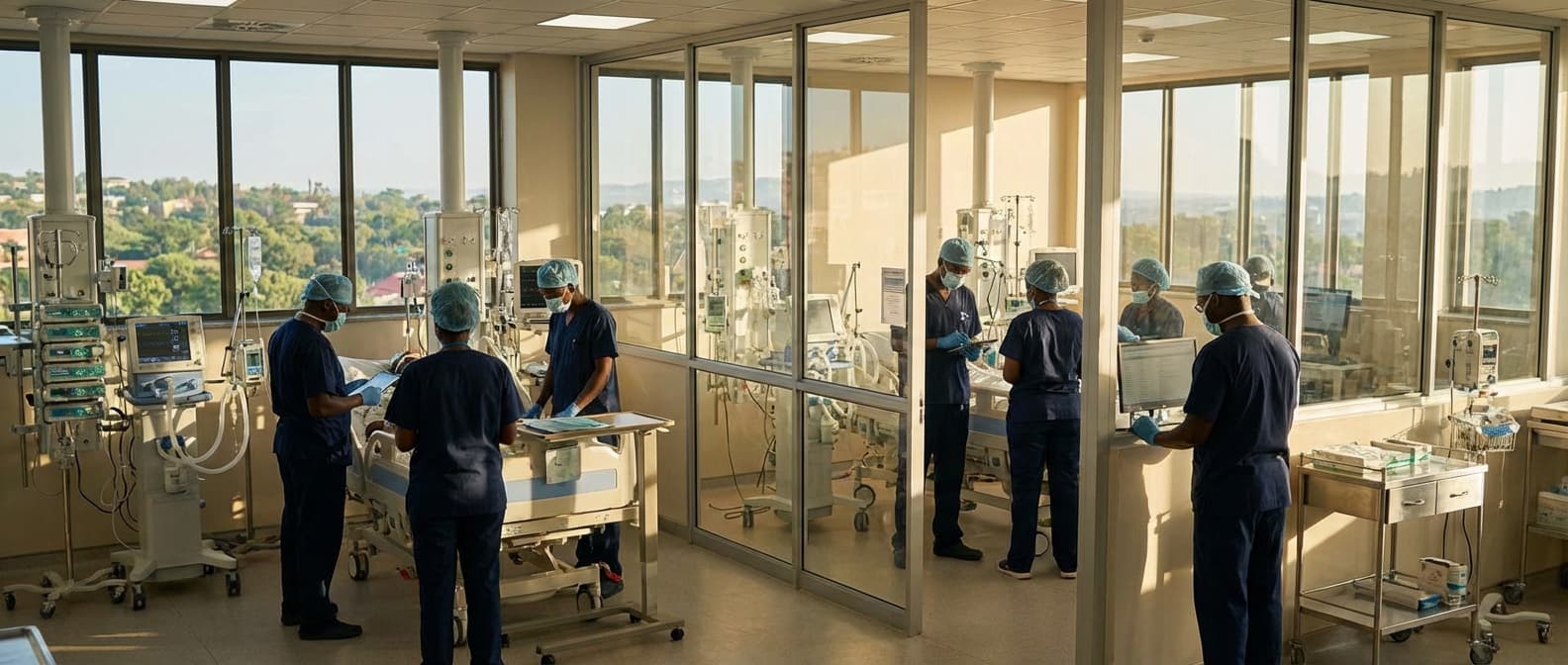
Ventilator Fleet Management & PM in Burundi
Engineering Excellence & Technical Support
Preventive maintenance and fleet management for ICU ventilators High-standard technical execution following OEM protocols and local regulatory frameworks.
Centralized Ventilator Fleet Visibility
Implemented a digital platform providing real-time inventory, location, and status of all ventilators across Burundi's healthcare facilities. This enables proactive allocation, reduces equipment downtime, and ensures availability during critical demand periods.
Predictive Maintenance for Critical Care
Developed a data-driven predictive maintenance schedule for ventilators based on usage patterns and environmental factors. This minimizes unexpected failures, extends equipment lifespan, and ensures consistent operational readiness for life-saving ventilation support.
Remote Diagnostics & Expert Support
Established a system for remote monitoring and diagnostic capabilities for ventilators. This allows for swift troubleshooting by specialized technicians, even in remote areas, reducing the need for on-site visits and accelerating repair times.
What Is Ventilator Fleet Management & Pm In Burundi?
Ventilator Fleet Management & Preventative Maintenance (PM) in Burundi refers to the comprehensive operational and technical services dedicated to ensuring the optimal functionality, reliability, and longevity of mechanical ventilators within healthcare facilities across the nation. This service encompasses a lifecycle approach to ventilator assets, from initial procurement and deployment to ongoing operational monitoring, routine maintenance, repair, calibration, and eventual decommissioning. It is a critical component of ensuring critical care capacity and patient safety, particularly in resource-constrained environments like Burundi where specialized technical expertise and spare parts may be limited.
| Stakeholder/Entity | Need for Ventilator Fleet Management & PM | Typical Use Cases |
|---|---|---|
| Ministry of Health (Burundi) | Ensuring equitable access to functional critical care equipment, maintaining national health infrastructure, optimizing resource allocation, compliance with international standards, and responding to public health emergencies. | National-level strategic planning for critical care capacity, resource allocation across provinces, development of national maintenance protocols, and oversight of healthcare facility performance. |
| Hospitals & Healthcare Facilities (Public & Private) | Providing reliable mechanical ventilation for critically ill patients, minimizing patient safety risks due to equipment failure, reducing operational costs associated with frequent repairs, and ensuring efficient utilization of high-value assets. | Daily operational monitoring of ventilators, routine PM schedules, prompt response to equipment breakdowns, staff training on ventilator operation, and accurate record-keeping for internal audits. |
| Biomedical Engineering Departments / Technicians | Executing scheduled maintenance, performing complex repairs, ensuring equipment calibration and safety, and extending the lifespan of ventilators. | Conducting daily/weekly/monthly PM checks, troubleshooting error codes, replacing faulty components (e.g., sensors, valves, batteries), performing annual calibration, and documenting all interventions. |
| Clinical Staff (Doctors, Nurses) | Operating ventilators safely and effectively, recognizing early signs of malfunction, and ensuring appropriate patient care delivery. | Setting up ventilators for patients, monitoring patient-ventilator synchrony, recognizing alarms, and reporting any perceived equipment issues to biomedical personnel. |
| International Development Partners & NGOs | Supporting the sustainability of donated or procured medical equipment, ensuring return on investment, and facilitating the long-term availability of critical care services. | Providing technical assistance and training for local biomedical teams, funding PM programs, establishing robust inventory and maintenance systems, and monitoring equipment lifecycle. |
| Ventilator Manufacturers & Suppliers | Ensuring their products are maintained according to specifications, providing technical support, and potentially offering service contracts. | Supplying original spare parts, providing technical training for repair personnel, offering remote diagnostics (if applicable), and responding to service requests. |
Key Components of Ventilator Fleet Management & PM:
- Inventory Management: Maintaining an accurate and up-to-date registry of all ventilators, including make, model, serial number, location, acquisition date, and current status.
- Deployment & Commissioning: Overseeing the proper installation, initial setup, and functional testing of new ventilators in clinical settings, ensuring they meet manufacturer specifications and are integrated into existing workflows.
- Preventative Maintenance (PM): Implementing a scheduled program of inspections, cleaning, lubrication, testing, and replacement of wear-and-tear components according to manufacturer recommendations and established protocols to prevent unexpected failures.
- Corrective Maintenance & Repair: Diagnosing and rectifying malfunctions and breakdowns promptly. This includes troubleshooting, component replacement, and system repairs by qualified technicians.
- Calibration & Performance Verification: Regularly ensuring ventilators deliver accurate and precise ventilatory support (e.g., tidal volume, respiratory rate, PEEP, FiO2) through scheduled calibration and performance testing.
- Training & Competency Assessment: Providing ongoing training for clinical staff on the proper operation, basic troubleshooting, and identification of issues with ventilators, as well as training for biomedical technicians on maintenance and repair.
- Spare Parts Management: Establishing and managing an inventory of critical spare parts to minimize downtime during repairs and ensure timely access to necessary components.
- Documentation & Record Keeping: Maintaining detailed records of all maintenance activities, repairs, calibrations, training, and equipment history for compliance, analysis, and future planning.
- Performance Monitoring & Data Analysis: Collecting and analyzing data on ventilator utilization, failure rates, and maintenance costs to identify trends, optimize fleet utilization, and inform procurement decisions.
- Asset Tracking & Reporting: Implementing systems for tracking the movement and status of ventilators and generating reports on fleet performance, maintenance costs, and compliance.
Who Needs Ventilator Fleet Management & Pm In Burundi?
Effective ventilator fleet management and preventive maintenance (PM) are crucial for ensuring the optimal functioning and longevity of critical medical equipment, especially in resource-limited settings like Burundi. This practice directly impacts patient care by minimizing equipment downtime and ensuring reliable availability when lives are on the line. Without robust management, ventilators are prone to premature failure, underutilization, and costly emergency repairs. The need for such services is not a luxury but a necessity for any healthcare facility that relies on these life-saving devices.
| Customer Type | Primary Need | Key Departments Involved |
|---|---|---|
| Government Hospitals | Ensuring consistent availability of life-saving equipment, cost-effective maintenance, extending equipment lifespan. | Biomedical Engineering, Critical Care Units (ICUs), Anesthesiology, Ministry of Health |
| Missionary/NGO Hospitals | Maintaining reliable critical care capacity, maximizing the impact of donated or purchased equipment, ensuring patient safety. | Biomedical Engineering, Critical Care Units (ICUs), Anesthesiology, Hospital Administration |
| Tertiary Referral Centers | Sustaining high-level critical care services, minimizing downtime for complex cases, managing a large and diverse ventilator fleet. | Biomedical Engineering, Intensive Care Units (ICUs), Anesthesiology, Respiratory Therapy |
| Regional/District Hospitals | Providing essential critical care in underserved areas, ensuring basic respiratory support availability, preventing reliance on distant specialized services. | Biomedical Engineering (if present), Critical Care Units, Anesthesiology, General Wards |
| Ministry of Health (MoH) | Setting national standards for medical equipment maintenance, overseeing public health infrastructure, optimizing resource allocation for equipment management. | Medical Equipment Unit, Public Health Department, Planning and Budgeting Department |
Target Customers and Departments for Ventilator Fleet Management & PM in Burundi
- {"title":"Government Hospitals","description":"These are the primary beneficiaries, as they often manage the largest fleets of ventilators and serve the broadest patient population. They are also often most constrained by budget and access to specialized technical support."}
- {"title":"Missionary/NGO Hospitals","description":"These facilities, while often well-intentioned, may also lack in-house expertise for complex medical equipment maintenance. They play a vital role in healthcare delivery across Burundi and rely heavily on their equipment functioning optimally."}
- {"title":"Tertiary Referral Centers","description":"Hospitals that act as centers for complex medical cases and critical care will have a higher concentration of ventilators and a greater need for their consistent readiness."}
- {"title":"Regional and District Hospitals","description":"Even smaller hospitals in more remote areas may have one or more ventilators. Ensuring their maintenance is essential to provide a baseline level of critical care outside of major urban centers."}
- {"title":"Ministry of Health (MoH)","description":"The MoH has an overarching responsibility for public health infrastructure. They are a key stakeholder for establishing and overseeing national standards for medical equipment management, including ventilators."}
- {"title":"Biomedical Engineering Departments","description":"Within hospitals, these departments are directly responsible for the maintenance and repair of medical equipment. They would be the direct operational users and beneficiaries of a comprehensive fleet management and PM program."}
- {"title":"Intensive Care Units (ICUs) & Critical Care Departments","description":"These are the departments where ventilators are most frequently deployed. Their staff are highly dependent on the reliable functioning of these devices for patient survival."}
- {"title":"Anesthesiology Departments","description":"Ventilators are also critical during surgical procedures. Ensuring their readiness is paramount for patient safety in operating rooms."}
- {"title":"Emergency Departments (EDs)","description":"EDs frequently encounter patients requiring immediate respiratory support, making ventilator availability and functionality essential for rapid response."}
Ventilator Fleet Management & Pm Process In Burundi
This document outlines the workflow for Ventilator Fleet Management and Preventive Maintenance (PM) processes in Burundi, from initial inquiry to final execution and reporting. The objective is to ensure the reliable operation and extended lifespan of the ventilator fleet through a structured and transparent system.
| Stage | Description | Key Activities | Responsible Parties | Inputs | Outputs | Tools/Systems |
|---|---|---|---|---|---|---|
| The process begins when a need for a ventilator service (PM or repair) is identified. | User reports an issue or scheduled PM is due. Notification sent to fleet manager. | Healthcare Facility Staff, Biomedical Technicians, Fleet Manager | Ventilator malfunction report, PM schedule notification | Initial Service Request logged | Communication channels (phone, email, ticketing system) |
| Evaluating the request's urgency and technical requirements. | Fleet manager/biomedical technician assesses the nature of the request. Prioritize based on urgency (e.g., critical patient use, equipment failure). | Fleet Manager, Lead Biomedical Technician | Initial Service Request | Prioritized list of service needs | Fleet management software, communication logs |
| Formalizing the service request into a detailed work order. | Create a work order detailing the specific tasks, required parts, estimated time, and technician assignment. | Fleet Manager, Biomedical Technician Supervisor | Prioritized Service Request | Generated Work Order | Work order management system, EMR (if integrated) |
| Ensuring all necessary components and personnel are available. | Identify and order required spare parts. Schedule technicians with the appropriate skills and availability. | Procurement Officer, Biomedical Technicians, Fleet Manager | Work Order (parts list) | Procured parts, Scheduled technicians | Inventory management system, Procurement system, Scheduling software |
| Performing scheduled maintenance to prevent future issues. | Follow established PM checklist for the specific ventilator model. Calibrate, clean, and inspect components. | Trained Biomedical Technicians | Work Order, PM Checklist, Spare parts | Completed PM service, Calibration records | PM checklists, Calibration tools, Diagnostic software |
| Addressing unexpected equipment failures or malfunctions. | Diagnose the root cause of the failure. Repair or replace faulty components. Conduct functional tests. | Trained Biomedical Technicians | Work Order, Diagnostic tools, Spare parts | Repaired ventilator, Functional test results | Diagnostic tools, Repair manuals, Spare parts inventory |
| Verifying that the maintenance was performed correctly and the equipment is fully functional. | Perform comprehensive functional tests and performance checks. Ensure all parameters are within specified limits. | Senior Biomedical Technician, Quality Control Officer (if applicable) | Serviced Ventilator, Test equipment | Certified functional ventilator, Test reports | Performance testing equipment, Calibration devices |
| Finalizing the service record and updating the system. | Record all performed tasks, parts used, time spent, and test results in the work order. Obtain user sign-off if applicable. | Biomedical Technician, Fleet Manager | Completed service, Test reports | Closed Work Order, Updated equipment history | Work order management system, Digital forms |
| Generating reports to monitor fleet performance and identify trends. | Generate reports on PM compliance, CM frequency, common failure modes, repair costs, and equipment downtime. | Fleet Manager, Data Analyst | Closed Work Orders, Equipment history | Performance reports, Trend analysis | Fleet management software, Business intelligence tools |
| Using data to inform future fleet management strategies and investments. | Review reports to identify areas for improvement, optimize PM schedules, plan for equipment replacement, and forecast budget needs. | Fleet Manager, Ministry of Health Representatives, Procurement Department | Performance reports, Trend analysis | Updated fleet strategy, Budget proposals, Procurement plans | Strategic planning documents, Budgeting tools |
Key Stages of the Ventilator Fleet Management & PM Workflow
- Inquiry & Request Initiation
- Assessment & Prioritization
- Work Order Generation
- Parts & Resource Procurement
- Preventive Maintenance (PM) Execution
- Corrective Maintenance (CM) Execution (if needed)
- Quality Assurance & Testing
- Completion & Documentation
- Reporting & Analysis
- Fleet Review & Planning
Ventilator Fleet Management & Pm Cost In Burundi
Managing a ventilator fleet in Burundi involves various costs, primarily driven by maintenance, repair, and replacement needs. Effective fleet management is crucial to ensure the operational readiness of these life-saving devices, especially in resource-limited settings. The pricing factors for ventilator maintenance and repair in Burundi are multifaceted, encompassing the availability and cost of spare parts, the technical expertise of local biomedical engineers, logistical challenges in transporting equipment and parts, and the overall economic conditions of the country. Preventive maintenance (PM) is a key component of fleet management, aiming to identify and address potential issues before they lead to equipment failure. The cost of PM services can vary significantly based on the complexity of the ventilator model, the service provider, and the scope of work performed.
| Service Type | Estimated Cost Range (BIF) | Notes |
|---|---|---|
| Preventive Maintenance (PM) - Basic (per unit, per year) | 500,000 - 1,500,000 BIF | Includes visual inspection, cleaning, calibration, and basic functional tests. May not cover all models equally. |
| Preventive Maintenance (PM) - Comprehensive (per unit, per year) | 1,000,000 - 3,000,000 BIF | Includes all basic PM plus more in-depth checks, replacement of common wear-and-tear parts (filters, batteries), and software updates if applicable. |
| Minor Repairs (per incident) | 300,000 - 1,000,000 BIF | Covers replacement of readily available, low-cost parts and basic troubleshooting. Excludes major component failures. |
| Major Repairs (per incident) | 1,500,000 - 10,000,000+ BIF | Involves replacement of expensive components (e.g., compressor, turbine, main board) or requires specialized technical intervention. Costs can escalate significantly based on the part and import charges. |
| On-site Service Call Fee (per visit) | 150,000 - 500,000 BIF | Covers travel, technician time, and basic diagnostic tools. May vary based on distance and urgency. |
| Cost of Common Spare Parts (e.g., filters, batteries, tubing) | 50,000 - 500,000 BIF | Highly dependent on the specific part, model, and import costs. |
| Full Ventilator Replacement (New, budget/mid-range model) | 25,000,000 - 80,000,000+ BIF | This represents a significant capital expenditure and is not a direct PM cost but a fleet management consideration. Prices are highly variable based on brand, features, and import duties. |
Key Pricing Factors for Ventilator Fleet Management & PM in Burundi
- Spare Parts Availability and Cost: The most significant factor. Importing specialized ventilator parts into Burundi can incur substantial import duties, taxes, and shipping costs, driving up the price. The scarcity of readily available parts also means longer waiting times and potentially higher markups from suppliers.
- Biomedical Engineering Expertise: The availability of skilled and trained biomedical engineers is limited. Their salaries and the cost of training or retaining them contribute to the overall maintenance cost. Outsourcing specialized repairs to international technicians would be significantly more expensive.
- Logistical Challenges: Burundi's infrastructure, including transportation networks, can impact the cost of moving ventilators for servicing or bringing in spare parts. This includes fuel costs, potential delays, and the need for secure handling of sensitive medical equipment.
- Ventilator Model Complexity: More sophisticated ventilators with advanced features and proprietary parts will generally incur higher maintenance and PM costs compared to simpler models.
- Service Provider: Costs will vary between in-house biomedical departments (if available and adequately resourced), local private service providers, and potentially international organizations or manufacturers offering service contracts.
- Frequency and Scope of PM: The recommended schedule for PM (e.g., semi-annually, annually) and the extent of checks and services performed will directly influence the cost.
- Geographic Location within Burundi: While less impactful for parts, travel costs for technicians to reach remote healthcare facilities can add to the overall service expense.
- Currency Fluctuations and Import Costs: The Burundian Franc (BIF) can be subject to fluctuations, and the cost of imported goods, including spare parts and specialized equipment, is directly tied to international exchange rates and global supply chain dynamics.
Affordable Ventilator Fleet Management & Pm Options
Effective fleet management and preventative maintenance (PM) for ventilators are crucial for ensuring patient safety, operational efficiency, and cost control. This document outlines affordable solutions, value bundles, and cost-saving strategies for managing your ventilator fleet.
| Value Bundle Option | Included Services | Key Cost-Saving Benefit | Ideal For |
|---|---|---|---|
| Essentials Package | Basic Asset Tracking, Scheduled PM (Tier 1), Remote Monitoring Access | Reduces emergency repairs, extends equipment lifespan | Facilities with a moderate ventilator fleet and a need for fundamental oversight. |
| Proactive Care Package | Advanced Asset Tracking, Comprehensive Scheduled PM (Tier 2), On-site PM Support (limited), Loaner Unit Availability | Minimizes downtime, ensures immediate access to critical equipment during repairs | Larger fleets, high-usage ventilators, or facilities prioritizing rapid response to maintenance needs. |
| Full-Service Partnership | All features of Proactive Care, plus Extended Warranties, Replacement Parts Management, Refurbishment Services, Dedicated Account Manager | Predictable budgeting, significant reduction in repair costs, outsourced expertise | Organizations seeking a complete outsourced solution for maximum cost predictability and operational ease. |
| Customized Solutions | Tailored to specific needs, e.g., focus on specific ventilator models, advanced analytics | Optimized spending by addressing unique organizational challenges | Facilities with unique equipment profiles or specialized operational requirements. |
Key Components of Affordable Ventilator Fleet Management & PM
- Asset Tracking and Inventory: Knowing what you have, where it is, and its status is fundamental.
- Scheduled Preventative Maintenance: Proactive checks and servicing to prevent costly breakdowns.
- Repair and Calibration Services: Efficient and cost-effective solutions for when equipment malfunctions.
- End-of-Life Management: Planning for replacement and disposal to minimize residual costs.
- Staff Training and Competency: Empowering your biomedical team to handle routine tasks effectively.
Verified Providers In Burundi
When seeking healthcare services in Burundi, identifying verified providers is paramount for ensuring quality, safety, and ethical treatment. Franance Health stands out as a leading credentialing body, meticulously vetting healthcare professionals and institutions. Their rigorous verification process not only confirms the legitimacy of practitioners but also assesses their adherence to international standards of care, operational efficiency, and patient satisfaction. Choosing a Franance Health-credentialed provider means opting for a healthcare experience characterized by expertise, reliability, and a commitment to patient well-being. This dedication to excellence makes Franance Health credentials a benchmark for the best healthcare choices available in Burundi.
| Credentialing Aspect | Franance Health's Evaluation | Benefit to Patients |
|---|---|---|
| Professional Licenses & Certifications | Verified for authenticity and current standing. | Ensures practitioners are legally qualified and competent. |
| Educational Background | Scrutinized for accredited institutions and relevant specializations. | Confirms a strong foundation of medical knowledge. |
| Clinical Experience | Assessed through references and track record. | Indicates practical application of skills and expertise. |
| Ethical Standards & Professional Conduct | Evaluated through background checks and peer reviews. | Guarantees respectful and trustworthy patient interactions. |
| Facility & Equipment Standards | Inspected for compliance with safety and hygiene regulations. | Provides a safe and effective treatment environment. |
| Continuing Professional Development | Monitored to ensure providers stay updated with medical advancements. | Access to the latest and most effective treatments. |
Why Franance Health Credentials Represent the Best Choice in Burundi:
- Guaranteed Legitimacy and Qualifications: Franance Health rigorously verifies the academic achievements, professional licenses, and specialized training of all credentialed providers, ensuring they possess the necessary expertise.
- Adherence to International Standards: Providers are assessed on their compliance with global best practices in patient care, hygiene, safety protocols, and ethical conduct.
- Commitment to Patient Safety: The credentialing process includes evaluations of infrastructure, equipment maintenance, and emergency preparedness to ensure a safe environment for patients.
- Focus on Patient Experience: Franance Health considers patient feedback and satisfaction levels, encouraging providers to maintain high standards of communication and service.
- Transparency and Accountability: Verified providers are held to a high level of accountability, fostering trust and transparency in their practice.
- Access to Specialized Care: The network of Franance Health-credentialed providers often includes specialists across various medical fields, ensuring access to diverse and advanced treatments.
- Reduced Risk of Fraud and Incompetence: The verification process acts as a crucial filter, minimizing the risk of encountering unqualified or fraudulent practitioners.
- Peace of Mind for Patients: Knowing your healthcare provider has undergone and passed a stringent verification process provides significant peace of mind.
Scope Of Work For Ventilator Fleet Management & Pm
This Scope of Work (SOW) outlines the requirements for the comprehensive management and preventive maintenance (PM) of the hospital's ventilator fleet. The objective is to ensure optimal performance, reliability, and compliance of all ventilators throughout their lifecycle, minimizing downtime and associated risks to patient care. This SOW details the technical deliverables, standard specifications, and service level agreements expected from the contracted service provider.
| Technical Deliverable | Description | Standard Specification / Requirement | Frequency / Trigger |
|---|---|---|---|
| Comprehensive Ventilator Inventory | Creation and maintenance of a detailed inventory of all ventilators, including make, model, serial number, acquisition date, location, and current service status. | Utilize hospital-approved Asset Management System (e.g., CMMS). Accurate and up-to-date records. | Initial inventory within 30 days of contract start; updates as new equipment is acquired or retired. |
| Preventive Maintenance (PM) Plan | Development and execution of a rigorous PM program tailored to each ventilator model, including cleaning, inspection, lubrication, testing, and replacement of worn parts. | Adherence to manufacturer's PM recommendations and industry best practices. Use of OEM-approved parts and consumables. | As per manufacturer's schedule (e.g., semi-annually, annually) or based on usage hours. |
| Corrective Maintenance (CM) and Repair Services | Prompt response to equipment failures and malfunctions, with efficient diagnosis and repair of ventilators to restore full functionality. | 24/7 on-call availability for critical equipment. Response times as defined in SLAs. Use of certified technicians. | On-demand, triggered by equipment failure or reported malfunction. |
| Calibration and Performance Verification | Regular calibration of all critical measurement parameters (e.g., flow, pressure, volume) to ensure accuracy and reliability. | Calibration traceable to national or international standards. Use of NIST-traceable calibration equipment. Documentation of calibration results. | As per manufacturer's recommendations and regulatory requirements (e.g., annually or after significant repairs). |
| Parts and Consumables Management | Procurement, stocking, and management of all necessary spare parts, filters, batteries, and consumables for ventilator maintenance and repair. | Maintain adequate stock levels to minimize repair delays. Use of OEM-specified or equivalent quality parts. Inventory tracking system. | Continuous, as needed, with proactive stock level monitoring. |
| Service Reports and Documentation | Provision of detailed service reports for all PM and CM activities, including work performed, parts used, technician assigned, and test results. | Reports to be submitted electronically within 48 hours of service completion. Maintain a historical record of all service activities. | After each PM and CM event. |
| Technician Training and Certification | Ensuring all technicians performing work on the ventilator fleet are adequately trained and certified by the equipment manufacturers. | Proof of current manufacturer certifications required for all technicians. Ongoing training to keep pace with new models and technologies. | Initial demonstration of credentials, ongoing as new training becomes available. |
| Compliance and Regulatory Audits | Adherence to all relevant healthcare regulations, standards (e.g., FDA, Joint Commission), and hospital policies. | Maintain documentation for regulatory audits. Proactive identification and mitigation of compliance risks. | Continuous, with specific attention during regulatory audit periods. |
| Service Level Agreements (SLAs) | Defined performance metrics including response times, repair times, equipment uptime, and reporting timeliness. | Specific targets for each SLA will be mutually agreed upon and documented in the contract. Penalties for non-compliance. | Ongoing, with regular performance reviews. |
Key Areas of the Scope of Work
- Fleet Inventory and Asset Management
- Preventive Maintenance Program
- Corrective Maintenance and Repair Services
- Calibration and Performance Verification
- Parts and Consumables Management
- Documentation and Reporting
- Training and Competency Assurance
- Compliance and Regulatory Adherence
- Service Level Agreements (SLAs)
Service Level Agreement For Ventilator Fleet Management & Pm
This Service Level Agreement (SLA) outlines the performance standards for Ventilator Fleet Management and Preventative Maintenance (PM) services provided by [Provider Name] to [Client Name]. It details the agreed-upon response times for critical incidents and uptime guarantees for the managed ventilator fleet. This agreement is effective as of [Effective Date].
| Service Component | Service Level Target | Measurement Method | Service Credit/Remedy |
|---|---|---|---|
| Response Time for Critical Incidents | 4 Hours (during Service Hours) | Time elapsed from documented incident report (e.g., via phone call, ticketing system) to technician arrival or remote diagnostics initiation. | For each instance exceeding the 4-hour response time, a credit of [X]% of the monthly management fee for the affected unit will be applied. |
| Preventative Maintenance (PM) Completion | 95% Completion within Scheduled Window | Percentage of scheduled PMs completed within +/- 7 days of the scheduled date, documented in the asset management system. | For each PM not completed within the scheduled window (and not due to client unavailability), a credit of [Y]% of the monthly management fee for the affected unit will be applied. |
| Ventilator Fleet Uptime Guarantee | 98% Uptime (excluding scheduled PM and planned downtime) | Calculated as (Total Hours in Period - Unplanned Downtime Hours) / Total Hours in Period * 100. Unplanned downtime is any period a ventilator is unavailable due to malfunction or failure. | If uptime falls below 98% in a calendar month, a credit of [Z]% of the monthly management fee will be applied. If uptime falls below 95%, the credit increases to [A]%. |
Key Definitions
- Ventilator Fleet: All ventilators owned or managed by [Client Name] that are subject to this SLA.
- Preventative Maintenance (PM): Scheduled servicing and inspection of ventilators to ensure optimal performance and longevity.
- Critical Incident: Any malfunction or failure of a ventilator that renders it unusable for patient care, requiring immediate attention.
- Response Time: The maximum allowable time from the reporting of a Critical Incident to the commencement of diagnostic or repair activities by the provider.
- Uptime Guarantee: The minimum percentage of time during the contract period that ventilators are expected to be operational and available for use.
- Service Hours: The hours during which the provider is contractually obligated to provide support as defined in this SLA. (e.g., 24/7/365, Business Hours 8 AM - 6 PM M-F).
Frequently Asked Questions

Ready when you are
Let's scope your Ventilator Fleet Management & PM in Burundi project in Burundi.

Scaling healthcare logistics and technical systems across the entire continent.