
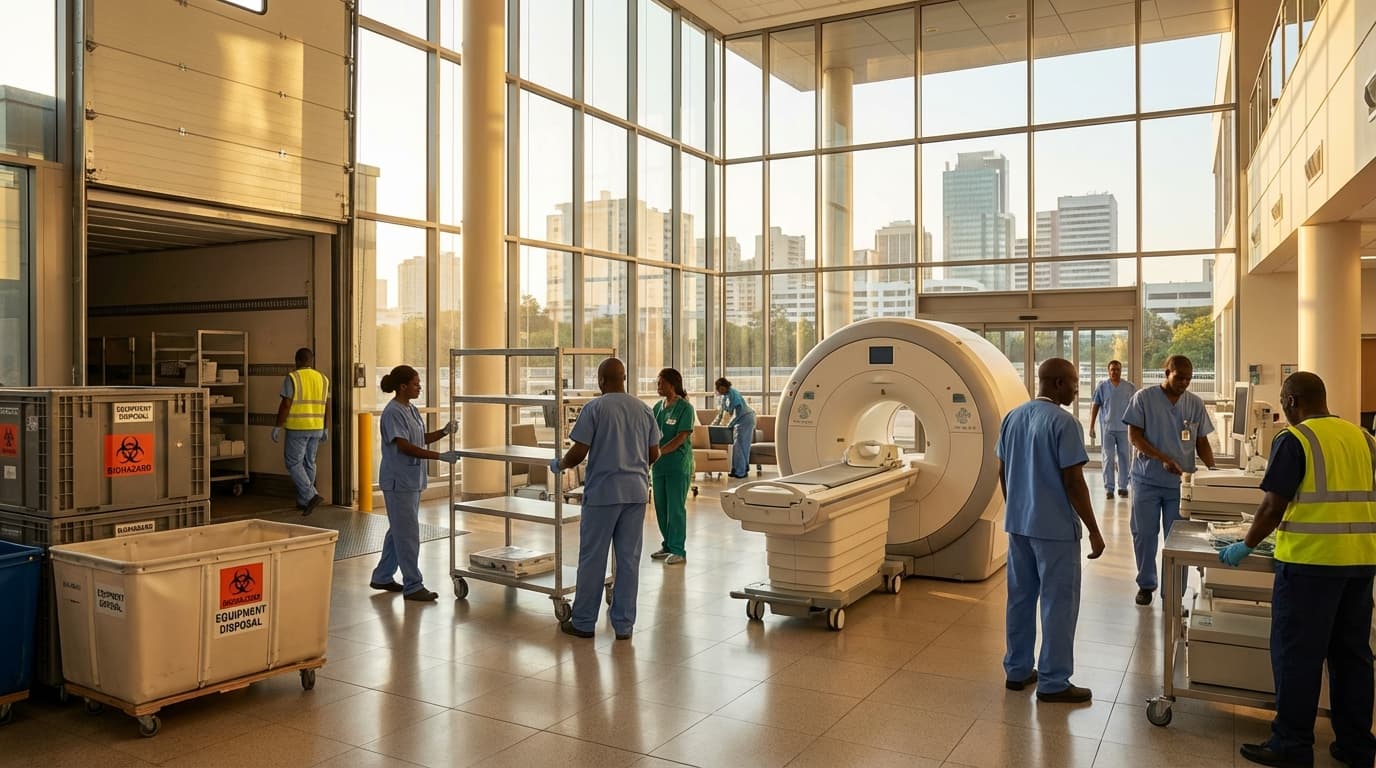
Medical Equipment Relocation Service (Move & Re-Install) in Burundi
Engineering Excellence & Technical Support
Medical Equipment Relocation Service (Move & Re-Install) High-standard technical execution following OEM protocols and local regulatory frameworks.
Specialized Medical Equipment Transport
Our dedicated fleet is equipped for the secure and climate-controlled transportation of sensitive medical equipment across Burundi, ensuring minimal disruption and preservation of calibration.
Precision Re-Installation & Calibration
Our certified technicians expertly re-install and calibrate a wide range of medical devices, guaranteeing operational readiness and adherence to stringent healthcare standards in Burundi.
End-to-End Project Management
We provide comprehensive, end-to-end project management for medical equipment relocations, from initial planning and logistics to final testing, ensuring a seamless and efficient transition for healthcare facilities in Burundi.
What Is Medical Equipment Relocation Service (Move & Re-install) In Burundi?
Medical Equipment Relocation Service (Move & Re-Install) in Burundi refers to a specialized logistical and technical process designed to safely transport and recommission medical devices and systems within or to new healthcare facilities in Burundi. This comprehensive service encompasses the de-installation of equipment from its original location, secure packaging, transportation adhering to environmental and shock-mitigation protocols, and subsequent re-installation, calibration, and functional testing at the designated new site. The objective is to ensure minimal disruption to healthcare operations and maintain the integrity and operational readiness of critical medical assets.
| Who Needs This Service? | Typical Use Cases | |||
|---|---|---|---|---|
| Hospitals (Public and Private) | Renovations or expansions of existing hospital wings or departments. | Relocation of a hospital to a new building or campus. | Upgrading or replacing existing medical infrastructure. | Establishing new specialized medical units (e.g., new ICU, imaging center). |
| Clinics and Diagnostic Centers | Relocation of a clinic to a larger or more accessible facility. | Consolidation of multiple smaller clinics into a single, larger center. | Installation of new, advanced diagnostic equipment requiring specialized placement. | |
| Research Institutions and Universities | Setting up new research laboratories with specialized medical imaging or analytical equipment. | Relocation of research facilities due to campus development. | ||
| Government Health Agencies | Deployment of medical equipment to newly established health posts or referral centers in remote areas. | Consolidation or redistribution of government-owned medical assets. | ||
| Medical Equipment Manufacturers and Distributors | Delivery and installation of newly purchased high-value medical equipment at client sites. | De-installation and re-installation of equipment during service contracts or upgrades. |
Key Components of Medical Equipment Relocation Service (Move & Re-Install):
- Site Assessment and Planning: Pre-relocation evaluation of both origin and destination sites to identify logistical challenges, power/utility requirements, access constraints, and necessary safety protocols.
- De-installation: Expert dismantling of complex medical equipment, including disconnection of power, data, and ancillary systems, following manufacturer specifications and safety regulations.
- Specialized Packaging and Crating: Utilization of custom-designed or industry-standard protective packaging, including anti-static materials, shock-absorbing padding, and climate-controlled containers, as dictated by equipment sensitivity.
- Secure Transportation: Deployment of appropriately equipped vehicles (e.g., climate-controlled, air-ride suspension) and trained personnel to ensure safe transit within Burundi, considering road conditions and transit times.
- Re-installation and Reassembly: Precise reassembly of equipment at the new location, ensuring all components are correctly connected and secured.
- System Integration and Connectivity: Re-establishment of all necessary connections to power, medical gas lines, IT networks, and other supporting infrastructure.
- Calibration and Testing: Rigorous calibration of equipment to manufacturer specifications and comprehensive functional testing to verify optimal performance and accuracy.
- User Training and Handover: Briefings for relevant medical personnel on any operational changes or specific aspects of the re-installed equipment.
- Documentation: Provision of detailed records of the relocation process, including checklists, test results, and updated asset inventories.
Who Needs Medical Equipment Relocation Service (Move & Re-install) In Burundi?
Medical equipment relocation is a complex and specialized process that requires meticulous planning, expert handling, and precise re-installation to ensure operational readiness. In Burundi, several entities and departments face unique needs for these services, driven by evolving healthcare infrastructure, expansion projects, and the imperative to maintain uninterrupted patient care. Understanding these target customers and their specific departmental requirements is crucial for providers of medical equipment relocation services.
| Customer Type | Key Departments Involved | Specific Relocation Needs |
|---|---|---|
| Public Hospitals | Radiology, Surgery, Intensive Care Units (ICU), Laboratories, Emergency Departments | Moving large imaging machines (X-ray, CT scanners), surgical robots, ventilators, specialized lab equipment, ensuring minimal downtime for critical care services. |
| Private Hospitals | Diagnostics, Cardiology, Oncology, Maternity, Outpatient Services | Relocating MRI machines, ultrasound devices, endoscopes, dialysis machines, accommodating patient flow during the move. |
| Research Institutions | Molecular Biology, Immunology, Pathology, Public Health Labs | Transporting sensitive microscopes, centrifuges, DNA sequencers, ensuring sterile environments and precise recalibration. |
| NGOs/International Organizations | Field Clinics, Mobile Health Units, Central Warehousing, Training Facilities | Relocating basic medical kits, diagnostic tools, generators, and specialized equipment for remote or temporary sites, often under challenging logistical conditions. |
| Government Ministries | Public Health Laboratories, Emergency Response Units, Training Academies | Moving equipment for national disease surveillance, disaster medical response stockpiles, and training simulation centers. |
| Medical Training Institutions | Anatomy Labs, Simulation Centers, Pathology Departments, Nursing Skills Labs | Relocating anatomical models, surgical simulators, microscopes, and other practical training apparatus without disrupting academic schedules. |
Target Customers and Departments Requiring Medical Equipment Relocation Services in Burundi
- {"title":"Public Hospitals and Healthcare Centers","description":"These are the backbone of the national healthcare system and frequently undergo upgrades, renovations, or the establishment of new facilities. Relocating critical diagnostic, surgical, and life-support equipment is essential for maintaining service continuity."}
- {"title":"Private Hospitals and Clinics","description":"As the private healthcare sector grows in Burundi, private facilities often expand their services, acquire new technologies, or merge with other entities, necessitating the relocation of their medical equipment to new or optimized spaces."}
- {"title":"Research Institutions and Laboratories","description":"Institutes involved in medical research, diagnostics, and public health initiatives rely on specialized laboratory equipment. Moving these sensitive instruments, often with intricate calibration requirements, demands expert handling."}
- {"title":"Non-Governmental Organizations (NGOs) and International Health Organizations","description":"Many NGOs and international bodies operate health programs and clinics across Burundi. They may need to relocate equipment as projects shift, new health initiatives are launched, or existing facilities are upgraded to meet evolving standards."}
- {"title":"Government Ministries and Agencies (e.g., Ministry of Health)","description":"Government bodies responsible for healthcare policy, infrastructure development, and disaster response may require relocation services for equipment used in central laboratories, training centers, or during emergency preparedness exercises."}
- {"title":"Medical Training and Educational Institutions","description":"Universities, nursing schools, and other medical training centers often need to move equipment for simulation labs, practical training sessions, or when relocating departments or campuses."}
Medical Equipment Relocation Service (Move & Re-install) Process In Burundi
This document outlines the comprehensive workflow for our Medical Equipment Relocation Service (Move & Re-Install) in Burundi, ensuring a seamless and secure transfer of sensitive medical assets. The process is designed to minimize downtime and maintain the integrity of the equipment from its initial location to its new operational site.
| Phase | Stage | Description | Key Activities | Deliverables |
|---|---|---|---|---|
| 1 | Initial Inquiry & Consultation | The process begins with a potential client reaching out to us with their relocation needs. | Receive initial inquiry, understand basic relocation requirements (equipment types, origin, destination, timeline), schedule an introductory call. | Understanding of client needs, confirmation of service scope. |
| 2 | Site Survey & Planning | A thorough assessment of both the origin and destination sites is crucial for detailed planning. | On-site visit to both locations, assess access routes, power requirements, space constraints, environmental conditions, identify potential challenges, document existing setup and surrounding infrastructure. | Detailed site survey report, preliminary relocation plan, identification of specialized equipment or personnel needs. |
| 3 | Quotation & Agreement | Based on the site survey and client requirements, a comprehensive quotation is prepared. | Develop a detailed quotation including all costs (packing, transportation, insurance, re-installation, testing), present quotation to client, negotiate terms, finalize and sign service agreement. | Formal quotation, signed service agreement, payment schedule. |
| 4 | Preparation & Packing | Meticulous preparation and specialized packing of medical equipment to ensure its safety during transit. | Disassembly (if required) by certified technicians, cleaning and decontamination, application of anti-static and shock-absorbent materials, custom crating or specialized packaging, labeling with clear handling instructions and destination details. | Properly packed and secured medical equipment, detailed inventory list of packed items. |
| 5 | Transportation & Logistics | Secure and timely transportation of the equipment to the new site, adhering to all regulations. | Loading of equipment onto specialized transport vehicles (climate-controlled if necessary), route planning considering road conditions and security in Burundi, real-time tracking of shipment, adherence to customs and import/export regulations (if applicable). | Equipment safely transported to the destination site, proof of delivery. |
| 6 | Re-Installation & Setup | Expert re-installation and setup of the medical equipment at the new location. | Unpacking and careful positioning of equipment, reassembly by certified technicians, connection to power and other utilities, ensuring correct placement according to site plan and manufacturer specifications. | Equipment physically installed and connected at the new site. |
| 7 | Testing & Calibration | Thorough testing and calibration to ensure the equipment is fully functional and accurate. | Performance testing of all functions, calibration against industry standards, diagnostic checks, verification of all safety features, conducting preliminary operational checks. | Certified testing and calibration reports, confirmation of equipment functionality. |
| 8 | Handover & Documentation | Final handover to the client with all necessary documentation. | Demonstration of equipment functionality to client representatives, provision of all relevant documentation (service agreement, packing list, installation reports, calibration certificates, user manuals), final sign-off and acceptance by the client. | Client acceptance and sign-off, comprehensive project documentation. |
Medical Equipment Relocation Service Workflow in Burundi
- Phase 1: Initial Inquiry & Consultation
- Phase 2: Site Survey & Planning
- Phase 3: Quotation & Agreement
- Phase 4: Preparation & Packing
- Phase 5: Transportation & Logistics
- Phase 6: Re-Installation & Setup
- Phase 7: Testing & Calibration
- Phase 8: Handover & Documentation
Medical Equipment Relocation Service (Move & Re-install) Cost In Burundi
Relocating medical equipment in Burundi, especially critical or sensitive items, requires specialized handling and expertise. The cost of such a service, encompassing both the move and the re-installation, is influenced by a variety of factors. These include the type and size of the equipment, the distance of the relocation, the level of disassembly and reassembly required, any specialized transportation needs, and the complexity of the re-installation and calibration. For accurate pricing, it's essential to obtain detailed quotes from service providers familiar with the local logistics and regulations in Burundi. Prices are typically quoted in Burundi Francs (BIF).
| Equipment Category | Estimated Cost Range (BIF) | Notes |
|---|---|---|
| Small Laboratory Equipment (e.g., centrifuges, microscopes) | 200,000 - 600,000 | Relatively straightforward; minimal disassembly/reassembly. |
| Medium-sized Diagnostic Equipment (e.g., portable X-ray, ultrasound) | 700,000 - 2,000,000 | May require some specialized handling and calibration upon re-installation. |
| Large Diagnostic Imaging Equipment (e.g., fixed X-ray, CT scanner components) | 2,500,000 - 10,000,000+ | Significant disassembly, specialized transport, complex re-installation and calibration by certified technicians. Costs can escalate dramatically. |
| Surgical Equipment (e.g., operating tables, anesthesia machines) | 800,000 - 3,000,000 | Depends on complexity and if specialized tools are needed for re-installation. |
| Sterilization Equipment (e.g., autoclaves) | 500,000 - 1,500,000 | Requires careful handling of pressure systems and proper re-connection of utilities. |
Key Pricing Factors for Medical Equipment Relocation & Re-installation in Burundi:
- Type and Size of Equipment: Larger, heavier, or more delicate equipment (e.g., MRI machines, X-ray units, large laboratory analyzers) will incur higher costs than smaller, simpler items.
- Disassembly and Reassembly Complexity: Equipment requiring extensive dismantling and careful reassembly, especially with intricate components, increases labor and time, thus impacting cost.
- Distance and Accessibility: The greater the distance between the origin and destination, and the more challenging the access (e.g., remote locations, poor road conditions, multiple flights of stairs), the higher the transportation and labor costs.
- Specialized Transportation Requirements: Certain medical equipment may need climate-controlled vehicles, vibration-dampening systems, or specialized lifting equipment, all of which add to the overall expense.
- Re-installation and Calibration Needs: The complexity of setting up and calibrating the equipment at the new location is a significant cost driver. This often involves skilled technicians and specialized tools.
- Insurance and Risk Mitigation: Adequate insurance for high-value medical equipment during transit is crucial and will be factored into the cost.
- Logistics and Permitting: Navigating local regulations, obtaining necessary permits, and managing customs (if applicable) can contribute to the service cost.
- Urgency of Service: Expedited relocation services will generally be more expensive.
Affordable Medical Equipment Relocation Service (Move & Re-install) Options
Moving and re-installing sensitive medical equipment requires specialized care, expertise, and adherence to strict protocols to ensure functionality and patient safety. Our Affordable Medical Equipment Relocation Service (Move & Re-Install) is designed to provide cost-effective solutions without compromising on quality. We understand the financial pressures on healthcare providers and are committed to offering transparent pricing and value-driven options.
| Value Bundle Option | Description | Key Benefits | Estimated Cost Savings |
|---|---|---|---|
| Basic Move & Connect | Includes professional de-installation, secure transportation, and basic re-installation with power and essential connections verified. | Ideal for standard equipment; cost-effective for straightforward moves. | Up to 15% compared to individual service calls. |
| Full Service Re-calibration | Encompasses de-installation, transportation, re-installation, and full calibration by a certified technician to manufacturer specifications. | Ensures optimal performance and reduces post-move troubleshooting needs. | Up to 20% by consolidating calibration with relocation. |
| Project Management & Integration | A comprehensive solution including planning, de-installation, secure transport, re-installation, calibration, and integration testing with existing networked systems. | Ideal for complex installations or facility-wide equipment moves; minimizes coordination efforts. | Up to 25% through streamlined project execution and reduced external vendor reliance. |
| Off-Peak Relocation Discount | Schedule your relocation during off-peak hours (evenings, weekends, holidays) for reduced labor rates. | Significant cost reduction without sacrificing service quality. | Varies, but can range from 10-20%. |
Our Services & Value Proposition
- Specialized Handling: Our team is trained in the safe de-installation, transport, and re-installation of a wide range of medical devices, from imaging systems to laboratory equipment.
- Certified Technicians: We employ certified technicians who possess the knowledge and skills to ensure proper calibration and functionality post-relocation.
- Risk Mitigation: Comprehensive insurance and meticulous packing procedures minimize the risk of damage during transit.
- Minimized Downtime: Efficient planning and execution aim to reduce operational disruptions for your facility.
- Compliance Assurance: We adhere to all relevant industry regulations and manufacturer guidelines.
Verified Providers In Burundi
In the burgeoning healthcare landscape of Burundi, identifying trusted and competent medical service providers is paramount for individuals seeking quality care. Franance Health stands out as a beacon of reliability, offering a network of verified providers who embody excellence in their respective fields. This commitment to verification and quality assurance makes Franance Health the discerning choice for your healthcare needs.
| Provider Type | Key Credentials Verified | Benefits for Patients |
|---|---|---|
| General Practitioners | Medical Degree, Licensure, Good Standing with Medical Council, Experience | Reliable primary care, initial diagnosis, referrals to specialists. |
| Specialist Doctors (e.g., Cardiologists, Pediatricians, Surgeons) | Specialty Board Certification, Advanced Training, Fellowship Diplomas, Extensive Clinical Experience | Expert diagnosis and treatment for complex medical conditions, advanced procedures. |
| Dentists | Dental Degree, Licensure, Specialization Certifications (e.g., Orthodontics, Periodontics) | Comprehensive oral healthcare, preventative services, specialized dental treatments. |
| Pharmacists | Pharmacy Degree, Licensure, Good Standing with Pharmacy Board, Knowledge of Medication Management | Accurate dispensing of prescriptions, drug interaction counseling, medication safety advice. |
| Diagnostic Laboratories | Accreditation by National/International Bodies, Quality Control Protocols, Qualified Technicians | Accurate and timely diagnostic testing, reliable laboratory results. |
| Imaging Centers (X-ray, Ultrasound, CT/MRI) | Accreditation, Certified Radiologists and Technicians, Up-to-date Equipment | High-quality diagnostic imaging services, clear and interpretable results. |
Why Franance Health Credentials Matter
- Rigorous Vetting Process: Franance Health employs a stringent vetting process for all its affiliated providers, ensuring they meet the highest standards of medical expertise, ethical practice, and patient care.
- Specialized Expertise: Our network comprises specialists across a wide range of medical disciplines, guaranteeing access to the right expertise for your specific health concerns.
- Commitment to Patient Safety: Verified providers prioritize patient safety and adhere to international best practices, offering peace of mind with every consultation and treatment.
- Modern Infrastructure and Technology: Franance Health partners with facilities equipped with modern medical technology and infrastructure, facilitating accurate diagnoses and effective treatments.
- Patient-Centric Approach: Our verified providers are dedicated to a patient-centric approach, focusing on personalized care, clear communication, and compassionate service.
- Continuous Professional Development: We encourage and support continuous professional development among our network, ensuring they remain at the forefront of medical advancements.
- Accessibility and Convenience: Through our platform, you gain easy access to a curated list of trusted providers, streamlining your search for quality healthcare in Burundi.
Scope Of Work For Medical Equipment Relocation Service (Move & Re-install)
This Scope of Work (SOW) outlines the requirements for the relocation and re-installation of medical equipment. This document details the technical deliverables, standard specifications, and overall process to ensure a safe, efficient, and compliant transfer of assets.
| Section | Description | Key Requirements/Deliverables |
|---|---|---|
| 1. Site Survey & Planning | Initial assessment of current and new locations, equipment inventory, and logistics planning. | Detailed site survey report (including access, power, environmental conditions). Pre-move risk assessment and mitigation plan. Detailed move plan and schedule. Finalized equipment inventory list with serial numbers, model numbers, and condition reports. |
| 2. De-installation & Preparation | Safe and proper disconnection, disassembly (if required), and preparation of equipment for transport. | Documented de-installation procedures. Secure packaging and protection of all equipment components. Labeling of all disassembled parts for easy re-assembly. Disconnection from utilities and networks as per manufacturer guidelines. |
| 3. Transportation | Safe and secure transport of medical equipment from the old site to the new site. | Use of specialized, climate-controlled, and vibration-dampened vehicles. Secure loading and unloading procedures. Transit insurance covering full replacement value. Real-time tracking and communication during transit. |
| 4. Re-installation & Re-assembly | Proper re-assembly and installation of equipment at the new location. | Adherence to manufacturer's installation specifications and guidelines. Reconnection to utilities and networks. Ensuring all components are correctly fitted and secured. |
| 5. Calibration & Testing | Verification of equipment functionality and accuracy after re-installation. | Performance testing and calibration against manufacturer specifications. Functional testing to ensure all modes of operation are satisfactory. Safety testing and certification where applicable. Generation of calibration certificates and test reports. |
| 6. Documentation & Handover | Provision of all necessary documentation and formal handover of equipment. | As-built documentation of re-installation. Updated equipment manuals or logs. Final acceptance certificate signed by both parties. Post-move cleaning of equipment and surrounding areas. |
| 7. Project Management | Overall coordination, communication, and management of the relocation process. | Designated project manager for the client and service provider. Regular progress reporting and status meetings. Change management process for any deviations from the plan. |
Standard Specifications & Requirements
- Personnel Qualifications: All personnel involved in the relocation must be trained, certified (where applicable), and experienced in handling medical equipment.
- Equipment Handling: Use of specialized lifting equipment, dollies, carts, and protective materials to prevent damage.
- Environmental Controls: Maintaining appropriate temperature, humidity, and vibration levels during transit and at both sites, as per equipment specifications.
- Safety Protocols: Strict adherence to all relevant safety regulations, including OSHA, HIPAA, and any site-specific safety rules. Proper use of PPE.
- Manufacturer Guidelines: All procedures must comply with the original equipment manufacturer's (OEM) guidelines and recommendations.
- Utilities & Connections: Ensuring compatibility and proper connection to electrical, gas, water, and data networks at the new location.
- Waste Disposal: Proper disposal of all packing materials and any obsolete equipment components in an environmentally responsible manner.
- Contingency Planning: Development and implementation of contingency plans for unforeseen issues or emergencies.
- Insurance: Comprehensive insurance coverage for all equipment during the entire relocation process.
- Cleanliness: All equipment and surrounding areas must be cleaned and sanitized after the move.
- Licensing & Permits: Service provider must possess all necessary licenses and permits to operate and perform services.
Service Level Agreement For Medical Equipment Relocation Service (Move & Re-install)
This Service Level Agreement (SLA) outlines the response times and uptime guarantees for the Medical Equipment Relocation Service (Move & Re-Install) provided by [Your Company Name] to [Client Name]. This agreement ensures the timely and efficient relocation and re-installation of medical equipment, minimizing downtime and ensuring operational readiness. This SLA is effective from [Start Date] to [End Date].
| Service Component | Criticality Level | Response Time Target | On-Site Arrival Time Target | Re-Installation Completion Target | Uptime Guarantee (Post Re-Installation) |
|---|---|---|---|---|---|
| Emergency Relocation (e.g., critical life-support equipment) | High | 1 hour (acknowledgement) | 4 hours | 8 business hours (from arrival) | 99.5% |
| Scheduled Relocation (non-critical equipment) | Medium | 2 hours (acknowledgement) | 12 business hours | 24 business hours (from arrival) | 98.0% |
| Minor Equipment Move (e.g., non-clinical support equipment) | Low | 4 business hours (acknowledgement) | 48 business hours | 48 business hours (from arrival) | 95.0% |
Key Service Parameters
- Response Time: The time taken from the initial notification of a service request to the acknowledgment and dispatch of a qualified technician.
- On-Site Arrival Time: The time taken from the initial notification of a service request to the technician's arrival at the designated site.
- Re-Installation Completion Time: The time taken from the technician's arrival at the new site to the successful re-installation and basic functional testing of the equipment.
- Uptime Guarantee: The percentage of time the relocated medical equipment is expected to be operational and available for use after successful re-installation.
Frequently Asked Questions

Ready when you are
Let's scope your Medical Equipment Relocation Service (Move & Re-Install) in Burundi project in Burundi.

Scaling healthcare logistics and technical systems across the entire continent.