
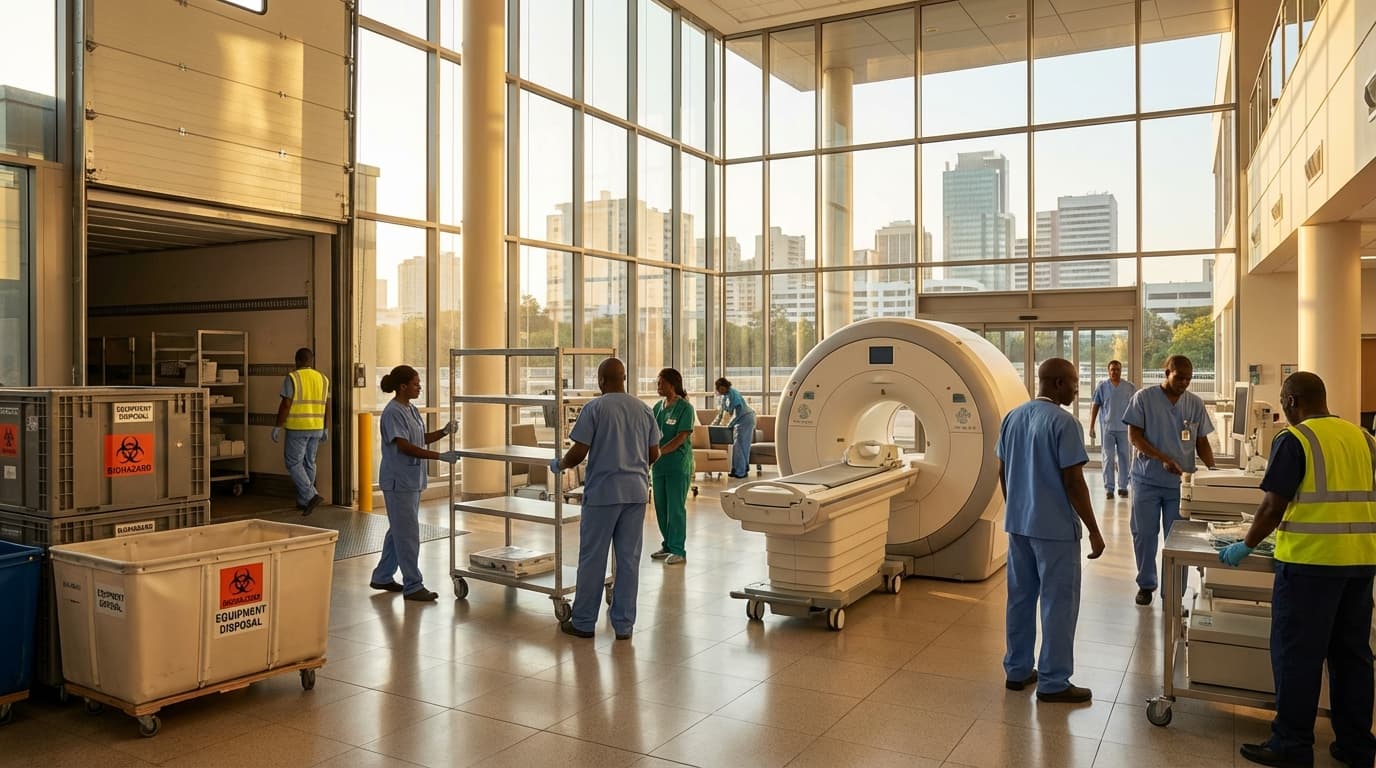
Decommissioning Service for Medical Devices in Burundi
Engineering Excellence & Technical Support
Decommissioning Service for Medical Devices High-standard technical execution following OEM protocols and local regulatory frameworks.
Secure Medical Device Decommissioning
Ensures the safe and environmentally responsible disposal of all medical devices, preventing data breaches and biohazard risks. Our certified processes adhere to international standards for medical waste management and data destruction, guaranteeing compliance and peace of mind.
Comprehensive Asset Lifecycle Management
Provides end-to-end tracking and management of medical device assets from installation to final decommissioning. We offer detailed inventory reconciliation, asset valuation, and documented disposal certificates, streamlining your asset management and regulatory reporting.
Expert Regulatory Compliance & Reporting
Navigates Burundi's specific regulations for medical device decommissioning, ensuring all procedures meet national health and environmental guidelines. We deliver transparent documentation and audit-ready reports, safeguarding your facility from penalties and liabilities.
What Is Decommissioning Service For Medical Devices In Burundi?
Decommissioning service for medical devices in Burundi refers to the comprehensive process of safely and compliantly removing medical equipment from active service. This involves a series of technical and administrative procedures designed to ensure patient safety, environmental protection, and regulatory compliance. The service encompasses the entire lifecycle of a device's retirement, from initial assessment to final disposal or repurposing.
| Who Needs Decommissioning Service? | Typical Use Cases | |||
|---|---|---|---|---|
| Healthcare Facilities (Hospitals, Clinics, Diagnostic Laboratories): When devices reach their end-of-life, are obsolete, or are being replaced. | Replacement of aging imaging equipment (e.g., X-ray machines, CT scanners) that contain hazardous materials. | Upgrading of patient monitoring systems or laboratory analyzers. | Closure or relocation of healthcare departments or entire facilities. | Decommissioning of specialized equipment with unique disposal requirements (e.g., radiotherapy units). |
| Medical Device Manufacturers and Distributors: For devices returned due to recalls, obsolescence, or end-of-lease agreements. | End-of-life management of leased medical equipment. | Recalls of devices requiring secure and documented disposal. | Disposal of demonstration or obsolete inventory. | |
| Government and Public Health Agencies: For devices managed within public healthcare networks or during public health initiatives. | Phasing out of outdated public health equipment. | Management of equipment from closed or repurposed public health facilities. |
Key Aspects of Medical Device Decommissioning in Burundi
- Assessment and Inventory: Cataloging existing devices, their functional status, maintenance history, and regulatory compliance documentation.
- Data Security and Eradication: Securely removing all patient health information (PHI) and other sensitive data from networked and stored-data devices to comply with privacy regulations.
- Technical Deactivation: Rendering devices inoperable through controlled dismantling, disabling of critical components, or software wiping to prevent unauthorized use.
- Environmental Assessment and Handling: Identifying and managing hazardous materials (e.g., mercury, lead, radioactive isotopes, refrigerants) present in the devices, adhering to local environmental regulations for their safe removal and disposal.
- Disposal or Repurposing: Executing environmentally sound disposal methods (e.g., recycling, incineration, secure landfill) for non-functional devices, or facilitating their donation, sale, or refurbishment for reuse if applicable and compliant.
- Documentation and Certification: Maintaining detailed records of the entire decommissioning process, including certificates of destruction or disposal, for audit and compliance purposes.
- Regulatory Compliance: Ensuring all activities adhere to Burundi's Ministry of Public Health and its affiliated regulatory bodies' guidelines for medical device management and waste disposal.
Who Needs Decommissioning Service For Medical Devices In Burundi?
Decommissioning medical devices in Burundi is a critical process that ensures the safe and responsible disposal or repurposing of outdated, broken, or end-of-life medical equipment. This service is essential for maintaining a safe healthcare environment, protecting patient data, and complying with environmental regulations. The demand for specialized decommissioning services stems from various healthcare stakeholders within Burundi.
| Customer Type | Key Departments Involved | Reasons for Decommissioning |
|---|---|---|
| Public Hospitals | Biomedical Engineering Department, Procurement Department, IT Department (for networked devices), Administration | Equipment obsolescence, broken/unrepairable devices, data security, space optimization, regulatory compliance |
| Private Clinics and Hospitals | Facility Management, Clinical Department Heads, IT Department, Administration | Technological advancement, improved patient care standards, risk management, aesthetic upgrades |
| Health Centers and Dispensaries | Head of Facility, Local Health Officials | Aging equipment, lack of maintenance capacity, limited budget for replacements |
| Government Ministries (Ministry of Health) | Department of Health Services, Procurement Unit, Public Health Programs | National equipment replacement strategies, public health initiatives, disaster response planning, data security mandates |
| Medical Training Institutions | Department of Biomedical Sciences, Simulation Lab Coordinators, IT Department | Curriculum updates, simulation technology upgrades, research equipment retirement |
| NGOs and Humanitarian Organizations | Program Managers, Logistics Department, Medical Coordinators | Project closure, equipment donation protocols, compliance with donor requirements, responsible waste management |
| Medical Equipment Suppliers | Sales Department, Service Department, Logistics/Operations | Trade-in programs, customer service offerings, product lifecycle management |
Target Customers and Departments for Medical Device Decommissioning in Burundi
- {"title":"Public Hospitals","description":"These are the primary healthcare providers in Burundi, often operating with limited budgets and requiring systematic upgrades of their medical equipment. They possess a wide range of medical devices, from basic diagnostic tools to complex imaging machines, all of which eventually require decommissioning."}
- {"title":"Private Clinics and Hospitals","description":"While often better funded than public facilities, private healthcare providers also face the challenge of managing aging medical equipment. They aim to maintain high standards of care, which necessitates replacing older devices and ensuring their proper decommissioning."}
- {"title":"Health Centers and Dispensaries","description":"These smaller facilities, prevalent in rural and remote areas, may have older or simpler medical equipment. Decommissioning services can help them manage these items without the need for extensive in-house expertise."}
- {"title":"Government Ministries and Agencies (e.g., Ministry of Health)","description":"The Ministry of Health, responsible for national health policy and oversight, would be a key stakeholder. They may contract decommissioning services for national health programs, centralized storage facilities, or in response to specific health initiatives that involve equipment replacement."}
- {"title":"Medical Training Institutions and Universities","description":"Institutions that train healthcare professionals often have laboratories and simulation centers equipped with medical devices. As technology advances, these devices become obsolete and require decommissioning."}
- {"title":"International Non-Governmental Organizations (NGOs) and Humanitarian Organizations","description":"Numerous NGOs operate healthcare projects and clinics in Burundi. They frequently donate, use, and eventually decommission medical equipment as their projects evolve or conclude. They often have a strong focus on responsible disposal."}
- {"title":"Medical Equipment Suppliers and Distributors","description":"Companies that sell new medical equipment may also offer decommissioning services for the old equipment they are replacing. This can be part of their value-added service offering to healthcare facilities."}
Decommissioning Service For Medical Devices Process In Burundi
This document outlines the standard workflow for decommissioning medical devices in Burundi, ensuring proper disposal, environmental safety, and compliance with national regulations. The process begins with an initial inquiry and culminates in the final execution and documentation of the decommissioning service.
| Phase | Key Activities | Responsible Parties | Deliverables |
|---|---|---|---|
| Inquiry & Assessment | Receive request, conduct site visit, assess device inventory, identify hazards. | Healthcare Facility, Service Provider. | Initial assessment report, device inventory list. |
| Proposal & Contract | Develop detailed quotation and service proposal, negotiate terms, sign contract. | Service Provider, Healthcare Facility. | Service proposal, signed contract. |
| Planning & Preparation | Obtain permits, schedule execution, procure resources, prepare safety plans. | Service Provider. | Work plan, safety protocols, permit documentation. |
| Execution | Disassemble, decontaminate, neutralize, pack, and transport devices. | Service Provider (Trained Technicians). | Decommissioned devices, transport records. |
| Disposal | Transport to authorized facility, process waste according to regulations. | Service Provider, Authorized Waste Facility. | Waste manifests, disposal certificates. |
| Documentation & Reporting | Compile final report, provide certificates and manifests to client. | Service Provider. | Final decommissioning report, proof of disposal. |
| Verification & Archiving | Optional post-execution checks, secure storage of all records. | Service Provider, Healthcare Facility. | Verification report (if applicable), archived records. |
Decommissioning Service Workflow for Medical Devices in Burundi
- Initiation: The process starts with a formal request or inquiry from a healthcare facility or organization requiring the decommissioning of one or more medical devices.
- Information Gathering & Assessment: A detailed assessment of the devices to be decommissioned is conducted, including their type, condition, potential hazards (e.g., biological, chemical, radioactive), and location.
- Quotation & Proposal: Based on the assessment, a detailed quotation and service proposal is prepared, outlining the scope of work, methodologies, timelines, associated costs, and required documentation.
- Contract & Agreement: Upon acceptance of the proposal, a formal contract or service agreement is established between the service provider and the client, defining terms, responsibilities, and legal obligations.
- Pre-Decommissioning Planning & Preparation: This phase involves meticulous planning, including obtaining necessary permits or approvals from relevant authorities, scheduling the decommissioning activities, and preparing all required equipment, safety gear, and disposal materials.
- On-site Execution: The actual decommissioning of the medical devices is carried out by trained personnel, adhering to safety protocols and environmental regulations. This may involve disassembly, decontamination, neutralization of hazardous materials, and secure transportation.
- Waste Management & Disposal: Decommissioned medical devices and their components are transported to authorized waste treatment and disposal facilities. The disposal methods are selected based on the nature of the device and its hazardous components, ensuring compliance with environmental standards.
- Documentation & Reporting: Comprehensive documentation is generated throughout the process, including an inventory of decommissioned devices, certificates of disposal, waste manifests, and a final decommissioning report. This report is provided to the client for their records and compliance purposes.
- Post-Decommissioning Verification & Auditing: In some cases, post-decommissioning verification or auditing may be conducted to ensure that the process has been completed correctly and that all regulatory requirements have been met.
- Record Archiving: All relevant documentation is securely archived for future reference and audits.
Decommissioning Service For Medical Devices Cost In Burundi
Decommissioning medical devices in Burundi is a critical but often overlooked service, essential for ensuring patient safety, environmental protection, and compliance with regulatory standards. The cost of these services can vary significantly due to a multitude of factors, making it difficult to provide a single, definitive price. This discussion aims to outline the primary pricing factors and provide estimated cost ranges in Burundi's local currency, the Burundian Franc (BIF).
| Device Category | Estimated Cost Range (BIF) | Notes |
|---|---|---|
| Small, Non-Hazardous Devices (e.g., stethoscopes, basic scales, examination lamps) | 50,000 - 150,000 | Primarily labor and basic disposal of non-hazardous materials. |
| Medium-Sized, Potentially Hazardous Devices (e.g., older X-ray machines with lead shielding, some laboratory equipment) | 200,000 - 750,000 | Involves more complex disassembly, potential hazardous material handling (e.g., mercury switches, lead), and specialized disposal. |
| Large, Complex, and Highly Hazardous Devices (e.g., MRI, CT scanners, large industrial sterilizers, devices with radioactive components) | 1,000,000 - 5,000,000+ | Significant costs associated with specialized engineering, hazardous material containment and disposal, transportation of heavy equipment, and extensive regulatory compliance. |
| Specialized Medical Waste Disposal (per kg or volume) | 10,000 - 50,000+ | This is often an add-on cost for specific components or materials requiring incineration, chemical treatment, or secure landfill. |
Key Pricing Factors for Medical Device Decommissioning in Burundi
- Type and Complexity of the Medical Device: More sophisticated and larger devices, such as MRI machines, CT scanners, or advanced surgical equipment, will naturally incur higher decommissioning costs due to the specialized knowledge, tools, and disposal methods required. Simple devices like basic examination tables or stethoscopes will be significantly less expensive.
- Condition of the Device: A device that is functioning and relatively easy to dismantle will cost less than one that is heavily damaged, corroded, or has been in storage for a long period, requiring extra effort for safe disassembly and handling.
- Hazardous Materials Present: Many medical devices contain potentially hazardous materials like mercury, lead, certain refrigerants, or radioactive components. The presence and quantity of these substances significantly increase decommissioning costs due to the specialized safety protocols, containment, transportation, and disposal procedures mandated by environmental regulations. This is often the most impactful cost driver.
- Labor Costs: The expertise of the technicians performing the decommissioning is crucial. Highly skilled personnel with experience in handling medical equipment and hazardous waste command higher wages. The number of technicians required will also influence the overall labor cost.
- Transportation and Logistics: The distance from the device's location to the authorized disposal or recycling facility will affect transportation costs. This includes fuel, vehicle maintenance, and driver wages. For remote or difficult-to-access locations, these costs can be substantial.
- Disposal/Recycling Fees: Licensed facilities that handle the final disposal or recycling of medical waste will charge fees based on the volume and type of waste. This includes fees for secure landfilling of non-recyclable components, incineration of biohazardous materials, or specialized recycling processes for metals and plastics.
- Permits and Documentation: Obtaining necessary permits and completing required documentation for the decommissioning process can add administrative costs. This ensures compliance with national and local regulations.
- Environmental Regulations and Compliance: Adherence to Burundi's environmental protection laws and waste management regulations is paramount. Any additional requirements for environmental impact assessments or specific treatment methods will influence pricing.
- Scale of Decommissioning Project: For larger projects involving the decommissioning of multiple devices, economies of scale might apply, potentially leading to a lower per-unit cost. Conversely, a single, small decommissioning might have higher fixed costs.
- Service Provider's Reputation and Overhead: Established and reputable decommissioning service providers with robust safety protocols, insurance, and certifications may charge more than less established competitors, reflecting their commitment to quality and compliance. Their operational overheads also contribute to pricing.
Affordable Decommissioning Service For Medical Devices Options
Navigating the decommissioning of medical devices can be a complex and costly undertaking. This service focuses on providing affordable solutions while ensuring compliance with all relevant regulations and environmental standards. We offer a range of options designed to minimize your expenses without compromising on security or environmental responsibility. Understanding value bundles and implementing strategic cost-saving measures are key to achieving these goals.
| Cost-Saving Strategy | Description | Benefit |
|---|---|---|
| Early Planning & Integration: | Incorporating decommissioning into the initial procurement process and asset management lifecycle. | Reduces unforeseen costs, allows for negotiation of bulk disposal rates, and streamlines end-of-life processes. |
| Consolidated Service Providers: | Utilizing a single provider for multiple decommissioning needs (e.g., data wiping, recycling, asset tracking). | Simplifies vendor management, potentially leading to volume discounts and reduced administrative overhead. |
| Tiered Service Levels: | Selecting service packages based on the specific needs and data sensitivity of each device. | Avoids overpaying for unnecessary services and ensures resources are allocated efficiently. |
| Responsible Recycling & Resale: | Prioritizing vendors with strong environmental credentials and exploring options for reselling functional or refurbishable equipment. | Minimizes landfill waste, generates potential revenue, and enhances corporate social responsibility. |
| Off-Peak Scheduling: | Scheduling decommissioning during non-peak operational hours. | Can sometimes lead to lower service rates and less disruption to your facility. |
| Digital Documentation: | Opting for digital records and reporting instead of physical copies. | Reduces printing costs, storage space, and improves accessibility. |
Value Bundles for Affordable Medical Device Decommissioning
- Basic Decommissioning Package: Includes secure data wiping, physical destruction of sensitive components, and proper recycling of non-hazardous materials. Ideal for standard equipment with less complex data requirements.
- Compliance & Certification Bundle: Extends the basic package with comprehensive documentation, chain-of-custody tracking, and certification of data destruction and environmental disposal. Essential for regulated environments.
- Bulk & Asset Management Bundle: Designed for organizations with large volumes of devices. Includes specialized logistics, inventory management, and reporting tailored to high-throughput decommissioning. Offers significant per-unit cost savings.
- Specialized Equipment Bundle: Tailored for devices with unique disposal needs (e.g., imaging equipment, laboratory instruments). Includes specialized dismantling and disposal processes to ensure compliance and minimize environmental impact.
- Consultation & Planning Add-on: Provides expert guidance on developing decommissioning strategies, regulatory compliance, and asset lifecycle management to proactively reduce future costs.
Verified Providers In Burundi
In Burundi's evolving healthcare landscape, identifying trustworthy and competent medical service providers is paramount for patient safety and effective treatment. Verified providers, particularly those with strong credentials like Franance Health, stand out as the optimal choice. This distinction is earned through rigorous vetting processes, adherence to international standards, and a demonstrated commitment to patient well-being. Franance Health's expertise in a wide range of medical disciplines, coupled with their investment in modern technology and continuous professional development for their staff, solidifies their position as a leader in Burundian healthcare.
| Credential Category | Franance Health's Attainment | Patient Benefit |
|---|---|---|
| Medical Licenses & Registrations | All practitioners hold valid and current licenses with the Burundian Ministry of Health and relevant professional bodies. | Ensures practitioners are legally qualified and meet minimum competency standards. |
| Specialty Certifications | Doctors and specialists possess certifications in their respective fields from recognized institutions. | Guarantees expertise in specific medical areas, leading to more accurate diagnoses and treatments. |
| Continuing Medical Education (CME) | Active participation in regular CME programs to stay updated with the latest medical advancements and techniques. | Patients benefit from the most current and evidence-based medical practices. |
| Quality Assurance Programs | Implementation of internal quality control measures and adherence to patient safety protocols. | Reduces the risk of medical errors and ensures a high standard of care delivery. |
| Infrastructure & Equipment Standards | Facilities are maintained to high hygiene standards and equipped with modern, well-maintained medical equipment. | Provides a safe and effective environment for diagnosis and treatment, improving patient outcomes. |
| Patient Feedback & Grievance Mechanisms | Established channels for patient feedback and a clear process for addressing concerns. | Demonstrates a commitment to patient satisfaction and continuous improvement of services. |
Why Franance Health is the Superior Choice
- Rigorous Accreditation and Certification: Franance Health undergoes stringent evaluations to ensure compliance with national and international healthcare standards.
- Highly Qualified Medical Professionals: Their team comprises experienced doctors, specialists, and nurses with extensive training and specialized knowledge.
- Commitment to Patient-Centric Care: Franance Health prioritizes patient comfort, clear communication, and personalized treatment plans.
- Advanced Medical Technology: Investment in state-of-the-art equipment ensures accurate diagnosis and effective treatment.
- Ethical Practice and Transparency: Upholding the highest ethical standards and maintaining transparency in all dealings.
- Comprehensive Range of Services: Offering a broad spectrum of medical services to meet diverse healthcare needs.
Scope Of Work For Decommissioning Service For Medical Devices
This Scope of Work (SOW) outlines the requirements for the decommissioning of medical devices. It details the technical deliverables, standard specifications, and procedures necessary to ensure safe, secure, and compliant removal and disposal of medical equipment. The primary objective is to protect patient data, environmental safety, and regulatory compliance throughout the decommissioning process.
| Deliverable | Description | Standard Specification/Requirement | Verification Method |
|---|---|---|---|
| Decommissioning Plan | Detailed plan outlining the scope, methodology, timeline, and responsibilities for each device. | Must include inventory list, risk assessment, data sanitization strategy, disposal methods, and safety protocols. | Review and approval by client's designated representative. |
| Data Sanitization Certificate | Proof of complete and irretrievable erasure or destruction of all sensitive data from device storage. | Compliance with NIST SP 800-88 Rev. 1 'Guidelines for Media Sanitization' or equivalent standard. Specific methods (e.g., overwriting, degaussing, physical destruction) to be documented. | Signed certificate from the decommissioning service provider, accompanied by audit logs if applicable. |
| Device Inventory and Status Report | Comprehensive list of all devices decommissioned, including serial numbers, model numbers, and their final disposition (e.g., recycled, disposed, donated). | Accuracy and completeness of the inventory. Status update for each device. | Cross-referencing with initial inventory and physical verification. |
| Environmental Compliance Documentation | Records demonstrating adherence to all local, national, and international environmental regulations for waste disposal and recycling. | Compliance with EPA regulations, WEEE Directive (if applicable), and hazardous waste disposal protocols. Certificates of disposal from licensed facilities. | Review of disposal manifests, recycling certificates, and waste transfer notes. |
| Certificate of Decommissioning | Formal document certifying that the device has been safely and compliantly decommissioned according to the agreed-upon SOW. | Includes date of decommissioning, device identification, signature of authorized personnel from the service provider. | Client acknowledgement and signature. |
| Asset Tag Removal/Update | Physical removal or updating of existing asset tags to reflect the current status of the device. | Thorough removal to prevent future misidentification. Documentation of any tag updates. | Visual inspection during physical decommissioning. |
| Safety Procedures Adherence Report | Documentation of adherence to all health and safety protocols during the decommissioning process. | Compliance with OSHA (or equivalent) safety standards, including personal protective equipment (PPE) usage, lockout/tagout procedures, and safe handling practices. | On-site audits by client representative, incident reports (if any). |
| Recycling/Disposal Service Provider Credentials | Proof of licensing and certification for all third-party recycling or disposal facilities used. | Verification of R2, e-Stewards, or equivalent certifications for electronics recyclers. Licenses for hazardous waste handlers. | Review of provider certificates and licenses. |
Key Stages of Medical Device Decommissioning
- Planning and Assessment
- Data Sanitization and Security
- Physical Decommissioning
- Environmental Disposal and Recycling
- Documentation and Reporting
Service Level Agreement For Decommissioning Service For Medical Devices
This Service Level Agreement (SLA) outlines the response times and uptime guarantees for the Decommissioning Service for Medical Devices provided by [Your Company Name] (hereinafter referred to as "Provider") to [Client Company Name] (hereinafter referred to as "Client"). This SLA aims to ensure the timely and secure decommissioning of medical devices, minimizing disruption and ensuring compliance.
| Incident Type | Severity Classification | Response Time Target | Resolution Time Target | Uptime Guarantee |
|---|---|---|---|---|
| Decommissioning Service Availability | Critical | 1 hour | 4 business hours (initial diagnosis/action plan), 24 business hours (resolution for critical incidents, dependent on device complexity and access) | 99.5% during Service Hours |
| Data Sanitization/Destruction Process Failure | Critical | 1 hour | 4 business hours (initial diagnosis/action plan), 12 business hours (resolution for data integrity failures) | N/A (focus on incident resolution) |
| Device Collection/Logistics Issues | Major | 2 business hours | 8 business hours | N/A (focus on incident resolution) |
| Documentation or Reporting Delays | Minor | 4 business hours | 2 business days | N/A (focus on incident resolution) |
| General Inquiries/Requests | N/A | 8 business hours | 2 business days | N/A (focus on incident resolution) |
Key Service Parameters
- Service Scope: This SLA covers the secure and compliant decommissioning of medical devices as defined in the Master Service Agreement (MSA).
- Service Hours: The Decommissioning Service is available during standard business hours (Monday to Friday, 9:00 AM to 5:00 PM [Client's Time Zone]), excluding public holidays.
- Exclusions: This SLA does not cover services related to device repair, maintenance, or installation, nor does it cover any hardware or software issues unrelated to the decommissioning process itself.
- Definitions:
- Critical Incident: An event that prevents the decommissioning of a medical device or a significant portion of devices, leading to a direct impact on patient care or regulatory compliance.
- Major Incident: An event that significantly degrades the decommissioning service's performance or functionality, but does not necessarily halt operations entirely.
- Minor Incident: An event that causes minor degradation or inconvenience, but does not prevent the core decommissioning activities.
- Uptime: The percentage of time the Decommissioning Service is available and functional during the defined Service Hours.
Frequently Asked Questions

Ready when you are
Let's scope your Decommissioning Service for Medical Devices in Burundi project in Burundi.

Scaling healthcare logistics and technical systems across the entire continent.