
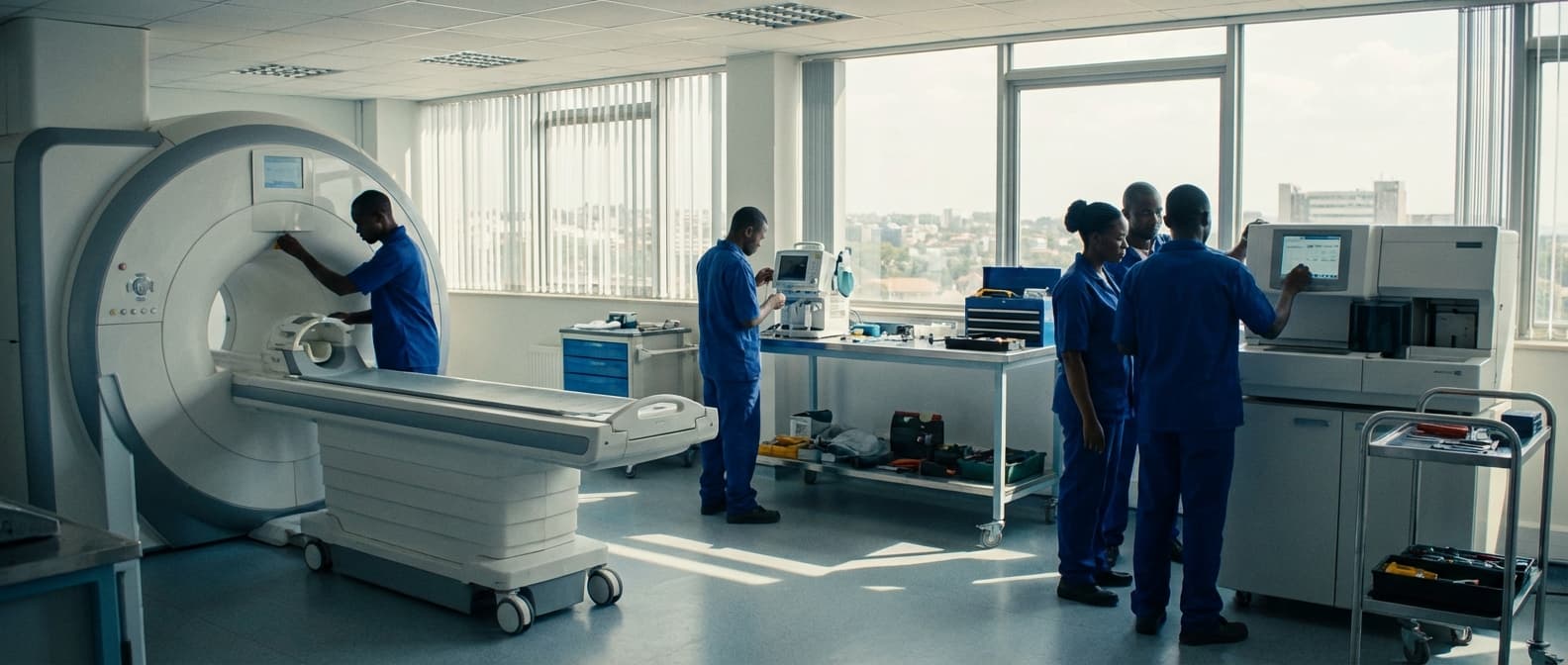
Uptime, Downtime & Root-Cause Analysis Reporting Service in Burundi
Engineering Excellence & Technical Support
Uptime, Downtime & Root-Cause Analysis Reporting Service High-standard technical execution following OEM protocols and local regulatory frameworks.
Proactive Uptime Assurance
Leverage our real-time, 24/7 monitoring across critical infrastructure in Burundi, detecting and resolving potential disruptions before they impact your operations. Our advanced analytics provide deep insights into system health, ensuring maximum availability for your business.
Rapid Downtime Mitigation
Minimize financial and reputational damage with our swift incident response and automated remediation capabilities. We offer comprehensive downtime reporting, detailing the duration, impact, and recovery steps taken, to rebuild trust and ensure business continuity.
Accurate Root-Cause Analysis (RCA)
Go beyond surface-level issues. Our sophisticated RCA engine pinpoints the precise origin of every incident, providing actionable intelligence to prevent recurrence. Receive detailed reports that empower your teams to implement permanent solutions and optimize system resilience.
What Is Uptime, Downtime & Root-cause Analysis Reporting Service In Burundi?
In Burundi's developing digital infrastructure landscape, the "Uptime, Downtime & Root-Cause Analysis Reporting Service" is a critical offering designed to ensure the reliability and performance of IT systems and network infrastructure. This service provides a systematic approach to monitoring system availability, identifying periods of unavailability (downtime), and conducting in-depth investigations to pinpoint the underlying causes of such disruptions. Its primary objective is to minimize service interruptions, optimize operational efficiency, and enhance the overall user experience by proactively addressing potential issues and learning from past incidents. The service typically involves continuous monitoring of key performance indicators (KPIs) such as server response times, network latency, application availability, and resource utilization. When deviations from baseline performance or complete service outages are detected, alerts are triggered, initiating the downtime incident response protocol. Subsequent root-cause analysis (RCA) employs a range of methodologies, including fault tree analysis, 5 Whys, and log correlation, to determine the originating event or configuration that led to the downtime. The output is a comprehensive report detailing the incident's timeline, impact, contributing factors, and recommended corrective and preventative actions.
| Who Needs This Service? | Typical Use Cases | |||||||||
|---|---|---|---|---|---|---|---|---|---|---|
| Businesses relying on digital operations: Companies in finance, telecommunications, e-commerce, healthcare, and government that depend on continuous availability of their IT systems for critical functions. | Financial Institutions: Ensuring uninterrupted access to banking services, ATMs, and online transaction platforms. | Telecommunications Providers: Maintaining network availability for voice, data, and internet services. | E-commerce Platforms: Guaranteeing seamless online shopping experiences and preventing lost revenue due to website downtime. | Government Agencies: Ensuring the availability of public services, citizen portals, and critical administrative systems. | Cloud Service Providers: Demonstrating service level agreements (SLAs) and providing assurance to their clientele. | Managed Service Providers (MSPs): Offering reliable IT support and infrastructure management to their clients. | IT Departments within Enterprises: Proactively managing and optimizing their organization's internal IT infrastructure. | Internet Service Providers (ISPs): Maintaining consistent internet connectivity for their subscribers. | Logistics and Supply Chain Companies: Ensuring the operational continuity of tracking systems and communication platforms. | Healthcare Providers: Guaranteeing access to patient records, diagnostic systems, and communication networks. |
Key Components of Uptime, Downtime & Root-Cause Analysis Reporting Service
- Continuous Monitoring: Proactive surveillance of IT infrastructure health and performance using specialized tools and agents.
- Alerting and Notification: Real-time notification systems to inform stakeholders of detected anomalies and service outages.
- Downtime Incident Management: Defined procedures for responding to and documenting service interruptions.
- Root-Cause Analysis (RCA): Structured methodologies for identifying the fundamental reasons behind system failures.
- Reporting and Documentation: Generation of detailed reports on uptime, downtime incidents, and RCA findings.
- Actionable Recommendations: Provision of concrete steps for remediation and future prevention.
Who Needs Uptime, Downtime & Root-cause Analysis Reporting Service In Burundi?
In Burundi's rapidly developing economic landscape, ensuring the continuous operation of critical systems is paramount for businesses and organizations across various sectors. Downtime can lead to significant financial losses, reputational damage, and operational disruptions. To mitigate these risks, a robust Uptime, Downtime & Root-Cause Analysis Reporting Service is indispensable. This service provides the insights needed to proactively identify issues, understand their origins, and implement effective solutions to maintain and improve system availability. By offering clear, actionable reports on system performance, downtime events, and their underlying causes, organizations can make informed decisions, optimize their IT infrastructure, and achieve higher levels of reliability.
| Industry Sector | Key Departments/Roles | Impact of Downtime | Benefit of Reporting Service |
|---|---|---|---|
| Telecommunications | NOC, Customer Support, IT Infrastructure | Lost revenue, customer dissatisfaction, churn | Improved network uptime, faster issue resolution, enhanced customer experience |
| Financial Services | IT Operations, Risk Management, Compliance | Lost transactions, regulatory fines, reputational damage | Enhanced system availability, reduced financial losses, improved audit trails |
| Government & Public Services | IT Departments, Administrative Offices | Disruption of public services, citizen inconvenience, data integrity risks | Reliable service delivery, efficient public administration, improved citizen trust |
| Healthcare | IT Departments, Clinical Operations | Compromised patient care, data access issues, operational paralysis | Ensured access to critical patient data, uninterrupted medical services, enhanced patient safety |
| E-commerce | IT Operations, Marketing, Sales | Lost sales, cart abandonment, brand damage | Maximized online revenue, improved customer conversion rates, stronger brand loyalty |
| Transportation & Logistics | IT, Operations | Supply chain disruptions, delayed deliveries, increased costs | Optimized logistics, reduced transit times, improved operational efficiency |
| Energy & Utilities | Operations, Engineering, IT | Service interruptions, safety hazards, economic impact | Ensured stable utility provision, minimized service outages, enhanced grid reliability |
Target Customers and Departments for Uptime, Downtime & Root-Cause Analysis Reporting Service in Burundi:
- {"item":"Telecommunications Companies:","description":"Crucial for maintaining network availability, customer service, and revenue streams. Downtime directly impacts subscriber experience and can lead to churn. Departments benefiting include Network Operations Centers (NOCs), Customer Support, and IT Infrastructure."}
- {"item":"Financial Institutions (Banks, Microfinance Institutions, Insurance Companies):","description":"Downtime in financial services can result in lost transactions, customer dissatisfaction, regulatory fines, and severe damage to trust. Essential for IT Operations, Risk Management, Compliance, and Fraud Prevention departments."}
- {"item":"Government Agencies & Public Services:","description":"Ensuring the availability of e-government services, public administration systems, and critical infrastructure (e.g., water, electricity) is vital for national operations and citizen well-being. Relevant departments include IT departments, administrative offices, and operational units."}
- {"item":"Healthcare Providers (Hospitals, Clinics):","description":"Uninterrupted access to patient records, diagnostic systems, and communication channels is a matter of life and death. IT departments and clinical operations management are key stakeholders."}
- {"item":"E-commerce & Online Retailers:","description":"Downtime directly translates to lost sales, abandoned carts, and damaged brand reputation. The IT department, Marketing, and Sales departments are primary beneficiaries."}
- {"item":"Transportation & Logistics Companies:","description":"Reliable tracking, scheduling, and communication systems are essential for efficient operations. Downtime can disrupt supply chains and delivery schedules. IT and Operations departments are key."}
- {"item":"Energy & Utility Companies:","description":"Maintaining the stability of power grids, water supply, and other essential utilities requires constant monitoring and rapid response to disruptions. Operations, Engineering, and IT departments are crucial."}
- {"item":"Large Enterprises & Corporations (across all sectors):","description":"Any organization with significant IT investments and reliance on digital systems will benefit from understanding and mitigating downtime. This includes departments like IT Operations, Business Continuity, and Executive Management."}
- {"item":"IT Service Providers & Managed Service Providers (MSPs):","description":"These entities often manage IT infrastructure for other businesses and need robust reporting to demonstrate value, SLA compliance, and to proactively manage their clients' systems. Their Technical Support, Operations, and Client Management teams would utilize this service."}
Uptime, Downtime & Root-cause Analysis Reporting Service Process In Burundi
This document outlines the standard workflow for the Uptime, Downtime, and Root-Cause Analysis (RCA) Reporting Service within Burundi. This process ensures efficient identification, reporting, and resolution of service disruptions, ultimately aiming to improve reliability and minimize future occurrences.
| Step | Description | Key Activities | Responsible Party | Output/Deliverable | Timeframe (Typical) |
|---|---|---|---|---|---|
| The process begins when a service disruption is detected or reported. | Monitoring systems alert relevant teams. Users report issues. Incident is logged. | Monitoring Systems, End Users, Service Desk | Incident Ticket/Log Entry | Immediate |
| The reported issue is assessed to determine its impact and priority. | Categorize incident, determine severity, assign ownership, initial troubleshooting. | Service Desk, Technical Support Team | Prioritized Incident Ticket, Preliminary Impact Assessment | Minutes to 1 Hour |
| If the issue can be resolved quickly, it is addressed directly. | Apply known fixes, restart services, resolve configuration errors. | Technical Support Team | Resolved Incident Ticket | Varies (depending on complexity) |
| For significant disruptions affecting multiple users or critical services, a formal Major Incident is declared and RCA is initiated. | Declare Major Incident, form Incident Response Team, communicate to stakeholders. | Incident Manager, Technical Leads | Major Incident Declaration, Incident Response Team Assembly | Within 15-30 Minutes of Major Incident Detection |
| A thorough investigation to determine the underlying cause of the downtime. | Data collection (logs, metrics, configurations), interviews, timeline reconstruction, analysis (e.g., 5 Whys, Fishbone diagram). | RCA Team (cross-functional) | Draft RCA Report | Hours to Days (depending on complexity) |
| Formal documentation of the RCA findings. | Detailing the incident, timeline, impact, root cause(s), and contributing factors. | RCA Team Lead | Final RCA Report | Concurrent with RCA Execution |
| Developing actions to resolve the identified root cause and prevent recurrence. | Propose specific, measurable, achievable, relevant, and time-bound (SMART) actions. | RCA Team, Affected Service Owners | Action Plan with Owners and Deadlines | Concurrent with RCA Report finalization |
| Executing the planned corrective and preventive actions. | Deploying fixes, updating configurations, implementing new processes, training. | Assigned Owners (Technical Teams, Operations) | Implemented Actions, Updated Documentation | Varies (based on action complexity) |
| Sharing the RCA report and action plan with relevant stakeholders. | Presenting findings in meetings, sending out email summaries, updating knowledge bases. | Incident Manager, RCA Team Lead | Distributed Reports and Action Plans, Stakeholder Briefings | Within 1-2 Business Days of RCA Report Completion |
| Ensuring that implemented actions are effective and that the issue is resolved. | Monitoring systems for recurrence, verifying action completion, conducting post-incident reviews. | Incident Manager, Service Owners | Confirmation of Action Effectiveness, Closure of Incident Ticket | Ongoing (until resolution is confirmed) |
| Integrating lessons learned into ongoing service operations and best practices. | Updating standard operating procedures (SOPs), training staff, revising monitoring thresholds. | Operations Teams, Service Improvement Leads | Updated SOPs, Enhanced Monitoring, Trained Staff | Ongoing |
Key Objectives of the Uptime, Downtime & RCA Reporting Service
- Accurately track and report service uptime and downtime.
- Identify the root cause of all significant service disruptions.
- Provide timely and comprehensive reports to relevant stakeholders.
- Implement corrective and preventive actions based on RCA findings.
- Continuously improve service reliability and performance.
Uptime, Downtime & Root-cause Analysis Reporting Service Cost In Burundi
Providing Uptime, Downtime, and Root-Cause Analysis (RCA) reporting services in Burundi involves a spectrum of costs influenced by several critical factors. These services are crucial for businesses relying on stable IT infrastructure and operational continuity. The pricing is not standardized and can vary significantly based on the provider's expertise, the complexity of the systems being monitored, the reporting frequency and detail required, and the overall scope of the engagement. Understanding these elements is key to budgeting for such essential services in the Burundian market.
| Service Tier/Complexity | Description | Estimated Monthly Cost Range (BIF) | Estimated Monthly Cost Range (USD - Approx.) |
|---|---|---|---|
| Basic Monitoring & Alerting | Covers essential uptime checks and immediate alerts for critical systems. Minimal RCA. | 200,000 - 500,000 | $90 - $225 |
| Standard Monitoring & Reporting | Includes more comprehensive uptime monitoring, basic downtime reporting, and simple root cause identification for common issues. | 500,000 - 1,500,000 | $225 - $675 |
| Advanced Monitoring & Detailed RCA | Proactive monitoring of complex environments, detailed downtime analysis, in-depth root cause investigations with actionable recommendations, and regular comprehensive reports. | 1,500,000 - 5,000,000+ | $675 - $2,250+ |
| Enterprise/Custom Solutions | Tailored solutions for large organizations with highly critical infrastructure, complex interdependencies, and specific compliance requirements. Includes dedicated support and advanced analytics. | 5,000,000 - 15,000,000+ (Highly Variable) | $2,250 - $6,750+ (Highly Variable) |
Key Pricing Factors for Uptime, Downtime & RCA Reporting in Burundi
- {"title":"Provider Expertise and Reputation","description":"Established IT service providers or specialized cybersecurity firms with a proven track record in monitoring, incident management, and RCA will command higher fees due to their experience, skilled personnel, and established methodologies. Smaller, less experienced providers may offer lower rates but with potential risks to service quality."}
- {"title":"Scope and Complexity of Systems Monitored","description":"The number and type of systems (servers, networks, applications, cloud services) that require monitoring directly impact cost. Monitoring complex, mission-critical, or custom-built systems will be more expensive than monitoring standard off-the-shelf solutions. The interconnectedness of systems also adds to complexity."}
- {"title":"Reporting Frequency and Detail","description":"The regularity of reports (daily, weekly, monthly, ad-hoc) and the level of detail required (e.g., high-level summaries vs. in-depth technical analysis, executive summaries vs. technical logs) will influence pricing. More frequent and detailed reporting will naturally incur higher costs."}
- {"title":"Proactive vs. Reactive Monitoring","description":"Services that include proactive monitoring and alerting to prevent downtime are generally more comprehensive and thus more expensive than purely reactive incident reporting after an outage has occurred. RCA itself is often a reactive service, but its integration with proactive monitoring adds value."}
- {"title":"Tools and Technology Used","description":"The sophistication of the monitoring and analysis tools employed by the service provider plays a role. Advanced, AI-driven, or specialized RCA tools might justify higher pricing. The provider's licensing costs for these tools are also factored in."}
- {"title":"Service Level Agreements (SLAs)","description":"The guaranteed uptime percentages, response times for incidents, and resolution times stipulated in an SLA will affect the cost. Higher SLAs typically translate to higher service fees."}
- {"title":"On-site vs. Remote Support","description":"While much of monitoring and reporting can be done remotely, any requirement for on-site presence for investigation or remediation will add travel and personnel costs, particularly relevant in Burundi where geographical distances can be significant."}
- {"title":"Contract Duration","description":"Longer-term contracts (e.g., annual or multi-year) often come with discounted rates compared to short-term or ad-hoc engagements, reflecting a commitment from both parties."}
Affordable Uptime, Downtime & Root-cause Analysis Reporting Service Options
Our service offers comprehensive uptime monitoring, detailed downtime incident reporting, and in-depth root-cause analysis to ensure your systems are always operational and to quickly resolve any issues. We provide flexible value bundles and cost-saving strategies designed to meet the needs of businesses of all sizes, from startups to enterprises.
| Value Bundle | Features Included | Ideal For | Starting Price (Monthly) |
|---|---|---|---|
| Startup Essentials | Basic Uptime Monitoring | New businesses, small teams with limited IT staff. | $49 |
| Growth Accelerator | Basic Uptime Monitoring, Standard Downtime Incident Reporting | Growing businesses, e-commerce sites, SaaS providers. | $129 |
| Resilience Builder | Basic Uptime Monitoring, Standard Downtime Incident Reporting, Advanced Root-Cause Analysis | Businesses with critical operations, companies prioritizing reliability. | $299 |
| Enterprise Guardian | Enterprise-Level Solution (customizable) | Large organizations, financial institutions, mission-critical systems. | Custom Quote |
Uptime, Downtime & Root-Cause Analysis Service Options
- {"title":"Basic Uptime Monitoring","description":"Essential 24/7 monitoring of your key services and applications. Real-time alerts for any downtime events. Includes automated uptime reports."}
- {"title":"Standard Downtime Incident Reporting","description":"Includes all Basic features, plus detailed incident reports upon downtime detection. Reports cover duration, impact, affected services, and initial response actions."}
- {"title":"Advanced Root-Cause Analysis (RCA)","description":"Builds on Standard features with in-depth investigation into the root cause of downtime. Provides actionable recommendations to prevent recurrence and improve system resilience. Includes post-incident review meetings."}
- {"title":"Enterprise-Level Solution","description":"Comprehensive monitoring, advanced RCA, dedicated support, custom reporting, SLA compliance tracking, and proactive vulnerability assessments. Tailored to meet the most demanding operational requirements."}
Verified Providers In Burundi
In Burundi, access to reliable healthcare is paramount, and understanding which providers are truly verified and trustworthy is crucial for individuals and organizations. Franance Health stands out as a premier choice due to its rigorous credentialing process and unwavering commitment to quality and patient well-being. This commitment translates into a network of healthcare professionals and facilities that meet the highest standards, ensuring that patients receive safe, effective, and ethical care.
| Credential Area | Franance Health Verification Standard | Benefit to Patients/Clients |
|---|---|---|
| Medical Licenses & Certifications | Mandatory verification of all current and valid licenses and certifications from recognized bodies. | Ensures providers are legally qualified and possess the necessary expertise. |
| Educational Background | Thorough review of academic records and degrees from accredited institutions. | Confirms foundational knowledge and training in medical disciplines. |
| Professional Experience | Verification of previous practice history and references, including checks for disciplinary actions. | Assesses practical skills, experience, and professional integrity. |
| Clinical Competency | May involve peer reviews or assessments of specialized skills (where applicable). | Guarantees a high level of medical proficiency and effective treatment. |
| Ethical Conduct & Patient Safety | Adherence to codes of conduct, patient rights policies, and robust safety protocols. | Promotes a safe, respectful, and ethical healthcare environment. |
Why Franance Health Credentials Matter in Burundi
- Rigorous Vetting Process: Franance Health employs a comprehensive and multi-layered vetting system for all its accredited providers. This includes verifying medical licenses, professional certifications, educational qualifications, and a thorough review of past performance and disciplinary records.
- Commitment to Quality Standards: Accreditation by Franance Health signifies adherence to stringent international and local quality benchmarks. This ensures that providers offer up-to-date medical practices and maintain optimal patient safety protocols.
- Focus on Patient Experience: Beyond clinical expertise, Franance Health evaluates providers on their patient care approach, communication skills, and ethical conduct. This holistic assessment guarantees a positive and respectful patient experience.
- Access to Trusted Networks: By choosing Franance Health-verified providers, individuals and businesses can be confident they are accessing a network of reputable doctors, specialists, hospitals, and clinics across Burundi.
- Enhanced Trust and Transparency: The Franance Health seal of approval provides a clear indicator of reliability, fostering trust and transparency in the Burundian healthcare landscape.
Scope Of Work For Uptime, Downtime & Root-cause Analysis Reporting Service
This Scope of Work (SOW) outlines the requirements for a Uptime, Downtime, and Root-Cause Analysis (RCA) Reporting Service. This service aims to provide detailed, actionable insights into system availability, performance degradation, and the underlying causes of incidents, enabling proactive problem-solving and continuous improvement.
| Service Component | Description | Technical Deliverables | Standard Specifications | |
|---|---|---|---|---|
| Uptime & Downtime Monitoring & Reporting | Continuous tracking of system availability and recording of all downtime events. | Automated uptime reports (daily, weekly, monthly). | Uptime percentage calculation (e.g., 99.9%, 99.99%). Availability metrics for defined service components. Downtime logs detailing start/end times, duration, and impacted services. Alerting on critical downtime thresholds. | Real-time monitoring tools (e.g., Nagios, Zabbix, Prometheus). Centralized logging and aggregation systems. Defined Service Level Objectives (SLOs). Automated notification channels (email, Slack, etc.). |
| Incident Detection & Triage | Prompt identification and initial assessment of system incidents. | Incident tickets generated with severity levels. | Defined incident severity matrix (e.g., Critical, High, Medium, Low). Time-to-detection SLAs. Initial impact assessment. | IT Service Management (ITSM) tools (e.g., ServiceNow, Jira Service Management). Automated alerting based on monitoring thresholds. Dedicated incident response team/process. |
| Root-Cause Analysis (RCA) | In-depth investigation to determine the underlying cause of incidents. | Formal RCA reports for all critical and high-severity incidents. | Structured RCA methodology (e.g., 5 Whys, Fishbone diagram, Fault Tree Analysis). Identification of direct and contributing causes. Timeline of events leading to the incident. Evidence supporting the root cause. | Access to system logs, performance metrics, configuration changes, network traffic data. Collaboration tools for incident investigation. Knowledge base for past incidents and resolutions. |
| Actionable Recommendations & Preventative Measures | Development of concrete steps to prevent recurrence of identified issues. | List of recommended actions with ownership and deadlines. | Prioritization of recommendations based on impact and feasibility. Identification of potential architectural or process improvements. Training requirements. | Project management tools for tracking action items. Change management processes. Regular review meetings for continuous improvement. |
| Reporting & Dashboards | Consolidated presentation of uptime, downtime, and RCA findings. | Executive summaries and detailed reports. | Interactive dashboards visualizing key availability and incident metrics. Trend analysis of incident types and resolution times. Performance reports against SLOs. | Business Intelligence (BI) tools (e.g., Tableau, Power BI, Grafana). Customizable report templates. Secure access controls for sensitive data. |
| Post-Incident Review (PIR) | Formal review of significant incidents to capture lessons learned. | Minutes and action items from PIR meetings. | Identification of what went well and what could be improved during incident response. Updates to incident response playbooks and procedures. Knowledge sharing sessions. | Facilitated review meetings. Document repository for PIR findings. |
Key Objectives
- Quantify system uptime and downtime accurately.
- Identify the root cause of all significant incidents promptly and thoroughly.
- Provide clear, concise, and actionable reports to stakeholders.
- Facilitate continuous improvement by identifying recurring issues and proposing preventative measures.
- Establish standardized reporting procedures for consistency and clarity.
Service Level Agreement For Uptime, Downtime & Root-cause Analysis Reporting Service
This Service Level Agreement (SLA) outlines the guaranteed uptime, acceptable downtime, and root-cause analysis (RCA) reporting standards for the [Service Name] service. It defines the responsibilities of both [Your Company Name] (the Provider) and the Customer regarding service availability and incident reporting.
| Service Component/Metric | Uptime Guarantee (Monthly) | Maximum Allowable Unscheduled Downtime (Monthly) | Response Time (for Severity 1 Incidents) | RCA Report Delivery (for Downtime Events > X hours) |
|---|---|---|---|---|
| Core Service Availability | 99.9% | 43.2 minutes | 15 minutes | Within 24 hours of resolution |
| Data Processing Module | 99.5% | 3.6 hours | 30 minutes | Within 48 hours of resolution |
| API Endpoints | 99.95% | 21.6 minutes | 15 minutes | Within 24 hours of resolution |
Key Definitions
- Uptime: The percentage of time the Service is available and operational for the Customer to use.
- Downtime: The percentage of time the Service is unavailable or not operational.
- Scheduled Maintenance: Planned periods of downtime for system upgrades, patches, or other necessary maintenance. Customers will be notified in advance.
- Unscheduled Downtime: Any downtime not classified as Scheduled Maintenance. This includes hardware failures, software bugs, network issues, etc.
- Root-Cause Analysis (RCA) Report: A detailed document explaining the origin, impact, and resolution of a significant incident that caused Unscheduled Downtime.
- Downtime Event: A continuous period of Unscheduled Downtime. Multiple occurrences within a 24-hour period may be aggregated.
- Response Time: The time taken by the Provider to acknowledge and begin investigating a reported incident.
Frequently Asked Questions

Ready when you are
Let's scope your Uptime, Downtime & Root-Cause Analysis Reporting Service in Burundi project in Burundi.

Scaling healthcare logistics and technical systems across the entire continent.