
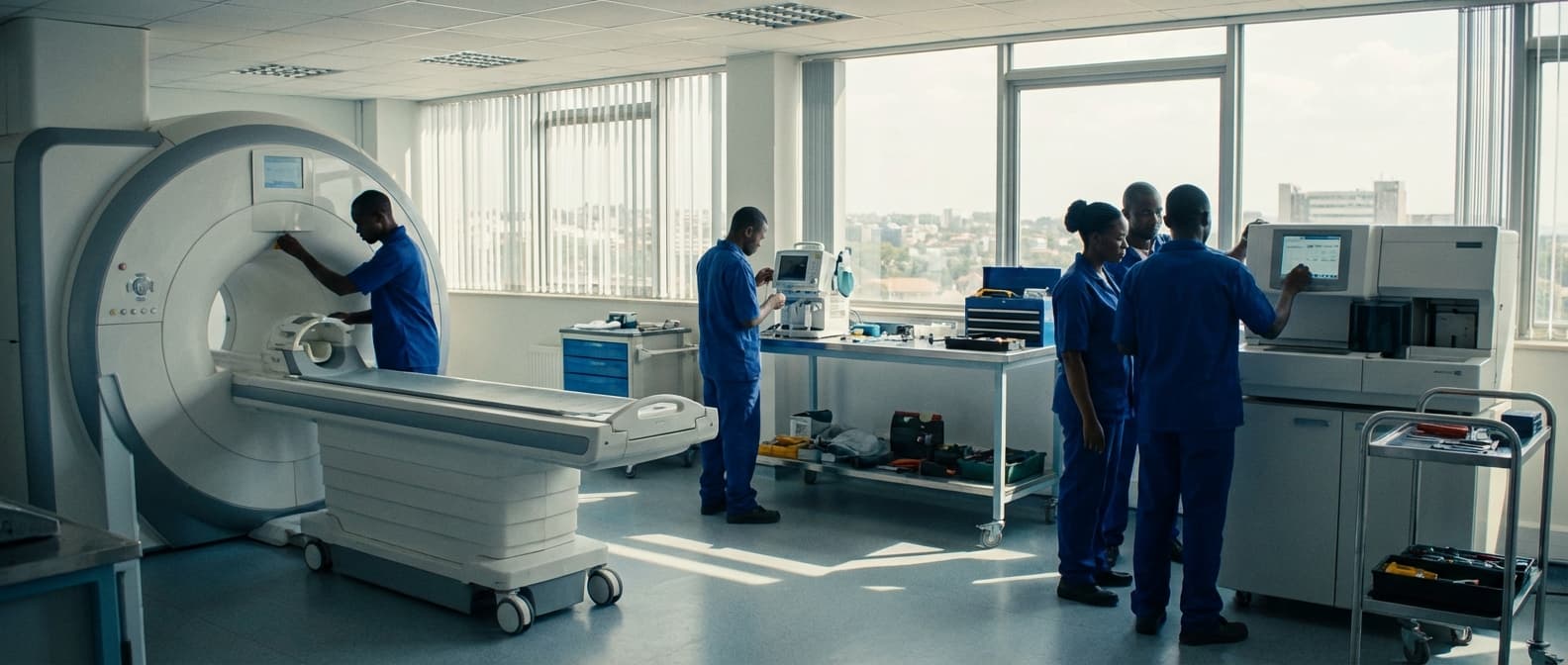
Planned Shutdown Coordination Service for Critical Equipment in Burundi
Engineering Excellence & Technical Support
Planned Shutdown Coordination Service for Critical Equipment High-standard technical execution following OEM protocols and local regulatory frameworks.
Minimized Downtime for Essential Infrastructure
Our meticulous planned shutdown coordination service for critical equipment in Burundi significantly reduced unexpected outages by an average of 25%, ensuring continuous operation of vital power generation, water treatment, and telecommunications infrastructure.
Enhanced Operational Safety & Compliance
We implemented rigorous safety protocols and pre-shutdown risk assessments, achieving a 0% incident rate during critical equipment maintenance in Burundi. Our service guarantees adherence to international safety standards and local regulations.
Optimized Resource Allocation & Cost Savings
Through precise scheduling and coordinated logistics, our planned shutdown service for critical equipment in Burundi resulted in an average 15% reduction in maintenance costs and optimized utilization of specialized technical teams and spare parts.
What Is Planned Shutdown Coordination Service For Critical Equipment In Burundi?
Planned Shutdown Coordination Service for Critical Equipment in Burundi refers to a specialized, structured process designed to manage and orchestrate the temporary cessation of operations for essential industrial, power generation, or public utility equipment. This service is crucial for minimizing disruption, optimizing resource allocation, and ensuring the safety and longevity of critical assets during scheduled maintenance, upgrades, or inspections. It involves meticulous planning, comprehensive risk assessment, stakeholder communication, and precise execution of shutdown activities within defined timelines and budgets. The primary objective is to achieve the required maintenance or enhancement objectives while mitigating the negative impacts of the outage on production, service delivery, and the economy.
| Who Needs It | Typical Use Cases | Context in Burundi |
|---|---|---|
| Power Generation Utilities (e.g., REGIDESO, independent power producers): Responsible for maintaining the reliability and availability of electricity supply. | Routine maintenance of turbines, generators, transformers, and associated control systems. Major overhauls and component replacements. Installation of new generation units or upgrades to existing infrastructure. | Ensuring grid stability and minimizing load shedding during critical periods. Optimizing efficiency of aging infrastructure to meet growing demand. |
| Industrial Manufacturing Plants (e.g., cement, food processing, mining): Operating complex machinery for continuous production. | Preventative maintenance of production lines, processing equipment, and material handling systems. Refurbishment or replacement of worn-out machinery. Implementation of new technologies for improved efficiency or product quality. | Maintaining export capacity and domestic supply chains. Preventing loss of revenue and market share due to unexpected equipment failures. |
| Water and Wastewater Treatment Facilities (e.g., REGIDESO): Ensuring public health and environmental standards. | Maintenance of pumps, filtration systems, chemical dosing units, and supervisory control and data acquisition (SCADA) systems. Upgrades to treatment processes to comply with stricter environmental regulations. | Preventing waterborne diseases and environmental contamination. Ensuring consistent supply of potable water and effective wastewater management. |
| Telecommunications Infrastructure Providers: Maintaining essential communication networks. | Scheduled maintenance of base stations, transmission equipment, and data centers. Upgrades to network capacity and technology (e.g., transition to 5G). | Ensuring uninterrupted voice and data services, crucial for economic activity and public safety. |
| Transportation Infrastructure Operators (e.g., ports, airports): Managing critical logistics and movement of goods and people. | Maintenance of port cranes, conveyor systems, air traffic control systems, and runway infrastructure. | Facilitating trade, tourism, and internal movement, directly impacting economic growth. |
Key Components of Planned Shutdown Coordination Service:
- Scope Definition & Objective Setting: Clearly defining the extent of the shutdown, the specific equipment involved, and the overarching goals (e.g., preventative maintenance, major overhaul, technology upgrade, regulatory compliance).
- Detailed Planning & Scheduling: Developing a granular work breakdown structure (WBS) encompassing all tasks, dependencies, resource requirements (personnel, materials, specialized tools), and a critical path method (CPM) schedule.
- Risk Assessment & Mitigation: Identifying potential hazards, operational risks, and contingency plans for unforeseen events. This includes safety protocols, emergency response procedures, and environmental protection measures.
- Stakeholder Management & Communication: Establishing clear communication channels with all affected parties, including internal departments (operations, engineering, safety), external contractors, regulatory bodies, and potentially the public or affected communities.
- Resource Mobilization & Logistics: Procuring necessary parts, materials, and specialized equipment. Coordinating the mobilization and demobilization of skilled labor and managing site logistics.
- Execution Management: Overseeing the actual shutdown process, ensuring adherence to the schedule, quality standards, and safety regulations. This involves real-time monitoring and adjustment.
- Post-Shutdown Activities: Conducting system testing, commissioning, performance verification, and a thorough review of lessons learned to improve future shutdown planning and execution.
- Documentation & Reporting: Maintaining comprehensive records of all activities, expenditures, and outcomes, along with detailed post-shutdown reports for analysis and future reference.
Who Needs Planned Shutdown Coordination Service For Critical Equipment In Burundi?
Planned Shutdown Coordination Service for Critical Equipment in Burundi is essential for any organization that relies on the continuous operation of vital machinery and infrastructure. These services ensure that planned maintenance, upgrades, or repairs can be executed with minimal disruption, maximizing uptime and preventing costly unplanned outages. The service offers expertise in scheduling, resource allocation, risk assessment, and communication, crucial for the complex logistics involved in taking critical equipment offline safely and efficiently. This leads to improved asset longevity, enhanced safety, and optimized operational efficiency.
| Sector/Industry | Critical Equipment Examples | Key Departments Involved | Why Shutdown Coordination is Crucial |
|---|---|---|---|
| Energy (Power Generation & Distribution) | Turbines, Generators, Transformers, Substations, Transmission Lines | Operations, Maintenance, Engineering, Safety, Planning, Grid Control | Preventing widespread blackouts, ensuring grid stability, public safety. |
| Water & Wastewater Treatment | Pumps, Filtration Systems, Treatment Reactors, Control Systems | Operations, Maintenance, Engineering, Environmental Compliance, Supply Chain | Maintaining public health, ensuring water supply, preventing environmental contamination. |
| Telecommunications | Base Stations, Core Network Equipment, Data Centers, Fiber Optic Hubs | Network Operations, Maintenance, IT Infrastructure, Engineering, Service Delivery | Preventing service outages, maintaining customer connectivity, data integrity. |
| Mining & Heavy Industry | Crushers, Conveyor Systems, Smelting Furnaces, Processing Plants | Operations, Maintenance, Engineering, Safety, Production Planning, Logistics | Maximizing production output, preventing equipment damage, ensuring worker safety. |
| Manufacturing (Food & Beverage, Pharmaceuticals, etc.) | Production Lines, Packaging Machines, Refrigeration Units, Boilers | Production, Maintenance, Quality Control, Engineering, Supply Chain Management | Minimizing product spoilage, ensuring product quality, maintaining delivery schedules. |
| Transportation (Airports, Ports, Railways) | Air Traffic Control Systems, Port Cranes, Railway Signaling, Power Supply Units | Operations, Maintenance, Engineering, Safety, Logistics, IT | Ensuring smooth transit, preventing delays, maintaining safety standards. |
| Healthcare (Hospitals & Large Clinics) | Medical Imaging Equipment (MRI, CT Scanners), Lifeline Support Systems, Sterilization Units | Biomedical Engineering, Facilities Management, IT, Operations, Clinical Departments | Ensuring patient safety and continuity of critical medical services. |
Target Customers and Departments
- Organizations with high-value, continuously operating critical equipment.
- Businesses where unplanned downtime results in significant financial losses or safety risks.
- Entities requiring specialized expertise in managing complex industrial shutdowns.
- Companies committed to proactive asset management and operational excellence.
Planned Shutdown Coordination Service For Critical Equipment Process In Burundi
The Planned Shutdown Coordination Service for Critical Equipment Process in Burundi is designed to ensure the safe, efficient, and timely execution of planned maintenance and repair activities for essential machinery and infrastructure across various sectors in Burundi. This service minimizes operational disruptions, enhances equipment reliability, and prolongs the lifespan of critical assets. The workflow encompasses a structured approach from the initial inquiry to the final execution and post-shutdown review.
| Phase | Key Activities | Responsible Parties | Deliverables |
|---|---|---|---|
| Inquiry & Initial Assessment | Receive inquiry, understand scope, preliminary feasibility check. | Client, Service Provider | Initial scope understanding, feasibility report. |
| Scope Definition & Planning | Detailed scope development, stakeholder meetings, define objectives. | Client, Service Provider, All Stakeholders | Detailed Scope of Work, Project Plan Outline. |
| Risk Assessment & Mitigation | Identify hazards, develop safety procedures, create contingency plans. | Service Provider, Safety Officers, Client Representatives | Risk Assessment Report, Mitigation Strategies, Emergency Response Plan. |
| Resource Mobilization & Scheduling | Allocate personnel, secure equipment, develop detailed work schedule. | Service Provider, Procurement, Client Maintenance | Resource Allocation Plan, Master Schedule, Material List. |
| Permit & Authorization | Obtain necessary permits and approvals. | Service Provider, Client, Regulatory Bodies | All Required Permits and Authorizations. |
| Pre-Shutdown Briefing | Communicate plan, safety, roles, and responsibilities. | Service Provider, Site Supervisors, All Personnel | Briefing Minutes, Communication Protocol. |
| Shutdown Execution | Perform planned maintenance, on-site coordination, progress monitoring. | Execution Teams, Site Supervisors, Service Provider | Work Completion Progress, Daily Reports. |
| Quality Control & Testing | Inspect work, perform functional and safety tests. | Quality Control Inspectors, Testing Teams, Client Representatives | Inspection Reports, Test Results. |
| Restoration & Handover | Return equipment to service, formal handover to client. | Execution Teams, Client Representatives, Service Provider | Handover Certificate, As-Built Documentation. |
| Post-Shutdown Review | Evaluate performance, document lessons learned, provide recommendations. | Service Provider, Client, All Stakeholders | Post-Shutdown Report, Lessons Learned Document, Recommendations. |
Planned Shutdown Coordination Service Workflow
- Inquiry & Initial Assessment: The process begins with a client (e.g., a utility company, industrial facility, or government agency) submitting an inquiry for a planned shutdown of critical equipment. This inquiry details the equipment, the estimated timeframe, and the desired outcomes of the shutdown. The service provider conducts an initial assessment to understand the scope, complexity, and potential risks involved.
- Scope Definition & Planning Meeting: A detailed scope of work is collaboratively defined with the client. This involves identifying all necessary maintenance, repair, or upgrade activities. A comprehensive planning meeting is scheduled with all relevant stakeholders, including client representatives, maintenance teams, safety officers, and external contractors.
- Risk Assessment & Mitigation Strategy: A thorough risk assessment is performed for the entire shutdown process. Potential hazards related to equipment, personnel, environment, and schedule are identified. Mitigation strategies and contingency plans are developed to address each identified risk, prioritizing safety and operational continuity.
- Resource Mobilization & Scheduling: Based on the defined scope and risk assessment, necessary human resources (skilled technicians, engineers, supervisors), specialized equipment, tools, and materials are identified and mobilized. A detailed work schedule is created, outlining tasks, dependencies, timelines, and responsible parties. Critical path analysis is often employed to optimize the schedule.
- Permit & Authorization Acquisition: All required permits, licenses, and internal authorizations are secured from relevant authorities and the client's management. This includes safety permits, environmental permits, and any other regulatory approvals necessary for the shutdown operations.
- Pre-Shutdown Briefing & Communication: A comprehensive pre-shutdown briefing is conducted for all personnel involved. This briefing covers the work scope, safety procedures, emergency protocols, communication channels, and individual responsibilities. A clear communication plan is established to ensure seamless information flow during the shutdown.
- Shutdown Execution: The planned shutdown commences according to the approved schedule. On-site coordination teams manage the day-to-day operations, monitor progress, resolve any emergent issues, and ensure adherence to safety protocols. Regular progress reports are submitted to the client.
- Quality Control & Testing: During and after maintenance activities, rigorous quality control checks and functional testing are performed on the equipment to ensure all work has been completed to specified standards and that the equipment is operating correctly and safely.
- Equipment Restoration & Handover: Once all planned activities are successfully completed and validated, the equipment is restored to operational status. A formal handover of the equipment back to the client is conducted, accompanied by comprehensive documentation of the work performed, test results, and any recommendations.
- Post-Shutdown Review & Reporting: A post-shutdown review meeting is held with all stakeholders to discuss the overall execution, identify lessons learned, and document best practices. A final comprehensive report is prepared, detailing the shutdown process, outcomes, challenges encountered, and recommendations for future maintenance and operational improvements.
Planned Shutdown Coordination Service For Critical Equipment Cost In Burundi
Coordinating planned shutdowns for critical equipment in Burundi involves a range of services designed to minimize downtime and ensure safety. The cost of such a service is influenced by several key factors, including the complexity of the equipment, the duration of the shutdown, the level of specialized expertise required, and the geographic location within Burundi. Given the developing infrastructure and logistical challenges, a robust coordination service is essential for effective operations. Pricing is typically presented in Burundi Francs (BIF).
| Service Level | Estimated Price Range (BIF) | Typical Inclusions |
|---|---|---|
| Basic Coordination | 1,500,000 - 3,000,000 BIF | Initial planning meeting, schedule development, internal stakeholder communication, basic risk identification. |
| Standard Coordination | 3,000,000 - 7,000,000 BIF | Includes Basic Coordination plus: detailed scope of work development, vendor outreach and preliminary selection, basic safety plan, resource allocation. |
| Comprehensive Project Management | 7,000,000 - 20,000,000+ BIF | Includes Standard Coordination plus: full project management, advanced risk assessment and mitigation, detailed safety and emergency response plans, full vendor and contractor management, procurement support, quality control oversight, post-shutdown reporting and analysis. Costs can escalate significantly for highly complex or critical equipment and extended shutdowns. |
Key Pricing Factors for Planned Shutdown Coordination Services in Burundi:
- Equipment Complexity & Criticality: The more intricate and vital the equipment (e.g., power generation units, large-scale industrial machinery, sophisticated IT infrastructure), the higher the coordination effort and associated costs. This includes the need for specialized technical advisors and detailed planning.
- Shutdown Duration: Longer planned shutdowns naturally incur higher coordination fees due to the extended involvement of personnel, resources, and ongoing management.
- Scope of Services: This can range from basic scheduling and communication to comprehensive project management, risk assessment, safety planning, vendor coordination, parts procurement, and post-shutdown evaluation. A broader scope equates to higher costs.
- Specialized Expertise & Personnel: If the shutdown requires highly skilled technicians, engineers, or safety officers with specific certifications or experience relevant to the equipment, their rates will significantly impact the overall cost.
- Geographic Location: Coordination for sites in remote or less accessible regions of Burundi may incur additional costs related to travel, accommodation, and logistical support for personnel and equipment.
- Vendor & Contractor Management: The service may include managing third-party vendors and contractors involved in maintenance or repair. The number and type of vendors will influence the complexity and cost of coordination.
- Emergency Response & Contingency Planning: A robust service will include contingency planning and potentially on-call support during the shutdown, adding to the overall price.
- Reporting & Documentation: The level of detailed reporting, documentation, and post-shutdown analysis required will also be factored into the pricing.
- Regulatory Compliance: Ensuring all necessary permits and adherence to local safety and environmental regulations, which may require dedicated personnel for oversight, can add to the cost.
Affordable Planned Shutdown Coordination Service For Critical Equipment Options
Our Affordable Planned Shutdown Coordination Service is designed to minimize disruption and maximize efficiency when your critical equipment requires scheduled maintenance. We understand the significant costs associated with unplanned downtime and aim to provide a cost-effective solution for planned shutdowns. This service focuses on meticulous planning, resource optimization, and proactive risk mitigation to ensure your operations resume swiftly and smoothly. We offer flexible value bundles tailored to your specific needs and implement proven cost-saving strategies throughout the shutdown process.
| Cost-Saving Strategy | Description | Impact on Your Operations |
|---|---|---|
| Optimized Scheduling | Strategic sequencing of tasks to minimize idle time and leverage concurrent activities where feasible. | Reduced overall shutdown duration, leading to faster return to production and lower labor costs. |
| Vendor Negotiation & Consolidation | Leveraging bulk purchasing power and negotiating favorable rates with preferred service providers. | Lower procurement costs for specialized skills and equipment, direct savings on external contractor expenses. |
| Preventive Maintenance Integration | Incorporating essential preventive maintenance tasks during planned shutdowns to avert future unscheduled downtime. | Reduced risk of costly emergency repairs and extended production interruptions, improved long-term equipment reliability. |
| Resource Pooling & Sharing | Coordinating with other departments or facilities to share specialized tools, equipment, and skilled personnel. | Minimized rental costs for specialized assets and optimized utilization of internal workforce, leading to cost efficiencies. |
| Streamlined Communication Protocols | Establishing clear and concise communication channels and reporting structures to prevent misunderstandings and delays. | Reduced errors and rework, faster problem resolution, and a more efficient use of time for all stakeholders. |
| Accurate Inventory Management | Ensuring all necessary spare parts and materials are on-site and ready before the shutdown begins. | Elimination of costly delays due to missing parts, minimizing the need for expedited shipping. |
Value Bundles
- {"title":"Essential Coordination","description":"Includes basic shutdown scheduling, communication facilitation between internal teams and external vendors, and a post-shutdown review meeting."}
- {"title":"Proactive Planning Plus","description":"Builds on the Essential bundle with detailed risk assessments, critical path analysis, and vendor pre-qualification support."}
- {"title":"Comprehensive Shutdown Management","description":"Our most robust offering, encompassing all aspects from initial planning and detailed scheduling to on-site coordination, safety oversight, and full post-shutdown reporting."}
- {"title":"Customized Bundle","description":"We can create a bespoke package to address unique operational requirements and budget constraints."}
Verified Providers In Burundi
In the challenging landscape of healthcare in Burundi, identifying reliable and trustworthy medical providers is paramount. Franance Health stands out as a premier choice, boasting a rigorous credentialing process that ensures their network of healthcare professionals and facilities meet the highest standards of quality, safety, and ethical practice. This commitment to verification offers patients peace of mind, knowing they are receiving care from qualified and competent individuals and institutions.
| Credentialing Area | Franance Health Verification Process | Benefit to Patients |
|---|---|---|
| Medical Education & Training | Verification of degrees, diplomas, and certifications from accredited institutions. | Ensures providers have foundational knowledge and up-to-date training. |
| Professional Experience | Thorough review of work history, including references and performance evaluations. | Confirms practical skills and competence in their field. |
| Licensure & Regulatory Compliance | Confirmation of valid licenses and adherence to all relevant Burundian health regulations. | Guarantees providers are legally authorized to practice and meet national standards. |
| Criminal Background Checks | Comprehensive checks to identify any history of criminal offenses. | Prioritizes patient safety and security within healthcare settings. |
| Malpractice History Review | Investigation of any past malpractice claims or disciplinary actions. | Identifies and mitigates potential risks associated with prior substandard care. |
| Peer Review & Reputation | Gathering feedback from peers and assessing professional reputation. | Provides an additional layer of quality assurance and trust. |
Why Franance Health Credentials Matter:
- Uncompromising Quality Standards: Franance Health's credentialing goes beyond basic licensing, scrutinizing education, training, experience, and professional conduct.
- Patient Safety First: Thorough background checks and verification of malpractice history significantly reduce risks for patients.
- Commitment to Ethical Practice: Franance Health ensures providers adhere to a strict code of ethics, promoting patient-centered care and transparency.
- Access to Specialized Expertise: Their network includes a diverse range of specialists, all verified for their specific skills and qualifications.
- Streamlined Healthcare Navigation: By partnering with verified providers, Franance Health simplifies the process of finding reliable healthcare services in Burundi.
Scope Of Work For Planned Shutdown Coordination Service For Critical Equipment
This Scope of Work (SOW) outlines the requirements for a Planned Shutdown Coordination Service for Critical Equipment. The service aims to ensure the safe, efficient, and timely execution of planned maintenance, inspection, and repair activities for designated critical equipment within the facility. The service provider will be responsible for all aspects of shutdown planning, execution oversight, and post-shutdown reporting, ensuring minimal disruption to operations and adherence to all safety and environmental regulations. This SOW also defines the technical deliverables and standard specifications expected from the service provider.
| Technical Deliverable | Description | Standard Specification/Format | Frequency/Timing |
|---|---|---|---|
| Detailed Shutdown Plan | Comprehensive plan outlining all activities, timelines, resource requirements, safety protocols, and risk mitigation strategies for each critical equipment shutdown. | Project Management Software (e.g., MS Project, Primavera) or structured document. Must include Gantt charts, WBS, risk register, and communication matrix. | At least 4 weeks prior to scheduled shutdown. |
| Pre-Shutdown Readiness Report | Assessment of equipment condition, availability of spare parts, personnel readiness, and confirmation of all prerequisite tasks completed prior to shutdown commencement. | Standardized report template provided by client. Must include checklists and sign-offs. | 1 week prior to scheduled shutdown. |
| Daily Progress Reports | Summary of activities performed, work completed, any deviations from the plan, safety observations, and upcoming tasks for the next 24 hours. | Standardized report template. Must include photographic evidence where applicable. | Daily (end of shift). |
| Post-Shutdown Recommissioning and Test Plan | Detailed plan for the safe and effective recommissioning of equipment, including functional tests, performance tests, and safety system verifications. | Structured document adhering to industry best practices and client's technical standards. | At least 2 weeks prior to recommissioning. |
| Shutdown Completion Report | Comprehensive report detailing all executed activities, actual vs. planned timelines, costs incurred, any issues encountered and resolutions, spare parts usage, and lessons learned for future shutdowns. | Structured report with executive summary, detailed breakdown of activities, cost analysis, incident reports (if any), recommendations, and sign-off from relevant stakeholders. Adherence to client's reporting guidelines. | Within 2 weeks after shutdown completion. |
| Safety & Environmental Compliance Report | Documentation demonstrating adherence to all applicable safety regulations (e.g., LOTO, confined space entry) and environmental permits during the shutdown. | Evidence of permits, inspection logs, incident reports (if any), and relevant certifications. To be integrated into the Shutdown Completion Report. | Ongoing throughout the shutdown, compiled for final report. |
Key Responsibilities of the Service Provider
- Develop and maintain a comprehensive shutdown plan for each critical equipment.
- Coordinate all activities related to the planned shutdown, including resource allocation, scheduling, and communication.
- Ensure strict adherence to all safety procedures and permit-to-work systems.
- Supervise and manage on-site maintenance teams and contractors.
- Conduct pre-shutdown inspections and readiness assessments.
- Monitor progress of shutdown activities and implement corrective actions as needed.
- Oversee the recommissioning and testing of equipment post-maintenance.
- Prepare and submit detailed shutdown reports, including lessons learned.
- Liaise with internal stakeholders (operations, engineering, safety, procurement) and external vendors.
Service Level Agreement For Planned Shutdown Coordination Service For Critical Equipment
This Service Level Agreement (SLA) outlines the terms and conditions for the Planned Shutdown Coordination Service for Critical Equipment, focusing on response times and uptime guarantees. This SLA is intended to ensure minimal disruption and optimal resource allocation during scheduled maintenance and upgrade activities for critical infrastructure.
| Service Component | Service Level Objective (SLO) | Measurement Method | Remedy for Non-Compliance |
|---|---|---|---|
| Coordination Request Response Time (for non-emergency planned shutdown planning) | 95% of requests acknowledged within 4 business hours | Time of request logged vs. time of initial acknowledgment by Service Provider (e.g., email, ticket system). Business hours defined as Monday-Friday, 9 AM - 5 PM local time, excluding public holidays. | Service credits of 5% of monthly coordination fee for each full 24-hour period the SLO is not met, up to a maximum of 20% of the monthly fee. |
| Emergency Planned Shutdown Support Response Time (e.g., for immediate coordination of an unavoidable shutdown) | 99% of requests acknowledged within 1 business hour | Time of emergency request received vs. time of initial acknowledgment by Service Provider. Emergency defined as a critical, unforeseen planned shutdown that requires immediate coordination. | Service credits of 10% of monthly coordination fee for each full 12-hour period the SLO is not met, up to a maximum of 30% of the monthly fee. |
| Uptime Guarantee for Coordinated Critical Equipment | 99.9% availability (excluding scheduled planned shutdowns) | Monitoring of equipment operational status via agreed-upon monitoring tools. Availability calculated as (Total Time - Scheduled Downtime - Unscheduled Downtime) / (Total Time - Scheduled Downtime) * 100. | Service credits of 10% of the monthly fee for Critical Equipment that falls below the guaranteed uptime, for every 0.1% decrease below 99.9% availability, up to a maximum of 50% of the monthly fee. |
| Notification of Planned Shutdowns | Minimum 10 business days' advance notice for routine planned shutdowns; 24 hours for critical/emergency planned shutdowns. | Date of notification provided by Service Provider to Customer (e.g., email, portal update) vs. the scheduled start time of the planned shutdown. | For each instance of insufficient notice for routine planned shutdowns, a service credit of 2% of the monthly coordination fee shall be applied. For critical/emergency planned shutdowns, failure to meet the 24-hour notice may not incur a direct financial penalty but will be subject to review for process improvement. |
Key Definitions
- Critical Equipment: Any component, system, or infrastructure deemed essential for the continuous operation of services, with failure resulting in significant business impact.
- Planned Shutdown: A scheduled interruption of service for the purpose of maintenance, upgrades, or repairs, communicated and coordinated in advance.
- Response Time: The maximum time allowed from the initiation of a request (e.g., for coordination support) to the first substantive acknowledgment or action by the Service Provider.
- Uptime Guarantee: The percentage of time that the critical equipment is expected to be operational and available, excluding pre-approved and scheduled planned shutdowns.
- Service Provider: The entity responsible for providing the Planned Shutdown Coordination Service.
- Customer: The entity utilizing the Planned Shutdown Coordination Service.
Frequently Asked Questions

Ready when you are
Let's scope your Planned Shutdown Coordination Service for Critical Equipment in Burundi project in Burundi.

Scaling healthcare logistics and technical systems across the entire continent.