
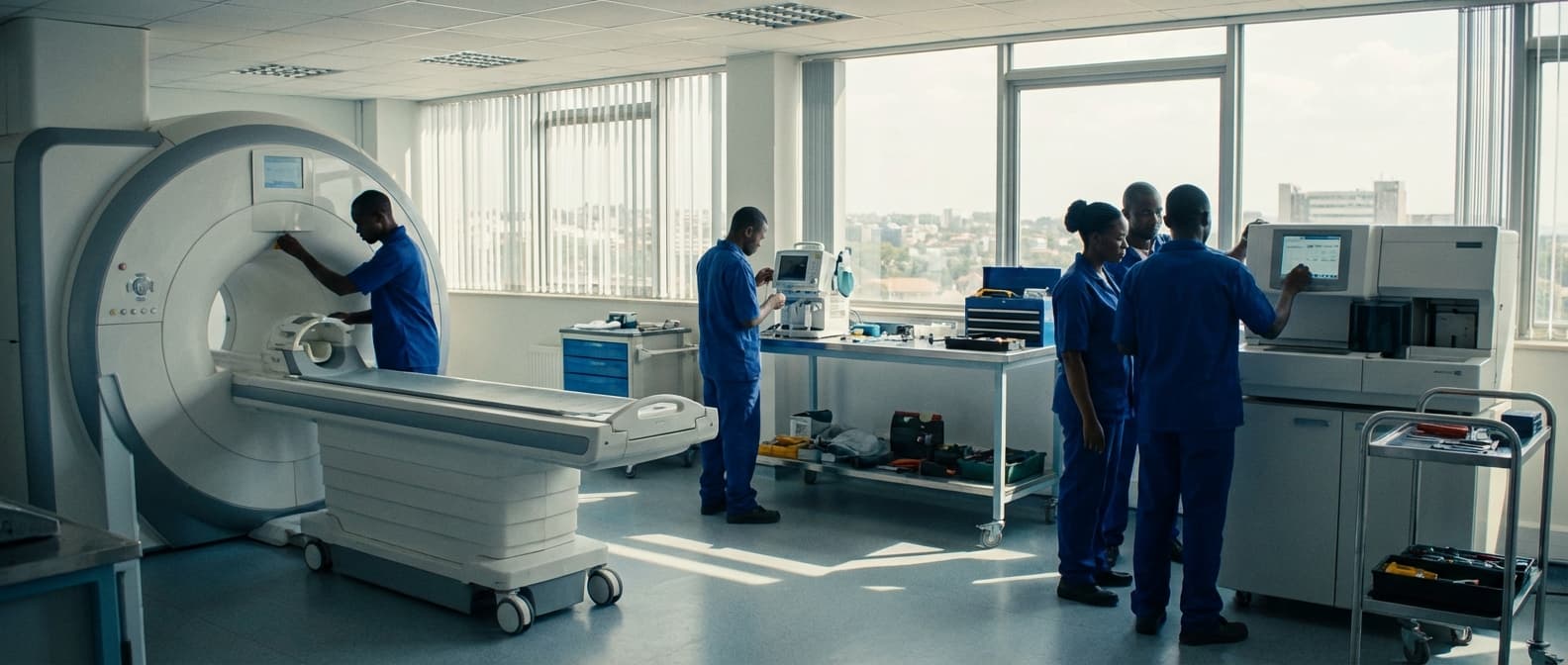
Comprehensive Maintenance Contract (CMC) Management Service (Parts & Labor) in Burundi
Engineering Excellence & Technical Support
Comprehensive Maintenance Contract (CMC) Management Service (Parts & Labor) High-standard technical execution following OEM protocols and local regulatory frameworks.
Proactive Equipment Upkeep & Extended Lifespan
Our CMC service in Burundi ensures your critical machinery undergoes scheduled, preventative maintenance, minimizing downtime and significantly extending its operational lifespan. We cover both genuine parts replacement and expert labor, guaranteeing your assets perform optimally for longer.
Budgetary Predictability & Cost Control
Gain complete control over your maintenance expenses in Burundi with our transparent CMC. We offer a fixed-price agreement for parts and labor, eliminating unexpected repair bills and allowing for precise financial planning. Focus on your core business, knowing your maintenance costs are managed.
Rapid Response & Expert On-Site Support
Experience unparalleled responsiveness with our CMC in Burundi. Our skilled technicians are strategically located and equipped to provide prompt on-site support for all parts and labor needs. We minimize disruption to your operations, ensuring quick resolution of any equipment issues.
What Is Comprehensive Maintenance Contract (Cmc) Management Service (Parts & Labor) In Burundi?
Comprehensive Maintenance Contract (CMC) Management Service (Parts & Labor) in Burundi refers to a specialized service offering that encompasses the proactive and reactive maintenance, repair, and replacement of essential equipment and systems. This service is delivered under a contractual agreement, ensuring predictable costs and guaranteed uptime for critical assets. It typically covers both the cost of spare parts and the labor required for all maintenance activities, from routine inspections and preventative servicing to emergency repairs and component replacements. The objective is to optimize the operational efficiency, extend the lifespan, and minimize the downtime of machinery and infrastructure, thereby safeguarding the investment and ensuring business continuity for the client.
| Who Needs CMC Management Service? | Typical Use Cases in Burundi |
|---|---|
| Industrial Manufacturers: Facilities operating heavy machinery, production lines, and complex assembly systems require consistent uptime to meet production targets. Examples include food processing plants, textile factories, and mining operations. | Healthcare Facilities: Hospitals and clinics rely heavily on the continuous operation of medical equipment such as MRI scanners, X-ray machines, laboratory analyzers, and sterilization units. Equipment failure can have life-threatening consequences. |
| Telecommunication Providers: Maintaining the integrity and availability of base stations, network infrastructure, and data centers is crucial for uninterrupted communication services. This includes power generation systems, cooling units, and transmission equipment. | Energy & Utilities Sector: Power generation plants (hydroelectric, thermal), water treatment facilities, and distribution networks demand reliable operation of turbines, generators, pumps, and control systems. Downtime can lead to widespread disruption. |
| Transportation & Logistics: Airports, ports, and railway systems depend on the operational readiness of essential equipment like baggage handling systems, cargo cranes, signaling systems, and rolling stock. Delays can impact supply chains and passenger movement. | Large Commercial Buildings & Real Estate: Owners and operators of office complexes, shopping malls, and hotels require the consistent functioning of HVAC systems, elevators, escalators, fire safety systems, and backup power generators to ensure tenant comfort and safety. |
| Government & Public Sector: Maintaining critical public infrastructure, such as water supply systems, sewage treatment plants, and public transportation networks, often falls under CMC agreements. | Agricultural Cooperatives & Large Farms: Mechanized farming operations involving tractors, harvesters, irrigation systems, and processing equipment benefit from predictable maintenance to ensure seasonal productivity. |
Key Components of CMC Management Service (Parts & Labor):
- Preventative Maintenance: Scheduled inspections, lubrication, calibration, cleaning, and replacement of wear-and-tear parts to avert failures.
- Corrective Maintenance: Prompt response to equipment malfunctions and breakdowns, including diagnostics and repair.
- Spare Parts Management: Procurement, stocking, inventory control, and timely availability of all necessary spare parts, covering both OEM (Original Equipment Manufacturer) and compatible components.
- Labor Services: Provision of skilled technicians and engineers for all maintenance and repair activities, including on-site presence and emergency call-outs.
- Performance Monitoring & Reporting: Regular tracking of equipment performance metrics, maintenance activities, and costs, with detailed reporting to the client.
- Technical Support & Troubleshooting: On-demand technical assistance and expertise to address operational issues and optimize equipment performance.
- Warranty Management: Facilitation and coordination of warranty claims for new or replaced components.
- Risk Mitigation: Proactive identification and management of potential equipment failures and associated risks.
Who Needs Comprehensive Maintenance Contract (Cmc) Management Service (Parts & Labor) In Burundi?
Comprehensive Maintenance Contract (CMC) Management Services, covering both parts and labor, are crucial for organizations in Burundi that rely on complex and mission-critical equipment and infrastructure. These services ensure the optimal performance, longevity, and cost-effectiveness of these assets, minimizing downtime and unexpected repair expenses. The primary beneficiaries are those who understand the significant financial and operational impact of equipment failure and seek proactive solutions.
| Target Customer Segment | Typical Departments Involved | Reasons for Needing CMC |
|---|---|---|
| Public Sector Institutions (e.g., Hospitals, Universities, Government Offices) | Facilities Management, IT Department, Biomedical Engineering (for healthcare), Procurement | Ensuring continuity of essential services, managing large fleets of diverse equipment, controlling budgets for critical infrastructure maintenance, complying with service level agreements. |
| Healthcare Facilities (Hospitals, Clinics, Diagnostic Centers) | Biomedical Engineering, Facilities Management, IT Department, Procurement | Critical need for reliable medical equipment (e.g., MRI, CT scanners, ventilators) to ensure patient safety and care, minimizing diagnostic and treatment delays, compliance with medical device regulations. |
| Telecommunication Companies | Network Operations, Engineering, IT Department, Field Services | Maintaining 24/7 network uptime, ensuring reliable service delivery to customers, managing complex network infrastructure (base stations, fiber optics), preventing service disruptions, optimizing operational costs. |
| Energy and Utilities Providers (Power Generation, Water Supply) | Operations & Maintenance, Engineering, Plant Management, Facilities Management | Preventing power outages or water supply disruptions, ensuring the continuous and safe operation of power plants and water treatment facilities, managing aging infrastructure, maximizing asset lifespan. |
| Manufacturing and Industrial Plants | Production Management, Maintenance Department, Engineering, Quality Control | Minimizing production downtime, ensuring consistent product quality, maintaining the operational efficiency of machinery (e.g., assembly lines, processing equipment), preventing costly breakdowns. |
| Financial Institutions (Banks, Microfinance) | IT Department, Operations, Facilities Management, Security | Ensuring the uptime of critical IT systems and ATMs, protecting sensitive data, maintaining secure and reliable branch operations, preventing service interruptions for customers. |
| Large Commercial and Hospitality Businesses (Hotels, Shopping Malls) | Facilities Management, Operations, IT Department, Engineering | Maintaining guest comfort and satisfaction, ensuring the smooth operation of building systems (HVAC, elevators, IT), managing a variety of equipment for guest services, preventing operational disruptions. |
| Government Agencies with Specialized Equipment (e.g., Defense, Research) | Technical Operations, Logistics, Maintenance Units, Procurement | Ensuring the readiness and operational effectiveness of specialized military or scientific equipment, managing unique maintenance requirements, controlling costs for high-value assets. |
Target Customers & Departments Requiring CMC Management Services in Burundi:
- Public Sector Institutions with Critical Infrastructure
- Healthcare Facilities
- Telecommunication Companies
- Energy and Utilities Providers
- Manufacturing and Industrial Plants
- Financial Institutions
- Large Commercial and Hospitality Businesses
- Government Agencies with Specialized Equipment
Comprehensive Maintenance Contract (Cmc) Management Service (Parts & Labor) Process In Burundi
This document outlines the Comprehensive Maintenance Contract (CMC) Management Service (Parts & Labor) process in Burundi, detailing the workflow from initial customer inquiry to the successful execution of maintenance services. The process emphasizes clarity, efficiency, and customer satisfaction.
| Stage | Description | Key Activities | Responsible Party | Deliverables/Outcomes | Potential Challenges in Burundi |
|---|---|---|---|---|---|
| Inquiry & Initial Consultation | The process begins when a potential client expresses interest in a CMC for their equipment or assets. | Receive and log inquiry, understand client's needs (equipment type, location, service level), provide preliminary information. | Sales Team/Business Development | Initial understanding of client requirements, preliminary discussion of service scope. | Lack of clear technical specifications from clients, language barriers, infrequent access to potential clients. |
| Proposal & Quotation Development | Based on the consultation, a detailed proposal and quotation are prepared. | Site assessment (if required), detailed scope of work definition, cost estimation (parts, labor, travel), risk assessment, proposal document creation. | Technical Team & Sales Team | Formal proposal document, detailed quotation with pricing and terms. | Accurate assessment of equipment condition and required parts, fluctuating spare part costs, availability of local technical expertise for specialized equipment. |
| Contract Negotiation & Signing | The client reviews the proposal and quotation, leading to negotiation and formal contract agreement. | Address client queries/concerns, negotiate terms and conditions (pricing, service levels, response times), finalize contract, legal review, contract signing. | Sales Team & Legal Department | Signed Comprehensive Maintenance Contract (CMC). | Lengthy negotiation periods, understanding of Burundian contract law, administrative delays in legal review. |
| Service Activation & Planning | Upon contract signing, the service is activated and maintenance plans are established. | Onboarding client into the system, scheduling initial preventive maintenance, assigning dedicated service teams, establishing communication protocols. | Operations Team & Service Delivery Manager | Active CMC account, scheduled preventive maintenance plan, assigned service personnel. | Client's operational schedule conflicts, ensuring proper client information capture, initial logistical arrangements. |
| Preventive Maintenance | Scheduled maintenance to prevent breakdowns and ensure optimal equipment performance. | Executing scheduled maintenance as per the contract (inspections, cleaning, lubrication, minor part replacements), providing status reports. | Field Service Technicians & Supervisors | Completed preventive maintenance tasks, updated equipment logs, maintenance reports. | Client accessibility to equipment, weather conditions affecting site access, availability of specialized tools for certain equipment. |
| Corrective Maintenance (Breakdown Service) | Responding to equipment failures or malfunctions as per the contract's service level agreement (SLA). | Receiving breakdown notification, diagnosing the issue, dispatching technicians, performing repairs, testing repaired equipment, closing service request. | Service Desk, Field Service Technicians, & Supervisors | Repaired equipment, resolved breakdown issue, service completion report. | Emergency response time challenges due to infrastructure, availability of spare parts for urgent repairs, complex troubleshooting. |
| Parts Management | Procurement, stocking, and management of spare parts required for both preventive and corrective maintenance. | Inventory management, procurement from approved suppliers, quality checks, warehousing, logistics for parts delivery to sites. | Procurement Department & Warehouse Staff | Adequate spare parts inventory, timely delivery of parts, minimized equipment downtime due to parts unavailability. | Importation challenges and delays for specialized parts, fluctuating international prices, customs clearance procedures, limited local supplier base for certain components. |
| Labor Management | Ensuring availability of qualified and skilled technicians for maintenance services. | Recruitment and training of technicians, skill assessment, scheduling and dispatching of technicians, performance monitoring, safety training. | Human Resources & Service Delivery Manager | Sufficient and competent technical workforce, efficient technician deployment, adherence to safety standards. | Shortage of highly specialized technicians, retention of skilled labor, training costs, geographical dispersion of service needs. |
| Reporting & Performance Review | Regular reporting on maintenance activities, performance against SLAs, and overall contract status. | Generating periodic reports (monthly, quarterly), analyzing key performance indicators (KPIs), conducting performance review meetings with clients, identifying areas for improvement. | Service Delivery Manager & Account Manager | Performance reports, client satisfaction feedback, action plans for improvement. | Data collection and accuracy from remote sites, client engagement for review meetings, translating technical data into client-understandable reports. |
| Contract Renewal/Termination | The final stage of the contract lifecycle, involving decision on continuation or ending the agreement. | Reviewing contract performance, discussing renewal terms, initiating termination procedures if necessary, asset handover (if applicable). | Account Manager & Management | Renewed CMC contract or termination of service, final asset status report. | Client's budget constraints for renewal, performance dissatisfaction leading to termination, ensuring smooth handover of responsibilities. |
Key Stages in CMC Management Service Workflow
- Inquiry & Initial Consultation
- Proposal & Quotation Development
- Contract Negotiation & Signing
- Service Activation & Planning
- Preventive Maintenance
- Corrective Maintenance (Breakdown Service)
- Parts Management
- Labor Management
- Reporting & Performance Review
- Contract Renewal/Termination
Comprehensive Maintenance Contract (Cmc) Management Service (Parts & Labor) Cost In Burundi
Managing Comprehensive Maintenance Contracts (CMCs) for parts and labor in Burundi involves a nuanced approach to pricing, influenced by various factors. These contracts are vital for ensuring the continued operational efficiency and longevity of equipment across diverse sectors, from healthcare and telecommunications to manufacturing and IT. The cost of CMC services in Burundi is not standardized and can vary significantly based on the complexity of the equipment, the service provider's expertise, the scope of coverage, and the geographic location within Burundi. It's crucial for organizations to conduct thorough due diligence to secure a CMC that offers both value and comprehensive protection. Factors such as the age and type of equipment, the availability of spare parts locally or the need for importation, the technical skill level required for maintenance, and the agreed-upon response times for breakdowns all play a role in determining the final cost.
| Equipment Category | Estimated Annual CMC Cost Range (BIF) | Notes on Cost Drivers |
|---|---|---|
| Office Equipment (Printers, Copiers, PCs) | 50,000 - 250,000 | Relatively low complexity, high availability of parts. Focus on preventive cleaning and minor part replacements. |
| Medical Equipment (Basic - e.g., Stethoscopes, Blood Pressure Monitors) | 75,000 - 300,000 | Requires trained biomedical technicians. Calibration and basic part replacement are key. |
| IT Infrastructure (Servers, Networking Gear) | 200,000 - 1,000,000+ | Complexity varies. Includes software support, hardware diagnostics, and rapid response. Importation of parts can be significant. |
| Telecommunications Equipment (Base Stations, Switches) | 500,000 - 2,500,000+ | High criticality, advanced technology, specialized technicians. Often involves remote monitoring and quick on-site intervention. Importation of specialized parts is common. |
| Industrial Machinery (Manufacturing, Generators) | 750,000 - 5,000,000+ | Highly complex, often bespoke. Requires highly skilled mechanical and electrical engineers. Availability of specific parts can be a major challenge, impacting lead times and costs. |
| Specialized Medical Equipment (MRI, CT Scanners) | 2,000,000 - 10,000,000+ | Extremely high complexity and cost. Requires highly specialized, often factory-trained technicians. Genuine parts are expensive and often imported. Downtime is critical. |
Key Pricing Factors for CMC Services (Parts & Labor) in Burundi:
- Equipment Type & Complexity: Highly specialized or intricate machinery will naturally incur higher maintenance costs due to the specialized skills and tools required.
- Age of Equipment: Older equipment may require more frequent maintenance and a higher likelihood of part replacement, increasing the overall CMC cost.
- Scope of Coverage: Differentiating between preventive maintenance, corrective maintenance (breakdown repairs), and emergency support significantly impacts pricing.
- Spare Parts Availability & Cost: The cost of procuring genuine spare parts, especially if they need to be imported into Burundi, is a major determinant. Import duties and logistics add to this.
- Service Provider's Expertise & Reputation: Established service providers with a proven track record and highly skilled technicians often command higher prices.
- Response Time Guarantees: Contracts that guarantee rapid response times for service calls, particularly for critical equipment, will be more expensive.
- Geographic Location: Maintenance services in remote areas might incur additional travel and accommodation costs for technicians, reflecting in the overall price.
- Contract Duration: Longer-term contracts may offer slight discounts compared to shorter ones.
- Included Labor Hours: The number of labor hours included for preventive and corrective maintenance can influence the cost.
- Exclusions & Limitations: Understanding what is NOT covered is as important as what is covered, as exclusions can lead to unexpected out-of-pocket expenses.
Affordable Comprehensive Maintenance Contract (Cmc) Management Service (Parts & Labor) Options
Managing comprehensive maintenance contracts (CMC) effectively is crucial for businesses to ensure the longevity and optimal performance of their assets while controlling costs. Our service offers flexible and affordable CMC management solutions, encompassing both parts and labor, designed to provide exceptional value through strategic bundling and cost-saving initiatives. We understand that different organizations have unique needs, which is why we offer tailored plans that can be customized to your specific equipment, operational demands, and budget.
| Value Bundle | Description | Key Benefits | Ideal For |
|---|---|---|---|
| Essential Care Bundle | Covers routine preventive maintenance, essential labor for minor repairs, and access to standard replacement parts. | Predictable budgeting, reduced minor breakdowns, extended equipment life. | Small to medium-sized businesses, low-complexity equipment fleets. |
| Proactive Performance Bundle | Includes comprehensive preventive maintenance, priority response for corrective maintenance, management of critical spare parts inventory, and performance optimization services. | Minimized downtime, enhanced operational efficiency, proactive issue resolution, optimized parts availability. | Growing businesses, medium to high-complexity equipment, critical operational assets. |
| Total Asset Protection Bundle | The most inclusive option: all services from Proactive Performance, plus advanced diagnostics, predictive maintenance analytics, extended warranties on parts, and dedicated account management. | Maximum uptime, significant cost savings through early issue detection, complete peace of mind, strategic asset lifecycle management. | Large enterprises, mission-critical infrastructure, high-value and complex equipment portfolios. |
| Customizable Solutions | Tailor-made bundles based on specific equipment types, usage patterns, criticality, and budget constraints. | Maximum flexibility, precise cost control, targeted service delivery. | Organizations with unique or highly specialized needs. |
Our CMC Management Service Includes:
- Preventive Maintenance Scheduling: Proactive service to minimize downtime and prevent costly breakdowns.
- Corrective Maintenance & Repair: Rapid response and expert resolution of equipment issues.
- Parts Procurement & Management: Access to a wide network for quality parts at competitive prices.
- Labor Management & Optimization: Skilled technicians, efficient scheduling, and performance tracking.
- Performance Monitoring & Reporting: Regular updates on equipment status, maintenance activities, and cost analysis.
- Risk Mitigation: Reducing the likelihood of unexpected failures and associated business disruption.
Verified Providers In Burundi
In Burundi's healthcare landscape, identifying reliable and skilled medical professionals is paramount. Franance Health stands out by offering a rigorous credential verification process, ensuring that all listed providers meet stringent standards of competence, ethics, and experience. This commitment to verification not only safeguards patient well-being but also fosters trust and transparency within the healthcare system. Choosing a Franance Health verified provider means opting for quality care backed by verified expertise.
| Service Area | Franance Health Verification Key Features | Benefits for Patients |
|---|---|---|
| General Practitioners | Verified medical license, proof of continuous professional development, clean disciplinary record. | Access to primary care from qualified and ethical doctors. |
| Specialist Physicians (e.g., Cardiologists, Pediatricians) | Verification of specialist qualifications, board certifications, and relevant clinical experience. | Confidently consult with specialists who have proven expertise in their field. |
| Surgeons | Rigorous verification of surgical training, accreditations, and surgical outcomes where available. | Trust in surgeons who have met high standards of skill and safety. |
| Dentists | Verification of dental degrees, licenses, and specialized training. | Receive dental care from accredited and competent professionals. |
| Nurses and Midwives | Verification of nursing/midwifery qualifications, licenses, and professional registrations. | Experience compassionate and competent care from verified nursing staff. |
Why Franance Health Verified Providers are the Best Choice:
- Unwavering Commitment to Quality: Franance Health meticulously vets each provider, verifying their medical licenses, educational qualifications, and professional experience.
- Enhanced Patient Safety: Our verification process minimizes the risk of unqualified or fraudulent practitioners, prioritizing your health and safety.
- Access to Trusted Expertise: Connect with a network of highly skilled and reputable healthcare professionals across various specialties.
- Transparency and Accountability: Franance Health promotes a transparent healthcare environment where patients can make informed decisions with confidence.
- Peace of Mind: Knowing your provider has undergone our thorough verification offers unparalleled peace of mind for you and your loved ones.
Scope Of Work For Comprehensive Maintenance Contract (Cmc) Management Service (Parts & Labor)
This Scope of Work (SOW) outlines the requirements for a Comprehensive Maintenance Contract (CMC) Management Service, encompassing both parts and labor. The service aims to ensure the optimal performance, reliability, and longevity of all specified equipment and systems through proactive and reactive maintenance activities. This document details the technical deliverables and standard specifications to be adhered to by the service provider.
| Category | Technical Deliverables | Standard Specifications & Requirements |
|---|---|---|
| Preventive Maintenance (PM) | Scheduled inspections, cleaning, lubrication, calibration, and replacement of worn parts based on manufacturer recommendations and usage history. | Adherence to manufacturer's recommended PM schedules and intervals. Use of OEM-specified or equivalent grade lubricants and consumables. Detailed PM checklists and reports for each service. Documentation of all PM activities, including date, time, personnel, tasks performed, parts used, and findings. Compliance with relevant industry standards (e.g., ISO 9001, specific equipment standards). |
| Corrective Maintenance (CM) / Breakdown Maintenance | On-demand repair services to address equipment failures, malfunctions, and unexpected breakdowns. | Guaranteed response times for different severity levels of breakdowns (e.g., critical, major, minor). Use of qualified and certified technicians. Diagnosis of the root cause of failure. Provision of accurate and detailed repair reports, including problem description, diagnosis, parts replaced, labor hours, and corrective actions taken. Adherence to safety protocols during repair operations. Documentation of all CM activities. |
| Spare Parts Management | Procurement, stocking, and management of essential spare parts required for both PM and CM activities. | Maintenance of an adequate inventory of critical spare parts. Just-in-time (JIT) procurement for non-critical parts. Use of genuine OEM or approved equivalent quality parts. Strict quality control for incoming parts. Inventory management system to track stock levels, usage, and reorder points. Proper storage and handling of parts to prevent damage or degradation. Transparent reporting on parts consumption and costs. |
| Technical Support & Troubleshooting | Provision of expert technical advice, remote troubleshooting, and on-site support. | Availability of 24/7 technical support for critical equipment. Rapid remote diagnostic capabilities. On-site support from experienced engineers and technicians. Clear escalation procedures for complex issues. Access to technical documentation and knowledge bases. Regular knowledge sharing sessions with client's technical team. |
| Performance Monitoring & Optimization | Regular monitoring of equipment performance against defined metrics and implementation of optimization measures. | Establishment of Key Performance Indicators (KPIs) for equipment performance (e.g., Mean Time Between Failures - MTBF, Mean Time To Repair - MTTR, availability, efficiency). Regular data collection and analysis of performance data. Generation of performance reports highlighting trends, anomalies, and areas for improvement. Implementation of recommendations for performance enhancement and energy efficiency. |
| Reporting & Documentation | Comprehensive reporting on all maintenance activities, equipment status, and costs. | Monthly, quarterly, and annual reports detailing all PM and CM activities. Equipment status reports, including uptime, downtime, and maintenance history. Cost reports detailing labor, parts, and other associated expenses. Asset register with detailed information on each piece of equipment. Audit trails of all maintenance records. Compliance with data security and confidentiality requirements. |
| Health & Safety Compliance | Adherence to all applicable health, safety, and environmental regulations. | Implementation of robust health and safety procedures for all maintenance activities. Provision of appropriate Personal Protective Equipment (PPE) for all personnel. Regular safety training and drills for service personnel. Compliance with environmental regulations regarding waste disposal and hazardous materials. Site-specific safety inductions and adherence to client's safety policies. |
| Continuous Improvement | Proactive identification and implementation of opportunities for service enhancement. | Regular review of maintenance strategies and procedures. Feedback mechanisms for client satisfaction. Implementation of best practices in maintenance management. Training and development of service personnel. Benchmarking against industry standards and competitor performance. |
Key Objectives of CMC Management Service
- Ensure maximum equipment uptime and availability.
- Minimize the occurrence of equipment failures and breakdowns.
- Optimize the lifespan of all maintained assets.
- Control maintenance costs through efficient resource allocation and proactive measures.
- Maintain equipment performance within specified operational parameters.
- Ensure compliance with all relevant safety and regulatory standards.
- Provide timely and effective resolution of all reported issues.
Service Level Agreement For Comprehensive Maintenance Contract (Cmc) Management Service (Parts & Labor)
This Service Level Agreement (SLA) outlines the response times and uptime guarantees for the Comprehensive Maintenance Contract (CMC) Management Service, covering both parts and labor. It defines the expected service levels to ensure the operational readiness and optimal performance of managed equipment.
| Service Level | Issue Severity | Response Time Guarantee (Parts & Labor) | Resolution Time Target (Parts & Labor) | Uptime Guarantee (Monthly) |
|---|---|---|---|---|
| Level 1 | Critical Issue | 2 Hours | 8 Business Hours | 99.8% |
| Level 2 | Major Issue | 4 Business Hours | 24 Business Hours | 99.5% |
| Level 3 | Minor Issue | 8 Business Hours | 48 Business Hours | 99.0% |
Definitions
- Managed Equipment: Any equipment covered under the Comprehensive Maintenance Contract (CMC) managed by the Service Provider.
- Downtime: The period during which Managed Equipment is non-operational and unable to perform its intended function due to a failure requiring repair.
- Response Time: The maximum time elapsed from the reporting of a critical issue to the commencement of troubleshooting or diagnosis by the Service Provider's qualified personnel.
- Resolution Time: The maximum time elapsed from the reporting of a critical issue to the restoration of the Managed Equipment to full operational status.
- Uptime Guarantee: The minimum percentage of time the Managed Equipment is expected to be operational over a defined period.
- Critical Issue: An issue that renders Managed Equipment completely inoperable, significantly impacting core business operations.
- Major Issue: An issue that degrades the performance of Managed Equipment or impacts non-core business operations.
- Minor Issue: An issue that does not significantly impact performance or operations, or is a cosmetic defect.
Frequently Asked Questions

Ready when you are
Let's scope your Comprehensive Maintenance Contract (CMC) Management Service (Parts & Labor) in Burundi project in Burundi.

Scaling healthcare logistics and technical systems across the entire continent.