
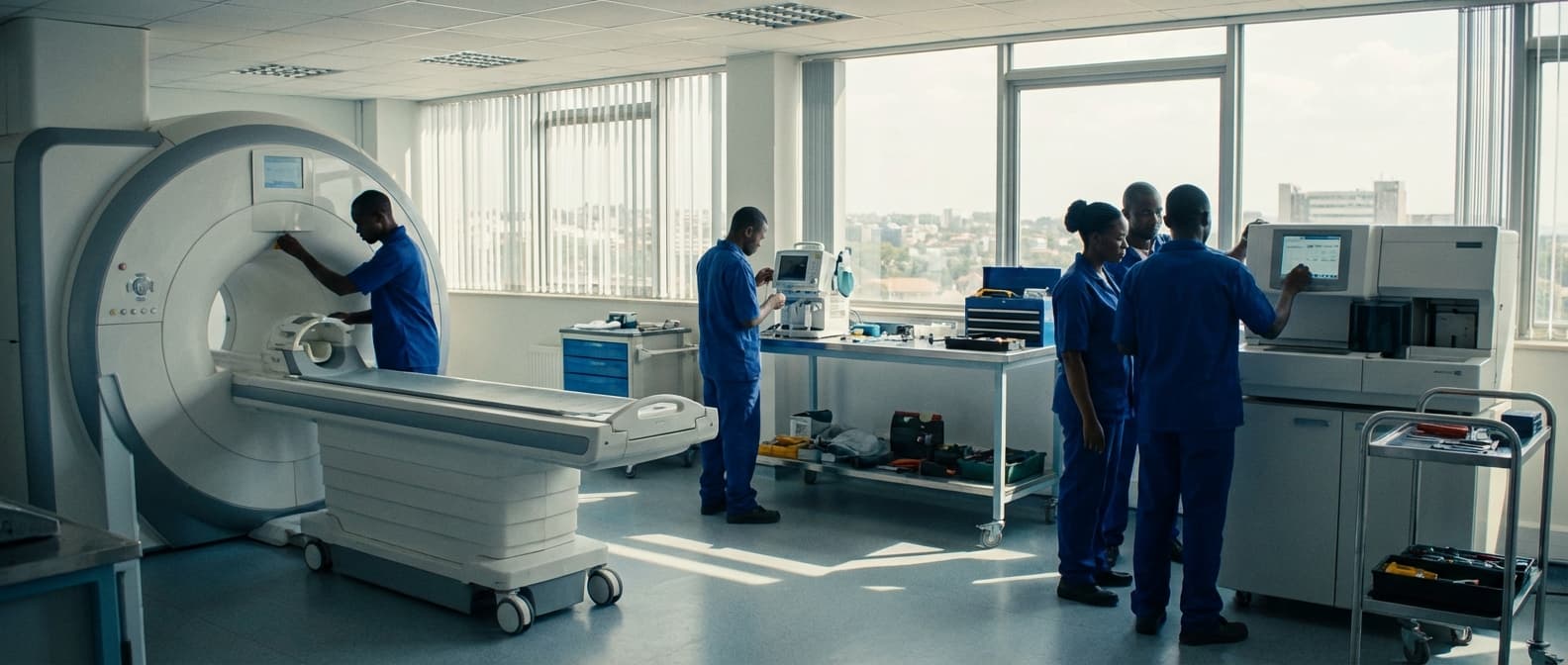
Annual Maintenance Contract (AMC) Management Service (Labor-Only) in Burundi
Engineering Excellence & Technical Support
Annual Maintenance Contract (AMC) Management Service (Labor-Only) High-standard technical execution following OEM protocols and local regulatory frameworks.
Expedited On-Site Technical Response
Rapid deployment of certified technicians across Burundi for immediate troubleshooting and repair, minimizing equipment downtime and operational disruptions.
Preventive Maintenance Optimization
Proactive scheduling and execution of maintenance tasks tailored to Burundi's environmental conditions, extending equipment lifespan and reducing unexpected failures.
Predictive Maintenance Insights
Leveraging data analysis from on-site inspections to identify potential issues before they escalate, ensuring continuous operational efficiency and cost savings.
What Is Annual Maintenance Contract (Amc) Management Service (Labor-only) In Burundi?
Annual Maintenance Contract (AMC) Management Service (Labor-Only) in Burundi refers to a specialized service that focuses on the administrative and operational oversight of labor-intensive maintenance activities performed under a contractual agreement for a defined annual period. This service is distinct from a comprehensive AMC that includes parts, materials, and full-spectrum technical support. The 'Labor-Only' designation signifies that the service provider is primarily responsible for the planning, scheduling, deployment, supervision, and quality assurance of human resources required for routine, preventive, and corrective maintenance tasks. It does not typically encompass the provision of spare parts, consumables, or advanced diagnostic equipment, which remain the responsibility of the client or a separate contractual arrangement. This model aims to leverage the client's existing inventory or procurement channels for parts, while entrusting the efficient utilization and management of skilled maintenance personnel to the service provider.
| Who Needs It? | Typical Use Cases in Burundi |
|---|---|
| Businesses with substantial installed base of operational equipment: This includes manufacturing plants, telecommunications providers, energy utilities, large commercial buildings (HVAC, elevators), and IT infrastructure operators. | Manufacturing Facilities: Ensuring continuous operation of production lines through regular maintenance of machinery and assembly equipment. This includes managing teams for routine inspections, lubrication, and minor repairs. |
| Organizations operating critical infrastructure: Such as hospitals, financial institutions, and government facilities where downtime can have significant economic or societal consequences. | Telecommunications Companies: Maintaining base stations, network equipment, and power systems to ensure network availability. Labor-only AMC can cover site visits for inspections, cleaning, and basic troubleshooting of hardware. |
| Companies seeking to optimize operational costs: By outsourcing the management of maintenance labor, they can focus on core competencies and reduce overhead associated with direct employment of a large technical workforce. | Commercial Real Estate and Facility Management: Managing the upkeep of building systems like HVAC, elevators, plumbing, and electrical distribution for office buildings, shopping malls, and residential complexes. This involves scheduling and supervising teams for scheduled checks and responding to tenant-related maintenance requests. |
| Entities in regions with specialized labor market dynamics: Where recruiting and retaining skilled maintenance personnel might be challenging. | Power Generation and Distribution: Maintaining turbines, generators, transformers, and distribution networks. A labor-only AMC can be used to manage the technicians responsible for inspections, preventive maintenance, and emergency response for faults. |
| Organizations requiring flexibility in their maintenance workforce: To scale up or down based on project demands without long-term commitment. | IT Infrastructure Management: Maintaining servers, networking devices, and data center facilities. This can include managing the technical staff for physical inspections, component replacements, and environmental monitoring. |
Key Inclusions and Exclusions of AMC Management Service (Labor-Only)
- Inclusions:
- Planning and scheduling of preventive maintenance (PM) and corrective maintenance (CM) tasks.
- Deployment and management of qualified technical personnel (technicians, engineers, supervisors).
- Supervision and quality control of maintenance work performed.
- Adherence to agreed-upon service level agreements (SLAs) regarding response times and resolution.
- Reporting on maintenance activities, labor utilization, and performance metrics.
- Coordination with the client for access and execution of maintenance tasks.
- Risk management related to labor safety and compliance on-site.
- Exclusions:
- Provision of spare parts, components, and consumables.
- Procurement or supply of specialized diagnostic tools and equipment.
- Costs associated with major equipment overhauls or replacements (unless specifically defined as labor for such tasks).
- Insurance for parts and materials.
- Third-party services for specialized repairs beyond the scope of in-house labor capabilities.
Who Needs Annual Maintenance Contract (Amc) Management Service (Labor-only) In Burundi?
Annual Maintenance Contract (AMC) Management Service (Labor-Only) in Burundi is crucial for organizations that own and operate a diverse range of equipment and systems but prefer to manage the procurement and oversight of maintenance labor themselves. This service focuses on the administrative, planning, and quality assurance aspects of AMC, without supplying the actual technicians or spare parts. It's ideal for entities that possess in-house technical expertise or have established relationships with external service providers and require professional management to optimize their maintenance operations.
| Customer Type | Key Equipment/Systems Managed | Primary Departments Involved | Need for Labor-Only AMC Management |
|---|---|---|---|
| Manufacturing | Production machinery, assembly lines, industrial automation | Production, Engineering, Maintenance | Ensuring continuous operation, scheduled preventative maintenance, managing external specialist labor. |
| Telecommunications | Base stations, network infrastructure, data centers, VSATs | Network Operations, Field Operations, IT | Coordinating site visits, managing labor contracts with multiple vendors, ensuring uptime. |
| Banking & Finance | ATMs, servers, security systems, office IT, HVAC | IT, Operations, Facilities Management | Maximizing ATM availability, securing sensitive data systems, efficient office space upkeep. |
| Healthcare | Medical imaging devices, lab equipment, patient monitoring systems, facility infrastructure | Biomedical Engineering, Facilities, IT | Ensuring critical medical equipment is functional, patient safety, compliance with healthcare standards. |
| Government | IT infrastructure, vehicles, public utility equipment, building maintenance | Public Works, IT, Administration | Efficient management of public assets, ensuring service delivery, cost control. |
| Retail/Commercial | POS systems, refrigeration, lighting, HVAC, IT networks | Operations, Facilities, IT | Maintaining customer experience, operational continuity, energy efficiency. |
| Education | Computer labs, science equipment, administrative IT, building systems | IT, Facilities, Academic Support | Supporting learning environments, research capabilities, efficient campus operations. |
| NGOs/International Orgs | Vehicles, communication equipment, office IT, generators | Logistics, Operations, IT | Maintaining operational readiness in remote or challenging environments, effective resource allocation. |
Target Customers and Departments for AMC Management Service (Labor-Only) in Burundi:
- {"title":"Manufacturing and Industrial Companies","description":"Companies with complex machinery, production lines, and industrial equipment that require regular servicing and preventative maintenance to ensure operational efficiency and minimize downtime. Departments benefiting include: Production, Engineering, Maintenance, Operations."}
- {"title":"Telecommunication Providers","description":"Organizations managing extensive networks of base stations, transmission equipment, data centers, and customer premise equipment. Departments benefiting include: Network Operations, Field Operations, Technical Support, Infrastructure Management."}
- {"title":"Financial Institutions (Banks, Microfinance)","description":"Entities with critical IT infrastructure, ATMs, security systems, and office equipment that need consistent upkeep to guarantee service availability and security. Departments benefiting include: IT Department, Operations, Facilities Management, Security."}
- {"title":"Hospitals and Healthcare Facilities","description":"Institutions operating sophisticated medical equipment, diagnostic tools, laboratory instruments, and building services that require specialized and timely maintenance to ensure patient care and safety. Departments benefiting include: Biomedical Engineering, Facilities Management, IT Department, Laboratory Services."}
- {"title":"Government and Public Sector Agencies","description":"Organizations responsible for public infrastructure, utilities, IT systems, and office buildings, including ministries, municipalities, and public service providers. Departments benefiting include: Public Works, IT Departments, Administrative Services, Procurement."}
- {"title":"Large Commercial and Retail Businesses","description":"Businesses with extensive retail spaces, warehousing, refrigeration units, POS systems, and other operational equipment that demand consistent maintenance for smooth business operations. Departments benefiting include: Operations, Facilities Management, IT Department, Supply Chain."}
- {"title":"Educational Institutions (Universities, Colleges)","description":"Schools and universities managing IT labs, specialized academic equipment, building systems, and administrative IT infrastructure. Departments benefiting include: IT Department, Estates/Facilities Management, Academic Departments."}
- {"title":"Non-Governmental Organizations (NGOs) and International Organizations","description":"Organizations operating in Burundi with significant logistical and operational footprints, requiring maintenance for vehicles, IT equipment, office facilities, and specialized project-related equipment. Departments benefiting include: Operations, Logistics, IT, Administration."}
Annual Maintenance Contract (Amc) Management Service (Labor-only) Process In Burundi
This document outlines the workflow for managing Annual Maintenance Contract (AMC) services on a labor-only basis within Burundi. The process begins with an initial inquiry and concludes with the successful execution of maintenance tasks, ensuring client satisfaction and contract compliance.
| Stage | Key Activities | Responsible Party | Output/Deliverable |
|---|---|---|---|
| Inquiry & Initial Consultation | Receive client inquiry, gather basic requirements, initial assessment. | Client, Service Provider | Acknowledged Inquiry, Preliminary Requirement List |
| Proposal Development & Negotiation | Site visit (if needed), labor estimation, cost calculation, proposal creation, negotiation. | Service Provider, Client | AMC Proposal, Finalized Agreement |
| Contract Activation & Planning | Contract signing, service plan development, resource allocation, client onboarding. | Service Provider, Client | Signed AMC Contract, Service Plan, Onboarded Client |
| Routine Maintenance & Execution | Schedule and perform preventive maintenance, execute tasks, generate service reports, client sign-off. | Service Provider, Client | Completed Maintenance Tasks, Service Reports, Client Sign-offs |
| Reactive Maintenance & Issue Resolution | Receive issue reports, triage, dispatch technicians, perform repairs, generate reports, client sign-off. | Client, Service Provider | Resolved Issues, Repair Reports, Client Sign-offs |
| Contract Monitoring & Review | Performance tracking, client communication, regular reviews, invoicing. | Service Provider, Client | Performance Reports, Feedback, Invoices |
| Contract Renewal or Termination | Discuss renewal, adjust terms, renew contract, or terminate. | Service Provider, Client | Renewed Contract or Termination Notice |
Annual Maintenance Contract (AMC) Management Service (Labor-Only) Process in Burundi
- 1. Inquiry & Initial Consultation:
- Client Inquiry: A potential client expresses interest in AMC services for their equipment or facility. This can be via phone, email, website form, or in-person visit.
- Information Gathering: The service provider gathers essential details about the client's needs, including the type of equipment/facility, scope of maintenance required, existing maintenance history (if any), and desired contract duration.
- Preliminary Assessment: A brief assessment of the client's requirements and feasibility of providing labor-only AMC services is conducted.
- Service Provider Response: The service provider acknowledges the inquiry and may schedule an initial consultation or request further documentation.
- 2. Proposal Development & Negotiation:
- Site Visit/Detailed Assessment (if required): For complex equipment or facilities, a technical team may conduct a site visit to thoroughly assess the scope of work and potential challenges.
- Labor Estimation: Based on the assessment, the service provider estimates the labor hours, skill sets, and personnel required for the contract duration.
- Costing & Quotation Preparation: A detailed proposal is prepared, outlining the scope of services, service levels, exclusions, personnel qualifications, and the labor-only cost. This proposal is tailored to the client's specific needs.
- Client Review & Feedback: The client reviews the proposal and provides feedback, potentially leading to further discussions and negotiations on scope, pricing, and terms.
- Agreement & Finalization: Once both parties agree on the terms, the AMC agreement is finalized.
- 3. Contract Activation & Planning:
- Contract Signing: The formal AMC contract is signed by both the client and the service provider.
- Service Plan Development: A detailed service plan is created, outlining the schedule of preventive maintenance, inspection points, critical tasks, and response times for reactive maintenance.
- Resource Allocation: The service provider allocates the necessary technical personnel, tools, and equipment based on the service plan and expertise required.
- Client Onboarding: The client is officially onboarded into the service provider's system, and contact persons for both sides are established.
- 4. Routine Maintenance & Execution:
- Preventive Maintenance Scheduling: Planned preventive maintenance activities are scheduled according to the service plan.
- Technician Dispatch: Skilled technicians are dispatched to the client's site as per the schedule.
- On-site Execution: Technicians perform the scheduled maintenance tasks, inspections, and minor adjustments as defined in the contract.
- Service Report Generation: After each maintenance visit, technicians generate a detailed service report, documenting the work performed, findings, any recommendations, and parts used (if applicable, though this is labor-only).
- Client Verification & Sign-off: The client reviews and signs off on the service report, confirming the satisfactory completion of the maintenance.
- 5. Reactive Maintenance & Issue Resolution:
- Client Reporting of Issues: The client reports any malfunctions or breakdowns to the service provider.
- Issue Triage & Prioritization: The service provider assesses the reported issue, determines its urgency, and prioritizes it based on the contract's service level agreement (SLA).
- Technician Dispatch for Repairs: Technicians are dispatched to the client's site to diagnose and repair the issue.
- On-site Repair Execution: Technicians perform the necessary repairs using their labor expertise. Any required spare parts are typically procured by the client or a separate agreement.
- Testing & Verification: After repairs, the equipment/facility is tested to ensure it is functioning correctly.
- Service Report & Sign-off: A service report detailing the repair work is generated and signed off by the client.
- 6. Contract Monitoring & Review:
- Performance Tracking: The service provider monitors the performance of their technicians and adherence to the service plan and SLAs.
- Regular Client Communication: Periodic communication with the client to gather feedback, address any concerns, and provide updates on maintenance activities.
- Mid-term/Annual Review: A formal review of the AMC contract is conducted, typically annually, to assess overall performance, discuss any emerging needs, and plan for the next contract period.
- Billing & Invoicing: Invoices are generated based on the agreed-upon labor rates and hours spent, or as per the fixed fee structure of the AMC.
- 7. Contract Renewal or Termination:
- Renewal Discussion: At the end of the contract term, discussions are held regarding renewal.
- Option for Contract Adjustment: The contract terms, scope, and pricing can be adjusted based on performance, evolving client needs, and market conditions.
- Contract Renewal: If both parties agree, the AMC contract is renewed.
- Contract Termination: If renewal is not desired or if there are breaches of contract, the contract is terminated according to the agreed-upon terms.
- Key Considerations for Burundi:
- Logistics & Accessibility: Travel time, road conditions, and accessibility to remote locations can impact scheduling and response times.
- Local Expertise & Skill Development: Ensuring access to adequately skilled local technicians is crucial.
- Communication Channels: Reliable communication methods are essential, especially in areas with limited internet connectivity.
- Cultural Nuances: Understanding and respecting local business practices and communication styles is important for building strong client relationships.
Annual Maintenance Contract (Amc) Management Service (Labor-only) Cost In Burundi
Managing Annual Maintenance Contracts (AMCs) for labor-only services in Burundi involves a nuanced approach to pricing, influenced by several key factors. These factors determine the overall cost for businesses seeking to ensure the operational efficiency and longevity of their equipment and systems through expert technical support. The labor-only aspect means clients are primarily paying for the skilled technicians' time, expertise, and on-site presence, rather than bundled parts or equipment. Burundi's economic landscape, including inflation, currency fluctuations, and the availability of specialized skills, plays a significant role in shaping these costs.
| Service Type / Equipment Category | Estimated Annual Labor Cost Range (BIF) | Notes |
|---|---|---|
| Basic Office Equipment (Printers, Scanners, Photocopiers) | 150,000 - 400,000 BIF | Covers routine checks, minor adjustments, and cleaning. Assumes 2-4 service visits per year. |
| Standard IT Support (PCs, Laptops, Basic Networking) | 300,000 - 800,000 BIF | Includes troubleshooting, software updates, and preventative network checks. Might involve remote support and scheduled on-site visits. |
| Mid-Range Commercial Equipment (e.g., Small Generators, Refrigeration Units) | 500,000 - 1,500,000 BIF | Requires more specialized technicians. Covers regular inspections, lubrication, and performance checks. Frequency typically 2-3 times per year. |
| Advanced IT Infrastructure (Servers, Complex Networks, Data Centers) | 1,000,000 - 3,000,000+ BIF | Demands highly skilled IT professionals and potentially 24/7 monitoring. Pricing is highly variable based on scale and criticality. |
| Industrial Machinery (Manufacturing, Agricultural Equipment) | 1,500,000 - 5,000,000+ BIF | Highly specialized labor, potentially requiring specific certifications. Frequency and scope are critical. May include safety inspections. |
| Specialized Medical Equipment | 2,000,000 - 6,000,000+ BIF | Requires certified biomedical engineers. Very high level of expertise and strict regulatory compliance. On-site visits and response times are critical. |
Key Pricing Factors for Labor-Only AMC Management in Burundi:
- Type and Complexity of Equipment/Systems: The more intricate or specialized the machinery or IT infrastructure, the higher the labor costs will be due to the need for highly skilled technicians with specific expertise. This includes industrial machinery, complex IT networks, or specialized medical equipment.
- Frequency and Scope of Maintenance: AMCs can range from preventive maintenance checks performed quarterly or bi-annually to more comprehensive servicing that might include diagnostic assessments and minor adjustments. A higher frequency and broader scope will naturally increase the total labor cost.
- Technician Skill Level and Experience: Highly experienced technicians with specialized certifications or a proven track record in managing specific types of equipment command higher hourly or daily rates.
- Geographic Location within Burundi: While major urban centers like Bujumbura might have a slightly more competitive market with a broader pool of technicians, remote or less accessible areas could incur additional travel and logistical costs for the service provider, which are often passed on to the client.
- Service Provider's Reputation and Overhead: Established service providers with a strong reputation, robust infrastructure, and lower overhead costs might offer more competitive pricing. Conversely, smaller or newer providers might have higher rates to cover their initial investments.
- Contract Duration and Commitment: Longer-term AMC agreements may sometimes come with slightly discounted labor rates as a testament to client loyalty and predictable revenue for the service provider.
- Urgency and Response Time: AMCs that guarantee rapid response times for urgent issues (e.g., within a few hours) will typically be priced higher than those with standard response times (e.g., within 24-48 hours).
- Economic Conditions: Inflationary pressures, the stability of the Burundian Franc (BIF), and the general cost of living can directly impact the wages service providers need to offer their technicians, thus influencing AMC pricing.
Affordable Annual Maintenance Contract (Amc) Management Service (Labor-only) Options
Our Affordable Annual Maintenance Contract (AMC) Management Service focuses on labor-only offerings, providing flexibility and significant cost savings for your business. We understand that procuring parts can be a separate and often more predictable expense. By specializing in the skilled labor required to maintain your assets, we empower you to source parts from your preferred vendors or leverage existing stock, further optimizing your budget. This approach allows for transparent pricing, focusing solely on the expertise and time invested in ensuring your equipment's optimal performance and longevity. We offer various value bundles tailored to different operational needs, alongside strategic cost-saving strategies to maximize your AMC investment.
| Bundle Name | Description | Key Benefits | Ideal For |
|---|---|---|---|
| Proactive Maintenance Bundle | Scheduled preventive servicing and inspections. | Reduces unexpected breakdowns, extends equipment life, identifies potential issues early. | Businesses prioritizing operational stability and long-term asset health. |
| Reactive Maintenance Bundle | On-demand emergency repair and troubleshooting. | Fast response to critical failures, minimizes downtime during emergencies. | Businesses with high uptime requirements and a need for immediate support. |
| Comprehensive Asset Management Bundle | Combines proactive, reactive maintenance with detailed reporting and tracking. | Holistic overview of asset health, informed decision-making, optimized maintenance schedules. | Organizations seeking complete control and visibility over their equipment maintenance. |
| On-Demand Service Add-on | Purchase of additional labor hours in pre-defined blocks. | Flexibility to scale labor support as needed, cost-effective for fluctuating demands. | Businesses with unpredictable maintenance needs or project-based work. |
Value Bundles & Cost-Saving Strategies
- Proactive Maintenance Bundle: Includes scheduled preventive maintenance visits, equipment inspections, and basic cleaning. This bundle is designed to identify and address minor issues before they escalate into costly breakdowns.
- Reactive Maintenance Bundle: Covers emergency repair calls and troubleshooting. While designed for responsiveness, pairing this with the Proactive bundle offers the best overall protection.
- Comprehensive Asset Management Bundle: Combines proactive and reactive maintenance with detailed asset tracking and reporting. This bundle provides a holistic view of your equipment's health and maintenance history.
- On-Demand Service Add-on: For businesses with highly variable needs, this allows for the purchase of additional labor hours in blocks, providing flexibility without a fixed ongoing commitment.
- Long-Term Commitment Discounts: We offer tiered discounts for multi-year AMC agreements, incentivizing predictable and sustained partnerships.
- Tiered Service Levels: Choose from Bronze, Silver, and Gold service tiers, each offering a different response time and scope of labor coverage to match your criticality and budget.
- Off-Peak Service Scheduling: For non-critical equipment, scheduling maintenance during off-peak hours or weekends can often incur lower labor rates.
- Remote Diagnostics & Support: Where applicable, we offer initial remote troubleshooting to resolve minor issues without an on-site visit, saving you valuable time and labor costs.
- Skilled Technician Specialization: By focusing on labor, we ensure you have access to highly skilled technicians specializing in your specific equipment types, leading to more efficient and effective repairs.
Verified Providers In Burundi
In the realm of healthcare, ensuring you are engaging with verified and credentialed providers is paramount for receiving quality and safe medical services. In Burundi, like many nations, a robust system of verification exists to safeguard patient well-being. Franance Health stands out as a leading entity in this regard, not only by adhering to stringent verification processes but also by actively promoting and facilitating access to healthcare professionals who meet the highest standards. Their commitment to transparency and excellence makes them the best choice for individuals seeking reliable healthcare solutions in Burundi.
| Franance Health's Verification Process Highlights | Why it Matters for You |
|---|---|
| Rigorous credentialing of medical practitioners | Ensures you receive care from qualified and licensed professionals. |
| Background checks and ethical standard evaluations | Guarantees that providers operate with integrity and professionalism. |
| Continuous monitoring of professional development | Confirms that providers stay updated with the latest medical advancements. |
| Facilitation of access to verified specialists | Connects you with the right expertise for your specific health needs. |
| Transparency in provider information | Empowers you to make informed decisions about your healthcare. |
Why Verified Providers are Crucial:
- Patient Safety: Verified providers have undergone rigorous checks on their qualifications, licenses, and ethical conduct, minimizing risks to patients.
- Quality of Care: Credentials often indicate specialized training and adherence to best practices, leading to better health outcomes.
- Trust and Confidence: Knowing your healthcare provider is legitimate and competent builds essential trust in the medical system.
- Accountability: Verified providers are accountable to regulatory bodies, ensuring a higher level of professional responsibility.
- Access to Expertise: Verification processes can highlight specialists and experts in various medical fields.
Scope Of Work For Annual Maintenance Contract (Amc) Management Service (Labor-only)
This Scope of Work (SOW) outlines the labor-only services to be provided for the Annual Maintenance Contract (AMC) Management Service. This service focuses on the planning, coordination, oversight, and quality assurance of maintenance activities performed by third-party vendors under various AMC agreements. The objective is to ensure that all contracted maintenance services are delivered efficiently, effectively, and in accordance with agreed-upon technical specifications and standards, thereby maximizing the lifespan and performance of assets and systems.
| Technical Deliverable | Standard Specifications / Requirements |
|---|---|
| AMC Plan Development | A comprehensive annual maintenance plan detailing scheduled preventive maintenance, corrective maintenance procedures, and expected response times for all managed assets/systems. Plan should align with manufacturer recommendations and operational needs. (e.g., Preventive Maintenance (PM) schedules, reactive maintenance protocols). |
| Vendor Performance Reports | Regular reports (monthly/quarterly) detailing vendor adherence to schedule, quality of work, responsiveness, and adherence to safety protocols. Reports should include key performance indicators (KPIs) such as Mean Time Between Failures (MTBF), Mean Time To Repair (MTTR), and percentage of PM completion. (e.g., Vendor Service Log Review, Corrective Action Reports). |
| Quality Inspection Checklists | Standardized checklists for inspecting completed maintenance tasks, ensuring work is performed according to manufacturer specifications, industry best practices, and contract requirements. Checklists should cover areas like equipment testing, calibration, cleaning, and safety checks. (e.g., Pre-task and Post-task Inspection Forms). |
| Maintenance Task Verification | On-site verification of critical maintenance tasks performed by vendors, including functional testing, performance validation, and system diagnostics post-maintenance. (e.g., Witnessing of critical repairs, functional test result validation). |
| Root Cause Analysis (RCA) Reports (for recurring issues) | For recurring or significant failures, a structured RCA report to identify the underlying causes and recommend preventive measures. This involves analyzing maintenance logs, operational data, and vendor reports. (e.g., Documented RCA process, recommendations for process improvement). |
| Compliance Audit Reports | Periodic audits to ensure vendor compliance with contract terms, safety regulations (e.g., OSHA, local environmental regulations), and organizational policies. (e.g., Safety audit findings, non-compliance notifications). |
| Asset Maintenance History Logs | Maintenance of a centralized, digital log for each asset/system, recording all maintenance activities, parts replaced, downtime, and associated costs, as provided by vendors. (e.g., Digital asset registry with integrated maintenance history). |
| Service Level Agreement (SLA) Monitoring Reports | Reports tracking vendor adherence to agreed-upon SLAs, including response times, resolution times, and availability of critical systems. (e.g., SLA breach notifications, performance trend analysis). |
| Budget vs. Actual Expenditure Tracking (Labor-Focused) | Oversight and reporting on labor costs associated with AMC services, comparing actual expenditures against budgeted amounts for planned and unplanned maintenance. (e.g., Labor cost reconciliation, variance analysis). |
| Standard Operating Procedures (SOPs) for Maintenance Oversight | Development and adherence to SOPs for managing AMC vendors, including procedures for work order issuance, task supervision, quality checks, and incident reporting. (e.g., Documented SOPs for vendor management, quality control). |
Key Responsibilities of AMC Management Service (Labor-Only)
- Contract Review and Understanding
- Maintenance Planning and Scheduling
- Vendor Coordination and Communication
- On-Site Supervision and Quality Assurance
- Performance Monitoring and Reporting
- Issue Resolution and Escalation
- Documentation and Record Keeping
- Compliance and Safety Adherence
Service Level Agreement For Annual Maintenance Contract (Amc) Management Service (Labor-only)
This Service Level Agreement (SLA) outlines the response times and uptime guarantees for the Annual Maintenance Contract (AMC) Management Service (Labor-Only). This service focuses on the efficient scheduling, dispatching, and oversight of labor for preventative and corrective maintenance activities as per the agreed-upon AMC. It does not include the supply of spare parts or materials, which are covered under separate agreements.
| Service Level | Description | Response Time Guarantee (Labor Dispatch) | Uptime Guarantee (Service Availability) |
|---|---|---|---|
| Preventative Maintenance Scheduling | Ensuring all scheduled preventative maintenance activities are planned and communicated within the agreed timeframe. | 99% of scheduled PM tasks communicated to the client at least 5 business days in advance. | N/A (This is a scheduling service, not directly impacting client system uptime) |
| Corrective Maintenance Request Acknowledgment | Initial acknowledgment and assignment of a technician upon receipt of a critical corrective maintenance request. | Within 2 business hours for Critical Issues (System Down/Major Functionality Loss). Within 4 business hours for High Issues (Significant Performance Degradation). Within 8 business hours for Medium Issues (Minor Functionality Loss/Degradation). | N/A (This is a response time for dispatch, not a guarantee of immediate repair) |
| Technician Dispatch for Critical Issues | Ensuring a qualified technician is dispatched to the client site or commences remote support for critical issues. | Within 4 business hours of acknowledgment for Critical Issues. | N/A |
| Technician Dispatch for High Issues | Ensuring a qualified technician is dispatched to the client site or commences remote support for high issues. | Within 8 business hours of acknowledgment for High Issues. | N/A |
| Service Availability (AMC Management) | Availability of the AMC Management service for clients to submit requests, receive updates, and access reports. | N/A | 99.5% during standard business hours (9 AM - 5 PM, client's local time, Monday-Friday, excluding public holidays). |
| Escalation Process Availability | Availability of the escalation process for unresolved issues or dissatisfaction with response times. | N/A | 99.5% during standard business hours. |
Key Service Components
- Proactive scheduling of preventative maintenance tasks.
- Reactive dispatch of technicians for corrective maintenance requests.
- Monitoring of technician availability and assignment.
- Communication and coordination between clients and maintenance personnel.
- Reporting on maintenance activities and technician performance.
Frequently Asked Questions

Ready when you are
Let's scope your Annual Maintenance Contract (AMC) Management Service (Labor-Only) in Burundi project in Burundi.

Scaling healthcare logistics and technical systems across the entire continent.