
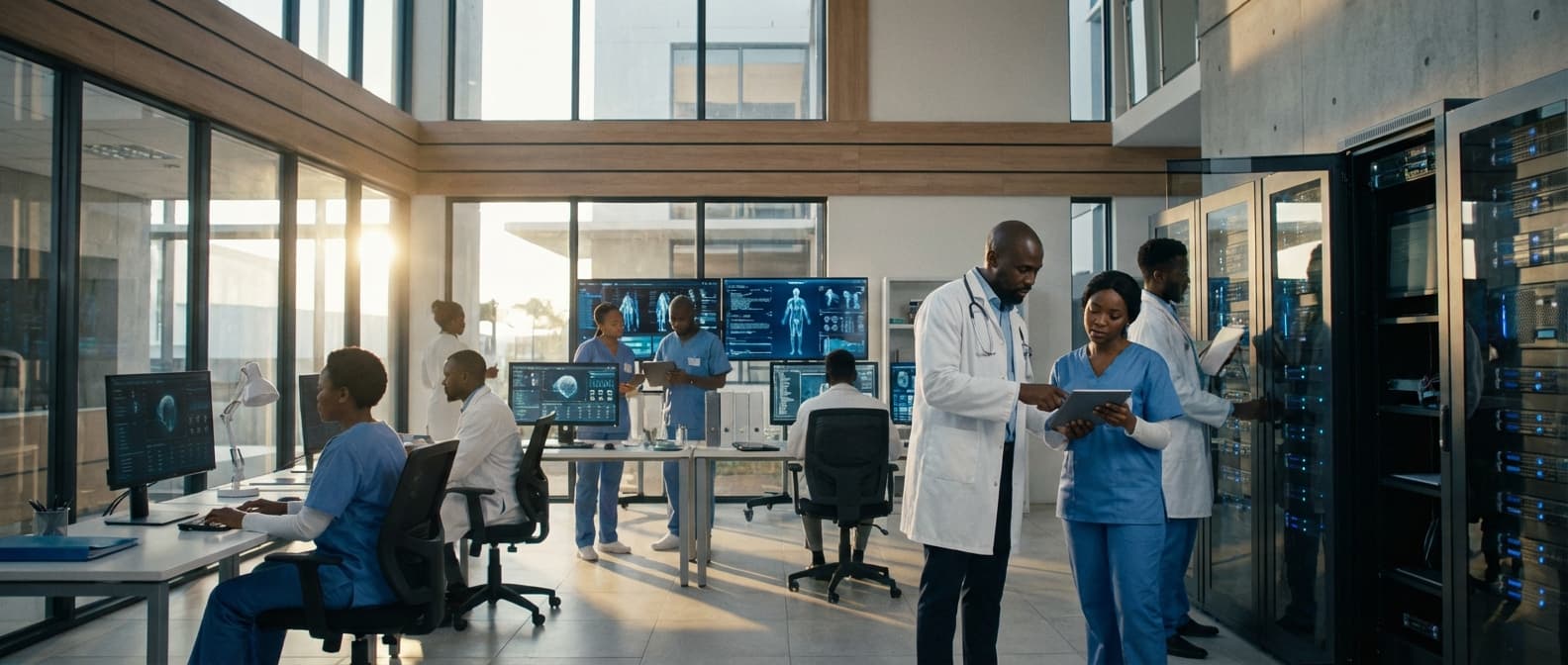
Tele-Radiology in Burundi
Engineering Excellence & Technical Support
24/7 access to certified radiologists providing rapid, accurate remote interpretation of diagnostic imaging studies. High-standard technical execution following OEM protocols and local regulatory frameworks.
Enhanced Diagnostic Access
Tele-radiology connects Burundi's remote healthcare facilities with expert radiologists globally. This dramatically increases access to critical diagnostic imaging services, enabling faster and more accurate diagnoses for patients in underserved areas, reducing the need for long-distance travel and associated costs.
Improved Workflow Efficiency
By leveraging digital imaging and secure transmission, tele-radiology streamlines the radiology workflow. Images are shared instantly, allowing for rapid interpretation by specialists. This reduces turnaround times for reports, enabling healthcare providers to initiate treatment sooner and optimize resource allocation within their facilities.
Knowledge Transfer & Capacity Building
Tele-radiology platforms facilitate remote consultations and case reviews, acting as a powerful tool for training and knowledge transfer. Local healthcare professionals can learn from experienced international radiologists, fostering the development of local expertise and building sustainable diagnostic imaging capacity within Burundi's healthcare system.
What Is Tele-radiology In Burundi?
Tele-radiology in Burundi refers to the practice of transmitting radiological images (such as X-rays, CT scans, and MRIs) from a healthcare facility in Burundi to a radiologist located remotely, often outside the country, for interpretation and reporting. This service leverages telecommunications technology to overcome geographical barriers and improve access to diagnostic imaging expertise, which is often scarce in many regions of Burundi. The core of tele-radiology involves the secure acquisition, transmission, and storage of medical imaging data, followed by expert interpretation and the generation of diagnostic reports that are then returned to the referring physician.
| Who Needs Tele-Radiology in Burundi? | Typical Use Cases | ||||
|---|---|---|---|---|---|
| Rural and remote healthcare facilities lacking on-site radiologists. | Interpretation of emergency radiology cases (e.g., trauma, stroke) where immediate expert opinion is critical. | Facilities with limited availability of specialized imaging modalities (e.g., MRI) requiring interpretation by subspecialists. | Support for public health initiatives requiring widespread diagnostic screening. | Cases requiring second opinions or confirmation of complex diagnoses. | Training and educational purposes for local medical professionals. |
| Hospitals and clinics in underserved areas requiring advanced diagnostic capabilities. | Emergency departments needing rapid interpretation of urgent imaging studies. | Specialized medical centers (e.g., oncology, cardiology) requiring subspecialty radiology expertise. | Public health programs for screening conditions like tuberculosis, pneumonia, or fractures. | Maternal and child health services requiring ultrasound or other imaging interpretations. | Disaster response scenarios where local expertise may be overwhelmed. |
Key Components and Stakeholders of Tele-Radiology in Burundi
- Digital Imaging and Communications in Medicine (DICOM) Standard: Ensures interoperability of imaging equipment and data.
- Picture Archiving and Communication System (PACS): Securely stores, retrieves, and manages medical images.
- Teleradiology Workstation: Software used by remote radiologists for image viewing and reporting.
- Telecommunications Infrastructure: Reliable internet connectivity (satellite or terrestrial) for image transmission.
- Referring Physicians: Healthcare professionals in Burundi who order radiological examinations.
- Remote Radiologists: Board-certified radiologists, often located internationally, who interpret the images.
- Healthcare Facilities in Burundi: Hospitals, clinics, and diagnostic centers equipped with imaging modalities.
- IT Support and Network Security: Crucial for maintaining system integrity and data privacy.
Who Needs Tele-radiology In Burundi?
Burundi, a nation with a developing healthcare infrastructure, faces significant challenges in accessing specialized medical imaging services, particularly radiology. Tele-radiology, the practice of interpreting medical images remotely, presents a transformative solution. This technology can bridge geographical gaps, address the shortage of trained radiologists, and improve diagnostic accuracy and turnaround times, ultimately leading to better patient outcomes. The need for tele-radiology in Burundi is not a luxury but a critical requirement for enhancing healthcare delivery across various levels of the medical system.
| Target Customer Group | Specific Needs Addressed | Key Benefits | Potential Impact |
|---|---|---|---|
| Public Hospitals (National and Provincial) | Limited availability of on-site radiologists, long waiting times for interpretation, need for subspecialty expertise (e.g., neuro-radiology, pediatric radiology). | Access to 24/7 expert interpretation, faster diagnosis for critical cases, improved workload management for existing radiologists, enhanced training opportunities. | Reduced diagnostic delays for complex conditions, improved patient flow, better management of acute stroke and trauma, early detection of diseases like TB and cancer. |
| District Hospitals and Health Centers | Lack of any on-site radiology services, reliance on referring patients to distant centers, inability to perform critical imaging diagnostics. | Introduction of basic diagnostic imaging capabilities (X-ray, ultrasound), remote interpretation of acquired images, basic teleradiology consultation. | Early diagnosis of common conditions (pneumonia, fractures, obstetric emergencies), reduced need for patient transfer, improved primary healthcare access to diagnostic imaging. |
| Private Clinics and Diagnostic Centers | Desire for competitive advantage, efficient turnaround times, access to specialized interpretations not locally available, quality assurance. | Expanded service offerings, faster reporting for referring physicians, access to subspecialty reads, consistent quality of interpretation. | Increased patient satisfaction, attracting more complex cases, contributing to a more robust private healthcare sector. |
| Missions Hospitals and NGOs | Operating in remote areas with limited resources, serving vulnerable populations, need for cost-effective and accessible diagnostic solutions. | Extending diagnostic capabilities to underserved areas, providing essential imaging services for primary and secondary care, facilitating remote training for local healthcare professionals. | Improved health outcomes for remote communities, equitable access to diagnostic imaging, support for public health initiatives. |
Target Customers and Departments for Tele-Radiology in Burundi
- Public Hospitals (National and Provincial)
- District Hospitals and Health Centers
- Private Clinics and Diagnostic Centers
- Missions Hospitals and NGOs providing healthcare
- Emergency Departments
- Outpatient Departments
- Maternity Wards
- Pediatric Departments
- Surgical Departments
- Oncology Departments
- Infectious Disease Control Units
Tele-radiology Process In Burundi
Tele-radiology in Burundi is a critical initiative to improve access to diagnostic imaging services, particularly in remote or underserved areas. The process, from initial inquiry to the final execution of a radiology report, involves several key stakeholders and steps to ensure efficient and accurate patient care. This workflow aims to bridge the gap between the need for radiological interpretation and the availability of expert radiologists.
| Stage | Description | Key Actors | Technology/Tools |
|---|---|---|---|
| Patient Presentation & Referral | A patient with symptoms requiring imaging presents to a local health center or hospital. The local clinician identifies the need for a radiological examination. | Patient, Local Clinician | Clinical assessment |
| Image Acquisition | The necessary radiological imaging (X-ray, CT, Ultrasound) is performed at the peripheral facility. Images are digitized and anonymized to protect patient privacy. | Radiographer/Technician, Local Facility Staff | Digital X-ray machine, CT scanner, Ultrasound machine, PACS (Picture Archiving and Communication System) or similar imaging software |
| Image Transmission | The acquired digital images are securely uploaded and transmitted over a network to a central tele-radiology service or directly to a radiologist. | Local Facility Staff, IT Support (if applicable) | Secure internet connection, VPN (Virtual Private Network), specialized tele-radiology software/platform |
| Radiological Interpretation | A qualified radiologist, potentially located at a different facility or even in another country, receives the images. They analyze the images and dictate a diagnostic report. | Radiologist | Workstation with high-resolution monitor, tele-radiology software, dictation software |
| Report Generation & Transmission | The radiologist's diagnostic report is finalized and securely transmitted back to the referring clinician at the peripheral health facility. | Radiologist, Administrative Staff (if applicable) | Tele-radiology software/platform, secure email or messaging system |
| Clinical Integration & Patient Management | The referring clinician receives and reviews the radiologist's report, integrating it into the patient's medical record and using it to guide diagnosis, treatment, and follow-up. | Local Clinician | Electronic Health Record (EHR) system, medical knowledge |
Tele-Radiology Workflow in Burundi
- Patient presents with symptoms requiring radiological examination at a peripheral health facility.
- Local clinician determines the need for a radiological study (e.g., X-ray, CT scan, ultrasound).
- Radiological imaging is performed at the peripheral facility using available equipment.
- Digital images are acquired and anonymized.
- Images are securely transmitted to a central tele-radiology hub or a designated radiologist.
- The tele-radiology hub or radiologist receives the image studies.
- Radiologist analyzes the images and generates a diagnostic report.
- The report is securely transmitted back to the referring clinician at the peripheral facility.
- The referring clinician reviews the report and integrates it into the patient's diagnosis and treatment plan.
- Follow-up actions, including further investigations or treatment, are initiated based on the radiologist's findings.
Tele-radiology Cost In Burundi
Tele-radiology services, while not yet widespread in Burundi, are an emerging solution to address the scarcity of specialized radiologists and advanced imaging equipment in the country. Estimating precise costs is challenging due to the nascent stage of the market, limited data, and varying service models. However, we can discuss the likely pricing factors and potential cost ranges in local currency (Burundian Franc - BIF) for tele-radiology services in Burundi.
Pricing Factors:
Several factors will influence the cost of tele-radiology in Burundi:
- Type of Imaging Modality: The complexity and type of scan (X-ray, CT, MRI, Ultrasound) will significantly impact the cost. More advanced modalities like CT and MRI will naturally incur higher interpretation fees.
- Volume of Cases: The number of studies or reports requested by a healthcare facility can influence pricing, with higher volumes potentially leading to bulk discounts.
- Turnaround Time (TAT): Urgent or STAT interpretations (e.g., within a few hours) will command a premium compared to routine reports that can be delivered within 24-48 hours.
- Subspecialty Expertise: Interpretation by subspecialists (e.g., neuroradiology, interventional radiology) might be more expensive than general radiology interpretation.
- Technology and Infrastructure: The cost borne by the tele-radiology provider for maintaining secure IT infrastructure, PACS (Picture Archiving and Communication System), and communication channels will be factored into pricing.
- Geographic Location of Provider: If the tele-radiology service is being sourced internationally, exchange rates, international transfer fees, and regulatory compliance costs can add to the overall price.
- Service Model: Whether it's a per-study fee, a subscription-based model, or a partnership agreement will affect how costs are structured.
- Local Market Conditions: The general economic situation, purchasing power of healthcare providers, and the competitive landscape (once established) will also play a role.
- Quality Assurance and Training: Costs associated with ensuring quality control and ongoing training for reporting radiologists will be embedded.
Estimated Cost Ranges (in Burundian Franc - BIF):
Given the lack of established tele-radiology providers in Burundi, these are speculative estimates based on potential international service costs adjusted for local economic factors and expected provider margins. It's crucial to note that these are approximations and actual prices could vary widely.
For context, as of late 2023/early 2024, the exchange rate is approximately 1 USD = 2000-2100 BIF. International tele-radiology reports for a single study can range from $20-$150+ USD depending on the modality and urgency.
- Simple X-ray Interpretation: This is likely to be the most affordable. A reasonable estimate might range from 40,000 BIF to 80,000 BIF per study. This would cover a standard X-ray interpretation by a general radiologist.
- Ultrasound Interpretation: Slightly more complex than X-rays, these could fall in the range of 60,000 BIF to 120,000 BIF per study.
- CT Scan Interpretation: With higher complexity and data volume, CT interpretations might range from 150,000 BIF to 300,000 BIF per study.
- MRI Scan Interpretation: As the most complex and expensive modality, MRI interpretations could potentially range from 250,000 BIF to 500,000 BIF per study, or even higher for specialized scans.
- STAT/Urgent Interpretations: An additional premium of 20-50% could be applied to the above ranges for urgent requests.
Subscription/Bulk Models:
If a hospital or a network of clinics establishes a longer-term relationship, a per-month or annual subscription fee for a certain volume of studies might be negotiated, potentially offering better per-study rates. These could be structured as packages, for instance, a monthly fee covering up to X number of X-rays, Y number of ultrasounds, etc.
Important Considerations for Burundi:
- Local vs. International Providers: If providers emerge locally or regionally, costs might be lower due to reduced international transfer fees and currency fluctuations. However, initial setup and technology adoption costs could still be high.
- Government Initiatives: National health policies and potential government subsidies or partnerships could influence the accessibility and affordability of tele-radiology.
- Payment Infrastructure: Secure and reliable payment channels will be essential for service providers.
- Pilot Programs: Initial pilot programs may offer discounted rates to encourage adoption and gather usage data.
In conclusion, while precise figures are unavailable, tele-radiology in Burundi is expected to be priced based on modality, urgency, and service volume. The estimated ranges provided offer a preliminary outlook on potential costs in local currency.
| Imaging Modality | Estimated Cost Range (BIF per study) |
|---|---|
| Simple X-ray | 40,000 - 80,000 |
| Ultrasound | 60,000 - 120,000 |
| CT Scan | 150,000 - 300,000 |
| MRI Scan | 250,000 - 500,000+ |
| STAT/Urgent Interpretation (Premium) | +20% to +50% on base rates |
Factors Influencing Tele-Radiology Costs in Burundi
- Type of Imaging Modality (X-ray, CT, MRI, Ultrasound)
- Volume of Cases
- Turnaround Time (TAT) for Reports (Routine vs. STAT)
- Subspecialty Expertise Required
- Technology and Infrastructure Costs for the Provider
- Geographic Location and Currency Exchange Rates (for international providers)
- Service Model (Per-study, Subscription, Partnership)
- Local Economic Conditions and Purchasing Power
- Quality Assurance and Radiologist Training Costs
- Government Regulations and Potential Subsidies
Affordable Tele-radiology Options
Tele-radiology offers a flexible and often cost-effective solution for medical imaging interpretation. Affordable options are becoming increasingly available, driven by technological advancements and a growing demand for remote services. Understanding how these services are priced and exploring cost-saving strategies is crucial for healthcare providers aiming to optimize their budgets without compromising on quality of care. This involves looking beyond per-study fees to consider broader service packages and operational efficiencies.
| Cost-Saving Strategy | Description | Potential Benefits |
|---|---|---|
| Value Bundles/Subscription Models | Instead of paying per study, healthcare providers contract for a package of services, often with a fixed monthly or annual fee. This can include a certain volume of reads, specific subspecialty coverage, or unlimited access to certain reports. | Predictable budgeting, potential for significant discounts on high-volume usage, simplified billing, and guaranteed access to services. |
| Tiered Pricing Structures | Providers offer different pricing tiers based on volume, TAT, or subspecialty needs. Choosing a tier that aligns with actual usage can optimize costs. | Flexibility to scale services as needed, avoiding overpayment for underutilization or underpaying for peak demand. |
| Long-Term Contracts | Committing to a longer-term contract (e.g., 3-5 years) with a tele-radiology provider often unlocks lower per-study rates and dedicated support. | Guaranteed pricing stability, preferential service levels, and stronger partnership with the vendor. |
| Negotiating Volume Discounts | For practices with predictable high volumes, direct negotiation for tiered discounts based on anticipated study numbers can be effective. | Direct cost reduction for high-frequency users. |
| Leveraging AI Integration | While AI tools may have upfront costs, they can improve radiologist efficiency by pre-screening images, highlighting critical findings, or automating measurements, thereby reducing interpretation time and costs. | Faster TAT, improved accuracy, and potentially lower per-study interpretation costs due to increased radiologist throughput. |
| Optimizing Workflow and IT Infrastructure | Ensuring seamless integration between your RIS/PACS and the tele-radiology platform minimizes manual workarounds and data entry errors, reducing administrative overhead. | Streamlined operations, reduced errors, and increased efficiency for both your staff and the tele-radiology provider. |
| Choosing the Right Subspecialty Coverage | Carefully assess which subspecialty reads are truly necessary and avoid paying for coverage that is rarely utilized. Some providers offer flexible subspecialty access on demand. | Targeted spending on essential services, avoiding unnecessary costs for underused expertise. |
Key Factors Influencing Tele-radiology Costs
- Volume of Studies: Higher volumes often lead to lower per-study rates due to economies of scale.
- Complexity of Imaging Modalities: Specialized interpretations (e.g., complex neuroimaging, cardiac MRI) may incur higher costs than general radiography.
- Turnaround Time (TAT) Requirements: Expedited reads typically command premium pricing.
- Subspecialty Coverage: Access to highly specialized radiologists (e.g., pediatric radiology, interventional radiology) can influence costs.
- Ancillary Services: Integration with PACS, RIS, and AI tools may have associated fees.
- Contractual Agreements: Long-term contracts and service level agreements (SLAs) can offer better pricing predictability and potential discounts.
Verified Providers In Burundi
In Burundi's evolving healthcare landscape, identifying truly reliable and ethical medical providers is paramount for ensuring quality patient care. Franance Health stands out as a leading organization committed to upholding the highest standards. Their rigorous credentialing process for healthcare providers is a cornerstone of their operation, offering patients and partners a clear assurance of competence, ethics, and professionalism. This dedication to verification is what makes Franance Health's network of providers the optimal choice for healthcare services in Burundi.
| Credentialing Aspect | Franance Health's Approach | Benefit to Patients |
|---|---|---|
| Educational and Professional Qualifications | Thorough verification of medical degrees, licenses, and specialized certifications. | Ensures providers possess the necessary academic and practical knowledge. |
| Clinical Experience and Competence | Assessment of past performance, peer reviews, and areas of expertise. | Guarantees that providers have practical, proven skills in their field. |
| Ethical Conduct and Professionalism | Background checks and assessment of adherence to a strict code of ethics. | Provides confidence in the provider's integrity and patient-centered approach. |
| Continuous Professional Development | Requirement for ongoing training and updates to stay current with medical advancements. | Ensures patients receive care informed by the latest medical knowledge. |
| Patient Feedback and Quality Assurance | Mechanisms for collecting and acting upon patient feedback to maintain service quality. | Promotes a culture of continuous improvement and patient satisfaction. |
Why Franance Health Credentials Matter
- Rigorous Vetting Process: Franance Health employs a multi-stage vetting process that scrutinizes the qualifications, experience, and ethical standing of every provider.
- Commitment to Patient Safety: Verification by Franance Health directly translates to enhanced patient safety, as only qualified and ethical practitioners are included in their network.
- Upholding Professional Standards: Their credentials ensure providers adhere to international best practices and ethical guidelines in their medical practice.
- Building Trust and Transparency: The Franance Health seal of approval fosters trust and transparency, empowering patients to make informed decisions about their healthcare.
- Facilitating Access to Quality Care: By curating a network of verified providers, Franance Health makes it easier for individuals and organizations to access high-quality healthcare services across Burundi.
Scope Of Work For Tele-radiology
This document outlines the Scope of Work (SOW) for the provision of Tele-Radiology services. It details the technical deliverables and standard specifications required for the successful implementation and operation of the tele-radiology system and services. The objective is to ensure seamless image acquisition, transmission, interpretation, and reporting, enhancing diagnostic capabilities and patient care.
| Category | Specification | Description | Standard/Requirement |
|---|---|---|---|
| Image Acquisition | DICOM Compliance | All imaging modalities must generate images in accordance with Digital Imaging and Communications in Medicine (DICOM) standards. | DICOM Part 10 |
| Image Transmission | Security Protocols | All image data transmission must be encrypted using industry-standard protocols. | TLS 1.2 or higher |
| Image Transmission | Bandwidth Requirements | Sufficient bandwidth to ensure timely transmission of large imaging files with minimal delay. | Minimum 10 Mbps per concurrent user (negotiable based on modality and volume) |
| Image Storage | PACS Compatibility | The tele-radiology system must be compatible with the existing PACS or provide a compliant archiving solution. | DICOM 3.0 compliant |
| Image Viewing | Monitor Resolution | Radiologist workstations must be equipped with high-resolution medical-grade monitors for accurate diagnosis. | Minimum 3 MP for CT/MRI, 2 MP for X-ray |
| Reporting | Report Format | Radiology reports must be generated in a standardized format, incorporating relevant clinical information and findings. | HL7 FHIR or custom templates |
| Data Privacy | Compliance | All systems and processes must adhere to relevant data privacy regulations. | HIPAA, GDPR (as applicable) |
| System Performance | Uptime Guarantee | The tele-radiology platform and network infrastructure should have a defined uptime commitment. | 99.5% or higher |
| System Performance | Image Load Time | Images should load and be ready for interpretation within an acceptable timeframe. | Max 10 seconds for typical studies |
| Interoperability | Interface Standards | The system should support standard interfaces for integration with EMR/EHR systems. | HL7 v2.x, FHIR |
Key Technical Deliverables
- Secure and reliable Picture Archiving and Communication System (PACS) integration and data transfer capabilities.
- High-resolution medical imaging equipment (e.g., CT, MRI, X-ray, Ultrasound) capable of producing DICOM-compliant images.
- Robust and secure network infrastructure for image transmission (e.g., VPN, dedicated lines) with sufficient bandwidth.
- Advanced teleradiology software platform for image viewing, manipulation, reporting, and workflow management.
- Workstations with high-resolution medical-grade monitors for accurate image interpretation.
- User authentication and access control mechanisms to ensure data security and patient privacy (HIPAA/GDPR compliance).
- Audit trails and logging capabilities for all system activities.
- Disaster recovery and business continuity plan for the tele-radiology system.
- Training materials and sessions for on-site staff and radiologists.
- Regular system maintenance, updates, and technical support.
Service Level Agreement For Tele-radiology
This Service Level Agreement (SLA) outlines the expected performance standards for Tele-Radiology services provided by [Radiology Provider Name] to [Client Name]. It defines response times for critical services and guarantees a minimum uptime for the platform.
| Service | Response Time Guarantee | Uptime Guarantee |
|---|---|---|
| Platform Availability | N/A | 99.9% |
| Image Transmission/Receipt | Less than 15 minutes for urgent cases; Less than 1 hour for routine cases (from network initiation) | N/A |
| Radiologist Read Availability (for urgent cases) | Within 1 hour of image availability and radiologist assignment | N/A |
| Routine Report Availability | Within 24-48 business hours of image availability and radiologist assignment | N/A |
| Critical Report Availability | Within 2-4 business hours of radiologist assignment | N/A |
| Technical Support Availability | 24/7 for critical system outages | N/A |
Key Definitions
- Uptime: The percentage of time the Tele-Radiology platform is operational and accessible to transmit and receive medical images and reports.
- Response Time: The maximum allowable time from the initiation of a service request to its fulfillment.
- Critical Report: A radiology report that identifies a condition requiring immediate medical attention, as determined by the referring physician.
- Routine Report: A radiology report for a condition not requiring immediate medical attention.
- Image Transmission Time: The time taken for medical images to be successfully uploaded to the platform and become accessible to the radiologist.
- Report Availability: The time from completion of a radiology report to its availability within the Tele-Radiology platform.
Frequently Asked Questions

Ready when you are
Let's scope your Tele-Radiology in Burundi project in Burundi.

Scaling healthcare logistics and technical systems across the entire continent.