
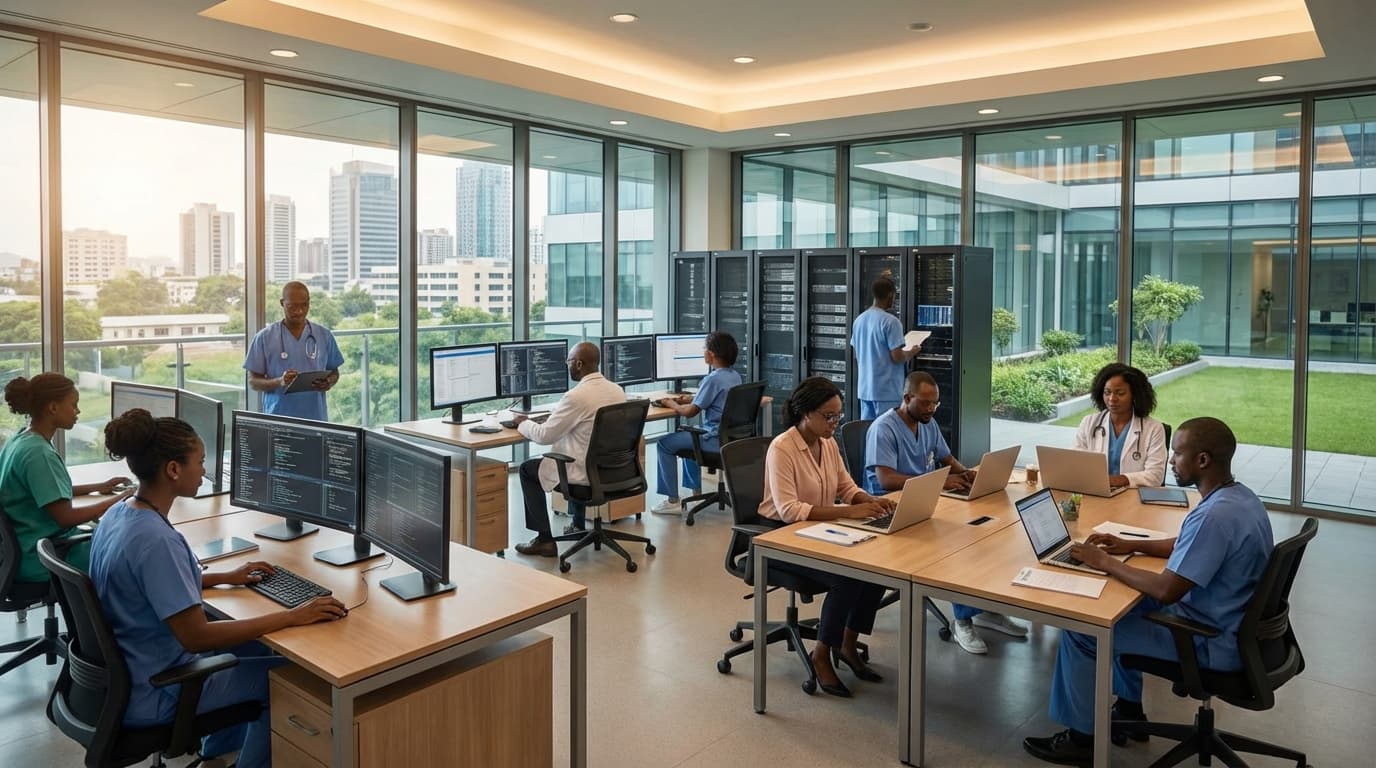
Radiology Reader & Reporting Support in Burundi
Engineering Excellence & Technical Support
Remote radiology reading and reporting services High-standard technical execution following OEM protocols and local regulatory frameworks.
AI-Powered Diagnostic Assistance
Leveraging cutting-edge Artificial Intelligence algorithms to automatically detect potential abnormalities in X-rays and CT scans, reducing missed diagnoses and speeding up preliminary report generation. Our AI assists radiologists in prioritizing critical cases and highlighting subtle findings.
Secure Cloud-Based Reporting Platform
A secure, HIPAA-compliant cloud platform enabling radiologists to access patient images and generate reports from anywhere. Features real-time collaboration, encrypted data storage, and automated report distribution to referring physicians, enhancing efficiency and accessibility of diagnostic services.
Interactive Case Training & Simulation
Providing a comprehensive digital library of anonymized radiological cases coupled with interactive simulation tools. This feature allows junior radiologists and technicians to hone their diagnostic skills, practice reporting under simulated conditions, and stay updated on the latest imaging interpretations.
What Is Radiology Reader & Reporting Support In Burundi?
Radiology Reader & Reporting Support in Burundi refers to the provision of expert interpretation of medical imaging studies (such as X-rays, CT scans, MRIs, and ultrasounds) and the generation of comprehensive, standardized diagnostic reports. This service is crucial in regions like Burundi where access to subspecialist radiologists and advanced reporting infrastructure may be limited. It bridges the gap in diagnostic capabilities by leveraging remote expertise and technology to enhance the accuracy and efficiency of radiological assessments. This support is vital for ensuring appropriate patient management, treatment planning, and epidemiological surveillance.
What this service involves:
- Image Interpretation: Qualified radiologists, often remotely located, review digital medical images uploaded from healthcare facilities in Burundi. This includes identifying abnormalities, characterizing findings, and correlating them with clinical information.
- Report Generation: The service produces detailed, structured diagnostic reports based on the image interpretation. These reports adhere to international standards (e.g., BI-RADS, PI-RADS where applicable) and include findings, impressions, and recommendations.
- Quality Assurance: Implementing protocols for quality control of both image acquisition and report content to ensure accuracy and consistency.
- Teleradiology Integration: Often relies on a teleradiology platform that facilitates secure image transfer, communication between referring clinicians and remote readers, and report distribution.
- Education and Training Support: May include feedback mechanisms or remote training sessions for local medical professionals involved in image acquisition or preliminary assessment.
Who needs it:
- Hospitals and Clinics in Burundi: Especially those with limited or no on-site radiologist coverage, or those seeking subspecialty expertise not available locally.
- Public Health Programs: Requiring large-scale screening or diagnostic capabilities for infectious diseases (e.g., tuberculosis) or other public health concerns.
- Referral Centers: Needing advanced diagnostic support for complex cases that exceed the capabilities of local radiology departments.
- Non-Governmental Organizations (NGOs) and International Aid Organizations: Providing healthcare services in underserved areas, requiring reliable diagnostic tools.
Typical Use Cases:
| Service Component | Description | Beneficiary Impact |
|---|---|---|
| Remote Image Interpretation | Expert radiologists analyze uploaded medical images (X-ray, CT, MRI, US). | Increases diagnostic accuracy and access to specialized knowledge. |
| Standardized Report Generation | Production of clear, structured reports with findings and impressions. | Facilitates consistent communication with referring physicians and aids treatment decisions. |
| Teleradiology Platform | Secure digital transmission of images and reports. | Enables efficient workflow and timely access to diagnostic services regardless of geographical location. |
| Quality Control Measures | Review of image quality and report adherence to standards. | Ensures reliability and trustworthiness of diagnostic outcomes. |
| Subspecialty Consultation | Access to radiologists with expertise in specific areas (e.g., neuro-radiology, pediatric radiology). | Addresses complex cases requiring specialized diagnostic insights. |
Typical Use Cases
- Tuberculosis screening via chest X-rays, especially in high-prevalence areas.
- Emergency room consultations for acute conditions requiring rapid radiological assessment (e.g., trauma, stroke).
- Outpatient diagnostics for various pathologies requiring CT or MRI scans.
- Cancer screening and staging where advanced imaging interpretation is critical.
- Prenatal ultrasound interpretation for fetal anomalies.
- Support for basic diagnostic imaging needs in remote or rural healthcare facilities.
- Epidemiological studies requiring consistent radiological data interpretation.
Who Needs Radiology Reader & Reporting Support In Burundi?
Radiology Reader & Reporting Support services are crucial for healthcare institutions in Burundi that face challenges in accessing specialized radiology expertise. These services aim to bridge the gap in skilled radiologists and radiographers, thereby improving diagnostic accuracy, efficiency, and patient care across various medical settings.
| Target Customer Type | Primary Need | Departmental Benefits |
|---|---|---|
| Public Hospitals | Overcome radiologist shortages, improve diagnostic capacity | All departments, especially Emergency, Internal Medicine, Surgery, Pediatrics |
| Private Hospitals & Clinics | Enhance service quality, offer advanced diagnostics | Radiology, Surgery, Internal Medicine, Oncology |
| Referral/University Hospitals | Support complex cases, aid in medical training | All specialized departments, Research, Education |
| District/Regional Hospitals | Access expert interpretation for general and specialized imaging | Internal Medicine, Surgery, Pediatrics, Emergency |
| NGO Healthcare Facilities | Provide essential diagnostic services in underserved areas | Primary care, Maternal & Child Health, Emergency |
| Diagnostic Imaging Centers | Increase reporting efficiency and accuracy | Radiology, various referring clinical departments |
| Emergency Departments | Rapid, accurate interpretation for critical conditions | Emergency Medicine, Trauma |
| Oncology Departments | Precise imaging for cancer diagnosis, staging, and monitoring | Oncology, Radiology |
| Surgical Departments | Pre-operative planning, intra-operative support, post-operative assessment | Surgery, Anesthesiology |
| Internal Medicine Departments | Diagnosis and management of diverse medical conditions | Internal Medicine, Pulmonology, Gastroenterology |
| Pediatric Departments | Specialized interpretation of pediatric imaging | Pediatrics, Neonatology |
| Maternal & Child Health Units | Expert interpretation of obstetric and gynecological imaging | Obstetrics & Gynecology, Neonatology |
Target Customers and Departments in Burundi
- Public Hospitals: These are often the largest healthcare providers, serving the majority of the population. They frequently experience shortages of specialized medical professionals, including radiologists.
- Private Hospitals and Clinics: As the private healthcare sector grows in Burundi, these facilities also seek to enhance their diagnostic capabilities and offer comprehensive services.
- Referral Centers and University Hospitals: These institutions handle complex cases and are vital for medical education. They require advanced diagnostic support to maintain high standards.
- District and Regional Hospitals: While often having basic radiology equipment, these hospitals may lack experienced readers for complex interpretations, leading to delays or misdiagnoses.
- Non-Governmental Organization (NGO) Healthcare Facilities: NGOs operating in remote or underserved areas often run clinics and hospitals that can benefit immensely from remote radiology support.
- Diagnostic Imaging Centers: Standalone imaging centers looking to expand their service offerings or improve turnaround times for reports.
- Emergency Departments: Critical for timely diagnosis in emergency situations, where rapid and accurate interpretation of imaging is paramount.
- Oncology Departments: Requiring precise imaging for diagnosis, staging, treatment planning, and monitoring of cancer patients.
- Surgical Departments: Relying on radiology for pre-operative assessment, intra-operative guidance, and post-operative evaluation.
- Internal Medicine Departments: Utilizing radiology for the diagnosis and management of a wide range of conditions affecting various organ systems.
- Pediatric Departments: Needing specialized interpretation of imaging in children, which often requires a different skillset than adult radiology.
- Maternal and Child Health Units: For obstetric and gynecological imaging, requiring expertise in interpreting scans related to pregnancy and women's health.
Radiology Reader & Reporting Support Process In Burundi
This document outlines the workflow for the Radiology Reader & Reporting Support Process in Burundi. This process is designed to facilitate access to expert radiology interpretations and reporting for healthcare facilities in Burundi, especially those with limited on-site radiology expertise. It aims to ensure timely and accurate diagnostic information for patient care.
| Stage | Description | Responsible Party | Key Outputs | Timeframe (Typical) |
|---|---|---|---|---|
| Inquiry and Request Initiation | A healthcare facility identifies a need for radiology interpretation and initiates a request. This typically involves filling out a standardized request form detailing patient demographics, clinical history, and imaging modality. | Requesting Healthcare Facility | Completed Request Form | Immediate |
| Case Triage and Assignment | Upon receiving a request, the administrative team or a designated radiology coordinator reviews the request for completeness and assigns it to an appropriate, available radiologist based on subspecialty or workload. If urgent, it's flagged for priority. | Radiology Coordination Team/Administrator | Assigned Radiologist, Prioritized Case Flag (if applicable) | Within 2-4 business hours |
| Image Upload and Secure Transfer | The requesting facility securely uploads the relevant imaging studies (e.g., DICOM files) to a designated secure Picture Archiving and Communication System (PACS) or a secure cloud-based platform. Access is granted to the assigned radiologist. | Requesting Healthcare Facility, PACS/Platform Administrator | Securely Transferred Imaging Studies | Within 1-3 business hours of assignment |
| Expert Reading and Interpretation | The assigned radiologist accesses the images and reviews them thoroughly. They perform a detailed interpretation, considering the clinical information provided. This may involve comparing with prior studies if available. | Assigned Radiologist | Radiological Findings, Preliminary Impression | Varies based on complexity (e.g., 8-48 business hours) |
| Report Generation and Review | The radiologist dictates or writes a comprehensive radiology report based on their findings. This report includes an impression/conclusion section. In some cases, a senior radiologist may review complex or critical reports before finalization. | Assigned Radiologist, (Optional) Senior Radiologist | Draft Radiology Report | Concurrent with or immediately after interpretation |
| Report Delivery and Feedback | The finalized radiology report is securely transmitted back to the requesting healthcare facility via the PACS/platform or secure email. The facility acknowledges receipt. A mechanism for providing feedback on the report quality may be available. | Radiology Coordination Team/Administrator, Requesting Healthcare Facility | Finalized Radiology Report, Acknowledgement of Receipt | Within 2-6 business hours of report finalization |
| Billing and Administration | After report delivery, the administrative team processes billing for the service according to established rates and procedures. Records of the service provided are maintained for reporting and audit purposes. | Administrative/Finance Department | Invoice, Service Record | Within 1-5 business days of report delivery |
Workflow Stages
- Inquiry and Request Initiation
- Case Triage and Assignment
- Image Upload and Secure Transfer
- Expert Reading and Interpretation
- Report Generation and Review
- Report Delivery and Feedback
- Billing and Administration
Radiology Reader & Reporting Support Cost In Burundi
Radiology reader and reporting support in Burundi is a critical service for healthcare facilities, especially those with limited in-house radiologist expertise. The cost of these services is influenced by several factors, including the complexity and volume of imaging studies, the turnaround time required for reports, the qualifications and experience of the remote radiologists or reporting physicians, and the technology platform used for image transmission and reporting. Given Burundi's economic landscape, pricing is typically discussed and negotiated in local currency, the Burundian Franc (BIF).
| Service Type | Estimated Price Range (BIF per study) | Notes |
|---|---|---|
| Routine X-ray Interpretation | 15,000 - 40,000 BIF | Varies by complexity of the X-ray (e.g., chest X-ray vs. orthopedic series). Does not include image acquisition costs. |
| Routine Ultrasound Interpretation | 25,000 - 70,000 BIF | Depends on the type of ultrasound (e.g., abdominal, obstetric, thyroid). |
| Routine CT Scan Interpretation | 70,000 - 150,000 BIF | Cost increases with the complexity of the scan (e.g., head CT vs. CT abdomen/pelvis with contrast). |
| Routine MRI Scan Interpretation | 100,000 - 250,000 BIF | Generally higher cost due to complexity and scan time. Varies by body part imaged. |
| STAT/Urgent Reading Surcharge | Add 20-50% to routine fee | Applicable for studies requiring immediate interpretation. |
| Sub-specialty Interpretation (e.g., Neuro, MSK) | Add 15-30% to routine fee | For highly specialized readings. |
Key Pricing Factors for Radiology Reader & Reporting Support in Burundi
- Volume of Studies: The sheer number of radiology examinations (X-rays, CT scans, ultrasounds, MRIs) requiring interpretation directly impacts the overall cost. Higher volumes generally lead to economies of scale, but per-study costs might still be significant.
- Study Modality and Complexity: Different imaging modalities have varying interpretation complexities and associated costs. For instance, a simple X-ray interpretation is typically less expensive than a complex CT angiography or MRI report.
- Turnaround Time (TAT) Requirements: Urgent STAT readings requiring immediate attention command a premium over routine reports with more flexible deadlines. The service provider needs to allocate resources to ensure timely delivery.
- Radiologist/Reader Expertise and Specialization: The qualifications, experience, and any sub-specializations (e.g., neuroradiology, musculoskeletal radiology) of the remote radiologists or reporting physicians will influence their fees. Highly specialized expertise is more valuable and thus more costly.
- Technology and Infrastructure Costs: The cost of secure image transmission, Picture Archiving and Communication Systems (PACS), and reporting software used by the provider are factored into their pricing. The burden of maintaining and upgrading this technology falls on the service provider.
- Geographic Location and Accessibility: While remote reading mitigates some geographic barriers, the logistical challenges and connectivity issues within Burundi can sometimes play a role in service accessibility and, consequently, cost.
- Contractual Agreements: Long-term contracts and service level agreements (SLAs) can often lead to more favorable pricing compared to ad-hoc or short-term arrangements.
- Ancillary Services: Some providers may offer additional services like quality assurance, peer review, or training, which would add to the overall cost.
Affordable Radiology Reader & Reporting Support Options
Radiology practices are continuously seeking ways to optimize their operations and reduce costs without compromising the quality of patient care. This includes finding efficient and affordable solutions for radiology reading and reporting. Value bundles and strategic cost-saving measures can significantly improve a practice's financial health while ensuring seamless workflow and timely report delivery. This document outlines common value bundles and cost-saving strategies available in the market.
| Value Bundle/Strategy | Description | Cost-Saving Mechanism | Potential Benefits |
|---|---|---|---|
| Full-Service Teleradiology | A comprehensive service providing both preliminary and final reads for all modalities, often 24/7. | Reduces need for in-house radiologists, eliminates recruitment and training costs, optimizes coverage. | Improved turnaround times, extended coverage, access to subspecialists, reduced on-call burden. |
| AI-Assisted Workflow Solutions | Integration of AI algorithms for image analysis, critical finding detection, and preliminary report generation. | Increases radiologist efficiency, reduces errors, prioritizes urgent cases. | Higher throughput, faster reporting, improved diagnostic accuracy, reduced radiologist fatigue. |
| Cloud-Based RIS/PACS/Reporting Integration | Unified platform hosted in the cloud for managing radiology workflows and data. | Lower IT infrastructure costs (no on-premise servers), reduced maintenance, scalable. | Enhanced accessibility, improved collaboration, streamlined data management, predictable subscription costs. |
| Subspecialty Teleradiology Services | Outsourcing specific subspecialty reads (e.g., neuroradiology, interventional radiology) to highly specialized remote radiologists. | Cost-effective alternative to hiring full-time subspecialists for lower volume needs. | Access to expert interpretation for complex cases, improved diagnostic specificity. |
| Managed Teleradiology Support | A vendor manages the entire teleradiology process, including radiologist recruitment, quality assurance, and IT integration. | Minimizes administrative overhead for the practice, predictable pricing. | Simplified vendor management, consistent service quality, dedicated support. |
Key Cost-Saving Strategies & Value Bundles
- Teleradiology Partnerships: Outsourcing overnight or subspecialty reads to remote radiologists can be more cost-effective than maintaining in-house coverage 24/7 or hiring specialized personnel for limited needs.
- AI-Powered Triage & Preliminary Reads: Artificial intelligence tools can pre-screen studies, flag critical findings, and even generate preliminary reports, allowing human radiologists to focus on complex cases and interpretation, thereby increasing throughput and reducing burnout.
- Flexible Staffing Models: Employing a mix of full-time, part-time, and locum radiologists can help manage fluctuating workloads and reduce overhead costs associated with full-time employees, such as benefits and long-term commitments.
- Integrated RIS/PACS/Reporting Solutions: Bundling Radiology Information Systems (RIS), Picture Archiving and Communication Systems (PACS), and reporting software can lead to better data integration, reduced IT complexity, and potentially lower licensing fees compared to standalone systems.
- Subscription-Based Software Models: Moving from perpetual licenses to subscription models for software (AI, reporting platforms, etc.) can offer more predictable monthly expenses and access to continuous updates and support.
- Managed Services: Outsourcing IT infrastructure management, PACS administration, or even scheduling and billing can free up internal resources and leverage specialized expertise at a potentially lower cost.
- Geographic Arbitrage: Utilizing teleradiology services located in regions with lower operational costs can significantly reduce per-read expenses while maintaining high-quality interpretations.
- Volume-Based Pricing Agreements: Negotiating pricing with teleradiology providers or AI vendors based on projected reading volumes can lead to discounted rates for higher throughput.
- Shared Service Models: For smaller practices, exploring partnerships with other local radiology groups to share resources, such as a common teleradiology contract or a centralized IT department, can be highly beneficial.
- Specialty-Specific Bundles: Some providers offer packages tailored to specific radiology subspecialties (e.g., neuroimaging, musculoskeletal), potentially including specialized AI tools and subspecialty radiologists at a bundled rate.
Verified Providers In Burundi
In Burundi, ensuring access to reliable and trustworthy healthcare services is paramount. 'Verified Providers in Burundi' highlights the critical role of credible organizations and their rigorous credentialing processes. Franance Health stands out as a prime example, demonstrating a commitment to quality and patient safety that makes them a superior choice for healthcare needs in the region. Their stringent credentialing procedures, which likely involve thorough background checks, verification of medical licenses and certifications, and adherence to established ethical standards, provide an essential layer of assurance to patients. This dedication to vetting their network ensures that individuals seeking medical assistance are connected with competent and ethical practitioners, fostering confidence and improving health outcomes. Choosing a provider like Franance Health means opting for a healthcare experience built on a foundation of trust, expertise, and unwavering patient care.
| Credentialing Component | Franance Health's Approach | Benefit to Patients |
|---|---|---|
| Licensing and Certification Verification | Comprehensive checks against official registries to confirm current and valid credentials. | Guarantees that providers meet the minimum legal and professional requirements for practice. |
| Professional Background and Experience | Evaluation of past performance, specialties, and years of relevant experience. | Connects patients with practitioners best suited to their specific medical needs. |
| Ethical Conduct and Reputation | Assessment of adherence to medical ethics and review of any disciplinary actions. | Ensures providers operate with integrity and maintain a high standard of professional conduct. |
| Continuous Professional Development | Encourages or requires ongoing training and education to stay updated with medical advancements. | Provides access to healthcare services informed by the latest medical knowledge and techniques. |
| Patient Feedback Mechanisms | Implementation of systems to gather and act upon patient reviews and feedback. | Promotes accountability and continuous improvement in service delivery. |
Key Aspects of Franance Health's Verified Provider Credentials
- Rigorous Verification of Medical Licenses and Certifications
- Thorough Background Checks on Healthcare Professionals
- Adherence to Ethical Standards and Best Practices
- Commitment to Patient Safety and Quality Care
- Ensuring Competence and Expertise of Practitioners
Scope Of Work For Radiology Reader & Reporting Support
This Scope of Work (SOW) outlines the services to be provided for Radiology Reader & Reporting Support. The objective is to supplement existing radiology departments with qualified readers and reporting support to ensure timely and accurate interpretation of medical imaging studies. This document details the technical deliverables and standard specifications required for successful service delivery.
| Deliverable | Technical Specifications | Standard Compliance | Reporting Format | Turnaround Time (TAT) |
|---|---|---|---|---|
| Radiology Reports | Comprehensive, accurate, and clear reports including findings, impressions, and recommendations. Reports must be digitized and readily accessible. Integration with PACS/RIS is a preferred capability. | ACR practice parameters, appropriate use criteria, and client-specific guidelines. Adherence to HIPAA for data privacy and security. | Structured reporting templates (e.g., RadElement, proprietary templates) or free-text as specified by the client. DICOM-compliant structured reports where applicable. | Standard: <24 hours for routine studies. STAT interpretations: <1 hour. Specific TATs to be defined in service level agreements (SLAs). |
| Image Interpretation | High-resolution image viewing capabilities via secure remote access. Ability to handle large datasets and complex imaging protocols. | Compliance with cybersecurity best practices. Secure VPN or cloud-based access with multi-factor authentication. | N/A (Service rendered via secure platform) | N/A |
| Quality Assurance | Regular review of reports for accuracy, completeness, and adherence to established protocols. Feedback mechanisms for continuous improvement. | Internal QA protocols and client-specific QA metrics. Random and targeted review processes. | N/A | |
| Consultation Services | Availability for telephonic or secure messaging consultation with referring physicians to discuss complex cases or clarification of reports. | HIPAA-compliant communication channels. | N/A | |
| Data Security & Privacy | Robust data encryption (in transit and at rest). Strict access controls and audit trails. Regular security training for personnel. | HIPAA, GDPR (if applicable), and client-specific data security policies. | N/A |
Key Services Provided
- Remote and/or on-site interpretation of various radiology modalities (X-ray, CT, MRI, Ultrasound, Mammography, Nuclear Medicine).
- Generation of comprehensive radiology reports in compliance with established standards and client-specific templates.
- Quality assurance and peer review of radiology reports.
- Consultation with referring physicians as needed.
- Adherence to all relevant regulatory and accreditation requirements (e.g., HIPAA, ACR).
Service Level Agreement For Radiology Reader & Reporting Support
This Service Level Agreement (SLA) outlines the guaranteed response times and uptime for the Radiology Reader & Reporting Support service. This SLA is designed to ensure efficient and reliable support for our radiology operations, enabling timely interpretation and reporting of medical images.
| Service Component | Response Time Guarantee (Business Hours) | Uptime Guarantee (Monthly) |
|---|---|---|
| Critical Issue (e.g., Reader unable to access images, complete system outage) | 15 minutes (initial acknowledgement) | 99.9% |
| High Priority Issue (e.g., Dictation system down, report saving failure) | 30 minutes (initial acknowledgement) | 99.9% |
| Medium Priority Issue (e.g., Slow system performance, minor viewer glitch) | 1 hour (initial acknowledgement) | 99.9% |
| Low Priority Issue (e.g., Feature request, minor workflow query) | 4 business hours (initial acknowledgement) | 99.9% |
| Reader Availability for Support | N/A (Continuous support available) | 99.9% |
Scope of Service
- Support for the radiology reading worklist and associated PACS (Picture Archiving and Communication System) viewer functionalities.
- Assistance with report generation, including template utilization and dictation integration.
- Troubleshooting and resolution of technical issues impacting reader and reporting workflows.
- Availability of qualified radiology reading support personnel during defined support hours.
Frequently Asked Questions

Ready when you are
Let's scope your Radiology Reader & Reporting Support in Burundi project in Burundi.

Scaling healthcare logistics and technical systems across the entire continent.