
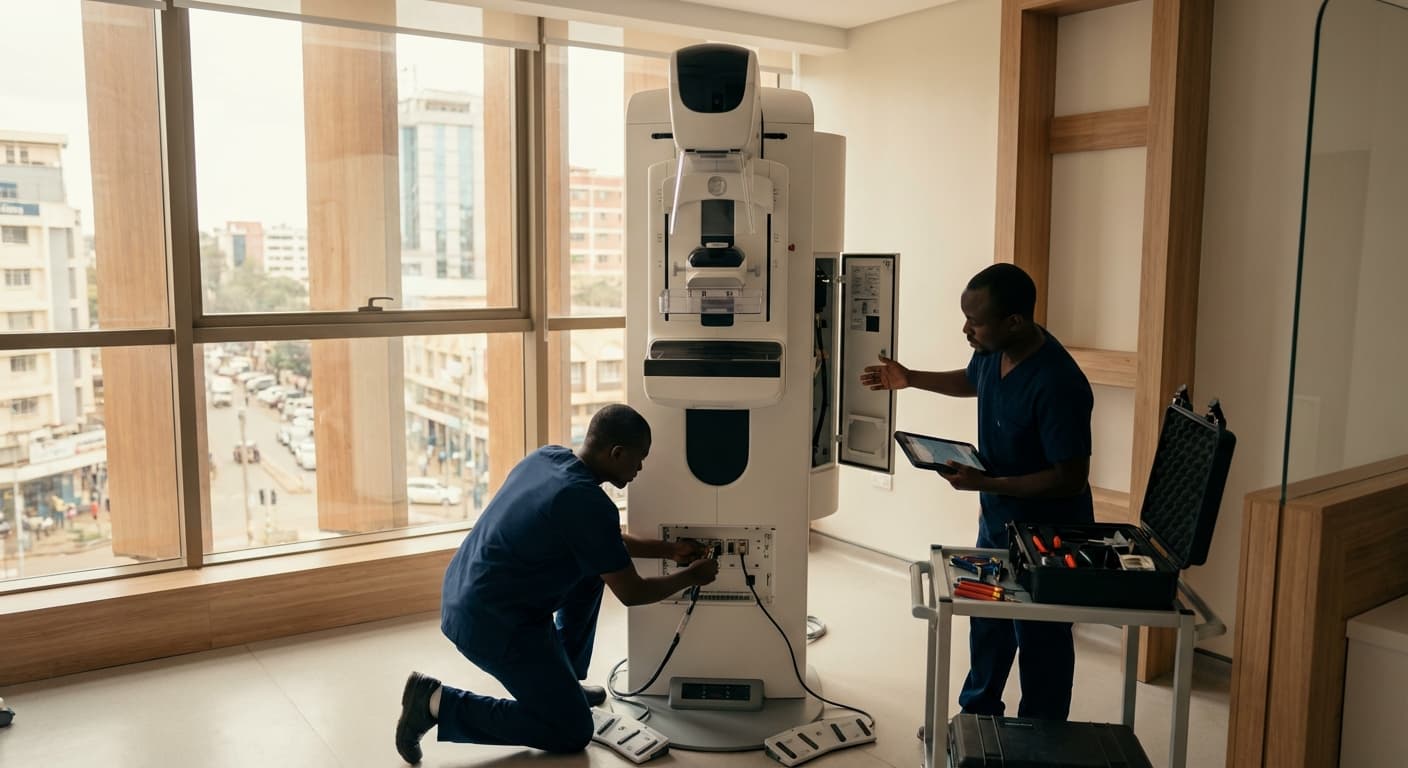
Mammography Installation Service in Burundi
Engineering Excellence & Technical Support
Mammography Installation Service High-standard technical execution following OEM protocols and local regulatory frameworks.
Unwavering Quality Assurance
Our rigorous installation process adheres to international medical imaging standards. We employ certified technicians who meticulously calibrate each mammography unit, ensuring optimal image quality and diagnostic accuracy, crucial for early cancer detection in Burundi's healthcare landscape.
Optimized Workflow Integration
We specialize in seamless integration of new mammography systems into existing hospital workflows. Our team conducts thorough site assessments and provides tailored installation plans to minimize disruption and maximize operational efficiency for healthcare providers across Burundi.
Reliable & Sustainable Solutions
Understanding Burundi's unique logistical challenges, we offer robust installation services built for longevity. Our technicians are trained to utilize durable, locally sourced materials where possible, ensuring the long-term reliability and sustainability of your mammography infrastructure.
What Is Mammography Installation Service In Burundi?
Mammography installation service in Burundi refers to the specialized technical process of setting up, configuring, and verifying mammography equipment within healthcare facilities across the nation. This service ensures that sophisticated medical imaging devices are accurately integrated into existing hospital or clinic infrastructure, adhering to both manufacturer specifications and local regulatory standards. The objective is to enable reliable and safe diagnostic imaging for breast health, crucial for early detection and management of breast cancer. The service encompasses a range of activities from site preparation and physical installation to software configuration, calibration, and initial operational testing. It is a critical component of establishing or upgrading diagnostic radiology capabilities, particularly for women's health services.
| Who Needs Mammography Installation Service? | Typical Use Cases | |||||
|---|---|---|---|---|---|---|
| Hospitals and Tertiary Care Centers: Facilities requiring advanced diagnostic imaging capabilities for comprehensive breast health screening and diagnosis, especially those with dedicated radiology departments or women's health units. | Establishment of New Radiology Departments: Integrating mammography as a core component of a newly formed or expanded radiology service. | Replacement of Obsolete Equipment: Upgrading existing mammography units to newer, more advanced digital systems (e.g., from analog to digital mammography, or replacing older digital models). | Expansion of Diagnostic Services: Healthcare providers aiming to broaden their diagnostic imaging portfolio to include breast cancer screening and detection. | Government and Non-Governmental Health Initiatives: Public health programs or NGOs focused on improving access to breast cancer screening in underserved regions. | Private Diagnostic Clinics: Specialized imaging centers that offer mammography as a primary service. | Research and Training Institutions: Facilities requiring functional mammography equipment for clinical research or medical education purposes. |
| Routine Breast Cancer Screening Programs: Providing equipment for scheduled mammography examinations for asymptomatic individuals as part of national or regional screening initiatives. | Diagnostic Mammography for Symptomatic Patients: Installing systems for the evaluation of patients presenting with clinical signs or symptoms suggestive of breast pathology (e.g., palpable lumps, nipple discharge). | Follow-up Imaging for Abnormal Screening Results: Enabling the acquisition of diagnostic mammograms to further investigate suspicious findings detected during screening. | Biopsy Guidance Procedures: Ensuring the mammography unit is integrated with imaging modalities that support image-guided breast biopsies (e.g., stereotactic biopsy capabilities). | Breast Cancer Treatment Monitoring: Providing imaging for patients undergoing treatment to assess response to therapy. | Specialized Breast Imaging Centers: Equipping dedicated facilities focused solely on breast imaging and diagnostics. | Tele-mammography Hubs: Setting up systems that can transmit images for remote interpretation by radiologists, especially in areas with limited specialist availability. |
Key Components of Mammography Installation Service
- Site Assessment and Preparation: Evaluating the designated installation space for structural integrity, power supply requirements, environmental controls (temperature, humidity), radiation shielding (if applicable), and network connectivity.
- Equipment Unpacking and Physical Setup: Careful unpacking of the mammography unit, including the mammography X-ray tube, detector (analog or digital), compression paddle system, control console, and associated peripherals. Precise physical alignment and mounting of components according to manufacturer guidelines.
- Electrical and Power Integration: Connecting the mammography unit to the facility's power grid, ensuring compliance with voltage, amperage, and grounding specifications. Installation of uninterruptible power supplies (UPS) for critical systems.
- Network and Data Connectivity: Establishing secure network connections for Picture Archiving and Communication Systems (PACS) and Electronic Health Records (EHR) integration, enabling seamless image transfer and storage. Configuration of DICOM (Digital Imaging and Communications in Medicine) protocols.
- Software Installation and Configuration: Installing and configuring the mammography unit's operating system, imaging acquisition software, and any associated analysis or post-processing tools. Setting up user profiles and access controls.
- Calibration and Quality Assurance (QA) Testing: Performing rigorous calibration of X-ray output, detector performance, and image processing parameters to ensure diagnostic accuracy and image quality. Executing a suite of QA tests (e.g., phantom imaging, contrast-detail analysis) to verify performance against established benchmarks.
- Radiation Safety Checks: Verifying proper functioning of safety interlocks, dose control mechanisms, and any necessary radiation shielding, in compliance with national radiation protection regulations.
- User Training and Handover: Providing comprehensive training to radiographers, technologists, and relevant biomedical engineering staff on the operation, basic maintenance, and troubleshooting of the installed mammography system.
- Documentation and Certification: Preparing detailed installation reports, calibration certificates, and user manuals. Obtaining any necessary regulatory approvals or certifications for operation.
- Post-Installation Support: Offering initial technical support and troubleshooting to ensure smooth operational startup.
Who Needs Mammography Installation Service In Burundi?
Mammography installation services are crucial for equipping healthcare facilities with the necessary technology for early breast cancer detection. In Burundi, a country with growing healthcare infrastructure and a recognized need for improved women's health services, there is a significant demand for such specialized installations. This service ensures that medical centers can offer accurate and reliable mammography screenings, playing a vital role in public health initiatives and the fight against breast cancer. The installation process involves not just the physical placement of the equipment but also calibration, testing, and often training for medical personnel, all of which are essential for optimal performance and patient safety.
| Target Customer Type | Key Departments Involved | Specific Needs/Justification |
|---|---|---|
| Government Hospitals | Radiology Department, Oncology Department, Women's Health Services | Serving a broad patient base, national screening programs, improving access to essential diagnostics in public health. |
| Private Hospitals and Clinics | Radiology Department, Diagnostic Imaging Unit, Gynecological Services | Catering to a paying clientele, offering advanced diagnostic services, competitive market positioning. |
| Maternity Centers and Women's Health Clinics | Radiology Unit, Preventive Care Department, Screening Services | Focus on reproductive and women's health, early detection campaigns, specialized screening for at-risk populations. |
| NGOs focused on Women's Health | Health Program Implementation Unit, Medical Outreach Teams | Executing health projects, providing services in underserved areas, raising awareness and facilitating screenings. |
| Research Institutions and Medical Training Centers | Radiology Department, Medical Education Faculty, Clinical Research Units | Training future radiologists and technicians, conducting research on breast cancer, establishing best practices in imaging. |
Target Customers and Departments for Mammography Installation Service in Burundi
- Government Hospitals (National and Provincial)
- Private Hospitals and Clinics
- Maternity Centers and Women's Health Clinics
- Non-Governmental Organizations (NGOs) focused on Women's Health
- Research Institutions and Medical Training Centers
Mammography Installation Service Process In Burundi
This document outlines the typical workflow for a mammography installation service process in Burundi, from initial inquiry to final execution. The process is designed to ensure proper equipment setup, calibration, and readiness for clinical use, adhering to relevant standards and regulations.
| Stage | Key Activities | Responsible Parties | Duration (Estimated) | Notes/Deliverables |
|---|---|---|---|---|
| Inquiry and Initial Consultation | Client expresses interest in mammography installation. Service provider gathers preliminary information about needs, location, and existing infrastructure. Initial discussion on equipment models and scope of service. | Client (Hospital/Clinic), Service Provider (Sales/Technical Team) | 1-3 days | Understanding of client requirements, preliminary advice. |
| Site Assessment and Planning | Technical team visits the site to evaluate space, power supply, ventilation, radiation shielding requirements, and network infrastructure. Detailed planning for equipment placement and logistical arrangements. | Service Provider (Technical Team), Client (Facilities/IT Staff) | 2-5 days | Detailed site survey report, installation plan, identification of any infrastructure modifications needed. |
| Quotation and Contract Agreement | Based on the assessment, a detailed quotation is prepared, including equipment costs, installation fees, training, and any required infrastructure upgrades. Contract negotiation and signing. | Service Provider (Sales/Legal Team), Client (Procurement/Management) | 3-7 days | Formal quotation, signed service contract. |
| Equipment Delivery and Warehousing | Manufacturer or supplier delivers the mammography equipment to the client's designated location or a pre-arranged warehouse. Proper handling and storage procedures are followed. | Manufacturer/Supplier, Logistics Company, Client (Warehouse Staff) | Variable (depending on shipping) | Equipment safely delivered and stored. |
| Pre-Installation Site Preparation | Client, with guidance from the service provider, undertakes any necessary civil works, electrical upgrades, radiation shielding installation, and network cabling as per the installation plan. | Client (Contractors, Electricians, IT), Service Provider (Supervision/Guidance) | Variable (weeks to months, depending on complexity) | Site ready for installation, necessary permits obtained (if applicable). |
| Equipment Installation and Assembly | Certified technicians from the service provider arrive at the site and proceed with unpacking, assembling, and positioning the mammography system according to the manufacturer's specifications and the approved installation plan. | Service Provider (Installation Technicians) | 3-7 days | Mammography system physically installed and assembled. |
| Electrical and Network Connectivity | Connecting the mammography system to the building's power supply, ensuring compliance with electrical safety standards. Establishing network connectivity for PACS (Picture Archiving and Communication System) and RIS (Radiology Information System) integration. | Service Provider (Technicians, IT Specialists), Client (IT Department) | 1-3 days | Stable power connection, functional network links for data transfer. |
| System Configuration and Calibration | Configuring software settings, performing initial system diagnostics, and calibrating the mammography unit to ensure accurate image acquisition. This includes phantom tests and dose monitoring. | Service Provider (Application Specialists, Technicians) | 2-5 days | System configured, calibrated, and initial performance parameters met. |
| Quality Assurance and Testing | Comprehensive testing of all system functions, including image quality, radiation output, safety features, and integration with other hospital systems. Verification against established quality standards. | Service Provider (QA Team, Application Specialists), Client (Radiology Department) | 2-4 days | QA reports, successful test results, imaging protocols validated. |
| Staff Training | Training for radiology technologists and radiologists on the operation of the new mammography system, including image acquisition techniques, system maintenance, and troubleshooting. | Service Provider (Application Specialists, Trainers), Client (Radiology Staff) | 3-7 days | Trained personnel capable of operating the system, training certificates issued. |
| Handover and Documentation | Formal handover of the installed and tested mammography system to the client. Provision of all relevant documentation, including user manuals, service records, warranty information, and calibration certificates. | Service Provider (Project Manager, Lead Technician), Client (Hospital Management, Radiology Department) | 1-2 days | Signed handover certificate, complete documentation package. |
| Post-Installation Support and Maintenance | Provision of initial post-installation support, troubleshooting any emergent issues. Establishment of a service and maintenance contract for ongoing technical support, preventive maintenance, and repairs. | Service Provider (Technical Support, Service Engineers), Client (Radiology Department) | Ongoing | Reliable system operation, agreed-upon service level agreement (SLA). |
Mammography Installation Service Process in Burundi
- Inquiry and Initial Consultation
- Site Assessment and Planning
- Quotation and Contract Agreement
- Equipment Delivery and Warehousing
- Pre-Installation Site Preparation
- Equipment Installation and Assembly
- Electrical and Network Connectivity
- System Configuration and Calibration
- Quality Assurance and Testing
- Staff Training
- Handover and Documentation
- Post-Installation Support and Maintenance
Mammography Installation Service Cost In Burundi
The cost of mammography installation services in Burundi can vary significantly due to a combination of technical, logistical, and market-specific factors. These installations typically involve the setup of advanced medical imaging equipment, requiring specialized expertise, precise calibration, and adherence to safety regulations. Understanding the pricing structure is crucial for healthcare facilities planning to acquire or upgrade their mammography capabilities.
| Service Component | Estimated Cost Range (BIF) |
|---|---|
| Basic Mammography Unit (2D) - Equipment Cost Only | 35,000,000 - 90,000,000 |
| Advanced Mammography Unit (3D/Tomosynthesis) - Equipment Cost Only | 80,000,000 - 200,000,000+ |
| Professional Installation & Calibration Services (per unit) | 5,000,000 - 15,000,000 |
| Site Preparation & Infrastructure (variable, per room) | 2,000,000 - 10,000,000 |
| Logistics, Shipping & Customs (highly variable) | 7,000,000 - 30,000,000+ |
| Staff Training & Handover (per session) | 1,000,000 - 3,000,000 |
| Ancillary Software/PACS Integration (basic setup) | 3,000,000 - 8,000,000 |
| Total Estimated Installation Package (Excluding Equipment) | 18,000,000 - 66,000,000+ |
| Total Estimated Project Cost (Including Basic 2D Equipment) | 53,000,000 - 156,000,000+ |
| Total Estimated Project Cost (Including Advanced 3D Equipment) | 98,000,000 - 266,000,000+ |
Key Pricing Factors for Mammography Installation in Burundi
- Type and Model of Mammography Equipment: Different mammography machines (e.g., 2D, 3D/tomosynthesis, AI-enabled systems) have vastly different price points. The complexity of the technology directly impacts installation requirements and associated costs.
- Site Preparation and Infrastructure: This includes any necessary structural modifications to the room (e.g., reinforced flooring, shielding, ventilation), electrical upgrades to handle high power demands, and plumbing if applicable. The current state of the facility plays a major role.
- Logistics and Transportation: The cost of safely transporting the heavy and sensitive equipment from the point of origin (often international shipping) to the installation site within Burundi, including customs duties, import taxes, and local transport, is a significant component.
- Labor and Expertise: Installation requires certified technicians and engineers. The duration of the installation, the number of personnel required, and their travel and accommodation expenses contribute to the overall cost. Specialized skills for calibration and initial testing are also factored in.
- Ancillary Equipment and Software: This can include PACS (Picture Archiving and Communication System) integration, workstations for radiologists, printers, and necessary software licenses for operation and image analysis.
- Training and Handover: Comprehensive training for medical staff and technicians on operating and maintaining the new mammography system is often part of the installation package and adds to the cost.
- Geographical Location within Burundi: Accessibility to the installation site can influence transportation costs and the time required for technicians to reach the location, particularly in remote areas.
- Warranty and Maintenance Contracts: While not strictly installation cost, initial warranty periods and optional extended maintenance contracts are often negotiated during the installation phase and can be bundled, affecting the upfront investment.
- Regulatory Compliance and Certifications: Ensuring the installation meets local health and safety regulations may require specific permits or inspections, incurring associated fees.
Affordable Mammography Installation Service Options
Acquiring and installing mammography equipment is a significant investment for any healthcare facility. Understanding the available service options, value bundles, and cost-saving strategies can help optimize this process and ensure long-term operational efficiency. This guide outlines key considerations for affordable mammography installation services.
| Value Bundle Component | Description | Cost-Saving Strategy |
|---|---|---|
| Equipment Purchase | The cost of the mammography unit itself. | Negotiate bulk discounts, consider refurbished options, or explore leasing agreements. |
| Installation & Deinstallation | Physical setup, calibration, and integration of the mammography system. | Compare quotes from multiple certified installers, factor in pre-installation site readiness to minimize on-site time. |
| Site Preparation | Modifications to the room, including electrical, structural, and radiation shielding. | Perform thorough site assessments early; explore modular solutions or phased upgrades if budget is a concern. |
| Training | Operator and technologist training on the new system and software. | Leverage manufacturer-provided training, explore online modules, or form partnerships with other facilities for shared training sessions. |
| Initial Maintenance & Service Contract | Coverage for repairs, preventative maintenance, and software updates for a specified period. | Negotiate bundled pricing for the first year of service; compare ISO service contracts against manufacturer offerings for ongoing coverage. |
| Software & IT Integration | Installation and integration of PACS, RIS, and other necessary software. | Ensure compatibility with existing IT infrastructure; discuss potential for cloud-based solutions which can reduce on-site hardware requirements. |
Key Considerations for Affordable Mammography Installation
- Understand Your Facility's Needs: Accurately assess the patient volume, required features, and desired imaging technology (e.g., 2D, 3D mammography/tomosynthesis, AI integration).
- Explore Manufacturer vs. Third-Party Installers: Manufacturers often offer comprehensive installation as part of the purchase, but independent service organizations (ISOs) can sometimes provide more flexible or cost-effective solutions, especially for existing equipment.
- Consider Refurbished or Used Equipment: Properly vetted refurbished mammography units can offer substantial savings compared to new models while still providing high-quality imaging.
- Factor in Site Preparation Costs: This includes electrical upgrades, radiation shielding, room modifications, and IT infrastructure, which can vary significantly depending on the location.
- Evaluate Ongoing Maintenance and Support: Beyond initial installation, consider the long-term costs of service contracts, preventative maintenance, and software updates.
- Negotiate Service Level Agreements (SLAs): Clearly define response times, uptime guarantees, and parts availability in your SLAs to avoid unexpected downtime and costs.
- Look for Integrated Solutions: Some vendors offer bundled packages that include equipment, installation, training, and initial maintenance, potentially leading to better pricing.
Verified Providers In Burundi
In Burundi's evolving healthcare landscape, identifying reliable and trustworthy medical providers is paramount. Franance Health has emerged as a leading name, distinguished by its rigorous credentialing process and commitment to patient care. This focus on verified providers ensures that individuals seeking medical services can do so with confidence, knowing they are engaging with professionals who meet stringent standards of competence and ethical practice. Franance Health's credentialing goes beyond mere licensing, encompassing a comprehensive evaluation of a provider's education, experience, disciplinary history, and adherence to best practices. This meticulous approach not only safeguards patients but also contributes to the overall improvement of healthcare quality in Burundi.
| Why Franance Health is the Best Choice | Benefit for Patients |
|---|---|
| Rigorous Credentialing Standards | Ensures access to highly qualified and competent medical professionals. |
| Commitment to Patient Safety | Minimizes risks associated with unqualified or unethical practitioners. |
| Enhanced Trust and Transparency | Provides peace of mind and clear information about provider qualifications. |
| Improved Healthcare Quality | Contributes to better patient outcomes and a more reliable healthcare system. |
| Access to a Network of Excellence | Connects patients with a curated selection of the best available healthcare providers. |
Key Aspects of Franance Health's Verification Process
- Comprehensive Background Checks: Thorough review of educational qualifications, professional licenses, and work history.
- Peer Review and Performance Evaluation: Assessment of clinical skills and patient outcomes through expert review.
- Adherence to Ethical Standards: Verification of commitment to patient rights, privacy, and professional conduct.
- Continuing Education Requirements: Ensuring providers remain up-to-date with the latest medical advancements and practices.
- Exclusion Screening: Checking against lists of excluded or sanctioned healthcare professionals.
Scope Of Work For Mammography Installation Service
This Scope of Work (SOW) outlines the requirements for the installation of a new mammography system. It details the technical deliverables, standard specifications, and project phases to ensure a successful and compliant installation. The primary objective is to integrate the mammography unit into the existing healthcare facility infrastructure, ensuring optimal functionality, safety, and compliance with regulatory standards.
| Technical Deliverable | Description | Standard Specification / Requirement | Verification Method |
|---|---|---|---|
| Mammography Unit Installation | Physical installation of the mammography system (e.g., Hologic, GE, Siemens) in the designated room. | Installation must adhere to manufacturer's specifications, local building codes, and radiation safety regulations. Includes mounting, cabling, and connection to power and network. | Visual inspection, manufacturer's checklist, site acceptance test report. |
| Radiation Shielding Verification | Ensuring adequate radiation shielding of the installation site is in place and effective. | Compliance with local and national radiation protection standards (e.g., NCRP, ACR). Shielding integrity to be confirmed by a qualified medical physicist. | Radiation survey report conducted by a certified medical physicist. |
| Picture Archiving and Communication System (PACS) Integration | Connecting the mammography unit to the hospital's PACS for image storage and retrieval. | DICOM compliance for image transfer, HL7 for patient and study information. Successful transmission of test images to PACS. | PACS integration test report, successful retrieval of test images. |
| Workstation Configuration and Setup | Installation and configuration of diagnostic workstations for image review. | High-resolution medical displays (e.g., 5MP or higher), appropriate graphics cards, and necessary software installed and configured for optimal image display. | Workstation performance test, display quality assessment. |
| Network Connectivity | Ensuring robust and secure network connectivity for the mammography unit and associated workstations. | Stable wired Ethernet connection, IP address assignment, firewall configuration, and secure data transfer protocols. | Network ping tests, data transfer speed tests, security audit report. |
| Power Supply and Electrical Requirements | Verification of adequate and stable power supply meeting the manufacturer's specifications. | Dedicated power circuit, uninterruptible power supply (UPS) if required, proper grounding, and surge protection. | Electrical inspection report, UPS functional test. |
| Ambient Conditions Monitoring | Ensuring the installation environment meets specified temperature, humidity, and light level requirements. | Temperature range (e.g., 18-24°C), humidity range (e.g., 30-60%), minimal ambient light interference. | Environmental monitoring log, visual inspection. |
| Quality Control (QC) Performance Tests | Performing all required manufacturer-specified QC tests to ensure the system is operating within performance specifications. | ACR-accredited QC procedures, phantom imaging, dose calibration, image quality assessment. | QC test reports signed by a qualified technologist or physicist. |
| User Training Program | Comprehensive training for radiologists, technologists, and IT personnel. | Training on system operation, image acquisition, QC procedures, troubleshooting, and PACS integration. | Training attendance records, post-training competency assessment. |
| As-Built Documentation | Providing detailed documentation of the installed system and its configuration. | System manuals, wiring diagrams, network configuration, radiation shielding details, QC records, and training materials. | Review and approval of all submitted documentation. |
Project Phases and Activities
- Site Preparation and Assessment
- Equipment Delivery and Unpacking
- Installation and Configuration
- System Testing and Calibration
- User Training
- Documentation and Handover
Service Level Agreement For Mammography Installation Service
This Service Level Agreement (SLA) outlines the performance standards and guarantees for the Mammography Installation Service. It defines the response times and uptime commitments for ensuring the efficient and reliable operation of installed mammography equipment.
| Service Component | Response Time (Max) | Uptime Guarantee (Monthly) |
|---|---|---|
| Initial Installation & Commissioning | As per Project Schedule (defined in Master Service Agreement) | N/A (Pre-Operational) |
| Critical Issue Support (Post-Installation) | 2 Business Hours (Acknowledgement & Initial Action) | 99.5% |
| Non-Critical Issue Support (Post-Installation) | 8 Business Hours (Acknowledgement & Initial Action) | 99.5% |
| Remote Diagnostics & Support | 4 Business Hours (Availability) | N/A (Supports Uptime) |
| On-Site Technician Dispatch (if required) | Within 24 Business Hours of initial acknowledgement for Critical Issues | N/A (Supports Uptime) |
Key Service Definitions
- Installation Service: Refers to the complete process of setting up, calibrating, and testing a new mammography unit at the Customer's designated facility, as per the agreed-upon project scope.
- Downtime: The period during which the Mammography System is not operational and available for patient use due to a failure or malfunction requiring technical intervention, excluding scheduled maintenance or upgrades.
- Response Time: The maximum time allowed for the Service Provider to acknowledge a reported issue and initiate troubleshooting or dispatch a technician.
- Uptime Guarantee: The minimum percentage of time the Mammography System is expected to be operational and available for use within a given period.
- Critical Issue: A malfunction that renders the Mammography System completely inoperable, preventing any imaging procedures.
- Non-Critical Issue: A malfunction that affects the performance or functionality of the Mammography System but allows for partial or limited operation, or affects non-essential features.
- Scheduled Maintenance: Pre-planned periods for routine checks, calibration, and software updates, communicated to the Customer in advance.
Frequently Asked Questions

Ready when you are
Let's scope your Mammography Installation Service in Burundi project in Burundi.

Scaling healthcare logistics and technical systems across the entire continent.