
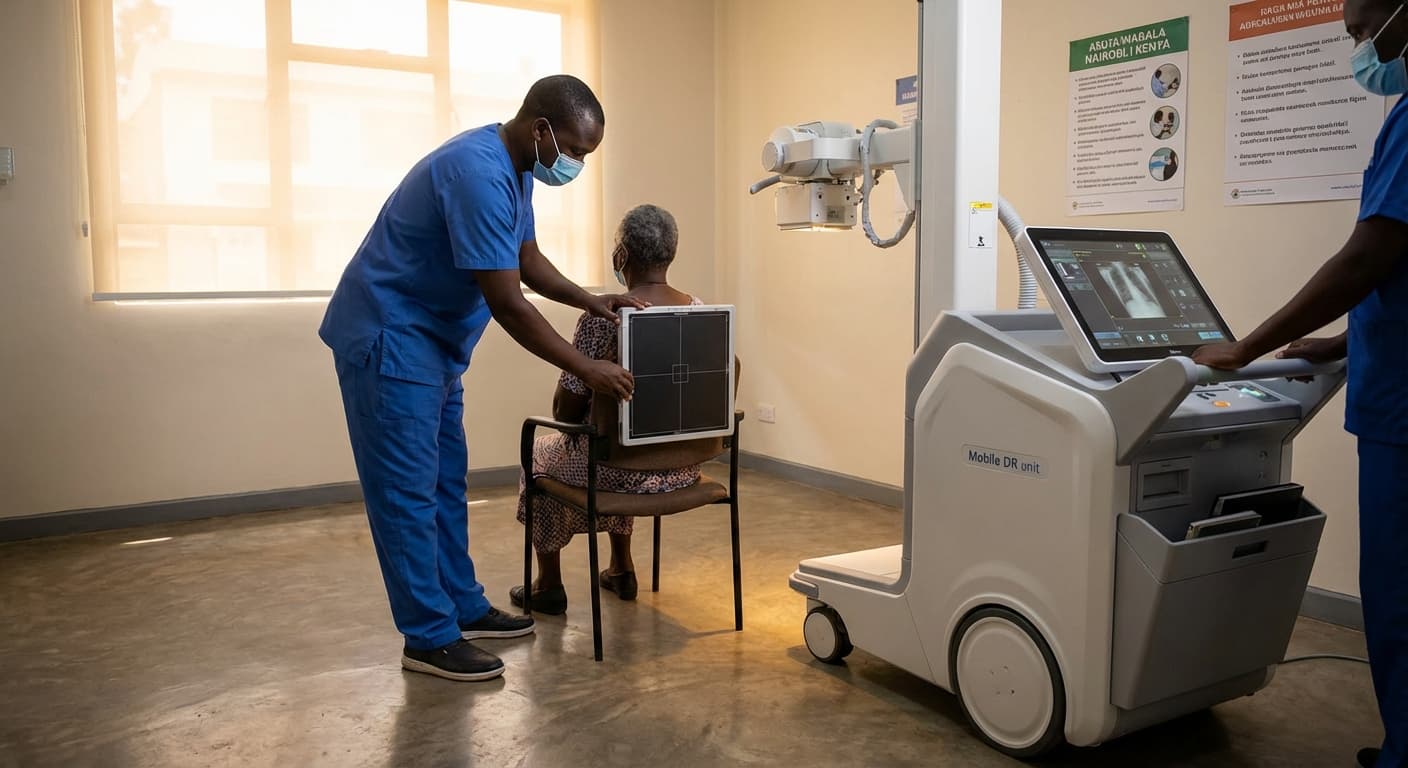
Digital X-Ray Installation Service (Mobile DR) in Burundi
Engineering Excellence & Technical Support
Digital X-Ray Installation Service (Mobile DR) High-standard technical execution following OEM protocols and local regulatory frameworks.
Rapid Deployment & On-Site Expertise
Our Burundi-based technicians provide swift, on-site installation of your Mobile DR system. We minimize downtime, ensuring your medical facility is operational with advanced imaging capabilities in minimal time, tailored to local infrastructure.
Comprehensive User Training & Support
Beyond installation, we deliver hands-on, practical training for your medical staff on Mobile DR operation, image acquisition, and basic troubleshooting. Our commitment extends to ongoing technical support, empowering your team for optimal performance.
Precision Calibration & Quality Assurance
Ensuring diagnostic accuracy is paramount. Our Mobile DR installations undergo rigorous calibration and quality assurance checks by certified technicians, guaranteeing optimal image quality and adherence to international standards for reliable patient diagnosis in Burundi.
What Is Digital X-ray Installation Service (Mobile Dr) In Burundi?
Digital X-ray Installation Service (Mobile DR) in Burundi refers to the specialized process of deploying and integrating advanced digital radiography (DR) systems within a mobile unit designed for on-site medical imaging. This service encompasses the physical installation, calibration, network integration, and initial operational setup of a mobile X-ray unit equipped with Direct Radiography (DR) detectors. Mobile DR units offer enhanced flexibility and reach, enabling diagnostic imaging services to be delivered in remote areas, temporary healthcare settings, or during public health emergencies where fixed imaging infrastructure may be inaccessible or insufficient. The service ensures the mobile DR system is fully functional, compliant with relevant health and safety regulations, and ready for immediate deployment in diverse clinical scenarios.
| Who Needs Mobile DR Installation Service? | Typical Use Cases in Burundi | |||
|---|---|---|---|---|
| Hospitals and Clinics (particularly in rural or underserved areas): To extend diagnostic imaging capabilities beyond their fixed infrastructure. | Outreach Programs and Mobile Health Camps: For providing diagnostic services in remote communities with limited access to healthcare facilities. | Emergency Response and Disaster Relief Operations: To quickly establish imaging services in temporary medical facilities following natural disasters or public health crises. | Specialized Medical Missions: For humanitarian or research initiatives requiring on-site imaging in challenging locations. | Public Health Screening Initiatives: To facilitate large-scale diagnostic screenings for specific conditions (e.g., tuberculosis, occupational lung diseases) in targeted populations. |
| Screening for Infectious Diseases (e.g., Tuberculosis - TB) in remote populations. | Diagnostic imaging for trauma and orthopedic injuries in accident-prone areas or during road safety campaigns. | Pre-employment or periodic medical examinations for workers in industries with occupational health risks (e.g., mining, agriculture). | Providing essential diagnostic imaging services during periods of civil unrest or humanitarian crises where access to fixed facilities is disrupted. | Facilitating early detection and management of respiratory illnesses in areas with limited access to pulmonary specialists. |
Key Components of Mobile DR Installation Service:
- Site Assessment and Preparation: Evaluating the mobile unit's interior and power infrastructure to accommodate DR components and ensure adequate environmental conditions.
- DR Detector and Generator Integration: Physically mounting and connecting the DR flat-panel detector, X-ray generator, and associated control interfaces within the mobile unit.
- Image Acquisition Workstation Setup: Installing and configuring the computer workstation, PACS (Picture Archiving and Communication System) client software, and image display monitors.
- Network and Connectivity Configuration: Establishing reliable network connections for data transfer (PACS, RIS - Radiology Information System) and potentially remote diagnostics.
- Power Management and Electrical Integration: Ensuring robust and stable power supply to all DR components, including surge protection and grounding.
- Calibration and Quality Assurance (QA): Performing initial system calibration, exposure parameter optimization, and image quality verification according to international standards.
- User Training: Providing comprehensive training to radiographers and technicians on the operation, maintenance, and basic troubleshooting of the mobile DR system.
- Regulatory Compliance Verification: Ensuring the installation meets national health and safety standards for medical imaging equipment.
Who Needs Digital X-ray Installation Service (Mobile Dr) In Burundi?
In Burundi, the need for mobile Digital Radiography (DR) installation services is crucial for improving diagnostic imaging capabilities, particularly in underserved and remote areas. Mobile DR systems offer flexibility and rapid deployment, making them ideal for reaching populations that may not have access to fixed radiology departments. This technology enhances the speed and accuracy of X-ray imaging, leading to quicker diagnoses and better patient outcomes, which is vital for a developing healthcare infrastructure.
| Customer Type | Typical Location | Key Needs Addressed | Relevant Departments/Services |
|---|---|---|---|
| Hospitals (Public/Private) | Urban & Peri-urban | Supplemental imaging, emergency response, ward coverage | ER, ICU, Surgery, Orthopedics, Pediatrics |
| Clinics & Health Centers | Rural & Remote | Primary diagnostic imaging, reduced patient travel | General Practice, MCH, Emergency Care |
| Missions & NGOs | Various (Field settings, temporary sites) | Flexible deployment, access to remote populations | Mobile Medical Units, Field Hospitals, Public Health Programs |
| Government Health Initiatives | Nationwide (Targeted regions) | National screening, infrastructure development, disaster response | TB Programs, Public Health Campaigns, Rural Health Projects |
| Military/Peacekeeping | Bases, field operations | On-site diagnostics, medical support | Military Medical Units, Field Hospitals |
Target Customers and Departments for Mobile DR Installation in Burundi
- {"title":"Hospitals (Public and Private)","subItems":["Emergency Departments (ER)","Intensive Care Units (ICU)","Surgical Departments","Orthopedics","Pediatrics","Internal Medicine","Outreach and Mobile Clinics"],"description":"Larger hospitals, both public and private, can benefit from mobile DR units to supplement their existing radiology departments, especially for rapid deployment during emergencies, to reach patient wards, or to serve multiple clinics within a hospital complex. They can also use these systems to expand their reach into surrounding communities. Departments within these hospitals include:"}
- {"title":"Clinics and Health Centers (Urban and Rural)","subItems":["General Practice","Maternal and Child Health (MCH)","Emergency Care","Diagnostic Services Units"],"description":"Smaller clinics and health centers, especially those located in rural or remote areas with limited access to traditional radiology services, are primary beneficiaries. Mobile DR can bring essential diagnostic imaging directly to these locations, reducing the need for patients to travel long distances. Key departments or services benefiting would be:"}
- {"title":"Missions and NGOs (Non-Governmental Organizations)","subItems":["Mobile Medical Units","Field Hospitals","Public Health Programs","Emergency Response Teams"],"description":"Humanitarian organizations and medical missions operating in Burundi often provide healthcare services in challenging environments. Mobile DR units are invaluable for their ability to be easily transported and set up in temporary field hospitals, disaster relief areas, or for routine medical outreach programs targeting vulnerable populations. Departments within these organizations include:"}
- {"title":"Government Health Initiatives","subItems":["National Tuberculosis (TB) Screening Programs","Public Health Campaigns","Disaster Preparedness and Response","Rural Health Development Projects"],"description":"The Ministry of Health and other governmental health bodies can leverage mobile DR for national health programs, disease screening initiatives, and to strengthen the healthcare infrastructure in regions with limited resources. This includes deployment for:"}
- {"title":"Military and Peacekeeping Operations","subItems":["Military Medical Units","Field Hospitals","Medical Support Services"],"description":"If there are military bases or peacekeeping missions in Burundi that require on-site medical support, mobile DR systems can provide essential diagnostic capabilities for military personnel and potentially for the local population in surrounding areas. Departments involved would be:"}
Digital X-ray Installation Service (Mobile Dr) Process In Burundi
This document outlines the typical workflow for the installation of a Digital X-Ray (Mobile DR) system in Burundi, from the initial client inquiry to the successful completion of the installation and commissioning. The process is designed to ensure a smooth, efficient, and compliant deployment, taking into account local logistical and regulatory considerations. Each stage involves specific actions and stakeholders to guarantee the optimal functioning of the medical imaging equipment.
| Stage | Key Activities | Stakeholders Involved | Deliverables |
|---|---|---|---|
| Initial Inquiry & Needs Assessment | Discuss requirements, budget, site survey, understand local context | Client (Hospital Admin/IT/Radiology), Service Provider Sales Team | Needs assessment report, preliminary understanding of project scope |
| Proposal & Quotation | Prepare technical proposal, cost breakdown, timelines | Service Provider Sales & Technical Teams, Client Procurement | Formal proposal and quotation document |
| Contracting & Procurement | Sign contract, initiate equipment ordering, manage import logistics | Client Legal & Procurement, Service Provider Legal & Procurement, Customs Authorities | Signed contract, purchase order, import documentation |
| Pre-Installation Planning & Logistics | Schedule delivery, arrange transportation, confirm site readiness | Service Provider Logistics, Client Facility Management, Local Transport Partners | Installation schedule, confirmed site readiness report |
| On-Site Installation & Configuration | Physical setup, software installation, network integration | Service Provider Installation Engineers, Client IT & Radiology Staff | Installed and configured Mobile DR system |
| Calibration & Quality Assurance (QA) | System calibration, image quality testing, performance checks | Service Provider Technical Engineers, Client Radiographers | Calibration report, QA test results |
| User Training | Train operators on system usage, protocols, basic troubleshooting | Service Provider Trainers, Client Radiologists, Radiographers, Technicians | Trained personnel, training attendance records |
| Commissioning & Acceptance Testing | Client testing, verification against specifications, formal sign-off | Client Project Manager, Client Radiology Department, Service Provider Project Manager | Acceptance test report, signed commissioning certificate |
| Post-Installation Support & Maintenance | Warranty service, preventive maintenance, technical support | Service Provider Technical Support & Maintenance Teams, Client Radiology Department | Ongoing service and support, maintenance schedules |
Digital X-Ray Installation Service (Mobile DR) Workflow in Burundi
- Initial Inquiry & Needs Assessment: The process begins when a healthcare facility or relevant authority in Burundi expresses interest in a Mobile DR system. This triggers an initial consultation to understand their specific requirements, existing infrastructure, budget, and intended use cases. This stage involves understanding the technical specifications of the desired system, the number of units required, and any specific features that are crucial for their operational needs. Site surveys may be conducted at this early stage to assess the physical environment, power availability, and network connectivity. Discussions also cover regulatory compliance and necessary permits.
- Proposal & Quotation: Based on the needs assessment, a detailed proposal is prepared. This includes technical specifications of the Mobile DR system, proposed configuration, a breakdown of costs (equipment, installation, training, warranty), estimated timelines, and payment terms. The proposal will also address any specific logistical challenges identified in Burundi, such as import duties, transportation, and local support availability.
- Contracting & Procurement: Upon acceptance of the proposal, a formal contract is signed between the client and the service provider. This contract outlines the scope of work, deliverables, responsibilities of each party, warranties, and service level agreements. Simultaneously, procurement of the Mobile DR system and associated components is initiated, including ordering from the manufacturer, managing import procedures, and ensuring compliance with Burundian customs and health regulations.
- Pre-Installation Planning & Logistics: This phase involves meticulous planning for the physical installation. It includes scheduling the delivery of the Mobile DR system to the designated facility in Burundi, coordinating with local transportation and logistics partners, and ensuring all necessary site preparation (e.g., power upgrades, radiation shielding if required, network infrastructure) is completed. The team will also plan for the arrival of the installation engineers and their accommodation and work permits.
- On-Site Installation & Configuration: Once the equipment arrives at the facility, the technical installation team begins the physical setup. This involves unpacking, assembling, and connecting the Mobile DR unit, X-ray generator, image acquisition system, and any other peripherals. The system software is installed and configured to meet the specific clinical protocols and network requirements of the facility. This stage also includes initial system testing to verify all components are functioning correctly.
- Calibration & Quality Assurance (QA): After installation, the Mobile DR system undergoes rigorous calibration and quality assurance procedures. This ensures the system produces accurate and diagnostically useful images. Image quality tests are performed, and settings are optimized. The system is checked against manufacturer specifications and any relevant national or international imaging standards. This stage is critical for ensuring patient safety and diagnostic accuracy.
- User Training: Comprehensive training is provided to the healthcare professionals (radiologists, radiographers, technicians) who will operate the Mobile DR system. Training covers system operation, image acquisition techniques, image processing, quality control, basic troubleshooting, and maintenance. The training is tailored to the specific needs and skill levels of the users and may include practical, hands-on sessions.
- Commissioning & Acceptance Testing: Upon successful installation, calibration, and user training, formal commissioning takes place. The client performs acceptance testing to verify that the system meets all contractual obligations and performance specifications. This typically involves the client signing off on a commissioning report, signifying their acceptance of the installed system. Any minor adjustments or issues identified during this phase are addressed and rectified.
- Post-Installation Support & Maintenance: After successful commissioning, the service provider offers ongoing support and maintenance services. This includes warranty support, routine preventive maintenance, troubleshooting, and access to technical assistance. A service contract for ongoing maintenance is usually established to ensure the long-term reliability and optimal performance of the Mobile DR system.
Digital X-ray Installation Service (Mobile Dr) Cost In Burundi
Installing a Digital Radiography (DR) system, particularly a mobile DR unit, in Burundi involves several cost factors that influence the final price. These factors range from the hardware itself and its features to the logistical and technical services required for a successful deployment. Understanding these elements is crucial for accurate budgeting and vendor selection. The price will also fluctuate based on the specific model, its capabilities (e.g., image quality, processing speed, portability, battery life), and any included software and accessories. Burundi's economic conditions, import duties, and local market competition can also play a significant role in pricing.
| Category | Estimated Price Range (BIF - Burundi Francs) | Notes |
|---|---|---|
| Basic Mobile DR System (Unit only) | 35,000,000 - 70,000,000 | Excludes import duties, taxes, installation, and training. Varies by detector size and brand. |
| Mobile DR System with Software | 45,000,000 - 90,000,000 | Includes basic imaging software. PACS integration may be extra. |
| Full Installation & Configuration Package | 5,000,000 - 15,000,000 | Covers setup, calibration, basic testing. |
| Comprehensive Training (Radiographers & Technicians) | 3,000,000 - 10,000,000 | Can vary based on the number of personnel and training duration. |
| Import Duties & Taxes (Estimated) | 15% - 30% of CIF value | Highly variable, dependent on specific tariff codes and government policies. |
| Logistics & Shipping (Estimated) | 3,000,000 - 8,000,000 | Depends on origin, shipping method, and insurance. |
| Annual Maintenance Contract (Optional) | 2,000,000 - 6,000,000 | Covers routine checks and potential repairs. Often a percentage of hardware cost. |
| Total Estimated Cost (Mid-Range System, fully installed, with training) | 70,000,000 - 150,000,000+ | This is a broad estimate. Actual costs can be higher or lower based on specific choices and market fluctuations. |
Key Pricing Factors for Mobile DR Installation in Burundi:
- Mobile DR System Hardware Cost: This is the primary component, encompassing the DR detector, X-ray generator, imaging workstation, and other essential hardware. The brand, resolution, field of view, and detector type (e.g., CsI, a-Si) will impact this cost.
- Software and PACS Integration: The cost of imaging software for image acquisition, processing, and viewing. Integration with existing Picture Archiving and Communication Systems (PACS) or the provision of a new PACS solution will add to the expense.
- Installation and Configuration Services: This includes the physical setup of the mobile unit, calibration, testing, and ensuring it's operational. It also covers the configuration of the imaging software and network connectivity.
- Training: Comprehensive training for radiographers, technicians, and IT staff on operating the DR system, software, and basic troubleshooting is essential and usually bundled or charged separately.
- Import Duties and Taxes: Burundi has specific import regulations and associated duties and taxes that will be applied to the imported medical equipment, significantly affecting the landed cost.
- Logistics and Shipping: The cost of transporting the equipment from the manufacturer or supplier to the installation site in Burundi, including freight, insurance, and customs clearance.
- Local Infrastructure Assessment and Requirements: Site preparation, power supply stability, and network infrastructure assessment might require minor upgrades or adaptations, which could incur additional costs.
- Warranty and After-Sales Support: The duration and scope of the warranty, along with the availability and cost of ongoing technical support, maintenance services, and spare parts, are critical long-term considerations.
- Brand and Manufacturer Reputation: Established brands often come with a higher price tag due to their perceived reliability, technological advancements, and customer support networks.
- Additional Accessories and Peripherals: This could include items like protective shielding, mobile carts, external monitors, or specialized software modules.
Affordable Digital X-ray Installation Service (Mobile Dr) Options
Acquiring a digital X-ray system, particularly a Mobile DR (Digital Radiography) unit, is a significant investment for any healthcare facility. This service focuses on providing affordable installation for these essential imaging solutions. We understand that cost-effectiveness is paramount, and our aim is to help you navigate the options for Mobile DR installation, exploring value bundles and practical cost-saving strategies to ensure you get the best possible system and service within your budget.
| Cost-Saving Strategy | Description | Potential Benefit |
|---|---|---|
| Refurbished or Pre-owned Equipment | Purchasing a certified, pre-owned Mobile DR unit can significantly reduce the initial hardware cost. Ensure it comes with a warranty and has been thoroughly inspected and upgraded. | Up to 50% reduction in hardware cost. |
| Negotiate Installation Packages | Don't accept the first installation quote. Clearly define your needs and request detailed breakdowns. Compare quotes from different vendors and negotiate for bundled services or discounts. | Potential 10-20% reduction in installation fees. |
| Phased Implementation | If budget is a major constraint, consider installing the core Mobile DR unit first and integrating advanced features or additional units over time as funds become available. | Spreads capital expenditure over time, improving cash flow. |
| In-house IT Support for Integration | If your facility has a competent IT department experienced with medical imaging systems, they might be able to assist with some of the software integration and networking aspects, reducing vendor service charges. | Reduces reliance on external IT consultants. |
| Bulk Purchasing Discounts | If multiple departments or affiliated clinics require Mobile DR units, inquire about bulk purchase discounts from manufacturers or distributors. | Significant savings on multiple unit acquisitions. |
| Leasing Options | Explore leasing agreements instead of outright purchase. This can offer lower upfront costs and predictable monthly payments, often including maintenance and upgrades. | Lower initial capital outlay, predictable operational costs. |
| Standardized Software & Workflow | Choosing a Mobile DR system that easily integrates with your existing PACS/RIS can minimize complex customization and integration costs. Opt for systems with user-friendly interfaces to reduce training time and costs. | Reduced integration and training expenses. |
Understanding Mobile DR Installation Costs & Value
- What is Mobile DR? A portable digital X-ray system that allows for imaging at the patient's bedside, in various departments, or even in remote locations, eliminating the need to transport patients to a fixed X-ray room.
- Key Installation Components:
- Hardware Procurement: The cost of the Mobile DR unit itself (detector, X-ray generator, acquisition workstation, etc.).
- Site Assessment & Preparation: Evaluating the intended use locations for power, space, and network connectivity.
- Installation & Setup: Physical placement, connection of components, and initial configuration.
- Software Integration: DICOM compliance, PACS (Picture Archiving and Communication System) integration, and RIS (Radiology Information System) connectivity.
- Training: On-site training for radiographers and IT staff.
- Calibration & Testing: Ensuring optimal image quality and system functionality.
- Warranty & Support: Post-installation technical assistance and maintenance.
- Value Bundles: These often combine the hardware purchase with installation, initial training, and sometimes a limited warranty. They aim to streamline the acquisition process and offer a predictable upfront cost.
- Cost-Saving Strategies: Beyond bundles, there are proactive approaches to reduce overall expenditure.
Verified Providers In Burundi
In Burundi's rapidly evolving healthcare landscape, identifying trusted and competent medical professionals is paramount. Franance Health has emerged as a leading platform dedicated to verifying and showcasing healthcare providers who meet stringent quality and ethical standards. This dedication ensures that patients have access to reliable care, fostering greater confidence and accessibility within the healthcare system. The credentials championed by Franance Health represent a commitment to excellence, patient safety, and evidence-based practices, making them the discerning choice for individuals seeking quality medical services in Burundi.
| Credential Type | Franance Health Verification Focus | Benefit for Patients |
|---|---|---|
| Medical Licenses & Certifications | Confirmation of active and valid professional licenses issued by recognized authorities in Burundi and internationally. | Ensures providers are legally authorized and have met basic educational and training requirements. |
| Specialist Qualifications | Verification of postgraduate training, fellowships, and board certifications in specific medical fields. | Guarantees access to highly skilled specialists for complex medical needs. |
| Continuing Professional Development (CPD) | Evidence of ongoing training and education to stay updated with the latest medical advancements and techniques. | Assures patients are receiving care based on current medical knowledge and best practices. |
| Reputation & Peer Reviews | Consideration of professional reputation, disciplinary records, and where applicable, patient feedback mechanisms. | Provides an added layer of confidence in the provider's competence and patient-centered approach. |
| Ethical Conduct & Professionalism | Assessment of adherence to medical ethics, professional conduct guidelines, and a commitment to patient privacy. | Promotes a safe and respectful healthcare experience, building strong patient-provider relationships. |
Why Franance Health Verified Providers Stand Out:
- Rigorous Verification Process: Franance Health employs a multi-faceted verification system, scrutinizing qualifications, licenses, and practice histories of healthcare professionals.
- Commitment to Ethical Standards: Verified providers adhere to a strict code of ethics, prioritizing patient well-being and confidentiality.
- Focus on Competency and Expertise: Emphasis is placed on ensuring providers possess the necessary skills and knowledge for effective patient care.
- Enhanced Patient Trust and Safety: The verification mark provides an assurance of quality, reducing risks for patients seeking medical attention.
- Accessibility to Reliable Healthcare: Franance Health simplifies the process of finding trustworthy doctors, specialists, and other healthcare professionals.
Scope Of Work For Digital X-ray Installation Service (Mobile Dr)
This Scope of Work (SOW) outlines the requirements for the installation of a mobile Digital Radiography (DR) system. It details the technical deliverables, standard specifications, and the responsibilities of the service provider to ensure a successful and compliant implementation. The primary objective is to integrate the mobile DR system into the client's existing infrastructure, enabling efficient and high-quality diagnostic imaging services.
| Technical Deliverable/Specification | Description | Standard/Requirement | Acceptance Criteria |
|---|---|---|---|
| Mobile DR System Unit (Detector, Generator, Acquisition Workstation) | The physical mobile DR system including the X-ray generator, DR detector (wired or wireless), and acquisition workstation. | Compliant with relevant medical device regulations (e.g., FDA, CE). Manufacturer's specifications met. Detector resolution, DQE, and MTF within specified ranges. | System powered on, all components identified and undamaged. Detector wirelessly or wired connected and communicating with the workstation. Basic system diagnostics passed. |
| Acquisition Software | The software used for image acquisition, processing, display, and basic manipulation. | Latest stable version provided by the manufacturer. Intuitive user interface. Support for DICOM 3.0 standards. | Software installed, licensed, and operational. Basic image acquisition and saving functions verified. DICOM Send/Store functionality tested to PACS. |
| Image Archiving and Communication System (PACS) Integration | Seamless integration of the DR system with the client's existing PACS for image storage, retrieval, and viewing. | DICOM 3.0 compliance for send/store/query/retrieve. HL7 interface for patient demographic integration (if applicable). Network configuration for secure data transfer. | Images successfully sent to PACS from the DR workstation. Patient data correctly associated with images. Images retrievable from PACS on the DR workstation. Audit trail functionality verified. |
| Workstation Configuration | Setup and configuration of the acquisition workstation, including operating system, drivers, and necessary software. | Windows/Linux OS (as specified). All necessary drivers installed. Antivirus software installed and updated. Network connectivity established. | Workstation boots up correctly. Network connectivity confirmed. User accounts created as per client specification. Basic workstation security measures in place. |
| X-ray Generator Integration and Calibration | Connecting and calibrating the X-ray generator to the DR system for optimal image quality and radiation output. | Manufacturer's recommended calibration procedures followed. Dose monitoring and safety interlocks functional. kVp, mAs, and exposure time accuracy within tolerance. | Generator can be triggered from the DR workstation. Exposure parameters accurately reflected. Radiation output consistent across multiple exposures. Safety interlocks confirmed functional. |
| DR Detector Calibration and Flat Fielding | Calibration of the DR detector to ensure uniform image quality and minimize artifacts. | Regular flat fielding performed as per manufacturer guidelines. Detector gain and offset correction applied. Pixel defects identified and mapped (if applicable). | Uniformity of images across the detector verified. Artifacts minimized. Detector sensitivity consistent. |
| Network Infrastructure Requirements | Assessment and potential upgrades to the client's network to support the DR system's data transfer needs. | Sufficient bandwidth (e.g., 1 Gbps LAN connection recommended). Stable network connectivity. IP addressing scheme defined and implemented. Firewall rules configured for secure access. | DR workstation has reliable network connectivity to PACS and other required network resources. Data transfer speeds meet or exceed specified requirements. |
| Power and Electrical Requirements | Ensuring adequate and stable power supply for the mobile DR system and its components. | Dedicated power circuits recommended. Surge protection implemented. UPS for workstation and critical components (if specified). Compliance with local electrical codes. | All components receive stable power. No power-related interruptions during testing. UPS functions as expected during simulated power outage. |
| User Training Material | Documentation and training sessions for radiographers and other relevant personnel on system operation. | Comprehensive user manual. Hands-on training sessions. Q&A sessions. Competency assessment. | Users demonstrate proficiency in basic image acquisition, processing, and system operation. Users can troubleshoot common issues. Training records provided. |
| Final System Handover Documentation | All relevant documentation provided to the client upon completion of the installation. | Installation report. Calibration certificates. User manuals. Service and maintenance guide. As-built network diagrams. Training attendance records. | All listed documents are provided, accurate, and complete. Client signs off on the handover document. |
Key Areas Covered by this Scope of Work
- System Procurement and Delivery Oversight
- Site Preparation and Infrastructure Assessment
- Hardware Installation and Configuration
- Software Installation, Configuration, and Integration
- Calibration and Performance Testing
- User Training and Handover
- Documentation and Compliance
- Post-Installation Support (Initial)
Service Level Agreement For Digital X-ray Installation Service (Mobile Dr)
This Service Level Agreement (SLA) outlines the guaranteed response times and uptime for the Digital X-Ray Installation Service (Mobile DR), provided by [Your Company Name]. This SLA is an addendum to the Master Services Agreement (MSA) between [Your Company Name] and [Client Name].
| Service Component | Response Time Guarantee (During Support Hours) | Resolution Target (During Support Hours) | Uptime Guarantee |
|---|---|---|---|
| Mobile DR System Installation & Initial Configuration | Within 4 Business Hours of Scheduled Appointment | To be completed within [Specify Duration, e.g., 8 Business Hours] of commencement, barring unforeseen circumstances. | N/A (Installation is a one-time service) |
| Technical Support & Troubleshooting (Post-Installation) | Severity 1: 1 Hour Severity 2: 2 Business Hours Severity 3: 4 Business Hours Severity 4: Next Business Day | Severity 1: Target 4 Business Hours (may require on-site visit) Severity 2: Target 8 Business Hours (remote resolution) Severity 3: Target 2 Business Days (remote resolution) Severity 4: As per standard development/support cycle | 99.5% during Business Hours, calculated monthly. |
Key Service Definitions
- Mobile DR System: Refers to the portable digital radiography system delivered and installed by [Your Company Name].
- Installation Service: Encompasses the physical setup, configuration, and initial testing of the Mobile DR system at the client's designated location.
- Support Hours: The period during which technical support is available. [Specify hours, e.g., Monday to Friday, 8:00 AM - 5:00 PM Local Time, excluding national holidays].
- Business Hours: Same as Support Hours, unless otherwise specified.
- Downtime: Any period during which the Mobile DR system is unavailable for use due to a failure in the system or the installation service provided by [Your Company Name], as determined by the client and confirmed by [Your Company Name]. Excludes scheduled maintenance or issues caused by the client's environment or third-party systems.
- Severity Level 1 (Critical): Complete system outage impacting core functionality. No workaround available.
- Severity Level 2 (High): Major functionality impaired, but a workaround may be available. Significant impact on operations.
- Severity Level 3 (Medium): Minor functionality impaired or performance degradation. Minimal impact on operations.
- Severity Level 4 (Low): Cosmetic issues, documentation errors, or feature requests. No impact on core functionality.
Frequently Asked Questions

Ready when you are
Let's scope your Digital X-Ray Installation Service (Mobile DR) in Burundi project in Burundi.

Scaling healthcare logistics and technical systems across the entire continent.