
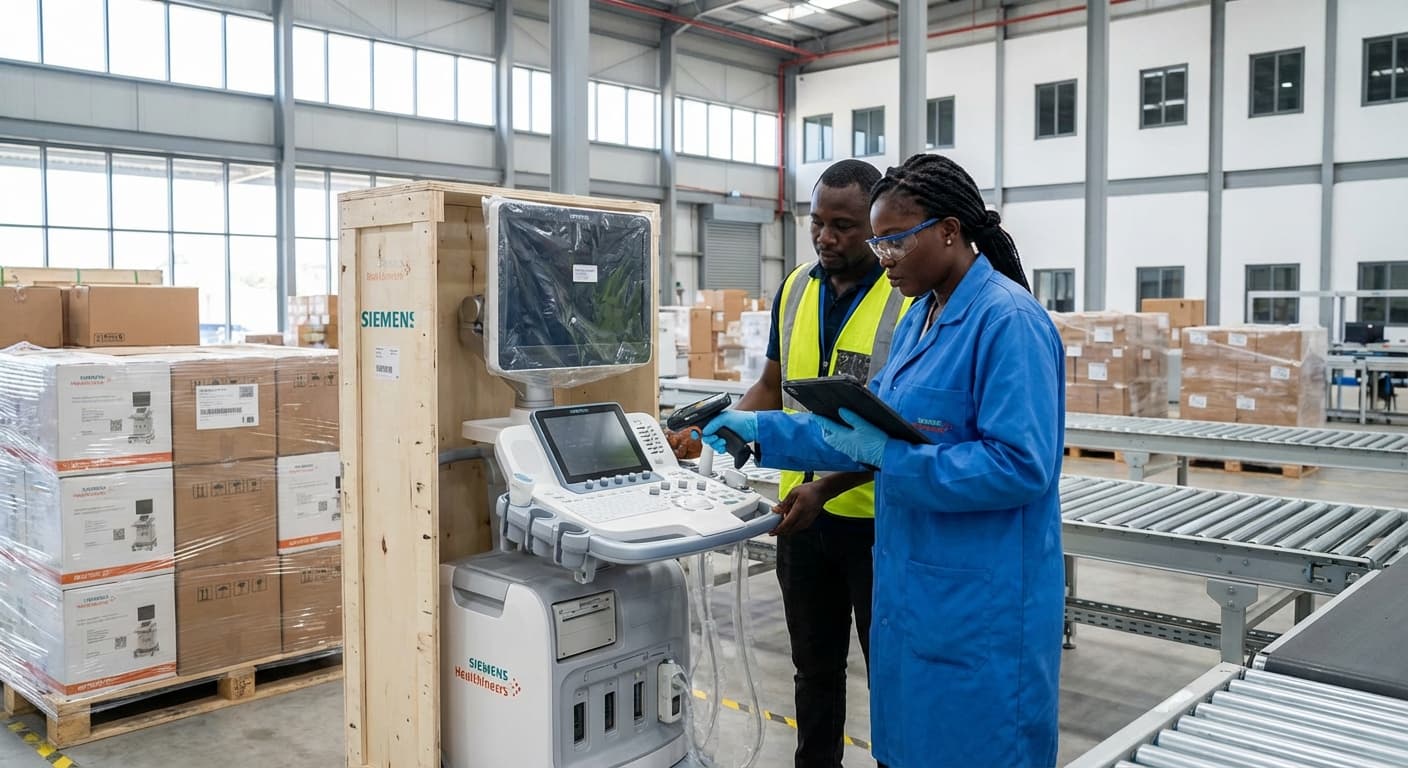
Warehouse Receiving Inspection Service (Medical Equipment) in Burundi
Engineering Excellence & Technical Support
Warehouse Receiving Inspection Service (Medical Equipment) High-standard technical execution following OEM protocols and local regulatory frameworks.
Advanced Non-Destructive Testing (NDT)
Our certified technicians employ cutting-edge NDT methods, including ultrasonic testing (UT) and liquid penetrant testing (PT), to meticulously inspect critical components of medical equipment for unseen defects, ensuring structural integrity and preventing in-service failures. This rigorous approach guarantees the safety and reliability of devices before they reach healthcare facilities in Burundi.
Comprehensive Serial Number & Lot Tracking
Leveraging state-of-the-art barcode scanning and integrated inventory management systems, we provide end-to-end traceability for all incoming medical equipment. This meticulous tracking ensures accurate record-keeping, simplifies recall management, and guarantees compliance with international standards, offering unparalleled visibility throughout the supply chain in Burundi.
Sterilization Compliance & Integrity Verification
We conduct thorough verification of sterilization records and perform integrity tests on packaging for all sterile medical equipment. Our service ensures that devices meet stringent regulatory requirements for sterility, minimizing the risk of healthcare-associated infections and safeguarding patient well-being within Burundi's healthcare sector.
What Is Warehouse Receiving Inspection Service (Medical Equipment) In Burundi?
Warehouse Receiving Inspection Service (Medical Equipment) in Burundi refers to a specialized quality assurance process undertaken by third-party inspection bodies or qualified internal personnel upon the arrival of medical equipment at a warehouse facility within Burundi. This service is critical for verifying that incoming medical equipment conforms to specified quality, safety, regulatory, and contractual requirements before it is accepted into storage and subsequently distributed. The inspection process aims to mitigate risks associated with the receipt of substandard, damaged, counterfeit, or non-compliant medical devices, thereby safeguarding public health and ensuring the efficacy of healthcare services.
| Who Needs This Service? | Typical Use Cases |
|---|---|
| Hospitals and Healthcare Facilities: Public and private hospitals, clinics, and diagnostic centers that procure medical equipment directly or receive it through government tenders. | Procurement of new medical equipment from international or local suppliers. |
| Medical Equipment Suppliers and Distributors: Companies responsible for importing, warehousing, and distributing medical equipment within Burundi. | Receiving shipments of diverse medical devices, from basic consumables to complex diagnostic and therapeutic machinery. |
| Government Procurement Agencies: Ministries of Health and other government bodies responsible for acquiring medical equipment for public health programs and facilities. | Verifying the quality and compliance of bulk orders of medical supplies and equipment intended for national health initiatives. |
| Non-Governmental Organizations (NGOs) and International Aid Organizations: Entities involved in providing medical aid and equipment to Burundi. | Ensuring that donated or procured medical equipment meets the required standards before deployment in aid projects. |
| Third-Party Logistics (3PL) Providers: Companies managing warehousing and logistics for medical equipment clients. | Accepting and verifying incoming inventory on behalf of their clients in medical supply chains. |
| Regulatory Authorities (indirectly): While not direct users, these services provide data and assurance that supports regulatory oversight. | Inspection of equipment upon arrival at national medical stores or central warehouses managed by the Ministry of Health. |
| Manufacturing Facilities with Warehousing: Local manufacturers of medical equipment who receive raw materials or components and store finished goods. | Ensuring incoming components and finished products meet quality specifications prior to assembly or dispatch. |
| Specialized medical equipment like imaging machines, surgical instruments, diagnostic kits, laboratory analyzers, patient monitors, and hospital furniture. |
Key Components of Warehouse Receiving Inspection for Medical Equipment:
- Documentation Verification: Cross-referencing received items against purchase orders, invoices, packing lists, certificates of origin, and import permits. This includes verifying lot numbers, expiry dates, and quantities.
- Physical Inspection: Assessing the general condition of the packaging for signs of damage, tampering, or ingress. Examination of the equipment itself for visible defects, damage sustained during transit, or discrepancies in model or specifications.
- Compliance Checks: Verifying that the equipment meets relevant Burundian regulatory standards (e.g., from the Ministry of Health, Burundi Standards and Quality Agency - OBN) and international standards (e.g., ISO, CE marking, FDA if applicable). This may involve reviewing technical specifications, user manuals, and sterilization certificates.
- Functional Testing (if applicable): Performing basic operational checks to ensure the equipment is functioning as intended, especially for critical medical devices. This might include power-on tests, calibration checks, or basic operational sequences, depending on the complexity and criticality of the equipment.
- Identification and Labeling Verification: Ensuring that equipment is correctly identified with manufacturer labels, serial numbers, and any required regulatory markings as per local and international guidelines.
- Sampling and Testing (if mandated): In certain cases, a representative sample of the received equipment may be selected for more rigorous laboratory testing to confirm its performance, safety, or material integrity.
- Reporting and Non-Conformance Management: Documenting all inspection findings, including any discrepancies or defects. A detailed report is generated, and a clear process for managing non-conforming products (e.g., rejection, quarantine, return to supplier) is initiated.
- Traceability Maintenance: Ensuring that the inspection process contributes to the overall traceability of the medical equipment within the supply chain.
Who Needs Warehouse Receiving Inspection Service (Medical Equipment) In Burundi?
In Burundi, the demand for specialized warehouse receiving inspection services for medical equipment is driven by the critical need to ensure the quality, safety, and functionality of vital healthcare resources. This service is essential for organizations that procure, store, and distribute medical devices and supplies, safeguarding public health and optimizing healthcare delivery within the country.
| Customer Type | Key Departments Involved | Primary Need |
|---|---|---|
| Government & Public Health Institutions | Ministry of Health, Procurement Departments, Central Medical Stores, National Public Health Laboratories | Ensuring availability of safe, effective, and compliant medical equipment for national healthcare delivery and public health programs. |
| Hospitals & Clinics (Public & Private) | Procurement/Purchasing Department, Biomedical Engineering Department, Stores/Inventory Management, Clinical Departments (e.g., Surgery, ICU, Diagnostics) | Verifying the functionality and specifications of received equipment to guarantee patient safety and support clinical operations. |
| NGOs & International Aid Agencies | Logistics and Supply Chain Department, Program Management, Procurement Team | Confirming that donated or procured medical equipment meets project requirements and international quality standards for deployment in field operations. |
| Medical Equipment Suppliers & Distributors | Warehouse and Logistics Department, Quality Assurance Department, Sales and Operations | Validating the condition and specifications of imported goods from manufacturers to ensure product integrity, customer satisfaction, and compliance with local regulations. |
| Pharmaceutical Companies | Supply Chain Management, Quality Control, Product Management | Ensuring the quality and compliance of any medical devices or equipment they handle alongside pharmaceuticals. |
| Research Institutions & Laboratories | Laboratory Management, Procurement Department, Research Project Leads | Guaranteeing the accurate receipt and pristine condition of sensitive scientific and diagnostic equipment essential for research and analysis. |
Target Customers and Departments for Medical Equipment Warehouse Receiving Inspection Services in Burundi:
- {"title":"Government and Public Health Institutions","description":"These are major consumers of medical equipment, procuring items for national hospitals, district health centers, and public health programs. Ensuring the integrity of these supplies upon arrival is paramount for patient care and public health initiatives."}
- {"title":"Hospitals and Clinics (Public and Private)","description":"Hospitals and clinics, regardless of their ownership structure, rely heavily on a consistent supply of functional medical equipment. Receiving inspections help prevent the use of faulty or incorrect equipment, which can have severe consequences for patient safety and treatment outcomes."}
- {"title":"Non-Governmental Organizations (NGOs) and International Aid Agencies","description":"Many NGOs and international organizations operate healthcare programs and projects in Burundi, often supplying medical equipment. They require assurance that the equipment they import meets quality standards and is fit for purpose before deployment."}
- {"title":"Medical Equipment Suppliers and Distributors","description":"Companies that import and distribute medical equipment within Burundi benefit from receiving inspection services to verify the quality of goods from their manufacturers and to comply with import regulations. This also helps in managing inventory and reducing potential losses due to damaged or non-conforming goods."}
- {"title":"Pharmaceutical Companies","description":"While primarily focused on pharmaceuticals, some pharmaceutical companies also handle or distribute medical devices and equipment. Receiving inspection ensures the integrity of their entire product offering."}
- {"title":"Research Institutions and Laboratories","description":"Institutions involved in medical research and diagnostics often require specialized and high-precision equipment. Inspections ensure these critical instruments are received in optimal condition."}
Warehouse Receiving Inspection Service (Medical Equipment) Process In Burundi
This document outlines the workflow for Warehouse Receiving Inspection Services for Medical Equipment in Burundi, from initial client inquiry to the final execution and reporting of the inspection. The process is designed to ensure the quality, safety, and compliance of medical equipment entering warehouses, safeguarding public health and client investments.
| Stage | Description | Key Activities | Responsible Party | Deliverables/Outcomes |
|---|---|---|---|---|
| The client expresses interest in the receiving inspection service for medical equipment. The service provider gathers preliminary information and prepares a tailored proposal. | Receive inquiry, understand scope (type of equipment, quantity, location), gather client requirements, conduct initial risk assessment, prepare and submit a detailed proposal outlining services, methodology, timelines, and costs. | Client, Inspection Service Provider | Inquiry details captured, Proposal submitted, Client interest confirmed. |
| Upon acceptance of the proposal, a formal agreement or contract is established between the client and the inspection service provider. | Review and negotiate contract terms, finalize scope of work, agree on payment terms, sign contract/service agreement. | Client, Inspection Service Provider | Signed contract/service agreement, Clear understanding of mutual obligations. |
| Detailed planning is conducted to ensure the inspection is efficient and effective, involving logistics, resource allocation, and defining specific inspection criteria. | Schedule inspection dates and times, assign qualified inspectors, gather relevant documentation (e.g., packing lists, import permits, manufacturer specifications), develop a detailed inspection plan and checklist specific to the medical equipment, confirm access to the warehouse and equipment. | Inspection Service Provider | Inspection schedule, Assigned inspection team, Inspection plan and checklists, Pre-inspection briefing with inspectors. |
| The physical inspection of the medical equipment is carried out at the client's warehouse according to the agreed-upon plan and checklists. | Verify equipment against packing lists and purchase orders, inspect for visible damage (packaging and equipment), check for correct models, serial numbers, and quantities, assess general condition and signs of tampering, verify presence and completeness of accessories, documentation (manuals, certificates), and compliance with import regulations and relevant standards (e.g., WHO, national health regulations). | Inspection Service Provider (Inspectors) | Detailed inspection findings recorded, photographic evidence of findings, preliminary assessment of equipment status. |
| A comprehensive inspection report is compiled and submitted to the client, detailing all findings, observations, and recommendations. | Analyze inspection data, compile the final inspection report including findings, discrepancies, non-conformities, and recommendations, attach supporting documentation (photos, relevant certificates), submit the report to the client in a timely manner. | Inspection Service Provider | Formal Inspection Report, Photographic evidence, Recommendations for corrective actions (if any). |
| The service provider may be involved in follow-up actions based on the inspection report, such as re-inspection or assisting in rectifying identified issues. | Respond to client queries regarding the report, coordinate re-inspections if required (e.g., after corrective actions), provide technical advice on addressing non-conformities (if within scope of service). | Inspection Service Provider, Client | Resolution of identified issues, Client satisfaction, Confirmation of compliance. |
Warehouse Receiving Inspection Service (Medical Equipment) Workflow in Burundi
- Inquiry and Proposal
- Agreement and Contract
- Pre-Inspection Planning
- On-site Inspection Execution
- Reporting and Documentation
- Follow-up Actions
Warehouse Receiving Inspection Service (Medical Equipment) Cost In Burundi
The cost of warehouse receiving inspection services for medical equipment in Burundi is influenced by several key factors. These include the volume and complexity of the equipment being inspected, the specific type of medical equipment (e.g., basic consumables vs. complex diagnostic machinery), the required level of detail in the inspection, the urgency of the service, and the location of the warehouse within Burundi. The expertise and certifications of the inspection personnel are also crucial pricing determinants. A comprehensive inspection might involve verifying serial numbers, checking for physical damage, confirming compliance with storage conditions, and ensuring all accompanying documentation is present and accurate. Prices are generally quoted per shipment, per item, or on an hourly basis, depending on the service provider's model and the nature of the inspection.
| Service Component / Unit | Estimated Range (BIF - Burundi Francs) | Notes |
|---|---|---|
| Inspection Fee (Per Shipment - Small) | 50,000 - 150,000 | Covers basic visual checks, documentation review for a small number of items. |
| Inspection Fee (Per Shipment - Medium) | 150,000 - 500,000 | For larger shipments with a moderate variety of equipment. |
| Inspection Fee (Per Shipment - Large/Complex) | 500,000 - 1,500,000+ | For very large shipments, high-value, or technically complex medical machinery. |
| Per Item Inspection Fee (Basic) | 5,000 - 20,000 | For individual inspection of simpler medical supplies or devices. |
| Per Item Inspection Fee (Complex/Technical) | 20,000 - 100,000+ | For individual inspection of specialized medical equipment requiring technical expertise. |
| Hourly Rate (Inspector/Technician) | 20,000 - 80,000 | Applicable for extended inspections, on-site troubleshooting, or specialized assessments. |
| Report Generation Fee | 10,000 - 50,000 | Cost associated with creating detailed inspection reports. |
| Travel and Logistics (Remote Locations) | Variable (add-on) | Costs incurred for inspectors traveling to less accessible warehouse locations. |
| Urgency Surcharge | 20-50% of base fee | For inspections required outside of standard working hours or with very short notice. |
Pricing Factors for Medical Equipment Warehouse Receiving Inspection in Burundi:
- Volume and complexity of equipment
- Type of medical equipment (basic vs. complex)
- Scope and depth of inspection required
- Urgency of service provision
- Warehouse location within Burundi
- Expertise and certifications of inspectors
- Inclusion of documentation verification
- Inclusion of storage condition checks
- Inclusion of physical damage assessment
- Reporting and certification requirements
Affordable Warehouse Receiving Inspection Service (Medical Equipment) Options
Finding affordable warehouse receiving inspection services for medical equipment is crucial for ensuring product integrity and compliance without breaking the budget. This service verifies that incoming medical devices match purchase orders, are free from damage, and meet all regulatory and quality standards. Cost-effective solutions often involve strategic planning, leveraging technology, and understanding different service models. Value bundles and smart cost-saving strategies are key to achieving this.
| Value Bundle/Cost-Saving Strategy | Description | Benefits | Potential Cost Impact |
|---|---|---|---|
| Tiered Inspection Packages | Offers different levels of inspection intensity based on equipment criticality and value. Basic for low-risk items, comprehensive for high-value/critical devices. | Matches service cost to risk. Avoids over-inspection of less critical items. Better budget allocation. | Moderate savings by right-sizing services. |
| Volume-Based Discounts | Negotiating lower per-unit inspection costs for higher monthly or annual volumes of incoming equipment. | Directly reduces cost per inspection as volume increases. Encourages long-term partnership. | Significant savings with higher throughput. |
| Technology Integration (e.g., Barcode Scanning, Digital Checklists) | Utilizing handheld scanners and digital forms for faster, more accurate data capture and reporting. Automates data entry and reduces manual errors. | Increased efficiency, reduced labor costs, improved data accuracy and traceability. Faster turnaround time. | Initial investment in technology may be required, but long-term savings on labor and error correction. |
| Remote Inspection Capabilities | Leveraging video conferencing and shared digital documentation for inspectors to guide on-site personnel or review remotely. Applicable for non-complex checks. | Reduces the need for on-site inspector travel, saving time and expenses. Faster response for urgent checks. | Potentially significant savings on travel and per-diem costs. |
| Standardized Inspection Protocols | Developing clear, repeatable checklists and procedures for common equipment types. Reduces ambiguity and training time. | Ensures consistency and quality. Speeds up the inspection process and reduces training overhead for inspectors. | Minimal cost, primarily internal process improvement. |
| Off-Peak Inspection Scheduling | If feasible, scheduling inspections during less busy periods to potentially negotiate lower rates with inspection providers. | Leverages provider capacity when demand is lower. May offer more flexibility in scheduling. | Negotiation-dependent, potential for minor savings. |
| Consolidated Service Contracts | Bundling receiving inspection with other warehouse services (e.g., storage, inventory management) under a single contract. Provides leverage for better pricing. | Simplifies vendor management. Potential for bundled discounts on multiple services. | Savings through negotiation power and reduced administrative overhead. |
| In-House Training for Supplier Personnel | Providing basic training to your own warehouse staff on simple visual checks and initial documentation review, allowing external inspectors to focus on more complex tasks. | Reduces reliance on external inspectors for routine checks. Empowers internal team. Frees up external resources for higher-value tasks. | Training costs, but potential for significant reduction in external service fees. |
Key Components of Medical Equipment Warehouse Receiving Inspection
- Verification against Purchase Orders (PO): Ensuring correct items, quantities, and catalog numbers.
- Physical Inspection for Damage: Checking for dents, scratches, cracks, or any signs of mishandling during transit.
- Documentation Review: Validating accompanying paperwork like packing slips, certificates of conformity, and serial number logs.
- Labeling and Packaging Integrity: Confirming that labels are legible, accurate, and packaging is intact and appropriate for medical equipment.
- Basic Functionality Checks (if applicable and agreed upon): Simple tests to ensure the device powers on or has no obvious defects.
- Compliance Verification: Ensuring adherence to relevant regulatory standards (e.g., FDA, ISO) as per contract.
Verified Providers In Burundi
Navigating the healthcare landscape in Burundi can be challenging. Identifying trusted and qualified healthcare providers is paramount for ensuring quality care and peace of mind. Franance Health stands out as a beacon of excellence, meticulously vetting its network of providers to offer unparalleled service and reliability. This commitment to rigorous credentialing ensures that every healthcare professional affiliated with Franance Health meets the highest standards of expertise, ethical practice, and patient-centered care.
| Category | Franance Health Provider Credentials | Benefits for Patients |
|---|---|---|
| Medical Education & Training | Verification of accredited medical degrees and specialized training from recognized institutions. | Ensures foundational knowledge and specialized skills for accurate diagnosis and effective treatment. |
| Professional Experience | Thorough review of past clinical experience, including tenure in relevant medical fields. | Guarantees practical application of knowledge and a history of successful patient outcomes. |
| Licensing & Certification | Confirmation of valid and current licenses and certifications from relevant Burundian medical boards. | Confirms adherence to legal and professional standards of practice. |
| Continuing Medical Education (CME) | Requirement for ongoing professional development to stay abreast of the latest medical advancements and best practices. | Ensures providers are up-to-date with cutting-edge treatments and diagnostic techniques. |
| Ethical Conduct & Patient Reviews | Screening for ethical violations and consideration of patient feedback and testimonials. | Promotes a trustworthy and respectful patient-provider relationship focused on well-being. |
| Malpractice & Disciplinary History | Diligent checks for any history of malpractice claims or disciplinary actions. | Minimizes risk and ensures a focus on patient safety and quality care. |
Why Franance Health Providers are the Best Choice in Burundi
- Rigorous Vetting Process: Franance Health implements a multi-faceted credentialing process that goes beyond basic licensing. This includes verification of educational background, professional experience, malpractice history, and ongoing professional development.
- Commitment to Quality and Safety: All Franance Health providers adhere to strict quality control measures and patient safety protocols, ensuring that you receive care that is both effective and secure.
- Specialized Expertise: Franance Health partners with a diverse range of specialists, allowing you to access the specific expertise you need for any medical condition, from general practice to complex surgical procedures.
- Patient-Centric Approach: Beyond clinical skills, Franance Health prioritizes providers who demonstrate empathy, clear communication, and a genuine commitment to understanding and addressing patient concerns.
- Seamless Access to Care: With Franance Health, you gain access to a curated network of top-tier professionals, simplifying the process of finding and booking appointments with trusted healthcare providers across Burundi.
- Transparent Information: Franance Health provides transparent information about its providers, empowering you to make informed decisions about your healthcare journey.
Scope Of Work For Warehouse Receiving Inspection Service (Medical Equipment)
This Scope of Work (SOW) outlines the services required for a comprehensive receiving inspection of medical equipment. The objective is to ensure all delivered medical equipment meets the specified technical requirements, quality standards, and is free from damage or defects prior to being accepted into inventory. This service is crucial for maintaining patient safety, operational efficiency, and regulatory compliance.
| Service Component | Description | Technical Deliverables | Standard Specifications/References |
|---|---|---|---|
| Shipment Verification | Confirming the received quantity and item details match the order and shipping documentation. | Packing list reconciliation report, Bill of Lading (BOL) verification. | Purchase Order (PO) details, manufacturer's packing list, BOL. |
| Physical Inspection | Visual examination for external damage, completeness of accessories, and labeling. | Damage report (photographic evidence included), missing parts log, accessory verification checklist. | Manufacturer's shipping and handling guidelines, visual inspection protocols. |
| Technical Inspection (Basic Functionality) | Performing initial functional tests as per manufacturer's guidelines or established protocols to confirm basic operation. | Functionality test report (Pass/Fail), calibration status verification (if applicable). | Manufacturer's User Manual, Quick Start Guide, Standard Operating Procedures (SOPs) for basic functional testing. |
| Labeling and Documentation Review | Checking for proper labeling (serial numbers, model numbers, warnings) and completeness of accompanying documentation. | Labeling accuracy report, documentation checklist (manuals, certificates, warranties). | FDA UDI (Unique Device Identification) requirements, ISO 13485, manufacturer's labeling specifications. |
| Damage/Defect Documentation | Detailed recording and photographic documentation of any identified damage or defects. | Detailed discrepancy report including description of damage/defect, location, severity, and photographic evidence. | Industry best practices for damage reporting, Quality Management System (QMS) non-conformance reporting procedures. |
| Reporting and Record Keeping | Compiling comprehensive inspection reports for each received shipment and maintaining accurate records. | Final Inspection Report (FIR) for each shipment, electronic or hard copy archival of all inspection data. | Client's specific reporting requirements, regulatory record retention guidelines (e.g., FDA 21 CFR Part 11 if electronic records are used). |
Key Service Objectives
- Verify the accuracy and completeness of received shipments against purchase orders and packing lists.
- Conduct thorough physical and technical inspections of all medical equipment.
- Identify and document any discrepancies, damages, or defects.
- Ensure compliance with manufacturer specifications, industry standards, and regulatory requirements.
- Provide detailed inspection reports to facilitate informed decision-making.
- Maintain a high level of accuracy and efficiency throughout the inspection process.
Service Level Agreement For Warehouse Receiving Inspection Service (Medical Equipment)
This Service Level Agreement (SLA) outlines the agreed-upon service standards for Warehouse Receiving Inspection Services specifically for Medical Equipment. It defines the expected response times for critical issues and uptime guarantees for the inspection process and associated systems.
| Service Component | Response Time (Critical Issue) | Uptime Guarantee |
|---|---|---|
| System Availability (Inspection Software/Platform): The digital platform used for recording inspection data, generating reports, and managing workflow. | 15 minutes (initial acknowledgement), 2 hours (resolution or workaround) | 99.5% |
| Inspector Availability (On-site): The availability of qualified inspectors to perform scheduled receiving inspections. | 30 minutes (notification of delay/absence), 4 hours (contingency inspector deployment) | 99.0% (scheduled inspection window) |
| Data Integrity and Security: Ensuring the accuracy, completeness, and secure storage of all inspection records. | Immediate investigation (upon report of anomaly), 24 hours (full root cause analysis and remediation plan) | N/A (Continuous monitoring and assurance) |
| Communication and Reporting: Timeliness and accuracy of communication regarding inspection status, issues, and completion. | 15 minutes (acknowledgement of urgent query), 4 business hours (response to non-urgent query) | N/A (Continuous during operational hours) |
Key Service Level Objectives
- Response Times: Critical issues are defined as events that prevent or significantly hinder the receiving inspection process or compromise the integrity of the inspection data. These require immediate attention and resolution.
- Uptime Guarantees: This refers to the availability of the inspection systems and personnel required to perform the receiving inspection tasks. Downtime will be monitored and reported against these guarantees.
Frequently Asked Questions

Ready when you are
Let's scope your Warehouse Receiving Inspection Service (Medical Equipment) in Burundi project in Burundi.

Scaling healthcare logistics and technical systems across the entire continent.