
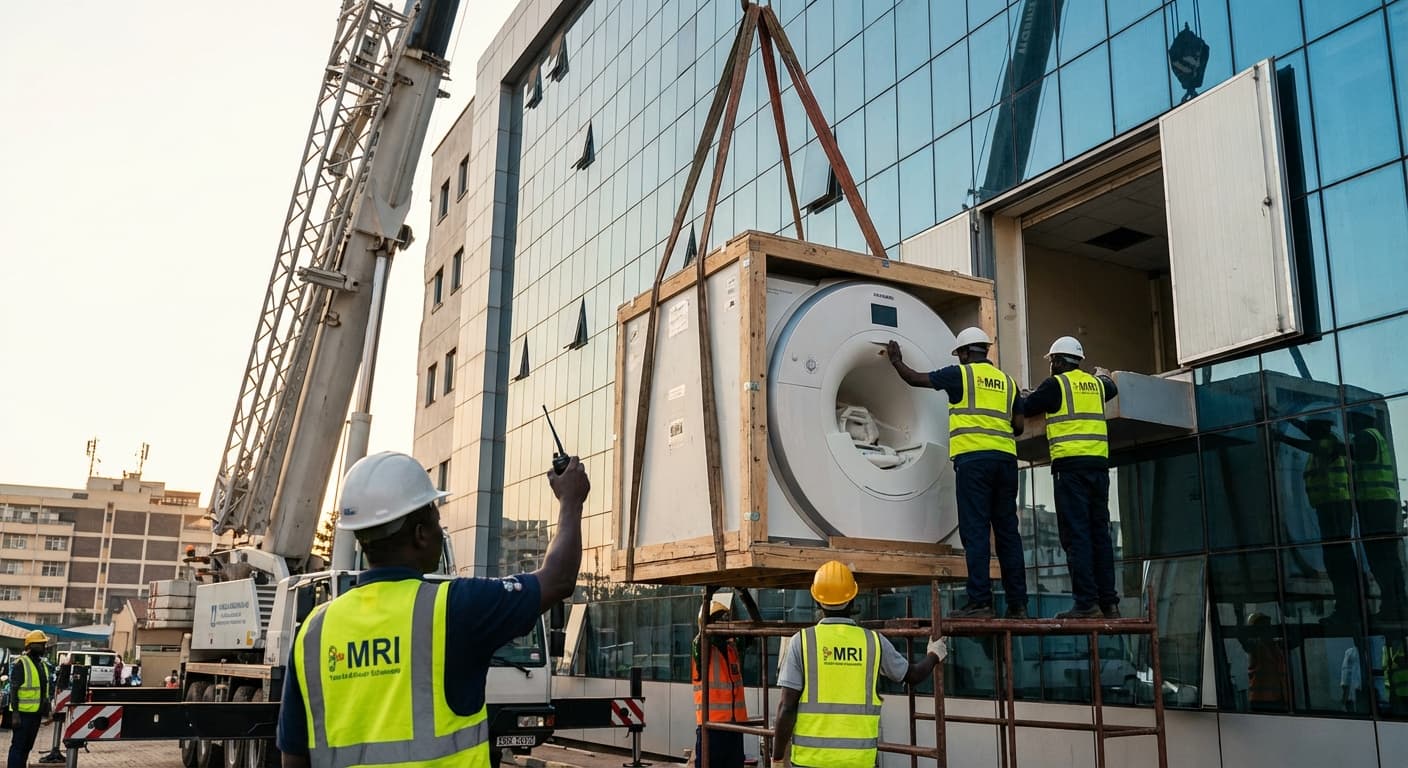
Cranage & Rigging Supervision Service in Burundi
Engineering Excellence & Technical Support
Cranage & Rigging Supervision Service High-standard technical execution following OEM protocols and local regulatory frameworks.
Expert Crane & Rigging Planning
Our certified supervisors provide meticulous planning and execution for all crane and rigging operations in Burundi, ensuring optimal load stability, route planning, and adherence to stringent safety protocols for complex lifts in challenging environments.
Unwavering Safety Compliance
Prioritizing safety above all, we implement rigorous risk assessments, pre-lift briefings, and continuous on-site supervision to guarantee compliance with both international and local Burundian safety regulations, minimizing risks and protecting personnel and assets.
Optimized Equipment Utilization
Leveraging deep industry knowledge, our supervisors ensure the precise selection and efficient utilization of cranes and rigging equipment, tailored to the specific demands of projects in Burundi, thereby maximizing operational efficiency and cost-effectiveness.
What Is Cranage & Rigging Supervision Service In Burundi?
Cranage and Rigging Supervision Service in Burundi refers to the specialized oversight and management of lifting and moving heavy or oversized equipment and materials. This service ensures that all operations involving cranes, hoists, slings, shackles, and other rigging hardware are conducted safely, efficiently, and in compliance with industry best practices and local regulations within Burundi. The core objective is to mitigate risks associated with the inherent hazards of heavy lifting, such as equipment failure, dropped loads, personnel injury, and damage to infrastructure or the environment.
| Who Needs Cranage & Rigging Supervision Service in Burundi? | Typical Use Cases | ||||||||
|---|---|---|---|---|---|---|---|---|---|
| Industrial Sector: Manufacturing plants, oil and gas facilities, mining operations, power generation plants, and chemical processing facilities undertaking major equipment installations, maintenance, or decommissioning. | Construction Projects: Large-scale infrastructure development, including bridges, dams, high-rise buildings, ports, and industrial complexes requiring the erection of heavy structural components, pre-fabricated modules, and machinery. | Heavy Industry & Infrastructure: Projects involving the installation of heavy machinery, turbines, generators, transformers, large pipes, and storage tanks. | Logistics & Warehousing: Operations involving the loading and unloading of extremely heavy or oversized cargo from ships, aircraft, or specialized transport vehicles. | Energy Sector: Installation and maintenance of wind turbines, solar panel arrays, and associated heavy equipment. | Mining and Extractive Industries: Lifting and placement of heavy mining equipment, crushers, conveyor systems, and extraction machinery. | Emergency Response & Disaster Relief: Operations involving the removal of debris or the placement of temporary infrastructure after natural disasters or industrial accidents. | Specialized Transport & Logistics: Companies involved in the movement of exceptionally large and heavy items such as industrial boilers, printing presses, or large scientific equipment. | **Companies seeking to ensure adherence to international safety standards and minimize liability. | **Projects with a high inherent risk profile due to the nature of the loads or the complexity of the lift. |
| Installation of New Equipment: Lifting and precisely positioning large machinery, reactors, boilers, and manufacturing units. | Major Maintenance and Repair: Replacing heavy components such as engines, turbines, pumps, or structural elements within industrial facilities. | Decommissioning and Dismantling: Safely lowering and moving heavy equipment during the closure or refurbishment of industrial sites. | Construction of Large Structures: Erecting pre-fabricated steel sections, concrete beams, and other heavy building components. | Offshore/Onshore Oil and Gas Operations: Installation of platform modules, drilling equipment, and subsea components. | Port and Terminal Operations: Loading and unloading of heavy containers, machinery, and project cargo. | Power Plant Construction and Maintenance: Installation of turbines, generators, and associated heavy equipment. | Mining Operations: Lifting and setting in place large excavators, crushers, and conveyor systems. | Relocation of Industrial Facilities: Moving heavy machinery and plant components from one location to another. |
Key Components of Cranage & Rigging Supervision Service
- Pre-Operational Planning & Assessment: Detailed analysis of lift requirements, including load weight, dimensions, center of gravity, lifting points, and environmental factors (wind, ground conditions, accessibility). Development of comprehensive lift plans.
- Equipment Inspection & Certification: Verification of the suitability, condition, and certification of all lifting equipment (cranes, hoists, etc.) and rigging gear (slings, shackles, spreader beams, etc.).
- Personnel Qualification & Competency Verification: Ensuring that all personnel involved, including crane operators, riggers, signalers, and supervisors, possess the necessary qualifications, certifications, and experience.
- On-Site Supervision & Execution Monitoring: Direct oversight of the lifting operation from commencement to completion. This includes directing personnel, monitoring load stability, ensuring adherence to the lift plan, and managing communication.
- Risk Management & Hazard Mitigation: Proactive identification and control of potential hazards throughout the lifting process. Implementation of safety procedures and emergency response protocols.
- Load Securement & Stabilization: Ensuring the load is correctly attached, balanced, and secured to prevent movement or shifting during the lift.
- Communication & Signaling: Establishing clear and effective communication channels between the lifting team, typically through standardized hand signals or radio communication.
- Documentation & Reporting: Maintaining detailed records of the lifting operation, including lift plans, inspection reports, incident reports (if any), and post-operation reviews.
- Regulatory Compliance: Ensuring adherence to relevant Burundian safety regulations, industry standards (e.g., ASME, ISO), and client-specific policies.
Who Needs Cranage & Rigging Supervision Service In Burundi?
Cranage and Rigging Supervision Services in Burundi are essential for a wide range of industrial, construction, and logistical operations. These services ensure the safe and efficient lifting, moving, and placement of heavy and oversized equipment and materials. The demand for such specialized expertise is driven by projects requiring precision handling, adherence to stringent safety regulations, and the avoidance of costly damage or downtime.
| Target Customer Type | Typical Departments/Roles Involved | Specific Needs Addressed |
|---|---|---|
| Large-Scale Construction Companies | Project Management, Site Engineering, Health & Safety (HSE) Departments, Equipment Management | Safe installation of structural components, erection of heavy machinery, lifting of prefabricated modules, critical lifts management. |
| Industrial Manufacturers | Production Management, Maintenance Departments, Engineering, Logistics/Warehouse Management | Installation of new production lines, relocation of heavy machinery, maintenance requiring precise component lifting, material handling solutions. |
| Mining and Extractive Industries | Operations Management, Maintenance & Reliability, Project Engineering, HSE | Installation and maintenance of large mining equipment (e.g., excavators, crushers), lifting of heavy materials in shafts or open pits, project-specific equipment deployment. |
| Oil, Gas & Petrochemical Companies | Project Engineering, Construction Management, Maintenance, HSE, Logistics | Installation of large vessels, reactors, and piping, lifting of offshore components (if applicable), maintenance of critical plant equipment, module assembly. |
| Logistics and Port Authorities/Operators | Operations Management, Terminal Management, Vessel Operations, Safety Officers | Loading and unloading of heavy cargo (e.g., containers, machinery, project cargo), efficient port operations, safe handling of oversized shipments. |
| Power Generation & Renewable Energy Developers | Project Management, Engineering, Construction, HSE, Operations & Maintenance | Installation of turbines (wind, hydro, thermal), lifting of large generators and transformers, erection of solar panel structures, critical component handling during plant construction and maintenance. |
| Government Infrastructure Agencies | Engineering Departments, Project Management Offices (PMOs), Public Works | Construction of bridges, dams, tunnels, airports, and other public infrastructure requiring heavy lifting operations. |
| Companies undertaking large-scale renovations or expansions | Facilities Management, Project Managers, Engineering Teams | Safe removal and installation of heavy equipment during facility upgrades or expansions. |
Who Needs Cranage & Rigging Supervision Service in Burundi?
- Heavy Industry Operations
- Construction Projects (Infrastructure & Buildings)
- Oil, Gas, and Mining Sector
- Manufacturing and Production Facilities
- Logistics and Port Operations
- Power Generation and Renewable Energy Projects
- Emergency Response and Disaster Relief
Cranage & Rigging Supervision Service Process In Burundi
This document outlines the Cranage & Rigging Supervision Service Process in Burundi, detailing the workflow from the initial client inquiry to the successful execution of the service. The process is designed to ensure safety, efficiency, and compliance with all relevant regulations.
| Stage | Description | Key Activities | Responsible Party | Deliverables |
|---|---|---|---|---|
| Inquiry & Initial Consultation | The client initiates contact to request cranage and rigging supervision services. | Client explains project scope, load details, location, and desired timeline. Service provider gathers preliminary information. | Client, Service Provider Representative | Understanding of client needs, initial project scope. |
| Site Assessment & Risk Evaluation | A thorough assessment of the project site and potential hazards is conducted. | On-site visit, evaluation of terrain, access routes, environmental conditions, and surrounding infrastructure. Identification of potential risks (e.g., weather, ground stability, personnel safety). | Service Provider Supervisor/Engineer, Client Representative | Site assessment report, preliminary risk assessment, identification of necessary permits/approvals. |
| Proposal & Quotation | A detailed proposal outlining the scope of services, methodology, equipment, personnel, and costs is prepared. | Development of a technical proposal, definition of supervision team structure, selection of appropriate supervision techniques, cost estimation based on assessment findings. Presentation of proposal to client. | Service Provider Management Team, Service Provider Supervisor/Engineer | Formal proposal document, detailed quotation, preliminary project plan. |
| Contract Agreement | Formalization of the agreement between the client and the service provider. | Review and negotiation of contract terms and conditions. Signing of the service agreement, outlining responsibilities, payment terms, insurance, and liability. | Client Management Team, Service Provider Management Team | Signed Service Agreement. |
| Mobilization & Planning | Preparation and deployment of the supervision team and resources to the project site. | Finalizing project schedules, coordinating personnel deployment, securing necessary permits and clearances, pre-job safety meetings (Toolbox Talks), equipment verification and readiness checks, communication plan establishment. | Service Provider Supervisor, Project Manager, Client Site Manager | Mobilized supervision team, confirmed permits, finalized JSA/RA, communication protocols. |
| Execution & Supervision | The core phase where supervision is actively provided during cranage and rigging operations. | On-site supervision of lifting operations, ensuring adherence to safety procedures, monitoring load integrity, verifying equipment suitability and condition, providing guidance to crane operators and rigging crews, real-time risk management and incident prevention, communication with all stakeholders. | Service Provider Supervisor/Rigger, Crane Operator, Rigging Crew, Client Site Personnel | Safe and efficient lifting operations, documented supervision activities, immediate incident response (if any). |
| Demobilization & Reporting | Withdrawal of the supervision team and provision of a comprehensive report. | Post-operation site inspection, equipment demobilization, compilation of daily/weekly supervision reports, final project report detailing operations, any incidents, lessons learned, and recommendations. Formal handover of site. | Service Provider Supervisor, Service Provider Project Manager | Post-operation site clearance confirmation, comprehensive project report, photographic/video evidence (if applicable). |
| Invoicing & Payment | The financial settlement for the provided services. | Submission of invoices based on agreed terms and conditions. Processing of payments by the client. | Service Provider Finance Department, Client Finance Department | Finalized payment. |
Key Stages of the Cranage & Rigging Supervision Service Process
- Inquiry & Initial Consultation
- Site Assessment & Risk Evaluation
- Proposal & Quotation
- Contract Agreement
- Mobilization & Planning
- Execution & Supervision
- Demobilization & Reporting
- Invoicing & Payment
Cranage & Rigging Supervision Service Cost In Burundi
The cost of Cranage & Rigging Supervision services in Burundi can vary significantly due to several factors, reflecting the complexity of operations, equipment used, duration, and the expertise of the supervisory team. These services are crucial for ensuring the safe and efficient lifting and moving of heavy or awkward loads, and their pricing is influenced by local market conditions, availability of specialized personnel, and regulatory requirements. Understanding these pricing factors is essential for accurate budgeting and project planning in Burundi.
| Service Component | Estimated Cost Range (BIF - Burundi Franc) | Notes |
|---|---|---|
| Daily Supervision (Basic Load/Small Crane) | 150,000 - 300,000 BIF | Covers supervision for a standard workday (e.g., 8-10 hours) for less complex lifts and smaller equipment. |
| Daily Supervision (Intermediate Load/Medium Crane) | 250,000 - 500,000 BIF | For moderately complex lifts and medium-sized cranes, requiring more experienced supervision. |
| Daily Supervision (Heavy Load/Large Crane/Complex Lift) | 400,000 - 800,000+ BIF | Includes highly experienced supervisors for major projects, heavy lifts, and specialized operations. Costs can escalate significantly for very large or hazardous lifts. |
| Hourly Supervision (Specialized Tasks/Overtime) | 40,000 - 80,000+ BIF | Often applied for specific, short-duration tasks or outside standard working hours. Rates are typically higher than daily rates. |
| Project-Based Supervision (Negotiated) | Varies widely | For long-term or exceptionally complex projects, a tailored package price will be negotiated based on the total scope of work, duration, and required resources. |
| Site Mobilization/Demobilization | 50,000 - 200,000+ BIF | One-time charges for transporting the supervision team and their necessary equipment to and from the project site, especially for remote locations. |
| Safety Officer (if part of supervision scope) | 200,000 - 400,000 BIF per day | If a dedicated safety officer is required as part of the supervision package, their costs are additional and depend on their experience and certifications. |
Key Factors Influencing Cranage & Rigging Supervision Costs in Burundi:
- Complexity of the Lift: Simple, straightforward lifts requiring basic supervision will be less expensive than complex, multi-crane lifts, or those involving delicate or hazardous materials. Factors like height, reach, load weight, and the need for precision maneuvering all increase complexity.
- Type and Size of Equipment: The supervision team's expertise must match the equipment being used. Supervising a large crawler crane will require a different skill set and potentially a more experienced (and thus more expensive) supervisor than overseeing smaller mobile cranes or specialized rigging equipment.
- Duration of Service: Supervision costs are typically billed on an hourly, daily, or project basis. Longer projects or those requiring continuous supervision throughout a shift will naturally incur higher overall costs. Overtime rates may also apply.
- Experience and Qualifications of Supervisors: Highly experienced and certified riggers and crane operators, along with their supervisors, command higher rates. Their expertise ensures compliance with safety standards and minimizes risks, which is a valuable asset.
- Location and Accessibility: Remote or difficult-to-access project sites in Burundi might incur additional costs related to travel, accommodation, and logistics for the supervision team. Challenges in transporting equipment to the site can also indirectly impact supervision costs.
- Safety and Regulatory Compliance: The level of safety oversight required by Burundian regulations and the client's specific safety protocols will influence the intensity and cost of supervision. Pre-lift planning, risk assessments, and on-site safety monitoring are integral parts of this.
- Risk Assessment and Method Statements: The development and implementation of detailed risk assessments and method statements are often part of the supervision scope and contribute to the overall cost. These documents are critical for safe operations.
- Client-Specific Requirements: Clients may have unique requirements, such as specialized communication protocols, reporting needs, or additional personnel for specific tasks, which can affect the overall pricing.
- Market Demand and Availability: The availability of qualified cranage and rigging supervisors in Burundi at any given time can influence pricing. High demand can lead to increased rates.
Affordable Cranage & Rigging Supervision Service Options
Securing reliable and cost-effective cranage and rigging supervision is crucial for the success of any project involving heavy lifting. This service ensures that heavy equipment is moved safely and efficiently, minimizing the risk of accidents and project delays. We offer flexible service options designed to meet diverse project needs and budgets, emphasizing value bundles and smart cost-saving strategies.
| Cost-Saving Strategy | Description | Benefits |
|---|---|---|
| Bundle Discounts | Opting for pre-defined value bundles often comes with a reduced overall cost compared to booking individual services. | Significant cost savings, simplified invoicing, and assured availability of integrated services. |
| Off-Peak Scheduling | Scheduling lifts during less busy periods can lead to lower rental rates for cranes and potentially more flexible crew availability. | Reduced operational expenses, potentially faster turnaround times due to less congestion. |
| Long-Term Contracts | For projects requiring continuous cranage and rigging services over an extended duration, negotiating a long-term contract can unlock discounted rates. | Predictable budgeting, preferential rates, and dedicated resource allocation. |
| Optimized Equipment Selection | Our experts will recommend the most appropriate crane and rigging gear for your specific lift, avoiding the cost of under- or over-speccing. | Ensures efficiency, safety, and prevents unnecessary rental or operational costs. |
| Pre-Fabrication & Staging | Planning to pre-fabricate components or stage materials strategically reduces the complexity and time required for on-site lifting. | Minimizes on-site crane time, reducing overall rental and labor costs. |
| Experienced Supervision | Investing in highly experienced rigging supervisors can prevent costly mistakes, rework, and accidents, ultimately saving money. | Improved safety record, reduced downtime, and minimized risk of damage to equipment or personnel. |
Understanding Our Value Bundles
- {"title":"Basic Cranage & Supervision","description":"This bundle includes the essential services for smaller-scale lifts. It covers the provision of a certified crane operator and a qualified rigging supervisor for a defined period, along with basic rigging equipment."}
- {"title":"Comprehensive Lift Planning & Execution","description":"This package goes beyond the basics. It encompasses detailed lift planning, risk assessment, site surveys, the provision of a crane, rigging crew, and all necessary equipment. This is ideal for complex or high-risk operations."}
- {"title":"Project-Specific Tailored Solutions","description":"We understand that every project is unique. This option allows for a customized bundle of services, combining specific crane types, specialized rigging gear, and extended supervision hours to precisely match your project's requirements and budget."}
- {"title":"On-Demand Support","description":"For projects with unpredictable needs or urgent requirements, our on-demand support offers flexible access to cranage and rigging supervision without long-term commitments. This is billed hourly or daily."}
Verified Providers In Burundi
When seeking healthcare services in Burundi, identifying verified providers is crucial for ensuring quality, safety, and ethical practice. Franance Health stands out as a leading organization committed to this very principle. Their rigorous credentialing process and unwavering dedication to patient well-being make them the optimal choice for anyone requiring medical attention in Burundi.
| Credentialing Aspect | Franance Health's Approach | Benefit to Patients |
|---|---|---|
| Educational Background | Verification of degrees, certifications, and accredited institutions. | Ensures providers have a strong foundational knowledge of medical science. |
| Clinical Experience | Scrutiny of past practice, including patient outcomes and clinical judgment. | Confirms practical skills and ability to manage diverse medical conditions. |
| Licensure and Regulatory Compliance | Confirmation of valid and current licenses from relevant national and international bodies. | Guarantees providers are legally authorized to practice and adhere to regulations. |
| Continuous Professional Development | Mandatory participation in ongoing training, workshops, and conferences. | Ensures providers stay updated with the latest medical advancements and techniques. |
| Reputation and Peer Review | Assessment of professional conduct and feedback from peers and institutions. | Provides an additional layer of assurance regarding a provider's competence and integrity. |
Why Franance Health Credentials Matter
- Uncompromising Quality Standards: Franance Health's credentialing process involves a thorough evaluation of medical professionals' education, training, experience, and ongoing professional development. This ensures that only highly qualified individuals are recognized.
- Patient Safety First: By verifying credentials, Franance Health significantly reduces the risk of patients receiving substandard care. This meticulous approach prioritizes your safety and peace of mind.
- Ethical Practice and Accountability: Franance Health adheres to strict ethical guidelines, ensuring that its providers are committed to patient-centered care, transparency, and professional integrity.
- Access to Trusted Expertise: Choosing a Franance Health-verified provider means gaining access to a network of medical professionals who have met and maintained the highest benchmarks in their respective fields.
- Streamlined Healthcare Navigation: In a complex healthcare landscape, Franance Health provides a clear pathway to reliable and trustworthy medical services, simplifying your search for the right care.
Scope Of Work For Cranage & Rigging Supervision Service
This Scope of Work (SOW) outlines the requirements for Cranage & Rigging Supervision Service. The service aims to ensure the safe, efficient, and compliant execution of lifting and rigging operations. This document details the technical deliverables, standard specifications, and key responsibilities for the supervision team.
| Technical Deliverable | Description | Standard Specification / Reference |
|---|---|---|
| Lifting Plans & Procedures Review | Comprehensive review of all proposed lifting plans and associated procedures to ensure they meet safety, technical, and operational requirements. | Project Specific Lifting Plan Template, Industry Best Practices (e.g., LOLER, ASME B30 series, applicable local regulations). |
| Pre-Lift Inspection Reports | Detailed reports documenting the inspection of all lifting equipment (cranes, slings, shackles, etc.), rigging gear, and the lifting area prior to commencement of any lift. | Pre-Use Inspection Checklists, Manufacturer's Recommendations, Applicable Standards (e.g., ASME B30.9, B30.10). |
| On-Site Supervision Log | Daily log documenting all lifting operations conducted, including time, personnel involved, equipment used, load details, weather conditions, and any observations or actions taken. | Project Daily Reporting Template, Site Safety Procedures. |
| Lift Confirmation Certificates (where applicable) | Verification and co-signing of lift confirmation certificates to confirm that the lift was executed according to the approved plan and is safe to proceed. | Project Specific Lift Confirmation Certificate, Regulatory Requirements. |
| Incident/Near Miss Reports | Detailed investigation and reporting of any incidents or near misses occurring during lifting operations, including root cause analysis and recommendations for corrective actions. | Project Incident Reporting Procedure, OSHA/HSE Guidelines. |
| Equipment Certification & Verification | Ensuring all lifting equipment and rigging gear have valid certifications and are fit for purpose. | Load Chart Verification, Equipment Certification Records, Manufacturer's Data Sheets, Applicable Standards (e.g., API, ISO). |
| Competency Assessment Records | Verification of the competency and certification of crane operators, riggers, signal persons, and supervisors. | Competency matrices, Certification bodies (e.g., NCCCO, ITCS), Project Personnel Qualification Matrix. |
| Site Safety Audits (Lifting Focus) | Periodic audits of lifting operations to ensure ongoing compliance with safety procedures and best practices. | Project Safety Audit Procedure, Checklist based on relevant standards. |
Key Responsibilities of Cranage & Rigging Supervision
- Review and approval of lifting plans and procedures.
- On-site supervision of all cranage and rigging activities.
- Ensuring adherence to all relevant safety regulations and project specific procedures.
- Verification of equipment suitability, certification, and condition.
- Monitoring and control of lifting operations to prevent incidents.
- Coordination with other site activities and personnel.
- Reporting of all lifting operations, including any incidents or near misses.
- Ensuring competency of lifting teams and equipment operators.
- Facilitating pre-lift meetings and toolbox talks.
- Maintaining accurate records of all lifting activities.
Service Level Agreement For Cranage & Rigging Supervision Service
This Service Level Agreement (SLA) outlines the response times and uptime guarantees for the Cranage & Rigging Supervision Service provided by [Provider Name] to [Client Name]. This agreement is effective as of [Start Date] and will remain in effect until [End Date], unless otherwise terminated.
1. Definitions
- Service: Cranage & Rigging Supervision Service, encompassing the provision of qualified and experienced supervisors to oversee and direct lifting and rigging operations on-site.
- Downtime: Any period during which the Service is unavailable to the Client due to issues within the Provider's control, preventing the execution of scheduled or emergent cranage and rigging supervision.
- Scheduled Downtime: Planned maintenance or upgrades announced in advance.
- Unscheduled Downtime: Downtime that is not pre-announced by the Provider.
- Response Time: The maximum time allowed for the Provider to acknowledge and begin working on a reported service issue.
- Resolution Time: The maximum time allowed for the Provider to resolve a reported service issue, bringing the Service back to full functionality.
- Uptime: The percentage of time the Service is available and operational.
2. Service Availability and Uptime Guarantees
[Provider Name] guarantees a minimum uptime of 99.5% for the Cranage & Rigging Supervision Service, calculated on a monthly basis. This guarantee excludes Scheduled Downtime.
3. Response Times
Response times are tiered based on the severity of the issue reported. The Client is responsible for accurately categorizing the severity of the reported issue.
4. Scheduled Downtime
Scheduled Downtime will be communicated to the Client at least [Number] business days in advance. Scheduled Downtime will be performed during off-peak hours whenever possible to minimize disruption. Any Scheduled Downtime will not count towards the Uptime guarantee.
5. Service Credits
In the event that the Uptime guarantee is not met, the Client may be eligible for service credits as detailed in the Service Credit section of this SLA.
6. Exclusions
This SLA does not apply to:
- Issues caused by the Client's equipment, network, or third-party services not under the Provider's control.
- Force Majeure events (e.g., natural disasters, acts of war, terrorism).
- Downtime resulting from the Client's misuse or negligence.
- Any suspension or termination of the Service due to breach of contract by the Client.
7. Reporting and Monitoring
[Provider Name] will monitor Service availability and provide monthly reports to the Client detailing uptime statistics and any incidents that impacted Service availability. The Client can report issues via [Reporting Method, e.g., dedicated support portal, email address, phone number].
| Severity Level | Description | Response Time (Business Hours) | Target Resolution Time (Business Hours) |
|---|---|---|---|
| Critical | Complete service outage impacting all ongoing operations; immediate safety hazard. | 15 Minutes | 2 Hours |
| High | Significant service degradation impacting critical operations; potential for delays or safety concerns. | 30 Minutes | 4 Business Hours |
| Medium | Minor service degradation impacting non-critical operations; workaround available but not ideal. | 2 Business Hours | 1 Business Day |
| Low | General inquiry, feature request, or minor issue with no immediate impact on operations. | 4 Business Hours | 2 Business Days |
Service Level Agreement - Cranage & Rigging Supervision Service
- Definitions
- Service Availability and Uptime Guarantees
- Response Times
- Scheduled Downtime
- Service Credits
- Exclusions
- Reporting and Monitoring
Frequently Asked Questions

Ready when you are
Let's scope your Cranage & Rigging Supervision Service in Burundi project in Burundi.

Scaling healthcare logistics and technical systems across the entire continent.