
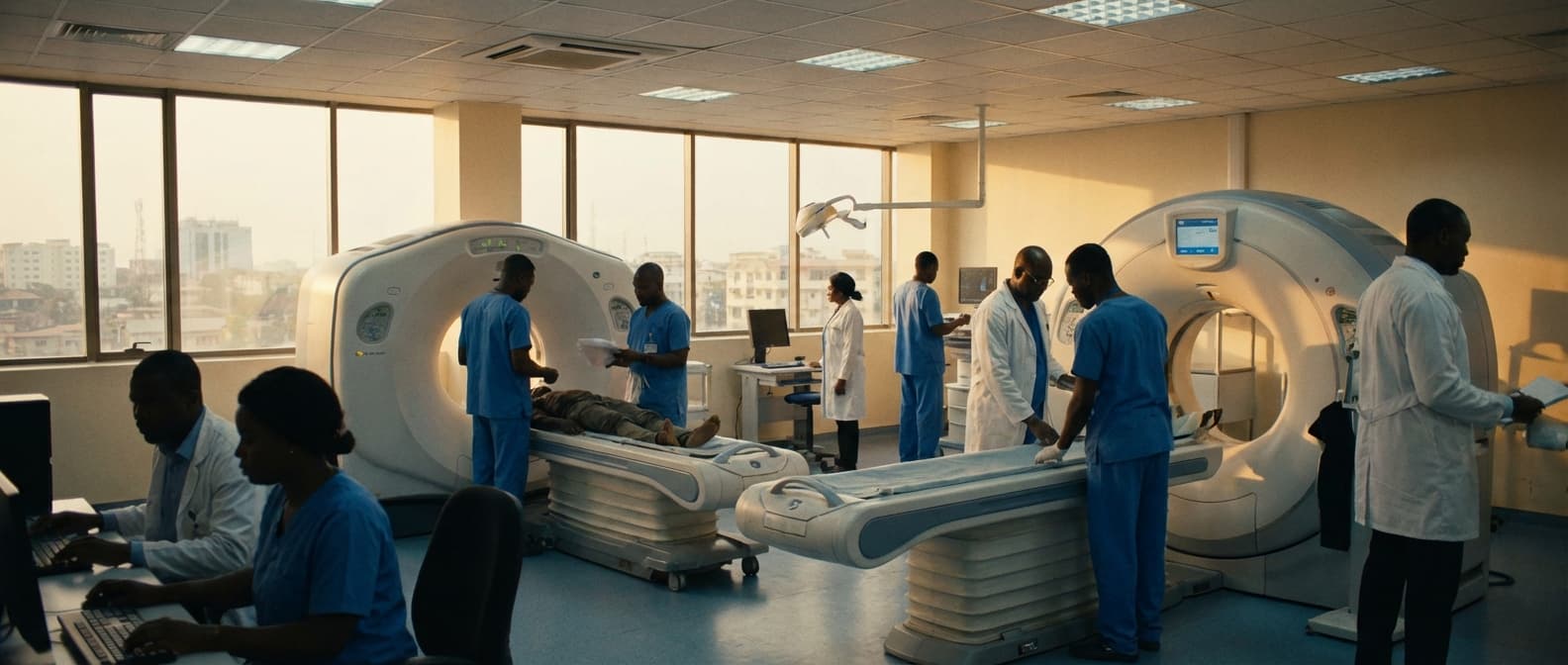
Radiology Room Design & Shielding Calculation in Burundi
Engineering Excellence & Technical Support
Turnkey room planning, shielding drawings and approvals for imaging suites. High-standard technical execution following OEM protocols and local regulatory frameworks.
Advanced Lead Shielding Design & Compliance
Expert design and calculation of lead shielding for radiology rooms in Burundi, ensuring optimal radiation protection for staff and patients while adhering to international safety standards and local regulatory requirements. Our calculations minimize material waste and ensure cost-effectiveness without compromising safety.
Optimized Room Layout for Workflow Efficiency
Strategic radiology room layout planning in Burundi, integrating shielding calculations with workflow analysis. We optimize the placement of X-ray equipment, control areas, and patient access points to enhance operational efficiency, reduce radiation exposure time, and improve diagnostic throughput in a safe environment.
Data-Driven Shielding Verification & Validation
Comprehensive post-installation shielding verification and validation services in Burundi, employing advanced dosimetry and modeling techniques. We ensure that installed shielding meets or exceeds calculated specifications, providing robust documentation for regulatory compliance and ongoing safety assurance for radiology facilities.
What Is Radiology Room Design & Shielding Calculation In Burundi?
Radiology room design and shielding calculation in Burundi refers to the specialized engineering and architectural process of planning and constructing rooms intended for medical imaging procedures. This service is critical for ensuring the safety of patients, medical personnel, and the general public from ionizing radiation emitted by diagnostic and therapeutic equipment. The design phase encompasses not only the optimal layout and workflow for efficient clinical operations but also the precise determination of the necessary shielding materials and their thicknesses to attenuate radiation to acceptable regulatory limits. This involves detailed analysis of radiation output from specific imaging modalities, occupancy factors of adjacent areas, and adherence to national and international radiation safety standards. Shielding calculations are paramount, utilizing established physics principles and radiation attenuation formulas to specify materials such as lead, concrete, or specialized composites. The service aims to create a safe, functional, and compliant radiology environment.
| Who Needs This Service? | Typical Use Cases | ||||||||
|---|---|---|---|---|---|---|---|---|---|
| Healthcare facilities in Burundi planning to install or upgrade diagnostic imaging equipment. | Establishment of new radiology departments or expansion of existing ones. | Installation of new X-ray machines (general radiography, fluoroscopy, mammography). | Implementation of Computed Tomography (CT) scanners. | Introduction of Magnetic Resonance Imaging (MRI) scanners (though shielding is primarily for RF, structural considerations are key). | Setting up Nuclear Medicine facilities (requiring specific considerations for gamma and beta emitters). | Renovation or refurbishment of existing radiology suites to meet current safety standards. | Compliance audits and recalibration of existing shielded rooms. | Medical centers, hospitals, clinics, and specialized imaging centers. | Government health ministries and regulatory bodies overseeing radiation safety. |
Key Components of Radiology Room Design & Shielding Calculation in Burundi
- Radiation Physics Principles: Application of fundamental physics to understand radiation interactions with matter.
- Imaging Modality Characterization: Understanding the radiation output (energy, intensity, beam geometry) of specific equipment (e.g., X-ray, CT, MRI, Fluoroscopy, Nuclear Medicine).
- Shielding Material Properties: Knowledge of the attenuation characteristics of various shielding materials (lead, concrete, baryte, etc.) at relevant radiation energies.
- Regulatory Compliance: Adherence to Burundian national radiation safety regulations and guidelines, often referencing international standards (e.g., ICRP, IAEA).
- Area Classification: Categorizing adjacent areas based on their occupancy and potential for radiation exposure.
- Dose Assessment & Limit Setting: Calculating potential doses to staff and the public and ensuring they remain below established dose limits.
- Structural Integrity: Ensuring the designed shielding integrates seamlessly with the building's structural requirements.
- Ventilation and HVAC: Designing appropriate air handling systems to manage potential heat loads and air quality within shielded rooms.
- Electrical and Data Infrastructure: Planning for power supply, data cabling, and specialized interfaces required for imaging equipment.
- Workflow Optimization: Designing the room layout to facilitate efficient patient throughput and staff movement.
- Acoustic Design: Mitigating noise from imaging equipment for patient comfort and staff communication.
- Ergonomics: Ensuring comfortable and safe working conditions for radiographers and physicians.
Who Needs Radiology Room Design & Shielding Calculation In Burundi?
Radiology room design and shielding calculations are crucial for ensuring the safety of both patients and medical professionals in any healthcare setting where X-ray, CT, MRI, or other ionizing radiation-producing equipment is used. In Burundi, as the healthcare infrastructure develops and introduces advanced diagnostic imaging technologies, the need for specialized design and shielding becomes paramount. This ensures compliance with radiation safety regulations, minimizes radiation exposure to acceptable levels, and optimizes workflow and patient comfort within the diagnostic imaging departments.
| Department/Facility Type | Key Imaging Modalities Requiring Design & Shielding | Specific Needs & Considerations |
|---|---|---|
| Radiology Department (General Hospital) | X-ray (general, fluoroscopy), CT scanner, Ultrasound, potentially Mammography | High patient throughput, varying room sizes, integration of multiple modalities, staff radiation protection, patient positioning ease, infection control. |
| Surgical/Operating Room (with Imaging Capabilities) | Mobile X-ray (C-arm), intraoperative CT | Shielding integrated into the OR environment, mobility of equipment, space constraints, precise beam direction control. |
| Oncology Department/Cancer Treatment Centers | CT scanners (for simulation and treatment planning), potentially PET-CT | High precision in patient positioning, radiation therapy planning integration, strict shielding for high-energy sources, dedicated treatment planning rooms. |
| Pediatric Hospitals/Departments | X-ray, CT scanners (adapted for children) | Child-friendly room design, sedation areas, reduced scan times, specialized shielding for smaller patients. |
| Emergency Departments | X-ray (mobile and fixed), CT scanners | Rapid patient access, durable and easy-to-clean surfaces, efficient workflow for emergency cases, immediate availability of imaging. |
| Cardiology Departments/Cath Labs | Fluoroscopy (angiography suites), Cardiac CT | Advanced shielding for high-dose fluoroscopy, precise imaging for interventional procedures, patient monitoring integration. |
| Diagnostic Imaging Centers | Wide range of modalities including MRI, CT, X-ray, Ultrasound, Mammography | Cost-effectiveness, patient comfort and experience, dedicated waiting and changing areas, efficient scheduling, specialized shielding for MRI magnets. |
| Veterinary Hospitals/Clinics (with advanced imaging) | X-ray, Ultrasound, potentially CT | Adaptation of human protocols for animal anatomy, specialized animal handling and restraint, appropriate shielding for animal imaging. |
Target Customers and Departments in Burundi Needing Radiology Room Design & Shielding Calculation:
- Hospitals (Public and Private): These are the primary consumers, requiring specialized rooms for various imaging modalities.
- Diagnostic Imaging Centers: Standalone facilities focused on providing imaging services.
- Specialized Clinics: Clinics focusing on specific medical fields that utilize diagnostic imaging (e.g., oncology centers, orthopedic clinics).
- Research Institutions: Facilities conducting medical research involving imaging techniques.
- Government Health Ministries/Regulatory Bodies: For setting standards and overseeing compliance.
Radiology Room Design & Shielding Calculation Process In Burundi
Designing and executing radiology room shielding in Burundi involves a structured workflow, from initial client inquiry to final commissioning. This process ensures compliance with radiation safety regulations, protects personnel and patients from unnecessary exposure, and facilitates efficient diagnostic imaging. The workflow is adapted to local conditions, often requiring careful planning and coordination due to resource availability and logistical considerations specific to Burundi.
| Phase | Key Activities | Key Deliverables | Typical Duration (Indicative) | Burundi Specific Considerations |
|---|---|---|---|---|
| Phase 1: Inquiry & Initial Consultation | Receive inquiry from healthcare facility (hospital, clinic). Initial discussion to understand imaging modalities planned (X-ray, CT, Fluoroscopy, Mammography), room size, existing infrastructure, and budget. Preliminary needs assessment. | Project scope definition, understanding of client requirements, preliminary budget estimate. | 1-2 weeks | Establish clear communication channels. Language proficiency may be a factor. Understand regulatory bodies involved (e.g., Ministry of Health, Radiation Protection Authority if established). |
| Phase 2: Site Assessment & Data Collection | On-site visit to the proposed radiology room location. Measure dimensions, identify wall construction materials, assess existing electrical and HVAC systems, determine proximity to occupied areas (offices, patient waiting areas, public spaces). Identify potential structural load-bearing capacities for lead shielding. Collect blueprints or existing architectural drawings. | Detailed site survey report, accurate room measurements, inventory of existing services, structural assessment, photographic documentation. | 1-3 weeks | Accessibility to site, availability of accurate architectural drawings, potential for remote assessment (though on-site is crucial). Understanding local construction standards and material availability is key here. |
| Phase 3: Design & Shielding Calculation | Based on imaging equipment specifications (kVp, mA, workload, duty cycle) and site assessment, perform shielding calculations using established international standards (e.g., NCRP, ICRP, IAEA). Determine the required thickness of lead, concrete, or other shielding materials for walls, floors, ceilings, and doors. Develop architectural drawings indicating shielding layout, door specifications, and ventilation requirements. Prepare a Bill of Quantities (BoQ) for materials and labor. | Shielding design report, detailed architectural and structural drawings (including shielding), Bill of Quantities (BoQ). | 2-6 weeks | Access to radiation physics expertise. Availability of specialized shielding calculation software. Adherence to local building codes and regulations. Potential need for verification by a local authorized body. |
| Phase 4: Procurement & Material Sourcing | Source and procure shielding materials (lead sheets, concrete additives, specialized shielding blocks, shielded doors, leaded glass). Engage with suppliers, manage import logistics if necessary. Procure necessary construction materials and specialized equipment. | Procured materials delivered to site, confirmed supplier agreements, import/customs clearance documentation. | 4-12 weeks (can be longer due to import lead times) | Reliability of local suppliers for construction materials. Importation challenges for specialized shielding materials (lead). Potential for delays in customs clearance. Cost-effectiveness of locally sourced materials vs. imported. |
| Phase 5: Construction & Installation | Prepare the room for shielding installation. Install lead shielding according to design specifications, ensuring continuity and proper overlap. Install shielded doors and windows. Implement ventilation systems. Install electrical and plumbing to support imaging equipment. Conduct basic construction and finishing work. | Installed shielding, completed construction, functional electrical and plumbing systems. | 4-10 weeks | Availability of skilled labor for specialized shielding installation. Quality control during installation to prevent gaps or voids. Environmental considerations (dust control, waste management). Coordination with other trades. |
| Phase 6: Quality Assurance & Testing | Conduct non-destructive testing (e.g., X-ray examination of lead joints) to verify the integrity of the shielding. Perform radiation surveys with calibrated survey meters to measure radiation levels at various points outside the shielded area under operational conditions. Verify door interlocks and safety features. | Shielding integrity report, radiation survey reports, QA/QC documentation. | 1-2 weeks | Availability of calibrated radiation survey equipment. Trained personnel for conducting surveys. Potential reliance on external expertise for complex QA testing. |
| Phase 7: Commissioning & Handover | Final inspection of the completed radiology room and shielding. Ensure all systems are operational and meet design requirements. Provide training to facility staff on radiation safety protocols and the operation of shielded components. Formal handover of the project to the client, including all documentation. | Commissioning report, training certificates, as-built drawings, operation and maintenance manuals, final project acceptance. | 1 week | Ensuring adequate training for local staff. Clarity in handover documentation, potentially requiring translation. Formal acceptance by relevant authorities. |
| Phase 8: Ongoing Support & Maintenance | Provide after-sales support, including periodic maintenance recommendations, troubleshooting, and potential future upgrades. Offer advice on radiation safety updates and compliance. | Maintenance schedules, support contact information, troubleshooting guides. | Ongoing | Establishing a reliable communication channel for ongoing support. Potential for remote support and planned on-site visits. Long-term relationship building for future projects. |
Radiology Room Design & Shielding Calculation Process in Burundi: Workflow
- Phase 1: Inquiry & Initial Consultation
- Phase 2: Site Assessment & Data Collection
- Phase 3: Design & Shielding Calculation
- Phase 4: Procurement & Material Sourcing
- Phase 5: Construction & Installation
- Phase 6: Quality Assurance & Testing
- Phase 7: Commissioning & Handover
- Phase 8: Ongoing Support & Maintenance
Radiology Room Design & Shielding Calculation Cost In Burundi
Designing a radiology room and calculating the necessary shielding involves a blend of technical expertise, material costs, and labor. In Burundi, the pricing for such projects is influenced by several factors, including the complexity of the imaging equipment, the size and layout of the room, the specific shielding materials required, and the availability of skilled professionals. Local currency (Burundian Franc - BIF) pricing can fluctuate, making it essential to obtain precise quotes for any project. This guide outlines the key pricing factors and provides estimated ranges for radiology room design and shielding calculations in Burundi. It's important to note that these are general estimates, and actual costs can vary significantly.
| Service/Component | Estimated Cost Range (BIF) | Notes |
|---|---|---|
| Radiology Room Design (Architectural & Planning) | 1,500,000 - 5,000,000 | Includes basic layout, room dimensions, and workflow considerations. Varies based on complexity. |
| Shielding Calculation & Report (Radiation Physicist/Consultant) | 2,000,000 - 7,000,000 | Crucial for determining exact shielding requirements. Dependent on equipment and room specifications. |
| Lead Shielding Materials (per square meter) | 150,000 - 400,000 | Price varies significantly based on lead thickness and quality. Installation labor extra. |
| Dense Concrete/Baryte Plaster (per cubic meter) | 300,000 - 700,000 | Cost includes specialized concrete mix and installation. Often a more cost-effective alternative to lead for certain applications. |
| Shielded Doors (including installation) | 3,000,000 - 10,000,000+ | Highly specialized and critical component. Cost depends on size, lead thickness, and automation. |
| Shielded Windows (including installation) | 2,000,000 - 7,000,000 | Requires specialized leaded glass and framing. Cost is per window and size. |
| General Construction & Installation Labor | Negotiable / Project-based | Covers wall construction, finishing, and installation of shielding components. |
| Total Estimated Project Cost (Small to Medium X-ray Room) | 10,000,000 - 30,000,000+ | Excludes equipment purchase. This is a preliminary estimate. |
| Total Estimated Project Cost (CT Scan Room) | 30,000,000 - 70,000,000+ | Significantly higher due to increased shielding needs and room size. Excludes equipment purchase. |
Key Pricing Factors for Radiology Room Design & Shielding in Burundi
- Equipment Type and Power: The type of radiology equipment (e.g., X-ray, CT scanner, MRI) and its power output directly impact the required shielding thickness. Higher-energy and more powerful machines necessitate more substantial shielding.
- Room Size and Layout: The dimensions of the radiology room and its proximity to occupied areas influence the amount of shielding needed for walls, floors, ceilings, and doorways.
- Shielding Materials: The choice of shielding material (e.g., lead, concrete, specialized baryte plaster) affects both material cost and installation complexity.
- Architectural and Engineering Fees: Professional services for room design, structural integrity assessment, and shielding calculations are essential and come with associated fees.
- Construction and Installation Costs: The labor and material costs for building the room and installing the shielding are a significant component of the overall price.
- Regulatory Compliance: Ensuring compliance with national and international radiation safety standards may require specific design elements and reporting, adding to the cost.
- Location and Accessibility: The specific location within Burundi can influence transportation costs for materials and the availability of specialized labor.
- Consultant Expertise: The experience and reputation of the radiology design consultant can also be a factor in their pricing.
Affordable Radiology Room Design & Shielding Calculation Options
Designing an affordable radiology room involves careful consideration of space, workflow, equipment, and, crucially, radiation shielding. This guide explores cost-effective design strategies and the essential calculations for radiation shielding, offering value bundles and practical cost-saving tips. The primary goal is to achieve a safe and functional radiology suite without unnecessary expense, balancing regulatory compliance with budget constraints.
| Value Bundle | Components | Cost-Saving Strategies | Estimated Value |
|---|---|---|---|
| <b>Basic Shielding Package</b> | Lead-lined drywall (standard thickness), basic leaded glass for observation window, standard door with lead shielding. | Utilize standard lead thicknesses based on minimal workload and low kVp scenarios. Source locally available materials. Opt for simpler, fixed-size observation windows. | Moderate Savings: Focuses on essential shielding for low-risk environments. |
| <b>Standard Workflow & Shielding Bundle</b> | Lead-lined drywall (optimized thickness), strategically placed leaded glass, a higher-quality lead-lined door with interlocks, basic room layout planning. | Accurate shielding calculations to avoid over-specification of lead. Consider shared observation windows where feasible. Negotiate bulk discounts on leaded materials. Streamlined layout reduces construction complexity. | Good Value: Balances safety with practical cost reductions through precise design. |
| <b>Comprehensive Imaging Suite Package</b> | Advanced shielding solutions (e.g., specialized concrete, composite materials), integrated shielding for multiple modalities, optimized workflow design, consultation on equipment placement, energy-efficient features. | Leverage expert consultation to ensure optimal shielding without overspending. Explore alternative shielding materials for specific areas. Integrate shielding into the building structure where possible. Benefits from economies of scale in purchasing and installation. | Significant Value: A holistic approach to cost reduction and long-term operational efficiency. |
Key Considerations for Affordable Radiology Room Design
- Space Optimization: Maximize existing or smaller footprints. Intelligent layout reduces travel distances for staff and patients.
- <b>Equipment Selection:</b> Opt for multi-functional equipment where possible. Consider refurbished or leasing options for high-cost items.
- <b>Material Choices:</b> Explore cost-effective yet durable and compliant materials for finishes and partitions.
- <b>Modular Design:</b> Pre-fabricated or modular components can sometimes offer faster installation and cost savings.
- <b>Future-Proofing:</b> Design with potential future upgrades or expansions in mind to avoid costly retrofitting.
- <b>Energy Efficiency:</b> Incorporate energy-efficient lighting and HVAC systems to reduce long-term operating costs.
Verified Providers In Burundi
In Burundi's evolving healthcare landscape, identifying reliable and qualified healthcare providers is paramount for individuals seeking quality medical services. Franance Health has emerged as a leading entity, distinguished by its rigorous credentialing process and unwavering commitment to excellence. This document outlines why Franance Health credentials represent the best choice for patients and healthcare facilities alike.
| Provider Type | Franance Health Verification Criteria | Why This Matters to Patients |
|---|---|---|
| Physicians | Medical degree from accredited institution, valid national medical license, proof of residency/specialty training, peer review records (where applicable), background checks. | Ensures the physician has the foundational knowledge, legal authority, and practical experience to diagnose and treat effectively and safely. |
| Nurses | Nursing degree/diploma from recognized school, valid nursing license, certification in specialized areas (e.g., critical care, pediatrics), verification of employment history. | Guarantees nurses possess the necessary skills, proper authorization, and experience to provide competent and compassionate patient care. |
| Specialists (e.g., Surgeons, Cardiologists, Pediatricians) | All physician criteria plus board certification in their specialty, documented surgical outcomes (for surgeons), peer recommendations, specific professional affiliations. | Confirms advanced expertise in a specific medical field, leading to more accurate diagnoses and specialized treatment plans for complex conditions. |
| Allied Health Professionals (e.g., Pharmacists, Lab Technicians, Physiotherapists) | Relevant professional degree or certification, national licensing (if applicable), proof of practical training, adherence to professional codes of conduct. | Ensures these critical support professionals are qualified to perform their roles accurately, contributing to the overall effectiveness of patient care and diagnostics. |
What Franance Health Credentials Signify
- Rigorous Verification: Franance Health employs a multi-stage verification process that scrutinizes educational qualifications, professional licenses, and clinical experience of all affiliated healthcare providers.
- Adherence to International Standards: Credentials are often benchmarked against international healthcare best practices, ensuring that Burundian providers meet global quality benchmarks.
- Patient Safety Focus: The credentialing process prioritizes provider competence and ethical conduct, directly contributing to enhanced patient safety and trust.
- Continuity of Care: By partnering with verified providers, patients can be confident in receiving consistent and high-quality care, regardless of the facility they choose within the Franance Health network.
- Professional Development Commitment: Franance Health often mandates or encourages ongoing professional development, ensuring providers remain up-to-date with the latest medical advancements and techniques.
Scope Of Work For Radiology Room Design & Shielding Calculation
This Scope of Work (SOW) outlines the services required for the design of a new radiology room and the associated radiation shielding calculations. The objective is to ensure a safe, compliant, and functional environment for both patients and staff. This SOW details the technical deliverables, standard specifications, and the overall scope of the project.
| Deliverable | Description | Standard Specification/Reference | |||
|---|---|---|---|---|---|
| Radiology Room Layout Drawings | Detailed floor plans illustrating room dimensions, equipment placement (e.g., X-ray unit, CT scanner, control console), patient access, and staff workflow. Includes views for all major equipment. | Architectural standards (e.g., AIA Guidelines for Design and Construction), local building codes, healthcare facility design guidelines. | |||
| Radiation Shielding Calculations Report | Comprehensive report detailing the required shielding for walls, doors, windows, and viewing panels. Calculations will consider the type and energy of radiation emitted by the equipment, workload, occupancy factors, and distance. | NCRP Report No. 147 (Radiation Protection and Measurement) | NCRP Report No. 151 (Medical X-ray Imaging) | AAPM Report No. 93 (Radiation Shielding Design and Analysis for Medical Imaging Facilities) | Local regulatory requirements for radiation safety. |
| Shielding Material Specifications | Detailed specifications for all shielding materials (e.g., lead, concrete, baryte plaster), including thickness, density, and installation requirements. | Manufacturer data sheets, material standards (e.g., ASTM), and construction best practices. | |||
| Equipment Placement Diagrams | Specific diagrams showing the precise location and orientation of all radiology equipment within the room, crucial for accurate shielding calculations and workflow. | Equipment manufacturer's specifications and recommendations. | |||
| Control Console Layout & Ergonomics | Design of the control console area, ensuring adequate space, ergonomic design for operator comfort, and compliance with radiation safety principles. | Healthcare facility design guidelines, ergonomic standards. | |||
| Ventilation and HVAC Requirements | Specifications for ventilation and HVAC systems to maintain appropriate air quality, temperature, and humidity within the radiology suite, considering any potential exhaust requirements. | ASHRAE standards, local building codes, healthcare facility design guidelines. | |||
| Lighting Specifications | Requirements for ambient, task, and emergency lighting within the radiology room, balancing operational needs with patient comfort. | IES (Illuminating Engineering Society) standards, healthcare facility design guidelines. | |||
| Final Design Report | A consolidated report summarizing all design elements, calculations, specifications, and adherence to codes and standards. | Project-specific requirements, client review criteria. |
Key Project Phases
- Phase 1: Requirements Gathering & Site Survey
- Phase 2: Conceptual Design & Layout
- Phase 3: Detailed Design & Shielding Calculations
- Phase 4: Specification Development & Reporting
- Phase 5: Review & Approval
Service Level Agreement For Radiology Room Design & Shielding Calculation
This Service Level Agreement (SLA) outlines the terms and conditions for the design and shielding calculation services provided for radiology rooms. It defines the expected response times for service requests and the uptime guarantees for the delivered design and calculation documentation.
| Service Component | Response Time | Uptime Guarantee (Deliverable) |
|---|---|---|
| Initial Consultation & Requirements Gathering | Within 2 business days of request acknowledgment | N/A |
| Preliminary Layout Design Submission | Within 5-10 business days of receiving all necessary project information (e.g., equipment specifications, architectural plans) | N/A |
| Radiation Shielding Calculation Report Submission | Within 7-12 business days of preliminary layout approval and confirmation of equipment parameters | N/A |
| Final Design & Shielding Documentation Delivery | Within 3 business days of final client approval of preliminary designs and calculation reports | 100% uptime for access to delivered digital documentation (e.g., PDF, CAD files) via agreed-upon secure portal or email. |
| Revisions/Clarifications on Deliverables | Within 2 business days of client request for revisions or clarifications | N/A |
Scope of Services
- Radiology Room Layout Design: Conceptual and detailed design of radiology room layouts to optimize workflow, patient comfort, and staff safety.
- Radiation Shielding Calculations: Performing comprehensive calculations to determine the required shielding thickness for walls, doors, windows, and other structural elements based on applicable regulations and equipment specifications.
- Compliance Review: Ensuring the design and shielding calculations meet relevant national and local radiation safety standards and regulations.
- Deliverable Documentation: Providing detailed design drawings, shielding calculation reports, and material specifications in a clear and actionable format.
Frequently Asked Questions

Ready when you are
Let's scope your Radiology Room Design & Shielding Calculation in Burundi project in Burundi.

Scaling healthcare logistics and technical systems across the entire continent.