
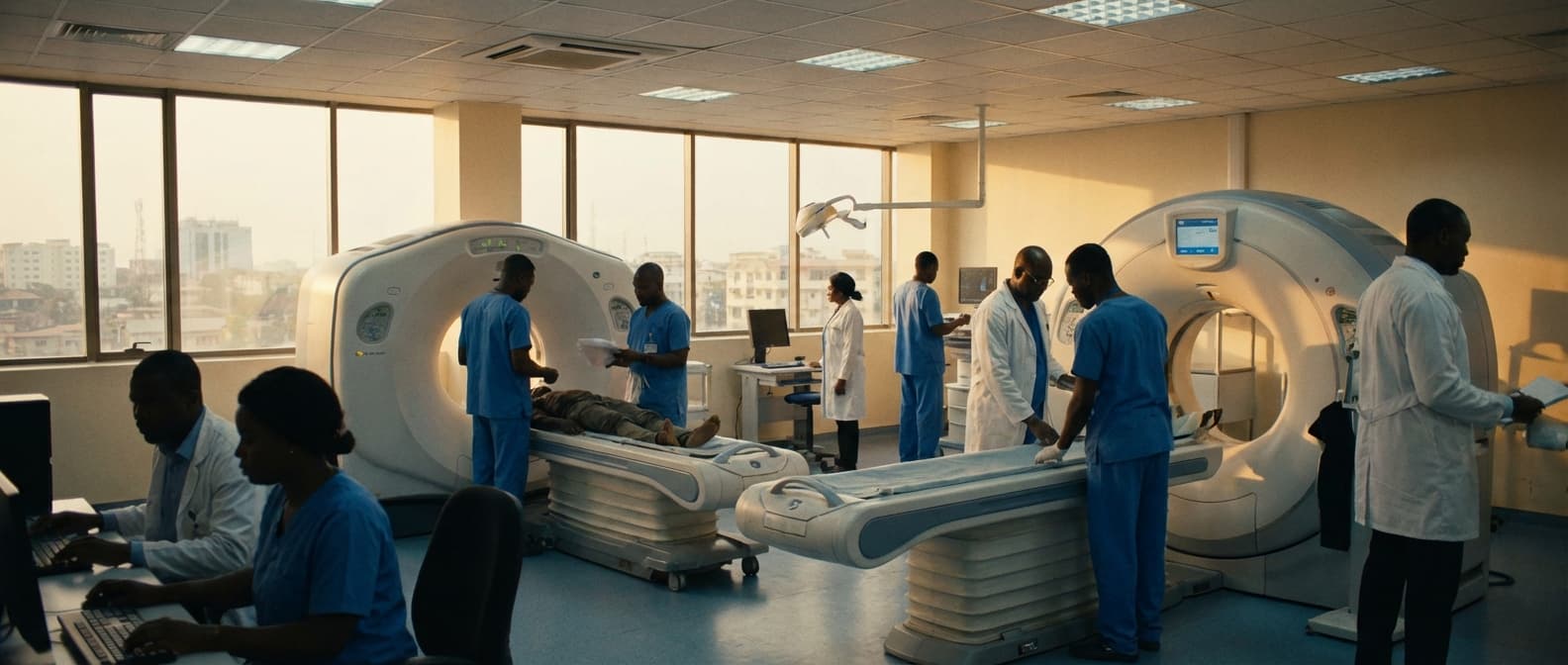
Imaging Acceptance Testing & QA in Burundi
Engineering Excellence & Technical Support
Commissioning and periodic QA for CT/MRI/X‑ray/US/Mammo. High-standard technical execution following OEM protocols and local regulatory frameworks.
Ensuring Image Clarity and Accuracy
Rigorous visual inspection of all medical images (X-rays, ultrasounds, CT scans, etc.) against established quality benchmarks to guarantee diagnostic accuracy and reduce misinterpretations. This includes checking for artifacts, proper contrast, and anatomical representation.
Verifying Data Integrity and DICOM Compliance
Implementing automated and manual checks to confirm that imaging data adheres to DICOM standards, ensuring seamless integration with Picture Archiving and Communication Systems (PACS) and other medical imaging platforms. Focus on metadata correctness and pixel data integrity.
Optimizing Imaging Workflow Efficiency
Conducting performance testing on imaging equipment and associated software to identify and resolve bottlenecks, minimize downtime, and streamline the entire imaging acquisition and retrieval process. This leads to faster patient throughput and improved resource utilization.
What Is Imaging Acceptance Testing & Qa In Burundi?
Imaging Acceptance Testing & Quality Assurance (QA) in Burundi refers to the systematic verification and validation processes applied to medical imaging equipment and associated software systems before they are deployed into clinical use. This service ensures that these critical healthcare technologies function according to predefined specifications, meet regulatory requirements (where applicable), and deliver reliable, accurate diagnostic information. The objective is to minimize risks associated with equipment malfunction, inaccurate diagnoses, and patient safety concerns. This process is integral to the operational readiness of healthcare facilities and the integrity of diagnostic imaging services in the Burundian context.
| Use Case Scenario | Description of Need | Typical QA Activities |
|---|---|---|
| New Hospital Wing/Department Inauguration | Acquisition of multiple new imaging modalities (e.g., a CT scanner, an X-ray unit, and an ultrasound machine) for a newly established radiology department. Requires comprehensive testing to ensure all units are operational, produce high-quality images, and integrate with a new PACS. | Full suite of acceptance tests for each modality, image quality assessments, PACS integration and validation, user training verification, and radiation safety checks. |
| Replacement of Obsolete Equipment | Replacing an aging analog X-ray machine with a new digital radiography (DR) system. Focus is on verifying the superior image quality, reduced radiation dose, and seamless workflow integration compared to the old system. | DR detector performance verification, image acquisition and processing parameter validation, comparison with baseline (old system) image quality metrics, and workflow efficiency assessment. |
| PACS/RIS Implementation or Upgrade | Introducing a new PACS to manage imaging studies from various modalities or upgrading an existing RIS to improve reporting and scheduling. Emphasis on data integrity, security, user interface, and interoperability. | DICOM conformance testing, image archiving and retrieval speed tests, user role and permission validation, data security audits, and HIS integration testing. |
| Equipment Relocation or Reinstallation | Moving an existing MRI scanner to a different location within a hospital or to a new facility. Requires re-validation of performance and safety after relocation and reinstallation. | Coil sensitivity and uniformity checks, gradient performance tests, magnetic field stability monitoring, image artifact reduction assessment, and safety interlock verification. |
| Routine Performance Verification for Accreditation/Certification | Hospitals seeking or maintaining international or national accreditation may require periodic QA checks on their imaging equipment to ensure continued compliance and optimal performance. | Scheduled phantom scans, dose output measurements, spatial resolution tests, and calibration verification. |
Who Needs Imaging Acceptance Testing & QA?
- Public and Private Hospitals: Facilities acquiring new or upgrading existing imaging equipment.
- Specialized Diagnostic Centers: Clinics focusing on radiology and medical imaging services.
- Government Health Agencies: Overseeing the procurement and deployment of medical technology in public health infrastructure.
- Non-Governmental Organizations (NGOs): Involved in healthcare projects and the provision of medical equipment in Burundi.
- Equipment Manufacturers and Suppliers: To ensure their products meet performance standards and customer expectations before final handover.
- Healthcare IT Departments: Responsible for the integration and maintenance of imaging software and systems.
Who Needs Imaging Acceptance Testing & Qa In Burundi?
Imaging Acceptance Testing & QA are crucial for ensuring that medical imaging systems in Burundi are functioning accurately, reliably, and safely. This is vital for providing correct diagnoses and effective patient care. Without proper testing and quality assurance, there's a significant risk of misdiagnosis, unnecessary procedures, and potential harm to patients.
| Customer Type | Relevant Departments | Key Needs & Benefits |
|---|---|---|
| Hospitals (Public) | Radiology Department, Cardiology, Neurology, Oncology, Emergency Department, IT Department | Ensuring accurate diagnoses for a large patient population, compliance with national health standards, cost-effectiveness through reduced errors and equipment downtime. |
| Hospitals (Private) | Radiology Department, Specialized Clinics (e.g., Orthopedics, Urology), Administration, IT Department | Maintaining high-quality patient care to attract and retain patients, competitive advantage, reputation for reliability and advanced technology. |
| Clinics and Diagnostic Centers | Radiology/Imaging Unit, Medical Staff (Physicians, Technologists), Management | Accurate diagnostic results for referring physicians, efficient workflow, patient trust, avoiding operational disruptions. |
| Research Institutions | Research Departments using imaging, Imaging Facilities, Data Management | Data integrity for research studies, ensuring imaging parameters are consistent and reliable for scientific analysis, reproducibility of results. |
| Government Health Agencies | Ministry of Health (e.g., Department of Health Services, Procurement Unit), Public Health Programs | Ensuring public health infrastructure is functional and safe, efficient allocation of resources, standardization of imaging services across the country, national health data quality. |
Target Customers & Departments for Imaging Acceptance Testing & QA in Burundi
- Hospitals (Public and Private)
- Clinics and Diagnostic Centers
- Research Institutions
- Government Health Agencies
Imaging Acceptance Testing & Qa Process In Burundi
This document outlines the Imaging Acceptance Testing and Quality Assurance (QA) process in Burundi, detailing the workflow from initial inquiry to the final execution of tests. The objective is to ensure that imaging solutions deployed meet defined standards, functional requirements, and user expectations. This process is crucial for verifying the integrity, reliability, and performance of imaging systems before they are fully integrated into clinical or operational workflows.
| Stage | Description | Key Activities | Deliverables | Responsible Parties |
|---|---|---|---|---|
| The process begins when a need for an imaging solution or a change to an existing one is identified, or when a vendor proposes a new system. This stage focuses on understanding the precise needs and expectations. | Receive and review inquiry/request. Conduct meetings with stakeholders (clinicians, IT, administrators). Document functional, performance, and security requirements. Define acceptance criteria. | Requirement Specification Document, Stakeholder Sign-off on Requirements. | Requestor/Client, Project Manager, Business Analyst, Key Stakeholders. |
| Based on the gathered requirements, a comprehensive test plan is developed to guide the entire testing effort. This involves defining the scope, objectives, resources, and schedule for testing. | Develop Test Strategy. Define test scope and objectives. Identify test types (functional, performance, security, usability, etc.). Create test cases and scenarios. Define test data requirements. Allocate resources and schedule. | Test Plan Document, Test Cases/Scenarios, Test Data Plan. | QA Lead, Test Manager, Project Manager. |
| A dedicated and controlled environment is established to simulate the production conditions as closely as possible, ensuring accurate and repeatable test results. | Procure/configure hardware and software. Install and configure imaging systems and related software. Set up network connectivity. Prepare and load test data. Ensure security configurations are in place. | Configured Test Environment, Test Data Sets, Environment Readiness Report. | IT Operations, System Administrators, QA Team. |
| This is the core stage where test cases are executed, and the system's performance against the defined requirements is systematically evaluated. | Execute planned test cases. Record actual results. Compare actual results with expected results. Document any deviations or anomalies. | Test Execution Logs, Defect Reports (if any). | QA Engineers, Testers. |
| Any discrepancies identified during test execution are logged, prioritized, and resolved. Once fixes are implemented, retesting is performed to verify the resolution. | Log defects in a tracking system. Prioritize defects based on severity. Assign defects to development/vendor for fixing. Retest fixed defects. Perform regression testing to ensure no new issues arise. | Defect Tracking System Updates, Retest Reports, Regression Test Results. | QA Team, Development Team/Vendor, Project Manager. |
| Once all critical defects are resolved and the system meets the acceptance criteria, formal sign-off is obtained from the stakeholders, indicating their approval of the imaging solution. | Review test results and defect resolution. Conduct User Acceptance Testing (UAT) if applicable. Obtain formal sign-off from stakeholders. Document the acceptance decision. | Final Test Report, Acceptance Certificate/Sign-off Document. | Key Stakeholders, Project Manager, QA Lead. |
| After the system has been deployed, a review is conducted to assess the overall success of the implementation and identify any lessons learned for future projects. | Gather feedback from end-users. Review system performance in the production environment. Document lessons learned. Identify areas for improvement. | Post-Implementation Review Report, Lessons Learned Document. | Project Manager, QA Team, Stakeholders. |
Key Stages in the Imaging Acceptance Testing & QA Process
- Inquiry and Requirement Gathering
- Test Planning and Design
- Test Environment Setup
- Test Execution
- Defect Management and Retesting
- Acceptance and Sign-off
- Post-Implementation Review
Imaging Acceptance Testing & Qa Cost In Burundi
Acceptance testing and Quality Assurance (QA) for imaging systems in Burundi involves a range of costs influenced by several key factors. These factors dictate the complexity, duration, and expertise required for thorough testing, ultimately impacting the final price. Understanding these elements is crucial for organizations budgeting for imaging system deployment and ongoing maintenance in the Burundian context. The pricing is typically presented in the local currency, the Burundian Franc (BIF).
| Testing Service Component | Estimated Cost Range (BIF) | Notes |
|---|---|---|
| Basic Imaging System (e.g., X-ray) Acceptance Testing (per system) | 2,000,000 - 6,000,000 | Covers functional checks, basic calibration, and initial image quality assessment. |
| Advanced Imaging System (e.g., CT, MRI) Acceptance Testing (per system) | 5,000,000 - 15,000,000 | Includes comprehensive functional, performance, image artifact analysis, and specialized protocol verification. |
| PACS/RIS Integration and Acceptance Testing (per system) | 3,000,000 - 10,000,000 | Focuses on data flow, image archiving, retrieval, reporting, and user interface functionality. |
| Expert Consultation & QA Strategy Development | 500,000 - 1,500,000 | For defining the testing framework and ensuring compliance with best practices. |
| On-site Technician/Engineer Day Rate | 150,000 - 400,000 | Varies based on experience and specialization. |
| Travel and Per Diem (per day, per person, within Burundi) | 50,000 - 150,000 | Covers local transportation, meals, and basic accommodation. |
| Specialized Calibration Equipment Usage (if required) | 200,000 - 1,000,000 | One-time fee or daily rental, depending on equipment. |
| User Acceptance Testing (UAT) Facilitation (per day) | 100,000 - 300,000 | Organizing and guiding end-users through testing scenarios. |
Key Pricing Factors for Imaging Acceptance Testing & QA in Burundi
- System Complexity and Type: The nature of the imaging system significantly affects cost. Simple radiography units will be less expensive to test than complex MRI, CT scanners, or advanced PACS/RIS systems. The number of components, integration points, and specialized software all contribute to the testing scope.
- Scope of Testing: This includes functional testing, performance testing, integration testing, security testing, and user acceptance testing (UAT). A comprehensive QA process demanding a wider range of tests will naturally incur higher costs.
- Test Environment Setup: The need for specific test environments, calibration equipment, phantoms, and simulated patient data can add to the expenses. If the vendor provides these, their cost will be factored in. Conversely, if the client needs to procure or prepare them, it also contributes to the overall cost.
- Duration of Testing: The length of the acceptance testing period is directly proportional to the cost. Longer testing cycles, especially if they involve iterative fixes and re-testing, will increase labor costs.
- Expertise and Experience of Testers: The qualifications and experience of the QA engineers or technicians are critical. Specialized knowledge in medical imaging technology and regulatory compliance (if applicable) commands higher rates.
- Travel and Accommodation: For testing conducted outside major urban centers or involving external experts, travel and accommodation expenses for the testing team will be added.
- Vendor-Specific Requirements and Support: Some imaging system vendors have specific protocols and documentation requirements for acceptance testing, which may necessitate additional effort and resources.
- Reporting and Documentation: The level of detail and format of the final acceptance testing and QA reports can influence the cost, especially if extensive documentation is required for regulatory or audit purposes.
- Geographic Location and Logistics: While less of a primary driver for the testing itself, the general logistical challenges and costs associated with operating in Burundi can indirectly influence pricing, especially for imported equipment and specialized personnel.
Affordable Imaging Acceptance Testing & Qa Options
Navigating the complexities of imaging acceptance testing and quality assurance (QA) can be a significant hurdle for many organizations, especially those operating on tighter budgets. This document outlines affordable options, highlighting the value of "value bundles" and presenting various cost-saving strategies to ensure robust imaging QA without breaking the bank. From initial equipment validation to ongoing performance monitoring, ensuring the accuracy and reliability of imaging systems is paramount for patient care and operational efficiency.
| Value Bundle Component | Description | Cost-Saving Impact | Ideal For |
|---|---|---|---|
| Basic Acceptance Testing Package | Includes essential performance tests (e.g., resolution, contrast, noise) for core imaging modalities. | Reduces per-test cost by bundling common procedures. | Smaller clinics, new equipment installations. |
| Comprehensive QA Suite | Combines acceptance testing with ongoing performance monitoring, preventative maintenance checks, and vendor-managed services. | Economies of scale, reduced need for specialized external services. | Medium to large healthcare facilities, multi-site organizations. |
| Remote Monitoring & Support Add-on | Extends QA capabilities through remote access for data analysis, troubleshooting, and basic testing. | Minimizes on-site technician time and travel expenses. | Organizations with geographically dispersed imaging assets. |
| Training & Certification Module | Provides specialized training for in-house staff on performing acceptance testing and QA procedures for specific modalities. | Reduces reliance on external consultants, builds internal capacity. | Organizations seeking to enhance in-house expertise and long-term cost control. |
| Phased Implementation Bundle | Offers a staged approach to QA implementation, allowing organizations to phase in testing and monitoring capabilities as budget allows. | Spreads costs over time, allows for iterative improvements. | Organizations with budget constraints or evolving QA needs. |
Key Affordable Imaging Acceptance Testing & QA Options
- Phased Acceptance Testing: Break down the testing process into manageable stages, focusing on critical functionalities first and deferring less urgent tests to a later date.
- Leveraging Manufacturer-Provided Tools: Many imaging device manufacturers include basic acceptance testing protocols and software with their equipment. Understanding and utilizing these can reduce the need for third-party solutions.
- Remote Testing & Monitoring: Implement remote access capabilities for testing and QA, reducing travel costs and the need for on-site personnel.
- Internal QA Teams & Training: Invest in training existing biomedical engineering or IT staff to perform a broader range of QA tasks, building in-house expertise.
- Standardized Test Protocols: Develop and adhere to standardized, efficient testing protocols to minimize time and resource expenditure per test.
- Cloud-Based QA Platforms: Explore cloud-hosted QA solutions that offer scalability and potentially lower upfront costs compared to on-premise systems.
- Peer-to-Peer Knowledge Sharing: Participate in industry forums or collaborate with other institutions to share best practices and cost-effective QA approaches.
- Risk-Based Testing: Prioritize testing efforts based on the criticality of the imaging modality and its potential impact on patient safety and diagnosis.
- Utilizing AI-Powered QA Tools (Emerging): As AI evolves, explore its potential in automating certain aspects of QA, leading to increased efficiency and cost reduction.
- Partnerships with Training Institutions: Collaborate with universities or colleges with biomedical engineering programs for student projects or internships focused on QA tasks.
Verified Providers In Burundi
In Burundi, navigating the healthcare landscape can be challenging. Ensuring you're accessing quality care from reputable professionals is paramount for your well-being. Franance Health stands out as a leading organization dedicated to verifying and promoting healthcare providers who meet the highest standards of professionalism, ethics, and patient care. This commitment to verification offers a crucial layer of trust and assurance for individuals seeking medical services in Burundi.
| Provider Type | Key Verification Points | Benefits for Patients |
|---|---|---|
| General Practitioners | Valid medical license, continuous professional development, patient feedback, adherence to diagnostic protocols. | Reliable first point of contact for general health concerns, accurate initial assessments, referrals to specialists. |
| Specialists (e.g., Cardiologists, Pediatricians, Surgeons) | Board certification, specialized training, proven track record in their field, advanced diagnostic and treatment capabilities. | Access to expert diagnosis and treatment for complex conditions, specialized surgical procedures, advanced medical interventions. |
| Hospitals & Clinics | Accreditation of facilities, adherence to infection control standards, availability of essential medical equipment, qualified and sufficient medical staff, patient safety protocols. | Safe and well-equipped medical environment, comprehensive range of services, coordinated care, improved patient outcomes. |
| Diagnostic Laboratories | Accreditation of laboratory services, quality control measures, use of validated testing methodologies, qualified laboratory technicians. | Accurate and reliable diagnostic test results, timely reporting of results, support for effective treatment decisions. |
Why Franance Health Credentials Matter:
- Rigorous Vetting Process: Franance Health employs a comprehensive and stringent vetting process for all providers seeking their accreditation. This includes background checks, verification of educational qualifications and licenses, assessment of clinical experience, and evaluation of adherence to ethical guidelines.
- Commitment to Quality Care: The credentials awarded by Franance Health signify a provider's dedication to delivering high-quality, patient-centered care. This means focusing on accurate diagnoses, effective treatment plans, and compassionate patient interactions.
- Enhanced Patient Safety: By choosing a Franance Health-verified provider, patients can have greater confidence in their safety. The verification process actively screens for practitioners who prioritize patient well-being and adhere to established safety protocols.
- Ethical Practice Standards: Franance Health places a strong emphasis on ethical conduct. Verified providers are expected to uphold the highest ethical standards in their practice, ensuring transparency, respect, and patient autonomy.
- Access to Expertise: Franance Health often collaborates with and highlights providers who demonstrate specialized knowledge and expertise in various medical fields, making it easier for patients to find the right specialist for their specific needs.
- Building Trust in the System: The presence of a trusted credentialing body like Franance Health helps to build confidence and trust in the overall healthcare system in Burundi, encouraging more people to seek necessary medical attention.
Scope Of Work For Imaging Acceptance Testing & Qa
This Scope of Work (SOW) outlines the requirements for comprehensive Imaging Acceptance Testing (AT) and Quality Assurance (QA) to ensure that all imaging-related systems and processes meet specified technical requirements, performance benchmarks, and regulatory standards before final deployment and ongoing operation. This SOW covers the activities necessary to validate the functionality, performance, reliability, and security of imaging solutions.
| Deliverable | Description | Standard/Specification Reference | Acceptance Criteria |
|---|---|---|---|
| Imaging System AT/QA Plan | A detailed document outlining the strategy, scope, methodologies, test cases, schedule, roles, and responsibilities for AT/QA activities. | Internal Project Standards, Industry Best Practices (e.g., ISO 29119, ISTQB) | Approved by Project Stakeholders; covers all identified testing objectives. |
| Test Cases and Scripts | Detailed step-by-step instructions for executing specific tests, including expected results. | Project Requirements Document, System Design Documents, User Stories | Each test case has clear preconditions, steps, and expected outcomes; traceable to requirements. |
| Defect/Bug Reports | Documented records of identified issues, including severity, priority, steps to reproduce, and impact. | Internal Defect Tracking System Guidelines, Project Management Tools | All critical and high-severity defects resolved and verified before go-live; medium/low defects with an agreed-upon resolution plan. |
| Performance Test Results | Data demonstrating the system's performance under various load conditions (e.g., acquisition time, retrieval speed, image loading times). | System Performance Requirements, Industry Benchmarks | Performance metrics meet or exceed defined thresholds under specified load conditions. |
| Integration Test Results | Evidence of successful data exchange and workflow integration between imaging systems and other connected applications (e.g., EHR/EMR, LIS). | HL7 Standards, DICOM Conformance Statements, API Specifications | All critical integration points function as expected; data is exchanged accurately and timely. |
| Security and Privacy Audit Report | Report detailing the results of security vulnerability scans, penetration testing (if applicable), and privacy compliance checks. | HIPAA Security Rule, NIST Cybersecurity Framework, GDPR (if applicable) | No critical security vulnerabilities found; all identified issues addressed; compliance with privacy regulations verified. |
| User Acceptance Testing (UAT) Sign-off | Formal documentation from end-users indicating their satisfaction with the system's functionality and usability. | Project Requirements Document, User Stories | All key end-users have formally accepted the system based on predefined UAT criteria. |
| Final AT/QA Summary Report | A comprehensive report summarizing all testing activities, key findings, outstanding issues, and recommendations for go-live. | Project Management Guidelines | Provides a clear overview of the system's readiness for deployment; includes a go/no-go recommendation. |
| DICOM Conformance Statement Validation Report | Verification that the imaging system adheres to the agreed-upon DICOM conformance levels for image acquisition, storage, query/retrieve, etc. | DICOM Part 10, DICOM Conformance Statements from vendors | System correctly implements specified DICOM services and object classes. |
| Image Quality Assessment Report | Evaluation of image quality, including resolution, contrast, noise, and artifacts, against established quality metrics. | Radiology Quality Standards (e.g., ACR guidelines), Project-specific image quality requirements | Images meet defined quality benchmarks; artifacts are minimal and non-diagnostic. |
Key Objectives of Imaging Acceptance Testing & QA
- Verify that all imaging hardware (scanners, cameras, displays, etc.) functions according to manufacturer specifications and project requirements.
- Validate that imaging software (PACS, RIS, DICOM viewers, image processing tools, etc.) meets functional and performance expectations.
- Ensure seamless integration between different imaging components and with existing IT infrastructure (e.g., EHR/EMR systems).
- Confirm adherence to relevant industry standards, such as DICOM, HL7, and regulatory guidelines (e.g., HIPAA, FDA if applicable).
- Assess the performance, speed, and accuracy of image acquisition, processing, storage, retrieval, and display.
- Evaluate the user interface (UI) and user experience (UX) for ease of use, efficiency, and intuitiveness.
- Test data integrity, security, and privacy measures for all imaging data.
- Identify and document defects, issues, and deviations from requirements, and track them through to resolution.
- Confirm that backup and disaster recovery procedures for imaging data are effective.
- Validate training materials and user documentation for accuracy and completeness.
Service Level Agreement For Imaging Acceptance Testing & Qa
This Service Level Agreement (SLA) outlines the agreed-upon standards for Imaging Acceptance Testing and Quality Assurance (QA) services provided by [Your Company Name] (hereinafter referred to as "Provider") to [Client Company Name] (hereinafter referred to as "Client"). This SLA defines response times for critical issues and uptime guarantees for the associated testing environments and tools.
| Service Component | Response Time Target (Business Hours) | Uptime Guarantee | Definition of Incident Severity |
|---|---|---|---|
| Critical Issue (System Down / Unusable Imaging Functionality) | 1 Hour | 99.5% | A critical incident is defined as a complete failure of the imaging system or a core imaging functionality that prevents the execution of acceptance tests or renders the QA environment unusable for its intended purpose. |
| High Severity (Significant Functionality Impaired / Major Bug Affecting Testing) | 2 Business Hours | 99.0% | A high severity incident is defined as a significant impairment of a key imaging functionality that substantially hinders or impacts the progress of acceptance testing or QA activities, but does not render the system completely unusable. |
| Medium Severity (Minor Functionality Impaired / Performance Degradation) | 4 Business Hours | 98.0% | A medium severity incident is defined as a minor functional issue or noticeable performance degradation that slows down testing progress or affects the efficiency of testing, but does not prevent the execution of core test cases. |
| Low Severity (Cosmetic Issue / Informational) | 8 Business Hours (Next Business Day) | N/A | A low severity incident is defined as a cosmetic issue, a non-critical bug that does not affect functionality, or an informational alert that does not require immediate attention. |
Scope of Services
- Imaging Acceptance Testing: This includes the execution of predefined test cases against imaging systems and workflows to verify functionality, performance, and compliance with specified requirements.
- Quality Assurance (QA): This encompasses ongoing QA activities related to imaging, including but not limited to, regression testing, defect reporting, and performance monitoring.
- Testing Environments: The Provider will ensure the availability and functionality of dedicated testing environments for acceptance testing and ongoing QA.
Frequently Asked Questions

Ready when you are
Let's scope your Imaging Acceptance Testing & QA in Burundi project in Burundi.

Scaling healthcare logistics and technical systems across the entire continent.