
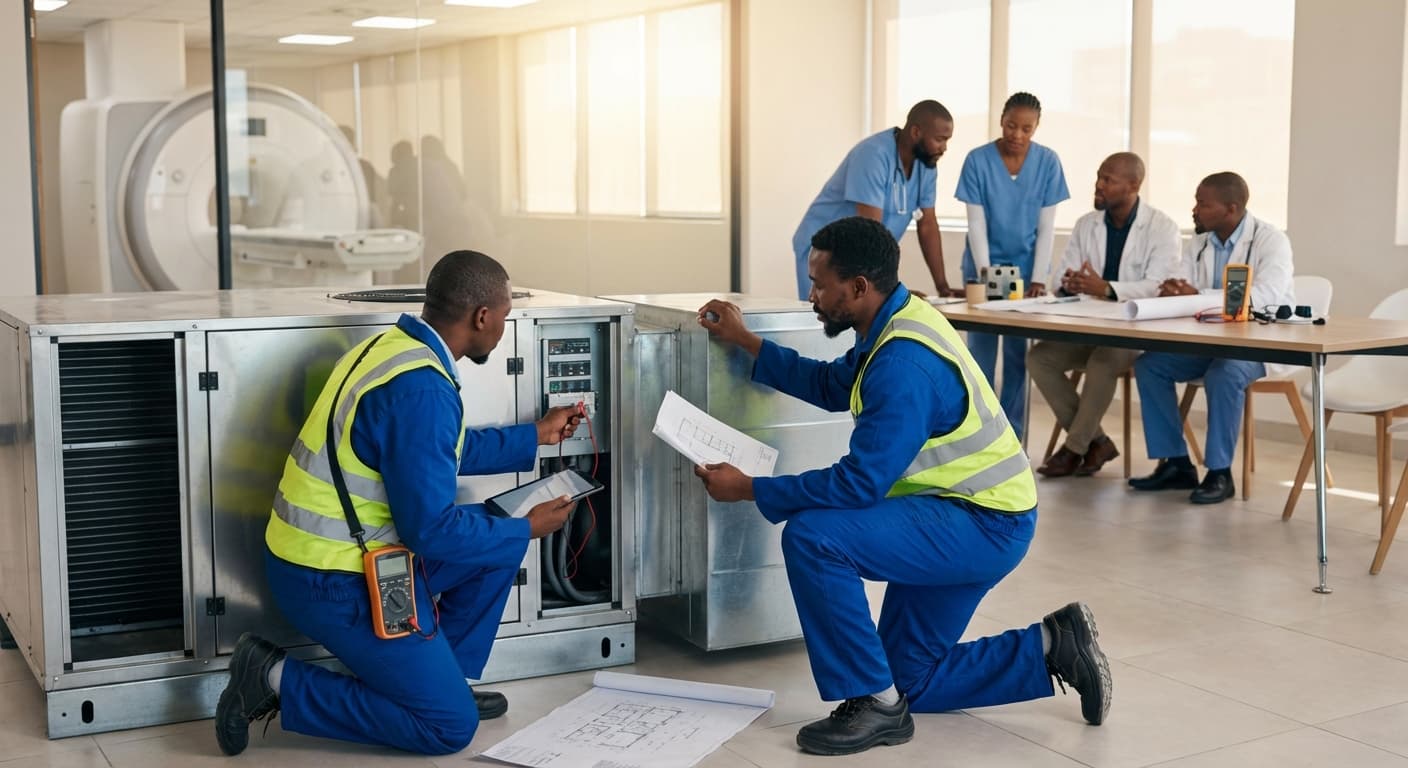
Site Readiness Assessment Service (Space/Access/HVAC/Power/Shielding) in Burundi
Engineering Excellence & Technical Support
Site Readiness Assessment Service (Space/Access/HVAC/Power/Shielding) High-standard technical execution following OEM protocols and local regulatory frameworks.
Optimized Site Layout for Scalable Infrastructure
Leveraging advanced spatial analysis, our service ensures optimal placement of servers, networking equipment, and future expansion zones within your Burundi facility, maximizing efficiency and minimizing footprint. This includes detailed assessment of rack density, cabling pathways, and accessibility for maintenance.
Robust Power Grid Assessment & Redundancy Planning
We conduct a comprehensive evaluation of Burundi's power grid stability and your facility's internal power distribution. Our recommendations focus on implementing cost-effective UPS systems, generator integration, and redundant power paths to guarantee uninterrupted operations and protect critical IT assets.
Environmentally-Conscious HVAC Design for Burundi's Climate
Our experts meticulously assess the ambient environmental conditions in Burundi to design or recommend energy-efficient HVAC solutions. We prioritize maintaining optimal temperature and humidity levels for IT equipment while considering local climate challenges and sustainable cooling practices to reduce operational costs.
What Is Site Readiness Assessment Service (Space/access/hvac/power/shielding) In Burundi?
The Site Readiness Assessment Service (Space/Access/HVAC/Power/Shielding) in Burundi is a comprehensive evaluation process designed to determine the suitability and compliance of a proposed or existing physical location for the installation and operation of critical infrastructure. This service meticulously analyzes key environmental and logistical factors to ensure that the site can reliably support the intended technological deployment, often within the context of telecommunications, data centers, broadcasting, research facilities, or other sensitive installations. The assessment focuses on five primary domains: Space, Access, HVAC (Heating, Ventilation, and Air Conditioning), Power, and Shielding.
Space pertains to the availability and suitability of physical dimensions, layout, and structural integrity for housing equipment, cabling, and personnel, considering future expansion. Access evaluates the ease and security of ingress and egress for personnel, equipment, and emergency services, including road networks, physical entry points, and internal pathways.
HVAC assesses the existing or required environmental control systems to maintain optimal temperature, humidity, and air quality crucial for equipment longevity and performance, considering Burundi's local climate conditions. Power scrutinizes the availability, reliability, capacity, and redundancy of electrical supply, including grid stability, potential for backup generators, and the feasibility of renewable energy integration. Shielding examines the site's susceptibility to and capacity for mitigating electromagnetic interference (EMI), radio frequency interference (RFI), and physical security threats, ensuring data integrity and operational continuity.
This service is essential for entities planning new installations, upgrades, or expansions of infrastructure within Burundi. It mitigates risks associated with unforeseen site limitations, costly retrofits, and operational failures by providing actionable insights and recommendations. The assessment ensures that all regulatory, technical, and operational requirements are met prior to significant capital investment and deployment.
| Assessment Component | Scope of Evaluation | Typical Considerations in Burundi |
|---|---|---|
| Space | Physical dimensions, structural load capacity, floor plan suitability, cable management pathways, expansion potential. | Availability of adequate land/building footprint in urban vs. rural areas; potential need for seismic reinforcement; considerations for modular or prefabricated structures. |
| Access | Road network connectivity, security of entry points, internal circulation paths, accessibility for large equipment transport, emergency vehicle access. | Quality of existing road infrastructure (paved vs. unpaved); customs and import logistics for equipment; local security protocols and permitting for site access. |
| HVAC | Current cooling/heating capacity, humidity control, air filtration, power consumption of HVAC systems, redundancy, ventilation design. | High ambient temperatures and humidity levels requiring robust cooling solutions; potential reliance on generators for HVAC due to grid instability; dust and particulate matter considerations. |
| Power | Grid stability and reliability, available voltage and current, backup power generation (generators, UPS), renewable energy integration potential, power distribution infrastructure. | Intermittent grid power supply necessitates significant investment in redundant backup generators and UPS; exploration of solar energy potential given high solar irradiance; local electrical codes and standards. |
| Shielding | Electromagnetic interference (EMI) sources, radio frequency interference (RFI) susceptibility, physical security measures, grounding and bonding, structural protection against environmental factors. | Potential for EMI from local broadcast towers or industrial activity; need for robust physical security to deter theft or vandalism; protection against heavy rainfall and potential flooding. |
Key Components of Site Readiness Assessment
- Space Assessment
- Access Assessment
- HVAC Assessment
- Power Assessment
- Shielding Assessment
Who Needs Site Readiness Assessment Service (Space/access/hvac/power/shielding) In Burundi?
A Site Readiness Assessment Service is crucial for any organization or project in Burundi that requires a new or significantly upgraded facility to ensure that the physical space, access logistics, HVAC systems, power infrastructure, and any necessary shielding (e.g., for radiation or electromagnetic interference) are adequately planned, designed, and implemented before construction or major renovations begin. This proactive approach minimizes risks, avoids costly rework, and ensures the facility meets operational and regulatory requirements.
| Target Customer/Industry | Relevant Departments/Considerations |
|---|---|
| Telecommunications Companies | Network Operations, Infrastructure Planning, Facilities Management (for cell towers, data centers) |
| Financial Institutions (Banks, Microfinance) | IT Infrastructure, Security, Branch Network Planning, Facilities Management (for data centers, new branches) |
| Manufacturing & Industrial Businesses | Production Planning, Operations, Facilities Engineering, Supply Chain Logistics |
| Healthcare Providers (Hospitals, Clinics, Labs) | Medical Equipment Planning, Facilities Management, Bio-safety, IT Infrastructure, Energy Management |
| Data Centers & Cloud Service Providers | IT Operations, Network Engineering, Facilities Management, Power & Cooling Engineering, Security |
| Government & Public Sector | Infrastructure Development Agencies, Ministry of Works, Ministry of Health, Ministry of Science & Technology, Security Agencies |
| Mining & Extractive Industries | Operations, Logistics, Site Development, Infrastructure Planning, Environmental Management |
| Agribusiness & Food Processing | Operations, Quality Control, Logistics, Facilities Engineering, Cold Chain Management |
| Educational Institutions (Universities, Research Centers) | Academic Departments, IT Services, Facilities Management, Research & Development |
| International Development Organizations (UN, NGOs) | Program Implementation Teams, Logistics, Facilities Management, Security |
Who Needs Site Readiness Assessment Service (Space/Access/HVAC/Power/Shielding) in Burundi?
- Organizations planning to establish new operational bases or expand existing ones in Burundi.
- Companies undertaking large-scale construction projects or infrastructure development.
- Businesses that rely on specialized equipment or sensitive environments (e.g., data centers, laboratories, manufacturing plants).
- Government agencies involved in public works, healthcare, or research facilities.
- International organizations and NGOs implementing development projects with a physical presence.
- Any entity requiring reliable and robust utility services (power, cooling) for their operations.
- Projects with specific security or environmental control requirements, necessitating specialized shielding or climate control.
Site Readiness Assessment Service (Space/access/hvac/power/shielding) Process In Burundi
The Site Readiness Assessment Service in Burundi, encompassing Space, Access, HVAC, Power, and Shielding, is a critical process for ensuring a location is suitable for the installation and operation of specialized equipment, often in telecommunications, IT infrastructure, or research environments. The workflow is designed to be systematic, from initial client inquiry to the final detailed assessment report. This process is crucial for mitigating risks, preventing costly delays, and guaranteeing the optimal performance of the installed systems.
| Phase | Key Activities | Deliverables | Responsible Parties |
|---|---|---|---|
| Inquiry & Initial Consultation | Client expresses interest, defines general needs and location. | Understanding of client requirements, preliminary discussion notes. | Client, Service Provider Sales/Technical Team |
| Scope Definition & Proposal | Define assessment scope, methodology, timeline, and costs. | Formal Proposal Document. | Service Provider Technical/Sales Team |
| Site Visit Scheduling & Pre-Assessment Planning | Schedule site visit, gather preliminary site information. | Scheduled site visit confirmation, preliminary site data (if available). | Client, Service Provider Project Manager |
| On-Site Assessment | Physical inspection and data collection across Space, Access, HVAC, Power, Shielding. | Collected site data (measurements, photos, observations). | Service Provider Assessment Team (Engineers/Technicians) |
| Data Collection & Analysis | Compile and analyze all gathered site data. | Initial analysis findings. | Service Provider Assessment Team |
| Report Generation | Compile detailed Site Readiness Assessment Report. | Comprehensive Site Readiness Assessment Report. | Service Provider Assessment Team/Technical Writer |
| Report Presentation & Review | Present findings, discuss recommendations, answer questions. | Client acceptance/feedback on report and recommendations. | Service Provider Project Manager/Lead Assessor, Client Stakeholders |
| Follow-up & Support | Assist with remediation planning, vendor coordination, further consultation. | Implementation support, ongoing technical advice. | Service Provider Project Manager/Technical Team, Client |
Site Readiness Assessment Service Workflow in Burundi
- Inquiry & Initial Consultation: The process begins when a client expresses interest in the Site Readiness Assessment Service. This involves an initial discussion to understand the client's specific needs, the type of equipment to be installed, the proposed site location(s), and the desired timeline.
- Scope Definition & Proposal: Based on the initial consultation, a detailed scope of work is defined, outlining the specific aspects of readiness to be assessed (Space, Access, HVAC, Power, Shielding). A formal proposal is then submitted, including the methodology, deliverables, timeline, and associated costs.
- Site Visit Scheduling & Pre-Assessment Planning: Upon proposal acceptance, a site visit is scheduled. This phase includes coordinating with the client for access to the proposed location and gathering any preliminary documentation the client might possess (e.g., building plans, existing infrastructure details).
- On-Site Assessment: The core of the service. A team of experienced engineers and technicians conducts a thorough physical inspection of the site, evaluating each readiness category:
- Space: Assessing the availability of adequate physical space for equipment, including future expansion, cable pathways, and working room.
- Access: Evaluating accessibility for personnel, equipment delivery (including size/weight limitations), and emergency egress.
- HVAC (Heating, Ventilation, and Air Conditioning): Determining the current HVAC capacity, its suitability for the equipment's environmental requirements (temperature, humidity), and the potential for upgrades or new installations.
- Power: Analyzing the existing power infrastructure, including capacity, reliability, voltage stability, grounding, and the availability of backup power solutions (generators, UPS).
- Shielding: Assessing requirements for electromagnetic interference (EMI) or radio-frequency interference (RFI) shielding, if applicable to the equipment being installed.
- Data Collection & Analysis: During the site visit, detailed measurements, observations, and photographic evidence are collected. This data is then analyzed by the assessment team to identify any potential issues or deficiencies.
- Report Generation: A comprehensive Site Readiness Assessment Report is compiled. This report typically includes:
- Executive Summary
- Detailed findings for each assessment category (Space, Access, HVAC, Power, Shielding)
- Identification of risks and potential challenges
- Recommendations for remediation, upgrades, or mitigation strategies
- Cost estimations for proposed remediation work (if applicable)
- Photographic evidence and technical specifications.
- Report Presentation & Review: The final report is presented to the client. This meeting allows for a thorough review of the findings, clarification of any questions, and discussion of the proposed recommendations.
- Follow-up & Support: Following the presentation, the service may include ongoing support to assist the client in implementing the recommended remediation actions, coordinating with local vendors, or providing further technical consultation.
Site Readiness Assessment Service (Space/access/hvac/power/shielding) Cost In Burundi
Assessing site readiness for a project, particularly in sectors like space/access, HVAC, power, and shielding, involves a comprehensive evaluation to ensure optimal infrastructure for operations. In Burundi, the cost of such a service can vary significantly due to a combination of local economic conditions, the complexity of the site, and the specific requirements of the project. Factors influencing these costs include the availability of skilled local labor and specialized equipment, the remoteness of the site, the extent of existing infrastructure, and the regulatory landscape. Given these variables, it's challenging to provide exact figures without a detailed project scope. However, we can outline the typical cost components and provide estimated ranges in the local currency, the Burundian Franc (BIF).
| Assessment Component | Estimated Cost Range (BIF) |
|---|---|
| Basic Site Access & Structural Review (Walkthrough, Visual Inspection) | 500,000 - 1,500,000 BIF |
| Power Infrastructure Assessment (Capacity, Distribution, Backup) | 700,000 - 2,500,000 BIF |
| HVAC System Assessment (Capacity, Condition, Airflow, Efficiency) | 800,000 - 3,000,000 BIF |
| Shielding Assessment (EMI/RFI, Radiation - if applicable, often niche) | 1,000,000 - 5,000,000+ BIF (Highly specialized) |
| Comprehensive Site Readiness Assessment (All components, detailed) | 2,000,000 - 10,000,000+ BIF |
| Add-ons: Detailed CAD drawings, Remedial Cost Estimates, Third-party Testing | Variable (typically 10-30% of base assessment cost) |
Key Pricing Factors for Site Readiness Assessment in Burundi
- Scope of Assessment: The depth and breadth of the assessment are paramount. Evaluating only basic power and access will be less costly than a comprehensive review including detailed HVAC load calculations, specialized shielding requirements, and complex structural access analysis.
- Site Complexity and Size: Larger, more complex, or remote sites will naturally incur higher costs due to increased travel, logistical challenges, and the time required for thorough inspection.
- Existing Infrastructure: The condition and adequacy of current HVAC, power, and structural elements will dictate the level of assessment needed. Sites requiring extensive upgrades or facing significant deficiencies will necessitate more in-depth analysis.
- Specialized Equipment Needs: Certain assessments, like detailed structural integrity checks or complex HVAC performance testing, might require specialized equipment. The availability and rental costs of such equipment in Burundi will influence the overall price.
- Labor Costs: The cost of skilled engineers, technicians, and support staff familiar with local conditions and assessment methodologies is a significant component. Labor rates can fluctuate based on demand and expertise.
- Travel and Logistics: For remote or hard-to-reach locations, travel expenses, accommodation, and local transportation for the assessment team will add to the overall cost.
- Reporting and Documentation: The level of detail required in the final report, including technical drawings, recommendations, and cost estimations for remedial work, will impact the pricing.
- Regulatory Compliance: Understanding and assessing against local building codes, environmental regulations, and safety standards can add to the complexity and cost.
- Consultant's Expertise and Reputation: Experienced and reputable consulting firms may command higher fees due to their proven track record and specialized knowledge.
Affordable Site Readiness Assessment Service (Space/access/hvac/power/shielding) Options
Our Affordable Site Readiness Assessment Service provides a comprehensive evaluation of your facility's suitability for new equipment or infrastructure. We focus on critical areas including Space, Access, HVAC, Power, and Shielding to ensure a smooth and cost-effective deployment. Understanding your unique needs, we offer flexible value bundles and employ strategic cost-saving measures to deliver maximum benefit.
| Value Bundle | Description | Included Services | Target Audience | Estimated Price Range (USD) |
|---|---|---|---|---|
| Essential Site Check | A foundational assessment focusing on the most common critical factors. | Space, Access (basic), Power (capacity check) | Small businesses, startups, minimal equipment deployments | $750 - $1,500 |
| Standard Site Readiness | A balanced assessment covering core infrastructure needs. | Space, Access, HVAC (basic assessment), Power (detailed analysis) | Medium-sized businesses, standard IT infrastructure upgrades | $1,500 - $3,000 |
| Comprehensive Facility Assessment | An in-depth evaluation of all critical site readiness factors. | Space, Access, HVAC (detailed analysis & recommendations), Power (detailed analysis & recommendations), Shielding (initial consultation) | Large enterprises, data center deployments, sensitive equipment installations, new construction | $3,000 - $6,000+ |
| Customizable Bundle | Tailored assessment based on your specific project requirements. | Select any combination of services | All business sizes and project scopes | Quote-based |
Key Assessment Areas:
- Space: Evaluating available floor space, ceiling height, and structural load-bearing capacity.
- Access: Assessing entry points, aisle width, elevator capacity, and pathway clearance for equipment movement.
- HVAC: Determining current cooling, ventilation, and humidity control capabilities and required upgrades.
- Power: Analyzing existing electrical infrastructure, capacity, redundancy, and grounding requirements.
- Shielding: Evaluating electromagnetic, RF, or radiation shielding needs based on equipment specifications.
Verified Providers In Burundi
In Burundi's healthcare landscape, identifying reliable and accredited healthcare providers is paramount for ensuring quality and safety. Franance Health stands out as a leading entity, rigorously vetting and credentialing medical professionals and facilities. This commitment to verification offers patients peace of mind, knowing they are engaging with providers who meet the highest standards of competence, ethics, and patient care. Their stringent credentialing process examines qualifications, experience, disciplinary history, and adherence to best practices, making Franance Health verified providers the most trustworthy choice for healthcare needs in Burundi.
| Provider Type | Franance Health Verification Benefits | Patient Advantage |
|---|---|---|
| Hospitals & Clinics | Validated operational standards, equipment, and hygiene protocols. | Access to safe, well-equipped facilities with competent staff. |
| Specialist Physicians | Confirmed board certifications, extensive training, and positive patient feedback. | Receiving expert care from highly skilled and reputable specialists. |
| General Practitioners | Assessed for comprehensive medical knowledge, diagnostic accuracy, and patient-centered approach. | Benefiting from reliable primary healthcare services and accurate diagnoses. |
| Diagnostic Laboratories | Certified for accurate and reliable testing, quality control, and modern equipment. | Receiving trustworthy lab results crucial for effective treatment planning. |
| Pharmacies | Verified for safe storage, dispensing practices, and availability of quality medications. | Ensured access to authentic and properly handled pharmaceutical products. |
Why Franance Health Credentials Matter
- Ensures access to qualified and experienced medical professionals.
- Guarantees adherence to international standards of healthcare delivery.
- Promotes patient safety and reduces the risk of medical errors.
- Fosters trust and transparency within the healthcare system.
- Facilitates access to appropriate and effective treatments.
- Supports continuous improvement and professional development of providers.
Scope Of Work For Site Readiness Assessment Service (Space/access/hvac/power/shielding)
This Scope of Work outlines the services to be provided for a Site Readiness Assessment. The assessment will cover critical infrastructure elements including Space, Access, HVAC, Power, and Shielding to ensure the suitability of a proposed site for the intended purpose. This document details the technical deliverables and the standard specifications against which the assessment will be performed.
| Technical Deliverable | Description | Standard Specification Reference |
|---|---|---|
| Site Readiness Assessment Report | A detailed report summarizing findings for Space, Access, HVAC, Power, and Shielding, including a gap analysis and recommendations. | Industry Best Practices (e.g., TIA, BICSI standards as applicable), Client-specific requirements. |
| Space Utilization Plan (Conceptual) | A conceptual layout indicating proposed equipment placement and associated space requirements. | Client-provided equipment specifications and operational workflow. |
| Access and Logistics Plan (Conceptual) | An outline of proposed access routes and logistical considerations for equipment installation. | On-site survey data, Client-provided equipment dimensions and weight. |
| HVAC Capacity Assessment | Analysis of current HVAC capacity versus required cooling/heating loads, including air changes per hour (ACH) and filtration levels. | ASHRAE Standards, Client-provided equipment thermal load data. |
| Power Availability and Redundancy Report | Documentation of available electrical capacity, existing power sources, UPS/generator status, and distribution. | NEC (National Electrical Code), Client-provided power requirements, UPS/generator manufacturer specifications. |
| Shielding Effectiveness Evaluation (if applicable) | Assessment of existing shielding against potential EMI/RFI sources and required attenuation levels. | IEEE Standards (e.g., IEEE Std 299), Client-provided equipment susceptibility data. |
Scope of Work Details
- 1. Site Survey and Documentation: Conduct a thorough on-site survey to gather all relevant data regarding the existing conditions of the proposed space.
- 2. Space Analysis: Evaluate the available physical space, including dimensions, layout, floor loading capacity, ceiling heights, and any existing obstructions. This will include verifying if the provided space meets the minimum requirements for the intended equipment and operational needs.
- 3. Access Assessment: Determine the ease of access to the site for personnel, equipment, and materials. This includes assessing entrance/exit points, corridors, elevators, loading docks, and any potential logistical challenges for bringing in and installing equipment.
- 4. HVAC System Evaluation: Review the existing Heating, Ventilation, and Air Conditioning (HVAC) system. This includes assessing its capacity, redundancy, temperature and humidity control capabilities, air filtration, and suitability for maintaining the required environmental conditions for sensitive equipment.
- 5. Power Infrastructure Review: Analyze the existing electrical power infrastructure. This involves evaluating available power capacity, redundant power sources (UPS, generators), power distribution pathways, electrical panel ratings, grounding, and the availability of appropriate outlets and connections.
- 6. Shielding Requirements Assessment: If applicable, assess the existing electromagnetic interference (EMI) or radio frequency interference (RFI) shielding. This includes evaluating the effectiveness of the current shielding and identifying any potential sources of interference that could impact the performance of the intended equipment.
- 7. Gap Analysis and Recommendations: Compare the current site conditions against the specified technical requirements and industry best practices. Identify any deficiencies or gaps and provide actionable recommendations for remediation or upgrades.
- 8. Reporting: Prepare a comprehensive Site Readiness Assessment Report detailing all findings, analysis, and recommendations.
Service Level Agreement For Site Readiness Assessment Service (Space/access/hvac/power/shielding)
This Service Level Agreement (SLA) outlines the terms and conditions for the Site Readiness Assessment Service provided by [Your Company Name] (hereinafter referred to as 'Provider') to [Client Company Name] (hereinafter referred to as 'Client'). This SLA defines the response times for critical issues and the uptime guarantees for the assessment tools and reporting portal. The scope of this assessment includes Space, Access, HVAC, Power, and Shielding.
| Service Component | Response Time (Business Hours) | Resolution Time (Business Hours) | Uptime Guarantee |
|---|---|---|---|
| Site Readiness Assessment Initiation | 24 Business Hours | N/A (Initiation only) | N/A (Service delivery) |
| Critical Assessment Findings Reporting (e.g., immediate safety/operational risk) | 4 Business Hours | 24 Business Hours (for initial workaround/mitigation plan) | N/A (Service delivery) |
| Standard Assessment Findings Reporting | 48 Business Hours | N/A (Reporting only) | N/A (Service delivery) |
| Assessment Tool & Reporting Portal Availability | N/A | N/A | 99.5% Uptime (Measured Monthly) |
| Support for Assessment Tool/Portal Issues | 8 Business Hours | 48 Business Hours (for resolution or workaround) | N/A (Service delivery) |
Service Objectives
- To provide timely and accurate assessments of site readiness for the Client's infrastructure needs.
- To ensure the availability of assessment tools and reporting mechanisms.
- To establish clear expectations for response and resolution times for critical issues.
Frequently Asked Questions

Ready when you are
Let's scope your Site Readiness Assessment Service (Space/Access/HVAC/Power/Shielding) in Burundi project in Burundi.

Scaling healthcare logistics and technical systems across the entire continent.