
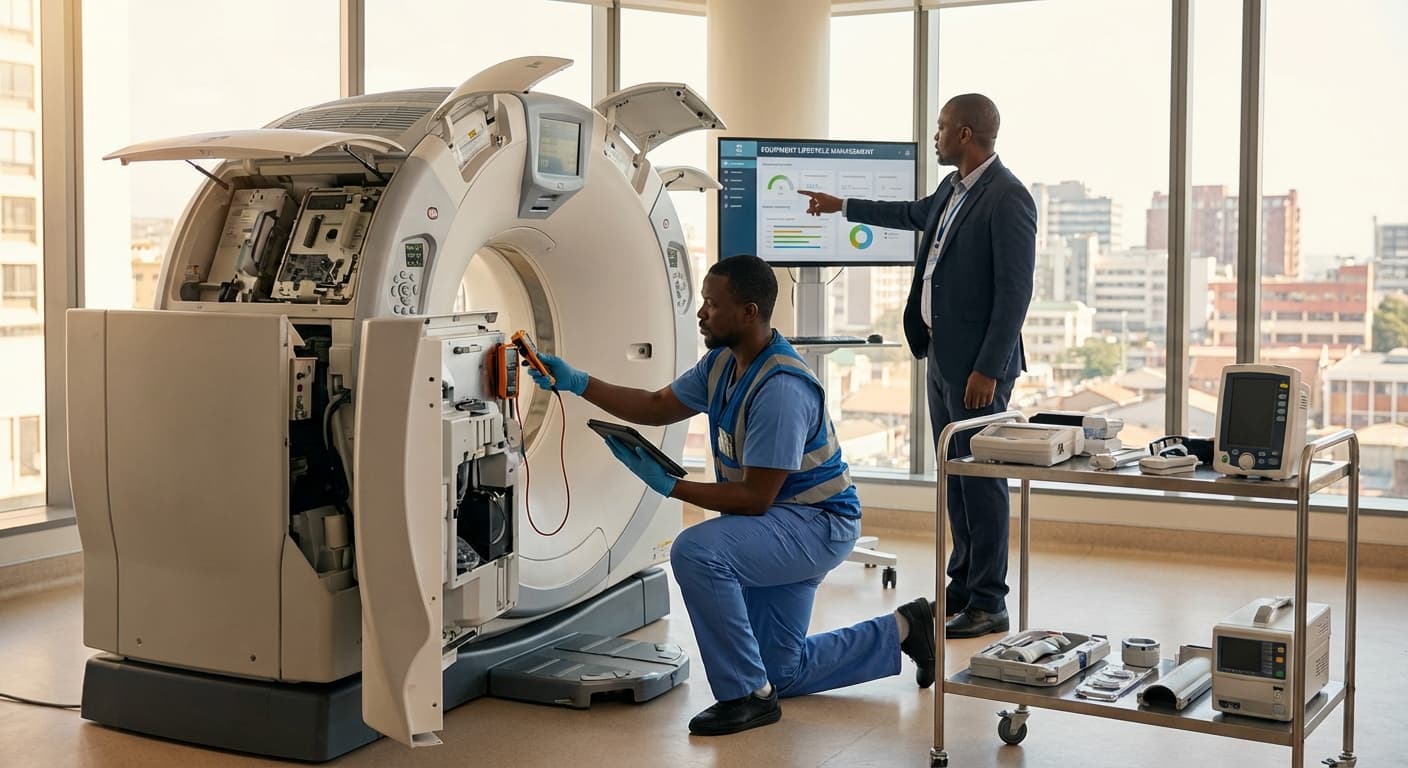
Equipment Replacement Planning & Obsolescence Strategy Service in Burundi
Engineering Excellence & Technical Support
Equipment Replacement Planning & Obsolescence Strategy Service High-standard technical execution following OEM protocols and local regulatory frameworks.
Proactive Obsolescence Forecasting & Risk Mitigation
Leveraging advanced analytics and historical data for the Burundian market, our service identifies critical equipment nearing end-of-life or facing obsolescence risks. We provide actionable foresight to mitigate operational disruptions and avoid costly emergency replacements, ensuring continuous service delivery.
Optimized Capital Expenditure (CAPEX) & Lifecycle Costing
Our strategy optimizes replacement cycles and investment decisions for vital infrastructure in Burundi. By conducting comprehensive lifecycle cost analyses, we pinpoint the most economically advantageous timing for upgrades and replacements, maximizing ROI and minimizing total cost of ownership for your assets.
Customized Replacement Roadmaps & Technology Integration
We develop tailored equipment replacement roadmaps aligned with Burundi's specific infrastructure needs and technological advancements. Our service facilitates the seamless integration of new technologies, ensuring compatibility, minimizing downtime, and enhancing overall operational efficiency and competitiveness.
What Is Equipment Replacement Planning & Obsolescence Strategy Service In Burundi?
Equipment Replacement Planning & Obsolescence Strategy Service in Burundi is a specialized consultancy offering aimed at optimizing the lifecycle management of industrial and technological assets within the Burundian context. This service systematically addresses the timely and cost-effective replacement of aging, underperforming, or obsolete equipment, and develops proactive strategies to mitigate the risks associated with technological advancements and the discontinuation of support for existing assets. It involves a comprehensive assessment of an organization's current equipment inventory, its operational criticality, remaining useful life, and the projected impact of technological obsolescence on business continuity and competitive advantage. The service encompasses financial analysis, risk assessment, and the development of a phased replacement roadmap, considering factors such as capital availability, market trends, regulatory compliance, and the availability of local support and spare parts.
| Who Needs This Service? | Typical Use Cases in Burundi | |
|---|---|---|
| Manufacturing Firms (e.g., food processing, textiles, light industry): Facing production line inefficiencies due to outdated machinery, increasing maintenance costs, and difficulty sourcing spare parts. | Production line modernization to improve efficiency, reduce waste, and enhance product quality. | Addressing bottlenecks caused by unreliable or slow-performing equipment. |
| Agricultural Cooperatives and Large-Scale Farms: Managing aging agricultural machinery (tractors, harvesters) and irrigation systems where parts and expertise are scarce. | Replacing outdated farm equipment with more fuel-efficient and technologically advanced models to increase yield and reduce operational costs. | Implementing modern irrigation technologies to combat water scarcity and improve crop management. |
| Mining and Extractive Industries: Dealing with heavy-duty equipment in remote locations, where maintenance, repairs, and replacement are logistically challenging and costly. | Phased replacement of critical extraction machinery (e.g., excavators, haul trucks) to maintain operational uptime and safety standards. | Upgrading processing equipment to meet evolving market demands for refined materials. |
| Energy and Utilities Providers (e.g., power generation, water treatment): Managing aging infrastructure with limited local support and a high risk of failure impacting public services. | Strategic replacement of generators, pumps, and distribution systems to ensure reliable service delivery. | Integrating newer, more sustainable energy technologies into existing grids. |
| Telecommunications Companies: Addressing the obsolescence of network hardware and infrastructure components as new technologies emerge. | Upgrading network infrastructure to support higher bandwidth and new communication standards. | Planning for the end-of-life of legacy network equipment and transitioning to modern solutions. |
| Healthcare Institutions: Managing vital medical equipment where failure can have life-threatening consequences and parts availability is crucial. | Developing replacement cycles for critical diagnostic and treatment equipment (e.g., X-ray machines, MRI scanners) to ensure patient safety and access to modern medical technologies. | Ensuring continued availability of spare parts and maintenance services for essential medical devices. |
| Government Agencies and Public Sector Organizations: Overseeing public infrastructure and operational assets where budgetary constraints and long-term planning are paramount. | Developing long-term asset management plans for public transportation, waste management equipment, and administrative technology. | Ensuring the sustainability and cost-effectiveness of public service delivery through optimized equipment lifecycles. |
Key Components of the Service
- Asset Inventory and Condition Assessment: Detailed cataloging of existing equipment, including age, condition, maintenance history, and performance metrics.
- Obsolescence Risk Analysis: Identification of equipment at risk of becoming obsolete due to technological evolution, vendor support discontinuation, or unavailability of critical components.
- Remaining Useful Life (RUL) Estimation: Application of predictive maintenance techniques and engineering analysis to forecast the operational lifespan of assets.
- Total Cost of Ownership (TCO) Modeling: Calculation of all costs associated with owning and operating equipment over its lifecycle, including acquisition, maintenance, repair, energy consumption, and disposal.
- Replacement Cost-Benefit Analysis: Evaluation of the financial and operational advantages of replacing equipment versus continuing to operate and maintain it.
- Strategic Sourcing and Procurement Strategy: Development of plans for acquiring new equipment, including vendor selection, contract negotiation, and integration into existing infrastructure.
- Disposal and Decommissioning Planning: Strategies for the environmentally responsible and cost-effective retirement of obsolete assets.
- Risk Mitigation Strategies: Development of contingency plans for dealing with unexpected equipment failures or the impact of obsolescence.
- Technology Roadmap Development: Alignment of equipment replacement cycles with evolving business needs and technological advancements.
Who Needs Equipment Replacement Planning & Obsolescence Strategy Service In Burundi?
Equipment replacement planning and obsolescence strategy services are crucial for organizations in Burundi to ensure operational continuity, cost-effectiveness, and technological relevance. These services help businesses proactively manage the lifecycle of their assets, mitigating risks associated with aging equipment, technological advancements, and potential supply chain disruptions. For Burundi's developing economy, where efficient resource allocation is paramount, such strategic planning is not a luxury but a necessity for sustainable growth and competitiveness.
| Target Customer Type | Key Departments Involved | Specific Needs/Challenges |
|---|---|---|
| Manufacturing Companies (e.g., food processing, textiles, light industry) | Production, Maintenance, Engineering, Finance, Procurement | Aging machinery leading to frequent breakdowns and reduced output; difficulty sourcing spare parts for older equipment; need to upgrade to more energy-efficient and automated systems to remain competitive. |
| Telecommunication Providers | Network Operations, Engineering, IT Infrastructure, Procurement, Finance | Rapid technological evolution making network infrastructure obsolete; high cost of network upgrades; ensuring service reliability and avoiding downtime due to equipment failure; managing spectrum licenses and associated hardware. |
| Energy and Utility Companies (Electricity, Water) | Operations, Maintenance, Engineering, Asset Management, Finance | Deterioration of power generation, transmission, and distribution infrastructure; need for modernization to improve efficiency and reduce losses; compliance with environmental regulations; ensuring continuous supply to the population. |
| Hospitals and Healthcare Providers | Biomedical Engineering, IT Department, Administration, Procurement, Finance | Medical equipment with short lifespans and high maintenance costs (e.g., imaging machines, laboratory equipment); need for advanced diagnostic and treatment technology; ensuring patient safety and quality of care; data security for medical records. |
| Mining and Natural Resource Extraction Companies | Operations, Maintenance, Engineering, Fleet Management, Safety, Procurement | Heavy-duty equipment (e.g., excavators, haul trucks) experiencing significant wear and tear; remote operational environments making maintenance and part sourcing challenging; safety concerns associated with aging machinery; need for specialized equipment for exploration and processing. |
| Government Ministries and Agencies (e.g., Public Works, Defense, IT) | Procurement, Asset Management, IT, Engineering, Department-Specific Operational Units | Publicly funded infrastructure with long service lives but requiring planned replacement; aging IT systems and vehicles; ensuring continuity of essential public services; managing large asset portfolios; budget constraints for capital expenditures. |
| Large Agricultural Enterprises | Farm Management, Maintenance, Operations, Procurement, Finance | Farm machinery (tractors, harvesters) requiring regular maintenance and eventual replacement; need for modern irrigation systems and processing equipment to improve yields and efficiency; susceptibility to spare part availability in rural areas. |
| Transportation and Logistics Companies | Fleet Management, Maintenance, Operations, Procurement, Finance | Aging vehicle fleets (trucks, buses) leading to increased maintenance costs and fuel inefficiency; need to adopt newer, more sustainable transportation technologies; ensuring compliance with transport regulations and safety standards. |
Target Customers & Departments for Equipment Replacement Planning & Obsolescence Strategy Service in Burundi
- Manufacturing Sector
- Telecommunications
- Energy and Utilities
- Healthcare Facilities
- Mining and Natural Resources
- Government and Public Services
- Large Agricultural Enterprises
- Transportation and Logistics
Equipment Replacement Planning & Obsolescence Strategy Service Process In Burundi
This document outlines the typical workflow for an Equipment Replacement Planning & Obsolescence Strategy Service offered to organizations in Burundi. The process is designed to be comprehensive, ensuring clients receive tailored strategies to manage their aging equipment effectively and mitigate risks associated with obsolescence.
| Stage | Key Activities | Deliverables | Burundi Context Considerations |
|---|---|---|---|
| Inquiry & Initial Consultation | Client expresses interest; preliminary discussion of needs, challenges, and objectives. | Initial understanding of client requirements. | Understanding local business environment, common equipment types, and existing infrastructure. |
| Needs Assessment & Data Gathering | Detailed inventory of existing equipment (age, condition, maintenance history, criticality). | Comprehensive equipment inventory report, identifying critical assets and potential obsolescence risks. | Logistical challenges for site visits; potential need for remote data collection tools; language considerations. |
| Analysis & Strategy Development | Assessment of obsolescence trends, vendor support lifecycle, cost-benefit analysis of replacement vs. repair, risk assessment (operational, financial, safety). | Obsolescence risk report, preliminary replacement/upgrade options, initial financial projections. | Availability of spare parts and local repair expertise; impact of import duties and regulations on new equipment. |
| Proposal & Recommendation Presentation | Presentation of findings and proposed strategy, including replacement timelines, budget estimates, and risk mitigation plans. | Formal proposal document outlining recommended equipment replacement strategy, including specific recommendations and justifications. | Cultural nuances in decision-making; need for clear and concise communication. |
| Approval & Contract Finalization | Client reviews proposal; negotiations; contract signing. | Signed service agreement detailing scope of work, timelines, costs, and responsibilities. | Familiarity with Burundian contract law and payment terms. |
| Implementation Planning | Detailed project plan for procurement, logistics, installation, and training. Identification of key stakeholders and responsibilities. | Detailed implementation project plan, including Gantt charts, resource allocation, and communication protocols. | Identifying reliable local logistics providers and potential customs clearance delays. |
| Execution & Procurement | Sourcing new equipment, managing procurement processes, and coordinating logistics for delivery. | Procured equipment ready for installation. | Navigating local procurement regulations and identifying trusted suppliers; potential for extended lead times. |
| Installation & Integration | On-site installation of new equipment, integration with existing systems, and initial testing. | Successfully installed and functional new equipment. | Availability of qualified local technicians for installation; power supply stability and infrastructure considerations. |
| Training & Knowledge Transfer | Training for client personnel on the operation, maintenance, and troubleshooting of new equipment. | Trained operational and maintenance staff. | Language barriers in training materials; need for practical, hands-on training. |
| Post-Implementation Review & Support | Assessment of the implementation process, initial performance monitoring, and addressing any immediate issues. | Post-implementation review report, initial performance metrics, and a plan for ongoing support. | Establishing clear channels for remote and on-site support. |
| Ongoing Monitoring & Strategy Refinement | Regular review of equipment performance, remaining lifespan, and evolving obsolescence risks. Periodic updates to the replacement strategy. | Updated obsolescence strategy, proactive maintenance plans, and revised replacement schedules. | Adapting to changes in local economic conditions, technological advancements, and regulatory landscape. |
Service Process Workflow
- Inquiry & Initial Consultation
- Needs Assessment & Data Gathering
- Analysis & Strategy Development
- Proposal & Recommendation Presentation
- Approval & Contract Finalization
- Implementation Planning
- Execution & Procurement
- Installation & Integration
- Training & Knowledge Transfer
- Post-Implementation Review & Support
- Ongoing Monitoring & Strategy Refinement
Equipment Replacement Planning & Obsolescence Strategy Service Cost In Burundi
Planning for equipment replacement and developing obsolescence strategies are critical for businesses in Burundi to maintain operational efficiency, avoid costly downtime, and manage technological advancements. The cost of these services in Burundi is influenced by several factors, leading to a range of potential pricing. These services typically involve assessing current equipment, forecasting future needs, identifying obsolescence risks, and recommending replacement schedules and strategic alternatives.
Pricing Factors in Burundi:
- Scope of Services: A comprehensive assessment covering all organizational assets will naturally cost more than a focused evaluation of a single department's equipment. This includes the depth of analysis, the number of asset types considered, and the complexity of the existing infrastructure.
- Client Size and Complexity: Larger organizations with more extensive and diverse equipment portfolios will require more time and resources for assessment and planning, thus increasing costs. The number of locations and the interdependencies between different equipment systems also play a role.
- Data Availability and Quality: The ease with which consultants can access reliable data on equipment inventory, maintenance history, performance metrics, and purchase dates significantly impacts the efficiency of the planning process. Poor or scattered data may require additional investigative work.
- Consultant Expertise and Reputation: Highly experienced consultants or specialized firms with a proven track record in asset management and obsolescence strategy will command higher fees. Their in-depth knowledge and established methodologies can lead to more effective and cost-saving outcomes.
- Duration and Intensity of Engagement: The length of the project, the frequency of on-site visits (if required), and the level of stakeholder involvement all contribute to the overall cost. Short-term, advisory-only engagements will be less expensive than long-term, project-based implementations.
- Technological Sophistication of Equipment: Assessing and planning for highly specialized or technologically advanced equipment might require consultants with specific domain expertise, potentially increasing costs.
- Reporting and Deliverable Requirements: The complexity and detail of the final reports, including detailed obsolescence forecasts, risk assessments, replacement roadmaps, and financial projections, will influence the time spent on documentation.
Estimated Cost Ranges in Burundian Francs (BIF):
It's important to note that these are estimates for Burundi, where consulting services may be less prevalent or standardized compared to more developed economies. Prices can vary significantly between local consultants, regional firms, and international experts who might be brought in for specific projects. The figures below are illustrative and assume a small to medium-sized enterprise (SME) context.
- Basic Equipment Audit & Initial Obsolescence Assessment (e.g., 1-2 weeks engagement): This might involve reviewing existing inventory and providing a high-level overview of potential obsolescence risks.
* **Range:** 1,500,000 BIF - 4,000,000 BIF
- Comprehensive Equipment Replacement Planning & Obsolescence Strategy (e.g., 4-8 weeks engagement): This would include detailed data gathering, analysis, risk assessment, forecasting, and the development of a phased replacement plan with budget considerations.
* **Range:** 5,000,000 BIF - 15,000,000 BIF
- Strategic Consulting & Implementation Support (e.g., ongoing advisory or project management): This could involve regular consultations, support in vendor selection for new equipment, or managing the implementation of the replacement strategy.
* **Range:** 1,000,000 BIF - 3,000,000 BIF per month (or project-based fees negotiated separately)
Note on Currency: All figures are presented in Burundian Francs (BIF). Exchange rates fluctuate, and the actual cost in USD or EUR would depend on the prevailing rate at the time of engagement.
| Service Type | Estimated Engagement Duration | Estimated Cost Range (BIF) |
|---|---|---|
| Basic Equipment Audit & Initial Obsolescence Assessment | 1-2 weeks | 1,500,000 - 4,000,000 |
| Comprehensive Equipment Replacement Planning & Obsolescence Strategy | 4-8 weeks | 5,000,000 - 15,000,000 |
| Strategic Consulting & Implementation Support (Monthly/Project-based) | Ongoing/Project-specific | 1,000,000 - 3,000,000 (per month for ongoing) |
Key Pricing Factors for Equipment Replacement Planning & Obsolescence Strategy Services in Burundi
- Scope of Services (breadth and depth of asset assessment)
- Client Size and Organizational Complexity
- Data Availability and Quality for Asset Management
- Consultant Expertise, Experience, and Reputation
- Duration and Intensity of the Consulting Engagement
- Technological Sophistication of the Equipment Portfolio
- Specific Reporting and Deliverable Requirements
Affordable Equipment Replacement Planning & Obsolescence Strategy Service Options
Our Affordable Equipment Replacement Planning & Obsolescence Strategy Service is designed to empower your organization with proactive, cost-effective solutions for managing aging and outdated equipment. We offer flexible value bundles and implement proven cost-saving strategies to minimize disruption, reduce expenditure, and maximize the lifespan and performance of your critical assets. Our service ensures you avoid costly emergency replacements and benefit from optimized upgrade cycles, ultimately improving operational efficiency and financial predictability.
| Value Bundle Name | Included Services | Key Cost-Saving Strategies | Target Organization Size/Complexity | Estimated Investment Range |
|---|---|---|---|---|
| Essentials Package | Basic Asset Inventory, Obsolescence Risk Identification, Basic Replacement Roadmap | Delayed Replacement of low-risk assets, bulk purchasing discounts for planned upgrades. | Small to Medium Businesses (SMBs) with standardized equipment. | $X,XXX - $X,XXX per year |
| Proactive Planning Suite | Comprehensive Asset Inventory & Assessment, Obsolescence Risk Analysis, Strategic Replacement Planning, Cost-Benefit Analysis, Vendor Negotiation Support | Optimized upgrade cycles, preventative maintenance, negotiated service contracts, phased rollout of new technology. | Medium to Large Enterprises with diverse equipment portfolios. | $XX,XXX - $XX,XXX per year |
| Strategic Lifecycle Management | All services in Proactive Planning Suite + Disposal & Recycling Management, Risk Mitigation & Business Continuity Planning, Ongoing Performance Monitoring | Maximizing ROI on asset lifecycle, reduced downtime through proactive maintenance, optimized disposal costs, leveraging residual value of old equipment. | Large Enterprises, organizations with highly specialized or critical equipment, multi-site operations. | Customized (based on asset volume and complexity) |
Key Service Components & Value Proposition
- Comprehensive Asset Inventory & Assessment: We meticulously catalog your existing equipment, evaluating its age, condition, performance, and remaining useful life.
- Obsolescence Risk Analysis: Identifying equipment at high risk of becoming obsolete due to technological advancements, component unavailability, or end-of-support.
- Strategic Replacement Planning: Developing phased replacement schedules aligned with your budget, operational needs, and technological roadmap.
- Cost-Benefit Analysis for Upgrades vs. Replacements: Evaluating the economic viability of extending the life of existing equipment through upgrades versus complete replacement.
- Vendor Negotiation & Procurement Support: Leveraging our expertise to secure competitive pricing for new equipment and maintenance contracts.
- Disposal & Recycling Management: Ensuring environmentally responsible and cost-effective disposal of retired assets.
- Risk Mitigation & Business Continuity: Minimizing the impact of unexpected equipment failures and ensuring uninterrupted operations.
Verified Providers In Burundi
When seeking healthcare services in Burundi, especially those involving specialized financial assistance or insurance, it is paramount to partner with verified providers. Franance Health stands out as a leading entity that not only verifies healthcare facilities but also educates and empowers individuals to make informed decisions about their medical care and financial planning. Their rigorous credentialing process ensures that partnered providers meet high standards of quality, ethics, and operational efficiency. By choosing a provider accredited by Franance Health, patients gain access to a network of reliable and trustworthy healthcare professionals, minimizing risks associated with substandard care or opaque financial practices. Franance Health's commitment to transparency and patient advocacy makes their credentialed providers the best choice for accessible, quality, and financially sound healthcare in Burundi.
| Provider Type | Franance Health Verification Benefits | Why it's the Best Choice |
|---|---|---|
| Hospitals & Clinics | Certified for quality medical equipment, skilled staff, and patient safety protocols. | Guarantees access to well-equipped facilities with competent medical teams, ensuring effective treatment and recovery. |
| Specialist Medical Centers | Verified for specific expertise, advanced diagnostic tools, and ethical treatment approaches. | Provides confidence in receiving specialized care from experts who utilize cutting-edge technology and adhere to best medical practices. |
| Pharmacies | Screened for authenticity of medications, proper storage, and dispensing practices. | Ensures patients receive genuine, safe, and correctly prescribed medications, preventing counterfeit or ineffective drugs. |
| Diagnostic Laboratories | Audited for accuracy of test results, calibrated equipment, and qualified technicians. | Reliable and precise diagnostic outcomes are crucial for accurate diagnoses and effective treatment plans. |
Why Franance Health Credentials Matter:
- Ensures adherence to strict quality and safety standards.
- Promotes ethical practices and patient-centered care.
- Facilitates transparent financial dealings and billing.
- Provides access to a trusted network of healthcare professionals.
- Empowers patients with informed decision-making capabilities.
- Reduces risks of fraud or substandard medical services.
Scope Of Work For Equipment Replacement Planning & Obsolescence Strategy Service
This Scope of Work (SOW) outlines the services to be provided for Equipment Replacement Planning and Obsolescence Strategy. The objective is to develop a comprehensive strategy that minimizes operational risks, optimizes capital expenditures, and ensures the continued functionality of critical equipment throughout its lifecycle. The services will encompass an assessment of existing equipment, identification of obsolescence risks, development of replacement strategies, and the creation of a long-term roadmap. Technical deliverables will include detailed reports, databases, and strategic plans, adhering to established industry standards and best practices.
| Deliverable Name | Description | Format | Standard Specifications/Key Content |
|---|---|---|---|
| Equipment Inventory & Condition Assessment Report | Detailed analysis of all relevant equipment, including age, condition, maintenance history, and operational performance. | PDF Report, Spreadsheet (e.g., Excel, CSV) | Asset ID, Manufacturer, Model, Serial Number, Installation Date, Last Maintenance Date, Maintenance Costs, Performance Metrics, Condition Rating (e.g., Excellent, Good, Fair, Poor), Operational Hours/Cycles. |
| Obsolescence Risk Assessment Report | Identification and prioritization of equipment at risk of obsolescence due to age, lack of spare parts, vendor support, or technology evolution. | PDF Report, Presentation Slides (e.g., PowerPoint) | Obsolescence Score (quantitative/qualitative), Risk Level (High, Medium, Low), Predicted Obsolescence Date, Impact on Operations, Recommended Mitigation Actions. |
| Equipment Replacement Strategy Plan | Strategic recommendations for phased equipment replacement, including budget allocation, procurement timelines, and technology considerations. | PDF Report, Gantt Chart (for timelines) | Prioritized Replacement List, Recommended Replacement Technologies, Cost-Benefit Analysis for each asset/group, Justification for Replacement Timing, Potential Vendors/Suppliers, Training Requirements. |
| Obsolescence Management Roadmap | A long-term strategic plan (e.g., 5-10 years) outlining proactive measures to manage equipment obsolescence and ensure continuity of operations. | PDF Report, Visual Roadmap (e.g., infographic-style document) | Key Milestones, Strategic Initiatives (e.g., standardization, redesign, strategic sourcing), Budgetary Projections, Performance Indicators (KPIs) for Obsolescence Management. |
| Equipment Database | A comprehensive, structured database containing all relevant equipment information for ongoing management. | Relational Database (e.g., SQL Server, PostgreSQL), Spreadsheet (for smaller datasets) | All data points from Inventory & Condition Assessment, cross-referenced with Obsolescence Risk and Replacement Strategy information. |
| Stakeholder Workshop Summary | Documentation of key discussions, decisions, and action items from workshops involving relevant stakeholders. | PDF Report, Minutes of Meeting | Date of Workshop, Attendees, Agenda Items Discussed, Key Decisions Made, Assigned Action Items and Owners. |
Key Objectives of the Service
- Assess current equipment inventory and condition.
- Identify and quantify obsolescence risks for critical assets.
- Develop a data-driven equipment replacement strategy.
- Formulate a long-term obsolescence management roadmap.
- Optimize capital investment planning for equipment replacement.
- Minimize downtime and operational disruptions due to equipment failure or obsolescence.
- Ensure compliance with relevant industry regulations and standards.
Service Level Agreement For Equipment Replacement Planning & Obsolescence Strategy Service
This Service Level Agreement (SLA) outlines the performance standards and commitments for the Equipment Replacement Planning & Obsolescence Strategy Service. It defines response times for incidents and requests, and uptime guarantees for the service platform.
| Service Component | Response Time Target (Business Hours) | Resolution Time Target (Business Hours) | Uptime Guarantee |
|---|---|---|---|
| Critical Incident (Service Outage) | 1 Hour | 4 Business Hours | 99.9% Monthly |
| High Priority Incident (Major Functionality Impaired) | 2 Business Hours | 8 Business Hours | 99.9% Monthly |
| Medium Priority Incident (Minor Functionality Impaired) | 4 Business Hours | 24 Business Hours | 99.9% Monthly |
| Low Priority Incident (Cosmetic or Informational Issue) | 8 Business Hours | 48 Business Hours | 99.9% Monthly |
| Request for Information/Reporting | 2 Business Days | 5 Business Days | N/A (Response time only) |
| Request for Strategy Review/Consultation | 3 Business Days | 10 Business Days | N/A (Response time only) |
| Platform Availability (for all service components) | N/A | N/A | 99.9% Monthly |
Key Service Components
- Equipment Inventory Management and Analysis
- Obsolescence Risk Assessment and Forecasting
- Replacement Planning and Budgeting Support
- Technology Roadmap Integration
- Proactive Alerting and Notification System
Frequently Asked Questions

Ready when you are
Let's scope your Equipment Replacement Planning & Obsolescence Strategy Service in Burundi project in Burundi.

Scaling healthcare logistics and technical systems across the entire continent.