
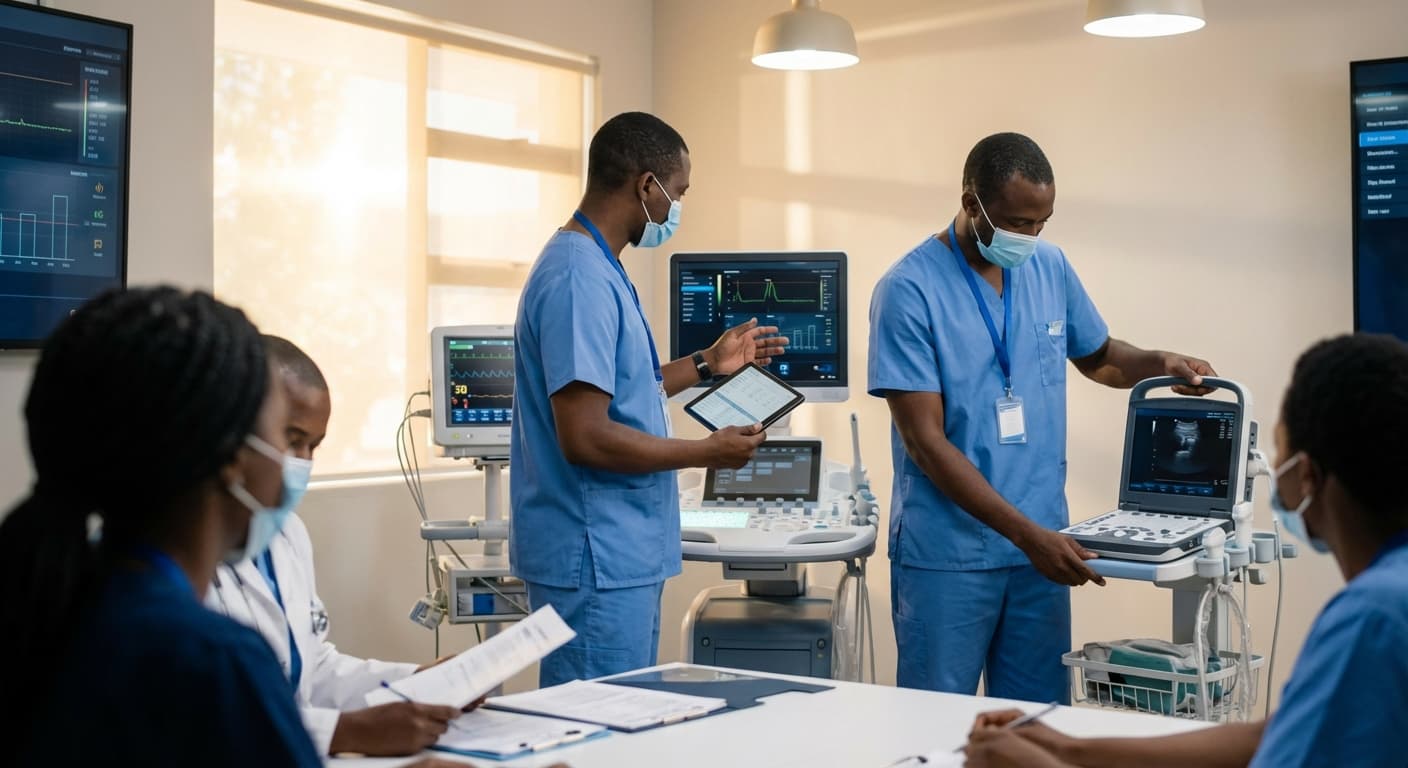
Clinical Needs Assessment for Medical Equipment in Burundi
Engineering Excellence & Technical Support
Clinical Needs Assessment for Medical Equipment High-standard technical execution following OEM protocols and local regulatory frameworks.
Data-Driven Equipment Prioritization
Leveraging real-time health data from district health offices to identify critical equipment gaps based on disease burden, patient demographics, and existing resource utilization. This ensures procurement aligns directly with the most pressing clinical needs.
Infrastructure & Sustainability Assessment
Conducting thorough assessments of existing healthcare facility infrastructure, including power availability, water supply, and technical support capacity. This guarantees that selected medical equipment is not only technologically appropriate but also sustainable and maintainable in the local context.
Healthcare Worker Training Needs Analysis
Integrating a comprehensive evaluation of healthcare worker skill sets and training requirements alongside equipment needs. This ensures that newly acquired equipment is accompanied by targeted training programs to maximize its effective utilization and improve patient care outcomes.
What Is Clinical Needs Assessment For Medical Equipment In Burundi?
A Clinical Needs Assessment (CNA) for medical equipment in Burundi is a systematic evaluation process designed to identify, quantify, and prioritize the medical equipment required to meet the healthcare needs of specific populations or facilities within the country. This service involves a comprehensive review of existing healthcare infrastructure, current clinical practices, disease prevalence, patient demographics, and available resources. The objective is to ensure that medical equipment procured is appropriate, functional, sustainable, and aligned with national health policies and strategic objectives. The assessment considers factors such as technological suitability, cost-effectiveness, user training requirements, maintenance capacity, and the integration of new equipment into existing workflows. This process is crucial for optimizing resource allocation, preventing the acquisition of obsolete or unsuitable equipment, and ultimately improving the quality and accessibility of healthcare services in Burundi.
| Use Case Category | Specific Application | Clinical Need Addressed | Equipment Type Example |
|---|---|---|---|
| Primary Healthcare Services | Rural Health Posts | Basic diagnostic and treatment capabilities for common ailments. | Manual sphygmomanometers, stethoscopes, diagnostic scales, basic wound care kits, non-refrigerated vaccine carriers. |
| Secondary Healthcare Services | District Hospitals | Enhanced diagnostic and therapeutic services, including emergency care and management of moderate to severe conditions. | Portable X-ray machines, basic ultrasound devices, electrocardiogram (ECG) machines, portable oxygen concentrators, laboratory analysers (hematology, biochemistry). |
| Tertiary Healthcare Services | Referral Hospitals (e.g., Centre Hospitalier Universitaire de Kamenge) | Specialized diagnostic, therapeutic, and surgical interventions for complex and critical conditions. | CT scanners, MRI machines, advanced surgical equipment (laparoscopic towers), intensive care unit (ICU) equipment (ventilators, patient monitors), advanced laboratory equipment. |
| Disease-Specific Programs | Tuberculosis (TB) Control Programs | Effective diagnosis, treatment monitoring, and prevention of TB spread. | Sputum microscopes, GeneXpert MTB/RIF systems, chest X-ray units, personal protective equipment (PPE). |
| Disease-Specific Programs | Malaria Control Programs | Accurate diagnosis and treatment of malaria. | Microscopes for malaria smear analysis, rapid diagnostic test (RDT) kits, presumptive treatment supplies. |
| Maternal and Child Health (MCH) | Maternity Wards and Neonatal Units | Improved outcomes for mothers and newborns, reduction of preventable mortality. | Maternity beds with adjustable positions, fetal Doppler, radiant warmers, phototherapy units, neonatal incubators, basic resuscitation equipment. |
| Emergency and Trauma Care | Emergency Departments | Stabilization and initial management of acute medical and traumatic emergencies. | Defibrillators, trauma resuscitation kits, suction machines, emergency trolleys, splinting materials. |
| Laboratory and Diagnostics | Central and Peripheral Laboratories | Accurate and timely laboratory testing for disease diagnosis and monitoring. | Microscopes, centrifuges, incubators, refrigerators/freezers for sample storage, automated immunoassay analysers, clinical chemistry analysers. |
| Infectious Disease Surveillance and Response | National and Regional Public Health Laboratories | Capacity for outbreak detection, diagnosis, and epidemiological monitoring. | PCR machines, biosafety cabinets, serological testing equipment, sequencing platforms (for advanced surveillance). |
Key Stakeholders Requiring Clinical Needs Assessment for Medical Equipment in Burundi
- Ministry of Public Health and the Fight against AIDS (MTSPPA): For national health planning, policy formulation, and resource allocation.
- Regional and District Health Authorities: To address specific needs within their geographical areas and manage distributed healthcare facilities.
- Public Hospitals and Health Centers: To identify deficiencies in their current equipment stock and plan for upgrades or new acquisitions.
- Non-Governmental Organizations (NGOs) and International Aid Organizations: Involved in healthcare delivery or infrastructure development in Burundi, requiring evidence-based equipment planning.
- Healthcare Providers (Clinicians, Technicians, Nurses): Their input is vital for understanding practical usability, training needs, and workflow integration.
- Medical Equipment Suppliers and Manufacturers: To understand market demands and tailor their offerings to Burundi's specific requirements.
- Research Institutions: For understanding disease patterns and informing future equipment needs for diagnostic and therapeutic advancements.
Who Needs Clinical Needs Assessment For Medical Equipment In Burundi?
A clinical needs assessment for medical equipment in Burundi is crucial for ensuring that healthcare facilities have the right tools to provide effective patient care. This process identifies existing gaps, prioritizes essential equipment, and facilitates strategic procurement and deployment. The primary beneficiaries are healthcare providers and patients, but the assessment itself targets various stakeholders within the Burundian health sector.
| Target Customer/Department | Primary Role in Needs Assessment | Key Equipment Focus Areas |
|---|---|---|
| Ministry of Public Health and the Fight Against AIDS | Policy formulation, resource allocation, national planning | National equipment inventory, strategic procurement, essential drug lists |
| Regional Health Directorates | Regional oversight, coordination of services, resource management | Regional equipment gaps, local procurement strategies, training needs |
| District Hospitals | Mid-level referral, comprehensive patient care | Diagnostic tools, surgical equipment, emergency care supplies, laboratory reagents |
| Health Centers (Health Posts) | Primary healthcare, community outreach | Basic diagnostic tools, essential medicines, maternal and child health equipment |
| Referral Hospitals | Specialized care, tertiary services, training | Advanced diagnostic imaging, specialized surgical equipment, critical care units |
| Maternal and Child Health Departments | Focus on reproductive health and pediatrics | Incubators, delivery tables, ultrasound for obstetrics, pediatric examination tools |
| Surgical Departments | Surgical interventions | Surgical instruments, anesthesia machines, sterilization equipment, imaging for surgical planning |
| Emergency and Trauma Units | Acute care and critical patient management | Resuscitation equipment, vital signs monitors, defibrillators, trauma kits |
| Laboratory Departments | Diagnostic testing | Microscopes, centrifuges, analyzers for blood/urine/stool, PCR machines (at higher levels) |
| NGOs and International Organizations | Funding, technical support, project implementation | Alignment with their project goals, identification of shared priorities |
| Healthcare Professionals | End-users, provide direct feedback on equipment utility | Usability, appropriateness for local context, training requirements |
| Biomedical Engineering | Equipment maintenance and sustainability | Availability of spare parts, training for maintenance, power infrastructure assessment |
Target Customers & Departments for Clinical Needs Assessment in Burundi
- Ministry of Public Health and the Fight Against AIDS (Ministry of Health): This is the overarching government body responsible for healthcare policy, planning, and resource allocation. They are key decision-makers and beneficiaries of the assessment's findings for national health strategies.
- Regional Health Directorates: These administrative bodies oversee healthcare services within specific provinces or regions. The assessment helps them understand and address the unique equipment needs of their respective areas.
- District Hospitals: These are the primary referral centers for local health centers. They require a comprehensive range of equipment for diagnosis, treatment, and emergency care. The assessment helps ensure they are adequately equipped to handle complex cases.
- Health Centers (Health Posts): These are the first point of contact for most of the population, providing primary healthcare services. The assessment identifies their essential equipment needs for basic curative, preventive, and maternal/child health services.
- Referral Hospitals (National/University Hospitals): These are the highest level of care, often with specialized departments. The assessment guides the acquisition of advanced diagnostic, surgical, and therapeutic equipment to support specialized medical services and training.
- Specialized Medical Units/Departments (within hospitals):
- Maternal and Child Health Departments: Focus on equipment for antenatal care, labor and delivery, neonatal care (e.g., incubators, phototherapy units), and pediatric services.
- Surgical Departments: Require a range of surgical instruments, anesthesia machines, operating tables, and sterilization equipment.
- Emergency and Trauma Units: Need equipment for resuscitation, vital signs monitoring, wound management, and stabilization of critically ill patients.
- Diagnostic Imaging Departments (Radiology, Ultrasound): Require X-ray machines, ultrasound scanners, and potentially CT/MRI scanners at higher-level facilities.
- Laboratory Departments: Need equipment for basic and advanced diagnostic testing (e.g., microscopes, centrifuges, analyzers).
- Cardiology and Pulmonology Departments: May require ECG machines, spirometers, and other specialized monitoring devices.
- Oncology Units: Need equipment for diagnosis, treatment (e.g., chemotherapy administration), and supportive care.
- NGOs and International Organizations Involved in Health: Many non-governmental organizations and international partners contribute to the Burundian health sector through funding, technical support, and direct service delivery. They are key stakeholders and collaborators in needs assessments.
- Healthcare Professionals (Doctors, Nurses, Technicians): The end-users of the equipment. Their input and experience are vital for accurately identifying needs and ensuring the usability of procured items.
- Biomedical Engineering Departments/Personnel: Responsible for the maintenance, repair, and calibration of medical equipment. Their involvement ensures the sustainability of the equipment post-acquisition.
Clinical Needs Assessment For Medical Equipment Process In Burundi
This document outlines the workflow for a Clinical Needs Assessment for Medical Equipment in Burundi, detailing the process from the initial inquiry to the final execution and integration of the acquired equipment. The assessment is crucial for ensuring that healthcare facilities are equipped with appropriate, functional, and well-maintained medical devices to meet the specific needs of the patient population and healthcare providers. The process is designed to be systematic, transparent, and collaborative, involving various stakeholders to guarantee optimal outcomes.
| Stage | Key Output/Deliverable | Primary Responsibility |
|---|---|---|
| Stage 1: Inquiry and Initial Consultation | Clarified request, identified stakeholders, preliminary assessment team | Requesting Facility, Ministry of Health/Assessing Body |
| Stage 2: Pre-Assessment Planning and Scoping | Detailed assessment plan, objectives, scope, methodology, logistics | Assessment Team Lead, Ministry of Health |
| Stage 3: Clinical Needs Assessment Execution | Collected on-site data, interviews, equipment inventory, condition reports | Assessment Team (Clinical Experts, Biomedical Engineers) |
| Stage 4: Data Analysis and Report Generation | Needs assessment report, prioritized equipment list, technical specifications, cost estimates | Assessment Team Lead, Ministry of Health |
| Stage 5: Procurement and Acquisition | Procured and delivered medical equipment meeting specifications | Procurement Unit, Ministry of Health/Implementing Partner |
| Stage 6: Installation, Training, and Commissioning | Installed, calibrated, and commissioned equipment; trained users | Biomedical Engineering Team, Suppliers, Healthcare Facility Staff |
| Stage 7: Monitoring, Evaluation, and Maintenance | Ongoing equipment performance, maintenance records, impact reports | Healthcare Facility Management, Biomedical Engineering Department, Ministry of Health |
Workflow Stages and Key Activities
- {"title":"Stage 1: Inquiry and Initial Consultation","substeps":["Reception of Inquiry: A designated authority (e.g., Ministry of Health department, implementing partner) receives the request.","Initial Needs Clarification: A preliminary discussion to understand the general nature of the request (e.g., new facility, equipment upgrade, specific department needs).","Stakeholder Identification: Identifying key individuals and departments involved at both the requesting facility and the assessing body.","Formation of Assessment Team: Assembling a preliminary team with relevant expertise (clinical, biomedical engineering, procurement)."],"description":"The process begins with a formal or informal inquiry from a healthcare facility, regional health office, or Ministry of Health regarding a need for medical equipment assessment or acquisition. This stage focuses on understanding the scope and preliminary requirements."}
- {"title":"Stage 2: Pre-Assessment Planning and Scoping","substeps":["Detailed Information Gathering: Requesting existing facility documentation (e.g., infrastructure plans, current equipment inventory, patient load data, disease burden statistics).","Defining Assessment Objectives: Clearly stating what the assessment aims to achieve (e.g., identify critical equipment gaps, prioritize needs, develop a procurement list, assess maintenance capacity).","Scope Definition: Specifying the type of equipment to be assessed (e.g., diagnostic, therapeutic, surgical, laboratory), the departments or units involved, and the geographical coverage.","Methodology Development: Outlining the assessment methods to be used (e.g., site visits, interviews, checklists, literature review).","Logistics and Scheduling: Planning for site visits, travel arrangements, and scheduling meetings with relevant personnel."],"description":"This stage involves detailed planning and defining the boundaries of the assessment to ensure it is focused, efficient, and addresses the core requirements."}
- {"title":"Stage 3: Clinical Needs Assessment Execution","substeps":["Site Visits and Facility Evaluation: Conducting thorough inspections of healthcare facilities, including infrastructure, power supply, water access, and space availability.","Clinical Staff Interviews: Engaging with doctors, nurses, technicians, and administrators to understand their current challenges, workflow, and unmet equipment needs.","Equipment Inventory and Condition Assessment: Documenting existing equipment, its functionality, age, maintenance history, and current condition.","Patient Care Pathway Analysis: Mapping patient journeys through various departments to identify critical equipment touchpoints and potential bottlenecks.","Disease Burden and Service Profile Review: Analyzing local epidemiological data and the range of services offered to determine appropriate equipment levels and types.","Technological Appropriateness Assessment: Evaluating the suitability of proposed equipment considering local technical capacity, user training, and sustainability.","Maintenance and Support Capacity Assessment: Evaluating the availability of trained personnel, spare parts, and service contracts for ongoing equipment maintenance."],"description":"This is the core of the process where data is collected and analyzed on-site to determine the specific equipment needs."}
- {"title":"Stage 4: Data Analysis and Report Generation","substeps":["Data Consolidation and Verification: Compiling all collected information and cross-referencing for accuracy.","Gap Analysis: Identifying discrepancies between existing equipment and the required equipment based on clinical needs and service delivery standards.","Prioritization of Needs: Ranking equipment needs based on criticality, impact on patient outcomes, cost-effectiveness, and feasibility.","Equipment Specification Development: Defining detailed technical specifications for each required piece of equipment.","Cost Estimation: Estimating the procurement, installation, training, and maintenance costs for the identified equipment.","Report Writing: Compiling a comprehensive report detailing the assessment findings, identified needs, prioritized list of equipment, technical specifications, and cost estimates.","Stakeholder Review: Presenting the draft report to key stakeholders for feedback and validation."],"description":"The collected data is systematically analyzed to identify gaps, prioritize needs, and formulate recommendations."}
- {"title":"Stage 5: Procurement and Acquisition","substeps":["Procurement Planning: Developing a detailed procurement plan based on the prioritized list and budget.","Tendering and Supplier Selection: Following established procurement procedures to solicit bids from qualified suppliers and select the best offer.","Contract Negotiation and Award: Negotiating terms and conditions and awarding contracts to suppliers.","Order Placement and Payment: Placing orders and processing payments according to contractual agreements.","Quality Assurance and Inspection: Ensuring the procured equipment meets specifications through pre-shipment and post-delivery inspections."],"description":"Based on the approved needs assessment report, the process moves to acquiring the necessary medical equipment."}
- {"title":"Stage 6: Installation, Training, and Commissioning","substeps":["Logistics and Delivery: Arranging for the safe transportation and delivery of equipment to the healthcare facilities.","Installation and Setup: Installing and configuring the equipment according to manufacturer guidelines and facility requirements.","User Training: Providing comprehensive training to healthcare professionals on the operation, maintenance, and troubleshooting of the new equipment.","Calibration and Testing: Calibrating and rigorously testing the equipment to ensure accuracy and functionality.","Commissioning: Officially declaring the equipment ready for use after successful installation, training, and testing."],"description":"This stage ensures that the newly acquired equipment is correctly installed, functional, and that users are adequately trained."}
- {"title":"Stage 7: Monitoring, Evaluation, and Maintenance","substeps":["Post-Installation Monitoring: Regularly checking the performance and usage of the equipment.","User Feedback Collection: Gathering feedback from users on the equipment's performance and any challenges encountered.","Routine Maintenance: Implementing planned preventive maintenance schedules.","Corrective Maintenance and Repairs: Addressing any malfunctions or breakdowns promptly.","Impact Evaluation: Assessing the impact of the new equipment on patient care, service delivery, and healthcare outcomes.","Equipment Lifecycle Management: Planning for eventual replacement or upgrading of equipment as it ages or becomes obsolete."],"description":"This ongoing stage ensures the sustained utility and effectiveness of the acquired medical equipment."}
Clinical Needs Assessment For Medical Equipment Cost In Burundi
This document presents a clinical needs assessment for medical equipment costs in Burundi, focusing on pricing factors and ranges in the local currency, the Burundian Franc (BIF). Accurate cost estimations are crucial for healthcare facility planning, budget allocation, and ensuring equitable access to essential medical technologies. The assessment considers various factors that influence the final price of medical equipment, from initial purchase and import to installation, training, and ongoing maintenance.
| Equipment Category | Estimated Price Range (BIF) | Notes/Examples |
|---|---|---|
| Basic Diagnostic Tools | 500,000 - 5,000,000 BIF | Stethoscopes, blood pressure monitors, thermometers, basic examination lamps. |
| Basic Laboratory Equipment | 1,000,000 - 15,000,000 BIF | Microscopes, centrifuges, basic hematology analyzers, urine analyzers. |
| Patient Monitoring Systems (Basic) | 2,000,000 - 10,000,000 BIF | Vital signs monitors for general wards. |
| Surgical Instruments (Sets) | 3,000,000 - 20,000,000 BIF | General surgery instrument sets, specialized instrument sets (e.g., orthopedic). |
| X-ray Machines (Fixed) | 25,000,000 - 100,000,000 BIF | Conventional fixed X-ray units. Digital radiography systems will be significantly higher. |
| Ultrasound Machines (Basic/Portable) | 10,000,000 - 40,000,000 BIF | Entry-level to mid-range portable or basic fixed ultrasound units. |
| Anesthesia Machines | 15,000,000 - 70,000,000 BIF | Basic to semi-modern anesthesia workstations. |
| Sterilizers (Autoclaves) | 5,000,000 - 30,000,000 BIF | Tabletop to medium-sized autoclaves for sterilization of instruments. |
| Hospital Beds (Manual) | 300,000 - 1,000,000 BIF | Basic manual hospital beds. |
| Hospital Beds (Electric) | 1,500,000 - 5,000,000 BIF | Electric adjustable hospital beds. |
| Refurbished/Used Equipment (General) | 30% - 70% of new cost | Price varies greatly depending on age, condition, and original cost. Requires thorough due diligence. |
Key Pricing Factors for Medical Equipment in Burundi
- Equipment Type and Complexity: Basic diagnostic tools will naturally be less expensive than advanced surgical or imaging equipment.
- Brand and Manufacturer Reputation: Established international brands often command higher prices due to perceived quality and reliability.
- New vs. Refurbished/Used: Refurbished or used equipment can offer significant cost savings but requires careful inspection for functionality and lifespan.
- Import Duties and Taxes: Burundi imposes import duties and taxes on medical equipment, which vary based on the item's classification and origin.
- Transportation and Logistics: Shipping costs, insurance, and local transportation from the port to the final destination add to the overall price.
- Currency Exchange Rates: Fluctuations in the BIF against major currencies (USD, EUR) can significantly impact the cost of imported equipment.
- Supplier Markup and Distribution Fees: Local distributors and suppliers add their markups to cover operational costs and profit margins.
- Installation and Commissioning: Some equipment requires specialized installation and calibration by trained technicians, incurring additional fees.
- Training and Capacity Building: The cost of training healthcare professionals to operate and maintain new equipment is an essential consideration.
- Warranty and After-Sales Service: The duration and comprehensiveness of the warranty, as well as the availability of reliable after-sales support, can influence the initial price.
- Local Availability of Spare Parts: The ease of access and cost of replacement parts for ongoing maintenance is a critical long-term factor.
- Volume Discounts: For bulk purchases by government health ministries or large NGOs, discounts may be negotiated.
Affordable Clinical Needs Assessment For Medical Equipment Options
This document outlines an approach to conducting an affordable clinical needs assessment for medical equipment, focusing on value bundles and cost-saving strategies. A thorough needs assessment is crucial for ensuring that acquired medical equipment directly addresses patient care requirements, operational efficiencies, and budgetary constraints. By understanding the core clinical needs, institutions can move beyond simple equipment acquisition and instead focus on obtaining solutions that deliver maximum value and long-term savings. This involves a strategic examination of current practices, future projections, and innovative purchasing models.
| Strategy | Description | Cost-Saving Potential | Considerations |
|---|---|---|---|
| Value Bundling | Acquiring a package of related equipment, services, and training from a single vendor, often at a negotiated discount. This can include equipment, service contracts, consumables, and even staff training. | Significant: Reduced per-unit cost, simplified procurement, streamlined maintenance, bulk discounts on consumables, bundled training costs. | Ensure the bundle genuinely meets all identified needs. Compare bundled pricing against individual component costs. Negotiate terms and service level agreements (SLAs) carefully. |
| Leasing vs. Purchasing | Exploring equipment leasing options as an alternative to outright purchase. Leases can offer lower upfront costs and predictable monthly payments, often including maintenance and upgrades. | Moderate to High: Lower capital outlay, predictable budgeting, access to newer technology, inclusion of maintenance in lease payments, avoidance of depreciation concerns. | Compare lease terms (duration, mileage/usage limits, buyout options) with purchase costs over the equipment's lifecycle. Understand end-of-lease responsibilities. |
| Refurbished or Pre-Owned Equipment | Purchasing certified refurbished or pre-owned medical equipment from reputable vendors. These devices are typically restored to full working order with warranties. | High: Substantially lower initial purchase price compared to new equipment. | Thoroughly vet the vendor and their refurbishment process. Ensure adequate warranties and service availability. Verify compatibility with existing infrastructure and workflows. |
| Consignment or Loaner Programs | Arranging for vendors to supply equipment on consignment (pay per use) or providing loaner equipment during periods of repair or upgrade. | Variable: Reduces the need for large upfront investments in infrequently used equipment. Ensures operational continuity. | Clearly define usage terms, payment structures, and return policies. Ensure sufficient usage to justify consignment over outright purchase. |
| Group Purchasing Organizations (GPOs) | Leveraging the purchasing power of GPOs to negotiate better prices on medical equipment and supplies. | Moderate: Access to pre-negotiated discounts from multiple vendors. | Evaluate GPO membership fees and the breadth of contracts relevant to your specific needs. Ensure the GPO's offerings align with your organization's purchasing volume. |
| Standardization and Interoperability | Standardizing on specific equipment models or brands to simplify training, maintenance, and parts management. Prioritizing equipment with robust interoperability features. | Moderate: Reduced training costs, streamlined maintenance, economies of scale for parts and consumables, improved data integration. | Ensure standardization doesn't stifle innovation or limit options unnecessarily. Assess interoperability requirements for IT and data management systems. |
| Outcome-Based Purchasing | Exploring agreements where payment or pricing is linked to achieving specific clinical outcomes or performance metrics. | Potentially High: Aligns vendor incentives with desired patient care results, driving efficiency and innovation. | Requires robust data collection and analysis capabilities. Clearly define measurable outcomes and performance metrics. |
Key Components of an Affordable Clinical Needs Assessment
- Define Scope and Objectives: Clearly outline what equipment categories and clinical areas are being assessed. Set measurable objectives for the assessment, such as identifying cost-saving opportunities, improving patient outcomes, or enhancing staff efficiency.
- Engage Stakeholders: Involve clinical staff (doctors, nurses, technicians), IT departments, biomedical engineering, procurement, finance, and administration. Their input is vital for understanding real-world needs and potential challenges.
- Analyze Current Equipment Inventory: Conduct a comprehensive audit of existing equipment, including its age, condition, maintenance history, utilization rates, and associated costs.
- Identify Clinical Gaps and Future Needs: Determine areas where current equipment is insufficient, outdated, or absent. Project future patient volume, service offerings, and technological advancements that may influence equipment requirements.
- Research Market Trends and Technologies: Stay abreast of new medical equipment innovations, emerging technologies, and evolving clinical best practices.
- Develop Functional and Technical Specifications: Based on identified needs, create detailed specifications that outline the essential features, performance requirements, and technical capabilities of desired equipment.
- Evaluate Vendor Offerings: Assess potential vendors based on product quality, reliability, support services, training, and pricing. Explore various acquisition models.
- Calculate Total Cost of Ownership (TCO): Look beyond the initial purchase price to include installation, training, maintenance, service contracts, consumables, energy consumption, and eventual disposal costs.
- Prioritize Equipment Based on Impact and ROI: Rank equipment needs based on their potential to improve patient care, enhance operational efficiency, and deliver a strong return on investment.
Verified Providers In Burundi
In the pursuit of reliable healthcare solutions in Burundi, identifying verified providers is paramount. Franance Health stands out as a leading entity, distinguished by its rigorous credentialing processes and commitment to quality care. Their verified status signifies adherence to established standards, ensuring patients receive safe, effective, and ethical medical services. This verification is not merely a formality; it's a testament to their dedication to excellence and a cornerstone of patient trust.
| Credentialing Aspect | Franance Health's Commitment | Benefit to Patients |
|---|---|---|
| Licensing and Certification Verification | Thoroughly checks and confirms all medical licenses and certifications for providers. | Guarantees that practitioners are legally qualified and have met educational requirements. |
| Professional Experience Assessment | Evaluates the practical experience and areas of specialization of each healthcare professional. | Ensures patients are treated by experienced and skilled doctors and specialists. |
| Background and Ethical Conduct Checks | Conducts comprehensive background checks and verifies ethical standing. | Protects patients from unqualified or unethical practitioners, fostering a safe environment. |
| Facility Standards Compliance | Ensures affiliated healthcare facilities meet high standards for hygiene, equipment, and safety. | Provides access to well-equipped and safe medical facilities for diagnosis and treatment. |
| Continuous Professional Development | Encourages and sometimes requires ongoing training and education for its network. | Ensures providers stay updated with the latest medical advancements and best practices. |
Why Franance Health is the Best Choice:
- Uncompromising Quality Standards: Franance Health adheres to stringent quality benchmarks, ensuring all affiliated healthcare professionals and facilities meet and exceed industry expectations.
- Rigorous Vetting Process: Their credentialing involves thorough background checks, verification of licenses, and assessment of professional experience and ethical conduct.
- Patient-Centric Approach: Prioritizing patient well-being, Franance Health ensures that verified providers are committed to delivering compassionate and personalized care.
- Access to Specialized Expertise: The network comprises a diverse range of specialists, offering comprehensive healthcare solutions across various medical disciplines.
- Transparency and Accountability: Franance Health promotes transparency in healthcare delivery, holding its providers accountable for the services they render.
Scope Of Work For Clinical Needs Assessment For Medical Equipment
This Scope of Work (SOW) outlines the requirements for conducting a comprehensive clinical needs assessment to inform the procurement of medical equipment. The assessment will identify and prioritize equipment needs based on current and future clinical demands, technological advancements, and budget constraints. The successful completion of this SOW will result in a detailed report with technical specifications and recommendations for equipment acquisition.
| Phase | Description | Key Activities | Deliverables | Timeline (Weeks) |
|---|---|---|---|---|
| Phase 1: Project Initiation and Planning | Establish project scope, objectives, and methodology. Form the assessment team and gather initial documentation. | Kick-off meeting, define stakeholder roles, review existing inventories, identify key departments and clinical pathways. | Project plan, stakeholder register, preliminary documentation review report. | 2 |
| Phase 2: Data Collection and Analysis | Gather detailed information on current equipment, clinical needs, and future requirements through surveys, interviews, and observation. | Conduct user interviews (clinicians, technicians, administrators), departmental surveys, workflow analysis, review patient data and utilization reports, observe equipment usage. | Raw data from surveys and interviews, utilization data analysis, clinical workflow maps. | 6 |
| Phase 3: Technology Evaluation and Specification Development | Research available medical equipment technologies and develop detailed technical specifications for prioritized needs. | Market research on relevant technologies, vendor consultations (non-committal), identify essential features, performance criteria, safety standards, interoperability requirements, develop draft technical specifications. | Shortlist of potential technologies, draft technical specifications, comparison matrix of available technologies. | 8 |
| Phase 4: Prioritization and Recommendation | Prioritize equipment needs based on clinical impact, cost-effectiveness, and strategic alignment. Formulate recommendations for procurement. | Develop prioritization criteria (clinical urgency, patient safety, ROI, alignment with strategic goals), cost-benefit analysis, generate final equipment priority list, develop procurement recommendations (quantity, vendor options if appropriate, estimated budget). | Prioritized equipment list, cost-benefit analysis report, final procurement recommendations. | 4 |
| Phase 5: Reporting and Handover | Compile all findings into a comprehensive report and present to stakeholders. | Draft final report, review with stakeholders, incorporate feedback, finalize report, presentation of findings. | Final Clinical Needs Assessment Report (including technical specifications), presentation slides. | 2 |
Key Objectives of the Clinical Needs Assessment
- Identify critical gaps in existing medical equipment inventory.
- Assess the current and projected clinical demands across all relevant departments.
- Evaluate the suitability and performance of existing equipment.
- Research and identify appropriate, state-of-the-art medical equipment solutions.
- Develop detailed technical specifications for prioritized equipment.
- Provide recommendations for equipment procurement, including quantity, features, and estimated costs.
- Ensure compliance with relevant regulatory standards and best practices.
Service Level Agreement For Clinical Needs Assessment For Medical Equipment
This Service Level Agreement (SLA) outlines the response times and uptime guarantees for the Clinical Needs Assessment service for Medical Equipment. This service is critical for ensuring that healthcare facilities acquire the most appropriate and effective medical equipment to meet their patient care objectives. Adherence to these SLAs is essential for maintaining operational efficiency and patient safety.
| Service Component | Priority Level | Response Time (Business Hours) | Resolution Time (Target) | Uptime Guarantee (for related online tools/portals) |
|---|---|---|---|---|
| Initial Consultation and Scoping | High (Urgent Assessment) | 2 Business Hours | 8 Business Hours | N/A (Typically off-site or in-person) |
| Initial Consultation and Scoping | Medium (Standard Assessment) | 8 Business Hours | 24 Business Hours | N/A |
| Data Collection and Analysis | High | 4 Business Hours | 48 Business Hours | N/A |
| Data Collection and Analysis | Medium | 12 Business Hours | 72 Business Hours | N/A |
| Equipment Specification Development | High | 8 Business Hours | 72 Business Hours | N/A |
| Equipment Specification Development | Medium | 24 Business Hours | 5 Business Days | N/A |
| Report Generation and Presentation | High | 1 Business Day | 5 Business Days | N/A |
| Report Generation and Presentation | Medium | 3 Business Days | 7 Business Days | N/A |
| Post-Assessment Support (Clarifications/Minor Revisions) | High | 4 Business Hours | 24 Business Hours | N/A |
| Post-Assessment Support (Clarifications/Minor Revisions) | Medium | 12 Business Hours | 48 Business Hours | N/A |
| Access to Online Assessment Portal/Tools | N/A | N/A | N/A | 99.5% (Monthly Average) |
Key Service Components
- Initial Consultation and Scoping
- Data Collection and Analysis
- Equipment Specification Development
- Report Generation and Presentation
- Post-Assessment Support
Frequently Asked Questions

Ready when you are
Let's scope your Clinical Needs Assessment for Medical Equipment in Burundi project in Burundi.

Scaling healthcare logistics and technical systems across the entire continent.