
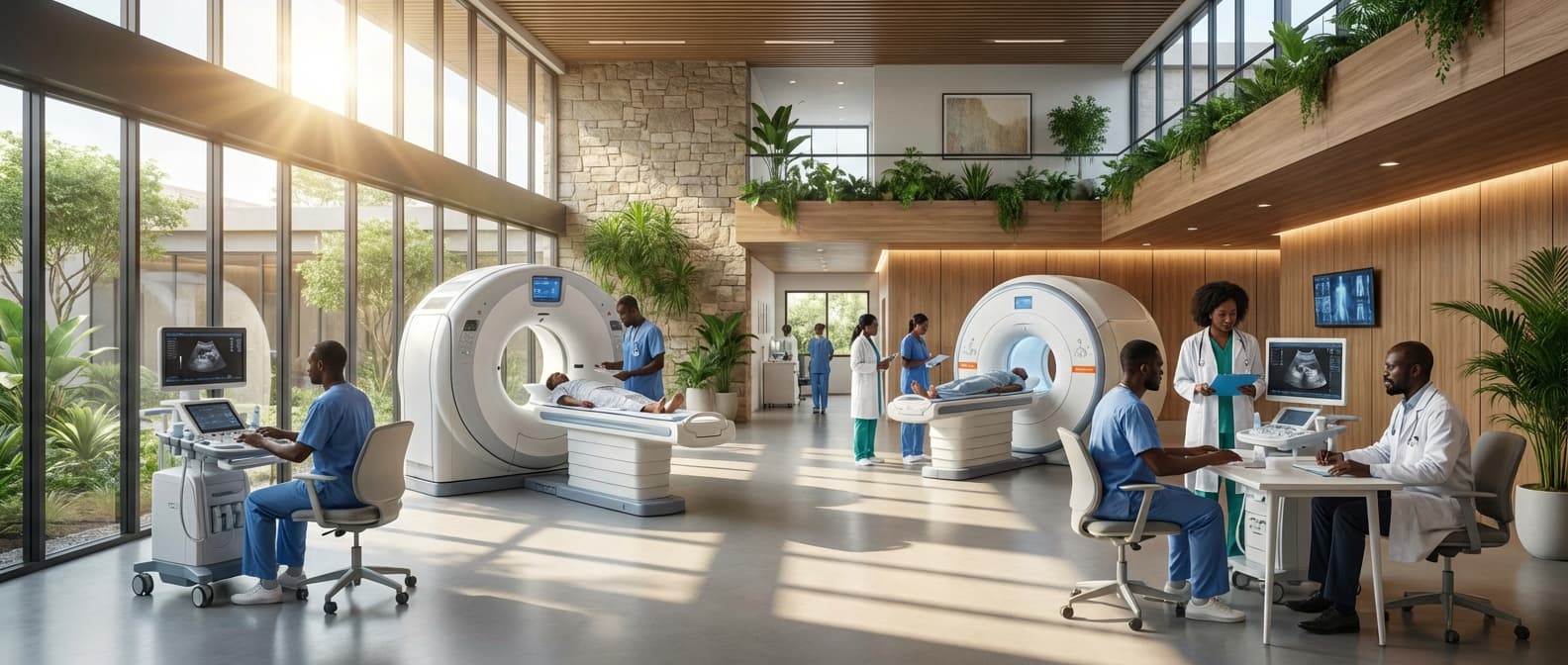
Diagnostic Imaging in Burundi
Engineering Excellence & Technical Support
High-resolution imaging systems including CT scanners, MRI, X-ray, and ultrasound technology for accurate clinical diagnosis. High-standard technical execution following OEM protocols and local regulatory frameworks.
Mobile Diagnostic Units for Remote Access
Deployment of fully equipped mobile diagnostic imaging units, leveraging satellite connectivity and solar power, to reach underserved rural populations in Burundi. These units provide essential X-ray, ultrasound, and basic CT scan capabilities, significantly reducing travel time and costs for patients seeking crucial diagnoses in remote areas.
Tele-radiology Network & Cloud PACS
Establishment of a nationwide tele-radiology network connecting regional health centers to specialized radiologists in urban hubs. A secure, cloud-based Picture Archiving and Communication System (PACS) facilitates rapid image sharing, storage, and remote consultation, enabling timely diagnoses and treatment planning even with limited local expertise.
AI-Powered Diagnostic Support Systems
Integration of artificial intelligence (AI) algorithms for automated detection and preliminary analysis of common pathologies in X-ray and ultrasound images. This technology acts as a valuable assistant to local technicians and general practitioners, enhancing diagnostic accuracy, prioritizing critical cases, and optimizing workflow in resource-constrained environments.
What Is Diagnostic Imaging In Burundi?
Diagnostic imaging in Burundi encompasses a range of medical technologies used to visualize the internal structures of the human body for the purpose of disease detection, diagnosis, and monitoring. This involves the application of various physical principles, such as X-rays, magnetic fields, ultrasound waves, and radioactive isotopes, to generate images that aid clinicians in understanding pathological processes. The service is critical for providing objective evidence of disease, guiding therapeutic interventions, and assessing treatment efficacy. The accessibility and sophistication of diagnostic imaging services in Burundi can vary significantly based on geographic location and healthcare facility level.
| Who Needs Diagnostic Imaging? | Typical Use Cases | |||
|---|---|---|---|---|
| Patients presenting with symptoms such as pain, swelling, abnormal masses, neurological deficits, or trauma. | Fracture identification (e.g., long bones, skull). | Detection and characterization of tumors (benign and malignant). | Evaluation of organ system dysfunction (e.g., kidney stones, gallstones, appendicitis, pneumonia, cardiac abnormalities). | Assessment of vascular abnormalities (e.g., deep vein thrombosis, aneurysms). |
| Patients undergoing pre-operative assessment to evaluate the extent of disease or plan surgical approaches. | Monitoring of chronic conditions (e.g., metastatic disease, inflammatory bowel disease). | Guidance for interventional procedures (e.g., biopsies, drain placements). | Screening for certain conditions (though less widespread for general population screening in Burundi due to resource limitations). | Trauma assessment in emergency settings to identify internal injuries quickly. |
| Patients referred by primary care physicians or specialists who require further investigation. | Evaluation of neurological conditions such as stroke, brain tumors, and spinal cord injuries. | Diagnosis of infectious diseases (e.g., tuberculosis in the chest, abscesses). | Monitoring of treatment response in oncology and infectious diseases. | Fetal imaging during pregnancy to assess fetal development and detect anomalies. |
Key Aspects of Diagnostic Imaging in Burundi
- Definition: Diagnostic imaging utilizes specialized equipment to create visual representations of internal body structures, organs, and tissues.
- Purpose: Primarily for identifying abnormalities, confirming diagnoses, staging diseases, and monitoring treatment responses.
- Technological Modalities: Includes X-ray radiography, fluoroscopy, computed tomography (CT), magnetic resonance imaging (MRI), ultrasonography (USG), and nuclear medicine (e.g., SPECT, PET, though less common in Burundi).
- Personnel: Requires trained radiologists, radiographers (radiologic technologists), sonographers, and supporting technical staff.
- Infrastructure: Demands specialized equipment, appropriate shielding, power stability, and often, a cold chain for contrast agents or radiopharmaceuticals.
Who Needs Diagnostic Imaging In Burundi?
Diagnostic imaging plays a crucial role in modern healthcare, aiding in the accurate diagnosis, treatment planning, and monitoring of a wide range of medical conditions. In Burundi, a country striving to improve its healthcare infrastructure, understanding who needs diagnostic imaging and within which departments it is most vital is key to resource allocation and service development.
| Department | Key Uses of Diagnostic Imaging | Example Patient Scenarios |
|---|---|---|
| Emergency Department (ED) | Rapid diagnosis of acute trauma, fractures, internal bleeding, stroke, and cardiac events. | A patient arriving with severe abdominal pain after an accident; a suspected stroke victim exhibiting neurological deficits; a child with a suspected broken bone after a fall. |
| Internal Medicine / General Outpatient Clinics | Diagnosing and monitoring chronic diseases like pneumonia, tuberculosis, heart conditions, kidney disease, and gastrointestinal issues. Screening for certain cancers. | A patient with persistent cough and fever for tuberculosis workup; a patient with chest pain to rule out cardiac involvement; individuals with unexplained weight loss for abdominal investigations. |
| Surgery Department | Pre-operative assessment (e.g., assessing tumor size and location, planning surgical approach), intra-operative guidance, and post-operative monitoring for complications. | A patient with appendicitis requiring imaging to confirm diagnosis before surgery; assessing extent of injuries for orthopedic surgery; checking for post-surgical complications like fluid collection. |
| Pediatrics | Diagnosing congenital anomalies, infections, trauma, and developmental issues in children. | An infant with suspected congenital heart defect; a child with severe ear infection and potential mastoiditis; a toddler with a high fever and abdominal pain. |
| Obstetrics & Gynecology (OB/GYN) | Monitoring pregnancy, diagnosing gynecological conditions, and guiding interventions. | Routine antenatal scans to assess fetal growth and well-being; diagnosing ovarian cysts or fibroids; evaluating pelvic pain. |
| Oncology / Cancer Care | Detecting, staging, and monitoring the response to treatment of various cancers. | Identifying a suspicious lump that requires further investigation; assessing the spread of cancer (metastasis); monitoring tumor shrinkage during chemotherapy. |
| Orthopedics | Diagnosing fractures, dislocations, degenerative joint diseases, and bone infections. | A patient with pain and swelling after a sports injury; assessing the severity of arthritis; monitoring bone healing after a fracture. |
| Infectious Diseases | Identifying the source and extent of infections, particularly in the chest (pneumonia, TB) and abdomen. | Imaging to confirm pneumonia in a patient with respiratory distress; assessing for abscesses in cases of complicated infections. |
Target Customers & Departments for Diagnostic Imaging in Burundi
- {"item":"Target Customers","description":"The primary customers for diagnostic imaging services in Burundi are patients across all age groups and socioeconomic backgrounds presenting with a variety of symptoms and conditions. This includes individuals seeking routine check-ups, those with acute injuries or illnesses, and patients with chronic diseases requiring ongoing management."}
- {"item":"Departments Benefiting from Diagnostic Imaging","description":"Several key hospital and clinic departments rely heavily on diagnostic imaging to provide effective patient care. These departments often represent the frontline of patient interaction and require imaging to confirm or rule out diagnoses, guide interventions, and assess treatment efficacy."}
Diagnostic Imaging Process In Burundi
Diagnostic imaging in Burundi, like in many healthcare systems, follows a structured workflow to ensure accurate and timely diagnosis. This process typically begins with a patient's presentation to a healthcare provider, who then determines the need for imaging based on symptoms and clinical history. The ordering physician generates a referral or request, specifying the type of imaging needed. This request is then processed, often by administrative staff, and scheduled with the relevant imaging department. Upon arrival, the patient undergoes the imaging procedure by a trained technologist. Following the scan, a radiologist interprets the images and generates a diagnostic report, which is then sent back to the referring physician for patient management and treatment planning.
| Stage | Description | Key Personnel Involved | Potential Challenges in Burundi |
|---|---|---|---|
| Inquiry/Referral | Patient presents with symptoms; physician identifies need for imaging and creates a request. | Patient, General Practitioner/Specialist | Limited access to specialists in rural areas; misdiagnosis leading to inappropriate referrals. |
| Scheduling and Access | Request is processed, and an appointment is scheduled for the imaging procedure. | Administrative Staff, Imaging Department | Long waiting times due to limited equipment and personnel; geographical barriers for patients; cost of procedures. |
| Preparation (if applicable) | Patient may need to follow specific instructions (e.g., fasting, contrast agent administration). | Patient, Technologist | Lack of patient education; inadequate supply of contrast agents. |
| Image Acquisition | The imaging procedure (X-ray, Ultrasound, CT, MRI) is performed by a qualified technologist. | Radiologic Technologist | Deterioration or lack of functional equipment; shortage of trained technologists; inconsistent power supply. |
| Interpretation | A radiologist reviews the acquired images and provides a written diagnostic report. | Radiologist | Severe shortage of radiologists; reliance on remote interpretation services (if available); limited access to advanced imaging software for analysis. |
| Report Delivery and Follow-up | The diagnostic report is sent back to the referring physician for diagnosis and treatment planning. | Radiologist, Referring Physician, Administrative Staff | Slow or incomplete communication channels; lack of electronic record systems; referring physician's limited knowledge of interpreting complex imaging findings. |
Diagnostic Imaging Workflow in Burundi
- Patient Presentation and Clinical Assessment
- Physician's Determination of Imaging Need
- Generation of Imaging Request/Referral
- Scheduling of Imaging Appointment
- Patient Preparation (if necessary)
- Image Acquisition by Technologist
- Radiologist's Image Interpretation
- Generation of Diagnostic Report
- Report Delivery to Referring Physician
- Physician's Review and Patient Management
Diagnostic Imaging Cost In Burundi
Diagnostic imaging plays a crucial role in modern healthcare, enabling accurate diagnosis and treatment planning. In Burundi, the cost of these essential services is influenced by a complex interplay of factors. These include the type and complexity of the imaging modality used (e.g., X-ray, ultrasound, CT scan, MRI), the specific anatomical region being examined, and whether contrast agents are required. The availability of advanced technology also significantly impacts pricing, with more sophisticated equipment generally commanding higher fees. Furthermore, the geographic location within Burundi can influence costs, with services in urban centers like Bujumbura often being more expensive than those in rural areas due to overheads such as rent, utilities, and specialized personnel. The training and expertise of the radiographers and radiologists are also a consideration. The operational costs for the imaging centers, including equipment maintenance, electricity, and consumables, are passed on to the patient. Finally, the regulatory environment and the specific pricing policies of individual healthcare facilities, both public and private, contribute to the overall cost structure. It's important to note that these are general ranges and actual costs can vary considerably.
| Imaging Modality | Estimated Cost Range (BIF) |
|---|---|
| Basic X-ray (e.g., chest, limb) | 20,000 - 50,000 |
| Ultrasound (e.g., abdominal, pelvic) | 40,000 - 100,000 |
| CT Scan (e.g., head, abdomen) | 150,000 - 400,000 |
| MRI Scan (e.g., brain, spine) | 300,000 - 800,000+ |
| Contrast Agent (additional cost) | 50,000 - 200,000+ |
Factors Influencing Diagnostic Imaging Costs in Burundi
- Type and complexity of imaging modality (X-ray, Ultrasound, CT, MRI)
- Anatomical region to be examined
- Requirement for contrast agents
- Availability of advanced technology
- Geographic location (urban vs. rural)
- Training and expertise of medical professionals
- Operational costs (maintenance, utilities, consumables)
- Healthcare facility type (public vs. private)
- Regulatory environment and pricing policies
Affordable Diagnostic Imaging Options
Diagnostic imaging is a crucial part of healthcare, but costs can be a significant barrier for many. Fortunately, various affordable options and strategies exist to make these essential services more accessible. Understanding value bundles and implementing smart cost-saving measures can significantly reduce out-of-pocket expenses while ensuring you receive necessary care.
| Value Bundle Example | What it Might Include | Potential Cost Savings |
|---|---|---|
| Pre-Surgical Imaging Package | X-rays, MRI, or CT scan required before a specific surgery. | Often 10-20% less than individual scan costs when bundled. |
| Comprehensive Health Screening | A combination of imaging tests (e.g., mammogram, bone density scan, chest X-ray) as part of a wellness check. | Significant discount compared to paying for each scan separately. |
| Follow-Up Care Bundle | Initial diagnostic scan plus a scheduled follow-up scan to monitor progress. | May include a reduced rate for the second scan. |
| Specialty Care Packages | Imaging tailored to specific conditions (e.g., cardiac CT angiography, specific joint MRIs) often with associated consultations. | Can be more predictable and often offers a fixed price. |
Key Strategies for Affordable Diagnostic Imaging
- Understand Your Insurance Coverage: Before any imaging is scheduled, thoroughly review your health insurance policy. Know your deductible, copayments, coinsurance, and out-of-network benefits. Contact your insurance provider directly if you have any questions.
- Ask About Self-Pay Discounts: Many imaging centers offer discounted rates for patients paying out-of-pocket, even if you have insurance. Inquire about these discounts when scheduling your appointment.
- Shop Around and Compare Prices: Imaging costs can vary significantly between different providers and facilities. Call multiple imaging centers, hospitals, and independent radiology groups to compare prices for the specific scan you need. Websites like Healthcare Bluebook or Fair Health Consumer can also help you find average costs in your area.
- Consider Independent Imaging Centers: Independent imaging centers are often more affordable than hospital-based departments. They may have lower overhead costs, which can translate to lower prices for patients.
- Inquire About Package Deals or Bundles: Some providers offer 'value bundles' that combine multiple imaging procedures or related services at a reduced cost. This is particularly common for pre-operative or comprehensive diagnostic workups.
- Seek Out Imaging Centers with Advanced Technology: While it might seem counterintuitive, centers with newer, more efficient technology might offer more accurate and faster scans, potentially reducing the need for repeat procedures and overall costs.
- Discuss Necessity and Alternatives with Your Doctor: Have an open conversation with your physician about the necessity of the imaging test. Ask if there are less expensive alternatives or if a less detailed scan would suffice. Sometimes, a doctor's order can be adjusted to a more cost-effective option.
- Explore Payment Plans and Financial Assistance: If you're facing a high cost, ask the imaging provider about payment plans or any financial assistance programs they might offer. Many facilities are willing to work with patients to make payments manageable.
- Utilize Health Savings Accounts (HSAs) or Flexible Spending Accounts (FSAs): If you have an HSA or FSA, these pre-tax dollars can be used to pay for diagnostic imaging, significantly reducing your out-of-pocket expense.
Verified Providers In Burundi
Navigating the healthcare landscape in Burundi can be challenging. Ensuring you are accessing quality care from trustworthy sources is paramount. This guide highlights the importance of verified providers and specifically focuses on "Franance Health" credentials, explaining why they signify the highest standard of care and reliability in Burundi. Franance Health is a testament to rigorous vetting and commitment to excellence in the Burundian healthcare sector.
| Credential Type | Description | Significance for Patients in Burundi |
|---|---|---|
| Franance Health Certification | Official recognition granted by Franance Health after a comprehensive evaluation of healthcare facilities and individual practitioners. | Indicates a provider meets high standards of medical practice, patient care, and operational efficiency. Assurance of quality and safety. |
| Professional Licenses & Registrations | Mandatory documentation proving a healthcare professional's authorization to practice within Burundi. | Confirms that doctors, nurses, and other medical staff are legally qualified and registered with the relevant Burundian medical authorities. |
| Specialty Board Certifications | Advanced certifications demonstrating expertise in a specific medical field (e.g., cardiology, pediatrics). | Assures patients they are receiving care from specialists with advanced training and validated knowledge in their chosen area. |
| Affiliation with Reputable Medical Associations | Membership in recognized national or international medical organizations. | Suggests a commitment to professional development, ethical conduct, and staying abreast of medical advancements. |
| Patient Testimonials & Feedback Scores | Collections of patient experiences and satisfaction ratings. | Provides real-world insights into the patient experience, service quality, and the overall reputation of the provider. |
Why Franance Health Credentials Matter in Burundi:
- Unwavering Commitment to Quality: Franance Health's accreditation signifies adherence to stringent international and national healthcare standards.
- Rigorous Vetting Process: Every provider undergoes a thorough review of their qualifications, experience, and ethical practices.
- Enhanced Patient Safety: Verified providers prioritize patient well-being through best practices and ongoing professional development.
- Trust and Transparency: The Franance Health badge offers a clear indicator of reliability, reducing uncertainty for patients.
- Access to Specialized Care: Many Franance Health-affiliated facilities offer specialized medical services, catering to a wide range of health needs.
- Improved Health Outcomes: Partnering with verified providers increases the likelihood of effective diagnosis and treatment.
Scope Of Work For Diagnostic Imaging
This Scope of Work (SOW) outlines the requirements for providing diagnostic imaging services, including the technical deliverables and standard specifications expected from the service provider. The objective is to ensure high-quality, reliable, and timely diagnostic imaging examinations that support accurate patient diagnosis and treatment planning.
| Service Component | Description | Standard Specifications / Deliverables | Quality Metrics |
|---|---|---|---|
| Imaging Modalities | Availability of various imaging techniques including X-ray, CT, MRI, Ultrasound, Mammography, Fluoroscopy, and Nuclear Medicine. | State-of-the-art, well-maintained equipment with current software versions. PACS and RIS integration capability. | Equipment uptime of >= 98%. Availability of all specified modalities during contracted hours. |
| Personnel | Provision of licensed and certified Radiologists, Radiologic Technologists, and other necessary support staff. | All personnel must hold current licenses and certifications. Minimum years of experience as specified. Ongoing training and professional development. | Compliance with all licensing and certification requirements. Positive feedback from referring physicians on professionalism and expertise. |
| Imaging Reports | Timely generation of comprehensive and accurate diagnostic reports for each imaging examination. | Reports must be legible, complete, and contain all relevant findings, impressions, and recommendations. Standardized report templates where applicable. Electronic transmission via secure channels. | Report turnaround time: Critical findings within 2 hours, routine findings within 24 hours. Accuracy rate of >= 99% as validated by subsequent patient outcomes or peer review. |
| Quality Assurance | Implementation of a robust QA/QC program to ensure image quality and diagnostic accuracy. | Regular equipment calibration and maintenance logs. Internal peer review process for radiologists. Patient feedback mechanisms. Incident reporting and resolution. | Adherence to established QA protocols. Reduction in repeat scans due to technical factors by >= 5% annually. Minimal patient complaints related to image quality or service. |
| Data Management and Security | Secure storage, retrieval, and transmission of all patient imaging data and reports. | Compliance with HIPAA and other relevant data privacy regulations. Secure PACS/RIS. Data backup and disaster recovery plan. Audit trails for data access. | 100% compliance with data security and privacy regulations. Successful data recovery within defined RTO/RPO objectives. |
| Technical Support and Maintenance | Provision of all necessary technical support and maintenance for imaging equipment. | Proactive and reactive maintenance schedules. Emergency repair response times. Spare parts inventory. Software updates and upgrades. | Scheduled maintenance completed on time. Mean Time To Repair (MTTR) for critical equipment <= 4 hours. Equipment downtime due to maintenance < 2% of scheduled operational hours. |
Key Components of Diagnostic Imaging Services
- Provision of a comprehensive suite of diagnostic imaging modalities.
- Ensuring availability of qualified and certified medical imaging professionals.
- Delivery of detailed and accurate imaging reports.
- Adherence to all relevant regulatory standards and best practices.
- Maintenance of imaging equipment and technology.
- Implementation of robust quality assurance and control measures.
- Secure and timely transmission of imaging data and reports.
- Provision of interpretation services by board-certified radiologists.
Service Level Agreement For Diagnostic Imaging
This Service Level Agreement (SLA) outlines the performance expectations and guarantees for diagnostic imaging services provided by [Provider Name] to [Client Name]. It defines key metrics, including response times for critical requests and uptime guarantees for imaging systems.
| Metric | Service Level Target | Measurement Period | Remedy for Failure |
|---|---|---|---|
| Critical Request Response Time | Within 15 minutes | 24/7/365 | Service credit of X% of monthly fee for each occurrence. Escalation to senior management. |
| Routine Request Response Time | Within 60 minutes | Business Hours (e.g., 8 AM - 6 PM, Monday-Friday) | Service credit of Y% of monthly fee for each occurrence. |
| System Uptime Guarantee | 99.9% | Monthly | Service credit of Z% of monthly fee for each full percentage point below the target. Review of infrastructure and processes. |
| Image Availability (PACS) | Within 30 minutes of completion of scan acquisition | 24/7/365 | Service credit of A% of monthly fee for each occurrence. Investigation into workflow and system integration. |
Key Performance Indicators (KPIs)
- Critical Request Response Time: The maximum time allowed for the initial acknowledgement and commencement of work on a critical diagnostic imaging request.
- Routine Request Response Time: The maximum time allowed for the initial acknowledgement and commencement of work on a routine diagnostic imaging request.
- System Uptime Guarantee: The minimum percentage of time that diagnostic imaging systems are operational and available for use.
- Image Availability: The maximum time for images to be accessible through the Picture Archiving and Communication System (PACS).
Frequently Asked Questions

Ready when you are
Let's scope your Diagnostic Imaging in Burundi project in Burundi.

Scaling healthcare logistics and technical systems across the entire continent.