
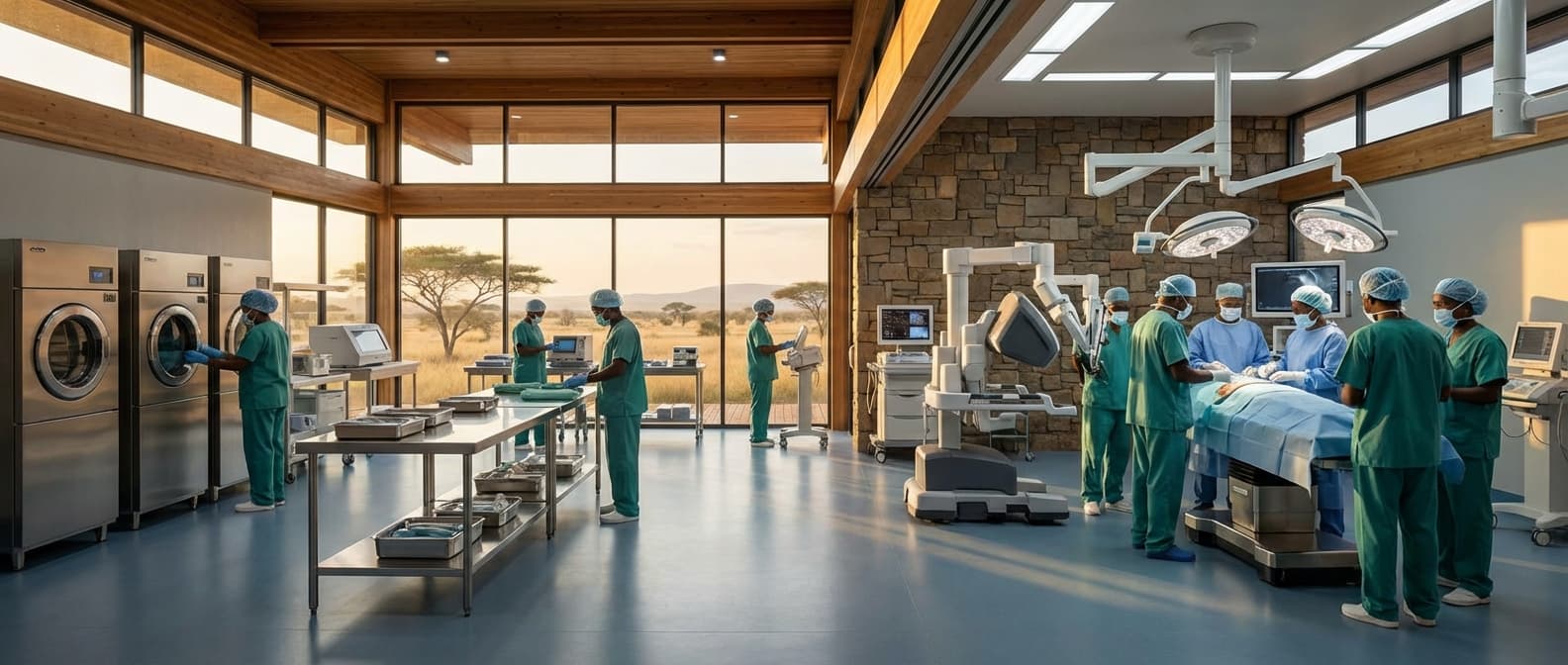
Medical Gas System Design & Installation in Burundi
Engineering Excellence & Technical Support
Medical gas pipeline systems: O2, N2O, air, vacuum High-standard technical execution following OEM protocols and local regulatory frameworks.
Certified Medical Gas Pipeline Installation
Expert installation of compliant medical gas pipeline systems (Oxygen, Medical Air, Vacuum, Nitrous Oxide) according to international standards (e.g., NFPA 99, HTM 02-01), ensuring patient safety and system integrity. Includes brazed copper piping, pressure testing, and rigorous leak detection.
Advanced Medical Gas Alarm & Monitoring Systems
Design and integration of state-of-the-art medical gas alarm panels and area monitoring systems. Provides real-time alerts for pressure deviations, gas purity, and system malfunctions, empowering proactive maintenance and immediate response to critical events.
Regulatory Compliance & Certification Support
Comprehensive guidance and implementation to ensure medical gas systems meet all relevant Burundian health regulations and international best practices. Facilitates system commissioning, final inspection, and certification processes for operational approval.
What Is Medical Gas System Design & Installation In Burundi?
Medical Gas System Design & Installation in Burundi refers to the specialized engineering and construction process of creating, implementing, and commissioning integrated systems for the safe and reliable delivery of medical gases within healthcare facilities. These systems are critical for patient care, enabling the administration of essential therapeutic and anesthetic gases. The design phase involves meticulous planning to ensure adherence to international standards (e.g., NFPA 99, ISO 7396), local regulations, and specific facility requirements, encompassing the selection of appropriate materials, pressure regulators, alarm systems, and distribution networks. Installation is a highly regulated process requiring skilled technicians trained in medical gas pipeline systems (MGPS) to ensure leak-free connections, proper pressure management, and sterility. Commissioning is the final stage, involving rigorous testing and validation to confirm the system's performance, safety, and compliance before handover to the healthcare provider.
| Who Needs Medical Gas System Design & Installation? | Typical Use Cases | ||||||
|---|---|---|---|---|---|---|---|
| Hospitals (Public and Private) | Oxygen therapy for respiratory distress, pneumonia, COPD, and critical care. | Anesthesia delivery in operating rooms. | Cardiopulmonary resuscitation (CPR) and ventilation support. | Nitrous oxide for analgesia in obstetric and dental settings. | Medical vacuum for suctioning of bodily fluids. | Surgical tools powered by compressed air. | Diagnostic procedures. |
| Clinics and Health Centers (with inpatient facilities) | Emergency oxygen administration. | Basic ventilation support. | Wound debridement via vacuum. | ||||
| Specialty Medical Facilities (e.g., Dental Clinics with general anesthesia capabilities, Rehabilitation Centers with therapeutic gas needs) | Specific anesthetic gas administration. | Therapeutic gas applications. | |||||
| Government and Non-Governmental Organizations (NGOs) involved in healthcare infrastructure development | Establishing or upgrading healthcare facilities to meet modern medical standards. | Disaster relief and emergency preparedness medical infrastructure. |
Key Components of Medical Gas System Design & Installation
- Central Gas Supply Source: Including bulk liquid oxygen/nitrous oxide tanks, medical air compressors, vacuum pumps, and their associated piping and control systems.
- Pipeline Distribution Network: Interconnected network of medical-grade piping (typically copper) with appropriate pressure ratings and materials, color-coded according to international standards.
- Gas Outlet Points: Wall-mounted or ceiling-mounted terminals for connecting patient respirators, anesthesia machines, and other medical devices, featuring quick-connect, non-interchangeable couplings (e.g., DISS, NIST).
- Pressure Regulators and Control Valves: Devices to reduce and maintain gas pressure at safe and functional levels throughout the distribution network.
- Alarm Systems: Continuous monitoring of gas pressures, flow rates, and supply status, with audible and visual alerts for potential hazards or system malfunctions.
- Purging and Testing Protocols: Comprehensive procedures for leak detection, pressure testing, purity analysis, and performance validation of the entire system.
- Point-of-Use Equipment Integration: Ensuring compatibility and proper functionality of delivered gases with specific patient care equipment.
Who Needs Medical Gas System Design & Installation In Burundi?
The implementation of reliable and safe medical gas systems is crucial for modern healthcare facilities. In Burundi, a growing demand for improved healthcare infrastructure and the desire to provide higher standards of patient care necessitate expert design and installation of these vital systems. This includes ensuring the availability of essential gases like oxygen, medical air, and vacuum, which are fundamental for a wide range of medical procedures, from routine anesthesia to critical care support.
| Customer Type | Key Departments Benefiting | Specific Needs & Applications |
|---|---|---|
| Hospitals (Public & Private) | Operating Theatres, Intensive Care Units (ICU), Neonatal Intensive Care Units (NICU), Emergency Rooms, Pulmonary Medicine, Anesthesiology, General Wards | Oxygen for respiratory support, anesthesia delivery; Medical air for ventilators, nebulizers; Vacuum for suctioning fluids; Nitrous oxide for anesthesia. |
| Clinics & Health Centers | Minor Procedure Rooms, Outpatient Departments, Pediatric Wards | Basic oxygen supply for emergencies, nebulizer treatments, post-operative care. |
| Specialty Medical Centers (e.g., Cardiac, Respiratory) | Cardiology, Pulmonology, Critical Care Units | High-purity oxygen for cardiac and respiratory distress management, specialized gas mixtures for diagnostics. |
| Emergency Response Services (Ambulance Services) | Ambulances, Mobile Medical Units | Portable oxygen cylinders and regulators for life support during transport. |
| Medical Research & Training Institutions | Laboratories, Simulation Centers, Teaching Hospitals | Controlled environments for experiments, training on medical gas usage, simulation of critical care scenarios. |
| Government Health Agencies | Ministry of Health, Public Health Directorates, Disaster Preparedness Units | Strategic planning and oversight of healthcare infrastructure, ensuring nationwide availability of medical gases for public health initiatives and emergency response. |
Target Customers & Departments for Medical Gas System Design & Installation in Burundi
- Hospitals (Public & Private)
- Clinics & Health Centers
- Specialty Medical Centers
- Emergency Response Services
- Medical Research & Training Institutions
- Government Health Agencies
Medical Gas System Design & Installation Process In Burundi
The design and installation of medical gas systems in Burundi, as in many other regions, follows a structured workflow that ensures safety, compliance, and optimal functionality. This process is critical for healthcare facilities to provide essential medical gases like oxygen, medical air, and vacuum to patients. The workflow typically begins with an initial inquiry and progresses through detailed design, procurement, installation, and finally, commissioning and handover.
| Phase | Key Activities | Deliverables/Outcomes | Responsible Parties | Considerations for Burundi |
|---|---|---|---|---|
| Client (hospital, clinic) expresses interest, requests proposals. Initial discussions about project scope, budget, and timeline. | Proposal/Quotation, understanding of client needs. | Healthcare Facility, Medical Gas System Provider (MSGP). | Establish clear communication channels. Understand local healthcare priorities and infrastructure limitations. |
| Detailed assessment of current and future medical gas requirements. Site visit to evaluate existing infrastructure, building layout, and accessibility. | Needs assessment report, site survey report, preliminary system requirements. | MSGP, Healthcare Facility (engineering/medical staff). | Identify specific medical gas types and quantities needed. Assess power availability and potential for backup systems. Consider seismic activity and local environmental conditions. |
| Development of a preliminary system layout and component selection. Evaluation of technical and economic feasibility. | Conceptual design drawings, feasibility report, preliminary bill of quantities (BOQ). | MSGP (design engineers). | Prioritize cost-effectiveness and sustainability. Explore locally available materials and skilled labor where possible. |
| Production of detailed engineering drawings, schematics, specifications, and calculations. Compliance with international standards (e.g., NFPA 99, ISO 7396) and any local building codes. | Complete engineering drawings (P&ID, layout), technical specifications, BOQ, project schedule. | MSGP (certified engineers). | Ensure designs are robust and adaptable to potential future expansions. Incorporate safety features relevant to the tropical climate (e.g., humidity control). |
| Submission of design documents to relevant government ministries and regulatory bodies for approval (e.g., Ministry of Health, Ministry of Infrastructure). Obtaining necessary construction permits. | Approved design plans, construction permits. | MSGP, Healthcare Facility, Local Authorities. | Understand the specific approval processes and timelines in Burundi. Engage with authorities early to avoid delays. |
| Sourcing and purchasing of all required medical gas equipment, pipelines, valves, alarms, terminal units, and source equipment. Emphasis on quality and reliability. | Procured equipment and materials, supplier contracts. | MSGP, Suppliers. | Investigate local suppliers for consumables and basic components. Ensure imported specialized equipment meets quality standards and import regulations. |
| Preparation of the installation site, including any necessary structural modifications, trenching, or support structures. | Ready installation site. | MSGP (installation team), Local Contractors (if needed). | Coordinate with existing building structures and utilities. Ensure minimal disruption to ongoing hospital operations. |
| Installation of the main medical gas pipelines within the facility, adhering to strict quality control and safety standards. This includes brazing, welding, and testing of all joints. | Installed pipeline network. | MSGP (certified installers). | Use qualified technicians for all welding and brazing. Implement rigorous pressure testing and leak detection procedures. |
| Installation and connection of the medical gas source equipment (e.g., oxygen concentrators, compressors, vacuum pumps, manifold systems). | Installed and connected source equipment. | MSGP (certified installers). | Consider the reliability of the local power grid and the need for robust backup power solutions. Ensure proper ventilation for source equipment. |
| Installation of terminal units at patient beds and other points of use, along with the central alarm system to monitor gas pressures and flow rates. | Installed terminal units and alarm system. | MSGP (certified installers). | Ensure easy access and clear labeling of all outlets. Test alarm functionalities thoroughly. |
| Comprehensive testing of the entire system to verify functionality, performance, and safety. This includes pressure testing, purity testing, flow rate testing, and alarm system verification. | Commissioning report, system test results, compliance certificates. | MSGP (commissioning engineers), Third-party inspectors (if required). | Perform extensive leak detection tests. Verify gas purity meets medical standards. Ensure alarm thresholds are correctly set. |
| Training of hospital staff (medical and technical) on the operation, maintenance, and emergency procedures for the medical gas system. | Trained staff, training manuals. | MSGP (trainers), Healthcare Facility staff. | Provide clear, practical training in a language accessible to the staff. Emphasize safety protocols. |
| Formal handover of the completed system to the healthcare facility, including all as-built drawings, operation and maintenance manuals, warranties, and commissioning reports. | Complete project documentation, operational system. | MSGP, Healthcare Facility. | Ensure all documentation is comprehensive and easy to understand. Provide digital and physical copies. |
| Provision of ongoing technical support, maintenance services, and spare parts to ensure the long-term reliability and safety of the system. | Ongoing support, maintenance contracts. | MSGP, Healthcare Facility. | Establish a reliable maintenance schedule. Offer remote support if feasible. Build local capacity for basic maintenance where possible. |
Medical Gas System Design & Installation Process in Burundi: Workflow Overview
- Inquiry & Initial Consultation
- Needs Assessment & Site Survey
- Conceptual Design & Feasibility Study
- Detailed Design & Engineering
- Regulatory Approvals & Permitting
- Procurement of Equipment & Materials
- Site Preparation & Civil Works
- Installation of Medical Gas Pipelines
- Installation of Gas Source Equipment
- Installation of Terminal Units & Alarms
- Testing & Commissioning
- Training of Personnel
- Handover & Documentation
- Post-Installation Support & Maintenance
Medical Gas System Design & Installation Cost In Burundi
Designing and installing a medical gas system in Burundi involves several cost considerations, influenced by local market conditions, the complexity of the system, and the specific materials and equipment chosen. The pricing is typically quoted in the local currency, the Burundian Franc (BIF). Key factors affecting the overall cost include the type and number of medical gases required (e.g., oxygen, medical air, vacuum, nitrous oxide), the size and layout of the healthcare facility, the distance of pipeline runs, the type of terminal units and control panels, and the installation labor rates.
| System Component/Service | Estimated Cost Range (BIF) | Notes |
|---|---|---|
| Design & Engineering (per facility size) | 5,000,000 - 25,000,000+ | Varies based on complexity and size of the facility. |
| Medical Gas Piping (per meter, including labor) | 50,000 - 200,000+ | Depends on gas type, pipe material, and diameter. |
| Oxygen Concentrator (e.g., 5-10 LPM) | 3,000,000 - 10,000,000 | For smaller clinics or backup. |
| Bulk Oxygen Storage System (e.g., for a hospital wing) | 50,000,000 - 200,000,000+ | Includes tank, vaporizer, piping, and installation. |
| Medical Air Compressor System | 15,000,000 - 60,000,000 | For continuous supply of medical air. |
| Vacuum Pump System | 10,000,000 - 40,000,000 | For medical suction. |
| Terminal Units (per outlet, installed) | 150,000 - 750,000+ | Includes wall outlets, bed head units, and associated fittings. |
| Central Control Panel & Alarms | 5,000,000 - 20,000,000 | Monitors gas pressures and alarms. |
| Installation Labor (skilled technicians, per day) | 100,000 - 300,000 | Can vary significantly based on experience and demand. |
| Testing & Commissioning | 3,000,000 - 15,000,000+ | Ensures system integrity and performance. |
| Contingency (recommended) | 10-20% of total project cost | To cover unforeseen expenses. |
Key Pricing Factors for Medical Gas System Design & Installation in Burundi:
- Type and Quantity of Medical Gases: The number of different gases to be piped and the required flow rates for each significantly impact material and equipment costs.
- Facility Size and Complexity: Larger hospitals or facilities with multiple wings and specialized departments will require more extensive piping and a more complex distribution network.
- Pipeline Material and Diameter: The choice of materials (e.g., copper tubing, stainless steel) and the diameter of the pipes are determined by gas type and flow requirements, influencing material costs.
- Number and Type of Terminal Units: These are the outlets for medical gases at patient bedsides and in operating rooms. The quantity and sophistication of these units (e.g., integrated console units, wall outlets) affect the price.
- Gas Source Equipment: The cost of oxygen concentrators, bulk oxygen storage tanks, compressors, vacuum pumps, and other source equipment is a major component.
- Control Panels and Alarms: Centralized control panels for monitoring gas pressure, flow, and alarms are essential and add to the cost.
- Installation Labor: The cost of skilled technicians and engineers for design, fabrication, installation, and testing varies based on local wage rates and availability of expertise.
- Ancillary Equipment: This includes shut-off valves, pressure regulators, filters, and other safety devices.
- Permits and Inspections: Local regulatory requirements may necessitate fees for permits and inspections.
- Transportation and Logistics: Moving materials and equipment to the installation site can incur significant costs, especially in remote areas.
- Commissioning and Testing: Thorough testing and commissioning of the entire system to ensure it meets safety and performance standards are crucial and add to the overall project cost.
- Warranty and Maintenance: The cost of extended warranties and initial maintenance contracts should also be considered.
Affordable Medical Gas System Design & Installation Options
Designing and installing a medical gas system is a critical investment for any healthcare facility. Fortunately, there are several affordable options and cost-saving strategies available without compromising safety or compliance. This guide explores value bundles and practical approaches to manage the costs associated with medical gas system design and installation.
| Value Bundle Component | Description | Cost-Saving Strategy |
|---|---|---|
| Design & Engineering | Comprehensive system design, layout, and engineering plans. | Opt for modular or standardized designs where applicable. Utilize experienced but efficient engineering teams. Explore firms offering integrated design-build services to streamline the process. |
| Equipment Procurement | Sourcing of medical gas equipment, including regulators, alarms, outlets, and piping. | Bundle equipment purchases with design or installation services. Negotiate bulk discounts. Consider reliable, certified manufacturers known for value and longevity over the cheapest option. |
| Installation & Commissioning | Expert installation of piping, valves, and outlets, followed by rigorous testing and commissioning. | Partner with installers experienced in medical gas systems to minimize errors and rework. Schedule installation during off-peak hours if possible. Ensure clear project management to avoid delays. |
| Maintenance & Service Packages | Post-installation maintenance plans, including inspections and testing. | Inquire about bundled service contracts that offer discounted rates for ongoing maintenance. Proactive maintenance can prevent costly emergency repairs and system downtime. |
| Training & Education | Training for facility staff on the operation and basic maintenance of the system. | Include training as part of the installation package. Well-trained staff can identify minor issues early, preventing escalation and reducing the need for external intervention. |
Key Considerations for Affordable Medical Gas Systems
- Understanding the Scope: Clearly defining your facility's specific needs for medical gases (e.g., oxygen, medical air, vacuum, nitrous oxide) and their required flow rates and pressures is the first step to avoiding unnecessary expenses.
- Compliance and Standards: Adhering to relevant standards (e.g., NFPA 99, HTM 02-01) is non-negotiable for safety and regulatory compliance. Budget for these requirements from the outset.
- System Complexity: The number of gases, outlets, and the size of the facility directly impact cost. Simpler, well-planned systems are generally more affordable.
- Material Selection: Choosing durable and compliant materials is essential. While upfront costs can vary, long-term reliability and maintenance should be considered.
- Installation Location: The accessibility of the installation area can affect labor costs. Planning for easy access during design can lead to savings.
- Phased Implementation: For larger facilities or those with budget constraints, consider a phased approach to installation, prioritizing essential areas first.
Verified Providers In Burundi
In Burundi's evolving healthcare landscape, identifying trusted and competent medical providers is paramount. Franance Health has emerged as a leading force, meticulously vetting and credentialing healthcare professionals and facilities. This commitment to rigorous verification ensures that patients receive high-quality, safe, and effective medical care. This document outlines the significance of Franance Health's credentials and explains why they represent the best choice for accessing healthcare services in Burundi.
| Franance Health Credentialing Component | Significance for Patients | Benefits for Providers |
|---|---|---|
| Verification of Medical Licenses and Certifications | Ensures providers are legally qualified and possess the necessary foundational training. | Validates professional standing and adherence to regulatory requirements. |
| Assessment of Clinical Competency and Experience | Confirms that providers have the practical skills and knowledge to deliver effective treatment. | Highlights areas of specialization and expertise, attracting suitable patient cases. |
| Evaluation of Ethical Conduct and Professionalism | Guarantees that providers operate with integrity and prioritize patient well-being. | Reinforces a commitment to ethical medical practice and patient-centered care. |
| Review of Patient Safety Protocols and Infrastructure | Confirms that facilities are equipped and adhere to safety standards to prevent harm. | Demonstrates a dedication to providing a safe and secure healthcare environment. |
| Background Checks and Reference Verification | Adds an extra layer of assurance regarding the provider's reliability and past performance. | Builds a reputation for trustworthiness and accountability. |
Why Franance Health Credentials Matter
- Uncompromising Quality Standards: Franance Health's verification process goes beyond basic licensing, assessing clinical expertise, adherence to ethical practices, and patient safety protocols.
- Enhanced Patient Trust and Confidence: Knowing a provider is Franance Health credentialed offers peace of mind, assuring patients they are in capable and responsible hands.
- Access to Competent Professionals: The credentialing identifies individuals and institutions that meet stringent criteria for medical knowledge, skills, and experience.
- Improved Healthcare Outcomes: By promoting providers who adhere to best practices, Franance Health indirectly contributes to better health outcomes for the Burundian population.
- Streamlined Healthcare Navigation: Franance Health acts as a reliable guide, simplifying the process of finding appropriate and trustworthy medical care.
- Commitment to Continuous Improvement: The verification process often involves ongoing evaluation, encouraging providers to maintain and elevate their standards.
Scope Of Work For Medical Gas System Design & Installation
This Scope of Work (SOW) outlines the requirements for the design and installation of a comprehensive medical gas system. The project encompasses all necessary engineering, procurement, construction, and commissioning activities to deliver a fully functional and compliant medical gas system. This document details the technical deliverables expected from the contractor and references standard specifications to ensure quality, safety, and adherence to industry best practices.
| Standard Specification/Code | Description | Applicability |
|---|---|---|
| NFPA 99 | Health Care Facilities Code | General safety requirements for medical gas systems, including installation, testing, and maintenance. |
| NFPA 55 | Compressed Gases and Cryogenic Fluids Code | Specific requirements for the storage, handling, and use of compressed gases, including medical gases. |
| CSA Z305.1 | Nonflammable Medical Gas Pipeline Systems | Canadian standard for the design, installation, and testing of medical gas pipeline systems. |
| ASME B31.3 | Process Piping | Requirements for the design and construction of piping systems, applicable to medical gas pipelines. |
| ASTM Standards | Various ASTM standards for piping materials, fittings, and welding procedures relevant to medical gas systems. | Ensuring material quality and performance. |
| Local Building Codes and Regulations | Jurisdictional requirements for construction, safety, and occupancy. | Ensuring compliance with local authorities. |
| Manufacturer's Installation Manuals | Specific guidelines for the installation and operation of equipment provided. | Critical for proper equipment function and warranty. |
Key Project Phases and Deliverables
- {"items":["Detailed design drawings (P&IDs, layout, schematics)","Equipment specifications and submittals","Bill of Materials (BOM)","Pressure drop calculations","Alarm and monitoring system design","Compliance documentation (codes, standards, permits)"],"title":"Phase 1: Design and Engineering"}
- {"items":["Procurement of all specified equipment and materials","Fabrication of medical gas piping and assemblies","Quality control and inspection of fabricated components"],"title":"Phase 2: Procurement and Fabrication"}
- {"items":["Installation of main supply lines, branch lines, and outlets","Installation of shut-off valves, pressure regulators, and alarms","Installation of medical gas outlets and service panels","Installation of central supply equipment (compressors, vacuum pumps, manifolds, etc.)","Integration with existing building systems"],"title":"Phase 3: Installation and Construction"}
- {"items":["Pressure testing and leak detection","Purity testing of medical gases","Functional testing of all system components and alarms","Performance validation and commissioning report","Operator and maintenance training sessions","As-built drawings and O&M manuals"],"title":"Phase 4: Testing, Commissioning, and Training"}
Service Level Agreement For Medical Gas System Design & Installation
This Service Level Agreement (SLA) outlines the performance standards, response times, and uptime guarantees for the design and installation services of medical gas systems provided by [Your Company Name] to [Client Name].
| Service | Response Time (Business Hours) | Resolution Time Target (Business Hours) | Uptime Guarantee (for commissioned systems) |
|---|---|---|---|
| Design Clarification/Technical Support (Post-contract award) | 24 hours | 48 hours | N/A |
| Site Visit for Installation Planning/Issue Resolution | 48 hours | 72 hours (for non-critical issues) | N/A |
| Emergency on-site support (critical installation failure) | 8 business hours | 24 business hours | N/A |
| Commissioning and Testing Commencement (after installation completion) | 7 calendar days | 14 calendar days | N/A |
| Post-installation Support (during warranty period - e.g., 12 months) | 48 business hours | 5 business days (for non-critical issues) | 99.9% uptime for commissioned and validated systems |
Scope of Services
- Comprehensive design of medical gas pipeline systems (MGPS) in accordance with relevant standards (e.g., NFPA 99, ISO 7396-1).
- Detailed engineering drawings, specifications, and Bill of Materials (BOM).
- Procurement and supply of all necessary medical gas equipment and piping.
- On-site installation and commissioning of the MGPS.
- Pressure testing, purging, and leak detection.
- System certification and handover documentation.
- Post-installation verification and validation.
Frequently Asked Questions

Ready when you are
Let's scope your Medical Gas System Design & Installation in Burundi project in Burundi.

Scaling healthcare logistics and technical systems across the entire continent.