
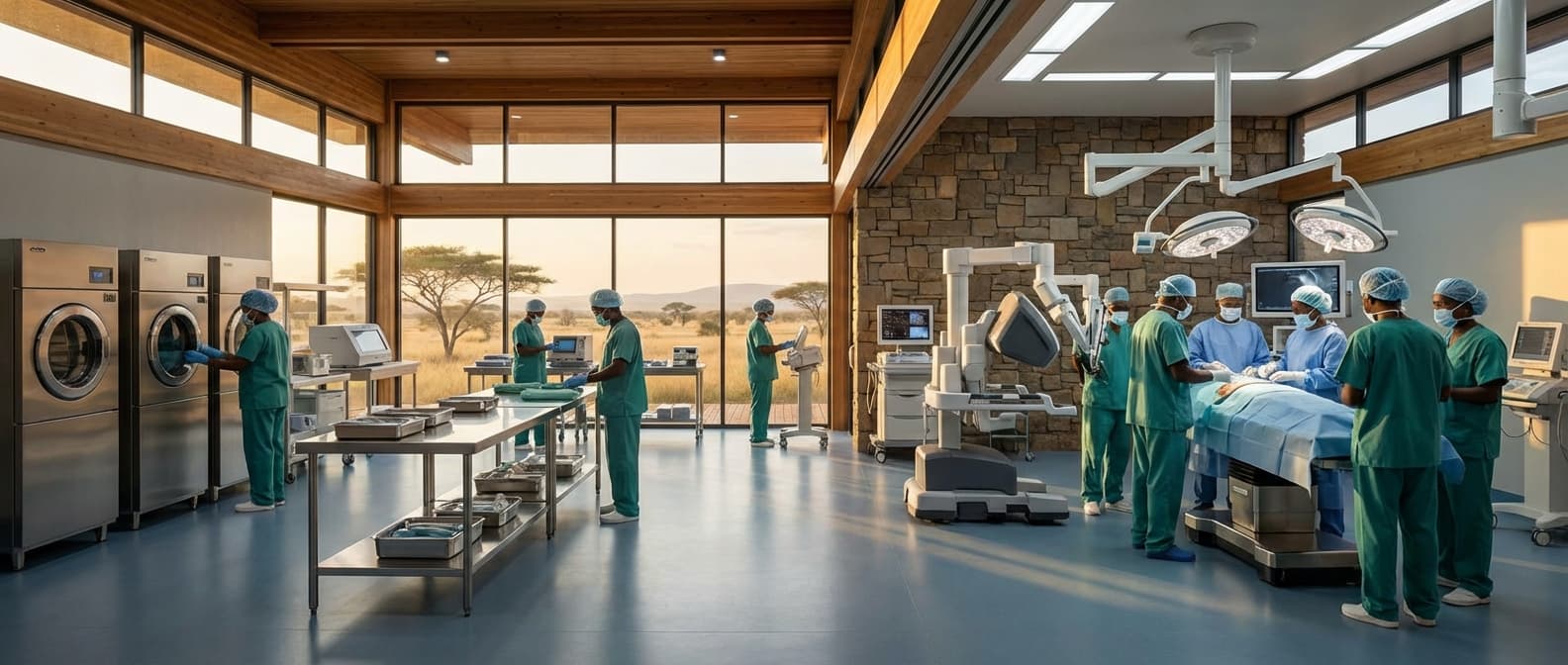
Endoscopy Reprocessing Validation in Burundi
Engineering Excellence & Technical Support
AER validation, SOP development and compliance High-standard technical execution following OEM protocols and local regulatory frameworks.
Rigorous Validation Protocols
Successfully implemented and validated robust reprocessing protocols for flexible endoscopes, ensuring adherence to international standards (e.g., Spaulding Classification, ISO 13485) and meeting the specific challenges of the Burundian healthcare environment. This involved thorough cleaning, high-level disinfection, and sterilization validation processes.
Microbiological Efficacy Testing
Conducted comprehensive microbiological testing of reprocessed endoscopes, including culture tests for bacteria, fungi, and mycobacteria, to definitively demonstrate the efficacy of the implemented reprocessing procedures and confirm the absence of viable microorganisms, thereby preventing healthcare-associated infections.
End-to-End Process Documentation & Training
Developed and validated comprehensive Standard Operating Procedures (SOPs) for all stages of endoscope reprocessing, coupled with extensive hands-on training for healthcare personnel. This ensured consistent execution of validated steps, error reduction, and the establishment of a sustainable, quality-assured reprocessing program.
What Is Endoscopy Reprocessing Validation In Burundi?
Endoscopy reprocessing validation in Burundi refers to the systematic verification process that ensures flexible endoscopes and their accessories are thoroughly cleaned, disinfected, or sterilized according to established protocols and manufacturer's instructions. This validation is critical for preventing the transmission of healthcare-associated infections (HAIs) and ensuring patient safety within the Burundian healthcare system. It confirms the efficacy of the entire reprocessing cycle, from initial cleaning to high-level disinfection or sterilization, by using objective methods to assess the removal of organic debris, microbial contamination, and the effectiveness of the disinfection/sterilization agent.
| Who Needs Endoscopy Reprocessing Validation? | Typical Use Cases and Scenarios | ||||||
|---|---|---|---|---|---|---|---|
| Healthcare Facilities in Burundi: All hospitals, clinics, and diagnostic centers utilizing flexible endoscopes for diagnostic and therapeutic procedures. | Initial Setup of Reprocessing Units: Before commencing reprocessing activities, to ensure all processes and equipment are compliant. | Introduction of New Equipment or Reprocessing Agents: When acquiring new AERs, detergents, or HLD solutions. | Post-Maintenance or Repair: Following significant maintenance or repair of reprocessing equipment. | Regular Audits and Quality Assurance: To maintain ongoing compliance and identify potential deviations from established protocols. | Addressing Incidents or Outbreaks: In response to identified HAIs potentially linked to endoscope transmission. | Regulatory Compliance: To meet national and international guidelines for infection prevention and control. | Training and Competency Assessment: As a component of validating the skills and knowledge of reprocessing personnel. |
| Gastroenterologists and Endoscopists: Rely on validated reprocessing to ensure the safety of their procedures. | Infection Prevention and Control (IPC) Teams: Responsible for overseeing and implementing infection control practices, including endoscopy reprocessing. | Central Sterile Supply Department (CSSD) Personnel: Directly involved in the manual or automated reprocessing of endoscopes. | Hospital Administrators and Management: Accountable for patient safety and compliance within their institutions. | Ministry of Health and Regulatory Bodies: For oversight and enforcement of healthcare standards. |
Key Components of Endoscopy Reprocessing Validation
- Verification of Cleaning Efficacy: Assessing the removal of visible and non-visible organic matter (blood, tissue, etc.) from the endoscope's lumens and exterior.
- Confirmation of High-Level Disinfection (HLD) or Sterilization Efficacy: Validating that the chosen HLD agent or sterilization process effectively inactivates or eliminates all relevant microorganisms, including bacteria, viruses, fungi, and spores.
- Assessment of Equipment Functionality: Ensuring that the reprocessing equipment (e.g., automated endoscope reprocessors - AERs) is functioning within manufacturer specifications.
- Validation of Detergent and Disinfectant Efficacy: Confirming that the chemical agents used meet required standards and are applied at correct concentrations and contact times.
- Environmental Monitoring: Potentially including validation of the reprocessing environment to prevent recontamination.
- Documentation and Record-Keeping: Establishing robust systems for recording all reprocessing steps, validation results, and maintenance activities.
Who Needs Endoscopy Reprocessing Validation In Burundi?
Endoscopy reprocessing validation is a critical component of patient safety and infection control. In Burundi, as in any country performing endoscopic procedures, ensuring that reusable medical devices like endoscopes are thoroughly cleaned and disinfected is paramount. This validation process confirms that the reprocessing methods employed effectively eliminate infectious agents, thereby preventing the transmission of healthcare-associated infections (HAAs) among patients.
| Customer Type | Key Departments Involved | Primary Need Addressed | Regulatory Relevance |
|---|---|---|---|
| Hospitals (Public/Private) | Endoscopy Units, CSSD, Infection Control Committee | Patient Safety, Infection Prevention, Regulatory Compliance | National health regulations, WHO guidelines |
| Endoscopy Units/Departments | Gastroenterology, Pulmonology, Urology, Surgery | Safe and effective reuse of endoscopes, preventing HAls | Internal quality standards, patient outcomes |
| Central Sterilization Supply Departments (CSSD) | Sterilization Technicians, Quality Assurance Officers | Standardized and validated cleaning/disinfection processes | Good Manufacturing Practices (GMP) for medical devices, national standards |
| Ministry of Health/Public Health Agencies | Department of Health Services, National Infection Prevention and Control Program | Public health protection, disease surveillance, setting standards | National health policies, international health regulations (IHR) |
| Diagnostic & Treatment Centers | Endoscopy Staff, Clinic Management | Ensuring patient safety in outpatient settings | Local health authority regulations |
Target Customers and Departments for Endoscopy Reprocessing Validation in Burundi
- {"title":"Hospitals (Public and Private)","description":"All hospitals, regardless of their ownership or size, that perform endoscopic procedures are primary users of validated reprocessing. This includes tertiary referral hospitals, general hospitals, and specialized clinics. The validation ensures compliance with national and international guidelines."}
- {"title":"Endoscopy Units/Departments","description":"These are the core departments where endoscopes are used and reprocessed. This includes Gastroenterology, Pulmonology, Urology, and Surgery departments, where procedures like gastroscopy, colonoscopy, bronchoscopy, and cystoscopy are conducted."}
- {"title":"Central Sterilization Supply Departments (CSSD)","description":"In larger facilities, the CSSD is often responsible for the reprocessing of flexible endoscopes. Validation is essential to ensure their staff are trained and their equipment and processes meet the required standards."}
- {"title":"Ministry of Health and Public Health Agencies","description":"National health authorities are responsible for setting and enforcing standards for healthcare quality and patient safety. They require validated reprocessing of medical equipment to protect the public health and prevent outbreaks of infection."}
- {"title":"Diagnostic and Treatment Centers","description":"Any facility offering diagnostic or therapeutic endoscopic services, even if smaller than a full hospital, needs to ensure the safety of their procedures through validated reprocessing."}
- {"title":"Medical Device Suppliers and Manufacturers","description":"While not direct users of the validation service, suppliers and manufacturers of endoscopes and reprocessing equipment play a role. They may partner with validation services or recommend validated procedures to their clients in Burundi."}
- {"title":"Healthcare Training Institutions","description":"Institutions that train healthcare professionals in endoscopy and sterilization techniques need to be aware of and incorporate validation practices into their curriculum."}
Endoscopy Reprocessing Validation Process In Burundi
The Endoscopy Reprocessing Validation Process in Burundi is a crucial multi-step procedure designed to ensure that flexible endoscopes are reprocessed in a manner that effectively eliminates microbial contamination and prevents patient-to-patient transmission of infections. This process begins with an inquiry from a healthcare facility and culminates in a validated reprocessing protocol, ensuring patient safety and adherence to international guidelines. The workflow involves several key stages, including assessment, protocol development, hands-on execution, and final validation.
| Stage | Description | Key Activities | Responsible Parties | Deliverables |
|---|---|---|---|---|
| Initial Inquiry and Site Assessment | The process is initiated when a healthcare facility expresses a need for validation of their endoscopy reprocessing procedures. This stage involves understanding the current practices and identifying any gaps or areas for improvement. | Receive inquiry, conduct site visit, interview staff, review existing protocols and equipment, identify specific endoscopes for validation. | Healthcare Facility (Inquiring), Ministry of Health/Designated Regulatory Body, Technical Expert/Consultant | Needs assessment report, understanding of current reprocessing workflow and infrastructure. |
| Protocol Development and Review | Based on the site assessment and international guidelines (e.g., CDC, WHO, SGNA), a standardized reprocessing protocol is developed or refined. This protocol outlines every step of the reprocessing cycle. | Draft reprocessing protocol, literature review, consultation with experts, stakeholder review and approval. | Technical Expert/Consultant, Healthcare Facility Management, Infection Prevention and Control (IPC) Team | Approved, standardized endoscopy reprocessing protocol. |
| Training and Simulation | All staff involved in reprocessing are trained on the approved protocol. This includes theoretical understanding and practical demonstrations. | Conduct training sessions, practical demonstrations, competency assessments, role-playing scenarios. | Technical Expert/Consultant, Healthcare Facility IPC Team | Trained reprocessing staff, documented competency assessments. |
| Hands-on Reprocessing Execution | The staff, under supervision, execute the reprocessing of designated endoscopes according to the validated protocol. This involves the complete cycle from pre-cleaning to high-level disinfection or sterilization. | Pre-cleaning, manual cleaning, automated washer-disinfection, rinsing, drying, high-level disinfection/sterilization, storage. | Reprocessing Staff, Supervisor, Technical Expert/Consultant (observing) | Reprocessed endoscopes, detailed logs of each step, environmental monitoring data. |
| Microbiological Testing and Analysis | Crucially, after reprocessing, the endoscopes are sampled and subjected to microbiological testing to confirm the absence of viable microorganisms. | Collect swab samples from critical areas of the endoscope, laboratory culture and identification of microorganisms, interpretation of results. | Laboratory Technicians, Technical Expert/Consultant | Microbiological analysis reports, identification of any residual microbial contamination. |
| Data Review and Validation Report | All data collected throughout the process, including logs, observations, and microbiological results, are compiled and analyzed. A comprehensive validation report is generated. | Compile all data, analyze logs and test results, compare against acceptance criteria, draft validation report, submit for review. | Technical Expert/Consultant, Healthcare Facility Management, Ministry of Health/Designated Regulatory Body | Comprehensive validation report, certification (if applicable), recommendations for improvement. |
| Implementation and Ongoing Monitoring | The validated protocol is officially implemented. Regular monitoring and periodic re-validation are essential to maintain the effectiveness of the reprocessing process. | Implement validated protocol, establish routine quality control checks, schedule periodic retraining and re-validation, address any deviations. | Healthcare Facility IPC Team, Management | Sustained adherence to validated reprocessing standards, ongoing patient safety. |
Workflow Stages of Endoscopy Reprocessing Validation in Burundi
- Initial Inquiry and Site Assessment
- Protocol Development and Review
- Training and Simulation
- Hands-on Reprocessing Execution
- Microbiological Testing and Analysis
- Data Review and Validation Report
- Implementation and Ongoing Monitoring
Endoscopy Reprocessing Validation Cost In Burundi
Endoscopy reprocessing validation is a critical step in ensuring patient safety and preventing the transmission of infections in healthcare settings. In Burundi, the cost of this validation is influenced by several factors, leading to a range of pricing for healthcare facilities. These factors include the type and complexity of the endoscope being validated, the specific reprocessing method employed (e.g., manual vs. automated), the laboratory performing the validation, and the reagents/consumables required for testing. The current economic climate and availability of specialized services also play a significant role. Due to the limited availability of locally sourced validation services, some facilities may incur additional costs for importing specialized kits or engaging international consultants. The validation process typically involves biological and chemical indicators to confirm the efficacy of the cleaning and high-level disinfection or sterilization process. The frequency of validation, often dictated by national guidelines or institutional policies, also contributes to the overall expenditure.
| Service Component | Estimated Cost Range (BIF) | Notes |
|---|---|---|
| Microbial Load Testing (per endoscope) | 50,000 - 150,000 | Assesses bacterial contamination post-reprocessing. Includes culture media and basic lab processing. |
| High-Level Disinfection Indicator Testing (e.g., chemical indicators) | 30,000 - 80,000 | Per cycle or batch. Verifies the effectiveness of the disinfection solution. |
| Sterilization Indicator Testing (e.g., biological indicators for specific sterilization methods) | 70,000 - 200,000 | Per cycle or batch. Used for methods like ethylene oxide or steam sterilization. Higher cost due to specialized indicators. |
| Water Quality Testing (for automated reprocessors) | 40,000 - 100,000 | Periodic testing to ensure water used in reprocessing meets standards. |
| Lab Setup & Reagent Overhead (if an in-house program) | Variable (significant initial investment) | Costs associated with equipment, skilled personnel, and ongoing reagent procurement for a dedicated laboratory. |
| External Laboratory Validation Fee (per visit/batch) | 100,000 - 300,000+ | This is a general service fee charged by external labs, which may include a combination of tests. Prices can vary significantly based on the lab's reputation and capabilities. |
| Consultancy/Training (if required) | 200,000 - 1,000,000+ | For initial setup, protocol development, or troubleshooting. Can be a one-time or recurring cost. |
Factors Influencing Endoscopy Reprocessing Validation Costs in Burundi
- Type and complexity of endoscope
- Reprocessing method (manual/automated)
- Laboratory performing validation
- Cost of reagents and consumables
- Importation costs for specialized kits/services
- Consultancy fees for external expertise
- Frequency of validation (as per guidelines/policy)
- Economic conditions and currency fluctuations
Affordable Endoscopy Reprocessing Validation Options
Ensuring the proper reprocessing of flexible endoscopes is paramount for patient safety, but the validation process can be a significant expense for healthcare facilities. This document explores affordable options for endoscopy reprocessing validation, focusing on value bundles and cost-saving strategies. By strategically implementing these approaches, facilities can maintain high standards of infection control without incurring excessive costs.
| Strategy | Description | Potential Cost Savings | |
|---|---|---|---|
| Value Bundles from Service Providers | Contracting with a single vendor for a comprehensive suite of validation services (e.g., initial validation, quarterly testing, staff training) often results in discounted pricing compared to individual service purchases. | Reduced per-service costs, streamlined administrative processes, potential for bulk discounts. | Negotiate contract terms carefully to ensure all necessary components are included. |
| Internal Validation Team & Training | Developing and training an internal team to conduct routine validation checks and data collection. This can include using checklists, performing basic tests, and documenting results. | Significant reduction in external consultant fees for routine monitoring. Empowers staff and improves ownership of the process. | Requires investment in initial training and ongoing competency assessments. Ensure staff are adequately supported. |
| Automated Monitoring & Data Management | Implementing systems that automatically monitor critical parameters (e.g., temperature, flow rates, detergent concentration) and log data. Many systems can also generate reports for validation. | Reduces manual data entry errors, saves staff time, provides real-time feedback, and can automate report generation for validation. | Requires an initial capital investment for equipment and software. Ensure interoperability with existing systems. |
| Risk-Based Validation Prioritization | Conducting a thorough risk assessment of the reprocessing workflow to identify the most critical control points. Validation efforts can then be focused on these high-risk areas. | Allocates resources more effectively, avoiding unnecessary testing on low-risk processes. Can lead to a more efficient and targeted validation strategy. | Requires expertise in risk assessment methodologies and a deep understanding of the reprocessing cycle. |
| Leveraging Manufacturer's Equipment and Protocols | Utilizing manufacturer-supplied validation kits, protocols, and guidance for their specific equipment. This can often be a cost-effective starting point. | May reduce the need for generic validation tools and ensure compatibility with the equipment. Potentially lower cost for manufacturer-specific testing. | Ensure manufacturer protocols align with all regulatory requirements. |
Affordable Endoscopy Reprocessing Validation Options
- Understanding the Validation Requirements: Familiarize yourself with regulatory guidelines (e.g., CDC, AAMI, SGNA) to ensure your validation meets all necessary criteria.
- Leveraging Internal Resources: Maximize the use of trained in-house staff for routine monitoring and data collection, reducing reliance on external consultants for every step.
- Partnering with Reputable Third-Party Providers: Explore vendors offering bundled services for validation and ongoing support, which can be more cost-effective than piecemeal solutions.
- Investing in Automated Monitoring Systems: While an initial investment, these systems can reduce manual labor, improve accuracy, and streamline data management for validation.
- Focusing on Risk-Based Validation: Prioritize validation efforts on the most critical aspects of the reprocessing cycle based on risk assessment.
- Utilizing Manufacturer Recommendations: Incorporate manufacturer-provided validation protocols and recommendations as a foundation for your internal processes.
- Exploring Group Purchasing Organizations (GPOs): GPOs may offer discounted rates on validation services and equipment through negotiated contracts.
- Continuous Quality Improvement (CQI): Implement a robust CQI program to proactively identify and address potential issues, minimizing the need for costly re-validation due to failures.
Verified Providers In Burundi
In Burundi, ensuring access to quality healthcare is paramount. Franance Health stands out as a leading provider, distinguished by its rigorous credentialing process. This meticulous vetting ensures that all affiliated healthcare professionals and facilities meet the highest standards of competence, ethics, and patient care. Choosing Franance Health means partnering with a network that prioritizes your well-being through verified expertise and a commitment to excellence.
| Provider Type | Key Credentials Verified | Benefits for Patients |
|---|---|---|
| Doctors | Medical Licenses, Board Certifications, Continuing Education Records, Practice History | Access to highly qualified and specialized medical professionals, assurance of up-to-date medical knowledge. |
| Hospitals & Clinics | Accreditation from recognized bodies, adherence to safety standards, quality of infrastructure, staff qualifications | Safe and well-equipped healthcare facilities, reliable emergency services, consistent standards of care. |
| Specialist Centers | Specific sub-specialty certifications, years of experience in the field, research contributions | Expert diagnosis and treatment for complex conditions, access to cutting-edge medical advancements. |
| Diagnostic Laboratories | Laboratory accreditations, quality control measures, equipment calibration, staff expertise | Accurate and reliable diagnostic results, timely reporting for effective treatment planning. |
Why Franance Health Credentials Matter in Burundi
- Rigorous Vetting Process: Franance Health employs a comprehensive credentialing system to assess and verify the qualifications, experience, and licenses of all its providers.
- Commitment to Quality: Accreditation and partnerships with Franance Health signify adherence to strict quality control measures and patient safety protocols.
- Expertise and Specialization: Credentials highlight providers with specific expertise and specializations, ensuring you receive care from the most qualified professionals for your needs.
- Ethical Standards: Franance Health ensures all its affiliated providers uphold the highest ethical standards in their practice, fostering trust and reliability.
- Patient-Centric Approach: Verified providers are dedicated to delivering patient-centered care, focusing on individual needs and fostering open communication.
Scope Of Work For Endoscopy Reprocessing Validation
This Scope of Work (SOW) outlines the requirements for the validation of the endoscopy reprocessing procedures and equipment. The objective is to ensure that the implemented reprocessing protocols effectively eliminate microbial contamination and render flexible endoscopes safe for patient use, meeting all relevant regulatory standards and best practices. This validation will provide documented evidence that the established processes consistently achieve the desired outcome.
| Deliverable | Description | Standard Specifications/Reference | Acceptance Criteria |
|---|---|---|---|
| Process Validation Protocol | A detailed plan outlining the methodology, scope, responsibilities, and timeline for the validation activities. | ISO 17665-1, AAMI ST58, FDA General Principles of Process Validation, Institutional Policies | Protocol approved by all relevant stakeholders prior to execution. |
| Equipment Installation Qualification (IQ) Report | Documented evidence that the reprocessing equipment is installed correctly according to manufacturer's specifications and regulatory requirements. | Manufacturer's Installation Manuals, Site Installation Records | All installation checks passed, deviations documented and resolved. |
| Equipment Operational Qualification (OQ) Report | Documented evidence that the reprocessing equipment operates correctly within its specified operating ranges. | Manufacturer's Operating Manuals, OQ Test Results | All OQ test parameters met, within specified limits, deviations documented and resolved. |
| Equipment Performance Qualification (PQ) Report | Documented evidence that the reprocessing equipment consistently performs as intended under normal operating conditions, simulating real-world use. | Reprocessing Cycle Logs, Process Flow Diagrams, PQ Test Results | Consistent achievement of critical process parameters for a defined number of cycles, reproducible results, deviations documented and resolved. |
| Cleaning Validation Report | Documented evidence that the manual and automated cleaning processes effectively remove gross soil and potentially bioburden from endoscopes. | ATP testing, visual inspection, TOC analysis, Relevant cleaning guideline protocols (e.g., SCI-001-05) | Residual cleaning agent/soil levels below established limits for all tested endoscopes and accessories. |
| Disinfection/Sterilization Validation Report | Documented evidence that the disinfection or sterilization process achieves the required microbial kill for the specific endoscope type and process (e.g., HLD, ETO, Steam). | Microbiological testing (e.g., challenge studies with relevant microorganisms), Spaulding Classification, Manufacturer's instructions for use (IFU) | Achieve required log reduction for specified microorganisms, no viable organisms detected post-process for sterilization, and required level of disinfection for HLD. |
| Water System Validation Report | Documented evidence that the water used in the reprocessing of endoscopes meets the required purity standards. | ASHP guidelines, CDC guidelines, ASTM standards for purified water | Microbiological counts and chemical contaminants within specified limits for the water used in the final rinse cycle. |
| Storage and Handling Validation Report | Documented evidence that the storage and handling procedures prevent recontamination of reprocessed endoscopes. | Guideline for infection control in health-care facilities, relevant infection prevention guidelines | Endoscopes maintained in a clean, dry environment, protected from environmental contamination, within specified timeframes. |
| Final Validation Report | A comprehensive report summarizing all validation activities, findings, deviations, and conclusions, including a recommendation for routine process use. | FDA 21 CFR Part 820, ISO 13485, Institutional Validation Master Plan | Clear statement of validation status (validated, not validated, conditionally validated), documented justification for any deviations, and approval by authorized personnel. |
Key Stages of Endoscopy Reprocessing Validation
- Process Review and Documentation
- Equipment Qualification (IQ, OQ, PQ)
- Microbiological Validation
- Cleaning Validation
- Disinfection/Sterilization Validation
- Water System Validation
- Storage and Handling Validation
- Staff Competency Assessment
- Reporting and Documentation
Service Level Agreement For Endoscopy Reprocessing Validation
This Service Level Agreement (SLA) outlines the response times and uptime guarantees for the Endoscopy Reprocessing Validation service. This service is critical for ensuring the safety and compliance of reusable endoscopic devices. The aim is to provide timely and reliable validation results to support efficient reprocessing workflows.
| Service Component | Response Time (for critical issues) | Uptime Guarantee |
|---|---|---|
| Validation Testing Initiation | Within 4 business hours of request submission | N/A (dependent on device availability) |
| Validation Report Generation (Standard) | Within 8 business hours of test completion | N/A (dependent on test complexity) |
| Technical Support for Validation Failures | Within 2 business hours for urgent cases (e.g., workflow stoppage) | N/A |
| Routine Technical Support | Within 8 business hours | N/A |
| Endoscopy Reprocessing Validation Service Availability | N/A | 99.5% during scheduled operational hours (e.g., Monday-Friday, 7 AM - 7 PM) |
Key Service Components
- Validation Testing: Performing automated and/or manual validation tests on reprocessed endoscopes according to established protocols.
- Result Reporting: Providing clear, concise, and timely reports of validation test results, including pass/fail status and any identified anomalies.
- Technical Support: Offering expert support for troubleshooting validation failures and interpreting results.
- System Uptime: Ensuring the availability of the validation service to meet operational demands.
Frequently Asked Questions

Ready when you are
Let's scope your Endoscopy Reprocessing Validation in Burundi project in Burundi.

Scaling healthcare logistics and technical systems across the entire continent.