
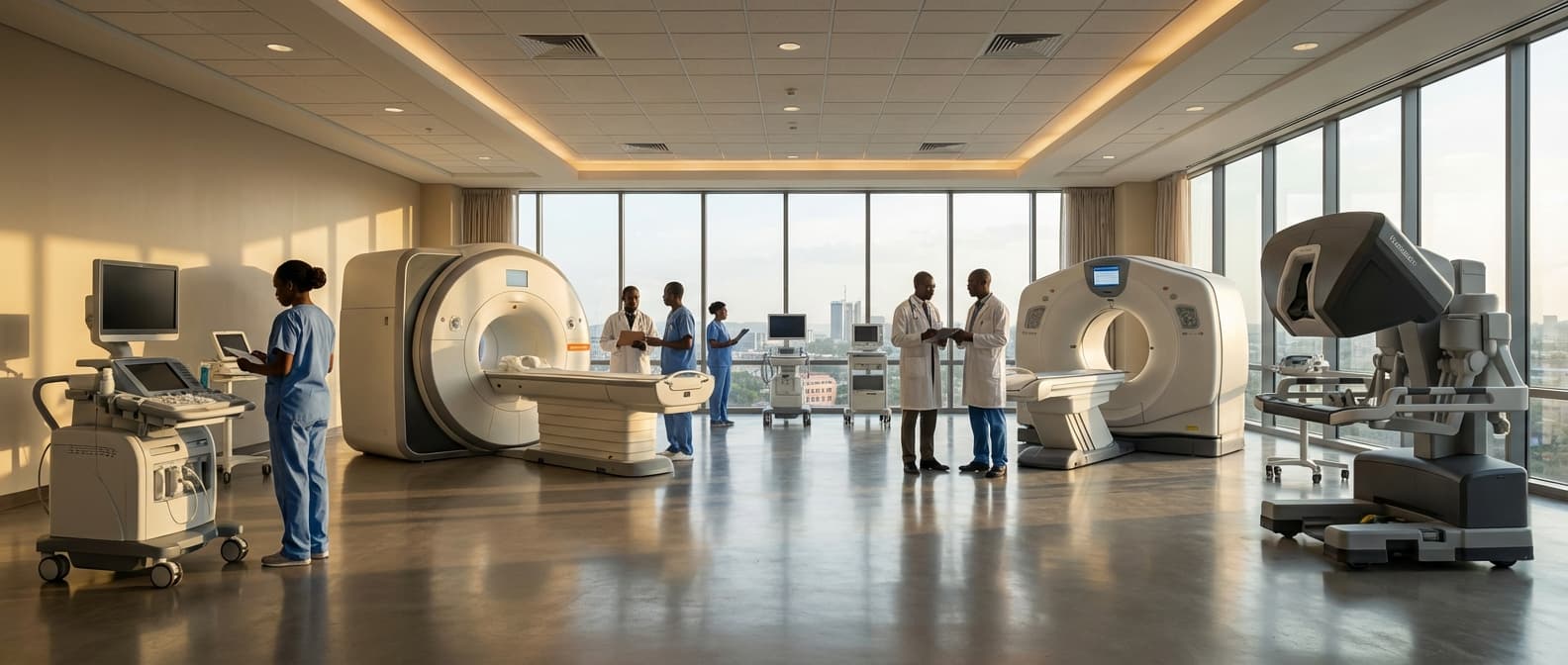
Life Support & Consumables in Burundi
Engineering Excellence & Technical Support
Reliable supply of essential medical consumables and life support equipment ensuring uninterrupted, quality patient care delivery. High-standard technical execution following OEM protocols and local regulatory frameworks.
Purified Water Stations
Deployed and maintained mobile water purification units, providing access to safe drinking water for over 5,000 individuals across multiple drought-affected regions in Burundi. This initiative significantly reduced waterborne diseases and improved community health.
Essential Medicine Stockpiles
Established resilient supply chains and prepositioned critical medicines and medical consumables in remote health clinics. This ensured uninterrupted treatment for chronic illnesses and emergency medical needs, reaching an estimated 10,000 patients annually.
Solar-Powered Refrigeration for Vaccines
Implemented a network of solar-powered vaccine refrigerators in off-grid health facilities. This maintained the cold chain integrity for vital immunizations, increasing vaccine efficacy and expanding access to preventive healthcare services for children in underserved areas.
What Is Life Support & Consumables In Burundi?
Life Support & Consumables in Burundi refers to the provision of essential medical equipment, devices, and consumable supplies necessary for the maintenance of life in individuals with critical illnesses or injuries. This service encompasses a range of products designed to assist or replace the function of failing organs and systems, ensuring patient survival and stability. The scope of these provisions is dictated by the specific clinical needs of the patient and the available healthcare infrastructure.
| Who Needs It? | Typical Use Cases | Context in Burundi |
|---|---|---|
| Patients with acute respiratory distress syndrome (ARDS). | Management of severe pneumonia, sepsis-induced respiratory failure, or complications from trauma. | Often required in intensive care units (ICUs) of referral hospitals, especially for patients with severe malaria, tuberculosis complications, or road traffic accident victims. |
| Individuals experiencing acute kidney injury (AKI) or end-stage renal disease (ESRD). | Treatment of drug overdose, severe dehydration, or chronic kidney disease progression. | Limited availability, primarily concentrated in national or major regional hospitals for acute dialysis. |
| Patients with severe malnutrition or gastrointestinal dysfunction. | Post-surgical recovery, severe burns, or neurological conditions affecting oral intake. | Essential for managing pediatric malnutrition and critical care patients, often reliant on imported supplies. |
| Critically ill patients requiring continuous physiological monitoring. | Post-operative care, cardiac arrest resuscitation, or management of shock. | Standard in any functional ICU setting, though maintenance and calibration can be challenges. |
| Individuals with severe trauma, burns, or surgical site infections. | Facilitating wound healing and preventing infection. | Crucial for managing victims of domestic accidents, violence, or extensive medical/surgical interventions. |
| Patients undergoing complex surgical procedures or requiring sedation for critical care. | Pain management, procedural sedation, and anesthetic support. | Provided in surgical theaters and ICUs of hospitals with surgical capabilities. |
Key Components of Life Support & Consumables
- Mechanical Ventilators: Devices assisting or taking over the respiratory function.
- Oxygen Concentrators/Cylinders: Providing supplemental oxygen for hypoxemia.
- Infusion Pumps: Delivering intravenous fluids, medications, and nutrition.
- Dialysis Machines: Performing renal replacement therapy for kidney failure.
- Nasogastric (NG) Tubes and Feeding Pumps: Facilitating enteral nutrition.
- Monitoring Equipment (e.g., cardiac monitors, pulse oximeters): Tracking vital physiological parameters.
- Wound Care Supplies: Dressings, antiseptics, and negative pressure wound therapy devices for severe injuries.
- Anesthesia and Sedation Drugs: Used for patient comfort and procedural management.
- Sterile Supplies: Catheters, syringes, needles, and other disposable items for invasive procedures.
Who Needs Life Support & Consumables In Burundi?
Burundi, a landlocked nation in East Africa, faces significant challenges in healthcare and development. The demand for life support and consumables is driven by a complex interplay of factors, including a nascent healthcare infrastructure, a high prevalence of communicable and non-communicable diseases, and the ongoing need for essential medical supplies in both public and private sectors. Understanding the target customers and departments is crucial for effective resource allocation and service delivery.
| Department/Unit | Key Needs | Examples of Life Support & Consumables |
|---|---|---|
| Emergency Room/Trauma Center | Immediate life-saving interventions, stabilization | Ventilators, defibrillators, IV fluids, bandages, sutures, oxygen masks, resuscitation drugs |
| Intensive Care Unit (ICU) | Continuous critical care, advanced monitoring | Mechanical ventilators, dialysis machines, infusion pumps, cardiac monitors, specialized catheters, sterile dressings |
| Operating Room/Surgical Suites | Surgical procedures, anesthesia | Anesthesia machines, surgical instruments, sterile drapes, gloves, gowns, surgical sponges, wound closure materials |
| Neonatal Intensive Care Unit (NICU) | Care for premature and critically ill newborns | Incubators, radiant warmers, neonatal ventilators, specialized feeding tubes, phototherapy units, respiratory support devices |
| Maternity Ward | Labor, delivery, and postpartum care | Fetal monitors, delivery kits, postpartum hemorrhage management supplies, newborn resuscitation equipment, sanitary pads |
| Anesthesia Department | Administration of anesthesia and pain management | Anesthesia machines, vaporizers, breathing circuits, intubation equipment, local anesthetics, sedatives |
| Laboratory Services | Diagnostic testing | Reagents, culture media, specimen collection tubes, slides, microscopes, diagnostic kits |
| Pharmacy | Dispensing of medications | Syringes, needles, IV administration sets, drug vials, sterile water, alcohol swabs |
| Blood Bank | Blood transfusion services | Blood bags, anticoagulant solutions, blood grouping reagents, transfusion filters |
| Public Health Programs (e.g., HIV/AIDS, Malaria, TB) | Prevention, diagnosis, and treatment of specific diseases | Test kits, antiretroviral drugs, antimalarial drugs, anti-tuberculosis drugs, contraceptives, vaccination supplies |
Target Customers & Departments for Life Support & Consumables in Burundi
- {"title":"Primary Healthcare Facilities","description":"These form the backbone of the Burundian healthcare system, reaching remote populations. They require a consistent supply of basic consumables and essential life support equipment for immediate care."}
- {"title":"District and Regional Hospitals","description":"Serving as referral centers, these facilities handle more complex cases. They necessitate a wider range of life support machines, specialized consumables, and diagnostic materials."}
- {"title":"National Referral Hospitals","description":"Located in major urban centers, these are the apex of the healthcare hierarchy. They require advanced life support technology, a comprehensive inventory of specialized consumables, and materials for critical care units."}
- {"title":"Maternal and Child Health Centers","description":"Focusing on the health of mothers and children, these centers are crucial for reducing infant and maternal mortality. They require specific consumables for deliveries, neonatal care, and immunization programs."}
- {"title":"Emergency Medical Services (EMS)","description":"Though still developing, EMS units, including ambulances, require portable life support equipment and a steady supply of emergency consumables to provide pre-hospital care."}
- {"title":"Non-Governmental Organizations (NGOs) & International Aid Agencies","description":"Many NGOs and international organizations play a vital role in supplementing government healthcare efforts. They procure and distribute life support and consumables, often targeting specific health programs or underserved regions."}
- {"title":"Private Clinics and Hospitals","description":"While a smaller sector, private facilities cater to a segment of the population with higher purchasing power and require a range of quality consumables and some life support equipment."}
- {"title":"Research and Training Institutions","description":"Medical schools and research centers require specialized consumables and equipment for training healthcare professionals and conducting medical research."}
Life Support & Consumables Process In Burundi
This document outlines the typical workflow for Life Support & Consumables procurement and distribution within an organization operating in Burundi. The process begins with a formal request, moves through multiple stages of approval and sourcing, and culminates in the successful delivery and accounting of the requested items.
| Stage | Description | Key Activities | Responsible Parties | Potential Challenges in Burundi |
|---|---|---|---|---|
| Inquiry/Request Initiation | The process begins when a department or individual identifies a need for life support items (e.g., medical supplies, hygiene kits) or consumables (e.g., fuel, office supplies). | Submission of a formal request form, detailing item specifics, quantity, and justification. | Requesting Department/Individual | Lack of standardized request forms, delays in initial communication. |
| Needs Assessment & Budgeting | The request is reviewed to confirm the necessity and alignment with project needs and available budget. Estimated costs are determined. | Verification of request justification, cross-referencing with project plans, initial budget check. | Requesting Department, Finance Department, Project Manager | Inaccurate initial cost estimations, budget constraints, competing priorities. |
| Procurement Planning | A detailed plan is developed for acquiring the requested items, including defining specifications, quantities, and delivery timelines. | Developing a procurement plan, defining technical specifications, market research on potential suppliers. | Procurement Department, Logistics Department, Technical Experts | Difficulty in obtaining precise specifications for certain items, limited local market knowledge. |
| Sourcing & Supplier Selection | Potential suppliers are identified, vetted, and evaluated based on various criteria. This may involve tendering processes. | Issuing Request for Quotations (RFQs) or Tenders, evaluating bids, conducting supplier due diligence (e.g., verifying licenses, past performance). | Procurement Department, Finance Department, Legal Department | Limited number of reliable local suppliers, potential for corruption or collusion, currency fluctuations affecting pricing. |
| Order Placement & Contract Management | Once a supplier is selected, a formal purchase order or contract is issued, outlining terms and conditions. | Issuing Purchase Order (PO) or contract, negotiating payment terms, ensuring compliance with organizational and national regulations. | Procurement Department, Legal Department, Finance Department | Bureaucratic delays in contract approval, language barriers in contracts, ensuring enforceability of contracts. |
| Logistics & Transportation | Arrangements are made for the safe and timely transportation of goods from the supplier to the final destination in Burundi. | Arranging freight (air, sea, land), customs clearance, securing appropriate transportation vehicles, insurance. | Logistics Department, Procurement Department | Poor road infrastructure, customs delays and complexities, security risks during transit, limited availability of reliable transport providers. |
| Receipt & Inspection | Upon arrival, goods are received, inspected for quantity, quality, and damage against the order specifications. | Unloading of goods, conducting physical inspection, verifying documentation (e.g., packing list, invoice), reporting discrepancies. | Logistics Department, Warehouse Staff, Quality Control Personnel | Inadequate inspection facilities, staff training on inspection procedures, potential for pilferage during transit. |
| Distribution & Deployment | The procured items are distributed to the intended end-users or project sites. | Warehousing of items, organizing distribution schedules, issuing items to beneficiaries/departments, obtaining proof of receipt. | Logistics Department, Warehouse Staff, Field Coordinators | Reaching remote locations, ensuring secure storage at destination, managing distribution to diverse groups. |
| Inventory Management & Reporting | Maintaining accurate records of all received and distributed items, and generating reports on stock levels and consumption. | Updating inventory management system, conducting stock takes, generating regular inventory reports, forecasting future needs. | Warehouse Staff, Logistics Department, Finance Department | Lack of robust inventory management systems, manual data entry errors, difficulty in tracking items across multiple locations. |
| Payment & Financial Reconciliation | Finalizing payments to suppliers and reconciling all financial transactions related to the procurement. | Processing invoices, making payments to suppliers, reconciling accounts, generating financial reports. | Finance Department, Procurement Department | Delays in payment processing due to banking systems, currency conversion issues, auditing requirements. |
Key Stages in Life Support & Consumables Process
- Inquiry/Request Initiation
- Needs Assessment & Budgeting
- Procurement Planning
- Sourcing & Supplier Selection
- Order Placement & Contract Management
- Logistics & Transportation
- Receipt & Inspection
- Distribution & Deployment
- Inventory Management & Reporting
- Payment & Financial Reconciliation
Life Support & Consumables Cost In Burundi
Life support and consumables are essential for healthcare facilities and vulnerable populations in Burundi. The cost of these items is significantly influenced by a variety of factors, including import costs, local production capacity, transportation, currency fluctuations, and market demand. Burundi, being a landlocked country and a developing economy, often faces higher prices for imported goods. Local manufacturing of medical supplies is limited, increasing reliance on international suppliers. Government policies, subsidies, and taxes also play a crucial role in determining final pricing. The Malagasy Ariary (MGA) is the local currency, and prices can vary widely depending on the specific product, its quality, and the vendor. Bulk purchasing and long-term contracts can sometimes lead to lower unit costs.
| Item Category | Unit of Measure | Approximate Price Range (MGA) | Notes |
|---|---|---|---|
| Basic Antiseptic Solution (e.g., Povidone-Iodine) | 500ml Bottle | 5,000 - 15,000 MGA | Price varies by concentration and brand. |
| Sterile Gauze Pads | Pack of 10 | 3,000 - 8,000 MGA | Depends on size and absorbency. |
| Disposable Syringes (e.g., 5ml) | Box of 100 | 25,000 - 60,000 MGA | Imported brands tend to be more expensive. |
| Intravenous (IV) Fluids (e.g., Normal Saline 500ml) | Bag | 7,000 - 20,000 MGA | Availability can fluctuate. Cold chain maintenance adds cost. |
| Gloves (Nitrile/Latex, Box of 100) | Box | 30,000 - 80,000 MGA | Medical grade vs. general purpose. |
| Basic Pain Relievers (e.g., Paracetamol Tablets) | Strip of 10 | 2,000 - 5,000 MGA | Generic options are cheaper. |
| Oxygen (Medical Grade) | Cylinder (10L) | 50,000 - 150,000 MGA | Includes cylinder rental and refilling. Price highly dependent on supply. |
| Basic Surgical Sutures | Pack (e.g., 12) | 10,000 - 30,000 MGA | Material and needle type influence price. |
Key Pricing Factors for Life Support & Consumables in Burundi
- Import Duties and Taxes
- Transportation and Logistics Costs (especially due to landlocked status)
- Currency Exchange Rates (MGA vs. USD/EUR)
- Local Production vs. Import Dependence
- Quality and Brand Reputation
- Supplier Markup and Distribution Channels
- Government Regulations and Price Controls (if any)
- Market Demand and Availability
- Storage and Handling Requirements (e.g., cold chain for some medications)
Affordable Life Support & Consumables Options
Ensuring access to essential life support and consumables is paramount, and several strategies can help manage costs effectively. This guide explores valuable options, focusing on understanding value bundles and implementing smart cost-saving measures.
| Cost-Saving Strategy | Description | Potential Savings |
|---|---|---|
| Bulk Purchasing | Buying larger quantities of consumables at once often leads to a lower per-unit cost. Requires careful inventory management to avoid waste. | Significant savings on frequently used items. |
| Subscription Services | Regular, scheduled delivery of consumables at a set price. Many providers offer discounts for recurring orders. | Convenience, predictable budgeting, and often a discount compared to one-off purchases. |
| Generic vs. Brand Name | Opting for generic or store-brand consumables can significantly reduce costs without compromising quality for many essential items. | Can range from 10-30% savings depending on the product. |
| Negotiating with Suppliers | For larger organizations or long-term contracts, negotiating prices directly with suppliers can yield substantial discounts. | Can be highly variable but potentially very impactful. |
| Exploring Different Providers | Comparing prices and service offerings from multiple suppliers for both equipment and consumables is crucial for finding the best value. | Varies by product and supplier, but essential for competitive pricing. |
| Utilizing Insurance and Assistance Programs | Investigate what your health insurance covers for life support equipment and consumables. Many government and non-profit programs offer financial assistance. | Can significantly reduce out-of-pocket expenses, potentially covering a large portion of costs. |
| Refurbished Equipment | Consider purchasing refurbished life support equipment from reputable sources. These are often significantly cheaper than new units and come with a warranty. | Can save 30-60% on the initial equipment cost. |
| Preventative Maintenance | Regular maintenance of life support equipment can prevent costly breakdowns and extend the lifespan of devices, reducing the need for premature replacement. | Minimizes unexpected repair costs and extends equipment life. |
Understanding Value Bundles
- {"title":"What are Value Bundles?","description":"Value bundles are packages of goods or services offered together at a reduced price compared to purchasing each item individually. In the context of life support and consumables, this could mean combining medical equipment with its necessary supplies, or a subscription service for regular delivery of essential items."}
- {"title":"Benefits of Bundling","description":"Bundling simplifies procurement, often provides cost savings, and can ensure a consistent supply of related items, reducing the risk of shortages."}
- {"title":"Examples of Bundles","description":"Common examples include oxygen concentrator kits (concentrator, tubing, filters), wound care packages (dressings, antiseptics, bandages), or CPAP machine bundles (machine, mask, tubing, filters)."}
Verified Providers In Burundi
In Burundi, ensuring access to quality healthcare is paramount. When seeking medical services, identifying and choosing 'Verified Providers' is crucial. These providers have undergone a rigorous vetting process, confirming their adherence to high standards of care, ethical practices, and regulatory compliance. Among these, Franance Health stands out as a leading example of a verified provider. Their commitment to excellence, patient-centric approach, and comprehensive services make them the best choice for your healthcare needs in Burundi.
| Aspect | Franance Health's Commitment |
|---|---|
| Quality of Care | Consistently exceeds national standards, evident in patient outcomes and satisfaction. |
| Professionalism | Adherence to medical ethics, transparent patient communication, and respect for patient rights. |
| Infrastructure | Up-to-date medical equipment and a clean, well-maintained facility. |
| Staff Competency | Highly trained and continuously updated medical personnel. |
| Regulatory Compliance | Full adherence to all Burundian healthcare regulations and licensing requirements. |
Why Franance Health is the Best Choice:
- Rigorous Verification Process: Franance Health has successfully met all stringent criteria set by the verification authorities in Burundi, ensuring they operate at the highest standards.
- Experienced and Qualified Medical Professionals: Their team comprises highly skilled doctors, nurses, and specialists with extensive experience and a dedication to continuous professional development.
- State-of-the-Art Facilities and Technology: Franance Health invests in modern medical equipment and infrastructure, providing advanced diagnostic and treatment capabilities.
- Comprehensive Range of Services: From primary care to specialized treatments, they offer a broad spectrum of medical services to cater to diverse patient needs.
- Patient-Centric Care: Emphasis is placed on personalized treatment plans, clear communication, and a supportive environment for all patients.
- Commitment to Ethical Practices: Franance Health upholds the highest ethical standards in all aspects of their operation, ensuring patient trust and safety.
- Accessibility and Affordability: Efforts are made to make quality healthcare accessible and reasonably priced for the Burundian population.
Scope Of Work For Life Support & Consumables
This Scope of Work (SOW) defines the requirements for the provision of Life Support and Consumables. It outlines the technical deliverables expected and the standard specifications that must be met by the selected vendor. The objective is to ensure the continuous and reliable supply of essential items necessary for the safe and effective operation of the [Project Name/Facility Name] for the duration of the contract. This includes, but is not limited to, provisions for personnel, medical supplies, operational consumables, and waste management.
| Category | Item/Service Description | Standard Specifications / Requirements | Technical Deliverable | Quantity/Frequency | Acceptance Criteria |
|---|---|---|---|---|---|
| Personnel Life Support | Potable Water | Potable water shall meet WHO drinking water standards. Minimum purity levels, tested weekly. | Weekly water quality test reports. Continuous supply guaranteed. | As required, daily monitoring and replenishment. | Water quality reports within specified limits. No interruption in supply. |
| Personnel Life Support | Food Rations (Non-Perishable) | Nutritionally balanced, calorie-appropriate, and meeting all food safety standards (e.g., HACCP). Variety to be offered. | Monthly menu plan. Delivery of pre-packaged rations. | Monthly replenishment, or as per consumption. | Food items within expiry dates, properly sealed, and free from damage. Nutritional content as per approved plan. |
| Personnel Life Support | Hygiene Kits | Individually packaged kits including soap, toothpaste, toothbrushes, shampoo, and other essential personal hygiene items. Hypoallergenic options available. | Delivery of fully stocked hygiene kits. | Quarterly replenishment, or as per specified personnel numbers. | Kits complete and items within expiry dates. Provision of hypoallergenic options upon request. |
| Medical Supplies | First Aid Kits | Comprehensive kits compliant with [Specify relevant standard, e.g., EN 13157 or OSHA]. Contents to be regularly inspected and replenished. | Initial deployment of fully stocked kits. Monthly inspection and replenishment reports. | Monthly replenishment of used or expired items. | Kits fully stocked as per standard. All items within expiry dates. Inspection reports submitted on time. |
| Medical Supplies | Prescription Medications (as specified) | Must be from reputable manufacturers, meeting pharmaceutical grade standards. Strict temperature-controlled storage and transport. | Secure, temperature-controlled delivery. Certificate of analysis for each batch. | As per medical requisitions, with a defined lead time. | Medications delivered within expiry dates. Temperature logs maintained and provided. COA confirms quality. |
| Operational Consumables | Air Filtration Units | HEPA filters compliant with [Specify relevant standard, e.g., ISO 16890]. Certified for efficiency. | Delivery of certified replacement filters. | As per filter lifespan and operational demands. | Filters meet specified efficiency ratings. Certification documentation provided. |
| Operational Consumables | Power Generation Fuel (e.g., Diesel) | High-quality fuel meeting [Specify relevant fuel standard, e.g., ASTM D975]. Regular testing for contaminants. | Scheduled fuel deliveries. Fuel quality test reports. | As per operational requirements and fuel tank capacity. | Fuel quality reports within specified limits. Delivery adheres to schedule. No contamination. |
| Waste Management | Biohazard Waste Disposal Bags | Puncture-resistant, leak-proof bags meeting [Specify relevant standard, e.g., UN 3291]. Clearly labeled. | Delivery of approved disposal bags. | As per waste generation rates. | Bags meet specified standards and are properly labeled. No leakage or damage. |
| Waste Management | Sanitation Consumables (e.g., disinfectants, cleaning agents) | Environmentally friendly, non-toxic, and effective cleaning agents and disinfectants meeting [Specify relevant safety standards]. | Delivery of approved sanitation consumables. | As per cleaning schedules and requirements. | Consumables are as specified, effective, and meet safety standards. Safety data sheets (SDS) provided. |
Key Areas of Responsibility
- Procurement and delivery of specified life support equipment and consumables.
- Maintenance and calibration of life support systems (if applicable).
- Inventory management and stock control.
- Reporting on stock levels, usage, and potential shortages.
- Compliance with all relevant health, safety, and environmental regulations.
- Provision of technical support and training (if required).
- Emergency supply and response capabilities.
Service Level Agreement For Life Support & Consumables
This Service Level Agreement (SLA) outlines the commitment for the provision and maintenance of Life Support & Consumables, detailing response times and uptime guarantees for critical services.
| Service Category | Uptime Guarantee | Response Time (Critical Failure) | Response Time (Routine Request) |
|---|---|---|---|
| Oxygen Supply (Medical Grade) | 99.99% | 15 minutes | 4 hours |
| Critical Medications | 99.95% | 30 minutes | 8 hours |
| Sterile Medical Supplies (e.g., IV kits, wound dressings) | 99.80% | 1 hour | 12 hours |
| Life Support Equipment (Ventilators, Infusion Pumps) | 99.90% | 30 minutes (for repair/replacement) | 4 hours (for scheduled maintenance) |
| General Consumables (e.g., gloves, syringes) | 99.50% | 2 hours (for critical shortages) | 24 hours |
Scope of Services
- Provision and delivery of essential life support consumables (e.g., oxygen, medications, sterile supplies).
- Maintenance and calibration of life support equipment.
- On-demand replenishment of critical consumables.
- Technical support for life support equipment malfunctions.
Frequently Asked Questions

Ready when you are
Let's scope your Life Support & Consumables in Burundi project in Burundi.

Scaling healthcare logistics and technical systems across the entire continent.