
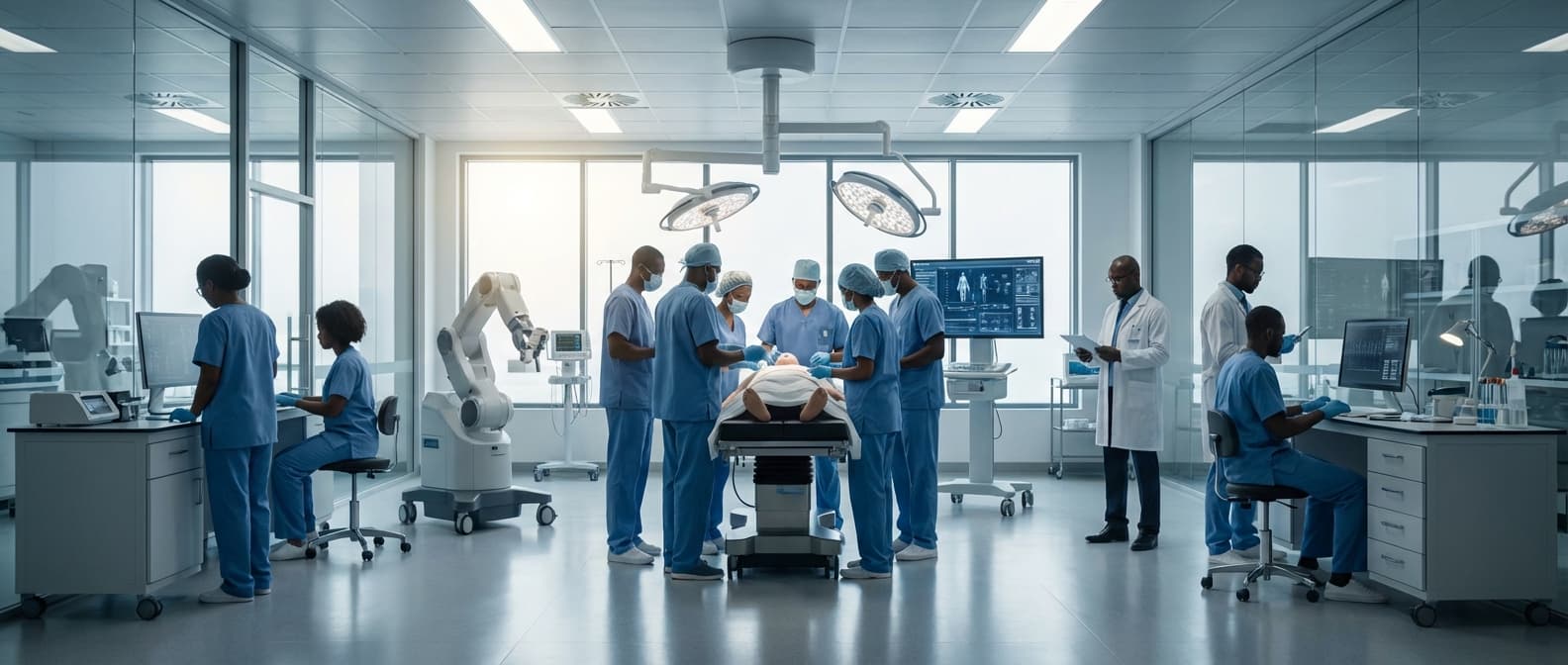
Managed Equipment Service (MES) in Burundi
Engineering Excellence & Technical Support
Long‑term equipment provision with uptime SLAs and lifecycle management. High-standard technical execution following OEM protocols and local regulatory frameworks.
Optimized Medical Device Uptime
Leveraging advanced remote monitoring and predictive maintenance, our MES in Burundi ensures critical medical equipment operates at peak performance, minimizing downtime and guaranteeing continuous patient care services across healthcare facilities.
Streamlined Spare Parts & Logistics
Our MES provides a robust supply chain management system for medical equipment spare parts in Burundi, ensuring timely availability and efficient distribution to reduce repair delays and maintain operational readiness, even in remote locations.
Enhanced Technical Expertise & Training
We empower local Burundian biomedical technicians through comprehensive, hands-on training programs as part of our MES, building in-country capacity for advanced equipment maintenance and repair, fostering self-sufficiency and long-term sustainability.
What Is Managed Equipment Service (Mes) In Burundi?
Managed Equipment Service (MES) in Burundi refers to a comprehensive outsourcing model wherein a specialized third-party provider assumes responsibility for the procurement, installation, maintenance, and management of critical medical equipment within healthcare facilities. This service aims to optimize equipment utilization, ensure operational continuity, reduce total cost of ownership, and improve the quality of patient care through reliable and technologically advanced equipment. MES can encompass a broad spectrum of medical devices, from diagnostic imaging systems and laboratory equipment to surgical instruments and patient monitoring devices.
| Who Needs MES in Burundi? | Typical Use Cases | |||
|---|---|---|---|---|
| Public Hospitals and Health Centers: Facing budget constraints, limited technical expertise, and the need to expand service offerings. | Upgrading diagnostic imaging capabilities (e.g., X-ray, Ultrasound, CT scanners) in regional hospitals. | Establishing or modernizing laboratory services with automated analysers and diagnostic equipment. | Ensuring reliable operation of critical care equipment (e.g., ventilators, patient monitors) in Intensive Care Units (ICUs). | Implementing a fleet management system for a large number of essential medical devices across multiple facilities. |
| Private Hospitals and Clinics: Seeking to enhance service quality, reduce capital expenditure, and access advanced technologies without significant upfront investment. | Outsourcing the management of surgical suites with advanced endoscopic and laparoscopic equipment. | Providing on-site technical support and rapid repair for specialized equipment like MRI machines or linear accelerators. | Implementing telehealth solutions requiring integrated diagnostic and communication equipment. | Focusing internal resources on patient care and clinical operations rather than equipment management. |
| Non-Governmental Organizations (NGOs) and Development Projects: Implementing healthcare infrastructure in underserved areas and requiring sustainable equipment solutions. | Deploying and maintaining essential medical equipment for mobile clinics or outreach programs. | Establishing new healthcare facilities in remote regions with limited local technical capacity. | Ensuring long-term availability and maintainability of donated medical equipment. | |
| National Health Ministries and Agencies: Aiming to standardize equipment, improve national health outcomes, and manage public health infrastructure efficiently. | Implementing national programs for disease screening and diagnostics through managed equipment fleets. | Centralized procurement and management of high-value medical equipment for the public sector. | Ensuring equitable access to modern medical technology across the country. |
Key Components of Managed Equipment Service (MES) in Burundi:
- Equipment Procurement and Installation: Sourcing, acquisition, and setup of new or replacement medical equipment according to facility specifications and needs.
- Maintenance and Repair: Proactive and reactive maintenance, including scheduled servicing, calibration, and emergency repairs to minimize downtime.
- Asset Management: Comprehensive tracking, inventory control, and lifecycle management of all contracted equipment.
- Technology Upgrades and Replacements: Planning and executing upgrades or replacements to ensure facilities have access to current and effective medical technologies.
- Clinical Engineering Support: Providing expertise in the safe, effective, and efficient use of medical technology, including user training and competency assessment.
- Performance Monitoring and Reporting: Continuous tracking of equipment performance, uptime, and utilization, with regular reporting to the client.
- Risk Management and Compliance: Ensuring equipment meets regulatory standards, safety protocols, and quality assurance requirements.
- Financial Management and Cost Optimization: Managing equipment budgets, negotiating service level agreements (SLAs), and identifying cost-saving opportunities.
Who Needs Managed Equipment Service (Mes) In Burundi?
Managed Equipment Service (MES) in Burundi offers a comprehensive solution for organizations that rely heavily on specialized medical equipment but lack the in-house expertise, resources, or desire to manage its procurement, installation, maintenance, and eventual replacement. MES providers take on the full lifecycle responsibility for the equipment, allowing clients to focus on their core operations while ensuring access to modern, reliable, and properly functioning medical technology.
| Target Customer Type | Key Departments/Areas Benefiting from MES |
|---|---|
| Public Hospitals and Healthcare Facilities | Radiology, Cardiology, Intensive Care Units (ICUs), Operating Theatres, Emergency Departments, Central Sterilization Supply Departments (CSSDs), Laboratories, Renal Dialysis Units |
| Private Hospitals and Clinics | Diagnostic Imaging (X-ray, Ultrasound, CT Scans), Surgical Suites, Pathology Labs, Maternity Wards, Outpatient Departments |
| Medical Research Institutions | Specialized Laboratories (e.g., genetics, microbiology), Imaging Facilities for research purposes, Clinical Trial Equipment |
| Large Non-Governmental Organizations (NGOs) with Healthcare Programs | Mobile Clinics, Field Hospitals, Community Health Centers, Specialized Treatment Centers (e.g., for specific diseases) |
| Government Ministries of Health | National Reference Laboratories, Central Medical Stores (for equipment management), Public Health Programs requiring specialized equipment |
| Diagnostic Laboratories | Clinical Chemistry, Hematology, Microbiology, Molecular Diagnostics, Histopathology Departments |
Target Customers for MES in Burundi
- Public Hospitals and Healthcare Facilities
- Private Hospitals and Clinics
- Medical Research Institutions
- Large Non-Governmental Organizations (NGOs) with Healthcare Programs
- Government Ministries of Health
- Diagnostic Laboratories
Managed Equipment Service (Mes) Process In Burundi
The Managed Equipment Service (MES) process in Burundi is a comprehensive workflow designed to provide healthcare facilities with access to essential medical equipment through a service contract rather than outright purchase. This model shifts the burden of equipment acquisition, maintenance, and eventual replacement to a service provider. The process typically begins with an inquiry from a healthcare institution and concludes with the operationalization and ongoing management of the equipment. The core objective is to ensure continuous availability and optimal functionality of medical devices, thereby improving healthcare delivery.
| Stage | Description | Key Activities | Responsible Parties |
|---|---|---|---|
| The healthcare facility identifies a need for specific medical equipment or a broader range of services. The MES provider engages to understand these requirements. | Contact initiation, facility visit, needs analysis, budget discussion, service scope definition. | Healthcare Facility, MES Provider |
| Based on the needs assessment, the MES provider develops a tailored proposal outlining the equipment, services, costs, and terms. | Technical proposal creation, financial proposal generation, service level agreement (SLA) drafting, proposal submission. | MES Provider |
| The healthcare facility and MES provider negotiate the terms of the agreement, including pricing, duration, SLAs, and responsibilities. | Contract review, negotiation sessions, amendment incorporation, final contract signing. | Healthcare Facility, MES Provider |
| The MES provider procures the agreed-upon equipment from manufacturers and arranges for its delivery to the healthcare facility. | Equipment sourcing, quality checks, shipping arrangements, customs clearance, delivery to site. | MES Provider |
| The procured equipment is installed, tested, and commissioned to ensure it meets specifications and is ready for clinical use. | Site preparation, equipment installation, calibration, functionality testing, performance validation. | MES Provider, Healthcare Facility Staff (for site readiness) |
| Clinical and technical staff at the facility are trained on the operation, basic maintenance, and troubleshooting of the new equipment. | User training sessions, technical training, on-the-job support, training material provision. | MES Provider, Healthcare Facility Staff |
| The MES provider is responsible for scheduled preventive maintenance and reactive repairs to ensure equipment uptime. | Routine maintenance checks, spare parts management, breakdown response, repair execution, equipment servicing. | MES Provider |
| The MES provider and healthcare facility monitor equipment performance against agreed-upon SLAs and generate regular reports. | Data collection on equipment usage and downtime, performance analysis, report generation, review meetings. | MES Provider, Healthcare Facility |
| As equipment reaches the end of its lifecycle or as technology advances, the MES provider manages its replacement or upgrade. | End-of-life assessment, replacement planning, new equipment procurement and installation, old equipment disposal. | MES Provider |
| Upon contract expiry, the service is formally closed, and a comprehensive review of the MES engagement is conducted. | Contractual obligations fulfillment, final equipment handover (if applicable), performance review, lessons learned documentation. | MES Provider, Healthcare Facility |
MES Process Workflow in Burundi
- Inquiry and Needs Assessment
- Proposal Development and Submission
- Contract Negotiation and Signing
- Equipment Procurement and Delivery
- Installation and Commissioning
- Training and Capacity Building
- Ongoing Maintenance and Repair
- Performance Monitoring and Reporting
- Equipment Replacement and Upgrade
- Service Closure and Review
Managed Equipment Service (Mes) Cost In Burundi
Managed Equipment Service (MES) in Burundi, while not as widely established or standardized as in some developed economies, typically involves a comprehensive agreement where a service provider assumes responsibility for the procurement, installation, maintenance, and eventual replacement of medical equipment for healthcare facilities. The costs associated with MES in Burundi are influenced by a variety of factors, making it challenging to provide a precise universal price range. These factors include the type and complexity of the equipment, the service level agreement (SLA) negotiated, the duration of the contract, the geographical location of the healthcare facility within Burundi, and the provider's business model and overhead. Local currency, the Burundian Franc (BIF), is used for all transactions. The economic landscape and currency fluctuations can also play a role in the overall cost. For smaller clinics, the MES might cover basic diagnostic tools, while larger hospitals could engage in MES for advanced imaging machinery like MRI or CT scanners. The level of support, including response times for maintenance and the availability of spare parts, directly impacts pricing. Furthermore, the inclusion of training for local staff on equipment operation and basic troubleshooting is often factored into the MES cost. Due diligence in contract negotiation is crucial to ensure transparency and alignment with the facility's budget and operational needs.
| Equipment Category | Estimated Annual MES Cost Range (BIF) | Notes |
|---|---|---|
| Basic Diagnostic Equipment (e.g., Ultrasound, ECG) | 5,000,000 - 15,000,000 | Covers routine maintenance, minor repairs, and potentially some consumables. Prices vary based on specific models and expected usage. |
| Mid-Range Imaging (e.g., X-ray machines) | 15,000,000 - 40,000,000 | Includes preventive maintenance, emergency repairs, and spare parts. Larger facilities with higher patient throughput will see higher costs. |
| Advanced Imaging (e.g., CT Scanners, MRI) | 40,000,000 - 150,000,000+ | Significantly higher costs due to the complexity, specialized parts, and need for highly trained technicians. May include site preparation and infrastructure adjustments. |
| Laboratory Equipment (e.g., Automated Analyzers) | 8,000,000 - 30,000,000 | Dependent on the automation level and throughput. Often includes calibration and quality control support. |
| Surgical & Anesthesia Equipment (e.g., Ventilators, Electrosurgical Units) | 6,000,000 - 25,000,000 | Focuses on ensuring functionality and safety. May include regular servicing and calibration. |
Key Pricing Factors for MES in Burundi
- Type and Complexity of Equipment
- Service Level Agreement (SLA) Specifications
- Contract Duration
- Geographical Location of Facility
- Provider's Business Model and Overhead
- Inclusion of Training and Support Services
- Availability and Cost of Spare Parts
- Economic Conditions and Currency Fluctuations
Affordable Managed Equipment Service (Mes) Options
Managed Equipment Service (MES) can be a cost-effective solution for businesses to ensure their essential equipment is well-maintained and operational. This service typically involves outsourcing the management, maintenance, and repair of IT and other business equipment to a third-party provider. Affordable MES options often leverage value bundles and strategic cost-saving measures to deliver significant benefits without breaking the bank. Understanding these approaches is key to selecting the right MES plan for your organization.
| Value Bundle Type | Description | Cost-Saving Benefit |
|---|---|---|
| Basic Maintenance Bundle | Covers routine preventative maintenance and essential on-site support for core equipment. | Reduces emergency repair costs and extends equipment lifespan through regular upkeep. |
| Comprehensive Support Bundle | Includes basic maintenance plus priority on-demand repair, remote diagnostics, and software updates. | Minimizes downtime, improves operational efficiency, and prevents costly data breaches from outdated software. |
| Full Lifecycle Bundle | Encompasses all aspects, from initial procurement and setup to ongoing maintenance, repair, and eventual replacement planning. | Optimizes capital expenditure, avoids costly end-of-life equipment issues, and ensures a consistent technology refresh cycle. |
| Specialized Equipment Bundle | Tailored for specific types of equipment (e.g., medical devices, industrial machinery) with specialized maintenance requirements. | Ensures compliance with industry standards and reduces the risk of expensive, specialized repairs by relying on expert technicians. |
Key Components of Affordable MES
- Proactive Maintenance: Regular inspections and preventative maintenance reduce the likelihood of costly breakdowns.
- On-Demand Repair Services: Prompt and efficient repair when issues do arise, minimizing downtime.
- Inventory Management: Tracking and managing equipment assets, including replacement parts.
- Remote Monitoring and Diagnostics: Utilizing technology to identify potential problems before they impact performance.
- Software and Firmware Updates: Ensuring equipment runs on the latest, most secure versions.
- Lifecycle Management: Planning for equipment upgrades and replacements to avoid obsolescence.
Verified Providers In Burundi
When seeking healthcare services in Burundi, ensuring you are receiving care from verified and credentialed providers is paramount. Franance Health stands out as a beacon of trust, offering a network of healthcare professionals who have undergone rigorous vetting processes. This commitment to verification not only safeguards patient well-being but also elevates the standard of medical care available in the country. Understanding the credentials and the rigorous selection process employed by Franance Health highlights why their network represents the best choice for reliable and high-quality healthcare.
| Provider Type | Typical Credentials Verified | Franance Health Added Value |
|---|---|---|
| Doctors | Medical Degree (MD), Specialist Certifications, Licensure by the Ministry of Health, Membership in professional medical associations. | Verification of board certifications, background checks for disciplinary actions, assessment of clinical experience in relevant specialties. |
| Nurses | Nursing Diploma/Degree, Nursing License, Specialization certifications (e.g., midwifery, critical care). | Confirmation of nursing registration and good standing, verification of specialized training, checks for adherence to nursing ethics. |
| Pharmacists | Pharmacy Degree, Pharmacy License, Registration with the Order of Pharmacists. | Verification of dispensing licenses, checks for compliance with drug regulations, assurance of ethical pharmaceutical practice. |
| Technicians (Lab, Radiology) | Relevant Diplomas/Certificates, Professional Registration/Licensure. | Confirmation of technical qualifications, verification of practical skills, assessment of adherence to safety protocols. |
| Allied Health Professionals | Specific Diplomas/Degrees, Professional Body Registrations (where applicable). | Verification of their specific professional credentials and any relevant governing body accreditations. |
Key Aspects of Franance Health Verification
- Rigorous Credentialing: Franance Health meticulously verifies the educational background, professional licenses, and certifications of all affiliated healthcare providers.
- Experience and Competence: Beyond formal qualifications, Franance Health assesses the practical experience and demonstrated competence of their providers through a thorough review process.
- Ethical Standards: Adherence to a strict code of ethics and professional conduct is a non-negotiable requirement for all Franance Health providers.
- Continuous Professional Development: The network encourages and often requires ongoing training and professional development to ensure providers stay abreast of the latest medical advancements.
- Patient Feedback Integration: Franance Health may incorporate patient feedback mechanisms to monitor and maintain high standards of care and patient satisfaction.
- Regulatory Compliance: All providers within the Franance Health network are confirmed to be compliant with Burundian healthcare regulations and standards.
Scope Of Work For Managed Equipment Service (Mes)
This document outlines the Scope of Work (SOW) for a Managed Equipment Service (MES) contract, detailing the technical deliverables and standard specifications expected from the service provider. The MES aims to ensure the reliable, efficient, and optimal operation of specified medical equipment throughout its lifecycle, encompassing maintenance, calibration, repair, and lifecycle management.
| Deliverable | Description | Standard Specification/Requirement | Frequency/Timing | Responsibility |
|---|---|---|---|---|
| Equipment Inventory and Asset Management | Establish and maintain a comprehensive, accurate, and up-to-date inventory of all managed equipment. | Unique asset tagging (barcode, RFID), detailed equipment profiles (model, serial number, manufacturer, location, purchase date, warranty status), regular audits. | Initial inventory within 30 days of contract start; quarterly updates. | Service Provider |
| Preventive Maintenance (PM) Program | Execute a proactive maintenance program to minimize equipment downtime and prevent failures. | Manufacturer-recommended PM procedures, adherence to established schedules, use of certified technicians, documented PM checklists. | As per manufacturer recommendations and agreed schedule (e.g., quarterly, annually). | Service Provider |
| Corrective Maintenance (CM) and Repair Services | Respond to equipment malfunctions and failures promptly and effectively. | Guaranteed response times (e.g., <4 hours for critical equipment, <8 hours for non-critical), first-time fix rate targets (e.g., >90%), use of OEM or equivalent parts, detailed repair logs. | On-demand, as required. | Service Provider |
| Calibration and Performance Verification | Ensure equipment operates within specified performance tolerances and accuracy. | Traceable calibration to national/international standards, use of certified calibration equipment, documented calibration certificates, adherence to regulatory requirements. | As per manufacturer recommendations, regulatory requirements, or agreed schedule (e.g., annually). | Service Provider |
| Parts and Consumables Management | Ensure availability of necessary spare parts and consumables for repairs and PM. | Maintain adequate stock levels of common parts, efficient procurement process for specialized parts, adherence to quality standards for parts. | Continuous management; immediate procurement upon need. | Service Provider |
| Equipment Upgrades and Replacements | Provide recommendations and execute planned upgrades or replacements of aging or obsolete equipment. | Technology assessment, obsolescence forecasting, cost-benefit analysis for upgrades/replacements, managed procurement and installation process. | As per lifecycle plan and identified needs; scheduled. | Service Provider (in consultation with Client) |
| Training and Competency Assurance | Provide training to clinical staff on the safe and effective operation of managed equipment. | Customized training modules, qualified trainers, competency assessments, documentation of training provided. | On boarding of new equipment; as needed for staff changes or new procedures. | Service Provider |
| Reporting and Performance Metrics | Provide regular reports on equipment performance, maintenance activities, and service costs. | Key Performance Indicators (KPIs) including uptime, MTBF, MTTR, PM completion rates, CM costs, parts usage; monthly/quarterly reporting. | Monthly and quarterly. | Service Provider |
| Compliance and Regulatory Adherence | Ensure all managed equipment complies with relevant industry standards, regulations, and client policies. | Adherence to local, national, and international regulations (e.g., FDA, ISO), maintenance of compliance documentation, participation in audits. | Continuous. | Service Provider |
| Asset Lifecycle Management and Decommissioning | Manage the entire lifecycle of equipment, including safe and environmentally sound decommissioning. | Planning for end-of-life, secure data erasure, proper disposal/recycling in accordance with environmental regulations. | As equipment reaches end-of-life. | Service Provider |
Key Technical Deliverables
- Equipment Inventory and Asset Management
- Preventive Maintenance (PM) Program
- Corrective Maintenance (CM) and Repair Services
- Calibration and Performance Verification
- Parts and Consumables Management
- Equipment Upgrades and Replacements
- Training and Competency Assurance
- Reporting and Performance Metrics
- Compliance and Regulatory Adherence
- Asset Lifecycle Management and Decommissioning
Service Level Agreement For Managed Equipment Service (Mes)
This Service Level Agreement (SLA) outlines the performance commitments for the Managed Equipment Service (MES), focusing on response times for critical issues and guaranteed uptime for designated equipment. This document serves as a binding agreement between the Service Provider and the Client.
| Issue Severity | Response Time Target | Resolution Time Target | Uptime Guarantee (Monthly) |
|---|---|---|---|
| Critical Issue | 2 Business Hours | 8 Business Hours | 99.9% |
| Major Issue | 4 Business Hours | 24 Business Hours | 99.5% |
| Minor Issue | 8 Business Hours | 7 Business Days | 98.0% |
Key Definitions
- Critical Issue: Any equipment malfunction that renders the equipment completely inoperable and significantly impacts core business operations.
- Major Issue: Any equipment malfunction that impairs functionality but does not completely halt core business operations.
- Minor Issue: Any equipment malfunction that has minimal impact on core business operations or is a cosmetic defect.
- Downtime: The period during which the equipment is non-operational due to a fault or scheduled maintenance, excluding planned downtime for upgrades or decommissioning.
- Response Time: The time elapsed from when a ticket is logged by the Client until the Service Provider acknowledges the issue and begins investigation.
- Resolution Time: The time elapsed from when a ticket is logged by the Client until the issue is resolved and the equipment is restored to full operational status.
- Uptime Guarantee: The minimum percentage of time the equipment is expected to be operational and available for use.
Frequently Asked Questions

Ready when you are
Let's scope your Managed Equipment Service (MES) in Burundi project in Burundi.

Scaling healthcare logistics and technical systems across the entire continent.