
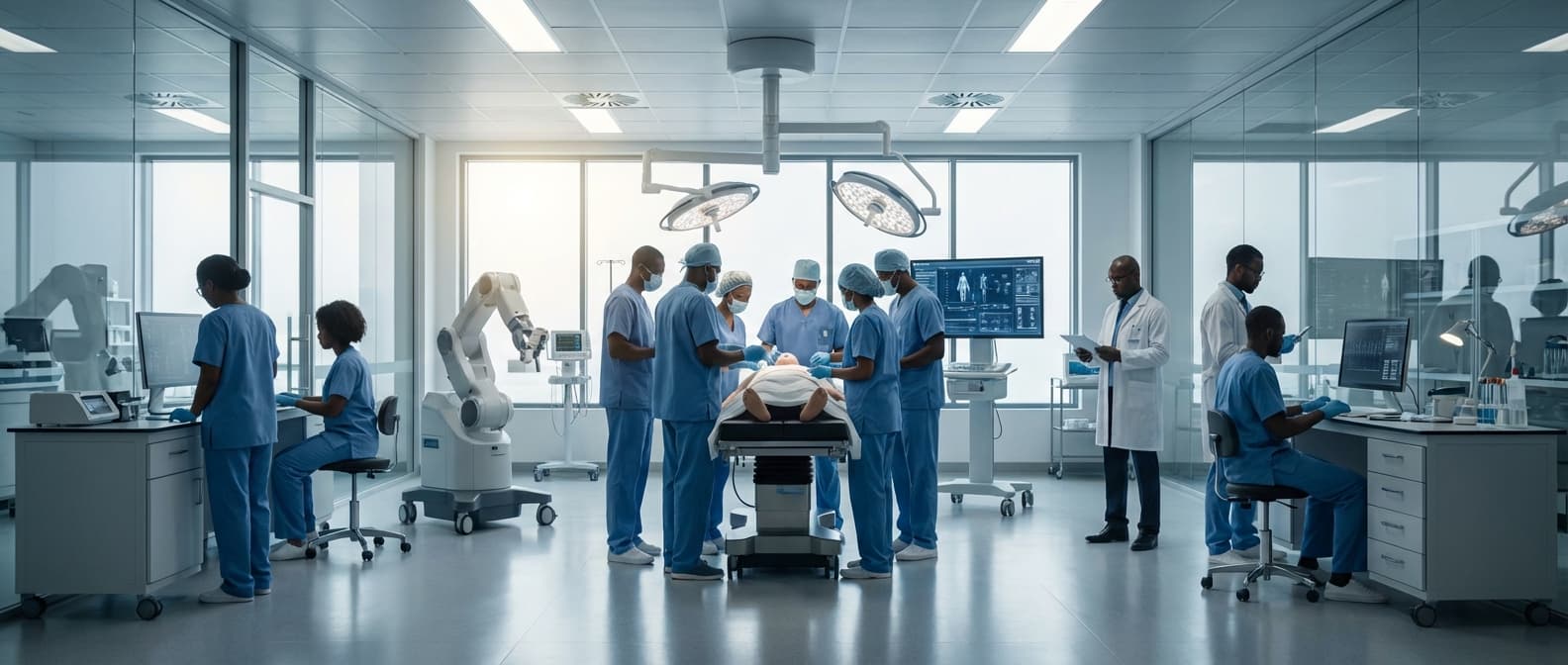
Biomedical Engineering Consulting in Burundi
Engineering Excellence & Technical Support
Equipment selection, procurement and implementation consulting High-standard technical execution following OEM protocols and local regulatory frameworks.
Bridging Healthcare Access with Mobile Diagnostics
Developing and deploying affordable, point-of-care diagnostic solutions utilizing portable biosensors and cloud-based data analysis. This initiative aims to extend diagnostic capabilities to remote villages in Burundi, enabling early disease detection and timely interventions for improved public health outcomes.
Optimizing Neurological Rehabilitation Technologies
Designing and implementing user-friendly, cost-effective neurorehabilitation devices and software tailored for the Burundian context. This includes leveraging open-source platforms and local manufacturing potential to enhance accessibility and affordability for patients recovering from neurological injuries and disorders.
Enhancing Agricultural Yields with Bio-integrated Sensors
Creating and integrating bio-integrated sensor networks for precision agriculture, monitoring soil health, water availability, and crop stress in real-time. This project empowers Burundian farmers with data-driven insights to optimize resource management, increase crop yields, and contribute to food security.
What Is Biomedical Engineering Consulting In Burundi?
Biomedical Engineering Consulting in Burundi refers to the provision of specialized technical expertise and advisory services related to the design, acquisition, implementation, maintenance, and strategic utilization of medical devices and healthcare technologies within the Burundian context. This service bridges the gap between advanced medical technology and the practical realities of healthcare delivery in Burundi, addressing challenges such as limited infrastructure, resource constraints, and specific local health needs. It encompasses a broad spectrum of activities aimed at optimizing the performance and impact of biomedical equipment in healthcare facilities, research institutions, and public health initiatives across the nation. Consultants assist in navigating regulatory frameworks, ensuring equipment compliance, and facilitating the effective integration of technology into clinical workflows and public health strategies.
| Who Needs Biomedical Engineering Consulting in Burundi? | Typical Use Cases |
|---|---|
| Public Hospitals and Health Centers: Requiring assistance with upgrading outdated equipment, implementing new technologies to expand services, and establishing effective maintenance protocols for resource-limited settings. | Assessing the need for diagnostic imaging equipment (e.g., X-ray, ultrasound) and developing plans for procurement, installation, and maintenance. Developing a comprehensive preventative maintenance schedule for critical care equipment in intensive care units. Training biomedical technicians on servicing vital signs monitors and ventilators. |
| Private Healthcare Providers: Seeking to enhance service offerings with advanced medical technologies and ensure compliance with quality standards and efficient operational management. | Advising on the selection of specialized surgical equipment for a new private clinic. Implementing a quality management system for a laboratory with advanced analytical instruments. Developing a strategy for managing a fleet of dialysis machines. |
| Non-Governmental Organizations (NGOs) and International Aid Agencies: Involved in healthcare delivery and infrastructure projects, needing expertise to ensure appropriate technology selection, sustainability, and effective implementation in project sites. | Evaluating the suitability of donated medical equipment for specific project locations and ensuring local capacity for maintenance. Designing the biomedical technology component of a new health facility funded by an international donor. Establishing a supply chain for essential medical consumables and spare parts for rural health posts. |
| Ministry of Health and National Health Institutions: Requiring strategic guidance on national health technology policies, procurement frameworks, and the development of a national biomedical engineering workforce. | Developing national guidelines for the procurement and management of medical equipment. Creating a roadmap for the adoption of telemedicine solutions to improve healthcare access in remote areas. Establishing a centralized system for tracking and managing the national medical equipment inventory. |
| Research Institutions and Universities: Needing support for setting up and maintaining specialized research equipment and ensuring its integration into academic and research programs. | Advising on the acquisition and setup of sophisticated laboratory equipment for a new research wing. Developing protocols for the calibration and validation of scientific instruments. Providing technical expertise for the maintenance of imaging equipment used in research studies. |
Key Aspects of Biomedical Engineering Consulting in Burundi
- Technology Needs Assessment: Evaluating existing and future technological requirements of healthcare facilities based on patient demographics, disease prevalence, and service offerings.
- Procurement and Acquisition Support: Assisting in the selection, specification, and procurement of appropriate medical equipment, ensuring cost-effectiveness, reliability, and suitability for local conditions and maintenance capabilities.
- Installation and Commissioning: Overseeing the proper installation, calibration, and validation of new medical devices to ensure optimal functionality and safety.
- Maintenance and Repair Strategies: Developing and implementing robust preventative and corrective maintenance programs, including training local technicians and establishing spare parts management systems.
- Regulatory Compliance and Quality Assurance: Advising on national and international standards for medical devices, ensuring adherence to safety regulations and quality management systems.
- Infrastructure Development: Providing guidance on the design and upgrade of healthcare facility infrastructure to support the integration and operation of medical technologies (e.g., power, HVAC, IT).
- Training and Capacity Building: Developing and delivering training programs for healthcare professionals and technical staff on the operation, maintenance, and safe use of medical equipment.
- Strategic Planning and Technology Roadmapping: Assisting institutions in developing long-term strategies for technology adoption, lifecycle management, and alignment with national health priorities.
- Decommissioning and Disposal: Managing the safe and environmentally responsible decommissioning and disposal of obsolete or end-of-life medical equipment.
- Clinical Engineering Services: Providing ongoing technical support and management of the medical equipment inventory, ensuring its availability, safety, and effective utilization.
Who Needs Biomedical Engineering Consulting In Burundi?
Biomedical Engineering (BME) consulting is crucial for advancing healthcare infrastructure and services in Burundi. While the country is on a path of development, addressing healthcare challenges requires specialized expertise that local institutions may not always possess internally. BME consultants can bridge these gaps, offering strategic guidance, technical solutions, and capacity building. The need for such services spans various segments of the healthcare ecosystem, from governmental bodies to private facilities and research institutions.
| Customer Type | Key Departments/Areas of Need | Specific BME Consulting Services |
|---|---|---|
| Ministry of Public Health and Sanitation | Planning & Strategy, Infrastructure Development, Procurement, Quality Assurance, Health Information Systems, Medical Equipment Management | National health infrastructure master planning, equipment needs assessment and strategic procurement plans, development of medical device regulations and standards, national biomedical engineering policy formulation, health technology assessment (HTA) framework development, capacity building for hospital engineers. |
| Public Hospitals (e.g., Hopital Général de Référence) | Engineering/Maintenance, Procurement, Clinical Departments (various) | Medical equipment inventory and lifecycle management, maintenance and repair program optimization, procurement advisory for new equipment, clinical engineering department establishment and training, facility design and renovation planning, infection control technology assessment, medical equipment tender management. |
| Military and Police Healthcare Services | Medical Corps, Logistics, Procurement | Specialized equipment needs assessment for field and base hospitals, logistics and supply chain management for medical devices, procurement of robust and field-deployable medical technologies, training for military/police medical personnel on equipment operation and maintenance. |
| Private Hospitals and Clinics | Administration, Clinical Departments (e.g., Radiology, Surgery, ICU), Biomedical Services | Feasibility studies for new facilities, medical equipment selection and procurement, facility design and layout optimization, establishment of in-house maintenance capabilities, regulatory compliance advisory, technology adoption strategy, clinical pathways integration with technology. |
| NGOs and International Organizations (e.g., WHO, UNICEF, local NGOs) | Program Management, Logistics, Technical Support, Project Implementation | Needs assessments for health projects, equipment sourcing and verification, project site technical readiness assessment, training of local healthcare workers on equipment use, post-installation support and monitoring, impact assessment of medical technology interventions. |
| Universities and Research Institutes (e.g., University of Burundi, Faculty of Medicine) | Academic Departments, Research Centers, Laboratories | Curriculum development for biomedical engineering programs, laboratory design and equipping, research equipment acquisition and integration, development of bio-medical innovation hubs, training on advanced medical technologies for researchers and students. |
| Medical Equipment Suppliers/Distributors | Sales, Technical Support, Training, After-Sales Service | Market analysis and entry strategy, technical training for local staff and end-users, development of service and maintenance contracts, regulatory compliance guidance for imported devices, product lifecycle management strategies. |
Target Customers and Departments for Biomedical Engineering Consulting in Burundi
- {"title":"Governmental and Public Healthcare Institutions","description":"These are the primary beneficiaries, responsible for national health policy, public hospital management, and procurement of medical equipment. Their needs are often related to strategic planning, infrastructure development, and ensuring equitable access to quality healthcare services."}
- {"title":"Private Healthcare Providers","description":"As private healthcare expands in Burundi, these entities require BME expertise to establish and manage modern medical facilities, ensure compliance with standards, and optimize their medical technology investments for patient care and operational efficiency."}
- {"title":"Non-Governmental Organizations (NGOs) and International Aid Agencies","description":"Organizations working on health projects in Burundi often partner with BME consultants for needs assessments, project design, equipment selection, installation, and maintenance, especially in underserved regions."}
- {"title":"Academic and Research Institutions","description":"Universities and research centers involved in health sciences and medical technology can benefit from BME consulting for curriculum development, laboratory setup, research equipment procurement, and the establishment of innovation hubs."}
- {"title":"Medical Equipment Manufacturers and Distributors","description":"Local or international companies selling medical equipment can leverage BME consultants for market analysis, regulatory compliance, technical support, and training of local technicians."}
Biomedical Engineering Consulting Process In Burundi
The biomedical engineering consulting process in Burundi, like in many other regions, follows a structured workflow designed to address the unique needs of healthcare facilities and organizations. This process ensures that clients receive tailored, effective, and sustainable solutions. It typically begins with an initial inquiry and culminates in the successful execution and evaluation of the project. The stages are interconnected, allowing for feedback and adjustments throughout the engagement.
| Stage | Description | Key Activities | Deliverables/Outcomes | Potential Challenges in Burundi Context |
|---|---|---|---|---|
| Initial Inquiry & Needs Assessment | The client reaches out to the consulting firm with a specific need or problem. | Understand client's background, identify specific challenges (e.g., equipment maintenance, procurement, infrastructure), conduct preliminary site visits, clarify objectives. | Understanding of client's needs, preliminary assessment report, identification of potential areas for consulting. | Limited accessibility to remote healthcare facilities, potential language barriers, varying levels of technical understanding among stakeholders. |
| Proposal Development & Contract Negotiation | Based on the needs assessment, a formal proposal is prepared. | Define scope of work, methodology, timelines, resource requirements, cost estimation, risk assessment, legal terms and conditions. | Detailed project proposal, formal contract/agreement. | Budget constraints of healthcare institutions, lengthy procurement/approval processes, establishing trust with new clients. |
| Project Planning & Scoping | Once the contract is signed, detailed project planning begins. | Develop a comprehensive project plan, define key performance indicators (KPIs), assign roles and responsibilities, establish communication protocols, risk mitigation strategies. | Detailed project plan, work breakdown structure (WBS), communication plan, risk register. | Ensuring availability of qualified local personnel, managing expectations, navigating regulatory frameworks. |
| Information Gathering & Analysis | Thorough data collection and analysis are crucial for informed decision-making. | Conduct site surveys, interview staff, review existing documentation (inventory, maintenance logs, training records), analyze equipment performance, assess infrastructure, research local regulations and best practices. | Detailed reports on current state, gap analysis, identified root causes of issues. | Incomplete or outdated documentation, limited access to historical data, potential reluctance from staff to share information. |
| Solution Design & Development | Developing practical and effective solutions tailored to the Burundi context. | Design and develop specifications for new equipment, create maintenance protocols and standard operating procedures (SOPs), design training programs, recommend procurement strategies, propose infrastructure upgrades. | Technical specifications, SOPs, training modules, procurement plans, design blueprints. | Availability of spare parts and consumables, compatibility with existing infrastructure, cost-effectiveness of proposed solutions, local technological infrastructure limitations. |
| Implementation & Execution | Putting the designed solutions into practice. | Procure and install equipment, implement new SOPs and maintenance schedules, conduct training sessions, supervise infrastructure upgrades, manage project milestones. | Implemented solutions, operational equipment, trained personnel, upgraded facilities. | Logistical challenges (transport, customs), import duties and taxes, potential delays due to unforeseen circumstances, ensuring sustainability of implemented solutions. |
| Training & Knowledge Transfer | Empowering local staff to manage and maintain the implemented solutions. | Deliver comprehensive training on equipment operation, maintenance, troubleshooting, and management; provide documentation and user manuals; establish mentorship programs. | Trained local workforce, user manuals, ongoing support mechanisms. | Language barriers in training materials, varying literacy levels, retention of knowledge over time, ensuring continued professional development. |
| Monitoring & Evaluation | Assessing the effectiveness and impact of the implemented solutions. | Track equipment performance, monitor adherence to SOPs, gather feedback from end-users, measure impact against initial objectives and KPIs, identify areas for improvement. | Performance reports, evaluation summaries, recommendations for future actions. | Difficulty in collecting reliable data, long-term impact assessment challenges, resource limitations for ongoing monitoring. |
| Project Closure & Follow-up | Formally concluding the project and ensuring ongoing support. | Finalize project documentation, conduct a project review meeting, handover all project deliverables, establish long-term support agreements if applicable, solicit client feedback. | Final project report, client satisfaction survey, established long-term partnership. | Ensuring continued client engagement, managing expectations for post-project support, securing future consulting opportunities. |
Biomedical Engineering Consulting Workflow in Burundi
- Initial Inquiry & Needs Assessment
- Proposal Development & Contract Negotiation
- Project Planning & Scoping
- Information Gathering & Analysis
- Solution Design & Development
- Implementation & Execution
- Training & Knowledge Transfer
- Monitoring & Evaluation
- Project Closure & Follow-up
Biomedical Engineering Consulting Cost In Burundi
Biomedical Engineering consulting costs in Burundi are influenced by several key factors. These include the complexity and scope of the project, the experience and reputation of the consultant or firm, the duration of the engagement, and the specific services required. For instance, a project involving the installation and validation of advanced imaging equipment will naturally command a higher fee than a basic needs assessment for a rural clinic. Similarly, consultants with a proven track record and specialized expertise in areas like medical device regulation, quality management systems, or infrastructure development will typically charge more. The 'out-of-pocket' expenses for travel, accommodation, and per diems for consultants operating in Burundi also contribute to the overall cost.
| Service Type / Project Complexity | Estimated Cost Range (BIF - Burundi Francs) | Notes |
|---|---|---|
| Basic Needs Assessment (e.g., for a small clinic) | 500,000 - 1,500,000 BIF | Covers initial site visit, interviews, and a preliminary report. |
| Medical Equipment Planning & Procurement Support (e.g., for a hospital department) | 1,000,000 - 3,000,000 BIF | Includes specification development, vendor evaluation, and tender assistance. |
| Installation, Commissioning, and Validation (per device/system) | 700,000 - 2,500,000 BIF | Varies significantly based on equipment complexity and manufacturer requirements. |
| Clinical Engineering Program Development (for a medium-sized hospital) | 2,000,000 - 5,000,000 BIF | Encompasses policy development, training plan, and initial implementation support. |
| Biomedical Waste Management System Design & Implementation | 1,500,000 - 4,000,000 BIF | Includes assessment, design, and guidance on operational procedures. |
| Regulatory Affairs & Compliance Consulting (e.g., for device registration) | 1,000,000 - 3,500,000 BIF | Depends on the number of products and the complexity of regulatory pathways. |
| Infrastructure Upgrade Planning (e.g., for power, water in healthcare facilities) | 2,500,000 - 7,000,000 BIF | Requires detailed technical assessment and design, potentially involving civil engineers. |
| Advanced Imaging Equipment Project (e.g., CT Scanner, MRI - installation & validation) | 5,000,000 - 15,000,000+ BIF | Highly complex, often involving international specialists and significant logistical coordination. |
Factors Influencing Biomedical Engineering Consulting Costs in Burundi:
- Project Scope and Complexity: Larger, more intricate projects requiring extensive analysis, design, or implementation will incur higher costs.
- Consultant Experience and Reputation: Senior consultants or well-established firms with strong credentials and a history of successful projects typically command higher rates.
- Duration of Engagement: The length of time the consultant is required for the project directly impacts the total cost.
- Specific Services Offered: Specialized services such as regulatory affairs, clinical engineering, IT integration, or training will have varying price points.
- Travel and Living Expenses: Costs associated with travel within Burundi, accommodation, and daily living expenses for consultants are factored in.
- Geographic Location: Consulting in remote or less accessible areas of Burundi might incur additional logistical costs.
- Urgency of the Project: Expedited projects may require premium pricing.
- Market Demand: The availability of qualified local consultants can influence pricing.
Affordable Biomedical Engineering Consulting Options
Biomedical engineering consulting can be a vital resource for companies developing medical devices, diagnostic tools, or therapeutic solutions. However, the perceived high cost can be a barrier. This guide outlines affordable biomedical engineering consulting options, focusing on value bundles and cost-saving strategies. Understanding these approaches can help organizations leverage expert knowledge without breaking their budget.
| Cost-Saving Strategy | Description | Benefits |
|---|---|---|
| Leverage Smaller or Niche Consulting Firms: | Smaller firms or specialized consultants often have lower overhead than large, established firms, allowing them to offer competitive rates. | Potentially lower hourly rates, more personalized service, and deep expertise in specific areas. |
| Utilize Freelance or Independent Consultants: | Engaging experienced freelance biomedical engineers can be significantly more cost-effective than hiring a full-time employee or a large firm for specific tasks. | Reduced overhead (no benefits, office space), flexibility in engagement duration, and access to a broad talent pool. |
| Explore University Partnerships or Academic Consulting: | Many universities have strong biomedical engineering departments. Students (under supervision) or faculty can offer consulting services at reduced rates for specific research or development projects. | Cost-effectiveness, access to cutting-edge research, and potential for innovation. Note: Scope and confidentiality may require careful management. |
| Phased Engagement and Milestone Payments: | Break down large projects into smaller phases with defined deliverables. Negotiate payment schedules based on achieving these milestones. | Manages budget effectively, reduces upfront risk, and ensures progress is being made before full payment. |
| Clearly Define Scope and Deliverables: | A precise understanding of project goals and what constitutes a successful outcome prevents scope creep and unnecessary consulting hours. | Minimizes wasted time and resources, ensures focus, and leads to more predictable costs. |
| Utilize Off-the-Shelf Tools and Templates: | For common tasks like protocol development or report generation, inquire if the consultant can leverage existing company templates or industry-standard tools to reduce custom work. | Speeds up project timelines and reduces labor costs associated with creating bespoke documents from scratch. |
| Consider Remote Consulting: | Many consulting tasks, especially documentation review, strategic planning, and data analysis, can be effectively performed remotely, reducing travel expenses. | Eliminates travel and accommodation costs, allowing for wider access to talent regardless of location. |
| Negotiate Contract Terms: | Don't be afraid to discuss pricing, payment terms, and potential discounts for long-term engagements or bundled services. | Can lead to significant savings and more favorable working conditions. |
Understanding Value Bundles
- Project-Based Bundles: These are pre-defined packages of services tailored to common project phases or needs. Examples include a 'feasibility study bundle,' 'regulatory submission preparation bundle,' or 'prototyping support bundle.' They offer a fixed scope and price, providing cost predictability.
- Retainer Bundles: For ongoing or recurring needs, retainer bundles offer access to consulting expertise for a set number of hours per month at a discounted hourly rate. This is ideal for companies that require continuous advice on R&D, quality systems, or strategic planning.
- Modular Bundles: These allow clients to pick and choose specific services or expertise from a larger offering, creating a customized bundle that meets their unique requirements. This offers flexibility and ensures you only pay for what you need.
- Outcome-Based Bundles: In some cases, consultants may offer bundles tied to specific project outcomes (e.g., achieving a specific regulatory milestone). This shifts the risk and aligns the consultant's success with the client's.
Verified Providers In Burundi
In Burundi's evolving healthcare landscape, identifying reliable and competent healthcare providers is paramount. Franance Health has emerged as a leading entity, distinguished by its rigorous credentialing process and commitment to excellence. This ensures that their network of providers meets the highest standards of medical expertise, ethical practice, and patient care. Choosing a Franance Health verified provider means opting for a level of trust and quality that directly benefits your health and well-being.
| Credential Type | Verification Standard | Benefit to Patients |
|---|---|---|
| Medical License Verification | Official validation from Burundian Ministry of Health & relevant medical boards | Confirms legal right to practice and adherence to professional regulations |
| Educational & Training Review | Verification of degrees, diplomas, and specialized training from accredited institutions | Ensures foundational medical knowledge and specialized skills |
| Professional Experience Assessment | Thorough review of past employment, peer references, and clinical practice history | Guarantees practical experience and established competency |
| Ethical Conduct & Disciplinary Record Check | Background checks for any past malpractice suits or disciplinary actions | Protects patients from practitioners with a history of unethical behavior |
| Continuing Medical Education (CME) Compliance | Confirmation of ongoing participation in accredited CME programs | Ensures providers stay updated with the latest medical advancements and techniques |
Why Franance Health Credentials Matter
- Rigorous Vetting Process: Franance Health employs a multi-stage verification process that scrutinizes medical licenses, educational qualifications, professional experience, and adherence to ethical guidelines.
- Commitment to Quality Care: Verified providers are committed to delivering patient-centered care, emphasizing evidence-based practices and continuous professional development.
- Enhanced Patient Safety: The credentialing process helps mitigate risks by ensuring that only qualified and reputable practitioners are part of the network, promoting patient safety.
- Access to Expertise: Franance Health's network includes specialists and general practitioners with diverse expertise, ensuring you can find the right care for your specific needs.
- Trust and Transparency: The "Verified Provider" designation offers a clear mark of trust and transparency, empowering patients to make informed decisions about their healthcare.
Scope Of Work For Biomedical Engineering Consulting
This Scope of Work (SOW) outlines the consulting services to be provided by [Consulting Firm Name] (hereinafter referred to as "Consultant") to [Client Name] (hereinafter referred to as "Client") for a biomedical engineering project. The project aims to [briefly describe project goal]. This document details the technical deliverables, associated standard specifications, and the overall framework for the consulting engagement.
| Deliverable | Description | Standard Specifications / Governing Standards |
|---|---|---|
| Project Plan | Detailed breakdown of tasks, timelines, resources, and milestones. | PMBOK Guide (Project Management Body of Knowledge), ISO 21500 |
| Requirements Specification Document | Comprehensive documentation of functional, performance, and safety requirements for the biomedical device/system. | IEC 62366 (Usability Engineering), ISO 14971 (Risk Management), specific device class requirements (e.g., FDA guidance documents) |
| Conceptual Design Report | Exploration of potential design concepts, including trade-off analysis, material selection, and initial feasibility assessment. | Industry best practices, patent search results |
| Detailed Design Documentation | Engineering drawings, schematics, Bill of Materials (BOM), component specifications, and manufacturing instructions. | ASME Y14.100 (Engineering Drawing Practices), IPC standards (for PCB design/assembly), relevant material standards (e.g., ASTM) |
| Prototype Units (if applicable) | Functional prototypes demonstrating key features and functionalities. | Internal quality control standards, client-approved specifications |
| Verification and Validation (V&V) Plan | Strategy for testing that the design meets specifications and user needs. | ISO 13485 (Quality Management Systems), specific test protocols relevant to device function and safety |
| V&V Test Reports | Detailed results of all verification and validation testing, including test protocols, pass/fail criteria, and deviations. | ISO 13485, IEC 60601 series (Medical Electrical Equipment - Basic Safety and Essential Performance), applicable IEC/ISO standards for specific device types |
| Risk Management File | Comprehensive documentation of hazard identification, risk analysis, evaluation, and control measures throughout the product lifecycle. | ISO 14971 (Medical Devices - Application of risk management to medical devices) |
| Usability Engineering File | Documentation of usability engineering processes, including user needs, use specifications, and usability testing. | IEC 62366 (Medical devices – Application of usability engineering to medical devices) |
| Regulatory Strategy Document | Outline of the regulatory pathway, classification, required submissions, and compliance strategies. | FDA regulations (21 CFR Part 820, etc.), EU MDR/IVDR, IMDRF guidance documents |
| Technical File/Design Dossier (support for) | Assistance in compiling documentation required for regulatory submissions. | ISO 13485, specific regulatory body requirements (e.g., FDA 510(k), CE Marking Technical Documentation) |
| Final Project Report | Summary of project activities, outcomes, lessons learned, and recommendations. | Client-defined format, project management best practices |
| Knowledge Transfer Documentation | Training materials, user manuals, and other documentation to facilitate client understanding and operation. | Client-specific operational procedures |
Project Phases and Key Activities
- Phase 1: Project Initiation and Requirements Gathering
- Phase 2: Conceptual Design and Feasibility Study
- Phase 3: Detailed Design and Prototyping
- Phase 4: Verification, Validation, and Testing
- Phase 5: Regulatory Strategy and Documentation Support
- Phase 6: Project Closure and Knowledge Transfer
Service Level Agreement For Biomedical Engineering Consulting
This Service Level Agreement (SLA) outlines the commitment of [Your Company Name] (hereinafter referred to as "Consultant") to its client, [Client Name] (hereinafter referred to as "Client"), for the provision of Biomedical Engineering Consulting services. This SLA specifically addresses response times for support requests and uptime guarantees for any managed systems or platforms provided by the Consultant. This document is an addendum to the Master Services Agreement (MSA) dated [Date of MSA].
| Service Component | Service Level Objective | Measurement Metric | Reporting Frequency |
|---|---|---|---|
| Critical Support Request Response | Acknowledge and begin diagnosis within 1 hour | Time from ticket creation to initial response (email, phone) | Monthly |
| High Priority Support Request Response | Acknowledge and begin diagnosis within 4 business hours | Time from ticket creation to initial response (email, phone) | Monthly |
| Medium Priority Support Request Response | Acknowledge and begin diagnosis within 8 business hours | Time from ticket creation to initial response (email, phone) | Monthly |
| Low Priority Support Request Response | Acknowledge and begin diagnosis within 24 business hours | Time from ticket creation to initial response (email, phone) | Monthly |
| Managed System Uptime Guarantee | 99.5% availability (excluding scheduled maintenance) | Percentage of time the system is operational and accessible | Monthly |
| Scheduled Maintenance Window | Max 4 hours per month, with 48 hours advance notice | Duration and notification of planned downtime | As needed, prior to occurrence |
Key Service Level Objectives
- Response Time: Defines the maximum acceptable time for the Consultant to acknowledge and begin addressing a support request from the Client.
- Resolution Time: Defines the maximum acceptable time to resolve a reported issue, categorized by its severity.
- Uptime Guarantee: Specifies the percentage of time that any agreed-upon managed systems or platforms will be available and operational.
- Exclusions: Outlines circumstances under which the SLA may not apply.
- Reporting: Describes the process for reporting and tracking SLA performance.
Frequently Asked Questions

Ready when you are
Let's scope your Biomedical Engineering Consulting in Burundi project in Burundi.

Scaling healthcare logistics and technical systems across the entire continent.