
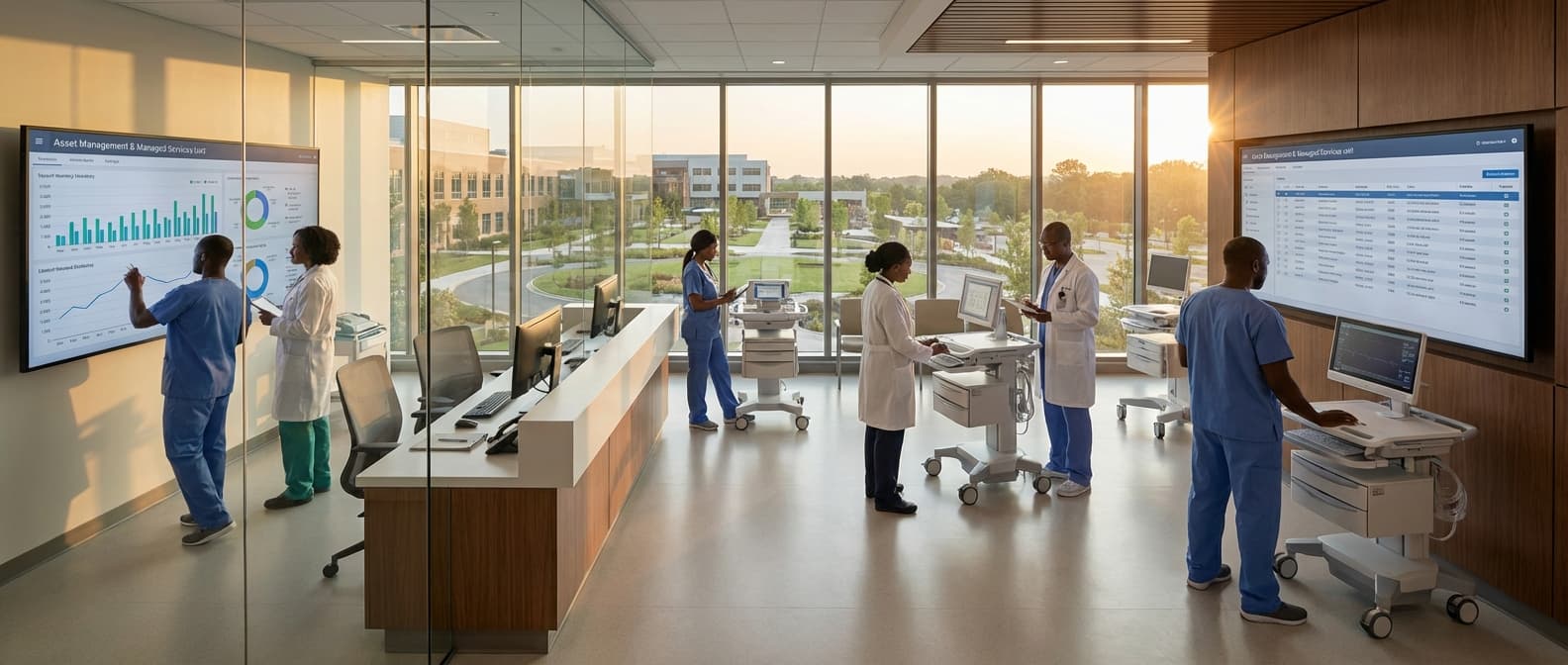
Maintenance KPI Reporting Service (Uptime/MTBF/MTTR) in Burundi
Engineering Excellence & Technical Support
Maintenance KPI Reporting Service (Uptime/MTBF/MTTR) High-standard technical execution following OEM protocols and local regulatory frameworks.
Uptime Maximization for Burundi's Critical Infrastructure
Our service delivers real-time Uptime monitoring and predictive analytics, ensuring that vital assets in Burundi's energy, telecommunications, and water sectors operate at peak performance. This translates to reduced downtime, uninterrupted service delivery, and enhanced public trust.
Reducing Mean Time Between Failures (MTBF) Across Burundian Industries
We empower Burundian businesses with actionable insights derived from MTBF analysis. By identifying recurring failure patterns and proactive maintenance opportunities, we help organizations significantly extend the operational life of their equipment, leading to substantial cost savings and improved efficiency.
Accelerating Mean Time To Repair (MTTR) for Faster Recovery in Burundi
Our advanced reporting service provides comprehensive diagnostics and rapid troubleshooting capabilities, drastically reducing MTTR for Burundian maintenance teams. This means quicker resolutions to breakdowns, minimizing operational disruptions and ensuring a swift return to full productivity.
What Is Maintenance Kpi Reporting Service (Uptime/mtbf/mttr) In Burundi?
Maintenance KPI Reporting Service (Uptime/MTBF/MTTR) refers to the systematic collection, analysis, and presentation of key performance indicators (KPIs) related to the operational availability and reliability of physical assets and systems. In Burundi, this service is crucial for organizations relying on critical infrastructure, machinery, and IT systems to ensure optimal performance, minimize downtime, and drive operational efficiency. It involves defining, measuring, and reporting on metrics such as Uptime (percentage of time a system is operational), Mean Time Between Failures (MTBF) (average time between repairable failures), and Mean Time To Repair (MTTR) (average time taken to repair a failed system). The output is typically presented in reports, dashboards, and visualizations, enabling informed decision-making for maintenance strategies, resource allocation, and capital expenditure planning. This service is indispensable for entities seeking to achieve predictable operational continuity and cost-effective asset management in the Burundian context.
| Who Needs This Service? | Typical Use Cases in Burundi |
|---|---|
| Industrial Manufacturing Plants: Factories producing goods requiring continuous operation of machinery (e.g., food processing, textiles, cement). | Optimizing production line uptime to meet output targets. Identifying bottleneck machinery prone to frequent failures. Scheduling preventive maintenance to avoid costly unplanned shutdowns. |
| Telecommunications Providers: Companies managing cellular towers, network infrastructure, and data centers. | Ensuring network availability and service continuity for customers. Minimizing subscriber service interruptions. Tracking the performance of base stations and fiber optic networks. |
| Energy and Utilities Companies: Power generation plants, transmission and distribution networks, water treatment facilities. | Maximizing power generation uptime and minimizing blackouts. Ensuring the reliability of water supply and sanitation infrastructure. Planning for the maintenance of critical grid components. |
| Transportation and Logistics Companies: Airlines, shipping lines, fleet operators, and warehousing facilities. | Monitoring the operational readiness of aircraft, vessels, and vehicles. Optimizing fleet availability for timely delivery. Ensuring the efficiency of warehouse automation systems. |
| Healthcare Facilities: Hospitals and clinics relying on medical equipment and IT systems. | Guaranteeing the uptime of critical medical devices (e.g., MRI machines, ventilators). Ensuring the availability of patient information systems. Planning for the maintenance of building infrastructure (HVAC, power). |
| Mining Operations: Companies extracting natural resources. | Maximizing the operational availability of heavy machinery (e.g., excavators, crushers). Minimizing downtime of processing plants. Ensuring the safety and reliability of operational equipment. |
| Information Technology (IT) Departments: Organizations managing servers, networks, and software applications. | Ensuring high availability of business-critical applications and services. Measuring and improving server uptime. Reducing the mean time to resolve IT incidents. |
Key Components of a Maintenance KPI Reporting Service:
- Data Acquisition and Integration: Establishing mechanisms to collect real-time or periodic data from asset sensors, control systems, enterprise resource planning (ERP) systems, and manual logs. This involves configuring interfaces and ensuring data integrity.
- KPI Definition and Calculation: Defining specific, measurable, achievable, relevant, and time-bound (SMART) metrics for Uptime, MTBF, MTTR, and potentially other related KPIs (e.g., Failure Rate, Availability Percentage, Preventive Maintenance Compliance). Implementing algorithms for accurate calculation.
- Data Analysis and Interpretation: Employing statistical methods and analytical tools to identify trends, root causes of failures, and areas for improvement. This includes anomaly detection and predictive analysis where applicable.
- Reporting and Visualization: Generating comprehensive reports (e.g., daily, weekly, monthly) and interactive dashboards that clearly present KPI performance against targets. Utilizing graphical representations (charts, graphs) for enhanced comprehension.
- Actionable Insights and Recommendations: Translating data analysis into practical recommendations for maintenance scheduling, spare parts management, technician training, process optimization, and asset lifecycle management.
- System Monitoring and Alerting: Implementing automated alerts for critical deviations from expected performance, enabling proactive intervention and minimizing the impact of failures.
Who Needs Maintenance Kpi Reporting Service (Uptime/mtbf/mttr) In Burundi?
Organizations in Burundi, across various sectors, that are reliant on their physical assets and machinery for operational continuity will significantly benefit from a Maintenance KPI Reporting Service focusing on Uptime, Mean Time Between Failures (MTBF), and Mean Time To Repair (MTTR). This service provides critical insights into the reliability and efficiency of their maintenance operations, enabling proactive problem-solving, cost optimization, and improved overall productivity. These KPIs are essential for understanding asset health, predicting potential failures, and minimizing costly downtime.
| Customer Sector | Key Departments Benefiting | Why Uptime/MTBF/MTTR is Crucial |
|---|---|---|
| Manufacturing | Production Management, Maintenance Department, Operations Management, Quality Control | Maximizing production output, minimizing unplanned stoppages, identifying root causes of failures, ensuring product quality, optimizing spare parts inventory. |
| Mining | Mine Operations, Maintenance & Engineering, Fleet Management, Safety Department | Ensuring continuous extraction and processing, minimizing equipment downtime in harsh environments, improving safety by predicting equipment failures, optimizing maintenance schedules for heavy machinery. |
| Energy Generation & Distribution | Plant Operations, Grid Management, Maintenance & Reliability Engineering, Asset Management | Ensuring consistent power supply, minimizing outages, optimizing the performance of turbines, generators, and transmission equipment, predicting and preventing failures in critical infrastructure. |
| Transportation & Logistics | Fleet Management, Operations Management, Maintenance Workshop, Supply Chain Management | Maximizing vehicle/vessel availability, minimizing delivery delays, reducing operational costs through efficient maintenance, ensuring the safety and reliability of transport assets. |
| Telecommunications | Network Operations Center (NOC), Field Maintenance Teams, Infrastructure Management, Service Assurance | Ensuring continuous network availability, minimizing service disruptions for customers, optimizing the performance of cell towers, data centers, and related equipment, improving customer satisfaction. |
| Water & Wastewater Treatment | Operations Management, Treatment Plant Maintenance, Infrastructure Management, Environmental Compliance | Ensuring continuous provision of clean water and effective wastewater treatment, minimizing disruptions to public services, optimizing the performance of pumps, filters, and treatment machinery, preventing environmental hazards. |
| Agriculture (large-scale) | Farm Operations Management, Machinery Maintenance, Processing Plant Management, Logistics | Maximizing crop yields by ensuring machinery availability during critical periods, minimizing post-harvest losses due to equipment failure, optimizing the efficiency of processing and packaging lines. |
| Hospitality | Engineering/Maintenance Department, Facilities Management, Operations Management | Ensuring guest comfort and satisfaction by maintaining building systems (HVAC, elevators, plumbing), minimizing disruptions to services, optimizing energy consumption through efficient equipment operation. |
| Healthcare | Biomedical Engineering Department, Facilities Management, Hospital Administration, IT Department | Ensuring the reliability of critical medical equipment (imaging machines, surgical instruments, life support systems), minimizing downtime that can impact patient care, adhering to strict regulatory compliance. |
Target Customers and Departments in Burundi for Maintenance KPI Reporting Service
- Manufacturing Plants
- Mining Operations
- Energy Generation & Distribution Companies
- Transportation & Logistics Providers
- Telecommunications Infrastructure Operators
- Water & Wastewater Treatment Facilities
- Agricultural Enterprises (large-scale farming, processing)
- Hospitality Sector (large hotels with complex systems)
- Healthcare Facilities (hospitals with critical equipment)
Maintenance Kpi Reporting Service (Uptime/mtbf/mttr) Process In Burundi
The Maintenance KPI Reporting Service in Burundi streamlines the process of tracking and reporting on critical maintenance performance indicators such as Uptime, Mean Time Between Failures (MTBF), and Mean Time To Repair (MTTR). This service is designed to provide valuable insights for optimizing maintenance strategies, reducing downtime, and improving overall operational efficiency for businesses operating within Burundi. The workflow encompasses a structured approach from initial client inquiry to the final delivery of comprehensive reports.
| Phase | Description | Key Activities | Deliverables/Outcomes | Responsibility |
|---|---|---|---|---|
| Understanding the client's specific maintenance challenges and reporting requirements in the Burundian context. | Initial contact, discovery call, understanding business goals, identifying specific KPIs needed (Uptime, MTBF, MTTR), defining reporting frequency and format. | Documented client requirements, scope of work agreement. | Service Provider Sales/Account Manager, Client Stakeholders |
| Designing a robust plan to gather the necessary data for accurate KPI calculation. | Identifying data sources (CMMS, manual logs, IoT sensors), defining data points to be collected for Uptime, Failure events, Repair times, developing data validation rules, considering local infrastructure limitations. | Data collection plan, data dictionary, validation protocols. | Service Provider Technical Lead, Client IT/Maintenance Team |
| Collecting and consolidating data from various sources into a central repository. | Implementing data extraction methods, setting up data connectors, performing data cleaning and transformation, ensuring data security and compliance with Burundian regulations. | Cleaned and integrated dataset ready for analysis. | Service Provider Data Engineers, Client IT/Operations |
| Computing the defined maintenance KPIs and identifying trends and root causes. | Applying formulas for Uptime, MTBF, MTTR, performing statistical analysis, identifying outliers, segmenting data by asset type, location, or failure mode, uncovering underlying maintenance issues. | Calculated KPI values, trend analysis, initial insights and anomalies. | Service Provider Data Analysts, Maintenance Experts |
| Creating clear, actionable, and visually appealing reports tailored to the client's needs. | Designing dashboards, generating charts and graphs, summarizing key findings, adding executive summaries, customizing reports based on specific stakeholder requirements (e.g., operations managers, executives). | Draft maintenance KPI reports and dashboards. | Service Provider Report Designers, Data Analysts |
| Communicating the findings and recommendations to the client effectively. | Scheduling report review meetings, presenting findings in a clear and concise manner, explaining the implications of the KPIs, answering questions and providing context relevant to the Burundian operational environment. | Finalized KPI reports, presentation decks, understanding of insights. | Service Provider Account Manager, Data Analysts, Client Management |
| Gathering client feedback to refine the service and improve future reporting. | Collecting feedback on report clarity, accuracy, and usefulness, discussing any challenges encountered, identifying opportunities to enhance data collection or analysis methods, adapting to evolving business needs and local market dynamics. | Actionable feedback for service improvement, updated service protocols. | Service Provider Management, Client Stakeholders |
Maintenance KPI Reporting Service Workflow in Burundi
- Client Inquiry and Needs Assessment
- Data Collection Strategy Development
- Data Acquisition and Integration
- KPI Calculation and Analysis
- Report Generation and Customization
- Report Delivery and Presentation
- Feedback and Continuous Improvement
Maintenance Kpi Reporting Service (Uptime/mtbf/mttr) Cost In Burundi
The cost of a Maintenance KPI Reporting Service (focusing on Uptime, Mean Time Between Failures - MTBF, and Mean Time To Repair - MTTR) in Burundi can vary significantly based on several factors. These services are crucial for businesses to understand their operational efficiency, predict maintenance needs, and minimize downtime. While there isn't a universally fixed price, understanding the components that influence the cost will help in budgeting and vendor selection.
| Service Scope | Estimated Monthly Cost Range (BIF) | Notes |
|---|---|---|
| Basic Uptime Monitoring & Reporting (Limited Assets) | 150,000 - 400,000 | Focuses on basic availability tracking, manual data input or simple sensor integration for a few critical assets. Reports are standard formats. |
| Standard MTBF/MTTR Reporting (Moderate Assets) | 400,000 - 1,000,000 | Includes more automated data collection, basic analysis of failure and repair times, and standard monthly/quarterly reports for a moderate number of assets. May involve some integration. |
| Advanced KPI Reporting & Analysis (Complex Systems/Extensive Assets) | 1,000,000 - 3,000,000+ | Comprehensive monitoring of numerous assets, sophisticated data integration (SCADA, IoT), advanced analytics, root cause analysis, predictive insights, and customized dashboards. Includes ongoing support and potential on-site consultation. |
| One-Time Setup & Integration Fee | 200,000 - 1,500,000+ | This fee is often separate from the recurring monthly cost and covers the initial setup, sensor installation, system configuration, and integration with existing infrastructure. |
Factors Influencing Maintenance KPI Reporting Service Costs in Burundi
- Complexity of the System/Assets Being Monitored: The number and type of assets requiring monitoring (e.g., manufacturing machinery, IT infrastructure, fleet vehicles, power generators) directly impact the complexity and cost. More intricate systems with numerous components will require more sophisticated data collection and analysis.
- Data Acquisition Methods: How data is collected is a key cost driver. This could involve manual data entry, integration with existing SCADA/PLC systems, IoT sensors, or dedicated monitoring hardware. The cost of sensors, installation, and ongoing maintenance of data acquisition infrastructure plays a role.
- Reporting Frequency and Granularity: Daily, weekly, monthly, or real-time reporting will have different associated costs. The level of detail required in the reports (e.g., high-level summaries vs. detailed component-level analysis) also influences the price.
- Software Platform/Tools: The reporting service may utilize proprietary software, off-the-shelf solutions, or custom-built platforms. The licensing fees, customization, and maintenance of these tools contribute to the overall cost.
- Level of Customization: Generic KPI reports are typically less expensive than highly customized dashboards and reports tailored to specific business needs and industry benchmarks.
- Integration with Existing Systems: If the reporting service needs to integrate with other business systems (e.g., ERP, CMMS), this can add to the complexity and cost due to API development or data mapping requirements.
- Data Analysis and Interpretation: Beyond raw reporting, some services offer advanced data analytics, root cause analysis, predictive maintenance insights, and recommendations. The depth of this analysis will increase the cost.
- Service Provider Expertise and Reputation: Established providers with a proven track record and specialized expertise may command higher fees.
- Support and Training: The level of ongoing support, troubleshooting, and training provided to the client's team can also be factored into the pricing.
- Contract Duration: Longer-term contracts may offer discounted rates compared to short-term engagements.
- Geographic Location and Accessibility: While in Burundi, the logistical challenges and costs associated with on-site visits for installation or troubleshooting might be a consideration for some service models.
Affordable Maintenance Kpi Reporting Service (Uptime/mtbf/mttr) Options
This document outlines affordable options for Maintenance KPI Reporting Services, focusing on Uptime, Mean Time Between Failures (MTBF), and Mean Time To Repair (MTTR). We explore value bundles and cost-saving strategies to help your organization gain actionable insights without breaking the bank.
| Service Level | Key Features | Value Proposition | Estimated Monthly Cost Range |
|---|---|---|---|
| Essentials Package | Basic Uptime/Downtime Tracking, Manual MTBF/MTTR Calculation (based on provided data), Standardized Report Templates, Email Support. | Ideal for smaller operations or those just starting with KPI tracking. Provides fundamental visibility into equipment status and repair durations. Cost-effective data consolidation. | $150 - $400 |
| Standard Package | Automated Data Import (limited sources), Real-time Uptime Monitoring, Automated MTBF/MTTR Calculations, Customizable Dashboards (limited), Monthly Performance Review Call. | Suitable for growing businesses seeking more automated insights. Offers proactive monitoring and a deeper dive into reliability metrics. Enhanced visualization and collaborative review. | $400 - $1200 |
| Premium Package | Integration with multiple CMMS/IoT platforms, Advanced Uptime Analytics (predictive insights), Root Cause Analysis Support (data-driven), Interactive Dashboards with Drill-down Capabilities, Weekly Performance Review & Strategic Consultation. | Designed for organizations prioritizing operational excellence and data-driven decision-making. Leverages advanced analytics for proactive maintenance and continuous improvement. Comprehensive support and strategic partnership. | $1200 - $3500+ |
Key Maintenance KPIs Explained
- Uptime: The percentage of time a piece of equipment or system is operational and available for use. Higher uptime signifies better reliability and reduced disruption.
- Mean Time Between Failures (MTBF): The average time a repairable piece of equipment operates between breakdowns. A higher MTBF indicates greater reliability.
- Mean Time To Repair (MTTR): The average time it takes to repair a piece of equipment after it has failed. A lower MTTR signifies efficient maintenance and quick restoration of operations.
Verified Providers In Burundi
In Burundi's evolving healthcare landscape, discerning reliable and high-quality medical services is paramount. Franance Health stands out as a leading credentialed provider, offering a comprehensive suite of healthcare solutions backed by stringent quality assurance and ethical practices. Their commitment to patient well-being, coupled with a deep understanding of the local health needs, makes them an indispensable partner for individuals and organizations seeking dependable healthcare.
| Credential/Aspect | Franance Health's Commitment | Why it Matters for Patients in Burundi |
|---|---|---|
| Quality Assurance Framework | Implements robust internal and external quality checks across all services. | Ensures consistently high standards of care, reducing risks and improving outcomes. |
| Professional Development | Regularly invests in training and continuous professional development for its staff. | Guarantees that patients receive care from up-to-date, skilled professionals utilizing the latest medical knowledge. |
| Patient Safety Protocols | Adheres to strict safety guidelines and infection control measures. | Minimizes the risk of medical errors and hospital-acquired infections, promoting a secure healing environment. |
| Accessibility & Reach | Strategically located facilities and partnerships for wider service access. | Provides easier access to quality healthcare services, even in potentially underserved areas. |
| Data Security & Privacy | Employs secure systems for managing patient health records. | Protects sensitive personal health information, fostering trust and confidentiality. |
Key Franance Health Credentials & Advantages:
- Accreditation & Compliance: Franance Health adheres to rigorous national and international healthcare standards, ensuring all services meet or exceed regulatory requirements. This commitment guarantees a safe and effective patient experience.
- Qualified Medical Professionals: Their network comprises highly skilled and experienced doctors, nurses, and allied health professionals, many with specialized training and international exposure.
- Patient-Centric Approach: Franance Health prioritizes patient comfort, privacy, and informed decision-making throughout the healthcare journey. They foster open communication and personalized care plans.
- Advanced Technology & Infrastructure: The organization invests in modern medical equipment and facilities, enabling accurate diagnostics and effective treatment protocols, often at par with global benchmarks.
- Comprehensive Service Offering: From routine check-ups and specialized consultations to emergency care and preventative health programs, Franance Health provides a holistic approach to healthcare needs.
- Ethical Practices & Transparency: Franance Health operates with the highest ethical standards, ensuring transparency in all dealings, including pricing, treatment options, and patient rights.
- Community Engagement & Health Education: Beyond direct patient care, Franance Health actively participates in community health initiatives and provides valuable health education, contributing to the overall well-being of Burundi's population.
Scope Of Work For Maintenance Kpi Reporting Service (Uptime/mtbf/mttr)
This Scope of Work (SOW) defines the services to be provided by a vendor for the development and ongoing maintenance of a Key Performance Indicator (KPI) reporting system focused on system uptime, Mean Time Between Failures (MTBF), and Mean Time To Repair (MTTR). The objective is to establish a transparent and actionable reporting mechanism to monitor and improve the reliability and availability of critical systems.
| Deliverable | Description | Standard Specifications / Requirements |
|---|---|---|
| KPI Reporting Framework Design | Architectural design of the KPI reporting system, including data sources, data flow, reporting tools, and access controls. | Must support integration with existing IT infrastructure (e.g., monitoring tools, ticketing systems, CMDB). Architecture must be scalable and secure. Documentation of the framework design, data models, and reporting logic. |
| Data Collection & Integration Module | Development and implementation of modules to extract, transform, and load (ETL) data from various sources relevant to uptime, MTBF, and MTTR. | Automated data ingestion from specified sources (e.g., server logs, network device logs, incident management systems, performance monitoring tools). Data validation and cleansing processes to ensure accuracy. Scheduled data refreshes (e.g., hourly, daily) as per requirements. Secure API or direct database connections as appropriate. |
| Uptime Calculation Logic | Implementation of precise algorithms to calculate system uptime based on defined operational periods and downtime events. | Definition of 'available' and 'unavailable' states for each system. Consideration for scheduled maintenance vs. unscheduled downtime. Accurate calculation of percentage uptime (e.g., 99.9%, 99.99%). Time-based calculations (e.g., per hour, per day, per month). |
| MTBF Calculation Logic | Implementation of algorithms to calculate Mean Time Between Failures. | Identification and timestamping of all unplanned downtime events. Accurate calculation of the average time between successive failures. Handling of initial system startup and long-term operation periods. Definition of a 'failure' event. |
| MTTR Calculation Logic | Implementation of algorithms to calculate Mean Time To Repair. | Accurate recording of incident start and resolution times. Calculation of the average time taken to resolve an incident from start to finish. Consideration of different types of incidents and their impact on MTTR. Exclusion of planned downtime or activities not directly related to repair. |
| Reporting Dashboards (Web-Based) | Development of interactive, user-friendly dashboards visualizing key KPIs. | Real-time or near real-time data display. Key metrics: Uptime percentage, MTBF (hours/days), MTTR (hours/minutes). Drill-down capabilities to view details of specific incidents or systems. Trend analysis charts (historical data visualization). Configurable time filters (e.g., last 24 hours, last 7 days, last 30 days). Responsive design for accessibility on various devices. |
| Ad-Hoc Reporting Capability | Provision for users to generate custom reports based on specific criteria. | User interface for selecting data points, filters, and date ranges. Export options (e.g., CSV, Excel, PDF). Ability to save and schedule custom reports. |
| Alerting and Notification System | Configuration of automated alerts for KPI breaches or critical events. | Threshold-based alerts (e.g., uptime drops below 99.5%). Notifications via email, SMS, or integration with collaboration tools. Configurable alert escalation policies. |
| User Training and Documentation | Comprehensive training materials and documentation for end-users and administrators. | User manuals for navigating dashboards and generating reports. Administrator guides for system configuration and maintenance. Training sessions covering KPI interpretation and system usage. FAQs and troubleshooting guides. |
| Ongoing Maintenance and Support | Post-implementation support, bug fixes, and minor enhancements. | Service Level Agreement (SLA) for response and resolution times. Regular system health checks and performance monitoring. Proactive identification and resolution of potential issues. Regular updates and patches. |
Objectives of the KPI Reporting Service
- Establish a baseline for system uptime, MTBF, and MTTR across defined critical systems.
- Develop and implement automated data collection and aggregation processes.
- Create standardized reporting dashboards and ad-hoc reporting capabilities.
- Identify trends and root causes of system downtime and failures.
- Provide actionable insights and recommendations for improving system reliability and reducing downtime.
- Ensure the accuracy, timeliness, and accessibility of KPI reports.
- Support continuous improvement of the reporting framework and underlying data.
Service Level Agreement For Maintenance Kpi Reporting Service (Uptime/mtbf/mttr)
This Service Level Agreement (SLA) outlines the performance standards for the Maintenance KPI Reporting Service, specifically focusing on Uptime, Mean Time Between Failures (MTBF), and Mean Time To Repair (MTTR). This document details response times and uptime guarantees to ensure the reliability and availability of the reporting service.
| Service Component | Uptime Guarantee | MTBF Target | MTTR Target | Response Time (for issues) | ||
|---|---|---|---|---|---|---|
| Maintenance KPI Reporting Service | 99.9% | = 1000 hours | <= 4 hours | Critical Incident: 1 hour | High Incident: 4 hours | Medium Incident: 8 business hours |
| Data Ingestion & Processing | 99.5% | = 800 hours | <= 8 hours | Critical Incident: 2 hours | High Incident: 8 business hours | Medium Incident: 24 business hours |
| Report Generation & Delivery | 99.8% | = 900 hours | <= 6 hours | Critical Incident: 1.5 hours | High Incident: 6 business hours | Medium Incident: 12 business hours |
Key Performance Indicators (KPIs) Covered
- Uptime: The percentage of time the Maintenance KPI Reporting Service is operational and accessible.
- Mean Time Between Failures (MTBF): The average time between unscheduled downtime occurrences of the reporting service.
- Mean Time To Repair (MTTR): The average time taken to resolve a failure and restore the reporting service to full operational status.
Frequently Asked Questions

Ready when you are
Let's scope your Maintenance KPI Reporting Service (Uptime/MTBF/MTTR) in Burundi project in Burundi.

Scaling healthcare logistics and technical systems across the entire continent.