
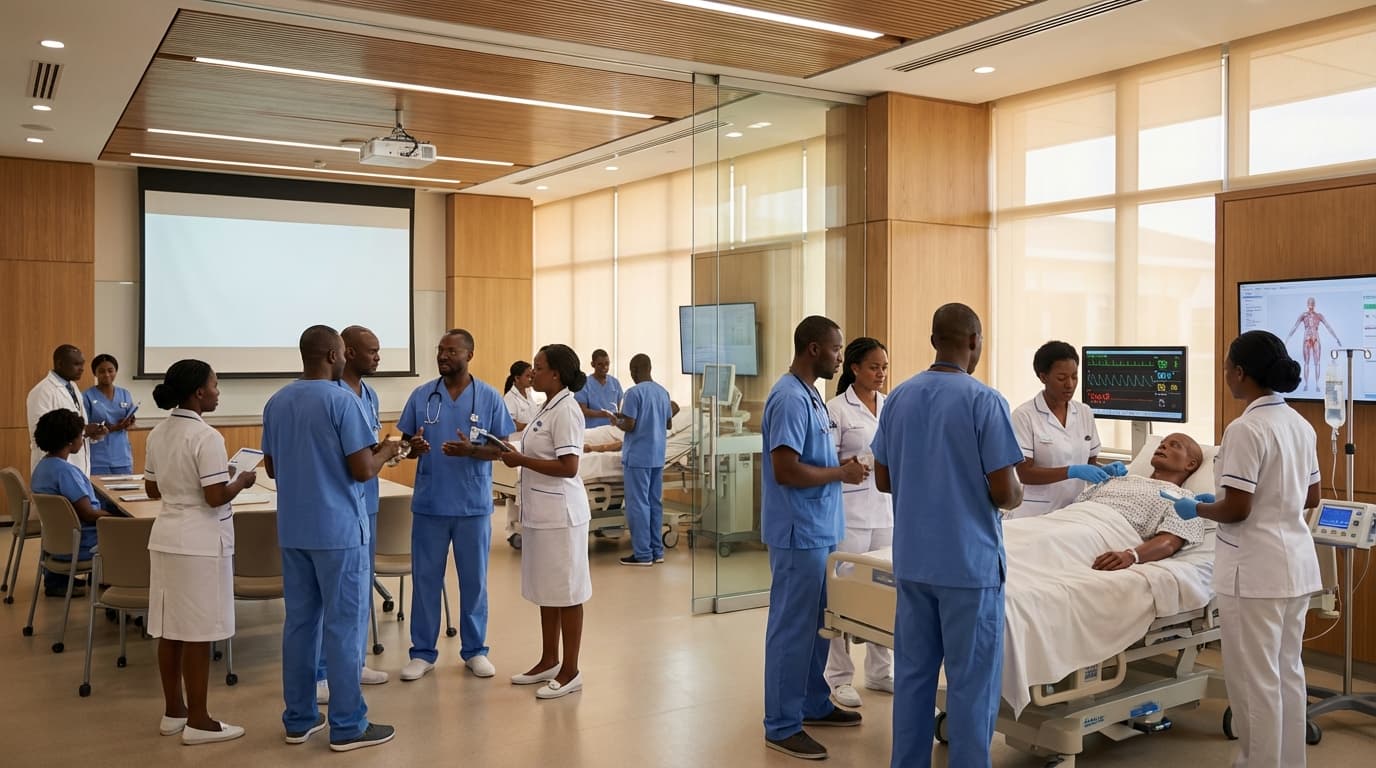
Equipment Training & Education in Burkina Faso
Engineering Excellence & Technical Support
Comprehensive equipment training and certification programs High-standard technical execution following OEM protocols and local regulatory frameworks.
Mobile Technical Workshops
Delivering hands-on training sessions on essential agricultural machinery maintenance and operation directly at rural community hubs. Our fully equipped mobile workshops ensure accessibility and immediate practical application of learned skills, boosting local capacity for equipment upkeep and efficient use.
Digital Learning Platform
Launching an accessible, offline-capable mobile application featuring interactive modules, video tutorials, and troubleshooting guides for a range of agricultural equipment. This platform empowers farmers and technicians with self-paced learning opportunities, regardless of internet connectivity, bridging knowledge gaps effectively.
Train-the-Trainer Programs
Establishing a network of local 'Master Trainers' through intensive pedagogical and technical training. These trainers will then cascade their expertise within their communities, creating a sustainable, locally-driven ecosystem for equipment knowledge dissemination and skill development across Burkina Faso.
What Is Equipment Training & Education In Burkina Faso?
Equipment training and education in Burkina Faso refers to the systematic process of imparting knowledge and practical skills necessary for the safe, efficient, and effective operation, maintenance, and troubleshooting of various types of equipment. This encompasses theoretical instruction, hands-on practical sessions, and ongoing support designed to enhance user competency and longevity of deployed machinery. The objective is to ensure that personnel can maximize equipment performance, minimize downtime, prevent accidents, and comply with operational standards and regulations within the Burkinabe context.
| Target Audience | Sectors/Industries | Typical Equipment Categories | Primary Objectives |
|---|---|---|---|
| Machine Operators (Skilled & Semi-Skilled) | Agriculture, Construction, Mining, Manufacturing, Logistics, Healthcare | Tractors, Excavators, Cranes, Industrial Machinery, Generators, Diagnostic Medical Equipment, Vehicles | Safe operation, optimal performance, basic maintenance, adherence to safety guidelines. |
| Maintenance Technicians (Entry-Level to Advanced) | All industrial and service sectors requiring equipment uptime | Hydraulic systems, electrical systems, mechanical components, specialized diagnostic tools | Preventive maintenance, troubleshooting, repair, component replacement, adherence to maintenance schedules. |
| Supervisors & Site Managers | Project management, operational oversight | Any equipment relevant to their operational scope | Effective supervision of equipment use, understanding of operational limitations, resource allocation for maintenance, safety compliance enforcement. |
| Emergency Responders (e.g., Firefighters, Medical Teams) | Public Safety, Healthcare | Specialized rescue equipment, emergency vehicles, medical devices | Safe and effective deployment in emergency situations, maintenance of readiness. |
| Training Instructors & Vocational Educators | Technical and Vocational Education and Training (TVET) institutions | All categories of equipment relevant to curriculum | Curriculum development, training delivery methodologies, assessment techniques. |
Key Components of Equipment Training & Education
- Operational Procedures: Training on standard operating procedures (SOPs), including startup, shutdown, normal operation, and emergency shutdown protocols.
- Maintenance & Troubleshooting: Instruction on routine preventive maintenance schedules, diagnostic techniques, and common fault rectification.
- Safety Protocols: Comprehensive modules on equipment-specific safety hazards, personal protective equipment (PPE) usage, lockout/tagout procedures, and emergency response.
- Technical Specifications & Principles: Understanding the underlying technical principles and specifications of the equipment.
- Documentation & Record Keeping: Training on maintaining logbooks, maintenance records, and incident reports.
- Regulatory Compliance: Awareness of relevant national and international standards pertaining to equipment use and safety.
Who Needs Equipment Training & Education In Burkina Faso?
Effective and safe operation of equipment is crucial for development in Burkina Faso. This necessitates targeted training and education for various individuals and departments across key sectors. Understanding who needs this training is the first step to ensuring efficient resource allocation and skill development.
| Sector | Key Equipment Types | Primary Training Needs | Target Personnel |
|---|---|---|---|
| Agriculture | Tractors, harvesters, irrigation systems, processing machinery | Operation, maintenance, safety, best practices | Farmers, cooperative members, agricultural technicians |
| Mining | Excavators, loaders, drills, haul trucks, crushing and grinding equipment | Safe operation, maintenance, hazard identification, environmental management | Miners, mechanics, safety officers, supervisors |
| Construction | Bulldozers, cranes, excavators, concrete mixers, scaffolding | Operation, safety regulations, site management, quality control | Construction workers, site managers, surveyors |
| Health | Diagnostic imaging equipment, laboratory analyzers, surgical instruments, ventilators | Operating procedures, maintenance, calibration, sterilization, patient safety | Doctors, nurses, lab technicians, biomedical engineers |
| Water & Sanitation | Pumps, filters, treatment chemicals, GIS equipment, pipe laying machinery | Operation, maintenance, water quality monitoring, safety | Plant operators, technicians, field staff |
| Energy | Generators, transformers, control systems, solar panels, wind turbines | Operation, maintenance, troubleshooting, safety, grid integration | Plant operators, electricians, technicians |
| Transportation & Logistics | Trucks, forklifts, conveyor belts, loading equipment | Driving, safe handling, load management, basic maintenance | Drivers, warehouse staff, logistics coordinators |
Target Customers and Departments for Equipment Training & Education in Burkina Faso
- {"title":"Agriculture Sector","departments":["Smallholder Farmers","Agricultural Cooperatives","Large-scale Farms","Ministry of Agriculture and Food Security (Technical Staff)","Agricultural Extension Services","Agro-processing Companies"],"description":"The backbone of Burkina Faso's economy, this sector relies heavily on machinery for planting, harvesting, and processing. Training is vital to maximize yields, minimize losses, and ensure operator safety."}
- {"title":"Mining Sector","departments":["Mining Company Operators (surface and underground)","Maintenance Technicians","Supervisors and Foremen","Health and Safety Officers","Ministry of Mines and Quarries (Inspectors and Technical Staff)"],"description":"A significant contributor to the national economy, the mining industry utilizes heavy machinery for extraction and processing. Training is paramount for safety, efficiency, and environmental compliance."}
- {"title":"Construction and Infrastructure Development","departments":["Construction Company Workers","Road Maintenance Crews","Building Construction Teams","Public Works Department Staff","Urban Planning and Development Agencies"],"description":"As Burkina Faso invests in its infrastructure, the demand for skilled equipment operators in construction is rising. Training ensures quality of work and timely project completion."}
- {"title":"Health Sector","departments":["Doctors and Nurses (operating specialized medical devices)","Medical Technicians (radiology, laboratory, etc.)","Biomedical Engineers and Technicians","Ministry of Health (technical support staff)","Hospital and Clinic Administrators"],"description":"Medical equipment, from diagnostic tools to life-support systems, requires specialized training for healthcare professionals to ensure accurate diagnosis and effective patient care."}
- {"title":"Water and Sanitation Sector","departments":["Water Treatment Plant Operators","Pump Station Technicians","Wastewater Management Facility Staff","Rural Water Supply Agencies","Ministry of Water and Hydraulics (technical personnel)"],"description":"Essential for public health, this sector utilizes equipment for water treatment, pumping, and distribution, as well as wastewater management. Training ensures reliable service delivery."}
- {"title":"Energy Sector","departments":["Power Plant Operators","Electrical Technicians","Linemen","Renewable Energy Technicians (solar, wind)","Société Nationale d'Electricité du Burkina Faso (SONABEL) Staff"],"description":"The operation and maintenance of power generation and distribution equipment require skilled personnel for reliable electricity supply."}
- {"title":"Transportation and Logistics","departments":["Truck Drivers","Forklift Operators","Warehouse Personnel","Port and Airport Authority Staff","Logistics Companies"],"description":"Efficient movement of goods and people depends on skilled operators of vehicles and handling equipment."}
- {"title":"Education and Vocational Training Institutions","departments":["Vocational Training Center Instructors","Technical and Secondary School Teachers","University Engineering and Technical Departments"],"description":"These institutions are key to disseminating knowledge and skills. Training their instructors and upgrading their curriculum is vital for long-term capacity building."}
- {"title":"Government Ministries and Agencies (Cross-cutting)","departments":["Public Procurement Agencies (understanding technical specifications)","Environmental Protection Agencies (operating monitoring equipment)","Disaster Management Agencies (operating rescue and relief equipment)"],"description":"Various government bodies are responsible for the oversight, management, and maintenance of public infrastructure and services, all of which involve equipment."}
Equipment Training & Education Process In Burkina Faso
This document outlines the typical workflow for equipment training and education processes in Burkina Faso, covering the journey from initial inquiry to the successful execution of training programs. The process is designed to be systematic and ensure that stakeholders' needs are met efficiently.
| Phase | Stage | Description | Key Activities | Responsible Parties | Deliverables/Outcomes |
|---|---|---|---|---|---|
| Initial Contact | An organization or individual expresses interest in equipment training. | Submit inquiry form, initial consultation, discuss training needs, identify target audience, assess current skill levels. | Client/Inquiring Organization, Training Provider | Clarified training objectives, identified skill gaps, understanding of client's operational context. |
| Needs Analysis | Detailed understanding of specific training requirements. | On-site assessment (if possible), interviews with key personnel, review of equipment manuals and operational procedures. | Training Provider, Client/Key Personnel | Detailed training needs report, confirmed equipment specifications, identified learning outcomes. |
| Proposal Creation | Development of a comprehensive training proposal based on the needs assessment. | Define training curriculum, select training methodology (classroom, hands-on, blended), specify duration and schedule, outline required resources, cost estimation. | Training Provider | Draft training proposal document. |
| Proposal Review & Negotiation | Client reviews the proposal and any necessary adjustments are made. | Internal review by client, feedback session, negotiation of terms, scope, and budget. | Client/Approving Authority, Training Provider | Agreed-upon training proposal. |
| Contract/Agreement Signing | Formalize the training engagement. | Preparation of contract/Memorandum of Understanding (MOU), legal review (if applicable), signing of the agreement. | Training Provider, Client/Legal Department | Signed contract/MOU, confirming scope, deliverables, timeline, and payment terms. |
| Curriculum Finalization | Develop detailed training materials. | Create or adapt training modules, presentations, handouts, practical exercises, assessments. | Training Provider (Instructors/Curriculum Developers) | Finalized training curriculum and materials. |
| Logistics & Scheduling | Arrange all logistical aspects for the training. | Book training venue, confirm dates and times, arrange for equipment availability and setup, organize participant travel and accommodation (if needed), procure necessary supplies. | Training Provider (Logistics Coordinator), Client (for access and participant nomination) | Confirmed training schedule, secured venue and equipment, logistical arrangements completed. |
| Trainer Allocation | Assign qualified trainers to the program. | Select trainers based on expertise, experience, and availability. | Training Provider (Management) | Assigned and briefed trainers. |
| Participant Notification | Inform participants about the training details. | Send out invitations, registration forms, and pre-training information. | Client (HR/Training Department), Training Provider (for participant lists) | Registered and informed participants. |
| Training Delivery | Conduct the actual training sessions. | Deliver lectures, conduct demonstrations, facilitate hands-on practice, manage group activities, address participant questions. | Training Provider (Instructors) | Active participation of trainees, knowledge and skill transfer. |
| On-site Support | Provide real-time assistance during practical sessions. | Troubleshooting equipment issues, guiding participants through practical tasks. | Training Provider (Instructors/Technicians) | Successful completion of practical exercises by participants. |
| Assessment | Evaluate participant learning and comprehension. | Conduct written tests, practical assessments, quizzes, observation of performance. | Training Provider (Instructors) | Data on participant learning outcomes. |
| Feedback Collection | Gather feedback on the training program from participants and stakeholders. | Distribute and collect feedback forms, conduct post-training interviews. | Training Provider, Participants | Participant and stakeholder feedback reports. |
| Reporting & Certification | Provide a summary of the training and issue certificates. | Compile training report (attendance, assessment results, feedback summary), issue certificates of completion. | Training Provider | Comprehensive training report, certificates of completion for successful participants. |
| Follow-up & Support | Offer continued support and address any lingering questions. | Provide post-training guidance, answer follow-up queries, offer refresher training (if agreed upon). | Training Provider, Client | Sustained knowledge application, improved operational efficiency. |
| Program Evaluation | Assess the overall effectiveness and impact of the training program. | Analyze feedback, compare pre- and post-training performance indicators (if measurable), review client satisfaction, identify areas for improvement in future programs. | Training Provider, Client (Management) | Evaluation report, recommendations for future training initiatives. |
Equipment Training & Education Process Workflow in Burkina Faso
- Phase 1: Inquiry & Needs Assessment
- Phase 2: Proposal Development & Agreement
- Phase 3: Planning & Preparation
- Phase 4: Execution of Training
- Phase 5: Post-Training & Evaluation
Equipment Training & Education Cost In Burkina Faso
This analysis examines the cost of equipment training and education in Burkina Faso, focusing on the factors influencing pricing and providing estimated ranges in the local currency, the West African CFA franc (XOF). The demand for skilled personnel to operate and maintain various types of equipment, from agricultural machinery to industrial and construction tools, drives the need for specialized training. However, the cost of such training is not uniform and is subject to a confluence of economic, logistical, and qualitative determinants.
| Training Category | Estimated Price Range (XOF per participant) | Notes |
|---|---|---|
| Basic Agricultural Equipment (e.g., Tillers, Small Tractors) | 25,000 - 75,000 | Typically shorter duration, focus on safe operation and basic maintenance. |
| Medium Construction Equipment (e.g., Loaders, Excavators - basic operation) | 75,000 - 150,000 | Includes practical sessions, safety protocols, and entry-level certification. |
| Heavy Construction Machinery (e.g., Cranes, Bulldozers - advanced operation) | 150,000 - 300,000+ | Requires experienced instructors, longer duration, and potentially specialized certifications. |
| Industrial Machinery (e.g., Welding, Basic Machine Operation) | 50,000 - 120,000 | Varies based on the specific trade and complexity of the machinery. |
| Specialized Technical Equipment (e.g., Generators, Pumps - maintenance) | 70,000 - 180,000 | Focus on troubleshooting, repair, and preventive maintenance. |
| Advanced/Specialized Training (e.g., Flight simulators, Medical equipment operation) | 300,000 - 1,000,000+ | Often conducted by manufacturers or specialized institutions, can be very high depending on uniqueness and duration. |
| Safety & Compliance Training (e.g., Forklift, Scaffolding) | 30,000 - 80,000 | Emphasis on regulatory compliance and risk mitigation. |
Key Pricing Factors for Equipment Training & Education in Burkina Faso
- Type and Complexity of Equipment: Training for highly specialized or complex machinery (e.g., advanced medical equipment, heavy-duty construction machinery, specialized industrial processors) will inherently be more expensive than for simpler tools or basic agricultural equipment. This is due to the need for expert instructors, specialized training materials, and potentially longer training durations.
- Duration and Intensity of Training: Longer and more intensive training programs, often involving practical hands-on sessions, simulations, or multi-stage certifications, naturally incur higher costs. The number of hours, days, or weeks dedicated to training directly impacts instructor fees, facility rental, and resource consumption.
- Instructor Expertise and Qualifications: The experience, certifications, and reputation of the trainers play a significant role. Highly qualified instructors with proven track records in specific equipment operation and maintenance command higher fees. International or specialized foreign trainers will also increase costs.
- Training Methodology and Resources: Training that incorporates advanced methodologies like virtual reality (VR) simulations, sophisticated simulators, specialized software, or state-of-the-art training facilities will be more costly. The provision of comprehensive training manuals, technical documentation, and assessment tools also contributes to the overall price.
- Location and Logistics: Training conducted in remote areas may incur additional travel and accommodation costs for instructors and potentially for trainees if they need to relocate. Accessibility to training centers, especially in urban hubs like Ouagadougou or Bobo-Dioulasso, can also influence pricing due to facility overheads.
- Accreditation and Certification: Training programs leading to recognized national or international certifications are generally more expensive. The accreditation process and the value of the certification in the job market justify the higher investment.
- Provider Type: Training can be offered by vocational schools, private training companies, equipment manufacturers or their authorized local representatives, and sometimes by governmental or non-governmental organizations (NGOs). Each provider type has different cost structures and pricing strategies.
- Group Size and Customization: The cost per participant can decrease with larger group sizes due to economies of scale. Customized training programs tailored to the specific needs of a company or a particular set of equipment will often be priced higher than standard, off-the-shelf courses.
- Economic Conditions and Inflation: General economic conditions within Burkina Faso, including inflation rates and currency exchange fluctuations (though the XOF is relatively stable within the West African Economic and Monetary Union - WAEMU), can indirectly affect the cost of materials, instructor fees, and operational expenses.
Affordable Equipment Training & Education Options
Gaining proficiency with specialized equipment is crucial for various industries, from manufacturing and healthcare to construction and technology. Fortunately, there are numerous affordable avenues for equipment training and education, allowing individuals and businesses to invest in skills without breaking the bank. Understanding value bundles and implementing smart cost-saving strategies can significantly reduce the overall expense of acquiring and maintaining this vital knowledge.
| Strategy | Description | Benefits | Considerations |
|---|---|---|---|
| Value Bundles | Combining multiple training modules, certifications, or even equipment accessories into a single package for a reduced price. | Lower overall cost for comprehensive learning, convenience of a single purchase, potential for deeper skill development. | Ensure the bundle aligns with specific training needs, check for any hidden fees or expiration dates, compare bundled prices against individual components. |
| Bulk Purchase Discounts | Negotiating lower per-unit prices when purchasing training for a group of employees or multiple courses. | Significant cost savings for organizations, ensures standardized training across teams, fosters a learning culture. | Requires a commitment to a certain number of participants or courses, may involve longer-term contracts. |
| Early Bird Registration | Registering for courses or workshops well in advance of the start date, often with a discount offered. | Reduced course fees, secures a spot in popular training sessions, allows for better planning. | Requires foresight and commitment, deadlines can be missed, check refund policies. |
| Leveraging Free Resources | Utilizing free introductory courses, demo sessions, user manuals, and online tutorials provided by manufacturers or educational platforms. | No direct cost, provides foundational knowledge, can supplement paid training. | May lack depth or personalized feedback, content can be generic, requires self-discipline to learn effectively. |
| Subscription Models | Paying a recurring fee for access to a library of training content, software, or online learning platforms. | Predictable costs, access to a wide range of resources, continuous learning opportunities. | May require a long-term commitment, ensure the subscription content remains relevant and up-to-date. |
| Train-the-Trainer Programs | Investing in training a select group of employees to then train their colleagues internally. | Highly cost-effective for large organizations, tailored to internal needs, builds internal expertise. | Requires careful selection of trainers, ongoing support for internal trainers is necessary, quality can vary. |
| Partnerships & Collaborations | Collaborating with other businesses or educational institutions to share training resources, facilities, or costs. | Reduced individual costs, access to broader expertise, networking opportunities. | Requires clear agreements and shared objectives, potential for scheduling conflicts. |
| Government Grants & Subsidies | Applying for funding or financial assistance offered by government bodies to support workforce development and training. | Significantly reduces or eliminates training costs, can be a valuable source of funding. | Application processes can be complex and time-consuming, eligibility criteria apply, funding may be limited. |
Affordable Equipment Training & Education Options
- Online Courses & Webinars: Many platforms offer self-paced online courses, live webinars, and virtual workshops covering a wide range of equipment. These are often more affordable than in-person sessions and offer flexibility.
- Manufacturer-Provided Training: Equipment manufacturers frequently offer training programs for their products. While sometimes included with purchase, they can also be purchased separately at competitive rates, often providing the most in-depth and accurate knowledge.
- Community Colleges & Vocational Schools: Local educational institutions often have programs specifically designed to train individuals on industry-standard equipment. These programs are typically more cost-effective than university degrees.
- Industry Associations & Professional Organizations: These groups may offer specialized training, certifications, and workshops at discounted rates for their members.
- Apprenticeship Programs: Combining on-the-job training with formal education, apprenticeships offer a hands-on, low-cost way to learn and gain experience with specific equipment.
- Government & Non-Profit Initiatives: Various government agencies and non-profit organizations provide grants, subsidies, or free training programs to support workforce development and specific industry needs.
- Peer-to-Peer Learning & Mentorship: Encouraging experienced employees to mentor less experienced ones can be a highly cost-effective way to transfer equipment knowledge within an organization.
- Simulation & Virtual Reality (VR) Training: While initial setup costs can be higher, VR and simulation training can reduce the need for physical equipment, minimize wear and tear, and provide a safe environment for practice, leading to long-term cost savings.
- Modular Training Programs: Breaking down complex equipment training into smaller, modular units allows for flexibility in learning and potentially lower upfront costs for specific skill acquisition.
Verified Providers In Burkina Faso
In Burkina Faso's evolving healthcare landscape, identifying reliable and competent healthcare providers is paramount. Franance Health distinguishes itself through its rigorous credentialing process, ensuring that its network comprises only the most qualified and trustworthy medical professionals. This commitment to verification offers patients peace of mind and access to high-quality care. Our credentialing focuses on a comprehensive review of education, licenses, certifications, and professional experience, guaranteeing that every provider meets stringent standards. Choosing Franance Health means partnering with a system that prioritizes your well-being through verified excellence.
| Credentialing Aspect | Franance Health Verification | Patient Benefit |
|---|---|---|
| Medical Education & Training | Verification of degrees and postgraduate qualifications from accredited institutions. | Ensures providers have foundational knowledge and specialized training. |
| Licensure & Certifications | Confirmation of valid and current medical licenses and relevant certifications. | Guarantees legal authorization to practice and adherence to specialized fields. |
| Professional Experience | Thorough review of past work history and clinical experience. | Indicates practical application of knowledge and hands-on skill. |
| Background Checks | Standardized background checks for professional conduct and ethical standing. | Upholds ethical standards and patient trust. |
| Continuing Medical Education (CME) | Verification of participation in ongoing educational programs. | Ensures providers stay updated with the latest medical advancements and practices. |
Why Franance Health Providers are the Best Choice:
- Rigorous credentialing and vetting process.
- Access to highly qualified and licensed medical professionals.
- Commitment to ongoing professional development and adherence to standards.
- Focus on patient safety and quality of care.
- A network built on trust and proven expertise.
Scope Of Work For Equipment Training & Education
This Scope of Work (SOW) outlines the requirements for comprehensive equipment training and education services. The objective is to ensure that personnel are proficient in the safe, efficient, and effective operation, maintenance, and troubleshooting of specified equipment. This includes both theoretical knowledge and practical hands-on application.
| Deliverable | Description | Standard Specifications / Criteria | Format / Medium | Target Audience | Completion Criteria |
|---|---|---|---|---|---|
| Training Curriculum Development | Creation of a structured training program tailored to the specific equipment and target audience. | Modular design, clear learning objectives for each module, industry best practices integrated, alignment with manufacturer recommendations. | Digital (PDF, interactive modules), Printed Manuals | All relevant personnel | Approved by client's technical lead |
| Training Manuals / Guides | Comprehensive documentation detailing all aspects of equipment operation, maintenance, and troubleshooting. | Clear, concise language, high-quality diagrams and illustrations, step-by-step instructions, revision control. | Digital (PDF), Printed | Operators, maintenance technicians | Content accuracy verified by manufacturer representative and client SMEs |
| Hands-on Training Sessions | Practical, instructor-led training on the actual equipment. | Adequate equipment availability for practice, supervised exercises, realistic scenarios, safe working environment. | In-person, on-site | Operators, maintenance technicians | Successful completion of practical assessments |
| Theoretical Training Sessions | Classroom-style instruction covering principles, safety, and procedures. | Engaging presentation style, use of visual aids, Q&A opportunities, knowledge checks. | In-person, virtual (webinar) | All relevant personnel | Demonstrated understanding through quizzes or written tests |
| Assessment and Evaluation Tools | Methods to measure trainee comprehension and skill proficiency. | Quizzes, practical skill demonstrations, observation checklists, performance metrics. | Digital, Printed | Trainees | Pre-defined passing scores for all assessments |
| Certification of Completion | Formal acknowledgment of successful completion of the training program. | Issued upon meeting all completion criteria, includes trainee name, training covered, date of completion, and trainer signature. | Digital (PDF), Printed | Trainees | Successful completion of all required training modules and assessments |
| Train-the-Trainer Program (Optional) | Training provided to designated internal personnel to enable them to deliver future training. | Focus on instructional techniques, adult learning principles, and curriculum delivery. | In-person, virtual | Designated trainers | Demonstrated ability to effectively deliver training modules |
| Post-Training Support | Limited duration support to address immediate questions or issues post-training. | Defined response times, designated contact person, issue escalation process. | Email, Phone, Remote support | Trainees | Resolution of assigned support queries within agreed SLAs |
Key Training Areas
- Equipment Overview and Principles of Operation
- Safe Operating Procedures (SOPs) and Safety Protocols
- Routine Operation and Setup
- Preventative Maintenance and Basic Troubleshooting
- Advanced Troubleshooting and Repair Techniques
- Calibration and Quality Control Procedures
- Emergency Procedures and Response
- Documentation and Reporting Requirements
Service Level Agreement For Equipment Training & Education
This Service Level Agreement (SLA) outlines the performance standards and commitments for Equipment Training & Education services provided by [Your Company Name] (hereinafter referred to as "Provider") to [Client Company Name] (hereinafter referred to as "Client"). This SLA defines response times for support requests and uptime guarantees for the training platform/resources.
| Service Component | Uptime Guarantee (Monthly) | Response Time (Business Hours) | Resolution Target (Business Hours) |
|---|---|---|---|
| Online Training Platform Accessibility | 99.5% | 4 Business Hours (for critical issues) | 24 Business Hours (for critical issues) |
| Access to Downloadable Training Materials (Manuals, Videos) | 99.9% | 8 Business Hours (for download issues) | 16 Business Hours (for download issues) |
| Email Support for Training-Related Queries | N/A (support availability) | 4 Business Hours (acknowledgement) | 24 Business Hours (resolution) |
| Scheduled Live Virtual Training Sessions | 100% (during scheduled times) | N/A (pre-scheduled) | N/A (session dependent) |
Key Service Level Objectives
- Response Times: Guarantees the maximum time taken by the Provider to acknowledge and begin addressing a support request.
- Uptime Guarantees: Specifies the minimum percentage of time that the training platform or essential educational resources will be available and operational.
- Exclusions: Clearly defines circumstances under which response times and uptime guarantees may not apply.
Frequently Asked Questions

Ready when you are
Let's scope your Equipment Training & Education in Burkina Faso project in Burkina Faso.

Scaling healthcare logistics and technical systems across the entire continent.