
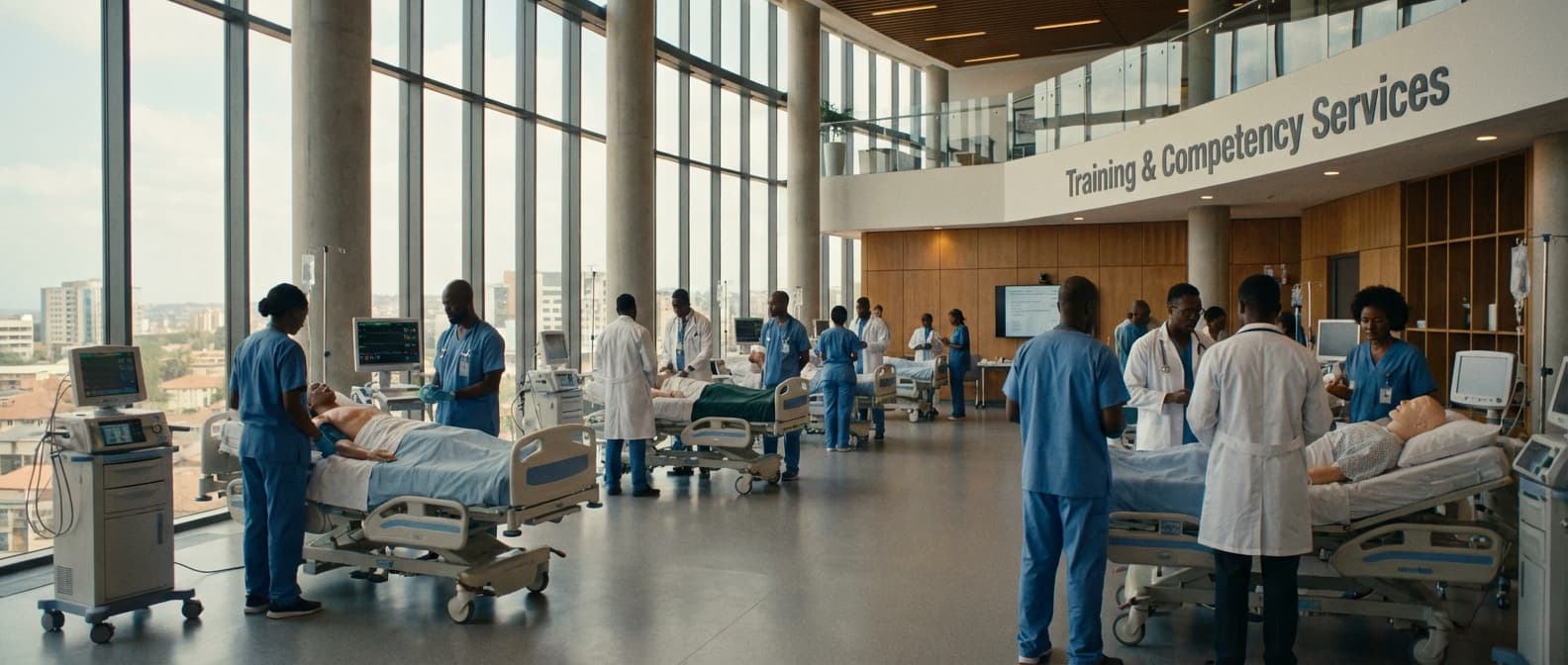
Ventilator User Training Service (Nurses) in Burkina Faso
Engineering Excellence & Technical Support
Ventilator User Training Service (Nurses) High-standard technical execution following OEM protocols and local regulatory frameworks.
Rapid Ventilator Setup for Timely Intervention
Learn to connect, pre-test, and set up essential ventilation modes for pediatric and adult patients in under 5 minutes, ensuring immediate respiratory support during critical emergencies. Understand color-coded connections and pre-use checks to prevent errors.
Effective Alarm Interpretation & Response
Master the meaning of common ventilator alarms (e.g., high/low pressure, disconnection, apnea) and their immediate troubleshooting steps. Practice distinguishing critical alarms from nuisance alarms to prioritize patient care and minimize alarm fatigue.
Principles of Ventilator Weaning in Resource-Limited Settings
Understand evidence-based weaning protocols adapted for Burkina Faso's context, focusing on spontaneous breathing trials (SBTs) and patient-ventilator synchrony. Learn to assess readiness for liberation and recognize early signs of weaning failure.
What Is Ventilator User Training Service (Nurses) In Burkina Faso?
Ventilator User Training Service (Nurses) in Burkina Faso refers to specialized educational programs designed to equip registered nurses and other qualified healthcare professionals with the knowledge and practical skills necessary to safely and effectively operate, monitor, and manage mechanical ventilators within the Burkinabé healthcare system. This service is critical for ensuring optimal patient outcomes in critical care settings where respiratory support is required.
The service involves a comprehensive curriculum covering theoretical principles of mechanical ventilation, ventilator modes and settings, patient assessment for mechanical ventilation, troubleshooting common ventilator-related issues, and ventilator weaning protocols. It emphasizes hands-on training with various ventilator models commonly found in Burkina Faso, focusing on practical application of learned concepts. Infection control protocols related to ventilator use and maintenance are also integral components. The training often includes simulations and supervised clinical practice.
This training is essential for registered nurses working in intensive care units (ICUs), emergency departments, operating rooms, and other critical care areas. It is also relevant for respiratory therapists (where available and designated for ventilator management), anesthesiologists, and critical care physicians who directly oversee or support ventilator-dependent patients. The service aims to standardize ventilator management practices across different healthcare facilities in Burkina Faso, ensuring a baseline level of competency for all nursing staff involved in this complex aspect of patient care.
| Target Audience | Indication for Training | Typical Use Cases |
|---|---|---|
| Registered Nurses (ICU, ED, OR, Critical Care) | Introduction to ventilator use, refresher courses, introduction of new ventilator models | Management of acute respiratory failure (e.g., pneumonia, ARDS, COPD exacerbations), post-operative respiratory support, patients requiring prolonged mechanical ventilation. |
| Respiratory Therapists (where applicable) | Advanced ventilator techniques, specialized modes, management of complex respiratory conditions | As above, with a focus on therapeutic interventions and advanced respiratory care modalities. |
| Anesthesiologists and Critical Care Physicians | Oversight of ventilator management, interpretation of ventilator data, decision-making for initiation and discontinuation | Intraoperative ventilation, management of critically ill patients requiring respiratory support. |
Key Components of Ventilator User Training Service (Nurses)
- Theoretical Principles of Mechanical Ventilation
- Ventilator Modes and Setting Optimization
- Patient Assessment and Monitoring for Ventilator Management
- Ventilator Troubleshooting and Alarm Management
- Ventilator Weaning Strategies and Protocols
- Infection Prevention and Control for Ventilator Use
- Hands-on Practice with Common Ventilator Models
- Simulation-based Learning
- Supervised Clinical Application
- Ethical Considerations in Mechanical Ventilation
Who Needs Ventilator User Training Service (Nurses) In Burkina Faso?
This document outlines the critical need for Ventilator User Training Services specifically tailored for nurses in Burkina Faso. As access to advanced respiratory support technologies like ventilators increases, ensuring that frontline healthcare professionals, particularly nurses, are proficient in their operation and maintenance becomes paramount. This training aims to enhance patient care, reduce the risk of ventilator-associated complications, and optimize the utilization of these life-saving devices within the Burkinabe healthcare system.
| Department/Healthcare Setting | Specific Roles Requiring Training | Rationale for Training |
|---|---|---|
| Intensive Care Units (ICUs) | ICU Nurses, Respiratory Therapists (if available), Nurse Managers | Direct management of critically ill patients requiring mechanical ventilation. High acuity and complex ventilator settings. |
| Emergency Departments (EDs) | ED Nurses, Triage Nurses | Initial stabilization and management of patients with acute respiratory distress requiring immediate ventilation. |
| Surgical Wards / Post-Anesthesia Care Units (PACUs) | Post-operative Nurses, PACU Nurses | Care of patients recovering from surgery who may require temporary mechanical ventilation. |
| Pediatric Wards / Neonatal Intensive Care Units (NICUs) | Pediatric Nurses, Neonatal Nurses, NICU Nurses | Specialized training required for pediatric and neonatal ventilation, with unique physiological considerations and equipment settings. |
| Pulmonary/Respiratory Clinics | Specialized Nurses in Respiratory Care | Management of patients with chronic respiratory conditions requiring non-invasive or intermittent invasive ventilation. |
| General Wards (where ventilators are available for acute cases) | Ward Nurses | To manage patients with moderate respiratory compromise or as a stepping stone before transfer to higher care units. |
| Healthcare Facilities in Remote/Underserved Areas | All Nursing Staff | To ensure basic competency in managing respiratory emergencies with limited resources and access to specialized support. |
| Teaching Hospitals and Training Institutions | Nursing Educators, Clinical Instructors | To equip educators with the knowledge to train future generations of nurses in ventilator management. |
Target Customers
- Registered Nurses
- Enrolled Nurses
- Nursing Assistants (with relevant responsibilities)
- Head Nurses / Nurse Supervisors
- Nursing Students (in their final year or specialized rotations)
Ventilator User Training Service (Nurses) Process In Burkina Faso
This document outlines the workflow for the Ventilator User Training Service for Nurses in Burkina Faso, detailing the process from initial inquiry to the successful execution of training.
| Phase | Step | Description | Responsible Party/Department | Key Deliverables/Outputs | Timeline (Indicative) |
|---|---|---|---|---|---|
| Phase 1: Inquiry and Needs Assessment | 1.1 Initial Inquiry | Healthcare facility (hospital, clinic) or Ministry of Health expresses interest in ventilator user training for nurses. | Inquiring Institution (e.g., Hospital Administrator, Nursing Director, Ministry Official) | Formal or informal request for training services. | Upon request |
| 1.2 Information Gathering | Service provider gathers information about the facility's current ventilator inventory, existing training levels, specific needs, target audience (number of nurses), and desired training dates/locations. | Training Service Provider | Needs assessment report, understanding of training scope. | 1-2 weeks | |
| Phase 2: Proposal Development and Agreement | 2.1 Proposal Submission | Based on the needs assessment, the training provider develops a detailed proposal including training objectives, curriculum, methodology, duration, trainers, equipment requirements, and cost. | Training Service Provider | Training proposal document. | 1-2 weeks after inquiry closure |
| 2.2 Proposal Review and Negotiation | The inquiring institution reviews the proposal, and negotiations take place regarding scope, budget, and scheduling. | Inquiring Institution & Training Service Provider | Agreed-upon training plan, budget, and schedule. | 1-2 weeks | |
| 2.3 Contract/Agreement Signing | A formal contract or Memorandum of Understanding (MOU) is signed, outlining the terms and conditions of the training service. | Both Parties | Signed contract/MOU. | 1 week | |
| Phase 3: Training Preparation | 3.1 Curriculum Finalization | Detailed training modules and materials are finalized, incorporating any specific requirements or equipment from the facility. | Training Service Provider | Finalized training curriculum and materials (presentations, handouts, case studies). | 2-3 weeks before training |
| 3.2 Trainer Assignment | Qualified and experienced trainers are identified and assigned to the training. | Training Service Provider | Assigned trainer(s). | 2-3 weeks before training | |
| 3.3 Logistics and Equipment Confirmation | Coordination of training venue, availability of ventilators (if provided by the facility), simulation equipment, and any other necessary resources. This includes confirming whether the training will be conducted on-site or at a central location. | Training Service Provider & Inquiring Institution | Confirmed logistics (venue, dates, times) and equipment readiness. | 1-2 weeks before training | |
| 3.4 Participant Nomination and Registration | The inquiring institution nominates nurses for the training, and registration details are collected. | Inquiring Institution | List of registered participants, contact information. | 1 week before training | |
| Phase 4: Training Delivery | 4.1 On-site/Off-site Training | The training is conducted according to the agreed-upon curriculum and schedule. This typically includes theoretical sessions (lectures, discussions) and practical hands-on sessions with ventilators. | Trainer(s) & Participants | Interactive learning sessions, skill demonstration, Q&A. | Duration as per agreement (e.g., 2-5 days) |
| 4.2 Practical Skill Assessment | Nurses demonstrate their understanding and proficiency in operating and managing ventilators through practical exercises and simulations. | Trainer(s) & Participants | Observed practical skills, competency assessment. | Throughout practical sessions | |
| 4.3 Knowledge Assessment | Theoretical knowledge is assessed through quizzes, tests, or case study discussions. | Trainer(s) & Participants | Assessment scores, identification of knowledge gaps. | End of theoretical sessions/modules | |
| 4.4 Feedback Collection | Participants provide feedback on the training content, delivery, trainers, and logistics. | Participants | Completed feedback forms/surveys. | End of training | |
| Phase 5: Post-Training Follow-up and Evaluation | 5.1 Certificate Issuance | Upon successful completion of the training and passing assessments, certificates are awarded to the nurses. | Training Service Provider | Training certificates. | Within 1 week of training completion |
| 5.2 Training Report | A comprehensive training report is prepared, summarizing the training activities, participant performance, assessment results, and feedback received. | Training Service Provider | Training report. | Within 2 weeks of training completion | |
| 5.3 Impact Evaluation (Optional/Follow-up) | A follow-up evaluation may be conducted after a period to assess the long-term impact of the training on clinical practice and patient outcomes. This could involve surveys or interviews. | Training Service Provider & Inquiring Institution | Impact evaluation report (if conducted). | 3-6 months post-training | |
| 5.4 Payment and Invoicing | Final invoicing and payment processing according to the contract terms. | Training Service Provider & Inquiring Institution | Payment confirmation. | As per contract |
Ventilator User Training Service (Nurses) Workflow in Burkina Faso
- Phase 1: Inquiry and Needs Assessment
- Phase 2: Proposal Development and Agreement
- Phase 3: Training Preparation
- Phase 4: Training Delivery
- Phase 5: Post-Training Follow-up and Evaluation
Ventilator User Training Service (Nurses) Cost In Burkina Faso
The cost of ventilator user training for nurses in Burkina Faso can vary significantly based on several factors. These factors influence the pricing, determining the range of costs encountered by healthcare facilities or organizations seeking such training. Understanding these elements is crucial for accurate budgeting and resource allocation. The training duration, the expertise and qualifications of the trainers, the specific type of ventilator being covered, the location and logistics of the training, and whether the training is provided by a government institution, a private company, or an NGO all contribute to the overall cost.
| Cost Range (XOF) | Description/Typical Scenarios |
|---|---|
| 50,000 - 150,000 | Basic, short-duration awareness training or introductory sessions conducted by local health professionals or NGOs, potentially covering a single, widely used ventilator model. This might be for a group of nurses. |
| 150,000 - 500,000 | Intermediate level training for a moderate group of nurses, covering more in-depth operation, troubleshooting, and basic maintenance of a specific ventilator. This could be offered by a local training provider or a manufacturer's representative. |
| 500,000 - 1,500,000+ | Advanced, comprehensive training for a group of nurses, potentially involving multiple ventilator models, complex patient scenarios, critical care principles, and hands-on simulation. This might be provided by international organizations, specialized private companies, or involve foreign trainers, and could include certification. |
| Subsidized/Free | Training provided by the Ministry of Health or through international donor-funded projects, often prioritized for public health facilities. Costs are absorbed by the funding agency. |
Key Pricing Factors for Ventilator User Training (Nurses) in Burkina Faso:
- Training Duration and Intensity: Longer and more comprehensive training programs, often including hands-on practice and simulation, will naturally incur higher costs.
- Trainer Expertise and Qualifications: Highly specialized and experienced medical trainers, especially those with international certifications or extensive clinical experience, command higher fees.
- Ventilator Model Specificity: Training on a single, basic ventilator model might be less expensive than training on multiple advanced models with complex functionalities, requiring more time and specialized knowledge.
- Location and Logistics: Training conducted in remote or hard-to-reach areas might involve additional travel and accommodation expenses for trainers, increasing the overall cost. Conversely, training at a well-equipped central facility could be more cost-effective.
- Provider Type: Training offered by government-funded institutions might be subsidized or free, especially for public health initiatives. Private training providers or specialized companies will typically charge market rates.
- Training Materials and Equipment: The cost of providing training manuals, simulation equipment, and access to actual ventilators for hands-on practice will be factored into the price.
- Certification and Assessment: If the training includes formal certification and assessment, this often adds to the cost due to the administrative and evaluation components.
- Group Size: The price per nurse might decrease with larger group sizes due to economies of scale, although the total cost for the facility will increase.
- Customization of Curriculum: Tailoring the training content to the specific needs and existing skill sets of the nurses can influence the development costs.
Affordable Ventilator User Training Service (Nurses) Options
This document outlines affordable ventilator user training service options specifically for nurses. We focus on delivering high-quality, practical education that enhances competency in ventilator management while being mindful of budget constraints. Our approach emphasizes value bundles and strategic cost-saving measures to ensure accessibility and maximize return on investment for healthcare institutions.
| Service Option | Description | Value Bundle Components | Estimated Cost Per Nurse (USD) | Cost-Saving Strategies Employed |
|---|---|---|---|---|
| Core Competency Package | Comprehensive training covering fundamental ventilator knowledge and skills. | Online self-paced modules, live Q&A webinars, simulation lab access (limited hours), digital resource library. | $250 - $400 | Leverages online learning for scalability, group webinar discounts, bundled resource access. |
| Advanced Skills Enhancement | Focuses on more complex ventilator management, troubleshooting, and weaning. | Core Competency Package + advanced case studies, in-person simulation workshop (half-day), personalized feedback sessions. | $450 - $600 | Combines online and in-person for efficient skill transfer, group workshop discounts, streamlined feedback. |
| On-Site Team Training | Tailored training delivered at the healthcare facility for entire nursing teams. | Customized curriculum, on-site instructor-led sessions, hands-on practice with facility equipment, train-the-trainer components. | Starts at $2,000 per session (negotiable based on team size and duration) | Reduces travel costs for nurses, allows for facility-specific equipment training, economies of scale for larger groups. |
| Refresher & Update Training | Designed for experienced nurses to refresh knowledge and stay updated on new protocols. | Short online modules, interactive quizzes, focused webinars on emerging trends. | $100 - $200 | Short, focused modules reduce learning time, utilizes efficient online delivery. |
Key Training Areas Covered
- Introduction to Mechanical Ventilation Principles
- Ventilator Modes and Settings Explained
- Patient Assessment and Monitoring on Ventilator
- Troubleshooting Common Ventilator Alarms
- Basic Ventilator Weaning Strategies
- Infection Control Practices with Ventilators
- Ethical Considerations in Ventilator Management
- Hands-on Simulation Exercises
Verified Providers In Burkina Faso
In Burkina Faso, ensuring you access healthcare from verified and reputable providers is paramount. Franance Health stands out as a leading organization committed to upholding the highest standards of medical care and ethical practice. This commitment translates into a superior patient experience and optimal health outcomes. Here's why partnering with Franance Health for your healthcare needs in Burkina Faso represents the best choice.
| Provider Type | Franance Health Verification Benefits | Why it Matters for Patients |
|---|---|---|
| Doctors and Specialists | Verified medical licenses, board certifications, and peer reviews. | Ensures you are treated by qualified and experienced medical professionals, reducing the risk of misdiagnosis or improper treatment. |
| Hospitals and Clinics | Accreditation status, adherence to hygiene protocols, and availability of essential medical equipment. | Guarantees a safe and well-equipped healthcare environment, crucial for effective treatment and recovery. |
| Diagnostic Laboratories | Validation of laboratory certifications and quality control measures. | Provides confidence in the accuracy and reliability of medical test results, which are vital for diagnosis and treatment planning. |
| Pharmacies | Verification of pharmacy licenses and adherence to drug dispensing regulations. | Ensures you receive authentic and safely dispensed medications, protecting you from counterfeit or substandard drugs. |
Why Franance Health is the Best Choice for Verified Providers in Burkina Faso
- Rigorous Provider Verification Process: Franance Health employs a stringent vetting system for all healthcare professionals and facilities listed on their platform. This process includes in-depth credential checks, license verification, and a review of professional standing.
- Commitment to Quality and Safety: Patients can trust that Franance Health partners with providers who adhere to international quality and safety standards in their practice.
- Patient-Centric Approach: The organization prioritizes patient well-being and satisfaction, ensuring that all verified providers offer compassionate and effective care.
- Accessibility and Convenience: Franance Health simplifies the process of finding and accessing trusted healthcare services, empowering individuals to make informed decisions about their health.
- Transparency and Accountability: By providing access to verified credentials, Franance Health fosters transparency in the healthcare system and holds providers accountable for their services.
Scope Of Work For Ventilator User Training Service (Nurses)
This Scope of Work (SOW) outlines the requirements for a comprehensive Ventilator User Training Service specifically designed for nurses. The service will equip nurses with the necessary knowledge and practical skills to safely and effectively operate, monitor, and manage patients requiring mechanical ventilation. The training will cover theoretical concepts, hands-on practical sessions, and troubleshooting common issues. The technical deliverables will ensure standardized competency and adherence to best practices in ventilator management. Standard specifications will define the quality and depth of the training provided.
| Technical Deliverable | Description | Standard Specification / Requirement |
|---|---|---|
| Training Curriculum Document | A detailed outline of all training modules, learning objectives, content, and assessment methods. | Must be approved by the client prior to commencement. Should align with current evidence-based guidelines and professional standards. |
| Training Manuals/Handouts | Comprehensive written materials for each participant, covering all theoretical aspects of the training. | Clear, concise language. Visually engaging with diagrams and illustrations. Available in digital and/or print format. Minimum 12-point font size. |
| Practical Demonstration Sessions | Hands-on sessions utilizing functional ventilators (simulated or actual, as specified). | Each participant must have direct access to a ventilator for practice. Instructor-to-participant ratio not exceeding 1:6 for practical sessions. |
| Competency Assessment Tools | Tools to evaluate the participants' understanding and practical skills. | Includes written quizzes, case studies, and practical skills checklists. Passing score of at least 80% required for certification. |
| Post-Training Evaluation Forms | Feedback forms for participants to evaluate the training program and instructors. | Anonymous submission. Data to be compiled and provided to the client within 7 days of training completion. |
| Certified Training Record | Documentation of participants' successful completion of the training program. | Includes participant name, date of training, modules covered, assessment results, and unique certificate number. Provided in digital format (PDF). |
| Instructor Qualifications | Credentials and experience of the trainers delivering the service. | Instructors must be certified nurses with a minimum of 5 years of experience in critical care and/or respiratory therapy, with demonstrated expertise in mechanical ventilation. |
| Ventilator Equipment Compliance | Specifications for the ventilators used during practical training. | Must be modern, functional ventilators representative of those commonly used in clinical settings. All safety features operational. Regular maintenance records available. |
Key Training Modules and Topics
- Introduction to Mechanical Ventilation: Principles, Indications, and Contraindications
- Ventilator Modes: Understanding Pressure Support, Volume Control, PRVC, etc.
- Ventilator Settings and Parameters: Tidal Volume, Respiratory Rate, PEEP, FiO2, Flow Rate
- Patient-Ventilator Synchrony: Recognizing and managing asynchrony
- Monitoring Ventilated Patients: Hemodynamic parameters, Respiratory mechanics, ABGs
- Ventilator-Associated Pneumonia (VAP) Prevention and Management
- Weaning from Mechanical Ventilation: Protocols and assessment
- Troubleshooting Common Ventilator Alarms and Malfunctions
- Special Populations: Ventilator management in pediatrics, geriatrics, and critically ill patients
- Ethical and Legal Considerations in Mechanical Ventilation
Service Level Agreement For Ventilator User Training Service (Nurses)
This Service Level Agreement (SLA) outlines the response times and uptime guarantees for the Ventilator User Training Service specifically tailored for nurses. It defines the expected service availability and the procedures for addressing any service disruptions.
| Service Component | Uptime Guarantee | Response Time (for Support Inquiries) | Resolution Target (Critical Incident) | Resolution Target (Major Incident) | Resolution Target (Minor Incident) |
|---|---|---|---|---|---|
| Training Platform Accessibility (Live Sessions) | 99.5% | N/A (Live support during sessions) | 2 hours | 4 hours | 8 business hours |
| Access to Pre-recorded Training Modules & Resources | 99.9% | 4 business hours | 4 hours | 8 business hours | 16 business hours |
| Technical Support (General Inquiries) | N/A (Support available during business hours) | 2 business hours | N/A | N/A | 24 business hours |
Key Definitions
- Uptime: The percentage of time the Ventilator User Training Service is accessible and fully functional for scheduled training sessions and access to training materials.
- Response Time (for Support Inquiries): The maximum time allowed for a support representative to acknowledge and begin addressing a reported issue or query.
- Critical Incident: A severe service disruption that prevents nurses from accessing scheduled training sessions or critical training materials, significantly impacting their ability to perform their duties.
- Major Incident: A service disruption that affects a significant portion of users or functionality but does not completely prevent access to all training.
- Minor Incident: A service disruption affecting a small number of users or a non-critical functionality, with minimal impact on overall training delivery.
Frequently Asked Questions

Ready when you are
Let's scope your Ventilator User Training Service (Nurses) in Burkina Faso project in Burkina Faso.

Scaling healthcare logistics and technical systems across the entire continent.