
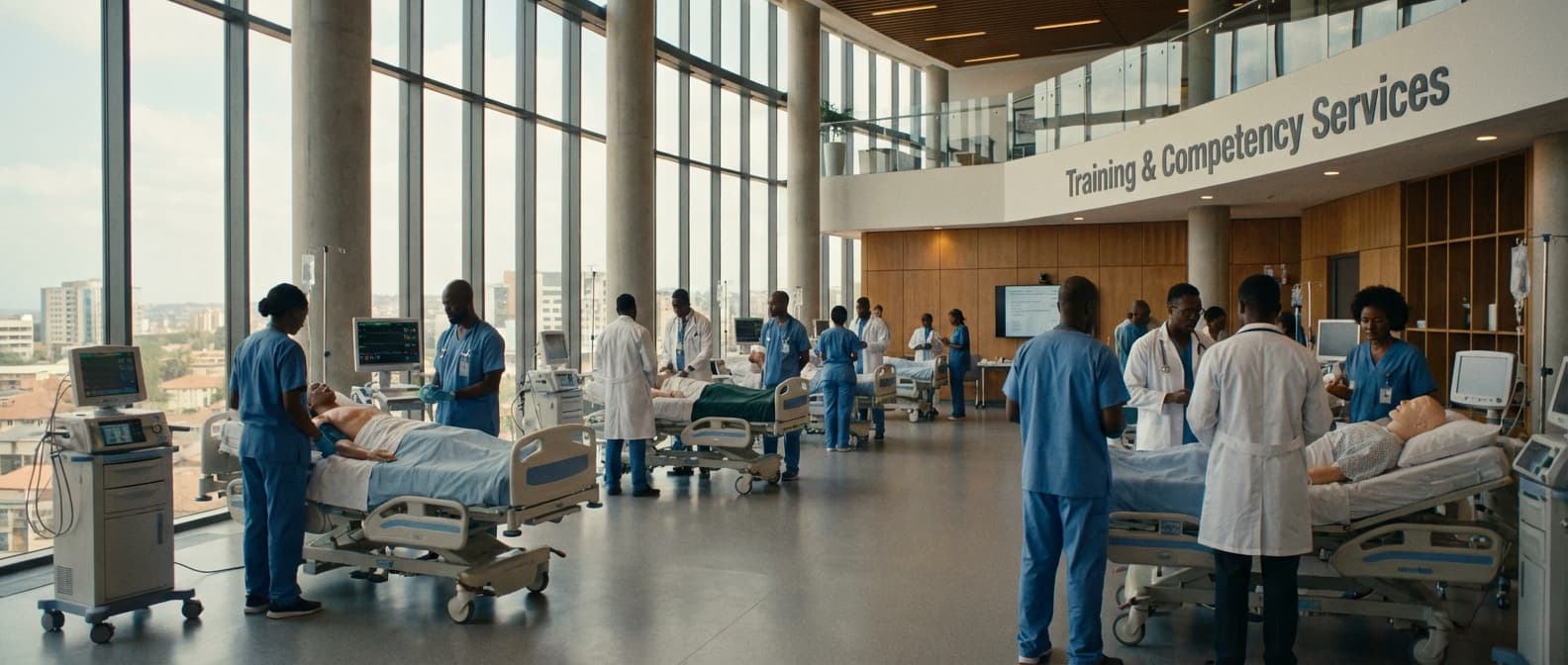
Ultrasound Application Training Service (Protocol-Based) in Burkina Faso
Engineering Excellence & Technical Support
Ultrasound Application Training Service (Protocol-Based) High-standard technical execution following OEM protocols and local regulatory frameworks.
Standardized Protocol-Driven Training
Our training emphasizes adherence to established ultrasound protocols, ensuring consistent and reproducible image acquisition. This promotes standardized diagnostic practices, enhancing the reliability of ultrasound findings in resource-limited settings.
Hands-On Skill Development with Real-World Scenarios
We provide extensive practical training utilizing high-fidelity phantoms and, where ethically permissible, simulated patient scenarios. This allows trainees to develop critical psychomotor skills and build confidence in applying learned protocols to diverse clinical presentations encountered in Burkina Faso.
Accessible Digital Learning Resources & Ongoing Support
Trainees receive access to a library of digital educational materials, including video demonstrations and interactive quizzes. Post-training, participants benefit from remote support and follow-up sessions to reinforce knowledge and address emerging challenges in their ultrasound practice.
What Is Ultrasound Application Training Service (Protocol-based) In Burkina Faso?
Ultrasound Application Training Service (Protocol-Based) in Burkina Faso refers to specialized educational programs designed to equip healthcare professionals with the theoretical knowledge and practical skills necessary to perform diagnostic ultrasound examinations according to standardized, evidence-based protocols. This service aims to enhance the accuracy, consistency, and clinical utility of ultrasound imaging within the healthcare system of Burkina Faso, addressing potential disparities in access to high-quality diagnostic services.
| Who Needs It | Typical Use Cases | ||||||
|---|---|---|---|---|---|---|---|
| Radiologists and Radiology Technologists: To standardize their practice and improve diagnostic accuracy across various specialties. | Obstetricians and Gynecologists: For prenatal screening, fetal well-being assessment, and evaluation of gynecological conditions. | General Practitioners and Internists: To provide point-of-care ultrasound (POCUS) for initial patient assessment and management in resource-limited settings. | Surgeons: For pre-operative assessment, intra-operative guidance, and post-operative monitoring. | Pediatricians: For the diagnosis of common pediatric conditions, particularly in abdominal and cranial imaging. | Emergency Medicine Physicians: For rapid diagnosis of trauma, fluid status assessment, and identification of acute pathologies. | Healthcare facilities in rural and underserved areas: To improve access to advanced diagnostic imaging capabilities. | Medical training institutions: To integrate comprehensive ultrasound education into their curricula. |
| Abdominal Imaging: Assessment of liver, gallbladder, pancreas, spleen, kidneys, and urinary tract for pathologies such as tumors, stones, inflammation, and organomegaly. | Obstetric and Gynecological Ultrasound: Dating pregnancies, assessing fetal anatomy and growth, detecting multiple gestations, evaluating adnexal masses, uterine fibroids, and other pelvic abnormalities. | Cardiovascular Ultrasound (Echocardiography): Assessment of cardiac structure and function, identification of valvular heart disease, and detection of pericardial effusions (often a more specialized training). | Musculoskeletal Ultrasound: Evaluation of joints, tendons, ligaments, and soft tissues for injuries, inflammatory conditions, and masses. | Thyroid and Breast Ultrasound: Detection and characterization of nodules and masses. | Vascular Ultrasound: Assessment of blood flow and identification of vascular abnormalities, such as deep vein thrombosis (DVT) and carotid artery stenosis (often a more specialized training). | Point-of-Care Ultrasound (POCUS): Rapid bedside assessment in emergency departments, intensive care units, and primary healthcare settings for conditions like pleural effusions, ascites, cardiac tamponade, and basic abdominal assessments. |
What the Service Involves:
- Protocol Standardization: Training is structured around universally recognized or locally adapted ultrasound protocols for specific organ systems (e.g., abdominal, obstetric, gynecological, small parts) and clinical indications.
- Theoretical Instruction: Covers foundational principles of ultrasound physics, instrumentation, image acquisition, artifact recognition, and relevant anatomy and pathophysiology.
- Practical Skills Development: Hands-on sessions focusing on probe manipulation, patient positioning, optimal transducer selection, and systematic image acquisition techniques aligned with established protocols.
- Image Interpretation: Training on the sonographic features of normal and abnormal findings, differential diagnoses, and reporting guidelines.
- Quality Assurance and Optimization: Instruction on maintaining optimal image quality, troubleshooting common issues, and adhering to safety standards.
- Case-Based Learning: Utilization of real-world patient cases to reinforce protocol application and interpretation skills in diverse clinical scenarios.
- Competency Assessment: Evaluation of trainees' knowledge and practical skills through theoretical exams, practical demonstrations, and image review.
- Continuing Professional Development: Some programs may offer ongoing mentorship or refresher courses to maintain and advance skill sets.
Who Needs Ultrasound Application Training Service (Protocol-based) In Burkina Faso?
Ultrasound Application Training Services, particularly those that are protocol-based, are essential for enhancing diagnostic capabilities and patient care in Burkina Faso. This type of specialized training ensures that healthcare professionals can utilize ultrasound equipment effectively and consistently for various medical scenarios, leading to more accurate diagnoses and improved treatment outcomes. The protocol-based approach standardizes examination techniques, reducing variability and improving the reliability of ultrasound findings.
| Target Customer Group | Relevant Departments | Specific Needs Addressed |
|---|---|---|
| Hospitals (Public and Private) | Radiology/Imaging Department Obstetrics and Gynecology Pediatrics Internal Medicine Surgery Emergency Department | Standardized protocol implementation for general and specialized ultrasound (e.g., fetal biometry, abdominal scans, cardiac assessments, vascular studies). Training for new equipment or advanced applications. Refresher courses for experienced staff. |
| Clinics and Health Centers | Maternal and Child Health General Practice Emergency Care | Basic ultrasound protocols for point-of-care diagnostics (e.g., FAST scans, basic obstetric scans, identifying fluid collections). Training for limited-resource settings. |
| Diagnostic Imaging Centers | Radiology/Imaging Department | Advanced protocol training for sub-specialties (e.g., musculoskeletal, interventional ultrasound). Quality assurance and optimization of scan protocols. Training on new imaging techniques. |
| Non-Governmental Organizations (NGOs) | Maternal and Child Health Programs Primary Healthcare Services Emergency Response Teams | Training for mobile ultrasound units. Protocols tailored for community-based screening and diagnostics. Capacity building for local healthcare workers in underserved areas. |
| Medical Training Institutions | Medical Schools Nursing Schools Paramedic Programs Radiography/Sonography Programs | Integration of protocol-based ultrasound training into curriculum. Training for instructors on how to teach standardized protocols. Equipping future professionals with essential diagnostic skills. |
Target Customers and Departments for Ultrasound Application Training Service (Protocol-Based) in Burkina Faso
- Hospitals (Public and Private)
- Clinics and Health Centers
- Diagnostic Imaging Centers
- Non-Governmental Organizations (NGOs) with healthcare programs
- Medical Training Institutions (Universities, Schools of Health Sciences)
Ultrasound Application Training Service (Protocol-based) Process In Burkina Faso
This document outlines the workflow for the Ultrasound Application Training Service (Protocol-Based) in Burkina Faso. This structured process ensures efficient and effective delivery of specialized ultrasound training based on predefined protocols.
| Stage | Key Activities | Responsible Party | Deliverables/Outcomes | Timeline (Indicative) |
|---|---|---|---|---|
| Initial contact from prospective client (e.g., hospital, clinic, NGO). Discussion of specific ultrasound application training needs. Identification of target audience, existing skill levels, and desired outcomes. Confirmation of adherence to specific protocols. | Prospective Client, Service Provider | Initial understanding of training requirements, confirmation of protocol relevance. | 1-3 days |
| Development of a detailed training proposal outlining objectives, curriculum (protocol-based), methodology, trainers, schedule, venue requirements, and cost. Negotiation and finalization of the training agreement. Payment of advance fees. | Service Provider, Prospective Client | Formalized training proposal, signed contract, initial payment. | 3-7 days |
| Logistics arrangement: scheduling, venue confirmation, equipment procurement/verification. Trainer assignment and briefing. Participant registration and pre-assessment (if applicable). Distribution of pre-reading materials or protocol guidelines. | Service Provider | Confirmed training schedule, prepared venue and equipment, registered participants, disseminated pre-training materials. | 1-2 weeks (prior to training) |
| Delivery of theoretical sessions (lectures, case studies). Practical hands-on sessions using ultrasound equipment, adhering strictly to the agreed-upon protocols. Demonstrations and supervised practice. Q&A sessions and troubleshooting. | Trainer(s), Participants | Acquisition of theoretical knowledge, development of practical scanning skills as per protocols. | Duration varies based on protocol complexity (e.g., 2-5 days per module) |
| Participant evaluation (practical assessment, knowledge test). Trainer feedback on participant performance. Collection of participant feedback on the training. On-site or remote follow-up support (if agreed). | Trainer(s), Service Provider, Participants | Assessment of learning outcomes, identification of areas for improvement, participant satisfaction data. | 1 week (post-training) |
| Compilation of training reports including participant attendance, assessment results, and feedback summary. Issuance of certificates of completion to successful participants. Final invoicing and payment processing. | Service Provider | Comprehensive training report, certified participants, final payment. | 1-2 weeks (post-evaluation) |
Workflow Stages
- Inquiry & Needs Assessment
- Proposal & Agreement
- Pre-Training Preparation
- Training Execution
- Post-Training Follow-up & Evaluation
- Reporting & Certification
Ultrasound Application Training Service (Protocol-based) Cost In Burkina Faso
This document outlines the potential cost of Ultrasound Application Training Services, specifically protocol-based training, within Burkina Faso. The pricing is influenced by several key factors, leading to a range of costs for individuals and institutions seeking such specialized education. Understanding these factors is crucial for accurate budgeting and service selection.
| Training Type/Duration | Estimated Cost Range (CFA Francs) | Notes |
|---|---|---|
| Basic Introduction to Ultrasound Principles (1-2 days) | 50,000 - 150,000 CFA | Covers fundamental concepts and basic machine operation. |
| General Ultrasound Applications (e.g., Abdominal Focus) (3-5 days) | 150,000 - 400,000 CFA | Includes hands-on scanning and protocol adherence for common examinations. |
| Specialized Ultrasound Application (e.g., Obstetrics/Gynecology, Cardiology) (5-7 days) | 300,000 - 750,000 CFA | Focuses on specific organ systems and advanced protocols. May involve expert instructors. |
| Advanced / Fellowship-Level Training (Weeks to Months) | 1,000,000+ CFA | Intensive, in-depth training, often with direct supervision and research components. Highly specialized. |
| On-Site Institutional Training (Per Day/Session) | 100,000 - 300,000+ CFA | Varies greatly based on the number of participants, required specialization, and duration. |
| Refresher/Continuing Education Courses (1-2 days) | 75,000 - 200,000 CFA | Designed to update skills and knowledge on existing protocols. |
Key Pricing Factors for Ultrasound Application Training in Burkina Faso
- Duration of the Training Program: Longer programs naturally incur higher costs due to increased instructor time, facility usage, and materials.
- Level of Specialization: Basic ultrasound training is generally less expensive than advanced or specialized modules (e.g., obstetric, abdominal, vascular, cardiac).
- Instructor Expertise and Credentials: Highly experienced and specialized sonographers or radiologists command higher fees, which are reflected in the training cost.
- Training Venue and Facilities: Training conducted at well-equipped medical institutions or dedicated training centers with access to modern ultrasound equipment may be more expensive than on-site training at a client's facility.
- Included Materials and Resources: The provision of comprehensive training manuals, access to online resources, simulated case studies, and practical scanning phantoms can add to the overall cost.
- Number of Participants: While some programs may have a fixed per-participant fee, larger groups might negotiate bulk discounts. Conversely, very small, personalized training sessions may have a higher per-individual cost.
- Certification and Assessment: If the training culminates in a formal certification or assessment process, this often adds to the price.
- Travel and Accommodation (if applicable): For trainers or trainees who need to travel to a different city or country, these expenses will be factored into the total cost.
- Curriculum Customization: Tailoring the training protocol to specific institutional needs or a particular set of patient demographics can increase the cost.
- Equipment Usage Fees: While often integrated, separate fees for the exclusive use of high-end ultrasound machines for prolonged practical sessions might be applicable.
Affordable Ultrasound Application Training Service (Protocol-based) Options
Our Affordable Ultrasound Application Training Service offers protocol-based education designed to equip sonographers and medical professionals with the skills and knowledge to perform standardized ultrasound examinations efficiently and accurately. We understand that budget constraints are a significant factor for many individuals and institutions. Therefore, we've developed a range of value bundles and cost-saving strategies to make high-quality ultrasound training accessible. Our approach focuses on teaching established protocols, ensuring consistency and best practices in diagnostic imaging.
| Cost-Saving Strategy | Description | Benefits |
|---|---|---|
| Early Bird Discounts | Register for training programs within a specified early period to receive a reduced fee. | Significant upfront savings on individual and group registrations. |
| Group Registration Discounts | Registering multiple participants from the same institution at once qualifies for tiered discounts. | Reduces the per-person cost for teams and departments. |
| Bundled Training Packages | Purchasing multiple application training modules together at a discounted rate compared to individual purchases. | Maximizes learning scope for a lower overall investment. |
| Subscription Models (for institutions) | Annual or multi-year subscriptions offering continuous access to training materials and updates for a fixed fee. | Predictable budgeting and ongoing professional development for staff. |
| Virtual & On-Demand Access | Training delivered through online platforms, reducing travel and accommodation costs associated with in-person workshops. | Flexibility for learners to study at their own pace and geographical location. |
| Customizable Learning Paths | Ability to select specific modules or protocols, avoiding payment for content not relevant to individual needs. | Ensures trainees only pay for the most pertinent training, optimizing resource allocation. |
| Partner Institution Programs | Special pricing and benefits for affiliated hospitals, clinics, and educational bodies. | Exclusive discounts and collaborative opportunities. |
| Limited-Time Promotions | Periodic offers and sales on specific training bundles or courses. | Opportunistic savings for proactive learners. |
Value Bundles for Ultrasound Application Training
- Core Protocol Bundle: This foundational bundle covers essential ultrasound applications (e.g., Abdominal, OB/GYN, Vascular Access) using standardized protocols. Ideal for new practitioners or those needing to solidify basic skill sets.
- Specialty Application Bundle: Designed for sonographers seeking to expand their expertise, this bundle focuses on advanced or specialized areas (e.g., Echocardiography, Musculoskeletal, Breast Imaging) with in-depth protocol training.
- Comprehensive Training Package: Combines core and selected specialty bundles, offering a holistic approach to ultrasound competency. This is our most cost-effective option for extensive training needs.
- Institution-Wide Access: Tailored packages for hospitals, clinics, and educational institutions, providing access for multiple users and often including on-site or dedicated virtual sessions.
- Refresher & Advanced Skills Bundle: For experienced sonographers, this bundle focuses on updating protocols, mastering new techniques, and addressing common challenges within specific applications.
- Certification Preparation Bundle: Specifically curated modules and practice scenarios designed to help individuals prepare for professional ultrasound certification exams.
Verified Providers In Burkina Faso
In Burkina Faso's evolving healthcare landscape, identifying trustworthy and high-quality healthcare providers is paramount for individuals seeking reliable medical services. Franance Health distinguishes itself by offering a curated network of verified providers, ensuring patients access to competent and ethical medical professionals. This verification process is rigorous, encompassing a comprehensive review of qualifications, experience, ethical standing, and adherence to international healthcare standards. By choosing a Franance Health verified provider, patients gain the assurance of receiving care from practitioners who have met stringent criteria, leading to better health outcomes and peace of mind. Their commitment to transparency and quality makes Franance Health the superior choice for healthcare in Burkina Faso.
| Verification Criterion | Franance Health Standard | Benefit to Patient |
|---|---|---|
| Medical Licensing and Accreditation | Active and valid licenses from recognized bodies. | Ensures providers are legally qualified and have met initial competency requirements. |
| Professional Experience | Minimum years of practice and specialization in relevant fields. | Guarantees hands-on experience and expertise in specific medical areas. |
| Reputation and Peer Review | Positive track record and feedback from peers and previous patients (where applicable and ethical). | Indicates a history of good patient care and professional conduct. |
| Continuing Medical Education (CME) | Proof of ongoing training and updates in medical knowledge and practice. | Ensures providers are up-to-date with the latest medical advancements and techniques. |
| Ethical Conduct and Disciplinary History | Clean record with no significant disciplinary actions or malpractice findings. | Provides assurance of professional integrity and patient-centered care. |
| Facility Standards (where applicable) | Compliance with relevant safety and hygiene regulations for clinics and hospitals. | Ensures a safe and sanitary environment for medical procedures. |
Why Franance Health Verified Providers are the Best Choice:
- Rigorous verification process ensures provider competence and ethical practice.
- Access to qualified medical professionals with proven experience.
- Adherence to international healthcare standards for quality care.
- Enhanced patient safety and trust.
- Improved health outcomes through reliable medical services.
- Peace of mind knowing you are receiving care from a vetted professional.
Scope Of Work For Ultrasound Application Training Service (Protocol-based)
This Scope of Work (SOW) outlines the requirements for a Protocol-Based Ultrasound Application Training Service. The service aims to equip trainees with the necessary knowledge and practical skills to perform specific ultrasound examinations according to established protocols. This document details the technical deliverables and standard specifications for the training program.
| Section | Description | Technical Deliverables | Standard Specifications |
|---|---|---|---|
| Development of a structured training curriculum tailored to specific ultrasound applications and protocols. |
|
|
| Execution of the training program using pre-defined ultrasound protocols. |
|
|
| Provision and utilization of appropriate ultrasound equipment and simulation tools. |
|
|
| Methods to assess trainee competency and evaluate the effectiveness of the training program. |
|
|
| Provision of comprehensive reports detailing training activities and outcomes. |
|
|
Scope of Work Objectives
- To deliver comprehensive, protocol-driven ultrasound training.
- To ensure trainees can confidently and accurately perform defined ultrasound examinations.
- To standardize ultrasound practices within the organization.
- To enhance diagnostic accuracy and patient care through skilled ultrasound application.
- To provide measurable outcomes demonstrating trainee competency.
Service Level Agreement For Ultrasound Application Training Service (Protocol-based)
This Service Level Agreement (SLA) outlines the response times and uptime guarantees for the Ultrasound Application Training Service (Protocol-Based). This SLA is an integral part of the Master Service Agreement (MSA) between [Your Company Name] ('Provider') and [Client Company Name] ('Client').
| Metric | Definition | Service Level Objective (SLO) | Measurement | Remedy for Failure |
|---|---|---|---|---|
| System Uptime | The percentage of time the core training platform and its associated resources are available and functional for users to access training materials and participate in scheduled sessions. | 99.5% Uptime (excluding scheduled maintenance) | Monthly monitoring of platform availability. | For each full hour of unplanned downtime exceeding 0.5% of monthly uptime, Client will receive a credit equivalent to 0.1% of the monthly training service fee. |
| Support Response Time (Technical Issues) | The maximum time within which Provider will acknowledge receipt of a support request related to platform access, functionality, or technical errors during scheduled training hours. | 4 Business Hours | Timestamp of ticket creation and timestamp of first response from support. | For each support request not responded to within 4 business hours, Client will receive a credit equivalent to 0.05% of the monthly training service fee. |
| Support Response Time (Content/Protocol Clarification) | The maximum time within which Provider will acknowledge receipt of a support request seeking clarification on training content or specific ultrasound protocols. | 8 Business Hours | Timestamp of ticket creation and timestamp of first response from support. | For each content clarification request not responded to within 8 business hours, Client will receive a credit equivalent to 0.03% of the monthly training service fee. |
| Scheduled Maintenance Notification | The advance notice provided to the Client for planned downtime or service interruptions for maintenance or updates. | 48 Hours Advance Notice | Timestamp of notification sent to the Client. | Failure to provide 48 hours' notice for scheduled maintenance will not incur a direct financial remedy but will be logged for review and potential service improvement discussions. |
Key Service Metrics
- This SLA applies to the provision of online training modules, live virtual training sessions, and technical support related to the specified ultrasound application protocols.
- Definitions of terms used in this SLA are provided in Section 4.
- This SLA is effective as of the date of the MSA execution.
- Any deviations from this SLA require written amendment to the MSA.
Frequently Asked Questions

Ready when you are
Let's scope your Ultrasound Application Training Service (Protocol-Based) in Burkina Faso project in Burkina Faso.

Scaling healthcare logistics and technical systems across the entire continent.