
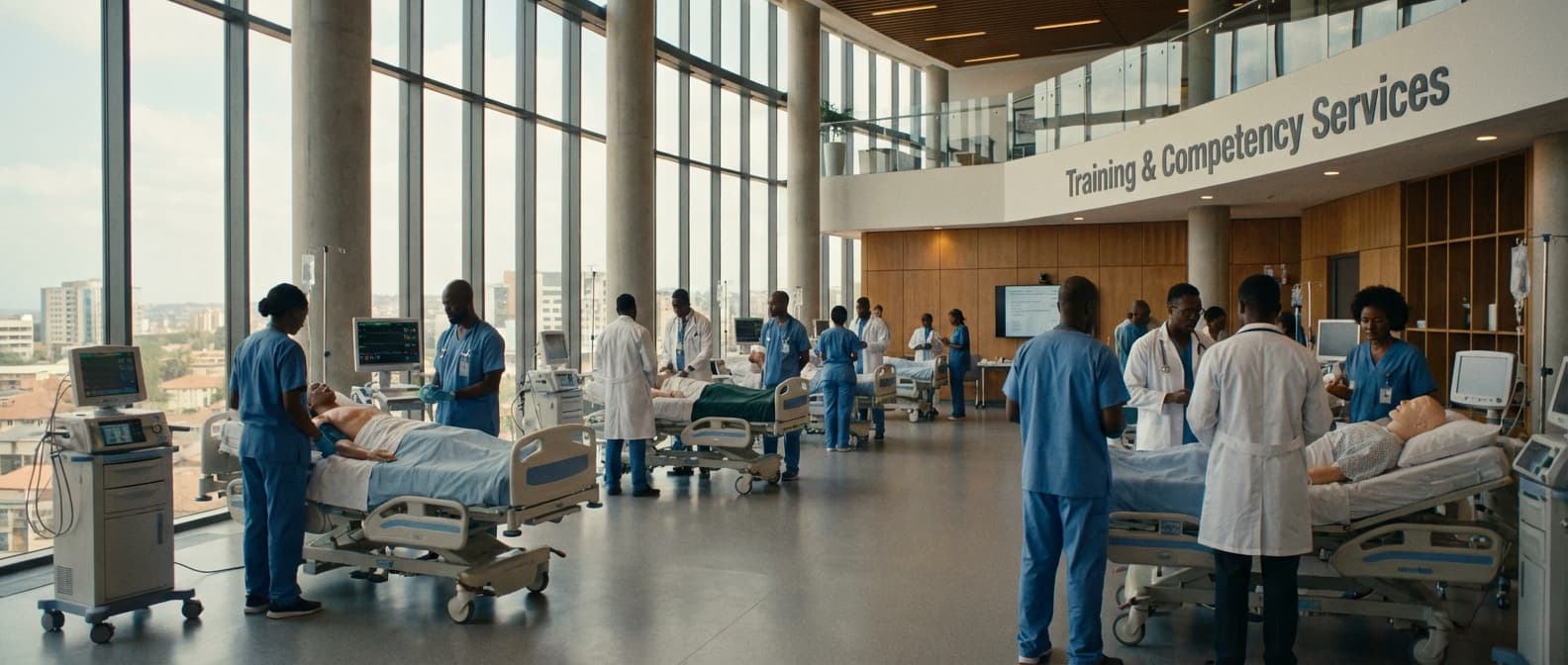
MRI Operator Training Service (Radiographers) in Burkina Faso
Engineering Excellence & Technical Support
MRI Operator Training Service (Radiographers) High-standard technical execution following OEM protocols and local regulatory frameworks.
Enhanced Image Quality & Patient Safety
Our training program equips radiographers in Burkina Faso with advanced MRI protocols and quality assurance techniques, leading to superior diagnostic image clarity and a significant reduction in potential artifacts and radiation exposure for patients.
Optimized Equipment Utilization & Longevity
Learn best practices for MRI scanner operation, routine maintenance, and troubleshooting. This training ensures radiographers can maximize the efficiency and lifespan of valuable MRI equipment, reducing downtime and operational costs.
Mastery of Diverse MRI Protocols
Gain expertise in a comprehensive range of MRI sequences and applications, from neuroimaging to musculoskeletal and abdominal scans. Our curriculum empowers radiographers to confidently perform complex examinations and contribute to accurate diagnoses across various medical specialties.
What Is Mri Operator Training Service (Radiographers) In Burkina Faso?
MRI Operator Training Service (Radiographers) in Burkina Faso refers to specialized educational programs designed to equip radiographers with the necessary knowledge and practical skills to safely and effectively operate Magnetic Resonance Imaging (MRI) scanners. This service is crucial for the development and enhancement of diagnostic imaging capabilities within the country's healthcare infrastructure. It encompasses theoretical instruction on MRI physics, safety protocols, image acquisition techniques, and artifact reduction, alongside hands-on experience with MRI equipment and software.
| Who Needs the Service | Typical Use Cases | |||||
|---|---|---|---|---|---|---|
| Radiographers: Particularly those seeking to specialize in advanced imaging modalities or those working in facilities acquiring new MRI technology. | Newly Qualified Radiographers: To provide foundational skills for entry-level MRI operation. | Existing MRI Operators: For skill enhancement, cross-training on different MRI platforms, or learning new advanced techniques. | Radiology Department Managers/Supervisors: To ensure their staff are adequately trained and to oversee the implementation of MRI services. | Healthcare Institutions: Hospitals, clinics, and imaging centers in Burkina Faso that have or plan to acquire MRI scanners. | ||
| Diagnosis of Neurological Conditions: Identifying brain tumors, strokes, multiple sclerosis, and spinal cord abnormalities. | Assessment of Musculoskeletal Injuries: Evaluating ligament tears, cartilage damage, and soft tissue pathologies in joints. | Cardiovascular Imaging: Assessing heart function, identifying congenital heart defects, and evaluating blood vessels. | Oncology Imaging: Staging and monitoring various types of cancer. | Abdominal and Pelvic Imaging: Diagnosing conditions affecting organs such as the liver, kidneys, pancreas, and reproductive systems. | Research and Clinical Trials: Acquiring specialized MRI data for research purposes. | Emergency Imaging: Rapid assessment of acute conditions like intracranial hemorrhage or spinal trauma. |
Key Components of MRI Operator Training Service:
- Theoretical Instruction: Covering fundamental principles of MRI physics (e.g., nuclear magnetic resonance, pulse sequences, gradient coils), radiofrequency pulse design, signal detection, and image reconstruction.
- Patient Safety and Protocol Management: Emphasizing contraindication screening (e.g., ferromagnetic implants, pacemakers), contrast agent administration guidelines, emergency procedures, and radiation protection principles relevant to MRI environments.
- Image Acquisition Techniques: Training on optimizing imaging parameters for various anatomical regions (e.g., neuroimaging, musculoskeletal, abdominal, cardiovascular), understanding different pulse sequences (e.g., spin echo, gradient echo, fast spin echo), and implementing advanced imaging techniques (e.g., diffusion-weighted imaging, functional MRI).
- Quality Assurance and Artifact Reduction: Instruction on identifying and mitigating common imaging artifacts (e.g., motion artifacts, susceptibility artifacts, aliasing), implementing quality control measures, and troubleshooting equipment issues.
- Image Post-processing and Interpretation Fundamentals: Basic training on image manipulation software, windowing, leveling, and the foundational aspects of image interpretation to aid in reporting by radiologists.
- Hands-on Clinical Experience: Supervised practical sessions on actual MRI scanners, involving patient positioning, protocol selection, scan execution, and data management.
- Continuous Professional Development (CPD): Opportunities for ongoing learning to keep abreast of technological advancements and evolving best practices in MRI.
Who Needs Mri Operator Training Service (Radiographers) In Burkina Faso?
The need for specialized MRI Operator Training Services for Radiographers in Burkina Faso is driven by the growing demand for advanced diagnostic imaging and the scarcity of locally trained personnel. To effectively implement and utilize MRI technology, skilled radiographers are essential. This training aims to equip them with the necessary knowledge and practical skills to operate MRI scanners safely and efficiently, interpret images accurately, and contribute to improved patient care.
| Department | Specific Roles/Needs within Department | Training Focus Areas |
|---|---|---|
| Radiology Department | MRI Technologists/Radiographers | MRI physics, patient positioning, protocol selection, image acquisition, artifact reduction, safety protocols (e.g., screening), contrast administration, basic quality control. |
| Neurology Department | Neurology Residents/Fellows (observational/understanding role) | Understanding of MRI sequences relevant to neurological conditions, image interpretation basics, role of MRI in diagnosis and management. |
| Orthopedics Department | Orthopedic Residents/Fellows (observational/understanding role) | Understanding of MRI sequences relevant to musculoskeletal injuries and conditions, image interpretation basics, role of MRI in surgical planning. |
| Oncology Department | Oncology Staff (observational/understanding role) | Understanding of MRI sequences for tumor detection, staging, and treatment response assessment. |
| Medical Imaging Technology Programs (Universities/Institutes) | Instructors/Faculty | Curriculum development for MRI, practical training methodology, staying updated with technological advancements. |
Target Customers and Departments for MRI Operator Training Service in Burkina Faso
- Public Hospitals: Major referral hospitals and regional hospitals that are equipped with or plan to acquire MRI machines.
- Private Diagnostic Centers: Private healthcare facilities and imaging centers that offer advanced diagnostic services, including MRI.
- University Teaching Hospitals: Institutions involved in medical education and research, requiring staff proficient in operating and teaching MRI techniques.
- Ministry of Health Facilities: Facilities directly managed or overseen by the Ministry of Health, particularly those designated for specialized care.
- NGO-funded Healthcare Projects: Healthcare initiatives funded by non-governmental organizations that may include advanced imaging equipment.
Mri Operator Training Service (Radiographers) Process In Burkina Faso
This document outlines the typical workflow for an MRI Operator Training Service targeting radiographers in Burkina Faso. The process encompasses the entire journey from the initial inquiry from a client (e.g., a hospital, clinic, or government health agency) to the successful execution and completion of the training program.
| Phase | Key Activities | Responsible Parties | Deliverables/Outcomes | Timeline (Indicative) |
|---|---|---|---|---|
| Client expresses interest in MRI operator training. Initial discussions to understand basic needs and expectations. | Potential Client, Training Service Provider (TSP) | Introduction of services, initial understanding of client requirements. | 1-2 weeks |
| Detailed assessment of client's current radiographer skill levels, available MRI equipment, training objectives, and desired outcomes. Development of a tailored training proposal including curriculum, duration, methodology, resources, and cost. | TSP (Training Specialists, Sales Team), Client (HR, Radiology Department Heads) | Detailed needs assessment report, comprehensive training proposal. | 2-4 weeks |
| Review and negotiation of the training proposal, including terms, conditions, payment schedules, and intellectual property. Finalization and signing of the service contract. | TSP (Legal, Management), Client (Procurement, Legal) | Signed training contract. | 1-3 weeks |
| Curriculum finalization. Scheduling of trainers and trainees. Arrangement of training venue (if off-site) or ensuring on-site facilities are adequate. Procurement of training materials (manuals, software, simulators if applicable). Communication of pre-training requirements to trainees. | TSP (Operations, Logistics, Trainers), Client (Logistics, HR) | Confirmed training schedule, prepared training materials, confirmed venue/facilities. | 4-8 weeks |
| Conducting theoretical and practical training sessions. Hands-on practice on MRI equipment (or simulators). Case study reviews, quizzes, and practical assessments. | TSP (Lead Trainers, Assistant Trainers), Client (Trainees, Department Supervisors) | Trainees gaining knowledge and practical skills in MRI operation. | Varies (e.g., 2-8 weeks depending on intensity and scope) |
| Formal evaluation of trainee performance through final exams and practical assessments. Feedback collection from trainees and client. Provision of post-training support, including Q&A sessions, access to online resources, and troubleshooting assistance. | TSP (Trainers, Assessment Team), Client (Trainees, Supervisors) | Assessment reports, feedback summary, initial post-training support. | 1-2 weeks (immediately post-training) |
| Issuance of training certificates to successful trainees. Follow-up meetings with the client to assess long-term impact and identify any further training needs or advanced courses. | TSP (Administration, Management), Client (HR, Radiology Management) | Training certificates, post-implementation review report, potential for future engagements. | 2-4 weeks (after evaluation) and ongoing |
MRI Operator Training Service Workflow (Radiographers) in Burkina Faso
- Inquiry & Initial Contact
- Needs Assessment & Proposal Development
- Contract Negotiation & Agreement
- Pre-Training Preparation & Logistics
- Training Delivery & Execution
- Post-Training Evaluation & Support
- Certification & Follow-up
Mri Operator Training Service (Radiographers) Cost In Burkina Faso
This document outlines the estimated costs for MRI Operator Training services for Radiographers in Burkina Faso. It's important to note that prices can fluctuate significantly based on several factors. The following discussion aims to provide a realistic overview of potential expenses and the reasoning behind them.
| Training Component/Type | Estimated Cost Range (XOF) | Notes |
|---|---|---|
| Basic MRI Operator Training (e.g., 1-2 weeks) | 300,000 - 750,000 | Covers fundamental principles, patient positioning, basic sequences, safety. May be a group rate. |
| Advanced MRI Operator Training (e.g., 3-5 weeks) | 700,000 - 1,500,000 | Includes specialized sequences, image interpretation fundamentals, advanced protocols, troubleshooting. Can be per person or group. |
| Specialized MRI Modules (e.g., Neuro, MSK, Cardiac - per module) | 150,000 - 400,000 | Focuses on specific anatomical areas or applications. Often an add-on to basic/advanced training. |
| On-site Training (per day, excluding trainer travel/accommodation) | 50,000 - 150,000 | Cost for using training facilities and resources at the client's location. Trainer fees are separate. |
| Trainer Fees (daily rate, excluding travel/accommodation) | 40,000 - 100,000 | Varies greatly with trainer experience and specialization. |
| Training Materials and Manuals (per trainee) | 20,000 - 50,000 | Digital or printed materials. |
| Certification Exam Fee | 30,000 - 80,000 | Depends on the issuing body and exam complexity. |
| Full Program (e.g., comprehensive certification track) | 1,000,000 - 2,500,000+ | This would encompass multiple modules, practical sessions, and certification. Highly variable. |
Key Pricing Factors for MRI Operator Training in Burkina Faso
- Training Provider Reputation and Expertise: Renowned institutions or highly experienced trainers with a proven track record will generally command higher fees.
- Training Duration and Curriculum Depth: The length of the training program and the complexity of the topics covered (e.g., basic operation, advanced sequences, specific pathologies, safety protocols) directly impact the cost.
- Location of Training: Training conducted in major cities like Ouagadougou might have different overhead costs compared to more remote locations. Also, if the training requires travel and accommodation for the trainers, these expenses will be factored in.
- Format of Training: On-site training at a healthcare facility, off-site at a dedicated training center, or a blended online/in-person approach will influence pricing due to logistical and resource requirements.
- Number of Trainees: Group discounts are often available for larger cohorts, while specialized individual training will be more expensive per person.
- Included Resources and Materials: The provision of comprehensive training manuals, practical simulation access, online learning platforms, and assessment tools will affect the overall cost.
- Certification and Assessment: Formal certification exams and the rigor of the assessment process can add to the price.
- Equipment Access and Simulation: Training that involves hands-on practice on actual MRI machines or advanced simulation equipment will be more costly than purely theoretical sessions.
- Language of Instruction: While French is the official language, the availability and cost of trainers proficient in other languages (if required) might be a factor.
- Accreditation and Recognition: Training programs accredited by recognized international or national bodies may have higher fees but offer greater value and credibility.
Affordable Mri Operator Training Service (Radiographers) Options
This document outlines affordable MRI operator training service options specifically designed for radiographers. We understand that acquiring specialized skills like MRI operation can be a significant investment. This guide focuses on value bundles and cost-saving strategies to make advanced MRI training accessible.
| Training Model | Description | Typical Cost Range (USD) | Cost-Saving Strategies/Value Bundles |
|---|---|---|---|
| On-Site Hospital Training (In-house) | Training conducted at a healthcare facility with their own MRI equipment and staff. | $3,000 - $10,000+ per individual (highly variable based on duration and institution) | Negotiate bulk training discounts for multiple staff members. Leverage existing staff as mentors (reduced external instructor fees). Bundle with other in-service training programs. Focus on specific modality training to reduce overall course length. |
| External Training Programs (Dedicated Institutes) | Specialized training centers offering dedicated MRI operator courses. | $5,000 - $15,000+ per individual | Look for programs with integrated certification exam fees. Consider 'early bird' registration discounts. Bundle online didactic modules with in-person clinical rotations. Partner with other facilities to share training resources and costs. |
| Online/Hybrid Learning Modules | Utilizes online lectures, simulations, and theoretical content, often supplemented with limited in-person clinicals. | $2,000 - $8,000 per individual | Highly cost-effective for theoretical components. Significant savings on travel and accommodation. Choose hybrid models that minimize mandatory on-site days. Look for programs offering tiered access to content or specialized module purchases. |
| Vendor-Specific Training | Training provided by MRI equipment manufacturers, often tied to equipment purchase or service contracts. | Often included as part of equipment package or at reduced rates ($1,000 - $5,000) for existing clients. | Prioritize vendors offering comprehensive training with new equipment purchases. Negotiate training packages into equipment leasing or purchase agreements. Explore 'train-the-trainer' models to build internal expertise. |
| Community College/University Extension Programs | Courses offered through continuing education departments, often more affordable. | $2,500 - $7,000 per individual | Utilize employer tuition reimbursement programs. Seek out scholarships or grants for allied health professionals. Look for programs with transferable credits or pathways to further certification. |
Key Value-Generating Components of MRI Operator Training
- Comprehensive curriculum covering MRI physics, safety, patient care, and image acquisition protocols.
- Hands-on clinical experience under the supervision of certified MRI technologists.
- Access to modern MRI equipment and simulation software.
- Personalized feedback and mentorship from experienced instructors.
- Certification preparation and support.
- Flexible scheduling options (full-time, part-time, online components).
- Post-training career support and networking opportunities.
Verified Providers In Burkina Faso
In Burkina Faso, ensuring access to reliable and high-quality healthcare is paramount. Franance Health stands out as a leading provider, distinguished by its rigorous credentialing process and commitment to patient well-being. This makes them the premier choice for individuals and organizations seeking trusted medical services. Their dedication to verifying the qualifications and ethical standards of their healthcare professionals ensures that patients receive care from competent and trustworthy practitioners.
| Credential Component | Franance Health Verification Standard | Impact on Patient Care |
|---|---|---|
| Academic Qualifications | Verification of degrees, diplomas, and certifications from recognized institutions. | Ensures providers possess foundational medical knowledge and training. |
| Professional Licenses | Confirmation of active and valid licenses to practice in Burkina Faso. | Guarantees providers are legally authorized to offer medical services. |
| Clinical Experience | Assessment of practical experience, often including peer reviews and practice history. | Confirms providers have hands-on expertise in their respective fields. |
| Ethical Conduct and Background Checks | Review of professional conduct, absence of disciplinary actions, and relevant background checks. | Protects patients from unqualified or unethical practitioners. |
| Specialty Certifications | Verification of specialized training and certifications for specific medical areas. | Ensures access to highly skilled specialists for complex medical conditions. |
Why Franance Health is the Best Choice for Verified Providers in Burkina Faso:
- Rigorous Credentialing Process: Franance Health employs a comprehensive vetting system that scrutinizes the academic qualifications, professional licenses, and practical experience of all their affiliated healthcare providers.
- Commitment to Ethical Standards: Beyond technical skills, Franance Health emphasizes the ethical conduct and patient-centered approach of its providers, ensuring compassionate and respectful care.
- Continuous Professional Development: The organization actively promotes and supports ongoing training and education for its network, keeping them abreast of the latest medical advancements and best practices.
- Patient Safety and Trust: By meticulously verifying their providers, Franance Health instills confidence and peace of mind in patients, knowing they are in capable and trustworthy hands.
- Access to Specialized Expertise: Their network encompasses a wide range of medical specialties, allowing patients to find verified specialists for their specific healthcare needs.
- Streamlined Healthcare Access: Franance Health simplifies the process of finding and accessing qualified healthcare professionals, saving patients valuable time and effort.
Scope Of Work For Mri Operator Training Service (Radiographers)
This Scope of Work (SOW) outlines the requirements for providing comprehensive MRI Operator Training services specifically tailored for Radiographers. The objective is to equip radiographers with the necessary knowledge, skills, and practical experience to safely and effectively operate Magnetic Resonance Imaging (MRI) scanners, produce high-quality diagnostic images, and ensure patient well-being throughout the imaging process. This SOW details the technical deliverables and standard specifications for the training program.
| Deliverable Type | Description | Standard Specification / Requirement | Verification Method |
|---|---|---|---|
| Training Curriculum | A detailed, structured curriculum covering all aspects of MRI operation, safety, and imaging principles, aligned with current best practices and regulatory guidelines. | Comprehensive coverage of theoretical concepts and practical applications. Modules should include learning objectives, content outlines, and assessment strategies. Curriculum must be reviewed and approved by a qualified MRI physicist or radiologist. | Review of training manual/syllabus by client's designated subject matter expert. |
| Training Manuals and Materials | High-quality, up-to-date training manuals, presentations, and supplementary materials for each module. | Materials should be easily understandable, visually engaging, and provided in both electronic and printable formats. Content must be accurate and current. Includes case studies, reference materials, and glossaries. | Review and approval of training materials by client's designated subject matter expert. |
| Instructor Qualifications | Experienced and certified MRI technologists or radiographers with proven expertise in MRI operation and training delivery. | Instructors must possess a minimum of [Specify Number, e.g., 5] years of hands-on MRI experience and hold relevant certifications (e.g., ARRT in MRI, or equivalent). Demonstrated teaching and communication skills are essential. | Review of instructor CVs, certifications, and references by the client. |
| Practical Training Sessions | Hands-on practical training on actual MRI scanners, simulating real-world clinical scenarios. | Minimum of [Specify Number, e.g., 40] hours of supervised practical training per participant. Training should cover patient positioning, protocol selection, scan execution, and image quality assessment. Access to a functional MRI scanner with diverse coil capabilities is required. | Observation by client's designated supervisor during practical sessions and review of participant performance logs. |
| Assessment and Evaluation | A robust system for assessing participant comprehension and skill acquisition. | Includes pre- and post-training knowledge assessments, practical skills evaluation checklists, and final competency examinations (written and practical). A passing score of [Specify Percentage, e.g., 80%] is required for successful completion. | Review of assessment scores, practical evaluation reports, and feedback forms. |
| Training Completion Certificates | Official certificates of completion awarded to participants who successfully meet all training requirements. | Certificates must clearly state the training program name, duration, participant's name, and the issuing organization. Should include the date of completion. | Verification of issued certificates against training records. |
| Post-Training Support | Limited post-training support to address any immediate questions or challenges encountered by the radiographers. | Provision of contact information for the trainer or a designated support person for a period of [Specify Duration, e.g., 30 days] post-training to answer specific technical queries. | Record of support interactions and resolution of queries. |
Training Program Modules
- Introduction to MRI Physics and Principles
- MRI Safety Protocols and Patient Screening
- MRI Scanner Operation and Image Acquisition Techniques
- Advanced MRI Pulse Sequences and Contrast Administration
- Image Post-processing and Archiving
- Quality Assurance and Troubleshooting in MRI
- Patient Care and Communication in the MRI Environment
Service Level Agreement For Mri Operator Training Service (Radiographers)
This Service Level Agreement (SLA) defines the terms and conditions under which the MRI Operator Training Service will be provided to radiographers. It outlines the guaranteed response times for support requests and the expected uptime for the training platform and resources. This SLA aims to ensure a reliable and effective learning experience for all participants.
| Service Component | Performance Metric | Target | Measurement | Escalation Procedure |
|---|---|---|---|---|
| Support Tickets (Technical Issues) | Initial Response Time | Within 2 business hours | Time from ticket submission to initial acknowledgement and assessment | If not met, ticket escalated to Senior Support Specialist. |
| Support Tickets (Content Clarification) | Initial Response Time | Within 4 business hours | Time from ticket submission to initial acknowledgement and assessment | If not met, ticket escalated to Training Manager. |
| Training Platform (Online Modules & Simulators) | Uptime Guarantee | 99.5% (monthly average) | Percentage of time the platform is accessible and functional, excluding scheduled maintenance | If uptime falls below target for two consecutive months, a service credit will be issued. |
| Scheduled Training Sessions (Virtual) | Session Availability | 100% (for scheduled sessions) | Ensuring virtual training sessions commence as scheduled without technical disruptions from the platform provider's side | If a scheduled session is significantly disrupted due to platform issues, a make-up session will be offered. |
| Training Resources (Downloadable Materials, Videos) | Accessibility | 99.5% (monthly average) | Percentage of time access to pre-downloaded or streaming training materials is available | If accessibility falls below target, users will be notified, and a recovery plan will be communicated. |
Key Performance Indicators (KPIs)
- Response Time for Support Tickets
- Uptime Guarantee for Training Platform
- Availability of Training Resources
Frequently Asked Questions

Ready when you are
Let's scope your MRI Operator Training Service (Radiographers) in Burkina Faso project in Burkina Faso.

Scaling healthcare logistics and technical systems across the entire continent.