
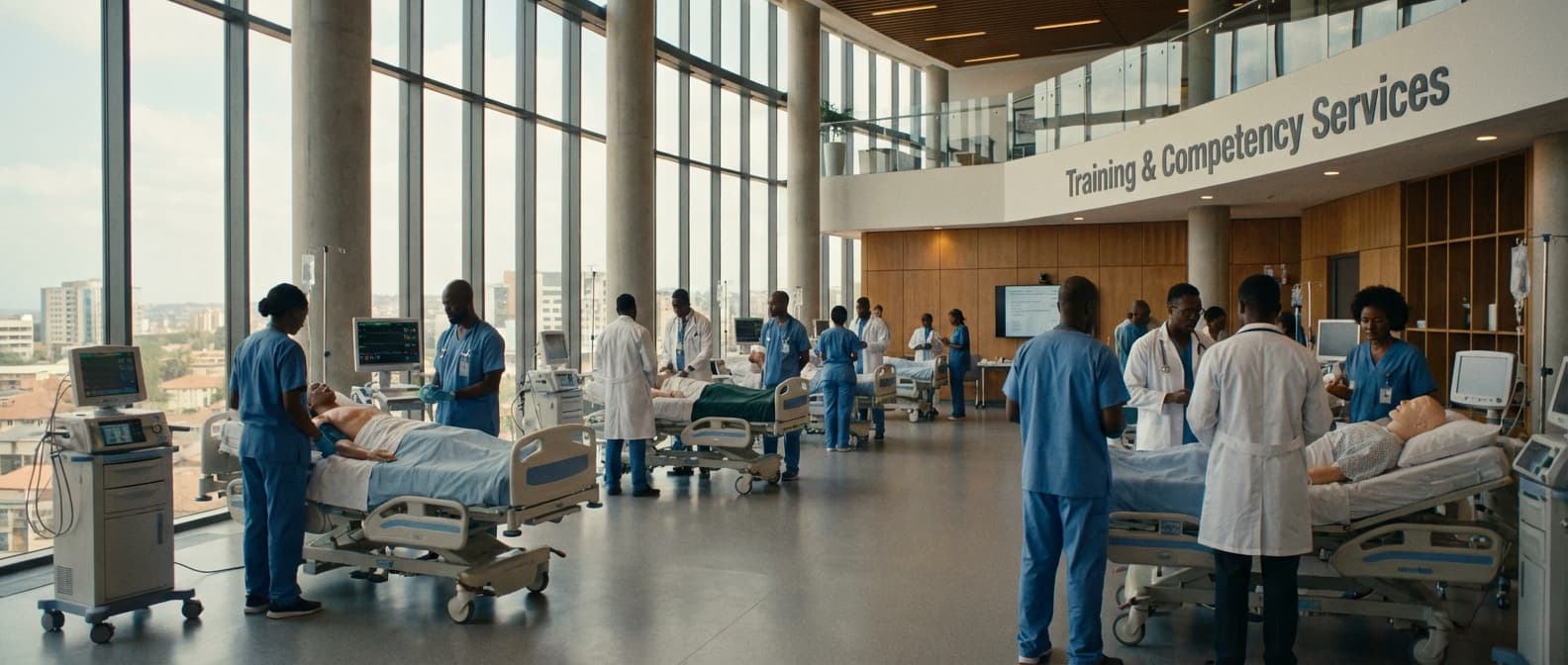
CT Operator Training Service (Radiographers) in Burkina Faso
Engineering Excellence & Technical Support
CT Operator Training Service (Radiographers) High-standard technical execution following OEM protocols and local regulatory frameworks.
Comprehensive Curriculum Development
Our service features a meticulously crafted training curriculum designed to meet and exceed the current radiographer competency standards in Burkina Faso. It covers essential theoretical knowledge, advanced imaging techniques, patient care protocols, and radiation safety, ensuring trainees are equipped for diverse clinical scenarios.
Hands-On Simulated Practice
We utilize state-of-the-art simulation technology to provide radiographers with invaluable hands-on practice. Trainees can refine their skills in patient positioning, equipment operation, and image acquisition in a safe, controlled environment before working with actual patients, significantly boosting confidence and reducing errors.
Expert Local & International Mentorship
Our training program pairs aspiring radiographers with experienced local professionals who understand the healthcare landscape in Burkina Faso, alongside international experts. This blended mentorship approach offers cultural relevance, practical insights, and exposure to global best practices, fostering a well-rounded and highly competent workforce.
What Is Ct Operator Training Service (Radiographers) In Burkina Faso?
CT Operator Training Service (Radiographers) in Burkina Faso refers to specialized educational and practical programs designed to equip radiographers with the necessary knowledge and skills to safely and effectively operate Computed Tomography (CT) scanners. This service is crucial for ensuring high-quality diagnostic imaging, patient safety, and adherence to international radiation protection standards within healthcare facilities in Burkina Faso. The training focuses on the theoretical underpinnings of CT imaging, practical operation of various CT systems, image acquisition protocols, post-processing techniques, quality assurance, and radiation safety principles. It aims to elevate the competency of radiographers, enabling them to contribute significantly to accurate diagnosis and patient management.
This training is indispensable for radiographers seeking to specialize in CT or to enhance their existing skills. It is also a requirement for new radiographers entering the field of diagnostic imaging in facilities equipped with CT technology. Healthcare institutions investing in CT scanners need to ensure their imaging personnel are adequately trained to maximize the utility and safety of the equipment. Furthermore, regulatory bodies or licensing boards may mandate such training as part of professional development or certification processes.
| Target Audience | Typical Use Cases | Training Modalities |
|---|---|---|
| Newly graduated radiographers | Acquiring fundamental skills for operating CT scanners in hospitals and diagnostic centers. | Classroom lectures, simulator-based training, supervised clinical rotations. |
| Experienced radiographers seeking specialization | Expanding expertise to advanced CT applications, such as cardiac CT, interventional CT, or specific oncological imaging protocols. | Advanced workshops, specialized modules, hands-on practice with advanced features. |
| Radiographers in facilities with new CT installations | Ensuring proficient and safe operation of new generation CT scanners and associated software. | Manufacturer-specific training, in-situ training, on-site technical support during initial phase. |
| Radiographers in remote or underserved areas | Providing essential CT imaging services where specialized personnel might be scarce, requiring comprehensive foundational training. | Intensive short courses, blended learning approaches (online theory with practical workshops). |
| Radiographers needing to comply with professional development requirements | Maintaining and updating their knowledge and skills to meet regulatory or institutional standards. | Continuing Professional Development (CPD) courses, online modules, attendance at professional conferences with educational components. |
Key Components of CT Operator Training Service:
- Theoretical Foundations: Principles of X-ray generation, beam attenuation, image reconstruction algorithms (e.g., filtered back-projection, iterative reconstruction), and CT physics.
- CT Scanner Operation: Hands-on training on specific CT scanner models, including patient positioning, gantry angulation, beam collimation, and parameter selection (kVp, mAs, slice thickness, pitch).
- Protocol Development and Optimization: Understanding and application of standardized imaging protocols for different anatomical regions and clinical indications, including contrast administration protocols.
- Image Acquisition Techniques: Mastering techniques for optimal image quality, artifact reduction, and dose optimization, including helical/spiral scanning, multi-detector CT (MDCT) capabilities, and advanced imaging techniques (e.g., dual-energy CT).
- Image Post-Processing and Manipulation: Training in basic image manipulation, windowing, leveling, multiplanar reconstruction (MPR), maximum intensity projection (MIP), and minimum intensity projection (MinIP).
- Quality Assurance (QA) and Quality Control (QC): Implementing daily, weekly, and monthly QA/QC procedures to ensure scanner performance and image integrity.
- Radiation Safety and Protection: Comprehensive understanding of radiation physics, biological effects of radiation, dose measurement, ALARA principle, and effective radiation protection measures for patients and staff, in accordance with national and international guidelines.
- Patient Care and Management: Ethical considerations, patient communication, managing patient anxiety, and handling specific patient populations (e.g., pediatric, geriatric, critically ill).
- Troubleshooting and Maintenance: Basic understanding of common equipment malfunctions and reporting procedures for technical issues.
Who Needs Ct Operator Training Service (Radiographers) In Burkina Faso?
The demand for CT Operator Training Services (Radiographers) in Burkina Faso is driven by the growing need to enhance diagnostic imaging capabilities within the country's healthcare sector. This training is crucial for ensuring that healthcare professionals are proficient in operating CT scanners safely and effectively, leading to accurate diagnoses and improved patient outcomes. The target customers for these services are primarily government and private healthcare facilities that either have existing CT scanner technology or are planning to acquire it. Specialized training ensures optimal utilization of expensive equipment, reduces the risk of errors, and promotes a higher standard of medical imaging practice.
| Customer Type | Typical Departments Involved | Key Needs/Benefits of Training |
|---|---|---|
| Public Hospitals | Radiology, Emergency Medicine, Surgery, Oncology | Improving diagnostic accuracy, standardizing protocols, efficient equipment utilization, patient safety, staff professional development. |
| Private Hospitals | Radiology, Cardiology, Neurology, Orthopedics | Competitive advantage through advanced diagnostics, patient satisfaction, minimizing downtime, adhering to international standards. |
| University Teaching Hospitals | Radiology, all clinical specialties | Training future radiographers, research applications of CT, developing advanced imaging techniques, knowledge transfer. |
| Diagnostic Imaging Centers | Radiology, Outpatient Services | High-volume scanning, specialized imaging protocols, efficient workflow, quality control, rapid turnaround times. |
| Medical Training Institutions | Radiography Programs, Continuing Education Units | Curriculum development, providing practical training, certifying competence, equipping graduates with essential skills. |
| NGO-funded Health Facilities | Radiology (if available) | Capacity building for remote or underserved areas, ensuring basic diagnostic imaging is accessible, cost-effective training solutions. |
| Ministry of Health | Health Planning, Human Resources Development, Directorate of Public Health | National health policy implementation, strengthening healthcare infrastructure, improving public health outcomes, ensuring equitable access to advanced diagnostics. |
Target Customers and Departments for CT Operator Training in Burkina Faso
- Radiology Departments (Public Hospitals)
- Radiology Departments (Private Hospitals)
- Radiology Departments (University Teaching Hospitals)
- Diagnostic Imaging Centers (Private)
- Medical Training Institutions (for radiographers)
- NGO-funded Health Facilities (with imaging equipment)
- Ministry of Health (for national capacity building initiatives)
Ct Operator Training Service (Radiographers) Process In Burkina Faso
This document outlines the workflow for CT Operator Training Services for Radiographers in Burkina Faso, from the initial inquiry to the successful execution of the training program.
| Phase | Key Activities | Responsible Party(ies) | Deliverables/Outcomes | Key Considerations (Burkina Faso Context) |
|---|---|---|---|---|
| Initial contact from healthcare facility/organization regarding CT operator training needs. Understanding specific CT scanner models, existing radiographer skill levels, training objectives, and desired outcomes. | Prospective Client, Training Provider | Clear understanding of training requirements, identified skill gaps, defined learning objectives. | Language proficiency (French is official, but local dialects may be present). Awareness of existing healthcare infrastructure and accessibility in different regions. Understanding of regulatory requirements for radiographers in Burkina Faso. |
| Based on the needs assessment, the training provider develops a detailed proposal outlining the training program, curriculum, methodology, duration, trainers' qualifications, proposed dates, and cost. Submission of the proposal to the prospective client. | Training Provider | Comprehensive training proposal. | Currency considerations (CFA franc). Potential for government or NGO funding opportunities. Understanding local procurement processes. |
| Discussion and negotiation of proposal terms, including pricing, payment schedules, responsibilities, liability, and intellectual property. Finalization and signing of a formal training agreement. | Prospective Client, Training Provider | Signed training contract. | Ensuring legal compliance with Burkinabe contract law. Clear payment terms to avoid delays. |
| Tailoring the training curriculum to the specific CT scanner models and the identified needs of the radiographers. Developing a detailed training schedule, including theoretical sessions, practical hands-on training, and assessment dates. | Training Provider (in consultation with Client) | Customized training curriculum and schedule. | Inclusion of relevant pathology common in Burkina Faso. Adaptation of practical sessions to available equipment and patient demographics. |
| Arranging travel and accommodation for trainers (if applicable). Booking training venue and ensuring availability of necessary equipment, simulation models, and training materials. Communicating final schedule and pre-reading materials to participants. | Training Provider, Prospective Client | Logistics finalized, training materials distributed, venue secured. | Facilitating visa and travel arrangements for international trainers. Ensuring reliable electricity and internet access for training sessions. Considering local transportation options for participants. |
| Conducting theoretical lectures, practical demonstrations, hands-on exercises with the CT scanner, case study analysis, and interactive Q&A sessions as per the agreed schedule. Emphasis on safety protocols and quality assurance. | Training Provider (Trainers) | Successful delivery of training modules. | Interactive teaching methods to overcome potential language barriers. Encouraging peer-to-peer learning among radiographers. Adapting pace based on participant comprehension. |
| Administering pre- and post-training assessments (theoretical and practical) to measure knowledge and skill acquisition. Collecting feedback from participants on the training content, delivery, and trainers. | Training Provider, Participants | Assessment results, participant feedback forms. | Ensuring assessments are culturally sensitive and relevant. Anonymous feedback mechanisms to encourage honest responses. |
| Issuing certificates of completion to participants who successfully pass the assessments. Providing post-training support, which may include follow-up consultations, access to online resources, or refresher courses. | Training Provider | Certificates of completion, post-training support plan. | Recognition of training by relevant professional bodies in Burkina Faso. Establishing a clear channel for ongoing support and knowledge sharing. |
CT Operator Training Service Workflow (Burkina Faso)
- Inquiry & Needs Assessment
- Proposal Development & Submission
- Contract Negotiation & Agreement
- Curriculum & Schedule Customization
- Logistics & Pre-Training Preparations
- Training Delivery
- Assessment & Evaluation
- Certification & Post-Training Support
Ct Operator Training Service (Radiographers) Cost In Burkina Faso
Providing accurate cost estimates for CT Operator Training (Radiographers) in Burkina Faso requires understanding several key pricing factors. These factors influence the overall investment a healthcare facility or individual radiographer will need to make to acquire or enhance CT operation skills. The cost is not static and can fluctuate significantly based on the provider, duration, curriculum depth, location within Burkina Faso, and any included certifications or practical components. It's crucial to note that specific pricing is often proprietary and best obtained through direct quotes from training institutions or specialized providers.
| Training Type/Level | Estimated Price Range (XOF per person) | Notes |
|---|---|---|
| Basic CT Operator Introduction (e.g., 1-2 weeks) | 150,000 - 400,000 | Focuses on fundamental principles, basic scan operation, patient positioning, and image acquisition. May not include extensive hands-on time. |
| Comprehensive CT Operator Training (e.g., 4-8 weeks) | 400,000 - 1,200,000 | Covers a wider range of protocols, image processing, quality control, troubleshooting, and more substantial supervised practical sessions. |
| Specialized CT Module (e.g., CT Angiography, Cardiac CT - 1 week) | 250,000 - 700,000 | Deeper dive into specific advanced CT applications. Often requires a foundational CT knowledge. |
| Certification-focused CT Training (Variable Duration) | 600,000 - 2,000,000+ | Programs specifically designed to meet the requirements for a recognized professional certification, often with rigorous evaluation and extensive practical components. |
| Refresher/Advanced Skills Workshop (e.g., 2-3 days) | 100,000 - 300,000 | Targeted workshops for existing operators to update skills or learn new techniques. |
Key Pricing Factors for CT Operator Training in Burkina Faso:
- Training Provider: Institutions with established reputations, experienced instructors, and accredited programs often command higher fees. This can include university medical departments, private training centers, or international organizations operating locally.
- Duration and Intensity of Training: Shorter, introductory courses will naturally be less expensive than comprehensive programs that cover advanced CT techniques, protocols, and troubleshooting. Full-time, immersive courses will also typically cost more than part-time or modular training.
- Curriculum Content and Specialization: The depth and breadth of the curriculum are major determinants. Training focusing on basic CT imaging will differ in price from specialized courses in areas like CT angiography, cardiac CT, or interventional CT procedures.
- Practical/Hands-on Component: The availability and extent of hands-on training using actual CT scanners are critical. More extensive supervised practice sessions will increase the cost due to equipment usage and dedicated trainer time.
- Certification and Accreditation: Training leading to recognized national or international certifications will generally be more expensive. Accreditation of the training program by relevant medical or radiologic bodies also adds value and can impact cost.
- Location within Burkina Faso: While training might be centralized in major cities like Ouagadougou or Bobo-Dioulasso, the operational costs for providers in these areas can sometimes influence pricing. Remote or less developed regions might see fewer training options and potentially different pricing structures.
- Materials and Resources: Inclusion of comprehensive training manuals, access to online learning platforms, simulators, and reference materials will contribute to the overall cost.
- Instructor Qualifications and Experience: Highly experienced radiographers or radiologists with specialized CT expertise as instructors will often necessitate higher fees.
- Group vs. Individual Training: Facilities sending multiple radiographers for training may negotiate group rates, potentially lowering the per-person cost compared to individual enrollment.
- On-site vs. Off-site Training: If a training provider offers on-site training at a healthcare facility, this can sometimes involve additional logistical costs for the provider, which may be factored into the overall price.
Affordable Ct Operator Training Service (Radiographers) Options
This document outlines affordable CT operator training service options specifically for radiographers, focusing on value bundles and cost-saving strategies. Investing in comprehensive CT training is crucial for radiographers to enhance their skills, improve patient care, and ensure the safe and efficient operation of CT scanners. We understand that budget constraints can be a concern, and therefore, we present a range of flexible and cost-effective training solutions.
| Training Service Option | Description | Value Bundle Inclusions | Estimated Cost Range (USD) | Cost-Saving Strategies |
|---|---|---|---|---|
| Basic CT Certification Program | Foundational training covering essential CT principles, safety, and basic imaging protocols. | Online modules, quizzes, and a final certification exam. Access to a simulated CT scanner environment. | $500 - $1,500 per radiographer | Group discounts for multiple enrollments. Early bird registration incentives. Bundling with other imaging modality training. |
| Comprehensive CT Operator Training Package | In-depth training encompassing all aspects of CT operation, from advanced protocols to quality assurance. | Includes basic certification, hands-on simulation lab access, advanced protocol workshops, and dedicated Q&A sessions with instructors. | $1,800 - $3,500 per radiographer | On-site training at your facility (reduces travel costs for staff). Customized curriculum to match your equipment and needs. Subscription-based access for ongoing learning and refreshers. |
| Specialized CT Technique Workshops | Focused training on specific advanced CT applications (e.g., cardiac CT, interventional CT). | Intensive hands-on sessions, case study reviews, and advanced protocol development. May include vendor-specific training. | $700 - $2,000 per workshop per radiographer | Partnering with equipment vendors for subsidized training. Leveraging online recorded sessions for theoretical components to reduce live session time. |
| CT Refresher and Competency Training | Designed for experienced radiographers needing to update skills or meet competency requirements. | Targeted modules on updated protocols, new technologies, and common errors. Online assessments and practical evaluations. | $300 - $800 per radiographer | Online delivery minimizes facility overhead. Focus on specific areas of need reduces unnecessary training time. |
| Blended Learning CT Program | Combines self-paced online learning with limited in-person or virtual live instruction. | Online modules, virtual instructor-led sessions, and optional hands-on simulation. Flexible scheduling. | $700 - $2,000 per radiographer | Reduced travel and accommodation costs compared to fully in-person programs. Scalable for large teams. |
Key Training Areas for CT Operators
- CT Physics and Principles
- CT Anatomy and Pathology
- Image Acquisition Protocols
- Image Reconstruction and Artifact Reduction
- Radiation Safety and Dose Management
- Contrast Media Administration and Patient Safety
- Advanced CT Techniques (e.g., Dual-Energy, Low-Dose CT)
- Quality Assurance and Quality Control (QA/QC)
- Common CT Scanners and Software Operation
- Emergency Procedures and Troubleshooting
Verified Providers In Burkina Faso
In Burkina Faso, ensuring access to quality healthcare is paramount. When seeking medical services, it is crucial to rely on Verified Providers who have demonstrated a commitment to excellence, adherence to ethical standards, and possession of relevant credentials. Franance Health stands out as a leader in this regard, offering a network of highly qualified and trustworthy healthcare professionals. Their rigorous vetting process and dedication to patient well-being make them the superior choice for healthcare in Burkina Faso.
| Credential Type | Franance Health Verification Process | Significance for Patients |
|---|---|---|
| Medical Licenses | Confirmed through official national and regional bodies. | Ensures legal and authorized practice. |
| Specialty Certifications | Validated against recognized certifying boards. | Guarantees advanced knowledge and skills in a specific field. |
| Educational Degrees | Verified from accredited institutions. | Confirms foundational medical education and training. |
| Professional Experience | Documented through references and past employment checks. | Indicates practical application of knowledge and skill. |
| Reputation and Ethics | Assessed through peer reviews and background checks. | Highlights commitment to patient well-being and ethical conduct. |
Why Franance Health Credentials Matter:
- Rigorous Verification: Franance Health employs a stringent credentialing process that goes beyond basic licensing. They assess educational background, professional experience, and ethical conduct.
- Specialized Expertise: Their network includes specialists across a wide range of medical disciplines, ensuring you can find the right expertise for your specific health needs.
- Commitment to Quality: Providers affiliated with Franance Health are committed to delivering high-quality care, adhering to best practices, and prioritizing patient safety and satisfaction.
- Ethical Standards: Franance Health vets providers for their adherence to ethical medical practices, ensuring integrity and trustworthiness in every interaction.
- Continuous Professional Development: Many Franance Health providers engage in ongoing training and development, keeping them abreast of the latest medical advancements and treatments.
Scope Of Work For Ct Operator Training Service (Radiographers)
This document outlines the Scope of Work for CT Operator Training Services specifically designed for Radiographers. It details the technical deliverables and standard specifications required to ensure comprehensive and effective training in Computed Tomography (CT) operation. The objective is to equip radiographers with the knowledge, skills, and practical experience necessary to safely and efficiently operate CT scanners, produce high-quality diagnostic images, and adhere to best practices in radiation safety and patient care.
| Section | Description | Technical Deliverables | Standard Specifications |
|---|---|---|---|
| Theoretical Training | In-depth theoretical knowledge covering CT principles, instrumentation, image formation, and radiation physics. | Training modules (digital and/or printed), presentations, lecture notes, case studies, quizzes, and pre/post-training assessments. | Modules must be aligned with current international CT imaging guidelines (e.g., ACR, IAEA). Content accuracy and currency are paramount. Assessments should have a pass mark of at least 80%. |
| Practical Hands-on Training | Supervised practical sessions on actual CT scanners, focusing on operational procedures and image acquisition. | Demonstrations of scanner operation, patient positioning techniques, protocol selection, image acquisition, and basic troubleshooting. Logbook of supervised practical hours. | Training to be conducted on modern, functional CT scanners. Minimum 80% of practical hours must involve direct hands-on operation under supervision. Trainees must demonstrate proficiency in at least 10 different common CT protocols. |
| Image Optimization and Quality Assurance | Training on techniques for achieving optimal image quality and understanding factors affecting it. | Modules on windowing/leveling, noise reduction, artifact management, and basic quality control procedures. Image review sessions with feedback. | Trainees must be able to identify and correct common artifacts. Ability to demonstrate correct windowing and leveling for specific anatomical regions should be assessed. |
| Radiation Safety and Protection | Comprehensive training on radiation physics, biological effects, dose estimation, and protection strategies. | Training materials on ALARA principles, use of shielding, patient dose monitoring, and emergency protocols. Practical demonstrations of safety equipment. | Training must cover relevant national radiation safety regulations. Trainees must demonstrate understanding of dose reduction techniques and the importance of justification and optimization. |
| Contrast Media Administration | Education on types of contrast media, administration routes, indications, contraindications, and management of adverse reactions. | Training modules, case discussions, and simulated scenarios for contrast administration and emergency response. Protocol for managing contrast reactions. | Training must include an understanding of patient assessment prior to contrast administration and immediate post-administration monitoring. Competency in emergency response procedures for contrast reactions. |
| Anatomy and Pathology | Review of relevant cross-sectional anatomy and common pathologies visualized on CT. | Anatomical atlases (digital/printed), case presentations correlating anatomy with pathology, and image interpretation exercises. | Trainees should be able to identify key anatomical structures in axial, sagittal, and coronal planes. Ability to recognize common pathological findings. |
| Workflow and Data Management | Training on patient registration, scheduling, image archival, retrieval, and reporting procedures. | Modules on Picture Archiving and Communication Systems (PACS), Radiology Information Systems (RIS), and data security. Workflow simulations. | Trainees must demonstrate proficiency in navigating PACS/RIS systems for image retrieval and archival. Understanding of data integrity and privacy regulations. |
| Assessment and Certification | Evaluation of trainee knowledge and practical skills throughout and at the end of the training program. | Written and/or practical examinations, competency checklists, and a certificate of completion. | Examinations should be comprehensive and cover all training modules. A minimum score (e.g., 80%) is required for certification. Certificate should clearly state the scope of training and the name of the institution. |
Training Objectives
- To provide radiographers with a foundational understanding of CT physics, principles, and technology.
- To train radiographers on the safe and effective operation of various CT scanner models and associated software.
- To develop radiographers' skills in patient positioning, protocol selection, and image acquisition techniques.
- To instill knowledge of image quality assessment, artifact identification, and troubleshooting.
- To emphasize radiation safety principles and ALARA (As Low As Reasonably Achievable) practices for both patients and staff.
- To familiarize radiographers with CT contrast media administration, safety protocols, and emergency procedures.
- To enhance radiographers' understanding of cross-sectional anatomy and its relevance in CT imaging.
- To ensure competency in data management, archival, and retrieval processes.
- To promote professional development and adherence to ethical guidelines in CT imaging.
Service Level Agreement For Ct Operator Training Service (Radiographers)
This Service Level Agreement (SLA) outlines the guaranteed response times and uptime for the CT Operator Training Service provided to radiographers. This SLA is designed to ensure the efficient and reliable delivery of training, minimizing disruptions to professional development and operational continuity.
| Service Component | Response Time (Business Hours) | Uptime Guarantee (Monthly) |
|---|---|---|
| Technical Support (Issue Reporting) | 2 Business Hours | 99.5% |
| Content Access & Platform Availability | N/A (Continuous) | 99.7% |
| Simulator Access (if applicable) | 4 Business Hours | 99.0% |
| Training Material Updates/Additions | 5 Business Days | N/A |
Key Performance Indicators (KPIs)
- Response Time: The maximum time it takes for the CT Operator Training Service provider to acknowledge and begin addressing a reported issue or request.
- Uptime Guarantee: The minimum percentage of time the CT Operator Training Service is available and fully functional for users.
Frequently Asked Questions

Ready when you are
Let's scope your CT Operator Training Service (Radiographers) in Burkina Faso project in Burkina Faso.

Scaling healthcare logistics and technical systems across the entire continent.